New Fire Group Chief Economist Fu Peng's Latest Speech: Crypto Assets Deeply Bound to Liquidity, Global Assets 'Shrink Circle' with Widening Divergence

链捕手Dipublikasikan tanggal 2026-07-24Terakhir diperbarui pada 2026-07-24

Abstrak

The chief economist of Sinovation Group delivered a speech at Wiki Finance EXPO Hong Kong 2026, analyzing the global market through the lens of liquidity. He argues that all major assets, including cryptocurrencies, are fundamentally tied to global liquidity, which is now shifting from an era of extreme post-2008 ease to sustained tightening under new Fed leadership. This marks the end of widespread "asset flooding" and ushers in a "shrinking circle" dynamic: capital is abandoning speculative, low-quality assets and concentrating in a few high-conviction, value-driven core holdings. The only dominant global investment theme is AI, viewed as a 20-25 year productivity cycle. However, a critical inflection point has been reached in Q2, where major tech firms' free cash flow has turned negative. The market narrative has pivoted from rewarding pure capital expenditure growth to demanding proof of future revenue generation and returns. While the AI super-cycle's long-term thesis remains intact, the initial hardware-driven phase (e.g., Nvidia, memory chips) is maturing. The speaker warns of significant volatility risk not from industry fundamentals, but from excessive financial leverage built up in these "certain" assets. He emphasizes that investment strategy must evolve from broad diversification to focused, cyclical allocation within the AI value chain (upstream hardware, midstream, downstream applications), avoiding blind long-term holds on single names. For crypto, this liqui...

Author: New Fire Technology

Mr. Fu Peng, Chief Economist of New Fire Group, was invited to participate in Wiki Finance EXPO Hong Kong 2026 and delivered a keynote speech. Starting from the global liquidity framework, Mr. Fu Peng shared his core views on the current global macro-assets and market trends, and provided a systematic judgment on the underlying logic of the crypto market.
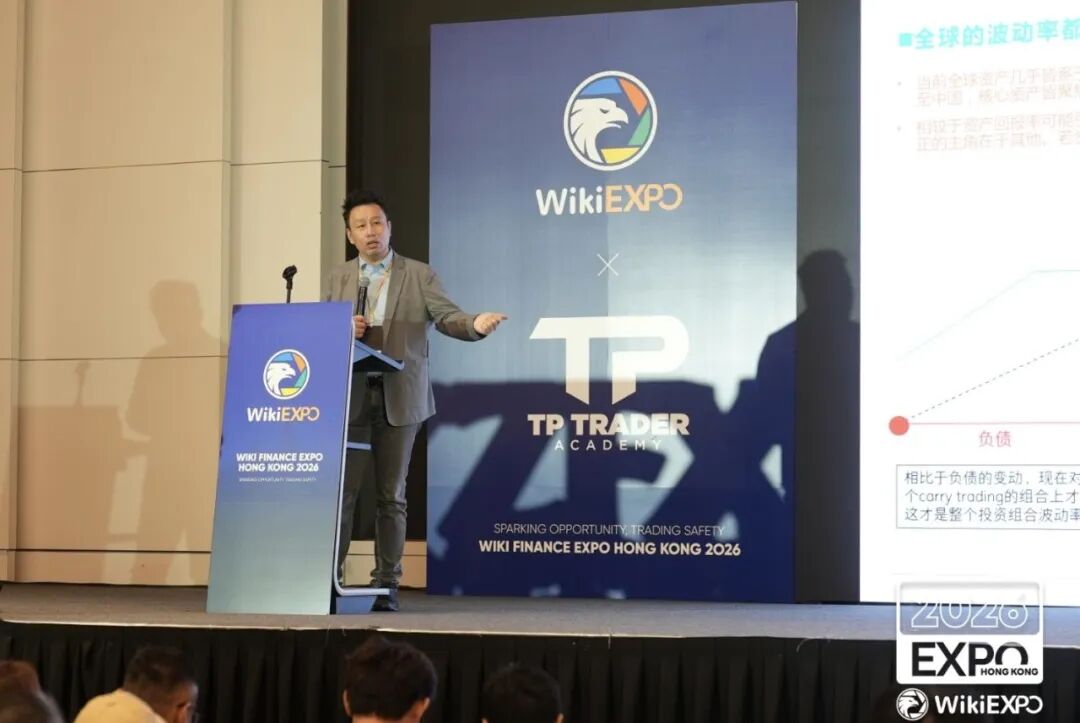
New Fire Group Chief Economist Fu Peng delivering a speech at Wiki Finance EXPO Hong Kong 2026
The following is the full text of the speech:

Today, I will share my views with you from several dimensions regarding the global markets. First, let's start with liquidity. Regardless of the asset class, up to today, including mainstream crypto assets, they are all essentially tied to core global liquidity.

After the 2008 financial crisis, global liquidity reached a temporary peak from 2008 to 2021. Liquidity should not be viewed solely through news about interest rate hikes or cuts; it comprises three dimensions, which you must remember.

Rate hikes and cuts only represent changes at the interest rate curve end and do not represent the complete liquidity environment. Observing liquidity can be broken down into three things: the volume of water in the pool, the water temperature, and the pressure distribution of funds within the pool. The underlying logic can be simply understood as P/Q×G. From a professional perspective, liquidity can be tracked from angles like the interest rate end, interest rate curve, Federal Reserve balance sheet, open market operations, etc. But there's an even simpler observation method: currently, in traditional trading, mainstream crypto assets like Bitcoin are widely regarded as leading indicators for liquidity strength.

01. From "Frenzied Speculation in Inferior Assets" to "Shrink Circle": The Two Faces of the Liquidity Cycle

After the 2020 pandemic, the world entered a window of extreme easing with low interest rates and central bank balance sheet expansion. During easing cycles, global financial assets exhibit typical characteristics: frenzied speculation in inferior assets.

For example, the retail short squeeze on GameStop in US stocks, and the surge of numerous worthless altcoins in the crypto market, are essentially results of excessive liquidity — when money is abundant, any asset can be pumped. However, when overall liquidity begins to contract, the market experiences a "shrink circle" scenario: capital actively distinguishes between good and bad assets, and inferior assets are abandoned. This process of squeezing out bubbles began in the second half of 2021.

From the second half of 2021 to 2022, typical cases include Bitcoin falling from over 70,000 to around 20,000 in the crypto market, and NVIDIA dropping about 64%-65% in 2022 in US stocks. This process is like squeezing water out of a sponge, continuously removing market bubbles.

This year, the real core inflection point occurred last November. 2021 was the peak of central bank balance sheet expansion, while the end of last year was a critical node of dual tightening involving both liquidity and quantitative tightening (QT). To explain simply: when the pool stops adding water, financial pressure doesn't materialize the instant QT begins; only when QT progresses to a certain extent does the market truly feel the funding pressure.

Last November/December, when Bitcoin was around 110,000, I made a bet with Li Lin: crypto assets were likely to halve within the next year. If this materializes, it would again confirm that the underlying logic of crypto assets is completely tied to global liquidity.

The core observation indicator last November: the Fed's Standing Repo Facility (SRF) open market operations. This indicator signifies that when QT reaches a critical point, structural funding pressure has already emerged in the market. It's important to understand that tightening credit and liquidity contraction doesn't mean everyone is short of funds; funding pressure is transmitted in layers: highly leveraged, weaker entities face funding stress first, while high-quality, leading entities still have ample funds. With this layered transmission of liquidity, capital markets experience the "shrink circle": funds first sell off peripheral, liquidity-sensitive weak assets, and continuously concentrate into the most core, highest-certainty assets.

Many retail crypto traders have a misconception: when there's no action in the crypto market, all funds flow into trading US stocks. This is a very retail-oriented mindset. Objectively speaking, during a liquidity tightening cycle, funds will first liquidate all high-volatility, highly speculative assets from their portfolios; cryptocurrencies, small-cap thematic stocks are among the first to be sold. When money is abundant and liquidity is loose, funds are willing to speculate on various junk assets; when money is scarce and liquidity tightens, funds will only focus on truly valuable core assets. This is the essence of the "shrink circle" scenario.

02. The Key Inflection Point for the AI Industry: Free Cash Flow Hits Zero, the Capex Narrative Becomes Ineffective

Since last November, global capital has continuously concentrated into the long-term productivity upgrade theme, namely the artificial intelligence (AI) sector. The logic of the AI sector can be analogized to large-scale fixed asset investment; it's easier to understand using the example of domestic infrastructure.

In 2001, the core market theme was large-scale domestic infrastructure construction, encapsulated by the old saying "to get rich, build roads first." At that time, Justin Yifu Lin and Andy Xie were discussing the driving effect of road and rail infrastructure on the economy. The 2002 Two Sessions set the direction for infrastructure development. In 2003, central and local fiscal funds were fully allocated, nationwide road and bridge projects commenced in batches, entering a long-term capital expenditure cycle. In 2004, the core holdings for institutional allocation were companies like Sany Heavy Industry and Conch Cement, upstream equipment and raw material suppliers in infrastructure.

This analogical logic fully applies to the current AI sector; the underlying industrial rules don't change just because it's named "AI." The first half of the AI wave was driven by the deployment of applications like ChatGPT, which ignited corporate willingness for capital expenditure. Starting in 2023, global tech companies concentrated on laying digital infrastructure, i.e., computing power and data center construction. Large-scale digital infrastructure drives the upstream hardware, storage, optical modules, HBM, and other industrial chain beneficiaries — Samsung Electronics, SK Hynix, TSMC correspond to the steel, cement, and construction machinery of the infrastructure era. However, Q2 of this year is a key inflection point for the entire industrial chain, coinciding with the dual variable of liquidity contraction.

After Google's earnings report yesterday, experienced investors could clearly sense that the market's dominant logic of the past two to three years has become ineffective. The market rules in 2023, 2024, and 2025 were simple: whenever internet giants increased AI infrastructure spending and expanded capital expenditures, the market gave high valuations. But after major companies' Q2 earnings reports this year, even with high capex growth, stock prices fell instead.

The core reason is that investors detected a key data point: free cash flow has dropped to zero for all leading companies heavily investing in AI infrastructure. The most critical indicator in Google's earnings report last night was free cash flow. Many investors still cling to the old logic, believing that as long as capex keeps expanding, stock prices will rise. That era is over.

The market pricing logic has completely shifted: previously, it was about the scale of capital investment; now, capital will interrogate whether infrastructure investments can generate sustained traffic and revenue to recoup costs. Free cash flow hitting zero is a landmark signal for the transition from Phase 1 to Phase 2 of the AI industry. If companies plan to continue increasing capital expenditures, they can only do so through external financing like equity issuance or bond issuance. External funds have costs, and investor scrutiny will become extremely stringent.

Here's a refined tracking metric: the ratio of Capital Expenditures (CapEx) to the growth rate of cloud business revenue. Currently, Google's ratio is about 1.9, meaning for every 1.9 units invested in infrastructure, only 1 unit of cloud revenue is generated. This is the core reason why the capital market is unwilling to continue giving high valuations.

With tightening overall funding conditions, global capital continuously contracts to a few high-certainty assets, coupled with the industrial cycle shift, the "shrink circle" scenario inevitably leads to severe risk volatility in the market.

Let me take NVIDIA as an example to outline the complete industrial cycle: 2022 was the starting point for confirming NVIDIA's industrial cycle, with its market cap falling from trillions to hundreds of billions that year. After the explosive deployment of ChatGPT, NVIDIA officially entered a value-growth phase. In 2023 and 2024, NVIDIA's logic was fully closed-loop: continuous earnings growth, global AI capex driving order expansion, market cap successively breaking through $1 trillion, $2 trillion, $3 trillion, with extremely low stock price volatility and almost no deep correction risks.

However, after returning from a research trip to Singapore in June 2024, I began warning major financial institutions about risks: NVIDIA's business operations, industry supply/demand, and industrial fundamentals were all sound; the risks all came from off-balance-sheet financial leverage.

There is a serious cognitive bias among new-generation post-00s investors: they believe stock price movements must perfectly match fundamentals. This view is completely wrong! Capital market pricing trades on market expectations, which significantly lead actual corporate fundamentals.

Here's an example: the current industry reality is that HBM capacity is tight and supply is insufficient — a correct fundamental fact. But this doesn't lead to the conclusion that stock prices will continue to rise indefinitely. This is a typical cognitive bias: earnings reports and capacity reflect current reality, while stock prices trade future expectations. Fundamental data severely lags behind market pricing. This is practical experience from over twenty years in the industry.

In July 2024, NVIDIA plunged 20% in just a few trading days, and Japanese stocks fell 10% on the same day. Many analysts at the time attributed the decline to the Bank of Japan's rate hike and the unwinding of yen carry trades — these were superficial explanations. The underlying truth was: global capital was concentrated into a few high-certainty assets, extreme certainty breeds extreme greed, directly manifesting as investors aggressively adding leverage.

Here's a simple trading analogy: we are playing cards, your card is a 6, mine is a 5, and you clearly know you have the better hand. An ordinary retail investor might go in with a heavy position, but a qualified trader would go all-in with maximum leverage. The core conclusion must be remembered: certainty breeds greed; everything has two sides; the corresponding action for greed is adding leverage. With a consensus that NVIDIA has ample long-term orders, traders will continuously add leverage to amplify returns — this is traders' instinct. When leverage accumulates to a critical point, it inevitably triggers violent volatility and rapid declines.

The current market is replicating the same pattern: some memory chip stocks experience frequent sharp plunges despite no industry headwinds, stable business operations, full order books, and steady earnings growth. Many young traders in South Korea made significant profits one day, only to suffer large losses the next. The root cause isn't Samsung, SK Hynix, or HBM industry supply/demand; the core issue is excessive accumulated leverage within the market.

The underlying logic is identical to NVIDIA's flash crash in July 2024: high-certainty assets breed leverage bubbles; when leverage hits a critical threshold, a crash is inevitable. There is no such thing as a perpetual leveraged rally. Here's a simple risk assessment standard: when recent graduates with no practical experience pour all their funds and leverage to go all-in on Samsung and SK Hynix, it signals approaching risk. When a previously niche, professional sector is flooded with speculative retail investors, a bubble burst is only a matter of time. The market has been in a capital contraction cycle for several years; everyone recognizes the few core, certain assets. But the risk isn't in the industry fundamentals; it lies hidden at the liquidity and leverage levels. This must be emphasized.

The market has now reached the core inflection point of AI's first phase. The narrative relying solely on capital expenditure expansion has run its course; the market will experience significant volatility and valuation correction for digestion. My overall assessment for US stocks this year: if the index can maintain a sideways consolidation, that's already an optimistic expectation. Some might argue: after the March decline, US stocks rebounded in May and June. But one must distinguish: the May-June rally was an extreme structural move, driven by only a handful of stocks lifting the index, while the vast majority of stocks continued to decline steadily. The structure of the A-share market over the past year is identical: 55% of stocks are trading below their levels when the Shanghai Composite was at 3000 points, with the index solely supported by a few AI sector leaders.

To summarize the current market environment: liquidity tightening, extreme market divergence, and the AI industrial cycle reaching a key inflection point. I reiterate: the long-term development logic of the AI industry hasn't changed; productivity upgrade is the definite theme. But one cannot blindly hold stocks long-term; one must adopt a complete industrial cycle perspective for phased allocation.

I have built a complete five-layer analytical framework: Industrial Layer, Economic Layer, Inflation Layer, Liquidity Layer, Market Layer. Currently, there's no need to expend great effort dissecting the Economic Layer. The Industrial, Liquidity, and Market Layers are the core of analysis; the weight of macroeconomic analysis has significantly decreased. Some might ask if deep analysis of the US economy is still needed. The answer is absolutely not. The reason: US companies are engaged in massive, continuous capital expenditure expansion, and the household sector completed deleveraging back in 2008. In other words, there's no need to scrutinize high-frequency economic data; the core characteristic of the US economy is just two words: resilience.

03. Global Market Structure: The Only Theme is AI

At the market level, the only global theme is artificial intelligence. Currently, global capital has only this core investment logic. Looking at globally allocable assets, the future core markets are only Japan, South Korea, Taiwan (China), Mainland China, and the United States. Other regions have extremely low allocation value. In Europe, only ASML warrants attention; other assets have no allocation significance.

Consider two questions: Is the current trend of the South Korean stock market related to its domestic real economy? Completely unrelated. Look at the Japanese stock market: is it linked to Japan's domestic economy? Also unrelated. Examining the core assets of the Japanese market reveals they are all upstream equipment manufacturers in the AI industrial chain. Market focus is mostly on Samsung and SK Hynix, but the core production equipment purchased by these two companies comes from Japanese firms. The entire industrial chain's upstream and downstream are fully connected. In Taiwan (China), the only core asset is TSMC; there are no other core industrial companies with allocation value.

The entire AI sector is essentially productivity-driven industrial investment, following fixed cyclical patterns. Let me state the core conclusion clearly: the moment major tech giants' free cash flow hit zero in Q2 is the major market turning point. Before and after this inflection point, the entire market's asset pricing logic completely reverses. This must be remembered.

The AI industrial chain is divided into upstream, midstream, and downstream, each with its own independent industrial lifecycle, featuring clear sector rotation and allocation windows. Do not treat AI as a belief for blind long-term holding; simply speculating on the AI concept will inevitably lead to pitfalls. Many ask me if I'm not bullish on AI; this question itself contains a logical flaw. Over the past decade, the market has reached a consensus: artificial intelligence is the core theme of the next generation of productivity — there is no controversy about this. Being bullish on the sector does not mean blindly holding any single asset at any time. NVIDIA, as an upstream hardware core asset, has completed its high-growth cycle; starting in 2025, it enters a mature blue-chip phase, hence its significant narrowing of gains from last year to this year. It won't be long before Samsung and SK Hynix also enter maturity; the overall growth rate of the upstream hardware sector will slow, and growth potential will gradually shift downstream.

Prediction of the complete AI industry cycle rhythm: 2022 dominated by upstream hardware; 2026 involves software layer valuation digestion and reshaping; around 2030, terminal application layer valuation adjustment and repricing. The complete AI industry super-cycle lasts about 20 to 25 years; 10 years have passed so far. The first decade's theme was upstream hardware infrastructure; the next decade's theme will be terminal applications.

However, there is currently a cyclical gap; the next 10 to 18 months is an industrial transition window. During this window period, do not go all-in. Strictly follow industrial cycle patterns for phased allocation to avoid significant volatility risks. Let's distinguish a key concept: from a programmer's perspective, AI coding tools, development aids, etc., belong to the industrial supporting tools layer, not the terminal application layer. Their valuation logic differs vastly.

04. Karen Walsh and the Liquidity Paradigm Shift: The Central Bank No Longer Backstops, Crypto Assets Enter Maturation

Finally, I return to the liquidity dimension, a core variable highly relevant to crypto assets. Why is the new Fed Chair, Karen Walsh, a key signal? His appointment declares the complete rewriting of the central bank's core policy framework established by Ben Bernanke after the 2008 financial crisis.

I wrote an analysis note in January: this personnel change signifies a return to the pre-2008 policy path. Briefly summarizing the policy background: the 2008 financial crisis exposed massive systemic financial risks. Policymakers learned from the 1929 Great Depression: completely放任自由市场 (letting the free market run its course) during a crisis means the market cannot stabilize itself. Therefore, post-2008, Keynesian stimulus policies were implemented on a massive global scale.

All Fed Chairs from Bernanke to Yellen followed the same core idea: when a financial crisis erupts, the central bank must intervene to support and rescue the market. But any policy has two sides, just like leverage in investing. Leverage can quickly放大收益 (amplify returns) but can also directly lead to账户爆仓归零 (account liquidation to zero). Central bank rescue can quickly calm market panic and avoid a repeat of the Great Depression, but long-term unconditional market backstopping by the central bank breeds market speculation and催生大规模资产泡沫 (gives rise to large-scale asset bubbles).

The market has a professional term called the "Fed Put": whenever the market falls, capital dares to buy indiscriminately, as all traders bet the central bank will intervene. When the market forms a unified expectation: profits belong to investors, losses are backstopped by the central bank, all financial assets become severely overvalued.

The core message of all Karen Walsh's public speeches can be summarized in one sentence: the central bank only performs its法定分内职责 (mandated duties). The central bank has two法定核心目标 (core statutory goals): stable employment and inflation control; it will not routinely prop up the stock market. With ongoing technological progress and steady productivity提升 (improvement), the central bank has the conditions to exit the long-term backstopping model.

This can be analogized to家庭教育 (family education): when a child enters high school and gains independent living ability, parents cannot handle everything, fostering dependency. After Karen took office, many market participants superficially interpreted it as expectations for rate cuts or QT; the core focus is actually the QT operation, with less correlation to short-term rate movements. The core issue is how to complete QT orderly, returning central bank functions to their standard pre-2008 positioning.

This signifies the definitive end of the largest global liquidity easing cycle in human history from 2008 until Karen's appointment. Therefore, do not entertain illusions: the next 5 to 10 years will not replicate the 2008-2026 scenario of universal大水漫灌 (flood-like easing) and broad-based asset appreciation. Capital will flow back to truly valuable core assets with long-term value. This is a key turning point at the liquidity level that will fundamentally rewrite everyone's investment strategy. Investment logic shifts from过去全面分散布局、各类资产同步上涨 (past broad diversification and synchronous asset class gains) to focusing on a few high-quality core assets.

Similar changes will occur in the crypto market. Many traders have already observed: Bitcoin and Ethereum market caps are stabilizing, volatility is declining, market liquidity is stabilizing, and participation is becoming institutionalized. These are typical characteristics of core assets that survive post-bubble cleansing. The narrative logic of speculating on worthless altcoins has彻底失效 (completely lost effectiveness).

Liquidity is the topmost core influencing factor for all financial assets; this year everyone must thoroughly understand this analytical framework. Analyzing industries, corporate fundamentals, and various assets becomes much clearer by following this liquidity framework first. Time is limited today, so I cannot dissect each of the five analytical layers in detail.

I prefer to discuss underlying logic and analytical methodology. Once the foundational thinking is sorted out, viewing short-term market micro-volatility won't lead to excessive confusion. My sharing ends here. I hope it provides you with insights. Thank you all.


Kripto yang Sedang Tren

Pertanyaan Terkait

QWhat are the two distinct phases of the liquidity cycle, and how does market behavior differ between them according to Fu Peng's speech?

AFu Peng describes two phases: the 'Crazy Speculation on Inferior Assets' phase during periods of ultra-loose liquidity (like post-2020), where abundant capital drives up prices of even low-quality assets. This is followed by the 'Shrinking Circle' phase when liquidity contracts. In this phase, capital actively differentiates asset quality, abandoning speculative and peripheral assets and concentrating only on core, high-quality assets with the highest certainty.

QWhat is the key turning point and critical signal for the AI industry's investment logic shift, as identified in the speech?

AThe key turning point occurred in Q2 2026 (referred to as 'this year' in the speech). The critical signal was major tech companies like Google reporting zero or negative free cash flow. This marks the end of the 'capital expenditure expansion' narrative. The market's valuation logic switched from rewarding spending to demanding proof that investments generate sustainable revenue and traffic, indicating a move from the infrastructure-building phase to the application/commercialization phase.

QWhat is the primary risk for high-certainty assets like Nvidia in the current 'shrinking circle' market, according to the economist's analysis?

AThe primary risk is not related to corporate fundamentals or industry supply/demand, but to off-balance-sheet financial leverage piled up by investors. Extreme certainty in these assets breeds greed, which manifests as investors adding excessive leverage to amplify returns. When this leverage reaches a critical point, it inevitably triggers sharp price corrections and volatility, as seen with Nvidia's 20% drop in July 2024.

QWhat major change in central bank policy framework does the appointment of the new Fed Chair, Karen Walsh, signify, and what is its implication for future markets?

AKaren Walsh's appointment signifies a fundamental shift away from the post-2008 crisis framework established by Ben Bernanke, where central banks actively intervened to backstop markets ('the Fed put'). Walsh's stance is that the central bank should only focus on its dual mandate of stable employment and inflation control, not routinely propping up asset prices. This implies the end of the era of unlimited liquidity support. Consequently, the future market will not see the broad-based, everything-rises bull market of 2008-2026, and investment strategy must focus on a narrower set of truly valuable core assets.

QHow does Fu Peng characterize the current relationship between crypto assets (like Bitcoin) and global liquidity, and what trend is he observing in the crypto market?

AHe states that mainstream crypto assets are fundamentally tied to global core liquidity. Their price action serves as a leading indicator for liquidity conditions. He observes that the crypto market is maturing: Bitcoin and Ethereum's market capitalization is stabilizing, volatility is decreasing, market liquidity is becoming more stable, and participation is becoming more institutionalized. The narrative of speculating on low-quality 'air' tokens has completely失效 (become invalid), mirroring the broader market's 'shrinking circle' phenomenon where focus shifts to core assets.

Bacaan Terkait

Kes Perceraian Chey Tae-won Selesai: Mengungkap Garis Suksesi Tersembunyi di Balik Kerajaan Triliunan SK Hynix

Kasus perceraian Ketua SK Group, Choi Tae-won, akhirnya diputuskan, mengungkap garis suksesi tersembunyi di balik kerajaan triliunan won SK Hynix. Artikel ini menjelaskan perjalanan ketiga anaknya sebagai generasi penerus ketiga dalam keluarga Chaebol Korea Selatan yang tidak mengikuti skenario tradisional. Anak tertua, **Choi Yun-jung**, dianggap sebagai kandidat penerus yang paling jelas. Berpendidikan tinggi di bidang biologi dan informatika biomedis, dia memegang posisi eksekutif di SK Inc., mengelola perencanaan jangka panjang dan ekspansi global. Pernikahannya dengan pendiri startup infrastruktur AI mencerminkan pergeseran dari pernikahan dinasti tradisional. Anak kedua, **Choi Min-jung**, memiliki koneksi mendalam dengan SK Hynix, Washington, dan jaringan militer. Sebagai veteran Angkatan Laut Korea yang pernah bertugas di Teluk Aden, dia bekerja di divisi kebijakan internasional SK Hynix sebelum mendirikan startup perawatan kesehatan berbasis AI di AS. Dia menikahi mantan perwira Korps Marinir AS, menguatkan hubungannya dengan lingkungan geopolitik tempat perusahaan semikonduktor beroperasi. Putra satu-satunya, **Choi In-geun**, adalah yang paling sesuai dengan profil penerus tradisional namun justru paling diam. Setelah bekerja di SK E&S, dia kini berkarier di McKinsey Seoul, sebuah langkah yang dianggap sebagai pelatihan eksternal standar, bukan pernyataan suksesi. Kasus perceraian orang tua mereka, dengan tuntutan pembagian aset mencapai triliunan won, juga membawa ketiganya ke dalam narasi publik melalui berkas hukum. Sementara SK Hynix melonjak menjadi aset geopolitik global di era AI, ketiga anak ini tidak mewarisi jawaban sederhana, melainkan serangkaian tantangan kompleks industri AI global. Pewarisan bagi mereka bukan lagi sekadar masalah keluarga, melainkan uji kelayakan publik di panggung dunia baru.

marsbit1j yang lalu

Kes Perceraian Chey Tae-won Selesai: Mengungkap Garis Suksesi Tersembunyi di Balik Kerajaan Triliunan SK Hynix

marsbit1j yang lalu

2 Bulan, Valuasi Melonjak dari 88 Miliar Jadi 680 Miliar! OpenRouter, 'Stasiun Transit' AI Terbesar, Akan Diakuisisi

Stripe, pemroses pembayaran terbesar di dunia, dilaporkan sedang dalam negosiasi untuk mengakuisisi OpenRouter, pasar yang menghubungkan lebih dari 400 model AI besar, dengan harga sekitar 100 miliar USD. Harga ini mencerminkan lonjakan valuasi hampir 7 kali lipat dari 13 miliar USD dua bulan lalu. OpenRouter berfungsi sebagai lapisan perantara atau "mesin perbandingan harga" yang memungkinkan pengembang mengakses berbagai model AI (seperti GPT, Claude, atau model open-source) melalui satu API. Platform ini secara otomatis mencocokkan permintaan pengguna dengan model terbaik berdasarkan kompleksitas tugas, biaya, dan kecepatan, membantu aplikasi AI mengoptimalkan biaya tanpa mengubah pengalaman pengguna. Didirikan pada 2023 oleh Alex Atallah (salah satu pendiri OpenSea) dan Louis Vichy, OpenRouter telah mencatat pertumbuhan pesat dengan pendapatan tahunan mencapai 50 juta USD per April 2025. Akuisisi ini merupakan bagian dari strategi Stripe untuk memperluas infrastruktur ekonomi AI. Pada akhir 2025, mereka mengakuisisi Metronome, platform penagihan berbasis penggunaan. Dengan menggabungkan OpenRouter (pemilihan dan perutean model) dan Metronome (penagihan), Stripe bertujuan menawarkan solusi terpadu—dari pemilihan model, penagihan sesuai pemakaian, hingga pembayaran—bagi bisnis yang menggunakan AI. Langkah ini memperkuat posisi Stripe sebagai "pusat kendali" dalam alur kerja AI. Meski transaksi berpotensi diumumkan dalam sebulan, negosiasi masih bisa gagal.

链捕手2j yang lalu

2 Bulan, Valuasi Melonjak dari 88 Miliar Jadi 680 Miliar! OpenRouter, 'Stasiun Transit' AI Terbesar, Akan Diakuisisi

链捕手2j yang lalu

Trading

Spot

Artikel Populer

Apa Itu $S$

Memahami SPERO: Tinjauan Komprehensif Pengenalan SPERO Seiring dengan perkembangan lanskap inovasi, munculnya teknologi web3 dan proyek cryptocurrency memainkan peran penting dalam membentuk masa depan digital. Salah satu proyek yang telah menarik perhatian di bidang dinamis ini adalah SPERO, yang dilambangkan sebagai SPERO,$$s$. Artikel ini bertujuan untuk mengumpulkan dan menyajikan informasi terperinci tentang SPERO, untuk membantu para penggemar dan investor memahami dasar-dasar, tujuan, dan inovasi dalam domain web3 dan crypto. Apa itu SPERO,$$s$? SPERO,$$s$ adalah proyek unik dalam ruang crypto yang berusaha memanfaatkan prinsip desentralisasi dan teknologi blockchain untuk menciptakan ekosistem yang mendorong keterlibatan, utilitas, dan inklusi finansial. Proyek ini dirancang untuk memfasilitasi interaksi peer-to-peer dengan cara baru, memberikan pengguna solusi dan layanan keuangan yang inovatif. Pada intinya, SPERO,$$s$ bertujuan untuk memberdayakan individu dengan menyediakan alat dan platform yang meningkatkan pengalaman pengguna dalam ruang cryptocurrency. Ini termasuk memungkinkan metode transaksi yang lebih fleksibel, mendorong inisiatif yang dipimpin komunitas, dan menciptakan jalur untuk peluang finansial melalui aplikasi terdesentralisasi (dApps). Visi mendasar dari SPERO,$$s$ berputar di sekitar inklusivitas, bertujuan untuk menjembatani kesenjangan dalam keuangan tradisional sambil memanfaatkan manfaat teknologi blockchain. Siapa Pencipta SPERO,$$s$? Identitas pencipta SPERO,$$s$ tetap agak samar, karena ada sumber daya publik yang terbatas yang memberikan informasi latar belakang terperinci tentang pendiriannya. Kurangnya transparansi ini dapat berasal dari komitmen proyek terhadap desentralisasi—sebuah etos yang banyak proyek web3 bagi, memprioritaskan kontribusi kolektif di atas pengakuan individu. Dengan memusatkan diskusi di sekitar komunitas dan tujuan kolektifnya, SPERO,$$s$ mewujudkan esensi pemberdayaan tanpa menonjolkan individu tertentu. Dengan demikian, memahami etos dan misi SPERO tetap lebih penting daripada mengidentifikasi pencipta tunggal. Siapa Investor SPERO,$$s$? SPERO,$$s$ didukung oleh beragam investor mulai dari modal ventura hingga investor malaikat yang berdedikasi untuk mendorong inovasi di sektor crypto. Fokus investor ini umumnya sejalan dengan misi SPERO—memprioritaskan proyek yang menjanjikan kemajuan teknologi sosial, inklusivitas finansial, dan tata kelola terdesentralisasi. Fondasi investor ini biasanya tertarik pada proyek yang tidak hanya menawarkan produk inovatif tetapi juga memberikan kontribusi positif kepada komunitas blockchain dan ekosistemnya. Dukungan dari investor ini memperkuat SPERO,$$s$ sebagai pesaing yang patut diperhitungkan di domain proyek crypto yang berkembang pesat. Bagaimana SPERO,$$s$ Bekerja? SPERO,$$s$ menerapkan kerangka kerja multi-faceted yang membedakannya dari proyek cryptocurrency konvensional. Berikut adalah beberapa fitur kunci yang menekankan keunikan dan inovasinya: Tata Kelola Terdesentralisasi: SPERO,$$s$ mengintegrasikan model tata kelola terdesentralisasi, memberdayakan pengguna untuk berpartisipasi aktif dalam proses pengambilan keputusan mengenai masa depan proyek. Pendekatan ini mendorong rasa kepemilikan dan akuntabilitas di antara anggota komunitas. Utilitas Token: SPERO,$$s$ memanfaatkan token cryptocurrency-nya sendiri, yang dirancang untuk melayani berbagai fungsi dalam ekosistem. Token ini memungkinkan transaksi, hadiah, dan fasilitasi layanan yang ditawarkan di platform, meningkatkan keterlibatan dan utilitas secara keseluruhan. Arsitektur Berlapis: Arsitektur teknis SPERO,$$s$ mendukung modularitas dan skalabilitas, memungkinkan integrasi fitur dan aplikasi tambahan secara mulus seiring dengan perkembangan proyek. Kemampuan beradaptasi ini sangat penting untuk mempertahankan relevansi di lanskap crypto yang selalu berubah. Keterlibatan Komunitas: Proyek ini menekankan inisiatif yang dipimpin komunitas, menggunakan mekanisme yang memberikan insentif untuk kolaborasi dan umpan balik. Dengan memelihara komunitas yang kuat, SPERO,$$s$ dapat lebih baik memenuhi kebutuhan pengguna dan beradaptasi dengan tren pasar. Fokus pada Inklusi: Dengan menawarkan biaya transaksi yang rendah dan antarmuka yang ramah pengguna, SPERO,$$s$ bertujuan untuk menarik basis pengguna yang beragam, termasuk individu yang mungkin sebelumnya tidak terlibat dalam ruang crypto. Komitmen ini terhadap inklusi sejalan dengan misi utamanya untuk memberdayakan melalui aksesibilitas. Garis Waktu SPERO,$$s$ Memahami sejarah proyek memberikan wawasan penting tentang trajektori dan tonggak perkembangannya. Berikut adalah garis waktu yang disarankan yang memetakan peristiwa signifikan dalam evolusi SPERO,$$s$: Fase Konseptualisasi dan Ideasi: Ide awal yang membentuk dasar SPERO,$$s$ dikembangkan, sangat selaras dengan prinsip desentralisasi dan fokus komunitas dalam industri blockchain. Peluncuran Whitepaper Proyek: Setelah fase konseptual, whitepaper komprehensif yang merinci visi, tujuan, dan infrastruktur teknologi SPERO,$$s$ dirilis untuk menarik minat dan umpan balik komunitas. Pembangunan Komunitas dan Keterlibatan Awal: Upaya jangkauan aktif dilakukan untuk membangun komunitas pengguna awal dan investor potensial, memfasilitasi diskusi seputar tujuan proyek dan mendapatkan dukungan. Acara Generasi Token: SPERO,$$s$ melakukan acara generasi token (TGE) untuk mendistribusikan token asli kepada pendukung awal dan membangun likuiditas awal dalam ekosistem. Peluncuran dApp Awal: Aplikasi terdesentralisasi (dApp) pertama yang terkait dengan SPERO,$$s$ diluncurkan, memungkinkan pengguna untuk terlibat dengan fungsionalitas inti platform. Pengembangan Berkelanjutan dan Kemitraan: Pembaruan dan peningkatan berkelanjutan terhadap penawaran proyek, termasuk kemitraan strategis dengan pemain lain di ruang blockchain, telah membentuk SPERO,$$s$ menjadi pemain yang kompetitif dan berkembang di pasar crypto. Kesimpulan SPERO,$$s$ berdiri sebagai bukti potensi web3 dan cryptocurrency untuk merevolusi sistem keuangan dan memberdayakan individu. Dengan komitmen terhadap tata kelola terdesentralisasi, keterlibatan komunitas, dan fungsionalitas yang dirancang secara inovatif, ia membuka jalan menuju lanskap keuangan yang lebih inklusif. Seperti halnya investasi di ruang crypto yang berkembang pesat, calon investor dan pengguna dianjurkan untuk melakukan riset secara menyeluruh dan terlibat dengan perkembangan yang sedang berlangsung dalam SPERO,$$s$. Proyek ini menunjukkan semangat inovatif industri crypto, mengundang eksplorasi lebih lanjut ke dalam berbagai kemungkinan yang ada. Meskipun perjalanan SPERO,$$s$ masih berlangsung, prinsip-prinsip dasarnya mungkin benar-benar mempengaruhi masa depan cara kita berinteraksi dengan teknologi, keuangan, dan satu sama lain dalam ekosistem digital yang saling terhubung.

151 Total TayanganDipublikasikan pada 2024.12.17Diperbarui pada 2024.12.17

Apa Itu $S$

Apa Itu AGENT S

Agent S: Masa Depan Interaksi Otonom di Web3 Pendahuluan Dalam lanskap Web3 dan cryptocurrency yang terus berkembang, inovasi secara konstan mendefinisikan ulang cara individu berinteraksi dengan platform digital. Salah satu proyek perintis, Agent S, menjanjikan untuk merevolusi interaksi manusia-komputer melalui kerangka agen terbuka. Dengan membuka jalan untuk interaksi otonom, Agent S bertujuan untuk menyederhanakan tugas-tugas kompleks, menawarkan aplikasi transformasional dalam kecerdasan buatan (AI). Eksplorasi mendetail ini akan menyelami seluk-beluk proyek, fitur uniknya, dan implikasinya untuk domain cryptocurrency. Apa itu Agent S? Agent S berdiri sebagai kerangka agen terbuka yang inovatif, dirancang khusus untuk mengatasi tiga tantangan mendasar dalam otomatisasi tugas komputer: Memperoleh Pengetahuan Spesifik Domain: Kerangka ini secara cerdas belajar dari berbagai sumber pengetahuan eksternal dan pengalaman internal. Pendekatan ganda ini memberdayakannya untuk membangun repositori pengetahuan spesifik domain yang kaya, meningkatkan kinerjanya dalam pelaksanaan tugas. Perencanaan Selama Rentang Tugas yang Panjang: Agent S menggunakan perencanaan hierarkis yang ditingkatkan pengalaman, pendekatan strategis yang memfasilitasi pemecahan dan pelaksanaan tugas-tugas rumit dengan efisien. Fitur ini secara signifikan meningkatkan kemampuannya untuk mengelola beberapa subtugas dengan efisien dan efektif. Menangani Antarmuka Dinamis dan Tidak Seragam: Proyek ini memperkenalkan Antarmuka Agen-Komputer (ACI), solusi inovatif yang meningkatkan interaksi antara agen dan pengguna. Dengan memanfaatkan Model Bahasa Besar Multimodal (MLLM), Agent S dapat menavigasi dan memanipulasi berbagai antarmuka pengguna grafis dengan mulus. Melalui fitur-fitur perintis ini, Agent S menyediakan kerangka kerja yang kuat yang mengatasi kompleksitas yang terlibat dalam mengotomatisasi interaksi manusia dengan mesin, membuka jalan untuk berbagai aplikasi dalam AI dan seterusnya. Siapa Pencipta Agent S? Meskipun konsep Agent S secara fundamental inovatif, informasi spesifik tentang penciptanya tetap samar. Pencipta saat ini tidak diketahui, yang menyoroti baik tahap awal proyek atau pilihan strategis untuk menjaga anggota pendiri tetap tersembunyi. Terlepas dari anonimitas, fokus tetap pada kemampuan dan potensi kerangka kerja. Siapa Investor Agent S? Karena Agent S relatif baru dalam ekosistem kriptografi, informasi terperinci mengenai investor dan pendukung keuangannya tidak secara eksplisit didokumentasikan. Kurangnya wawasan yang tersedia untuk umum mengenai fondasi investasi atau organisasi yang mendukung proyek ini menimbulkan pertanyaan tentang struktur pendanaannya dan peta jalan pengembangannya. Memahami dukungan sangat penting untuk mengukur keberlanjutan proyek dan potensi dampak pasar. Bagaimana Cara Kerja Agent S? Di inti Agent S terletak teknologi mutakhir yang memungkinkannya berfungsi secara efektif dalam berbagai pengaturan. Model operasionalnya dibangun di sekitar beberapa fitur kunci: Interaksi Komputer yang Mirip Manusia: Kerangka ini menawarkan perencanaan AI yang canggih, berusaha untuk membuat interaksi dengan komputer lebih intuitif. Dengan meniru perilaku manusia dalam pelaksanaan tugas, ia menjanjikan untuk meningkatkan pengalaman pengguna. Memori Naratif: Digunakan untuk memanfaatkan pengalaman tingkat tinggi, Agent S memanfaatkan memori naratif untuk melacak sejarah tugas, sehingga meningkatkan proses pengambilan keputusannya. Memori Episodik: Fitur ini memberikan panduan langkah demi langkah kepada pengguna, memungkinkan kerangka untuk menawarkan dukungan kontekstual saat tugas berlangsung. Dukungan untuk OpenACI: Dengan kemampuan untuk berjalan secara lokal, Agent S memungkinkan pengguna untuk mempertahankan kontrol atas interaksi dan alur kerja mereka, sejalan dengan etos terdesentralisasi Web3. Integrasi Mudah dengan API Eksternal: Versatilitas dan kompatibilitasnya dengan berbagai platform AI memastikan bahwa Agent S dapat dengan mulus masuk ke dalam ekosistem teknologi yang ada, menjadikannya pilihan menarik bagi pengembang dan organisasi. Fungsionalitas ini secara kolektif berkontribusi pada posisi unik Agent S dalam ruang kripto, saat ia mengotomatisasi tugas-tugas kompleks yang melibatkan banyak langkah dengan intervensi manusia yang minimal. Seiring proyek ini berkembang, aplikasi potensialnya di Web3 dapat mendefinisikan ulang bagaimana interaksi digital berlangsung. Garis Waktu Agent S Pengembangan dan tonggak Agent S dapat dirangkum dalam garis waktu yang menyoroti peristiwa pentingnya: 27 September 2024: Konsep Agent S diluncurkan dalam sebuah makalah penelitian komprehensif berjudul “Sebuah Kerangka Agen Terbuka yang Menggunakan Komputer Seperti Manusia,” yang menunjukkan dasar untuk proyek ini. 10 Oktober 2024: Makalah penelitian tersebut dipublikasikan secara terbuka di arXiv, menawarkan eksplorasi mendalam tentang kerangka kerja dan evaluasi kinerjanya berdasarkan tolok ukur OSWorld. 12 Oktober 2024: Sebuah presentasi video dirilis, memberikan wawasan visual tentang kemampuan dan fitur Agent S, lebih lanjut melibatkan pengguna dan investor potensial. Tanda-tanda dalam garis waktu ini tidak hanya menggambarkan kemajuan Agent S tetapi juga menunjukkan komitmennya terhadap transparansi dan keterlibatan komunitas. Poin Kunci Tentang Agent S Seiring kerangka Agent S terus berkembang, beberapa atribut kunci menonjol, menekankan sifat inovatif dan potensinya: Kerangka Inovatif: Dirancang untuk memberikan penggunaan komputer yang intuitif seperti interaksi manusia, Agent S membawa pendekatan baru untuk otomatisasi tugas. Interaksi Otonom: Kemampuan untuk berinteraksi secara otonom dengan komputer melalui GUI menandakan lompatan menuju solusi komputasi yang lebih cerdas dan efisien. Otomatisasi Tugas Kompleks: Dengan metodologinya yang kuat, ia dapat mengotomatisasi tugas-tugas kompleks yang melibatkan banyak langkah, membuat proses lebih cepat dan kurang rentan terhadap kesalahan. Perbaikan Berkelanjutan: Mekanisme pembelajaran memungkinkan Agent S untuk belajar dari pengalaman masa lalu, terus meningkatkan kinerja dan efektivitasnya. Versatilitas: Adaptabilitasnya di berbagai lingkungan operasi seperti OSWorld dan WindowsAgentArena memastikan bahwa ia dapat melayani berbagai aplikasi. Saat Agent S memposisikan dirinya di lanskap Web3 dan kripto, potensinya untuk meningkatkan kemampuan interaksi dan mengotomatisasi proses menandakan kemajuan signifikan dalam teknologi AI. Melalui kerangka inovatifnya, Agent S mencerminkan masa depan interaksi digital, menjanjikan pengalaman yang lebih mulus dan efisien bagi pengguna di berbagai industri. Kesimpulan Agent S mewakili lompatan berani ke depan dalam pernikahan AI dan Web3, dengan kapasitas untuk mendefinisikan ulang cara kita berinteraksi dengan teknologi. Meskipun masih dalam tahap awal, kemungkinan aplikasinya sangat luas dan menarik. Melalui kerangka komprehensifnya yang mengatasi tantangan kritis, Agent S bertujuan untuk membawa interaksi otonom ke garis depan pengalaman digital. Saat kita melangkah lebih dalam ke dalam ranah cryptocurrency dan desentralisasi, proyek-proyek seperti Agent S pasti akan memainkan peran penting dalam membentuk masa depan teknologi dan kolaborasi manusia-komputer.

991 Total TayanganDipublikasikan pada 2025.01.14Diperbarui pada 2025.01.14

Apa Itu AGENT S

Cara Membeli S

Selamat datang di HTX.com! Kami telah membuat pembelian Sonic (S) menjadi mudah dan nyaman. Ikuti panduan langkah demi langkah kami untuk memulai perjalanan kripto Anda.Langkah 1: Buat Akun HTX AndaGunakan alamat email atau nomor ponsel Anda untuk mendaftar akun gratis di HTX. Rasakan perjalanan pendaftaran yang mudah dan buka semua fitur.Dapatkan Akun SayaLangkah 2: Buka Beli Kripto, lalu Pilih Metode Pembayaran AndaKartu Kredit/Debit: Gunakan Visa atau Mastercard Anda untuk membeli Sonic (S) secara instan.Saldo: Gunakan dana dari saldo akun HTX Anda untuk melakukan trading dengan lancar.Pihak Ketiga: Kami telah menambahkan metode pembayaran populer seperti Google Pay dan Apple Pay untuk meningkatkan kenyamanan.P2P: Lakukan trading langsung dengan pengguna lain di HTX.Over-the-Counter (OTC): Kami menawarkan layanan yang dibuat khusus dan kurs yang kompetitif bagi para trader.Langkah 3: Simpan Sonic (S) AndaSetelah melakukan pembelian, simpan Sonic (S) di akun HTX Anda. Selain itu, Anda dapat mengirimkannya ke tempat lain melalui transfer blockchain atau menggunakannya untuk memperdagangkan mata uang kripto lainnya.Langkah 4: Lakukan trading Sonic (S)Lakukan trading Sonic (S) dengan mudah di pasar spot HTX. Cukup akses akun Anda, pilih pasangan perdagangan, jalankan trading, lalu pantau secara real-time. Kami menawarkan pengalaman yang ramah pengguna baik untuk pemula maupun trader berpengalaman.

1.7k Total TayanganDipublikasikan pada 2025.01.15Diperbarui pada 2026.06.02

Cara Membeli S

Diskusi

Selamat datang di Komunitas HTX. Di sini, Anda bisa terus mendapatkan informasi terbaru tentang perkembangan platform terkini dan mendapatkan akses ke wawasan pasar profesional. Pendapat pengguna mengenai harga S (S) disajikan di bawah ini.

活动图片