Li Shanyou: The World Is Getting More Competitive, But We Can Choose to Be Slower, Go Deeper, and Turn Inward

marsbitDipublikasikan tanggal 2026-07-17Terakhir diperbarui pada 2026-07-17

Abstrak

**Title:** Li Shanyou: The World Is Moving Faster and More Chaotically; We Can Choose to Be Slower, Deeper, and More Inward **Summary:** In an era where AI evolves weekly and past experiences often fail, the article argues for returning to First Principles. It shifts focus from "cognition" (knowledge/content), which AI has disrupted, to "consciousness" or "the capacity to know"—the foundational ability that enables cognition and determines its scope and depth. The piece uses Zhang Yiming (founder of ByteDance) as a case study for the "second-order consciousness" of the mobile internet era: success through rational logic, modeling, and deduction, which allowed him to surpass earlier "first-order" entrepreneurs reliant on copying experiences. However, the author suggests that the AI era demands a further leap to "third-order consciousness"—operating from a place of inner inspiration, vision, or "ideas," beyond pure rationality. Figures like Elon Musk and Steve Jobs are cited as examples, with DeepSeek's Liang Wenfeng presented as a potential representative of this new, AI-native wave of entrepreneurs driven by curiosity and innovation rather than just commercial logic. For the majority who may not become such visionary leaders, the author proposes an alternative path: the "Path of Quality" or "Work as Art." This involves turning inward, focusing on the immediate task at hand, and imbuing one's work with care and dedication—creating a "quality" product not as a means to an e...

The "one" behind civilization is not a cognitive revolution, but a leap in 'capacity to know'.

As AI updates weekly and past experience frequently fails, we must emphasize: return to first principles.

At Hundun, we pursue inquiries with first-principles thinking.

In the past, when we talked about cognition, we referred to the known—knowledge, content. We believed knowledge is power. But now cognition has been pierced by AI. We must lower the foundation of first principles to 'capacity to know'.

In the 2026 Shan You Grand Lecture, the professor said: For the first decade of Hundun, our core keyword was always "cognition"; starting from this lecture, I quietly upgrade this term to "capacity to know".

Knowledge itself has no power; the capacity to know has power. Capacity to know is not the content of cognition, but the capability that makes cognition possible. It is "what you can perceive and to what degree"—an a priori stipulation, this is called capacity to know.

Applying this framework to entrepreneurship makes the issue acute.

Mentioning entrepreneurship, the representative entrepreneurs a decade ago were Ma Yun and Ma Huateng; today it's Zhang Yiming.

"Zhang Yiming" has become synonymous with entrepreneurship today, especially in the internet field. Thus, we can't help but ask:

How will entrepreneurs evolve in the AI era?

Will this era produce a new "Zhang Yiming"?

Or will it continue to be led by today's already dominant entrepreneurs?

Zhang Yiming's Cognitive Leap: From Experience to Logical Modeling

To clarify the future, let's trace the past.

There are three keywords associated with Zhang Yiming:

In 2017, Wang Xing said he thought Yiming's characteristic was rationality.

In 2016, Zhang Yiming himself mentioned a keyword: cognition.

He said, "Actually, cognition about things is most critical. Theoretically, all other production factors can be built—how much money to raise, whose money to take, what kind of people to recruit, where these people are, how the right people should collaborate. Ultimately, the more profound your cognition about the matter, the more competitive you are."

Furthermore, Zhang Yiming's way of doing things is modeling.

I asked a founder of a company he acquired, "Why did you sell your company to Zhang Yiming?" He said, "I talked with him for two hours and realized I wasn't on his level. Beyond his existing world, he could see two layers further. Zhang Yiming insists that anything can be modeled. If you can't model it, it's actually because your computational power is insufficient."

So, why could Zhang Yiming emerge in the mobile internet era? Toutiao changed content distribution, Douyin e-commerce strongly impacted traditional e-commerce, TikTok became a globally influential short-video platform, and in the AI large model arena, ByteDance has produced Doubao...... My guess, or hypothesis, is: behind this lies a difference in the level of capacity to know.
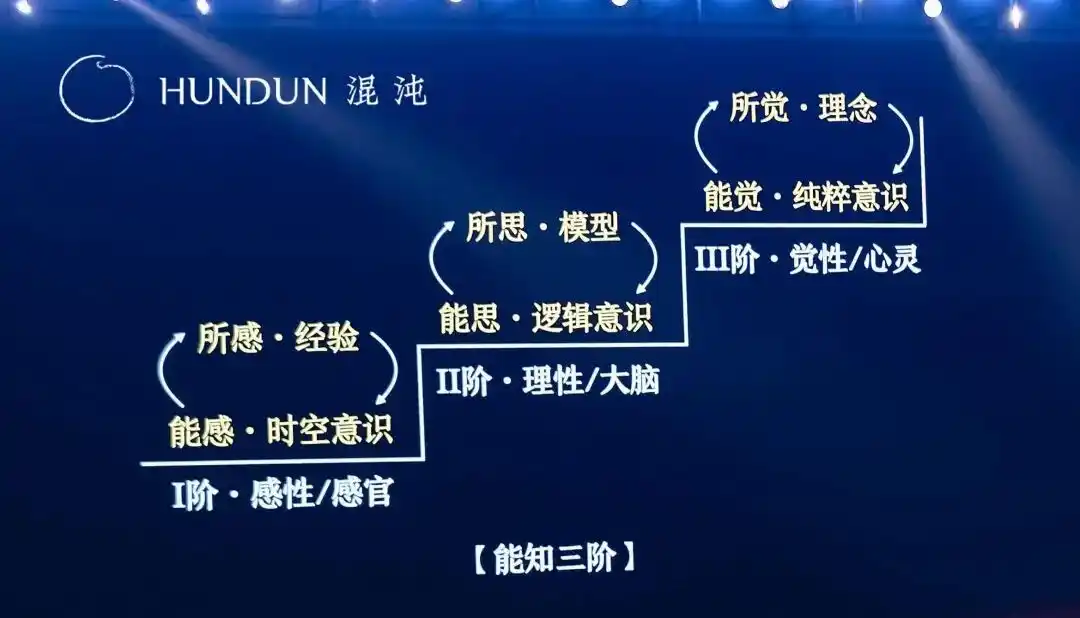
China's PC internet generation of entrepreneurs were heroes, but essentially most of them operated at the first-order capacity to know.

Because the keyword for this generation was "Copy to China," replicating successful experiences from one time and space to another. This is inductive reasoning, innovation living in experience—action innovation, execution innovation, not essential model innovation.

In contrast, the generation of entrepreneurs born in the 1980s, especially Huang Zheng and Zhang Yiming. You'll find this is a generation that completely believes in logic. Their success rests on the second-order capacity to know.

This can also explain why ByteDance and Pinduoduo could internationalize, achieving genuine overseas success. Because the mainstream of today's world is industrial civilization, at the second order. And ByteDance stands at the second order, so it can look the world in the eye and flow over.

Of course, you might say entrepreneurial success has many factors—resources, technology, opportunity, investment... But if we look for the core "one" factor, it's capacity to know. Ten years ago, Zhang Yiming made a leap in capacity to know, triumphing over the PC internet.

So Zhang Yiming's power is not just diligence, focus, correct strategy, nor merely seizing the mobile internet dividend. What he truly represents is the victory of second-order capacity to know: viewing the world with models, compressing information with logic, using modeling ability to form a dimensional reduction attack on experience-based entrepreneurs.

Zhang Yiming once said: "Anything that is logically possible will eventually happen." I think this aptly illustrates that he belongs to the second-order capacity to know.

But, what one succeeds by, one is also constrained by. ByteDance's boundary is rationality. If your capacity to know is built on rationality, you might not ascend further. For ByteDance as a whole, the concrete word embodying rationality is algorithm.

Zhang Yiming's belief in algorithms reached the point of training himself like an algorithm. But do you think this algorithm is pure and sincere?

So back to the initial question, will there be a new "Zhang Yiming" in the AI era? I think there definitely will be. Each era's discontinuity is not a single entrepreneur defeating a giant, but new entrepreneurs gathering within a new era's value network. The new value network grows, becoming the new giant.

DeepSeek's Liang Wenfeng: The Absolute Confidence of an Ideal-Driven Entrepreneur

If our footing remains on thinking capacity, on logic, we cannot surpass AI, nor can we surpass Zhang Yiming. Because AI lives directly in the rational world of logic, almost infinitely close to the peak of rationality.

Therefore, the very few who wish to become the new era's "Zhang Yiming" must leap, just as Zhang Yiming and Ma Yun did a decade ago, to the third-order capacity to know. Your way of viewing the world is no longer rational models, but a deep-seated idea within the heart. It is neither inductive nor deductive reasoning; it might be flow state, inspiration, the feeling of resonating with the great Way.

If I must give an example, I think it's DeepSeek's Liang Wenfeng. You'll find he is different from Zhang Yiming. I'm not saying he will definitely be the new era's "Zhang Yiming," but I think he carries some shadow, representing a certain zeitgeist we're discussing.

Liang Wenfeng said in a previous interview: "In the past 30 years, we've been more focused on making money than on innovation. But innovation isn't solely driven by business; it requires curiosity and creative ambition. We've been constrained by past habits, but this is just a phase." You can sense a kind of noble spirit, expressed in a humble yet powerful way. I believe he's not speaking just for himself, but representing a tide of the era. We truly need to sense a certain change.

He also said something I think is remarkable. "All established patterns are products of the previous generation; they may not hold in the future. Using the commercial logic of the internet era to discuss AI's future profit models is likely like marking the boat to find the sword."

Today we think OpenAI's ChatGPT is correct, but it might just be AI-enhanced innovation from the internet era. Perhaps DeepSeek's technical large model is a native innovation! How likely is that possibility? I think slightly more than zero, and that's the difference between innovation and entrepreneurship.

Entrepreneurship requires a high probability of success before you act, but innovation is doing something originally unlikely to succeed. I think this is the underlying color of Hundun; we are not cheering for entrepreneurial success, but for the courage to innovate.

Today's native AI-era entrepreneurs, if they can undergo a new leap in consciousness, might become the new figure of the AI era. This is also why the word "consciousness" isn't just philosophy; it has very concrete entrepreneurial significance. Musk and Jobs are references on this path.

Musk's business success is a byproduct of his pursuit of ideals. Many of SpaceX's decisions aren't based on commerce, but are inspired by the scene of "one day reaching Mars" to motivate all current decisions.

Jobs set enlightenment as his Y-axis, with tools, especially tools of thought, as the X-axis to achieve that enlightenment. He said he spent his life seeking self-enlightenment and hoped to enlighten more people through tools.

But this path is extremely difficult. I call it the path of ideals. It is glorious, but indeed it is a path only a few can walk, standing precisely on the point of the era's tide.

But what about the majority?

Crafting Your Work: The Ordinary Person's Path is to Do the Work at Hand Wholeheartedly

Not everyone has the chance to stand on the peak of the era's tide; many don't have such grand ideals or great vows. Now I want to talk about a second path, which is also the path I've chosen—the path of Quality, or the path of the Work.

I believe many students here feel this way: wanting to compete fiercely but unable to; wanting to give up but unable to rest easy, unwilling to settle. Does life lose meaning if you can't enter the tide? Many don't hold grand ideals; are personal small sentiments, small tastes, meaningless?

Not everyone can become a "Zhang Yiming." However, I can become a better version of myself.

I suspect that raising the frequency of consciousness doesn't necessarily require great endeavors; even in small matters, doing them with full attention can achieve incremental evolution of consciousness.

We often reify the things we do—for money, for a high salary. When you reify what you do, you are actually reifying your own heart. This reflects back; how you treat your work is how the world treats you. When you unify with what you do, the doing itself becomes the purpose; it is not a result or a means. At that point, what you do becomes a Work.

So the second path is not about comparison, not about competition, not about proving oneself, but turning inward. From the perspective of first principles, from the foundational color of consciousness, create a beautiful Work that belongs to me, express my heart through a Work. When person and work are unified, it's less about me polishing the work and more about me polishing my own heart.

This path originates from "Zen and the Art of Motorcycle Maintenance," which mentions a word called "Quality." I'll share my favorite passage: "One must listen to the guidance of Quality, follow it quietly, single-mindedly, so that the work in hand becomes an art."

I suspect Quality is also a word about essence. While it doesn't possess the extremely high consciousness frequency of "Ideas," it refers to finding the feeling of quality in whatever you do. The work in your hands having Quality gives those who use it a different feeling. Those who feel it might find it good and continue to spread it to others. Quality, like frequency, can ripple outward. I feel this is how the world becomes beautiful.

This path is backed by the faint light of ordinary people. You do the work at hand well, do it with heart, that's all. This era's frequency holders aren't necessarily the wealthy or famous. No matter how small your task, if your frequency is high enough, it will ripple outward, becoming a frequency holder of this era. So when the world gets more competitive and faster, perhaps we can make the opposite choice: be a little slower, go a little deeper, turn a little more inward.

Frankly, entrepreneurship is already difficult today. When the era lacks a great tide, we return to ourselves. People don't serve tasks; tasks serve people. People are the subject. Whether big or small, tasks are techniques, tools, carriers—all to cultivate my heart. This is returning to first principles.

This article is from WeChat public account "Hundun University" (ID: hundun-university), author: Hundun Academy


Kripto yang Sedang Tren

Pertanyaan Terkait

QWhat is the fundamental shift in perspective proposed by the author regarding knowledge and power?

AThe author proposes a shift from 'cognition' (suo zhi, or acquired knowledge) to 'capability of knowing' (neng zhi, or the innate capacity to perceive and understand). The key argument is that knowledge itself is not power; the true power lies in the underlying ability and framework that allows one to acquire and process knowledge.

QAccording to the article, what was Zhang Yiming's key advantage over previous generations of entrepreneurs?

AZhang Yiming's key advantage was operating from a 'second-order neng zhi' (capability of knowing). Unlike the experience-based, 'copy to China' approach of the PC internet generation, he viewed the world through logical models, enabling a more abstract and fundamental understanding that allowed for modeling, predicting, and executing complex projects, giving him a dimensional advantage over experience-driven entrepreneurs.

QWhy does the author suggest that some entrepreneurs must leap to a 'third-order neng zhi' in the AI era?

AThe author argues that because AI excels in and even dominates the realm of logic and rational modeling (second-order neng zhi), human entrepreneurs seeking to lead in the AI era must transcend it. They must leap to a 'third-order neng zhi' based on ideas, insights, vision, and a deeper connection to fundamental principles, which is less about pure logic and more about inspiration, consciousness, and alignment with a greater purpose.

QWhat path does the article suggest for most people who are not at the forefront of major innovation?

AThe article suggests the path of 'Quality' or 'Work as Art.' This involves turning inward and focusing on infusing the tasks at hand—no matter how small—with care, integrity, and a sense of craftsmanship. It emphasizes creating 'works' that are expressions of one's heart, aiming for personal growth and consciousness elevation through the dedication to quality in daily endeavors, rather than competition or proving oneself on a grand scale.

QWhat is the ultimate message of the article regarding how individuals should respond to a rapidly accelerating and competitive world?

AThe ultimate message is to adopt a counter-intuitive approach: to go slower, deeper, and more inward. Instead of succumbing to external pressure ('juan'), individuals should focus on refining their inner being through their work, treating tasks as vehicles for personal cultivation. The goal is to become a 'frequency holder' by elevating one's own consciousness and the quality of one's actions, thereby contributing to a better world in a more sustainable and meaningful way.

Bacaan Terkait

Setelah Tiga Kuartal Berturut-Turut Turun, Bisakah Pasar Kripto Menyambut Jendela Stabilitas di Kuartal Ketiga?

Pasar kripto mengalami kuartal terburuk sejak 2022, dengan kapitalisasi pasar turun 12.6% menjadi $2.1 triliun, didorong oleh keluarnya modal dan penurunan volume perdagangan. Bitcoin dan Ethereum masing-masing jatuh 14.2% dan 25.4% di kuartal kedua. Aliran keluar bersih dari ETF Bitcoin AS mencapai $4.67 miliar, menandakan tekanan jual yang berkelanjutan. Faktor utama meliputi terputusnya hubungan dengan saham AS, kebijakan moneter Federal Reserve yang ketat, dan pelepasan aset oleh perusahaan seperti Strategy. Proses legislasi UU CLARITY yang akan memberikan kejelasan regulasi terhambat, meningkatkan premi risiko di sektor ini. Namun, ada tanda-tanda potensi stabilisasi. Aliran keluar ETF yang besar secara historis sering terjadi di akhir fase penurunan, dan para pemegang Bitcoin jangka panjang mulai menambah kepemilikan lagi. Sementara sebagian besar sektor menyusut, pasar prediksi dan aset koleksi yang ditokenisasi mencatat pertumbuhan signifikan. Pandangan untuk kuartal ketiga sangat bergantung pada pertemuan Fed akhir Juli. Sinyal kebijakan yang lunak dapat mendukung pemulihan Bitcoin, sementara sikap yang hawkish dapat memicu konsolidasi lebih lanjut. Meskipun tantangan regulasi tetap ada, indikator teknis seperti harga Bitcoin yang mendekati rata-rata bergerak 200-mingguannya menunjukkan dasar jangka panjang belum rusak. Logika pasar telah bergeser dari mengandalkan narasi ke faktor fundamental seperti kebijakan dan ekspektasi suku bunga.

marsbit12j yang lalu

Setelah Tiga Kuartal Berturut-Turut Turun, Bisakah Pasar Kripto Menyambut Jendela Stabilitas di Kuartal Ketiga?

marsbit12j yang lalu

The SpaceX Trade, Terbuka: SPCXON Mulai Diperdagangkan di WEEX

SpaceX meluncurkan IPO terbesar dalam sejarah pada Juni 2026, namun akses bagi banyak pedagang terhambat oleh batasan regional dan prosedur broker. WEEX kini menghadirkan SPCXON/USDT di pasar spotnya, sebuah instrumen tokenisasi yang memungkinkan paparan terhadap pergerakan harga SpaceX melalui akun kripto yang diselesaikan dengan USDT, tanpa memerlukan broker AS atau pembiayaan bank. SPCXON adalah produk tokenisasi yang mencerminkan ekonomi kepemilikan SpaceX bagi pedagang yang memenuhi syarat di luar AS, dengan dividen diinvestasikan kembali. Aset ini diperdagangkan di WEEX sebagai pasangan spot dengan USDT, tersedia selama jam pasar, memberikan akses mudah bagi trader kripto. Kasus investasi untuk SpaceX didasarkan pada pertumbuhan pendapatan Starlink dan pencapaian Starship, meskipun valuasinya yang tinggi (sekitar 90-110 kali pendapatan) telah memperhitungkan eksekusi sempurna selama bertahun-tahun. Faktor seperti jumlah saham publik yang terbatas dan masa buka kunci (unlock) insider pertama menjadi pertimbangan penting. Penting untuk diingat bahwa SPCXON memberikan paparan, bukan kepemilikan langsung atas saham atau hak suara. Harganya dapat diperdagangkan pada premium atau diskon terhadap nilai aset bersih. WEEX menawarkan akses ke berbagai aset TradFi yang ditokenisasi seperti ini dalam satu akun terpadu, bersama dengan pasar futures dan kampanye perdagangan dengan pool hadiah.

TheNewsCrypto12j yang lalu

The SpaceX Trade, Terbuka: SPCXON Mulai Diperdagangkan di WEEX

TheNewsCrypto12j yang lalu

Momen Perdagangan BIT: BTC Masih Tertekan oleh EMA 200 Mingguan, Setelah Ditolak Mungkin Kembali Turun, Saham Penyimpanan dan Semikonduktor yang Melonjak Malam Kemudian Mulai Anjlok di Pasar Malam

**PASAR KRIPTO & SAHAM: BTC Hadapi Resistensi, Saham Semikonduktor Turun di Perdagangan Malam** Pasar kripto melanjutkan pemulihan, dengan harga Bitcoin bertahan di sekitar $66,000 setelah rebound lebih dari 15% dari titik terendah Juli. Namun, BTC menghadapi **tembok resistensi kuat di dekat $68,000**, yang bertepatan dengan biaya rata-rata investor selama lima bulan terakhir dan titik gagalnya rebound pertengahan Juni. Secara teknis, perhatian tertuju pada **200 EMA mingguan (~$68,328) sebagai level kunci**. Jika BTC ditolak di level ini, potensi penurunan menuju support $63,000 terbuka. Analis menyoroti volume rendah dan penurunan open interest futures di CME, menandakan rebound ini lebih dipicu likuiditas rendah musim panas daripada awal bull run penuh. Di pasar saham AS, **indeks futures utama turang** setelah sesi kemarin yang kuat. Sektor semikonduktor dan penyimpanan (storage), yang melonjak pada hari Selasa (contoh: Micron +12%), **mengalami koreksi di perdagangan malam (night trading)**. ETF semikonduktor turun 2,22% dan saham Micron turun 2,29%. Meski begitu, ada sorotan positif seperti **Super Micro Computer (SMCI)** yang naik lebih dari 15% setelah melaporkan pandangan pendapatan yang kuat dan pesanan baru yang sangat besar, mengonfirmasi permintaan server AI tetap solid. Kekhawatiran makro muncul dari **kenaikan harga minyak mentah (di atas $91)** akibat ketegangan geopolitik dan **lonjakan imbal hasil (yield) obligasi pemerintah AS**, dengan imbal hasil 10-tahun mencapai sekitar 4,64%. Faktor-faktor ini dapat menambah tekanan inflasi dan membatasi ruang gerak pasar saham. Saham terkait kripto seperti Coinbase dan Robinhood naik kuat didorong oleh perkembangan regulasi yang lebih jelas di AS. Di Asia, **Korea Selatan** dan **Jepang** menunjukkan kinerja beragam. Indeks KOSPI Korea naik didukung pemulihan saham semikonduktor, sementara pasar Jepang melemah dengan **Yen terus melemah ke level terendah sejak 1986**, meningkatkan kekhawatiran akan intervensi bank sentral. **Yang Perlu Diperhatikan Selanjutnya:** * **22 Juli:** Acara AI AMD, rilis laporan keuangan dari Google (Alphabet), Tesla, IBM. * **23 Juli:** Keputusan suku bunga Bank Sentral Eropa (ECB), data klaim pengangguran AS, laporan keuangan Intel. * Perkembangan lebih lanjut dari **harga minyak, imbal hasil obligasi, dan dinamika Yen Jepang** akan menjadi penentu sentimen pasar risiko secara keseluruhan.

marsbit12j yang lalu

Momen Perdagangan BIT: BTC Masih Tertekan oleh EMA 200 Mingguan, Setelah Ditolak Mungkin Kembali Turun, Saham Penyimpanan dan Semikonduktor yang Melonjak Malam Kemudian Mulai Anjlok di Pasar Malam

marsbit12j yang lalu

Mantan Ketua CFTC dan Presiden Circle, Tarbert: Satu Pihak Menasihati Anda untuk Berpikir Jangka Panjang, di Sisi Lain Menguangkan $30 Juta Sendiri

Penulis: Zen, PANews Heath Tarbert, mantan Ketua CFTC dan Presiden Circle, baru-baru ini menyerukan kepada investor untuk mengadopsi pandangan jangka panjang terhadap saham Circle, meskipun harganya telah turun 70% dari puncaknya. Namun, ia sendiri secara konsisten menjual saham CRCL sejak perusahaan go public, menguangkan sekitar $30 juta tanpa pernah membeli saham tambahan di pasar terbuka. Tarbert, yang bergabung dengan Circle pada Juli 2023 dan menjadi Presiden pada awal 2025, dikenal sebagai pendukung kuat narasi "jangka panjang" perusahaan. Namun, sehari sebelum IPO Circle, ia menetapkan rencana perdagangan 10b5-1 untuk menjual hingga 353.290 saham dalam setahun. Dalam 13 bulan setelah IPO, ia menjual lebih dari 360.000 saham, termasuk penjualan tunggal senilai $11,5 juta pada Maret 2026. Ia bahkan menetapkan rencana 10b5-1 kedua untuk menjual hingga 160.000 saham lagi pada akhir tahun 2026. Langkah Tarbert ini menuai kecaman karena dianggap tidak konsisten dengan pesan "jangka panjang" yang ia sampaikan kepada publik. Perjalanan kariernya sering dikaitkan dengan "revolving door" antara regulator dan dunia keuangan. Setelah mengundurkan diri sebagai Ketua CFTC pada Maret 2021, ia bergabung dengan Citadel Securities hanya 27 hari kemudian sebagai Kepala Penasihat Hukum, tepat saat perusahaan itu menghadapi pengawasan ketat terkait peristiwa GameStop. Di Citadel, ia juga mendukung undang-undang yang memperluas wewenang CFTC atas pasar crypto, sementara Citadel diketahui berencana berekspansi ke aset kripto. Tarbert kemudian pindah ke Circle pada 2023, membantu perusahaan mengatasi tantangan regulasi dan akhirnya go public melalui IPO langsung. Meskipun sangat berharga bagi perusahaan, tindakannya menjual saham dalam jumlah besar sambil mendorong investor untuk bertahan menimbulkan pertanyaan tentang komitmennya yang sebenarnya terhadap masa depan jangka panjang Circle.

marsbit13j yang lalu

Mantan Ketua CFTC dan Presiden Circle, Tarbert: Satu Pihak Menasihati Anda untuk Berpikir Jangka Panjang, di Sisi Lain Menguangkan $30 Juta Sendiri

marsbit13j yang lalu

Gate Research Institute: Produk Keuangan Kripto Menggulirkan Gelombang "Wall Street-ization", Kompetisi atau Integrasi?

**Ringkasan: Gelombang "Wall Street-ization" Produk Keuangan Kripto: Kompetisi atau Integrasi?** Artikel ini membahas fenomena konvergensi antara keuangan tradisional (TradFi) dan keuangan kripto (Crypto). Meskipun Bitcoin awalnya dirancang sebagai sistem peer-to-peer yang terdesentralisasi dan bebas dari perantara seperti bank, pasar kripto kini semakin diintegrasikan ke dalam infrastruktur keuangan tradisional. **Tren "Wall Street-ization":** Dimulai dengan disetujuinya ETF spot Bitcoin pada 2024, aset kripto kini dikemas menjadi produk seperti ETF (oleh BlackRock, Fidelity, dll.), futures, dan sekuritisasi aset riil (RWA) seperti obligasi pemerintah yang ditokenisasi. Ini memberikan akses yang mudah dan teregulasi bagi investor institusional, tetapi juga berarti kekuasaan atas penerbitan, penentuan harga, kustodian, dan distribusi aset kripto semakin bergeser ke lembaga keuangan besar. **Dua Jalur Konvergensi (1+1>2):** Artikel ini menyoroti dua arah integrasi: 1. **Dari CEX ke TradFi:** Dilambangkan oleh **Gate.io**, yang berkembang dari bursa kripto menjadi platform multi-aset. Gate kini menawarkan perdagangan saham nyata (AS, Hong Kong, Korea) menggunakan USDT, menyediakan akses tanpa batas waktu ke pasar tradisional. 2. **Dari TradFi ke Crypto:** Dilambangkan oleh **Robinhood**, platform broker tradisional yang memperluas layanannya ke aset kripto (termasuk melalui akuisisi Bitstamp) dan mengembangkan produk seperti token saham di blockchain. **Tujuan Bersama: Akun Keuangan "Super" Terpadu:** Kedua jalur ini bertujuan menciptakan **akun keuangan generasi berikutnya yang terpadu**. Pengguna di masa depan mungkin dapat memperdagangkan Bitcoin, saham Apple, ETF, emas, dan obligasi pemerintah yang ditokenisasi dalam satu antarmuka yang sama, menggunakan stablecoin sebagai lapisan dana. **RWA dan Obligasi Pemerintah di On-Chain sebagai Lapisan Tengah:** Tokenisasi aset dunia nyata, terutama obligasi pemerintah AS, menyediakan aset berpenghasilan rendah risiko di ekosistem on-chain. Pasar ini tumbuh pesat (naik 40% pada paruh pertama 2026) meskipun pasar kripto turun, menunjukkan permintaan nyata. **Kesimpulan:** "Wall Street-ization" bukanlah pengambilalihan sepihak, melainkan **transformasi timbal balik**. TradFi dan Crypto saling melengkapi: Crypto mendapatkan akses ke likuiditas, kepatuhan, dan jaringan distribusi yang luas, sementara TradFi mengadopsi efisiensi, kecepatan, dan pasar 24/7 dari Crypto. Hasil akhirnya adalah pembentukan **pasar modal terpadu yang lebih efisien dan global**, di mana batas antara aset tradisional dan kripto semakin kabur.

marsbit13j yang lalu

Gate Research Institute: Produk Keuangan Kripto Menggulirkan Gelombang "Wall Street-ization", Kompetisi atau Integrasi?

marsbit13j yang lalu

Trading

Spot

Artikel Populer

Cara Membeli CAP

Selamat datang di HTX.com! Kami telah membuat pembelian Cap (CAP) menjadi mudah dan nyaman. Ikuti panduan langkah demi langkah kami untuk memulai perjalanan kripto Anda.Langkah 1: Buat Akun HTX AndaGunakan alamat email atau nomor ponsel Anda untuk mendaftar akun gratis di HTX. Rasakan perjalanan pendaftaran yang mudah dan buka semua fitur.Dapatkan Akun SayaLangkah 2: Buka Beli Kripto, lalu Pilih Metode Pembayaran AndaKartu Kredit/Debit: Gunakan Visa atau Mastercard Anda untuk membeli Cap (CAP) secara instan.Saldo: Gunakan dana dari saldo akun HTX Anda untuk melakukan trading dengan lancar.Pihak Ketiga: Kami telah menambahkan metode pembayaran populer seperti Google Pay dan Apple Pay untuk meningkatkan kenyamanan.P2P: Lakukan trading langsung dengan pengguna lain di HTX.Over-the-Counter (OTC): Kami menawarkan layanan yang dibuat khusus dan kurs yang kompetitif bagi para trader.Langkah 3: Simpan Cap (CAP) AndaSetelah melakukan pembelian, simpan Cap (CAP) di akun HTX Anda. Selain itu, Anda dapat mengirimkannya ke tempat lain melalui transfer blockchain atau menggunakannya untuk memperdagangkan mata uang kripto lainnya.Langkah 4: Lakukan trading Cap (CAP)Lakukan trading Cap (CAP) dengan mudah di pasar spot HTX. Cukup akses akun Anda, pilih pasangan perdagangan, jalankan trading, lalu pantau secara real-time. Kami menawarkan pengalaman yang ramah pengguna baik untuk pemula maupun trader berpengalaman.

87 Total TayanganDipublikasikan pada 2026.06.26Diperbarui pada 2026.06.26

Cara Membeli CAP

Diskusi

Selamat datang di Komunitas HTX. Di sini, Anda bisa terus mendapatkan informasi terbaru tentang perkembangan platform terkini dan mendapatkan akses ke wawasan pasar profesional. Pendapat pengguna mengenai harga CAP (CAP) disajikan di bawah ini.

活动图片












