From Satoshi to Saylor: The Crypto Undercurrent in the Epstein Files

比推Dipublikasikan tanggal 2026-02-03Terakhir diperbarui pada 2026-02-03

Abstrak

Recent disclosures from the "Epstein Files" reveal significant, previously unknown connections between the late financier Jeffrey Epstein and the cryptocurrency industry. As early as 2011, Epstein was aware of Bitcoin, calling it a "brilliant idea" with "serious flaws." The documents show he was involved in discussions about Bitcoin's nature, invested in the seed round of infrastructure firm Blockstream, and received updates on market developments from figures like a16z's Steven Sinofsky. The files suggest Epstein may have met with "some Bitcoin creators," potentially including Satoshi Nakamoto, raising questions about Bitcoin's origins and the U.S. government's knowledge. He also proposed creating Sharia-compliant digital currencies to Middle Eastern contacts. Additionally, the documents include a harsh critique of MicroStrategy CEO Michael Saylor from 2010, describing him as a socially awkward "weirdo" at one of Epstein's parties. The revelations, which also involve investments in projects like Ripple and Stellar, hint at a deeper, hidden history of crypto's early days, with more information potentially yet to be disclosed.

Author: Cookie, Block Rhythm BlockBeats

Original Title: Claimed to Have Met Satoshi, Called Saylor a Freak: The Crypto Secrets in the Epstein Files


On January 30, the U.S. Department of Justice disclosed a large number of "Epstein Files" for the first time, immediately attracting widespread attention and discussion globally. While we were seeing whether Musk "went to the island," Bill Gates's extramarital affair, or the next Fed chairman nominee Kevin Warsh also appeared on Epstein's party invitation list, these newly disclosed files also dropped a series of bombshells about the cryptocurrency industry.

The history of the cryptocurrency industry may have finally revealed the tip of the iceberg and could be rewritten from now on.

Was Epstein a "Crypto OG"?

As early as 2011, Epstein had already taken notice of Bitcoin. That year, Bitcoin's total annual trading volume had not yet exceeded $100 million, and its price had surged past $30 only to plummet by 90%.

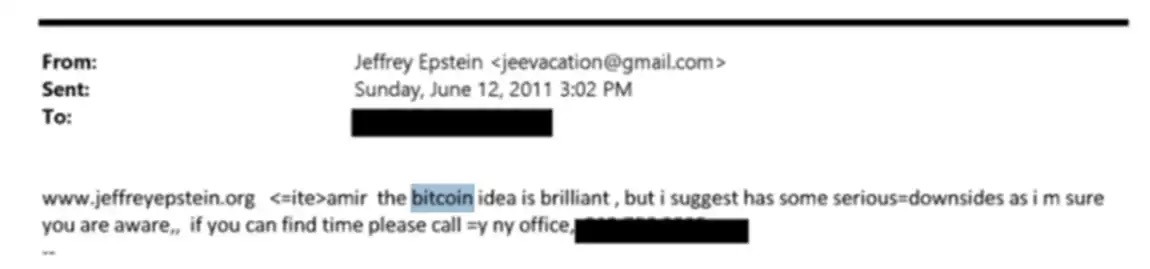
The email below is dated June 12, 2011, right around the peak of Bitcoin's price that year. Epstein stated in the email, "Bitcoin is a brilliant idea, but it has some serious drawbacks."
In 2013, the frequency of cryptocurrency mentions in Epstein's correspondence increased.

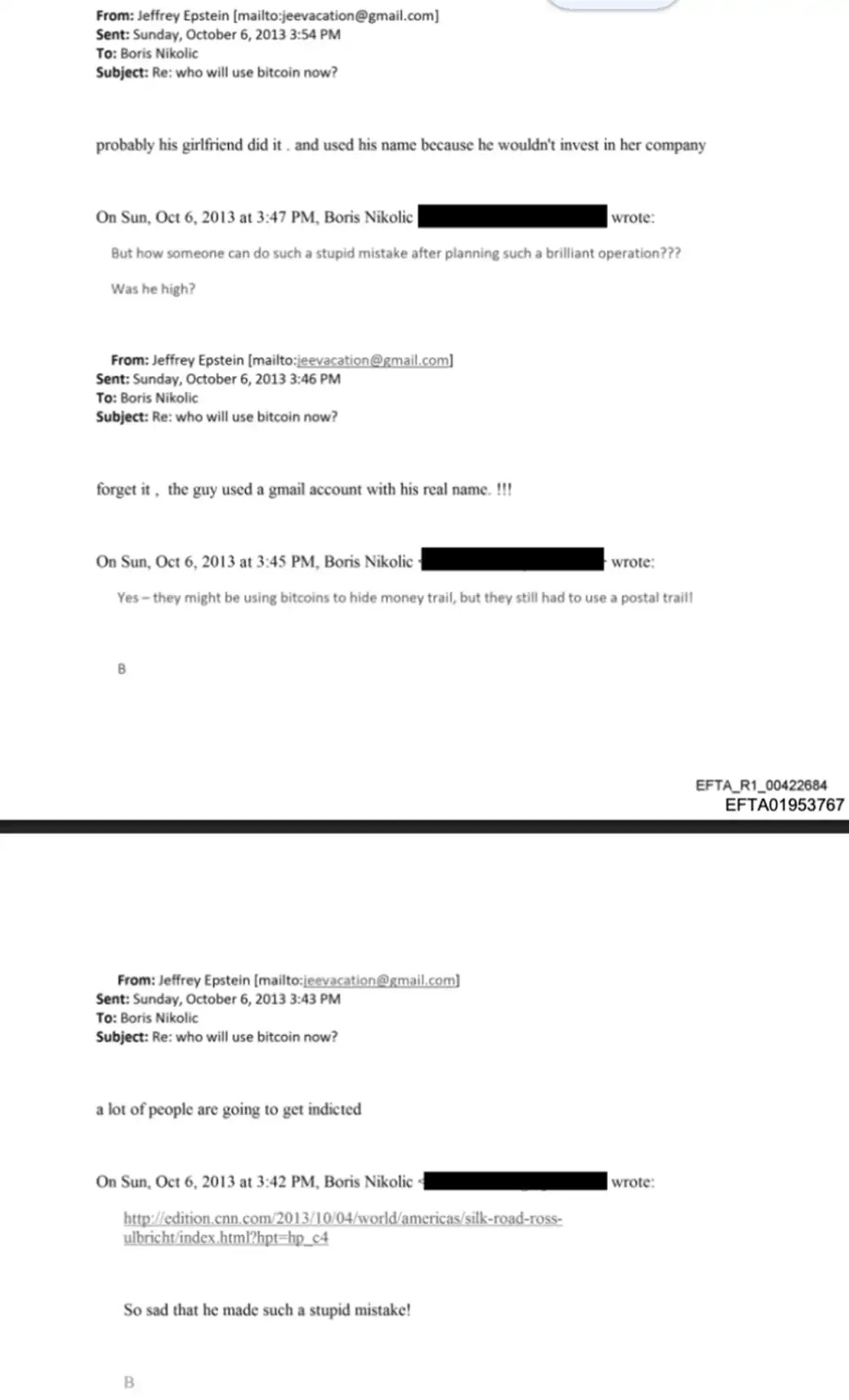
First, in an email exchange with Boris Nikolic (who once served as Bill Gates's chief technology advisor and was named in Epstein's will), the subject was "Who uses Bitcoin now?" They sarcastically discussed Ross Ulbricht, the founder of Silk Road who was arrested that year, saying that Ross's use of a Gmail account with his real name was a stupid mistake.
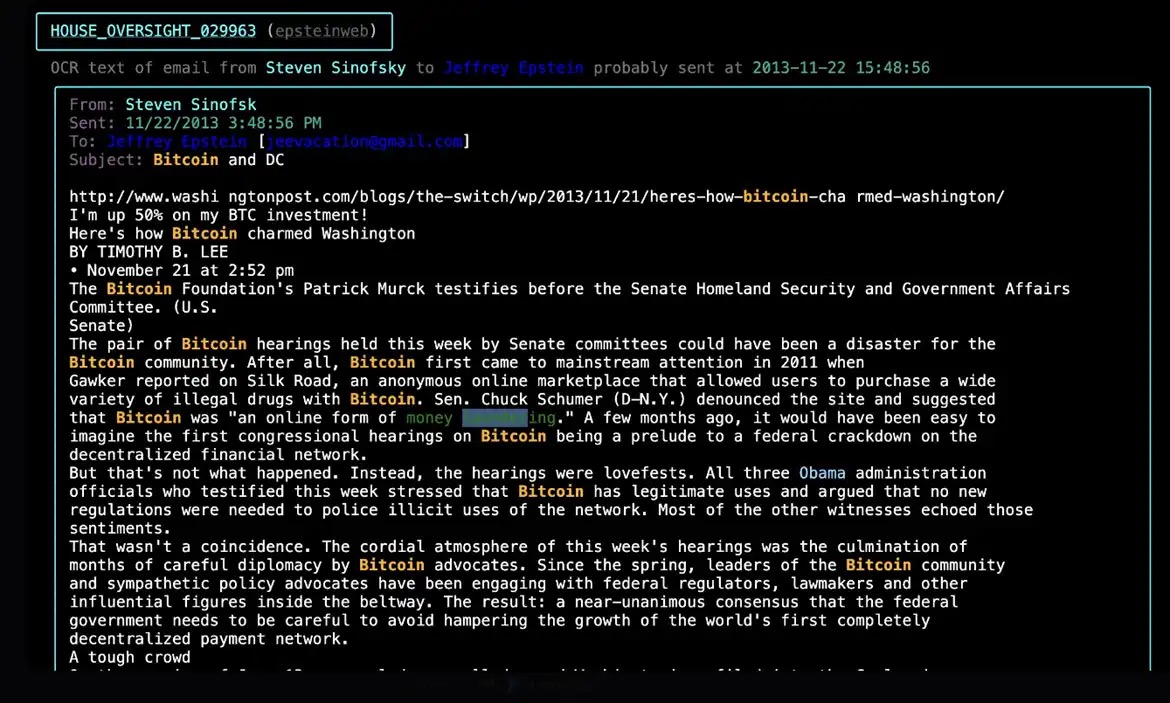
a16z board partner and former president of Microsoft's Windows division, Steven Sinofsky, emailed Epstein to say that his Bitcoin investment had increased by 50% and shared Timothy B. Lee's article "How Bitcoin Captivated Washington."
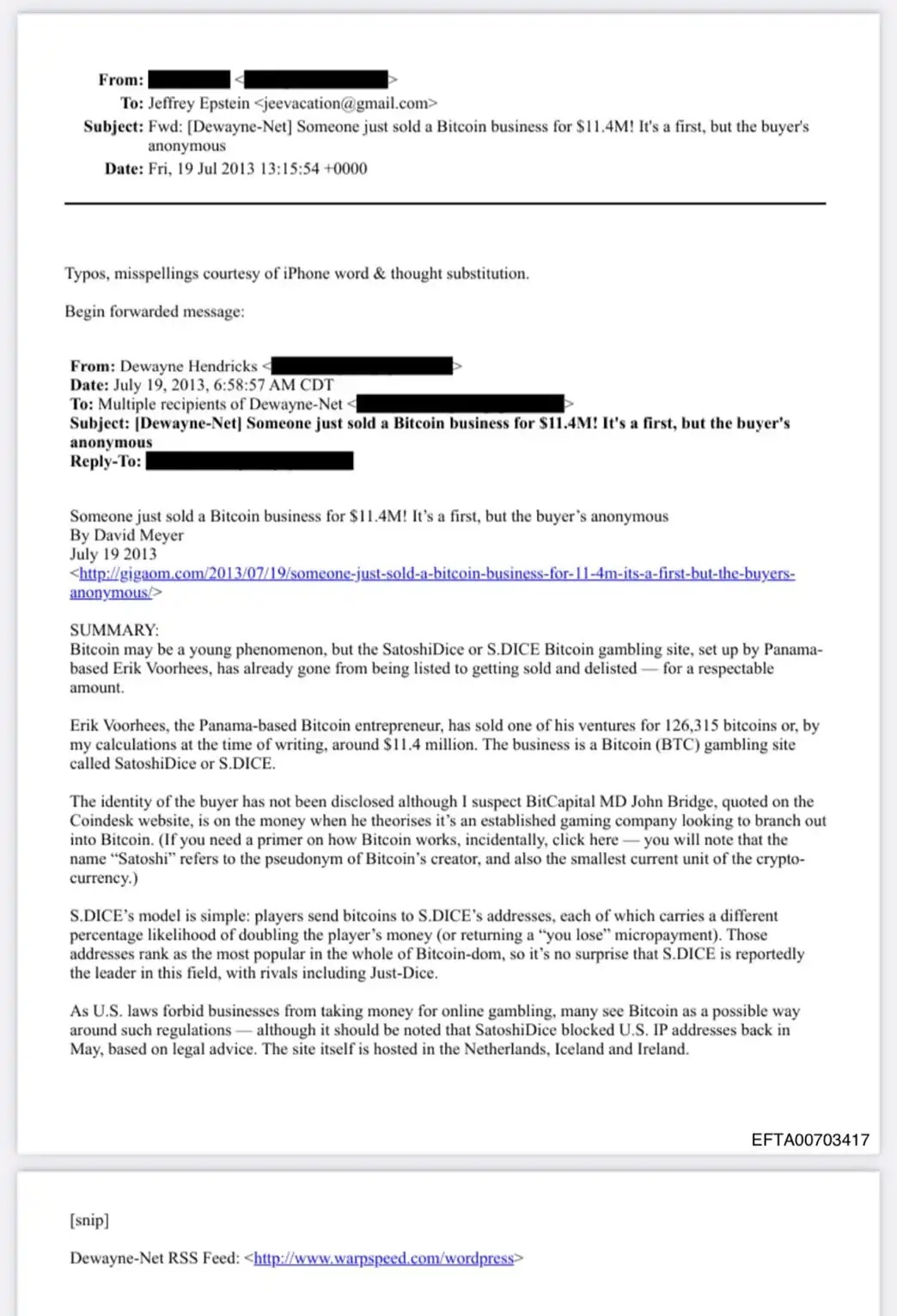
He also received news that the once-famous Bitcoin website Satoshi Dice had been sold for $11.4 million.
In 2014, Epstein engaged in an in-depth discussion with PayPal co-founder Peter Thiel about the nature of Bitcoin.
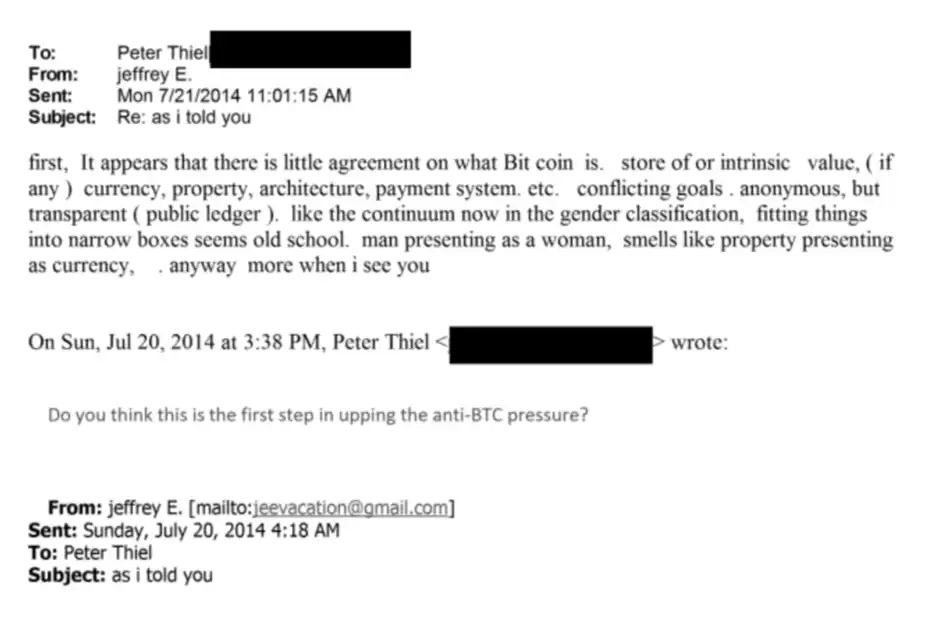
"There is no consensus on what Bitcoin is—a store of value, a currency, or property... It's like a man dressing as a woman, like property masquerading as currency."

This exchange shows that Epstein was very familiar with the ideological debates surrounding Bitcoin's nature in the early stages of the cryptocurrency market. He even compared it to gender identity.

Another email revealed that Epstein participated in the seed round funding of Bitcoin infrastructure company Blockstream. The round totaled $18 million, and Epstein's investment increased from $50,000 to $500,000.
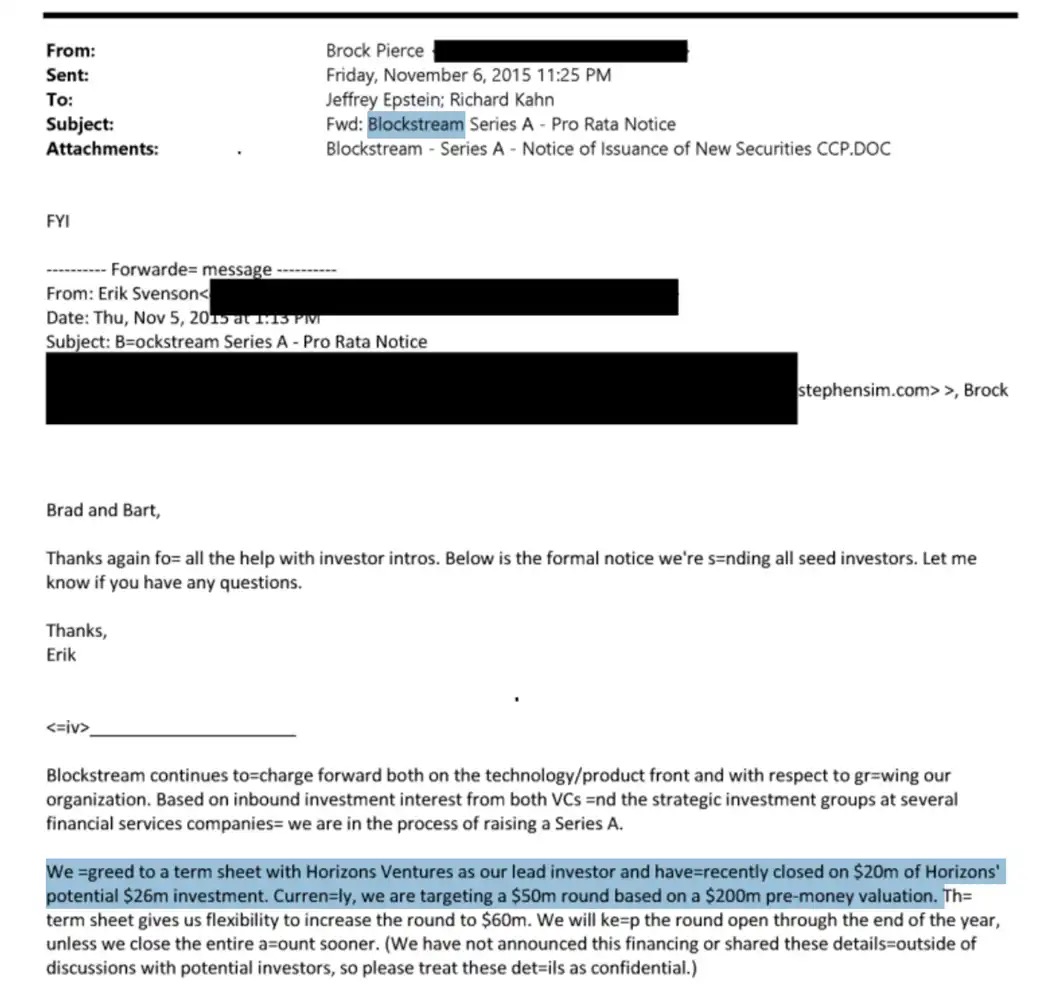
Blockstream CEO Adam Back recently issued a statement denying any direct or indirect financial connection between the company and Epstein or his estate. He explained that Epstein was a limited partner in a fund that once held a minority stake in Blockstream but had since fully divested.

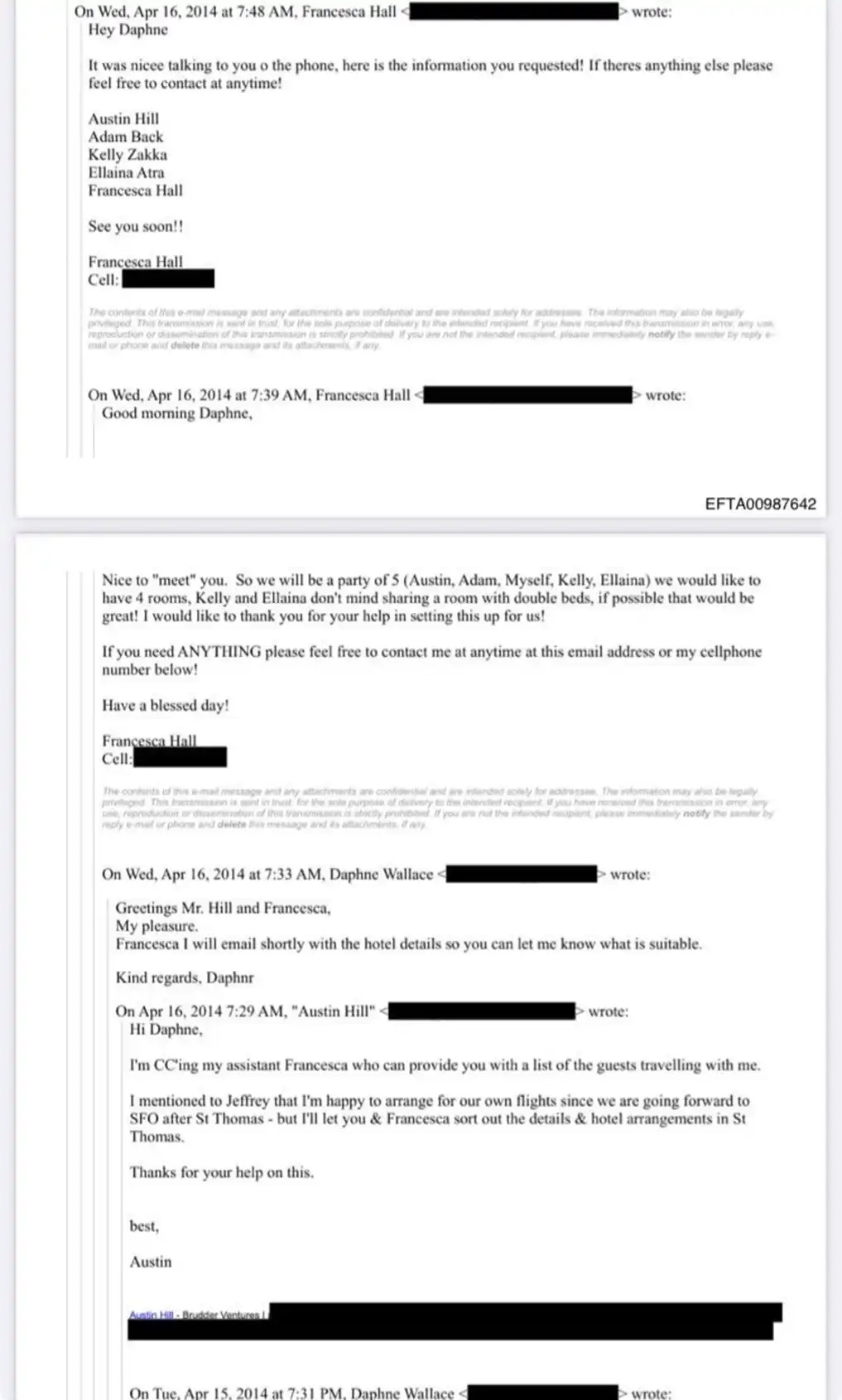
However, the names of Adam Back and Austin Hill (Blockstream co-founder) appeared in travel arrangement emails for St. Thomas Island (about 2 miles from "Epstein Island"):
Additionally, in 2014, Austin Hill emailed Epstein and Joi Ito (former director of the MIT Media Lab; Epstein invested in Blockstream through his fund). He stated that Ripple ($XRP) and Stellar (a new project by Ripple founder Jed McCaleb after leaving Ripple) negatively impacted the ecosystem Blockstream was building and harmed Blockstream because their investors were "backing two horses in the same race."
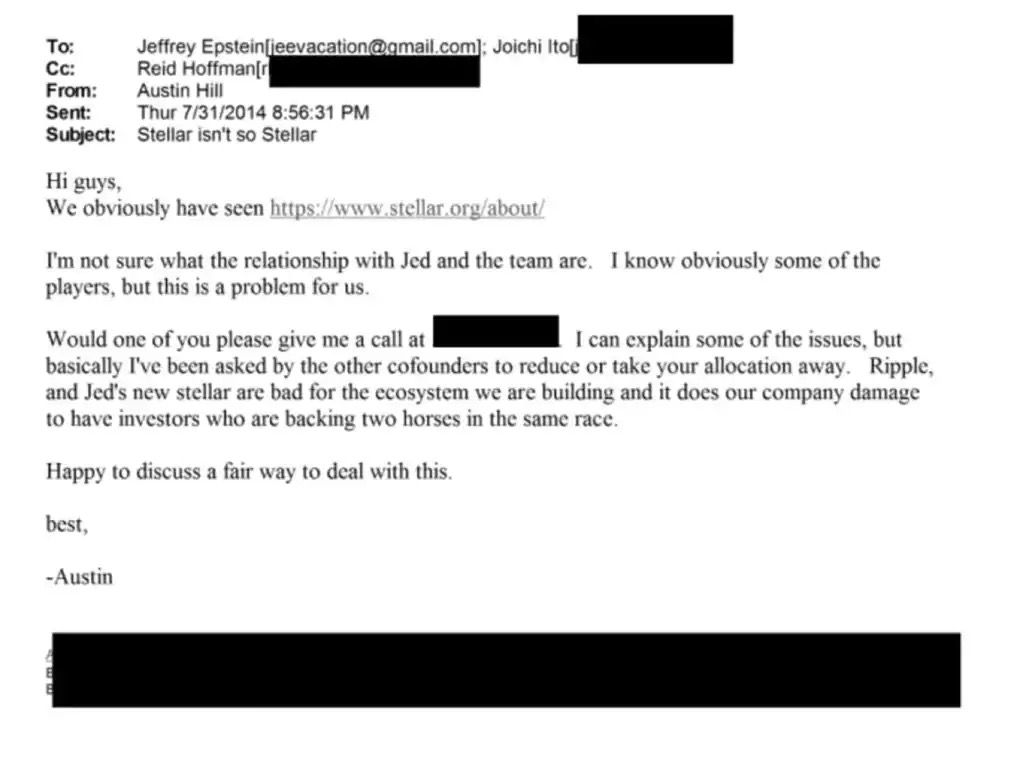
There is some divergence in the English-speaking community regarding the interpretation of this. Based on the context, I personally tend to adopt the interpretation that Epstein may have also invested in Ripple/Stellar at the time, which displeased Blockstream. This led Austin Hill to state in the email, "I was asked by other co-founders to reduce or even cancel your allocation."

Although Ripple and Stellar's growth was not affected, we do not know if more, unknown, excellent cryptocurrency projects have been stifled in their infancy through such behind-the-scenes pressure, from then until now.

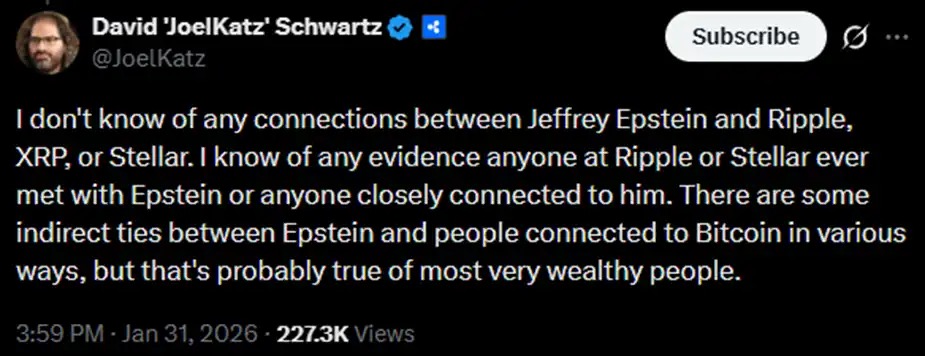
In response, former Ripple CTO David Schwartz tweeted, "I don't want to be a conspiracy theorist, but if this is just the tip of the iceberg, I wouldn't be surprised at all."
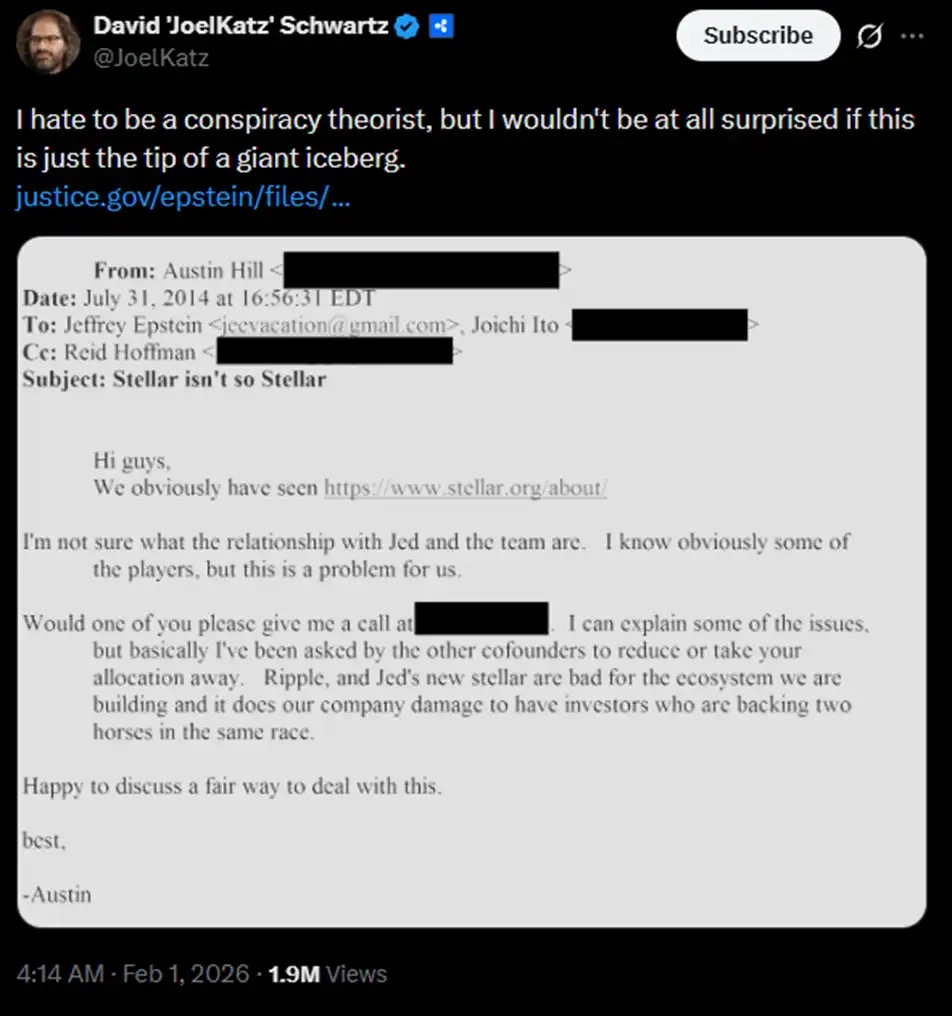
So, does this mean Epstein's evil also existed in the cryptocurrency field? David Schwartz also stated that for most ultra-wealthy individuals, having some connection to Bitcoin is probably very common.
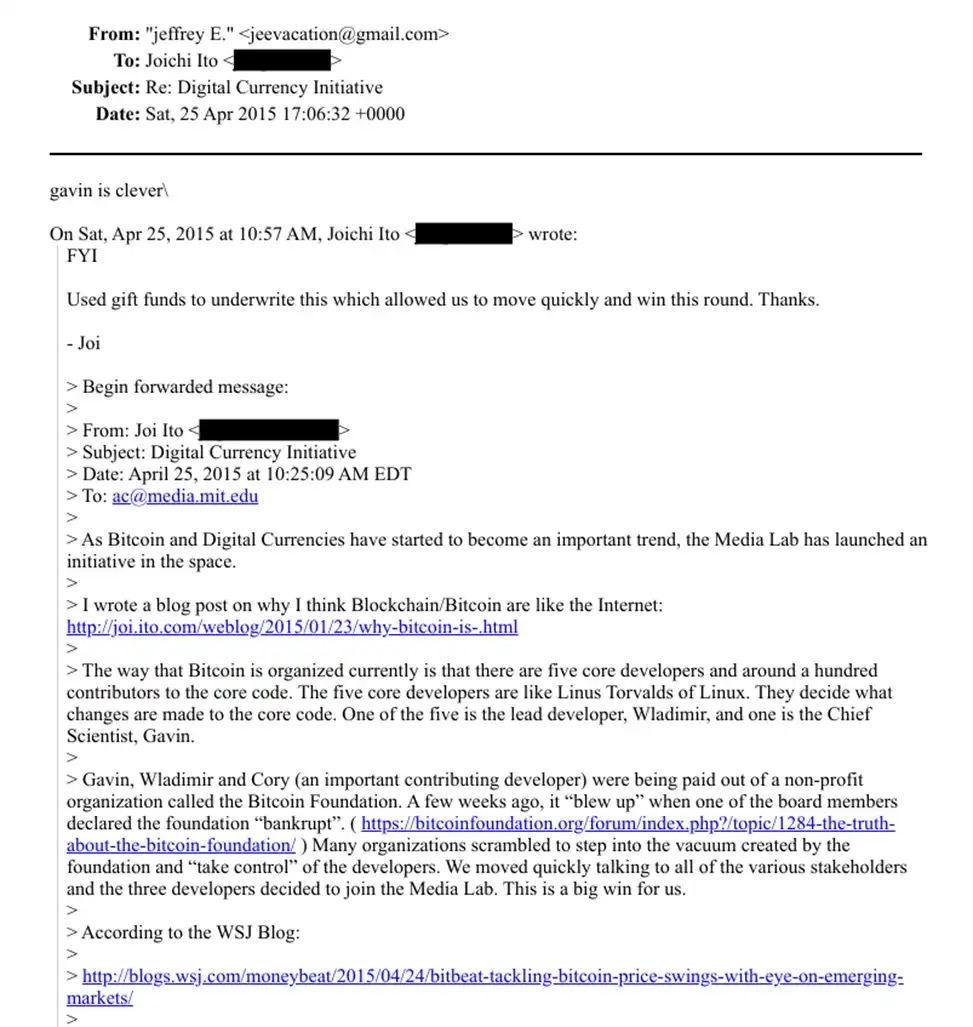
Furthermore, in 2014-2015, the collapse of the Bitcoin Foundation left Bitcoin Core developers without stable salaries. The MIT Media Lab's Digital Currency Initiative (DCI) began paying salaries to several Bitcoin Core developers. As a result, three Bitcoin Core developers—Gavin Andresen, Wladimir van der Laan, and Cory Fields—decided to join the MIT Media Lab.

At that time, the scandal had not yet broken, and the public was unaware of Epstein's anonymous donations to the MIT Media Lab. Joi Ito thanked Epstein via email, not only explaining Bitcoin's development operations to Epstein but also stating that thanks to this money, the lab was "able to move quickly and score a huge victory" because "many organizations wanted to take advantage of the situation to control Bitcoin's developers."

Epstein's reply was a simple compliment about Gavin Andresen: "Gavin is very smart."
Did Epstein Meet Satoshi?

In 2016, Epstein emailed Saudi Royal Court advisor Raafat AlSabbagh and current Abu Dhabi Department of Culture and Tourism advisor Aziza Al Ahmadi with two "radical ideas for creating two new currencies." One was a "Sharia" dollar. Just as all U.S. dollar bills have "In God We Trust," the Middle East could have its own "Sharia" dollar for internal use.
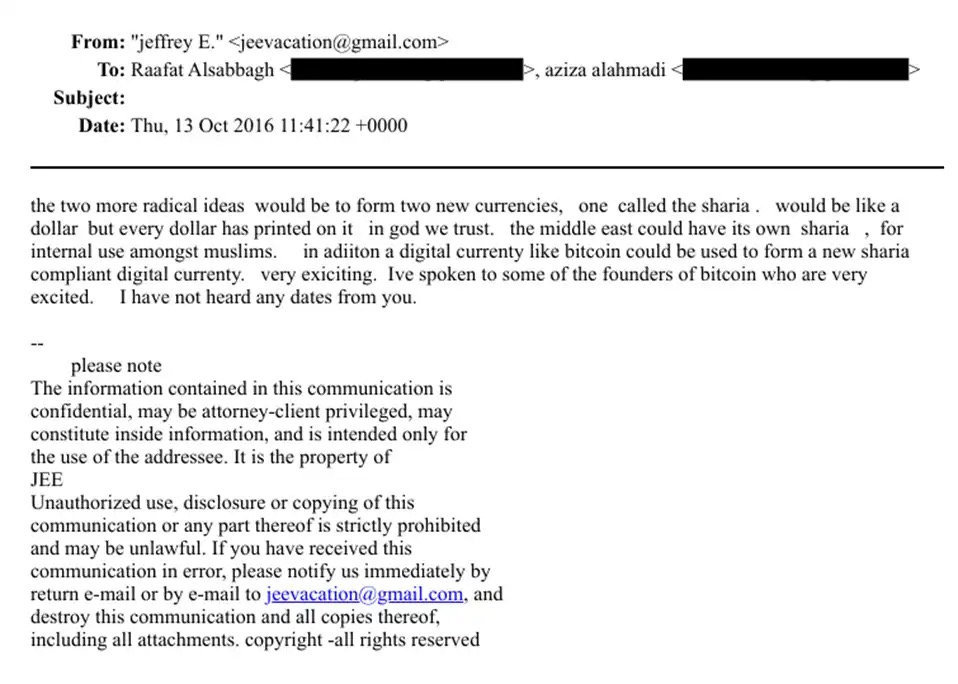
The other idea was to create a digital currency like Bitcoin to make money compliant with Sharia law. Then, after this idea, he casually and lightly dropped this piece of information:

"I have spoken with some of the Bitcoin creators, and they are very excited."

Epstein's purpose at the time might have been more about showing off his connections to enhance his reliable image, so he mentioned it offhand. But this could completely rewrite the history of Bitcoin and even the entire cryptocurrency industry. "Some Bitcoin creators"—does this mean Satoshi Nakamoto was not an individual but a team? If so, many mysteries surrounding Satoshi Nakamoto would have a reasonable explanation.

There are even more thought-provoking questions. Who was this team? What was their motivation for creating Bitcoin? If Epstein really met them, how did he initially find out who they were and establish a relationship with them? If even Epstein knew who created Bitcoin, wouldn't the U.S. government know? What motives does the U.S. government, which has remained silent on this issue, have?

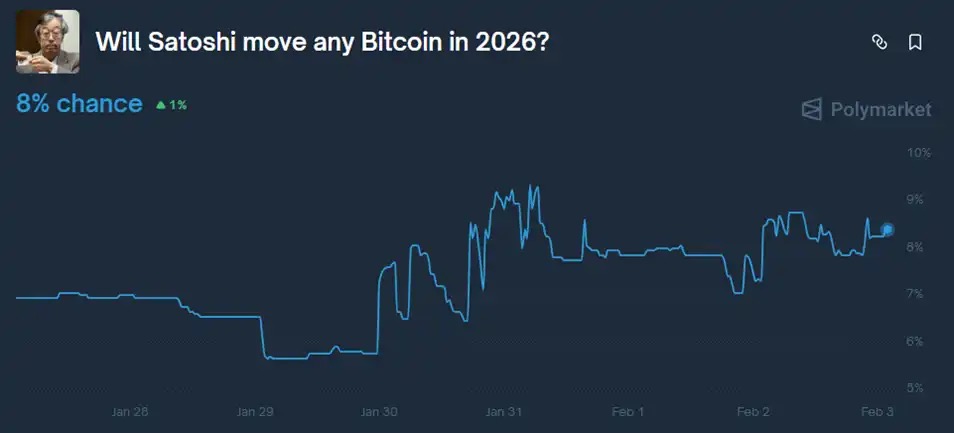
After this latest batch of Epstein files was disclosed, the possibility of "Satoshi Nakamoto's Bitcoin address taking action in 2026" on the prediction market Polymarket rose from about 6% to about 9.3% and is currently holding at 8%.
If Epstein did meet Satoshi Nakamoto, it seems Satoshi was not successful in evangelizing Bitcoin to him during their contact. In an email exchange on August 31, 2017, when asked "Is it worth buying a Bitcoin?" Epstein simply said "No." At that time, one Bitcoin was less than $5,000.

Whether Epstein actually met Satoshi Nakamoto is still unknown. However, we do know that he met the now most famous Bitcoin bull—MicroStrategy CEO Michael Saylor.

For years, Saylor's determination to only buy and never sell Bitcoin has been堪称变态 (abnormal/perverse, used here for emphasis on his extreme behavior). But in 2010, he was not yet famous for this identity.

That year, Comrade Saylor spent $25,000 to attend a party organized by Epstein's publicist Peggy Siegal and initially displayed his "autistic" traits at the event. This is how Peggy Siegal described Saylor:
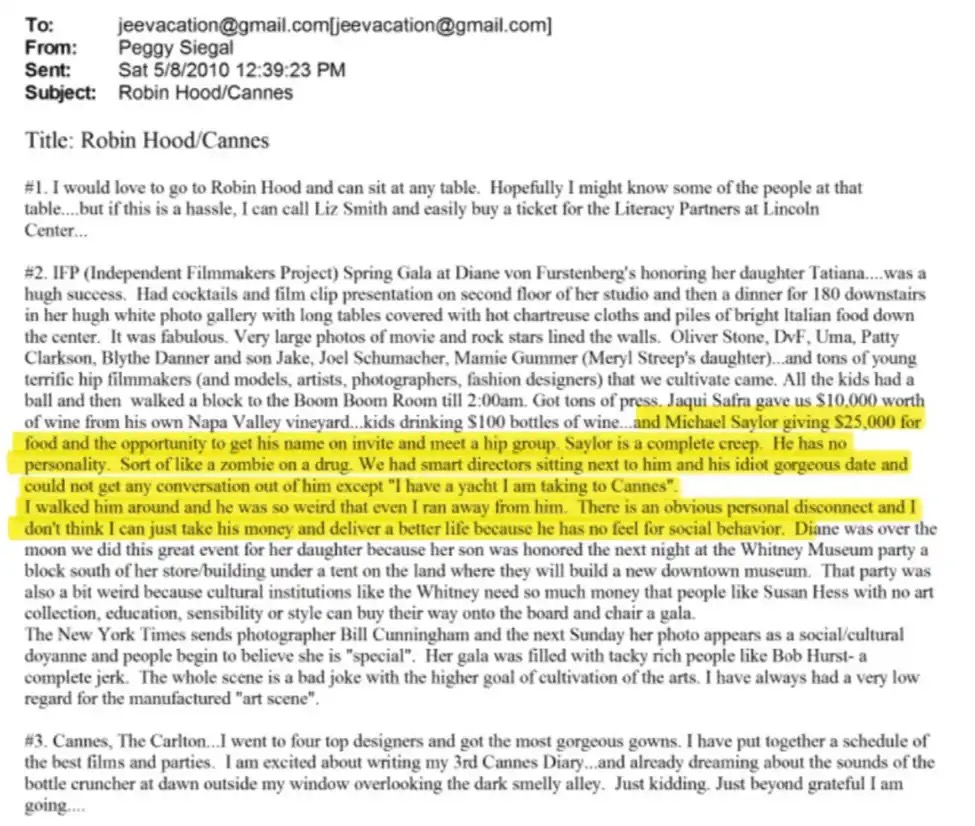
"This guy is a total freak, completely charmless, like a zombie on a drug overdose. We had smart directors at our party, sitting right next to him and his pretty, idiotic chick, and besides 'I have a yacht' and 'I'm going to Cannes,' there was no conversation. I took him around, but he was so weird I just had to run away. He has no personality and no social skills. I don't even know how to get money from him."

Being called变态 (freak/weirdo) by a变态 (freak/weirdo, referring to Epstein's associates) shows just how变态 Saylor) Saylor really is. Perhaps only a creation as great as Bitcoin could accommodate a变态 like Saylor and allow him to build a great career.

Conclusion

About half of the Epstein files have not yet been disclosed. How many more bombshells related to the cryptocurrency industry are hidden in these remaining files?

Will time clear the fog?


Twitter:https://twitter.com/BitpushNewsCN

Bitpush TG Discussion Group:https://t.me/BitPushCommunity

Bitpush TG Subscription: https://t.me/bitpush

Original link:https://www.bitpush.news/articles/7608204

Pertanyaan Terkait

QWhat was Jeffrey Epstein's initial opinion on Bitcoin in 2011, and what did he identify as its key issue?

AIn 2011, Jeffrey Epstein described Bitcoin as 'a brilliant idea' but noted that it had 'some serious drawbacks.'

QWhich prominent Bitcoin infrastructure company did Epstein invest in through a fund, and what was the controversy surrounding his involvement?

AEpstein invested in Blockstream's seed round through a fund, initially putting in $50,000 which grew to $500,000. Blockstream's CEO later denied any direct or indirect financial ties, stating Epstein was a limited partner in a fund that held a minority stake and had fully divested.

QWhat startling claim did Epstein make in a 2016 email regarding the creators of Bitcoin?

AIn a 2016 email, Epstein claimed, 'I have been meeting with some of the bitcoin creators and they are very excited,' suggesting he may have had contact with Satoshi Nakamoto or the founding team.

QHow did Epstein's associate, Peggy Siegal, describe MicroStrategy CEO Michael Saylor after meeting him at a party?

APeggy Siegal described Michael Saylor as a 'complete freak' with 'no charm,' comparing him to a 'zombie on too many drugs.' She found him socially awkward and difficult to engage with.

QWhat role did Epstein's donations to the MIT Media Lab play in the Bitcoin ecosystem?

AEpstein's anonymous donations to the MIT Media Lab allowed its Digital Currency Initiative (DCI) to fund the salaries of key Bitcoin Core developers like Gavin Andresen, Wladimir van der Laan, and Cory Fields, which the lab's director saw as a crucial move to prevent other organizations from controlling the developers.

Bacaan Terkait

Sinyal Pasar Bawah Sejarah Terulang? Messari yang Bernilai 3 Miliar Terjual Murah 10 Juta

Penanda Sinyal Sejarah Terulang? Messari yang Pernah Bernilai $300 Juta Terjual Murah $10 Juta Messari, yang pernah menjadi platform data kripto terdekat dengan Bloomberg dan bernilai $300 juta pada 2022, baru-baru ini dijual kepada pesaingnya Blockworks dengan harga hanya sekitar $10 juta. Penurunan dramatis ini bukan hanya kisah satu perusahaan. AI menjadi ancaman struktural bagi bisnis inti Messari, yaitu laporan penelitian dan data. Di saat yang sama, industri secara keseluruhan mengalami kontraksi mendalam: platform data seperti DappRadar dan Parsec tutup, media seperti CoinDesk dijual murah, dan perusahaan seperti Dune melakukan PHK besar-besaran. Venture Capital (VC) juga mundur. Investasi VC kripto anjlok lebih dari 80% dalam 6 bulan, dana dan perhatian dialihkan ke AI. Banyak firma VC kripto legendaris berhenti beroperasi atau memperluas fokus ke luar kripto, dengan salah satu mitra Dragonfly Capital menyebut situasi saat ini sebagai "kepunahan massal". Namun, kondisi suram ini mungkin justru merupakan sinyal bottom historis. Indeks Fear & Greed Kripto telah lama berada di zona "ketakutan ekstrem", mirip dengan momen sebelum siklus bull sebelumnya. Pemegang jangka panjang Bitcoin mengontrol hampir 80% pasokan yang beredar, pola yang biasanya terlihat di area bawah pasar. Aktivitas VC yang rendah juga mirip dengan periode sebelum ledakan DeFi pada 2020. Beberapa pelaku pasar justru melihat peluang dalam keputusasaan ini. Dragonfly Capital baru saja mengumpulkan dana baru senilai $650 juta, sementara Blockworks, yang membeli Messari, dengan sengaja mengkonsolidasi industri data kripto. Sejarah menunjukkan bahwa titik balik besar sering kali dimulai ketika semuanya terlihat paling suram.

marsbit19m yang lalu

Sinyal Pasar Bawah Sejarah Terulang? Messari yang Bernilai 3 Miliar Terjual Murah 10 Juta

marsbit19m yang lalu

Volume Pengiriman TPU Google Dinaikkan 50%

Kebutuhan AI akan daya komputasi terus meningkat, dan pasar sedang mengalami koreksi ekspektasi penting. Beberapa lembaga luar negeri secara diam-diam telah merevisi perkiraan pengiriman Google TPU ke atas. Dari perkiraan awal 10 juta unit untuk tahun 2027, penelitian industri terbaru menunjukkan angka ini dapat dinaikkan menjadi 15 juta unit, peningkatan 50%. Peningkatan signifikan dalam volume TPU ini akan langsung mengalir ke seluruh rantai pasokan. Skema interkoneksi optik penuh yang standar pada kluster TPU Google berarti kebutuhan perangkat keras pendukungnya kaku dan hampir tetap, termasuk NPO Optical Engine (yang dipasangkan 1:1 dengan TPU), modul optik 1.6T, OCS Optical Switch, catu daya server, serta kabel serat optik dan konektor MPO. Setiap kenaikan ekspektasi pengiriman TPU akan mendorong ekspektasi kinerja seluruh rantai ini. Di antara segmen-segmen ini, pendinginan cair (*liquid cooling*) muncul sebagai arah inti dengan perubahan terbesar. Dengan peningkatan daya chip TPU generasi baru, solusi pendingin tradisional sudah tidak memadai. Tahun 2026 diprediksi menjadi tahun peluncuran besar-besaran pendinginan cair untuk Google. Selain akselerasi kinerja, pola persaingan global sedang berubah. Produsen luar negeri menghadapi kendala kapasitas dan teknologi, membuka peluang bagi produsen domestik China untuk masuk ke rantai pasokan inti Google dengan keunggulan iterasi cepat dan kapasitas memadai. Pasar pendinginan cair khusus Google diproyeksikan melonjak dari level ratusan miliar menjadi 300 miliar dalam dua tahun, didorong oleh peningkatan volume dan nilai per unit. Logika di pasar serat optik juga diperbarui. Kebutuhan akan interkoneksi padat di pusat data AI telah mengubahnya dari komoditas siklus menjadi sumber daya strategis. Siklus ekspansi yang panjang untuk preform serat optik (18-24 bulan) menciptakan ketidakseimbangan pasokan dan permintaan global. Vendor cloud besar seperti Google mengamankan pasokan jangka panjang. Produsen serat optik China, dengan keunggulan kapasitas dan biaya, diperkirakan akan mendominasi hampir setengah dari permintaan global untuk serat AIDC pada 2026. Selain itu, peningkatan pasokan TPU juga mendorong pemulihan di segmen pendukung lain seperti modul optik 1.6T dan catu daya server bertegangan tinggi, di mana produsen China juga mendapat peluang substitusi. Intinya, fokus investasi beralih dari spekulasi chip ke pertumbuhan pasti infrastruktur pendukung komputasi. Revisi besar pasokan TPU Google ini mengunci visibilitas kinerja untuk dua tahun ke depan di seluruh rantai industri.

marsbit1j yang lalu

Volume Pengiriman TPU Google Dinaikkan 50%

marsbit1j yang lalu

Setelah Cerita Dunia Kripto Meredup, Apa yang Sebenarnya Diinginkan Wall Street?

Penulis: Blockchain in Plain Language Pada musim gugur 2008, saat Lehman Brothers runtuh, Satoshi Nakamoto meluncurkan Bitcoin dengan pesan sindiran terhadap sistem keuangan tradisional. Setelah 17 tahun, situasinya berbalik. Alih-alih mengadopsi narasi spekulatif "decentralized", Wall Street kini membangun infrastruktur keuangan tradisional yang dikendalikan dan sesuai regulasi di atas teknologi blockchain. Inti transformasi ini adalah tokenisasi aset dunia nyata. Dana BUIDL milik BlackRock, yang di-backing oleh surat utang pemerintah AS jangka pendek, telah menjadi aset dasar yang stabil di blockchain. Securitize, mitra BlackRock, akan melantai di bursa dengan valuasi $1,25 miliar dan bekerja sama dengan NYSE untuk membangun sistem penyelesaian perdagangan saham 24/7 berbasis blockchain. Wall Street juga mengemas volatilitas Bitcoin menjadi produk berpenghasilan tetap. ETF Bitcoin Premium Income (BITA) milik BlackRock akan menghasilkan pendapatan dengan menjual opsi call, mengubah Bitcoin menjadi aset yang membayar dividen bulanan. Dalam pembayaran, stablecoin kini difokuskan sebagai alat transaksi yang efisien. Stripe dan Mastercard mengintegrasikan stablecoin untuk penyelesaian pembayaran lintas batas yang instan, sementara regulasi GENIUS Act 2025 memastikan stablecoin tetap sebagai alat bayar yang tidak membayar bunga dan diawasi ketat. Kesimpulannya, Wall Street tidak lagi mengejar cerita spekulatif cryptocurrency. Mereka membangun pipa keuangan baru di blockchain yang menghasilkan pendapatan, terkendali, dan compliant—mengadopsi teknologi untuk memperkuat, bukan mengganti, sistem keuangan tradisional.

marsbit1j yang lalu

Setelah Cerita Dunia Kripto Meredup, Apa yang Sebenarnya Diinginkan Wall Street?

marsbit1j yang lalu

Terikat pada SpaceX, Jalan Cursor Menuju Kebangkitan dengan Nilai US$600 Miliar

**Ringkasan Bahasa Indonesia: Kisah Cursor, Startup AI Pemrograman yang Meroket dan Masa Depannya di Bawah Elon Musk** Pada 2019, Michael Truell, mahasiswa MIT berusia 18 tahun, menunjukkan bakat pemrograman luar biasa. Beberapa tahun kemudian, ia dan beberapa temannya mendirikan Anysphere dan meluncurkan Cursor, sebuah editor kode berbasis AI. Pada akhir 2025, Cursor digunakan jutaan pengembang dengan pendapatan melampaui $10 miliar, tumbuh 10 kali lipat dalam kurang dari setahun. Pertumbuhan pesat Cursor diiringi kontroversi, seperti proses rekrutmen yang ketat dengan "percobaan kerja" tidak berbayar selama berhari-hari hingga berminggu-minggu. Tantangan struktural utama adalah ketergantungannya pada model AI dari Anthropic (Claude). Ketika Anthropic meluncurkan alat pemrograman saingannya, Claude Code, Cursor merasa terancam dan memulai proyek darurat untuk mengembangkan model AI sendiri bernama Composer. Untuk mengatasi kebutuhan komputasi mahal dalam pengembangan model, Cursor menjalin kerja sama strategis dengan SpaceX milik Elon Musk. Cursor mendapatkan akses ke sumber daya komputasi masif SpaceX, sementara Grok (AI milik Musk/xAI) mendapatkan data pelatihan dari Cursor untuk meningkatkan kemampuan pemrogramannya. Kerja sama ini juga mencakup perjanjian akuisisi potensial senilai $600 miliar oleh SpaceX di kemudian hari. Inti cerita ini adalah pertanyaan tentang masa depan Cursor: akankah menjadi perusahaan perangkat lunak generasi berikutnya yang mandiri, atau hanya menjadi bagian dalam persaingan raksasa AI? Saat ini, dengan 700 karyawan dan melayani 60% perusahaan Fortune 500, Cursor terus tumbuh sambil menavigasi hubungan kompleks dengan mitra model AI dan komitmen besar dengan Elon Musk.

marsbit1j yang lalu

Terikat pada SpaceX, Jalan Cursor Menuju Kebangkitan dengan Nilai US$600 Miliar

marsbit1j yang lalu

Trading

Spot
Futures

Artikel Populer

Cara Membeli COOKIE

Selamat datang di HTX.com! Kami telah membuat pembelian Cookie DAO (COOKIE) menjadi mudah dan nyaman. Ikuti panduan langkah demi langkah kami untuk memulai perjalanan kripto Anda.Langkah 1: Buat Akun HTX AndaGunakan alamat email atau nomor ponsel Anda untuk mendaftar akun gratis di HTX. Rasakan perjalanan pendaftaran yang mudah dan buka semua fitur.Dapatkan Akun SayaLangkah 2: Buka Beli Kripto, lalu Pilih Metode Pembayaran AndaKartu Kredit/Debit: Gunakan Visa atau Mastercard Anda untuk membeli Cookie DAO (COOKIE) secara instan.Saldo: Gunakan dana dari saldo akun HTX Anda untuk melakukan trading dengan lancar.Pihak Ketiga: Kami telah menambahkan metode pembayaran populer seperti Google Pay dan Apple Pay untuk meningkatkan kenyamanan.P2P: Lakukan trading langsung dengan pengguna lain di HTX.Over-the-Counter (OTC): Kami menawarkan layanan yang dibuat khusus dan kurs yang kompetitif bagi para trader.Langkah 3: Simpan Cookie DAO (COOKIE) AndaSetelah melakukan pembelian, simpan Cookie DAO (COOKIE) di akun HTX Anda. Selain itu, Anda dapat mengirimkannya ke tempat lain melalui transfer blockchain atau menggunakannya untuk memperdagangkan mata uang kripto lainnya.Langkah 4: Lakukan trading Cookie DAO (COOKIE)Lakukan trading Cookie DAO (COOKIE) dengan mudah di pasar spot HTX. Cukup akses akun Anda, pilih pasangan perdagangan, jalankan trading, lalu pantau secara real-time. Kami menawarkan pengalaman yang ramah pengguna baik untuk pemula maupun trader berpengalaman.

336 Total TayanganDipublikasikan pada 2025.07.23Diperbarui pada 2026.06.02

Cara Membeli COOKIE

Diskusi

Selamat datang di Komunitas HTX. Di sini, Anda bisa terus mendapatkan informasi terbaru tentang perkembangan platform terkini dan mendapatkan akses ke wawasan pasar profesional. Pendapat pengguna mengenai harga COOKIE (COOKIE) disajikan di bawah ini.

活动图片