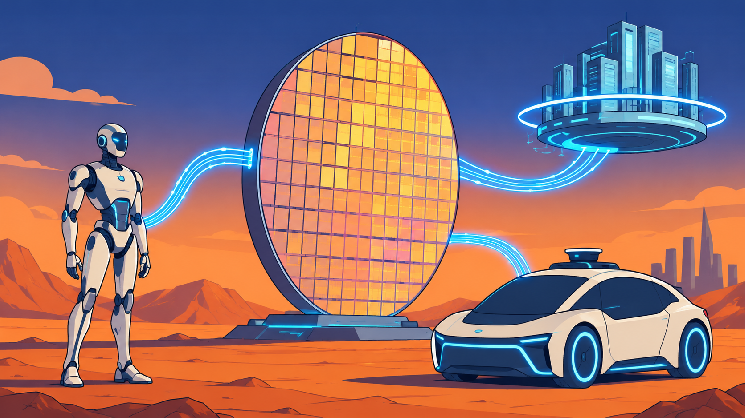
SpaceX and Tesla have launched the large-scale Terafab project to build a semiconductor plant in Grimes County, Texas. The facility will integrate logic chip production, memory production, chip packaging, and testing across an area exceeding 9.3 million square meters. The first phase of the complex will require capital investment of $16.8 billion, and the stated long-term goal is to produce computing hardware with a capacity of over 1 terawatt per year to support Optimus robots, Cybercab autonomous vehicles, and orbital data centers.
Government Support and First Phase Parameters
Texas Governor Greg Abbott confirmed the project's start on August 6, 2026, highlighting the creation of 3,000 new jobs and a $30 million grant from the Texas Enterprise Fund. The initiative also qualifies under the Texas Jobs, Energy, Technology, and Innovation (JETI) program, securing additional benefits. SpaceX and Tesla CEO Elon Musk emphasized the strategic importance of combining logic design, memory production, and advanced packaging under one roof to accelerate hardware solution development.
On social network X, Elon Musk called the future complex "the largest and most valuable building on Earth," stating that its fully equipped area would exceed the size of the Pentagon by approximately 50 times. The distribution of production capacity is planned as follows: about 25% of the output is intended for Tesla robotics, and the remaining 75% is for SpaceX space-based artificial intelligence systems. Earlier tax incentive documents mentioned estimates of around $55 billion for the initial phase, with a possible total of up to $119 billion if all stages are realized, although an official confirmation of the total investment amount is currently absent.
Technology Partnership and Geopolitical Context
A key partner for design and production is Intel: back in April 2026, Musk announced plans to use Intel's 14A process technology for chip production at the new plant. This decision aims to diversify supply chains, as TSMC maintains a dominant position in contract manufacturing with a market share of about 70–73%, and the concentration is even higher on advanced nodes below 5 nm. Vertical integration helps reduce dependence on external suppliers and control critical stages of microelectronics creation.
The Pax Silica initiative, launched by the U.S. Department of State in December 2025, is forming an international coalition to ensure reliable supply chains from critical minerals to AI infrastructure. The program unites Japan, the Republic of Korea, the Netherlands, the EU, and the UK, creating an alternative security ecosystem. According to the Stanford AI Index Report 2026, in 2025, the U.S. produced 59 notable AI models compared to 35 Chinese ones, and the number of data centers in the country reached 5,427 units, highlighting the need to increase domestic production capacity.
Construction of the Terafab plant will begin in the coming months following the official announcement, and the commissioning of the facility will be a significant step in forming a national semiconductor base. The project's implementation could change the balance of power in chip manufacturing and strengthen the U.S. position in global technological competition by creating a closed-loop cycle for computing hardware development and production.
AI Opinion
From a machine data analysis perspective, the scale of Terafab should be compared with the history of major semiconductor construction projects in the U.S. in recent years. A similar Intel project in Ohio (New Albany) was repeatedly delayed: the launch, initially planned for 2026, was postponed by the company to 2030 due to corporate difficulties and shifting priorities. This experience demonstrates that announced timelines and budgets for mega-fabs often diverge from reality by years, and factors such as workforce availability, power supply, and stability of partner chains (in this case, collaboration with Intel on the 14A process) are rarely factored into initial forecasts.
The situation also shows an interesting paradox: the larger the project, the greater the dependence on external factors that are difficult to control even for companies like SpaceX and Tesla. Whether Terafab can avoid the fate of similar giant construction projects is a question, the answer to which will not be clear until the end of this decade.