US Treasury Starts to Implement GENIUS Act & Seeks Feedback – Best Crypto to Buy

bitcoinistPublié le 2025-08-19Dernière mise à jour le 2025-08-19

Résumé

The US Treasury Department is putting the GENIUS Act into action with a 60-day comment period to gather ideas on...

Trusted Editorial content, reviewed by leading industry experts and seasoned editors. Ad Disclosure

The US Treasury Department is putting the GENIUS Act into action with a 60-day comment period to gather ideas on detecting illicit crypto activity.

By establishing a stablecoin framework and seeking input, the Treasury is working to shape the Web3 sector. Under Trump, their ultimate ambition is to bolster crypto innovation safely.

Such regulatory clarity is bound to boost investor confidence and help make it easier for legitimate projects to flourish.

In turn, now could be an opportune time to invest in the best crypto to buy (like Snorter Token) before their prices possibly soar.

GENIUS Act Feedback to Innovate Crypto & Combat Crime

The GENIUS Act was signed into law by President Trump on July 18, 2025. That same day, it passed both the Senate and the House.

Under the bill, stablecoins must be backed by liquid assets, such as the dollar. Coin issuers must also share a monthly report on what’s in their reserves. Doing so helps boost market transparency and trust.

Now, the Treasury is taking the initiative a nudge further by seeking input on how to spot unlawful crypto activity.

Feedback from the public, industry players, and innovators is welcome until October 16, 2025. Some of the key points the Treasury asks them to address include:

  • How APIs can be used to monitor and share data;
  • The role of AI in detecting suspicious activity;
  • Ways to approach digital identity verification for stronger compliance;
  • Strategies for using blockchain tech to monitor and trace unlawful transactions.

But that’s not all. The US regulators have also requested perspectives on the effectiveness of these methods, potential cost burdens, and privacy and cybersecurity risks tied to such tools.

Trump Makes Crypto Rules & Innovation Go Hand in Hand

The GENIUS Act is just a mere slice of a broader shift toward a much more crypto-friendly USA.

Since taking office in January 2025, Donald Trump has made several moves to help propel the US to become ‘the crypto capital of the world.’

Almost straight after taking back the US presidential reins, he signed Executive Order 14178, ‘Strengthening American Leadership in Digital Financial Technology.’

The order established a federal working group on digital assets and banned a US central bank digital currency (CBDC). As such, it shined a light on his pro-crypto stance almost from the get-go.

Then, he began backing major initiatives like the ‘One Big Beautiful Bill,’ ‘CLARITY Act,’ and ‘Project Crypto’ – each of which strives for more explicit rules for the crypto industry.

His administration has also modified ERISA rules, paving the way for crypto to be included in 401(k) retirement plans. For the first time ever, Americans can incorporate crypto in their long-term savings.

Thanks to these developments, today and tomorrow’s US crypto environment are more favorable than ever before.

With rules continuously being written in crypto’s favor and a focus on guardrails to reduce risks, the stage is set for top cryptos – like Maxi Doge ($MAXI), OKZOO ($AIOT), and Snorter Token ($SNORT) – to thrive.

1. Maxi Doge ($MAXI) – New Dog Coin With Upcoming Gamified Tournaments & Rewards

Maxi Doge ($MAXI) is a new top dog on the block(chain), barking up a similar path to Dogecoin ($DOGE) and Shiba Inu ($SHIB).

They each have one thing in common: a Shiba Inu mascot. $MAXI, however, is the only one with some hefty muscles, signaling its ambition to be a strong contender in the $46B dog-themed token arena.

$DOGE relies heavily on speculative hype. And it’s worked out for the #1 meme coin, as evidenced by its eye-boggling $2.95B market cap.

$SHIB, on the other hand, has evolved from its meme coin roots into a utility-rich altcoin. It has its own DEX, NFT collections, and card game. Analysts say if upgrades continue, $SHIB could climb to $0.0000162 this year.

$MAXI aims to capitalize on both of their success by bringing together the best of both worlds.

It taps into community-driven meme culture with slogans like ‘Feel the $MAXI Pump!’ Plus, it’s getting set to introduce real-world use cases: community rewards, gamified tournaments, and futures platform integrations.
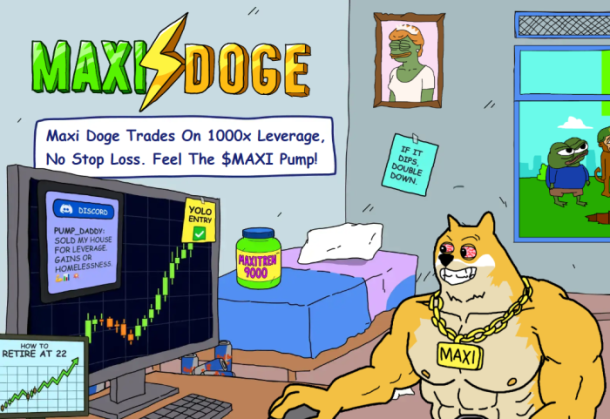
Maxi Doge presale.
Source: Maxi Doge

In anticipation of these developments, $MAXI has already fetched over $1.2M since going live on presale on July 29, 2024.

You can join the hype by purchasing $MAXI for as little as $0.000253, using either $ETH, $USDT, $USDC, $BNB, or fiat. But don’t wait around too long – this presale price will increase in just two days, and will continue rising thereafter.

2. OKZOO ($AIOT) – Jumps 194% After Revealing Upgraded Environmental Sensor Device

$AIOT is behind OKZOO, a decentralized network of smart devices that collect real-world environmental data.

Its small P-mini gadgets track things like air quality, noise, and temperature. When checking out the stats, it also features a digital pet that reacts to its surroundings – whatever the weather.

To top it off, $AIOT is used to unlock device features, reward data contributions, and power governance across the ecosystem.

As the project’s native coin, it often rockets whenever OKZOO introduces a new upgrade. For example, after the team revealed the upgraded P-mini with advanced environmental sensing, $AIOT has shot up by 194% since last week.

OKZOO announced P-mini upgrade on X.
Source: OKZOO

With the ecosystem now preparing to launch P-mini o2 (an even smarter and interactive device), now could be a great time to purchase $AIOT before its price possibly rockets.

$AIOT is available on some of the best crypto exchanges for just $1.55.

3. Snorter Token ($SNORT) – Telegram Trading Bot Built for Speed, Safety & Affordability

Snorter Token ($SNORT) is the foundation of Snorter Bot, a fast, secure, and user-friendly Telegram trading bot that’s gearing up to launch this quarter.

Offering automated, fast swiping, copy trading, and limit orders, it’s designed to give you a leg up in the trading arena – there’ll soon be no reason to miss out on hot investment opportunities.

The bot will first launch on Solana. With fees at just 0.85% and lightning-fast execution, it claims to be the cheapest and fastest on the network, undercutting and outpacing competitors like Maestro and Trojan.

Snorter Bot competitors.
Source: Snorter Token

It’ll then go multi-chain, expanding across Ethereum, BNB Chain, and other EVM networks. This will open the door to trading the next crypto to explode across leading networks – all from one seamless interface.

And all will be achieved with security at the top of its mind. Snorter Bot will come loaded with real-time honeypot checks, MEV protection, and rug pull alerts. In turn, you can feel secure knowing that you’ll stay clear of questionable tokens and front-running attacks.

With over $2.2B in crypto being stolen last year, Snorter Bot’s security measures have never been more essential.

You can also access premium features, governance rights, and 137% staking rewards by purchasing $SNORT on presale for just $0.1017.

Next year, it’s anticipated to surge to $1.92 following full bot functionality and multi-chain expansion. Therefore, now’s an opportune time to join for possible 19x returns.

Verdict – The GENIUS Act Could Spark the Next Bull Run

The GENIUS Act is a significant step toward a crypto-accepting USA. By offering clearer Web3-related rules in favor of innovation, the clarity it brings is already bolstering investor confidence.

With stronger guardrails and an industry full of promising projects delivering real value, there are plenty of safe investment opportunities to pick from.

Take $MAXI, for instance, it’s set to launch gamified tournaments and futures platform integrations. Meanwhile, $AIOT just pumped 194% as the backbone of environmental sensor devices, and $SNORT promises to launch the fastest and cheapest bot on Solana around.

Whichever one catches your eye, it’s clear that crypto is evolving quickly, and these could be some of this year’s most promising opportunities.

Still, only time can tell their success. For this reason, do your due diligence and never invest more than you’d be sad to lose.

Editorial Process for bitcoinist is centered on delivering thoroughly researched, accurate, and unbiased content. We uphold strict sourcing standards, and each page undergoes diligent review by our team of top technology experts and seasoned editors. This process ensures the integrity, relevance, and value of our content for our readers.

Leah is a British journalist with a BA in Journalism, Media, and Communications and nearly a decade of content writing experience. Over the last four years, her focus has primarily been on Web3 technologies, driven by her genuine enthusiasm for decentralization and the latest technological advancements. She has contributed to leading crypto and NFT publications – Cointelegraph, Coinbound, Crypto News, NFT Plazas, Bitcolumnist, Techreport, and NFT Lately – which has elevated her to a senior role in crypto journalism. Whether crafting breaking news or in-depth reviews, she strives to engage her readers with the latest insights and information. Her articles often span the hottest cryptos, exchanges, and evolving regulations. As part of her ploy to attract crypto newbies into Web3, she explains even the most complex topics in an easily understandable and engaging way. Further underscoring her dynamic journalism background, she has written for various sectors, including software testing (TEST Magazine), travel (Travel Off Path), and music (Mixmag). When she's not deep into a crypto rabbit hole, she's probably island-hopping (with the Galapagos and Hainan being her go-to's). Or perhaps sketching chalk pencil drawings while listening to the Pixies, her all-time favorite band.

Lectures associées

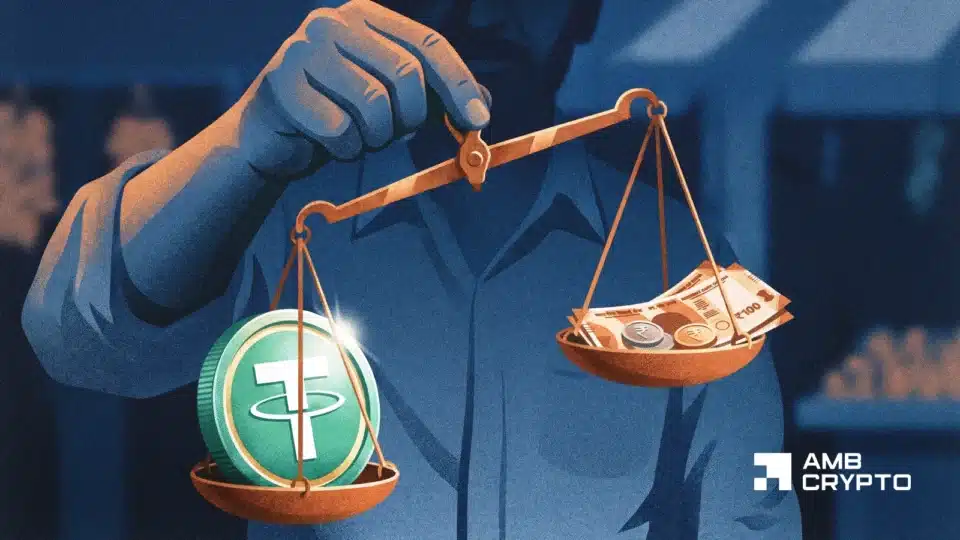
L'écart de prix du USDT en Inde dépasse 8,5 % alors que la pression réglementaire resserre l'offre

La prime de l'USDT en Inde a dépassé 8,5%, en raison d'une contraction de l'offre de stablecoins sur le marché local. Cette situation découle des pressions réglementaires qui découragent les entrées de capitaux via des actions coercitives et une surveillance accrue. En conséquence, le cours de l'USDT s'établit à ₹102,88 contre un taux officiel USD/INR de ₹94,65, élargissant considérablement l'écart par rapport à la fourchette habituelle de 3–4%. La pression réglementaire a ralenti les nouveaux afflux d'USDT, réduisant la liquidité sur les marchés de pair-à-pair, les bureaux de change de gré à gré et les bourses. Bien que le nombre de transactions et d'adresses de portefeuille actives reste solide, indiquant une demande soutenue pour les paiements transfrontaliers et la thésaurisation, l'offre est fortement contrainte. Les données de transactions P2P montrent un volume d'achat faible (1,2 million de dollars) par rapport au volume de vente (17,8 millions de dollars), révélant une capacité de tenue de marché limitée. Si l'incertitude réglementaire persiste, cette pénurie de liquidités pourrait maintenir des primes élevées et pousser les acteurs vers des canaux informels. À l'inverse, une clarification réglementaire et un meilleur accès au marché pourraient rétablir les opportunités d'arbitrage, augmenter la liquidité en dollars et réduire progressivement la prime sur l'USDT en Inde.

ambcryptoIl y a 7 mins

L'écart de prix du USDT en Inde dépasse 8,5 % alors que la pression réglementaire resserre l'offre

ambcryptoIl y a 7 mins

La CFTC américaine lance une enquête approfondie sur Polymarket : la saison des marchés prédictifs sur le point de s'éteindre ?

La Commodity Futures Trading Commission (CFTC) américaine a ouvert une enquête approfondie sur la plateforme de marchés prédictifs Polymarket, portant notamment sur ses activités de marketing sur les réseaux sociaux. Cette enquête fait suite à des accusations de sénateurs concernant des pratiques promotionnelles trompeuses, notamment via des influenceurs rémunérés. L'enquête intervient dans un contexte de croissance explosive du secteur des marchés prédictifs, stimulée par des événements comme la Coupe du Monde. Des plateformes comme Polymarket, Kalshi et celle de Robinhood voient leurs volumes de transaction et revenus annuels atteindre des records. Cette popularité attire également l'attention des géants de la tech comme Meta. La situation révèle un conflit croissant entre les régulateurs fédéraux, comme la CFTC qui revendique une juridiction exclusive sur ces "contrats d'événement", et les autorités étatiques qui y voient des paris sportifs illégaux menaçant leurs revenus fiscaux. Le litige porte sur la définition légale de ces marchés : produits dérivés ou jeux d'argent. Par ailleurs, des tensions existent aussi entre la CFTC et des bourses établies comme le CME, qui conteste des décisions réglementaires. En toile de fond, des intérêts politiques et financiers complexes émergent, avec l'implication d'investisseurs comme Donald Trump Jr. dans les principales plateformes. L'enquête sur Polymarket marque ainsi un tournant potentiel vers une régulation plus stricte, mettant fin à une période de croissance "sauvage" pour l'industrie, tout en dessinant les contours d'un futur cadre concurrentiel et légal plus structuré.

marsbitIl y a 1 h

La CFTC américaine lance une enquête approfondie sur Polymarket : la saison des marchés prédictifs sur le point de s'éteindre ?

marsbitIl y a 1 h

La CFTC américaine ouvre une enquête approfondie sur Polymarket, la saison de fête des marchés de prédiction est-elle sur le point de s'éteindre ?

La Commodity Futures Trading Commission (CFTC) américaine a ouvert une enquête approfondie sur la plateforme de marchés de prédiction Polymarket, suite à des accusations de marketing trompeur impliquant des influenceurs rémunérés. Cette action régulatoire intervient alors que le secteur connaît une croissance explosive, portée par la Coupe du Monde, avec des volumes d'échange hebdomadaires dépassant 144 milliards de dollars. L'enquête de la CFTC pourrait marquer la fin d'une période de croissance non régulée pour ces marchés. Elle s'accompagne d'un conflit de juridiction entre les régulateurs fédéraux, comme la CFTC qui revendique une compétence exclusive, et plusieurs États américains (dont le Kentucky) qui poursuivent Polymarket et sa concurrente Kalshi pour opérations de paris sportifs illégaux. Ce conflit oppose les intérêts fiscaux des États et la définition réglementaire de ces nouveaux produits. Parallèlement, l'industrie attire les géants de la tech, avec Meta envisageant des partenariats, et les investisseurs, comme Donald Trump Jr. qui a pris des participations stratégiques à la fois dans Kalshi et Polymarket. Malgré les défis réglementaires, les perspectives du secteur restent solides, Kalshi envisageant une introduction en bourse d'ici 2027-2028. L'enquête sur Polymarket apparaît ainsi comme une étape de normalisation pour un marché en passe de maturité.

Odaily星球日报Il y a 1 h

La CFTC américaine ouvre une enquête approfondie sur Polymarket, la saison de fête des marchés de prédiction est-elle sur le point de s'éteindre ?

Odaily星球日报Il y a 1 h

Les robots de Shenzhen vont bientôt sonner à la cloche

L'effervescence des robots à Shenzhen se concrétise par une vague d'introductions en bourse. La société de robotique Doogiang, basée à Nanshan, a vu sa demande d'introduction au ChiNext acceptée, après son IPO réussie à Hong Kong en 2024. Fondée en 2015 par Liu Peichao et son équipe dans un petit appartement, l'entreprise illustre le parcours typique de Shenzhen : partir d'une idée, prototyper rapidement grâce à un écosystème manufacturier dense, et se développer en s'appuyant sur une chaîne d'approvisionnement locale efficace. Doogiang s'est d'abord imposée dans les environnements industriels avant d'étendre ses robots collaboratifs aux espaces commerciaux. Cette dynamique s'inscrit dans un paysage robotique florissant à Shenzhen, surnommée "première ville des robots humanoïdes". Le "Nanshan Robot Valley", une ceinture industrielle de 28 km², regroupe des leaders comme Ubtech (valeur de près de 50 milliards de HKD) et des startups prometteuses telles que Zhipingfang et Ziliang. Des événements comme le "X-Day" au lac Xili servent de plateforme cruciale pour connecter les projets émergents aux capitaux et aux ressources industrielles, ayant déjà facilité des investissements et financements substantiels. La scène robotique de Shenzhen évolue ainsi des applications industrielles vers des domaines plus tournés vers l'expérience et le quotidien, solidifiant sa position de pôle d'innovation mondial.

marsbitIl y a 1 h

Les robots de Shenzhen vont bientôt sonner à la cloche

marsbitIl y a 1 h

Trading

Spot
活动图片