Polish Parliament Slams The Brakes On Crypto Market Act After Controversial Revival

bitcoinistPublicado a 2025-12-20Actualizado a 2025-12-20

Resumen

Polish lawmakers have halted discussions on the controversial Crypto-Asset Market Act until January. The lower house, the Sejm, recently passed a nearly identical version of a bill previously vetoed by President Karol Nawrocki, who expressed concerns about overregulation, threats to innovation, and potential startup exodus. Despite failing to override the veto, the ruling coalition reintroduced the bill with minimal changes, including a reduced fee for crypto intermediaries from 0.4% to 0.1%. The Senate has delayed its decision to carefully review the amendments, with further discussions scheduled for January.

Polish lawmakers have reportedly halted discussions on crypto legislations until January after the parliament’s lower house, the Sejm, voted to pass a nearly identical version of a bill that was vetoed by Poland’s president earlier this month without changes.

Poland’s Sejm Passes Controversial Crypto Bill

On Friday, local news media outlets informed that the Polish Senate hit the brakes on the controversial Crypto-Asset Market Act, following the Sejm’s recent vote to pass “version 2.0” of the legislation.

According to the reports, more than half of the members of the lower chamber voted to pass the revived version of the bill on Thursday, leaving its fate in the hands of the Senate and then the President, who has strongly opposed to the legislation.

As reported by Bitcoinist, Poland’s President Karol Nawrocki vetoed the Crypto-Asset Market Act at the start of the month due to concerns of a potential exodus of startups and overregulating the sector with the “legal mess” proposed by the Polish government.

On December 1, President Nawrocki refused to sign the bill, first introduced in June, which aimed to establish strict rules on the crypto assets market. He argued that the legislation it could pose a real threat to the freedoms of Poles, the stability of the state, and market innovation.

The local crypto community had raised concerns about the bill in September, affirming that it exceeded the European Union (EU)’s minimum regulatory requirements and could drive small businesses and startups abroad.

The parliament attempted to override the President’s veto, but ultimately failed after being unable to secure the required three-fifths majority vote to overturn the presidential decision.

Nonetheless, the part of the ruling coalition in the Sejm reintroduced the bill a week later without allegedly amending any of the controversial policies, raising more concerns among crypto industry players and community members.

Senate Delays Decision Until January

According to the reports, the Senate had initially planned to pass the bill “at an express pace” before the end of the year. However, the Deputy Finance Minister Jurand Drop raised concerns about the intention to pass the legislation with no further revisions.

Deputy Minister Drop pointed out that the Sejm had introduced only one change to the proposal, a lower fee for entities intermediating in crypto trading, despite the government’s disapproval of the current text.

“This amendment, which was introduced during the Sejm vote and which the government disagrees with, concerns the level of fees paid to the Polish Financial Supervision Authority (KNF) by entities in the crypto-asset market. The fee has been reduced from 0.4% to 0.1%,” Drop explained.

“Other market segments have fees of a maximum of 0.5%; for this market, the government has proposed 0.4%. Although the KNF’s projections indicate that these fees will not exceed 0.1%, and in the first year, they will not be collected at all, the question remains what will happen if this market grows and, as a result, the fees are forced to exceed 0.1%,” he added.

On Friday morning, the Senate Budget and Public Finance Committee discussed the recently passed bill and the Ministry of Finance’s concerns. The committee chairman, Senator Kazimierz Kleina, suggested that the committee review this modification calmly.

Therefore, he withdrew the motion to pass the bill without new changes and suspended the discussions on the bill, affirming that the Sejm’s amendments “will have to be carefully considered.” Ultimately, Chairman Kleina scheduled to resume work on the legislation during the January Senate session.
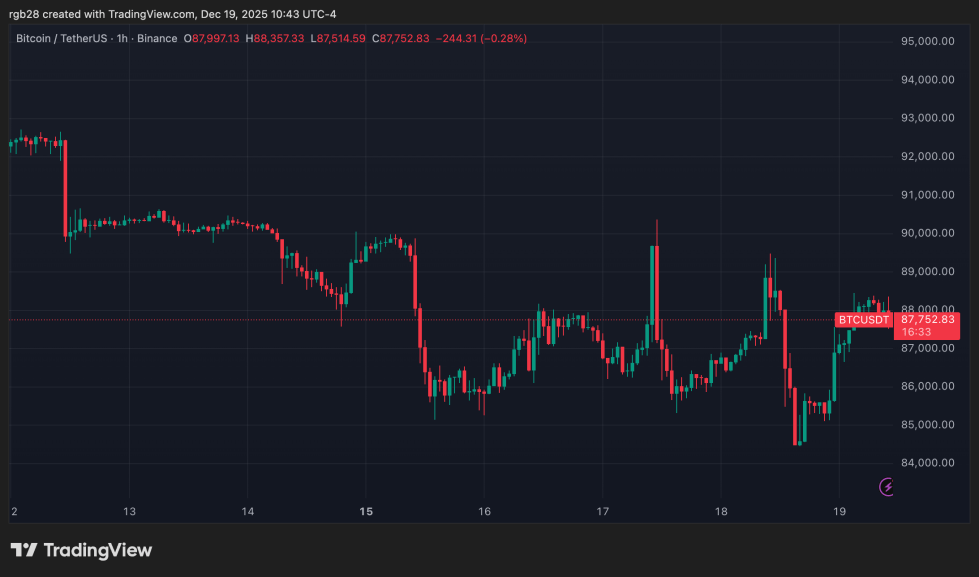
Bitcoin (BTC) trades at $87,752 in the one-week, chart. Source: BTCUSDT on TradingView

Preguntas relacionadas

QWhy did the Polish Sejm halt discussions on crypto legislation until January?

AThe Sejm halted discussions after passing a nearly identical version of a previously vetoed crypto bill, and the Senate decided to delay further review until January to carefully consider the amendments.

QWhat was the main reason President Karol Nawrocki vetoed the Crypto-Asset Market Act initially?

APresident Nawrocki vetoed the bill due to concerns about potential startup exodus, overregulation, and the threat it posed to Poles' freedoms, state stability, and market innovation.

QHow did the Sejm's revived version of the crypto bill change the fee structure?

AThe Sejm reduced the fee paid to the Polish Financial Supervision Authority (KNF) by crypto entities from 0.4% to 0.1%.

QWhat concerns did Deputy Finance Minister Jurand Drop raise about the revised bill?

ADrop expressed concerns about the reduced fee (0.1%) and questioned what would happen if the market grew, potentially requiring fees to exceed that level, as other market segments have fees up to 0.5%.

QWhy did the local crypto community oppose the Crypto-Asset Market Act?

AThe community argued that the bill exceeded the EU's minimum regulatory requirements and could drive small businesses and startups abroad due to overregulation.

Lecturas Relacionadas

Intervención conjunta de Estados Unidos y Japón: ¿El inicio del nuevo "Acuerdo Plaza" y del sistema de Bretton Woods 2.0 y el fin de la era del carry trade del yen?

**Intervención conjunta de EE.UU. y Japón: ¿El fin de la era del carry trade en yen?** EE.UU. y Japón han llevado a cabo una intervención cambiaria conjunta para apoyar al yen, lo que ha desencadenado una fuerte revalorización de la moneda. El Secretario del Tesoro de EE.UU., Yellen, y el Presidente Trump han confirmado la participación estadounidense, con Yellen señalando la voluntad de seguir interviniendo para corregir la "grave infravaloración" del yen. La acción coordinada, que incluye compras directas y orientación a los bancos, hizo que el yen se fortaleciera hasta 157,40 frente al dólar. Los analistas señalan que esta medida va más allá de la gestión de tipos de cambio y podría marcar un punto de inflexión en el *carry trade* global basado en el yen barato, una práctica que ha definido los flujos de capital durante décadas. Si Japón necesita vender reservas de divisas, incluidos bonos del Tesoro de EE.UU., para defender su moneda, podría provocar una reevaluación al alza de los rendimientos de la deuda estadounidense a largo plazo. La presión sobre los bonos a largo plazo no se atribuye principalmente al riesgo de inflación, sino a factores estructurales: la posible liquidación de reservas japonesas y el cambio de rol de las grandes tecnológicas, que ahora emiten deuda masivamente para financiar inversiones en IA e infraestructura, pasando de ser proveedoras a demandantes netas de ahorro. Algunos observadores interpretan esta intervención como el posible inicio de una nueva coordinación internacional, un "Acuerdo Plaza" moderno o el comienzo de un "Bretton Woods 2.0", que reflejaría un reequilibrio de la economía global y el fin del orden financiero basado en el financiamiento barato en yenes.

marsbitHace 41 min(s)

Intervención conjunta de Estados Unidos y Japón: ¿El inicio del nuevo "Acuerdo Plaza" y del sistema de Bretton Woods 2.0 y el fin de la era del carry trade del yen?

marsbitHace 41 min(s)

¿Qué tan alta es la posibilidad de que TradeXYZ abandone Hyperliquid y siga su propio camino?

Con la expansión continua de TradeXYZ y su dominio de más del 90% del mercado HIP-3 de Hyperliquid, ha surgido un debate en la comunidad sobre la posibilidad de que TradeXYZ se independice y construya su propia plataforma. Los usuarios discuten principalmente si la plataforma buscaría capturar una mayor parte de las tarifas de transacción, ya que actualmente comparte los ingresos 50/50 con Hyperliquid, habiendo generado casi 5000 millones de dólares en volumen pero con ingresos limitados. Aunque la independencia podría ofrecer a TradeXYZ más control y beneficios, existen limitaciones significativas. Hyperliquid proporciona un rendimiento técnico superior y es un canal crucial de distribución y adquisición de usuarios. Además, existe una relación de confianza entre los fundadores de ambos proyectos. Una separación podría resultar en una situación perjudicial para ambos: Hyperliquid perdería su principal motor de crecimiento narrativo y TradeXYZ enfrentaría desafíos técnicos, la pérdida de usuarios y daños reputacionales. Por lo tanto, aunque TradeXYZ tiene un fuerte poder de negociación, es poco probable que abandone Hyperliquid en el corto plazo. La estrategia más sensata sería negociar mejores términos de colaboración mientras se mantiene la integración actual, evitando una competencia directa que beneficiaría a otros actores del mercado RWA.

marsbitHace 52 min(s)

¿Qué tan alta es la posibilidad de que TradeXYZ abandone Hyperliquid y siga su propio camino?

marsbitHace 52 min(s)

"Teletubbies" robots hacen limpieza a domicilio, 200 yuanes/hora, pura inteligencia *artificial*

La compañía de robótica Tau Robotics, con sede en San Francisco, ha presentado su nuevo servicio de limpieza doméstica utilizando robots humanoides teleoperados. Bautizados cariñosamente como "Teletubbies" por su antena similar a un router Wi-Fi en la cabeza, estos robots, llamados Chelsea, Elon y Tony, realizan tareas como limpiar cocinas, baños, recoger basura y trapear pisos. La gran revelación, y decepción para algunos, es que las demostraciones mostradas son operadas por control remoto en tiempo real ("inteligencia artificial 100% humana"). La empresa defiende este enfoque como una solución práctica para cerrar la brecha tecnológica actual, permitiendo la recolección de datos del mundo real para eventualmente desarrollar autonomía completa, similar al "modo sombra" en los coches autónomos. El servicio, disponible por invitación en el área de la Bahía de San Francisco, cuesta 30 dólares (unos 200 yuanes) por hora, un precio competitivo frente a los servicios de limpieza humana en EE.UU. El artículo analiza los desafíos de introducir robots humanoides en hogares, comparando el enfoque estadounidense con el chino, que prioriza entornos industriales más controlados. Se argumenta que la forma humanoide facilita la teleoperación intuitiva y podría ofrecer un valor emocional único, aunque su necesidad funcional frente a robots con ruedas sigue siendo objeto de debate.

marsbitHace 1 hora(s)

"Teletubbies" robots hacen limpieza a domicilio, 200 yuanes/hora, pura inteligencia *artificial*

marsbitHace 1 hora(s)

Trading

Spot
活动图片




