Market Liquidity Survey: Under Diminishing Liquidity, Retail Investors 'Buy Lottery Tickets', Main Players 'Purchase Insurance'

marsbitPublicado a 2025-12-15Actualizado a 2025-12-15

Resumen

Following the sharp market decline on October 11, the crypto market has entered a period of low activity and structural divergence. Analysis of order book depth, derivatives data, and stablecoin flows reveals a clear trend: liquidity is deteriorating, institutional players are adopting defensive strategies, while retail investors remain in a wait-and-see mode. Order book depth on major exchanges like Binance has weakened significantly, with both bid and ask liquidity thinning out. Altcoin open interest and trading volumes have also declined, indicating a lack of retail participation and speculative interest. A notable shift is observed in the options market. Bitcoin options now dominate trading activity, with put options—particularly those concentrated around the $85,000 strike—carrying significantly higher premiums than calls. This suggests that while retail traders are buying cheap, out-of-the-money call options (like “lottery tickets”), institutions are paying high premiums for downside protection, reflecting a bearish or defensive stance. The max pain point for December is around $100,000, indicating a key level where option sellers would profit most. Stablecoin data further highlights this divide. USDT reserves on exchanges have reached an all-time high, suggesting available capital from retail and non-compliant players waiting to enter. In contrast, USDC—predominantly used by U.S. institutions—has seen a sharp 40% withdrawal from exchanges, signaling institutional ex...

Author: Frank, PANews

After the sharp downturn in the crypto market on October 11th, the market seems to have entered a prolonged "cooling-off period." For most investors, rather than predicting price movements, it might be more important to understand how much the current market liquidity has recovered since the heavy blow on 10.11. Additionally, how do the dominant funds in the market view the future direction?

In response, PANews attempts to analyze the current capital structure of the market through several data points, including order book depth, the options market, and stablecoins. The final conclusion is: the market does not seem to have truly recovered; instead, it has fallen into a state of structural fragmentation with continuously diminishing liquidity and accelerated defensive moves by institutional funds.

Micro Liquidity: Fragile Balance and Disappearing Support Orders

To understand the current liquidity situation, the order depth difference is the most direct indicator.

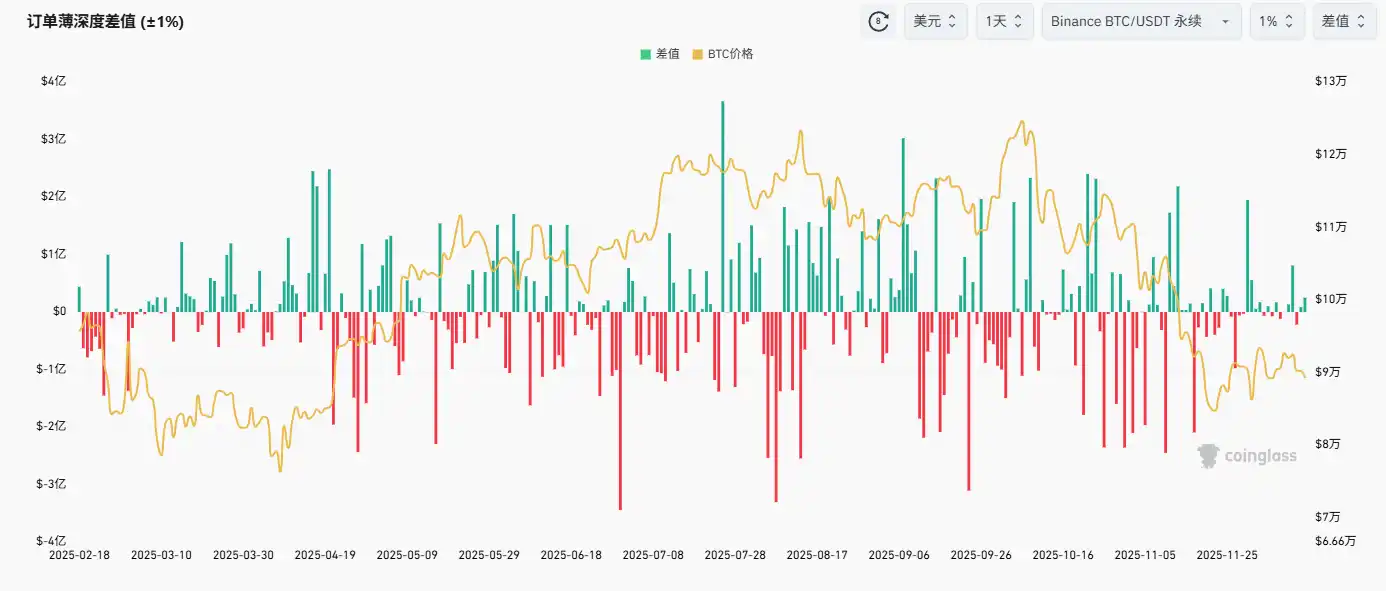
Taking the depth chart of the Binance BTC/USDT perpetual trading pair as an example, it is clear that since October, the depth of the buy order book has been decreasing, dropping from previously普遍 above $200 million to the $100–200 million range. The depth of sell orders has similarly decreased significantly, remaining below $200 million.
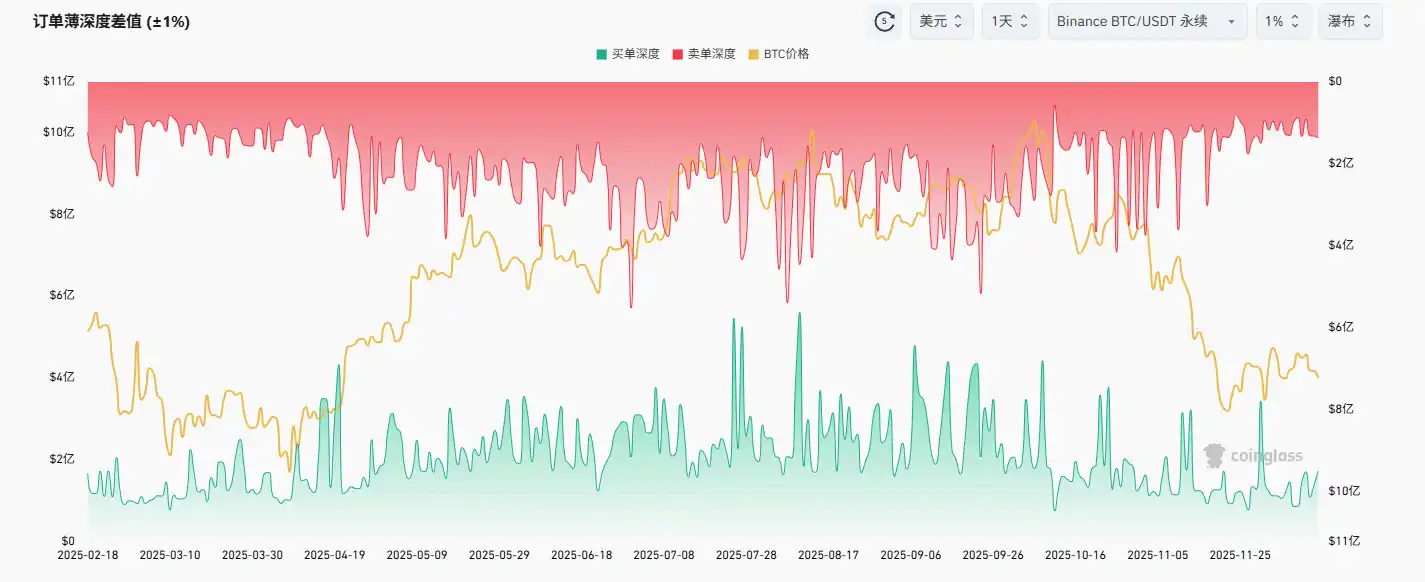
In terms of the difference, the gap between long and short order depths has recently become more balanced, with the difference on many days in November being only around $10 million. These data indicate that the entire market has entered a state of relative balance between long and short positions, but with continuously diminishing liquidity.
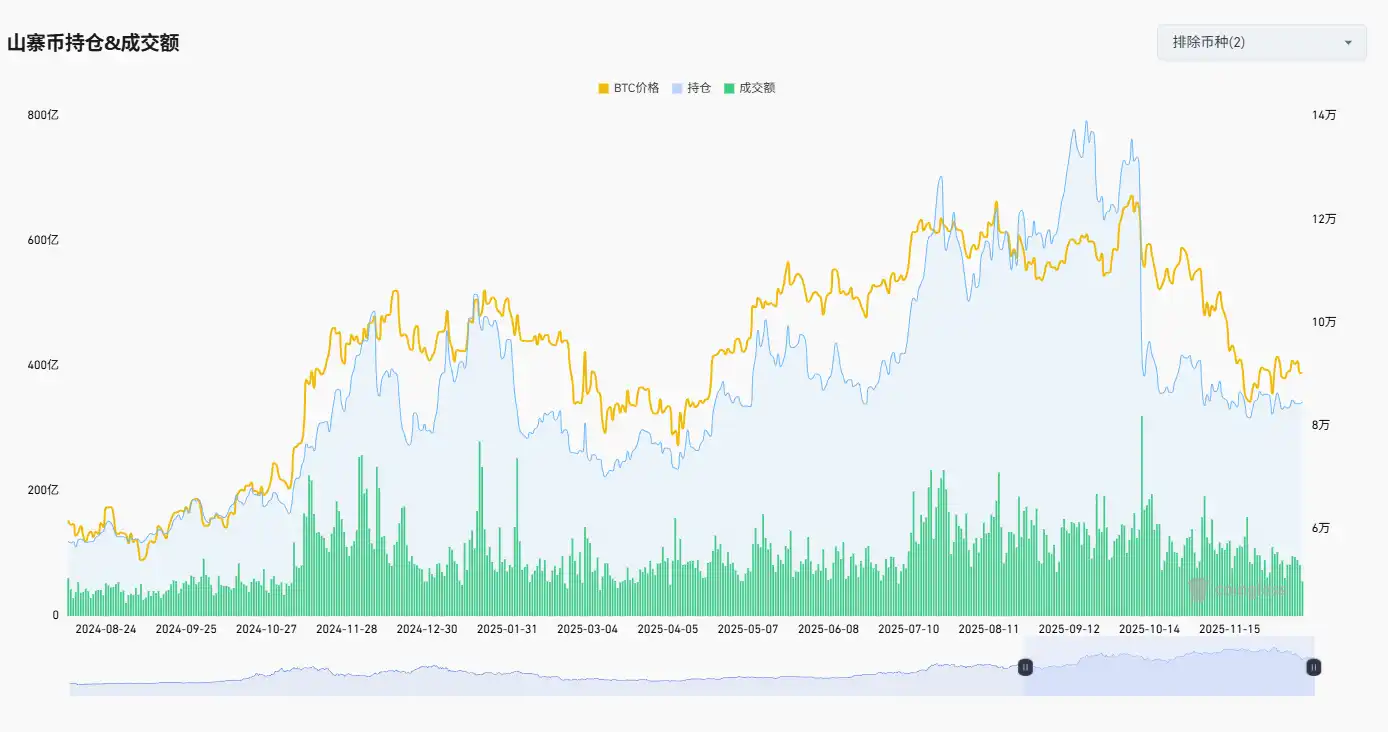
In terms of open interest, the total open interest of altcoins (excluding BTC and ETH) has not shown growth as prices hit lows but has instead also been declining. In contrast, the entire market experienced a deep correction in April, but at that time, after prices hit lows, the market's open interest saw a significant rebound (and this rebound even occurred提前 before prices reached the lowest point).

At the same time, the trading volume in the altcoin futures market is also shrinking, with no significant increase in volume triggered by bottom-fishing. From these data, the altcoin market seems to have entered a state of neglect.
Options Market: Retail Buys Lottery Tickets, Main Players Bet on Decline

Another set of data is quite interesting. The crypto options/crypto futures open interest ratio shows that the proportion of BTC options has been soaring since the beginning of the year, even exceeding 100% at its peak, and currently remains around 90%. Before this, the proportion of BTC options had long been maintained at around 60%. In other words, the BTC market has completely shifted from being dominated by futures contracts to being dominated by options contracts. However, the crypto options/crypto futures open interest ratio for ETH has dropped to a very low level this year, around 30%.
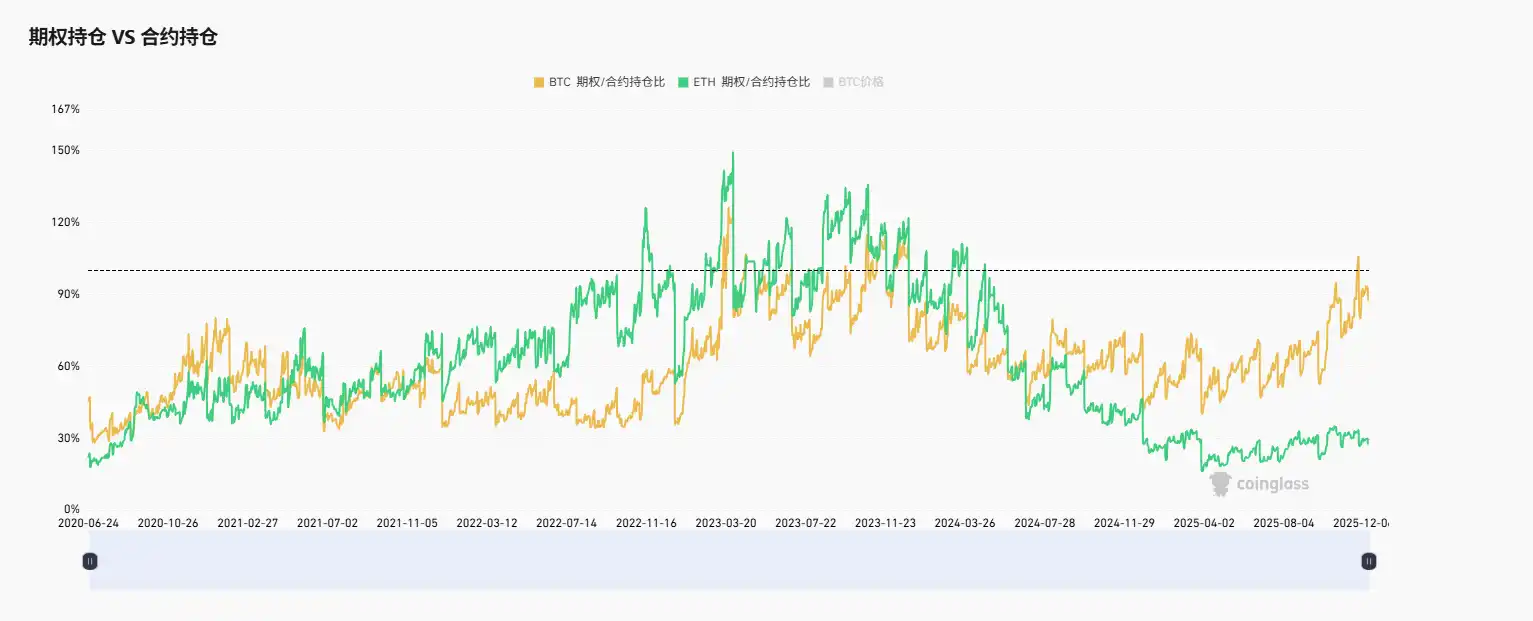
Behind this data, two issues are confirmed. One is that the dominance of the BTC market has been completely seized by institutions and hedge funds, while ETH and other altcoins no longer seem to be trading options for these institutions and hedge funds. Another key point is that in predicting the BTC market, options market data has become more important. We can also see this trend from the total open interest of BTC options; even as prices fall, open interest remains high.
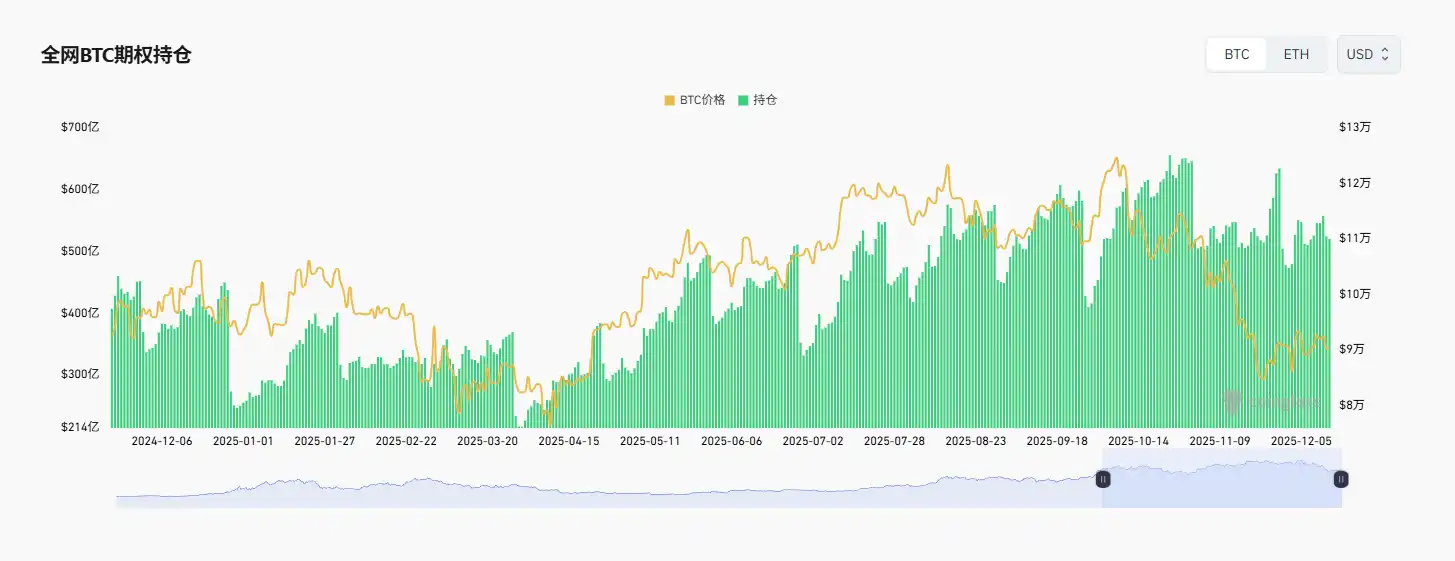
Therefore, options expiration dates and max pain points have become important reference indicators for the current BTC market. According to current data, the next important options expiration date is December 26th. At this point, the total volume of call options reaches 192,000, while the total volume of put options is only 74,200. However, the total notional value of these put options is as high as $508 million, while the total notional value of call options is only $71.25 million. This inverted data indicates that current call options are very cheap (about $370), while put options are very expensive (up to $6800).
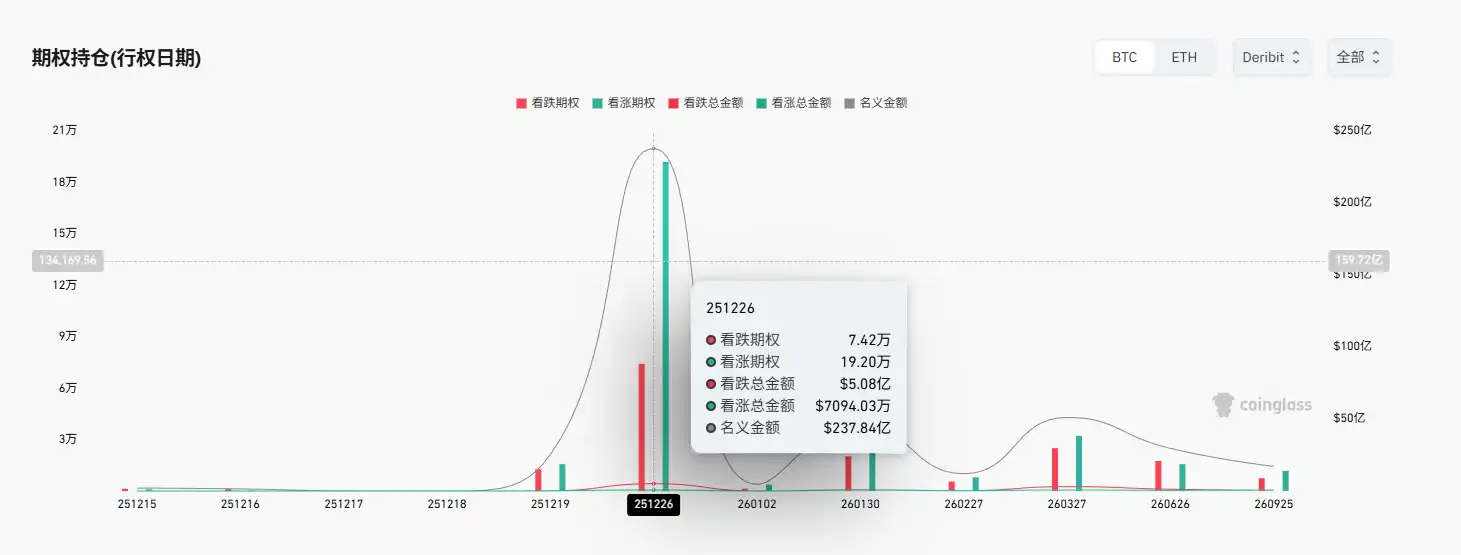
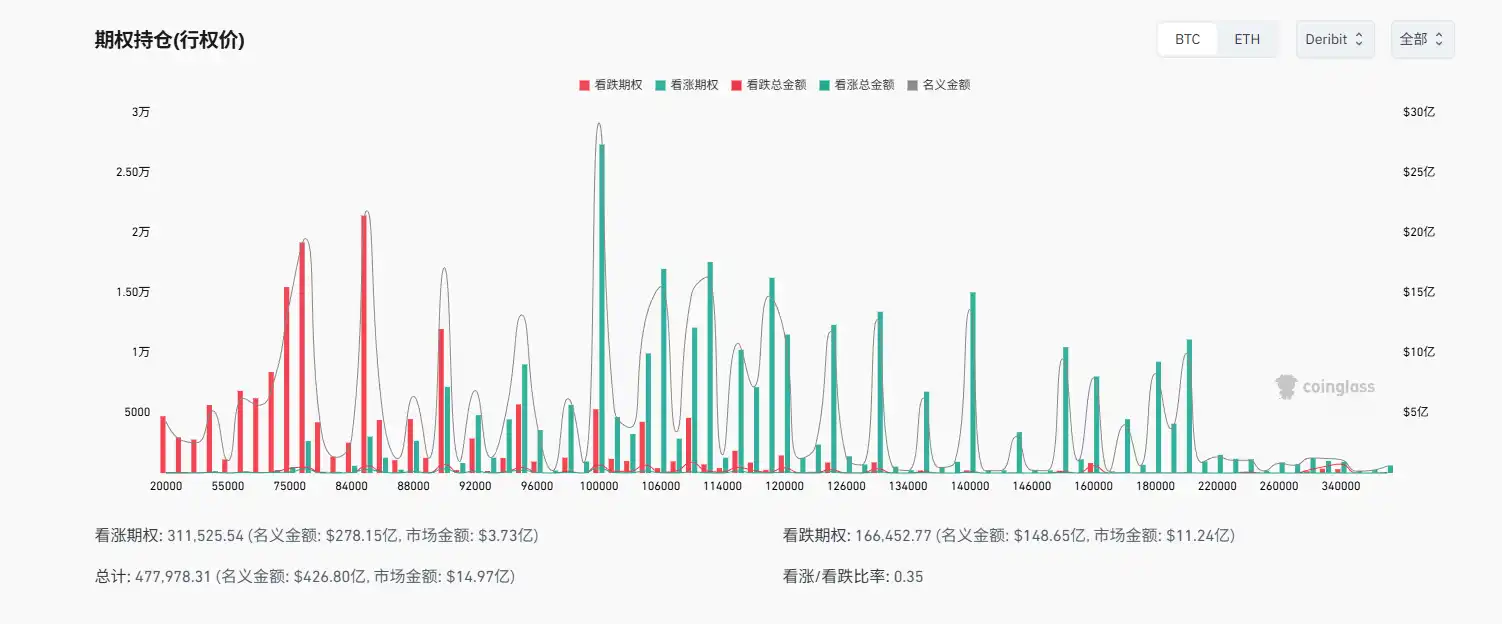
Combined with the distribution of strike prices, we can see that most call options are distributed above the $100,000 price, which makes it very unlikely that these options will be exercised on December 26th. Therefore, although the number of call options is large, they are more偏向于 "lottery ticket"-style speculative targets. A large number of put options have strike prices concentrated at $85,000 and below. At the same time, the market value of put options reached $1.124 billion, while the market value of call options was only $373 million (the premium paid by investors to purchase options). In summary, although there are more people betting on a rise,实际上 more funds (about 75%) are betting on or hedging against a decline.
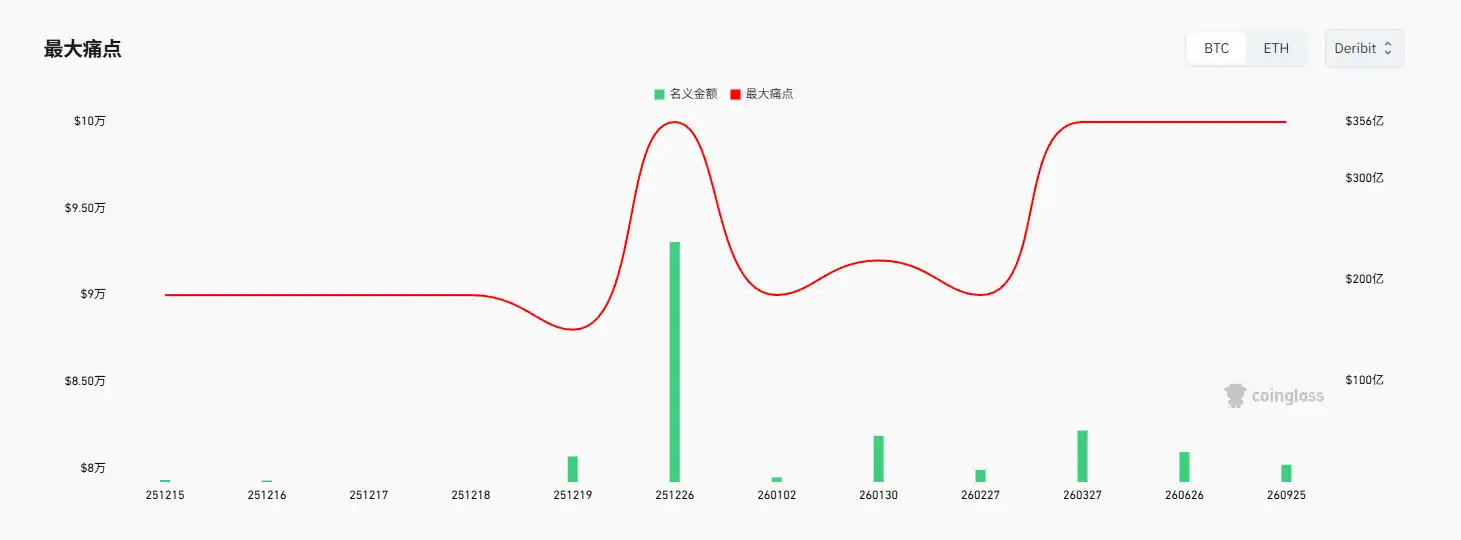
Additionally, the current max pain point is the $100,000 mark. This also indicates that the $100,000 price may become the focus of competition between option sellers and buyers this month. For market makers (option sellers), they are likely the main bulls in the current market; as long as the price can be pushed to around $100,000, they will be the biggest winners.

However, for institutions that have heavily invested in purchasing put options, most may be hedging against the downside risk of their spot holdings. Although本质上 they are mostly defensive in choosing to bet on a decline, the fact that they still put funds into put options despite the high cost indicates that their sentiment towards the future market trend is significantly pessimistic.
Stablecoins: Compliant Retreat, Hot Money Watches and Waits

Besides options data and order book data, stablecoin data is also an important indicator for judging current market liquidity and direction. Especially the flow of stablecoins to exchanges. However, this data also reveals significant divergences in the market.

According to CryptoQuant data, the exchange reserves of USDT have been on an upward trend this year and have maintained this momentum recently. On December 4th, USDT reserves on exchanges reached a historical peak of $60.4 billion. And they currently remain near the high of $60 billion. As the main pricing benchmark for non-compliant exchanges within the market, the continuous growth of USDT exchange reserves indicates that a large amount of speculative capital remains in a state of betting or preparing to buy the dip. Combined with the current decline in open interest, it can be felt that a large amount of speculative capital is in a wait-and-see mode.
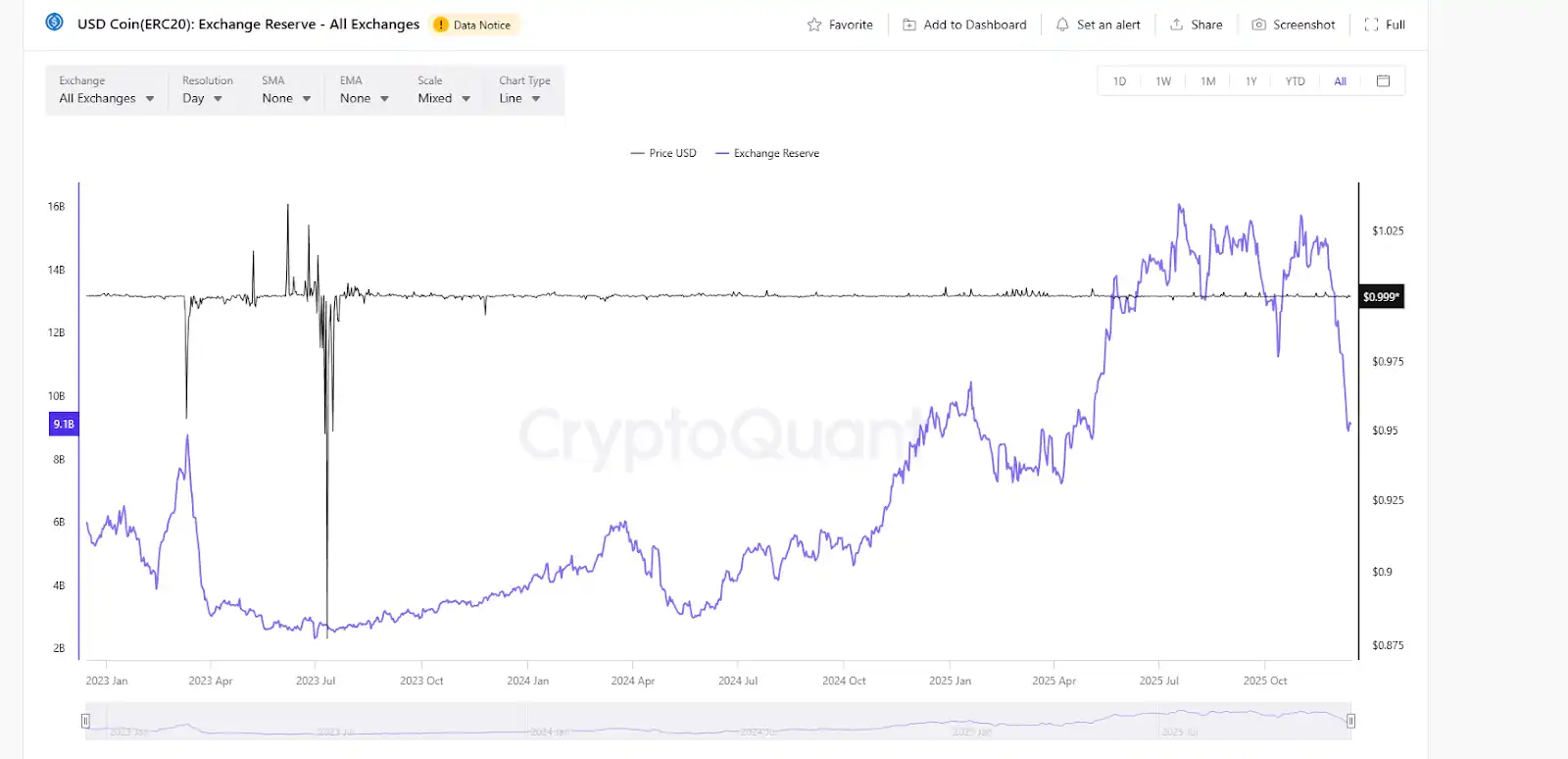
USDC shows a completely different picture. Since the end of November, a large amount of USDC has been withdrawn from exchanges, with exchange reserves plummeting from $15 billion to around $9 billion, a drop of 40%. As the leading compliant stablecoin, USDC's main users are来自 US institutions, compliant funds, etc. They are the representatives of the institutional faction in the market. Currently, it is clear that this group is accelerating their exit.
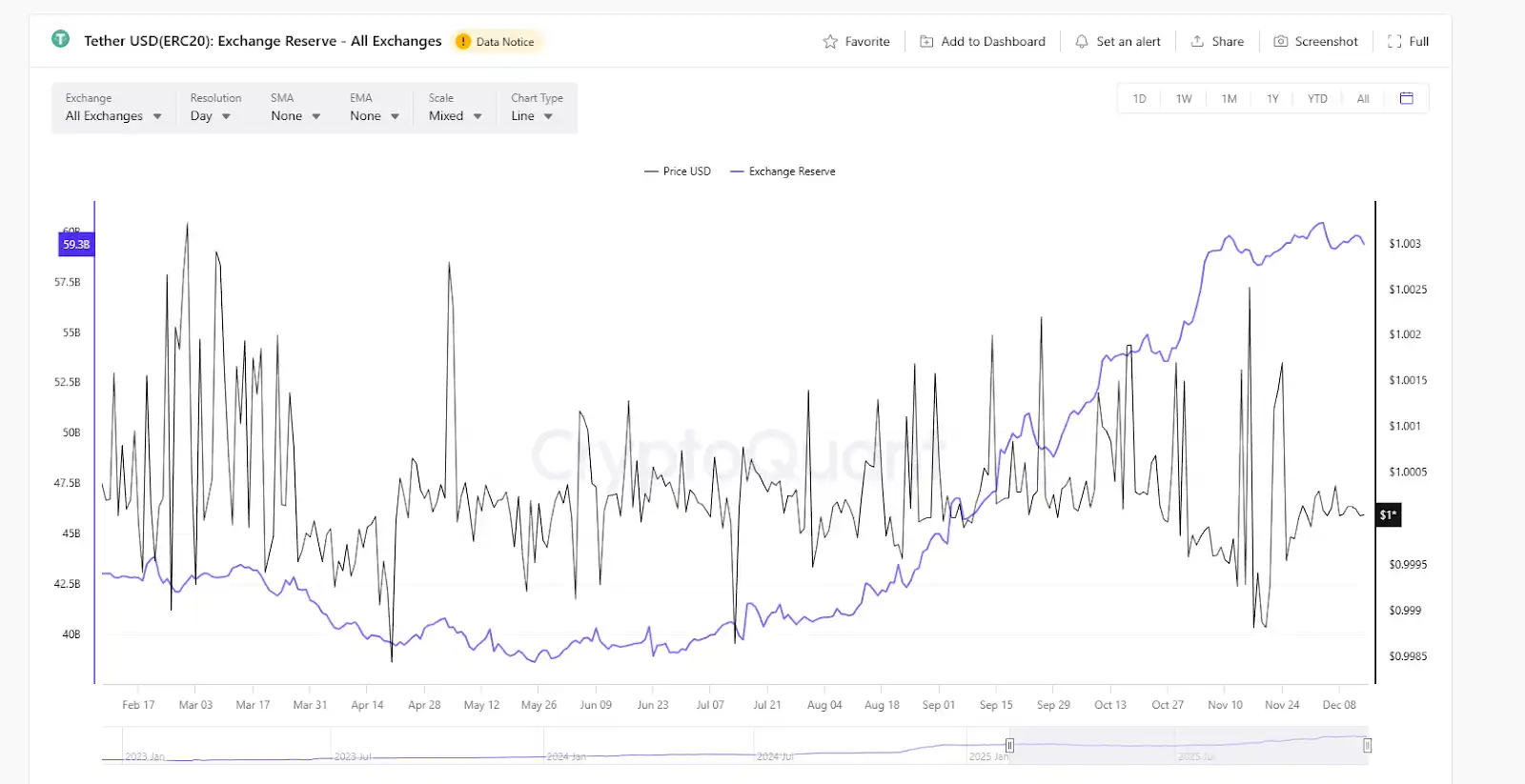
From the contrasting changes of these two, the current market seems to have retail investors and hot money waiting to buy the dip, while compliant institutions are retreating. This point also forms a similar conclusion to the changes in the BTC options market described earlier. Of course, another possibility is that under the downward risk of the market, a large amount of funds are converting crypto asset holdings into stablecoins for避险.

In fact, there are far more data and indicators to judge the market than those mentioned above, but overall, they almost all lead to similar conclusions. That is, the market after the 10.11 crash has not truly recovered; what we are seeing is a market with insufficient liquidity and significant divergence between main players and retail investors. Retail investors and hot money hold筹码观望 within the market, while compliant institutions or main funds are accelerating their withdrawal on the spot side and building short defenses in the options market by paying high premiums.

The current market does not seem to be a bottom gathering momentum for a takeoff, but更像 a defensive battle of "institutions exiting, hot money gambling." At this time, paying attention to whether the institutional defense line below $85,000 is breached is far more practical than expecting a breakthrough above $100,000.


Preguntas relacionadas

QWhat does the article suggest about the current state of market liquidity after the October 11 crash?

AThe article indicates that the market has not truly recovered but is in a state of continuous liquidity decay, with structural fragmentation where institutional funds are accelerating defensive strategies.

QHow has the order book depth for BTC/USDT perpetual contracts on Binance changed recently?

AThe order book depth for both buy and sell orders has significantly decreased, with buy order depth dropping from over $200 million to the $100-200 million range, and sell order depth also falling below $200 million, indicating reduced liquidity.

QWhat trend is observed in the options market for BTC, and what does it imply about institutional sentiment?

ABTC options now dominate the market with an options/open interest ratio around 90%, up from 60%, showing institutional dominance. However, 75% of the capital in options is betting on or hedging against a decline, reflecting a pessimistic and defensive institutional sentiment.

QWhat divergence is seen in stablecoin flows between USDT and USDC on exchanges?

AUSDT reserves on exchanges have reached a historical high of over $60 billion, indicating speculative capital is waiting on the sidelines, while USDC reserves have dropped 40% from $15 billion to $9 billion, showing compliant institutions are withdrawing from the market.

QWhat is the maximum pain point for BTC options expiring on December 26, and why is it important?

AThe maximum pain point is $100,000, which is a key price level where option sellers (market makers) would profit the most if the market moves to that point, making it a focal point for buyer-seller competition in the options market.

Lecturas Relacionadas

CEO de Strategy afirma que reanudará la compra de BTC este año, con un volumen de compra 25 veces mayor que el de venta

El CEO de Strategy, Phong Le, anunció en una entrevista con FOX Business que la compañía reanudará la compra de Bitcoin antes de fin de año, poniendo fin a una pausa en las adquisiciones que ha durado varios meses. Desde principios de año, Strategy ha comprado aproximadamente 175,000 BTC y vendido alrededor de 7,000, lo que significa que las compras netas son 25 veces mayores que las ventas. La empresa, que posee 840,447 BTC (cerca del 4% del suministro circulante), se consolida así como el mayor tenedor institucional de Bitcoin. Las ventas recientes, que rompieron la política previa de "nunca vender", se destinaron a pagar dividendos de acciones preferentes, recomprar acciones y fortalecer las reservas en dólares. Le explicó que esta gestión de capital era necesaria para cumplir con obligaciones financieras y asegurar liquidez, elevando las reservas en dólares a unos $4.7 mil millones. A pesar de la pausa, la reanudación de las compras se interpreta como un soporte clave para el mercado y un indicador de recuperación de la confianza institucional. La acción de Strategy (MSTR) ha caído aproximadamente un 38% este año, superando la caída del Bitcoin, lo que refleja los desafíos de su estrategia apalancada en un mercado bajista. La compañía ahora adopta un enfoque más flexible: vender cuando sea favorable y comprar cuando el mercado lo necesite.

marsbitHace 6 min(s)

CEO de Strategy afirma que reanudará la compra de BTC este año, con un volumen de compra 25 veces mayor que el de venta

marsbitHace 6 min(s)

Nuevo artículo de Arthur Hayes: Apostando por la apreciación del yen, ENA podría aumentar entre 5 y 10 veces en los próximos meses

Arthur Hayes, en su último artículo "Yen-quake", argumenta que el yen japonés está a punto de apreciarse frente al dólar. La vía más probable, según él, sería que el gobierno japonés utilice el mecanismo FIMA del Banco de la Reserva Federal para obtener préstamos en dólares con sus bonos del Tesoro estadounidense como garantía, y luego use esos dólares para comprar yenes en el mercado de divisas. Hayes descarta otras opciones, como un aumento significativo de las tasas de interés por parte del Banco de Japón o la venta masiva de activos en el extranjero por parte de instituciones japonesas, por sus consecuencias políticas y económicas no deseadas. La implementación del "Plan 3" a través de FIMA, que requeriría eliminar los límites actuales del mecanismo, inyectaría una gran liquidez en dólares en el sistema. Hayes cree que esta expansión monetaria impulsaría los precios de activos como bitcoin y el oro físico. En el ámbito cripto, además de considerar que bitcoin y Ethereum están infravalorados, Hayes señala que Ethena (ENA) tiene el potencial de multiplicar su valor entre 5 y 10 veces en los próximos meses, si un aumento en la liquidez revive los rendimientos de su stablecoin USDe. Concluye que el final de la era del "yen barato" se acerca, y aconseja estar atento a las señales de una próxima modificación de las reglas FIMA.

marsbitHace 21 min(s)

Nuevo artículo de Arthur Hayes: Apostando por la apreciación del yen, ENA podría aumentar entre 5 y 10 veces en los próximos meses

marsbitHace 21 min(s)

Equipo chino de generación de datos logra por primera vez publicar en la revista Nature

Un equipo de Hong Kong, WienerAI, se ha convertido en la primera empresa china de generación de datos y la cuarta del mundo en publicar en una revista principal de Nature (con un factor de impacto >10 en los últimos tres años). Su artículo en *Nature Communications* presenta un modelo de IA que ayuda en la toma de decisiones quirúrgicas para el cáncer renal. Fundada por el profesor Liu Qifeng de HKUST, la empresa se centra en un eslabón crítico del desarrollo de la IA: la generación de datos de preguntas y respuestas de razonamiento de alta calidad. WienerAI busca que los modelos de lenguaje grande no solo "respondan bien", sino que también "pregunten bien", creando así un "bucle de retroalimentación" completo: Datos → Modelo → Token (respuesta) → Nuevos Datos. Este ciclo es clave para que la IA adquiera capacidad de aprendizaje autónomo, especialmente en campos profesionales. La tecnología central de la empresa genera datos estructurados (cQrA: contexto, Pregunta, razonamiento, Respuesta), actuando como un "equipo de expertos" automatizado que produce "libros de ejercicios" para entrenar IA en sectores específicos, superando los cuellos de botella de la anotación manual tradicional. Con una ronda inicial de financiación liderada por Lenovo Capital, WienerAI ha validado su modelo en cuatro industrias dispares (seguridad de valores, administración pública, seguros y hípica), demostrando replicabilidad. La visión del profesor Liu trasciende el mundo digital: este paradigma de ciclo cerrado de generación y optimización de datos es fundamental para el futuro de la IA, incluyendo la IA embodied, donde el contexto evoluciona a cTrA (contexto, Tarea, razonamiento, Acción). Su objetivo final es ambicioso: "¡Generemos este mundo!".

marsbitHace 33 min(s)

Equipo chino de generación de datos logra por primera vez publicar en la revista Nature

marsbitHace 33 min(s)

Trading

Spot
活动图片