Kelp DAO Vulnerability Triggers Exodus of Hundreds of Billions; Two Major DeFi Lending Pathologies Clash Head-On

marsbitPublicado a 2026-05-29Actualizado a 2026-05-29

Resumen

Title: Kelp DAO Exploit Triggers $15 Billion Exodus, Exposing a Clash Between Two DeFi Lending Models. In April 2026, a hacker exploited a LayerZero bridge vulnerability in the Kelp DAO project, minting $292 million in fake rsETH tokens. These were deposited into Aave as collateral to borrow real Ethereum, draining the protocol's liquidity. Within three and a half days, Aave saw $15 billion in deposits flee, forcing a costly $160 million bailout. The root cause was identified as Aave's governance, which had previously voted to set rsETH's loan-to-value ratio to a risky 93%, leaving minimal safety margin. This incident starkly contrasts with the experience of Morpho, the second-largest DeFi lending protocol. Some fake rsETH also flowed into Morpho, but the exposure was limited to $1 million across isolated, pre-configured markets, preventing systemic contagion. The event highlights a fundamental divergence in DeFi lending architectures. Aave employs a shared liquidity pool model, where all deposits back all approved collateral assets, governed by DAO vote. This creates systemic risk, as seen when even users who never interacted with rsETH faced frozen funds. Furthermore, Aave's governance, influenced by leveraged borrowers, prioritized their interests during the crisis, even lowering borrowing rates for frozen markets at the expense of safer depositors. Its supplemental insurance mechanism, Umbrella, also failed as providers withdrew capital when needed. Morpho operates on...

Author: Vaidik Mandloi

Compilation: Saoirse, Foresight News

The underlying principles of all lending protocols in DeFi are largely similar: users deposit stablecoins or Ethereum into a shared liquidity pool, and borrowers draw funds from it after pledging assets; decentralized autonomous organizations (DAOs) vote to decide which assets can serve as collateral and their corresponding loan-to-value (LTV) ratios. Aave has developed a deposit scale of $500 billion precisely by relying on this model. For most of DeFi's development, this has been the industry's sole operating model, and its rationality has never been truly questioned.

However, on April 18, 2026, a hacker exploited a vulnerability in the LayerZero cross-chain bridge of the Kelp DAO project to forge rsETH tokens worth $292 million. The hacker deposited these counterfeit tokens into Aave as collateral to borrow real Ethereum. Within hours, the utilization rates of Aave's major mainstream lending markets reached 100%, meaning all available funds within the protocol had been fully borrowed. Over the next three and a half days, the platform lost $15 billion in deposits. Ultimately, Aave had to collaborate with various ecosystem parties to conduct a rescue, raising $160 million to cover the losses.

Although this vulnerability originated from the Kelp DAO project, the root cause of such massive losses lies in Aave's governance mechanism. As early as January of this year, a community vote decided to raise the collateral factor for rsETH to 93%, leaving only a 7% safety margin for such assets. It was this single decision that brewed one of the largest bank runs in the history of DeFi lending.

On the same day, some of the forged rsETH tokens also flowed into Morpho, the second-largest DeFi lending protocol. However, the risk exposure was only $1 million and dispersed across two independent, small isolated markets, failing to trigger a chain-reaction crisis.

Upon conducting in-depth research into this incident, I discovered that behind this event lies far more than a simple security attack.

Core Differences Between the Two Models

To understand why Aave hemorrhaged billions while Morpho remained largely unscathed, we must first clarify the fund placement and operational logic of the two protocol types.

When you deposit USDC into Aave, the funds flow into a single master liquidity pool, supporting lending activities for all community-approved assets like Ethereum and staked tokens. Depositors cannot choose the type of collateral asset their funds correspond to; all related rules are set by DAO votes. Therefore, when rsETH faced collapse risk, even ordinary users who had only deposited USDC and never touched rsETH found their assets frozen—everyone's funds were in the same risk pool, suffering collective losses.
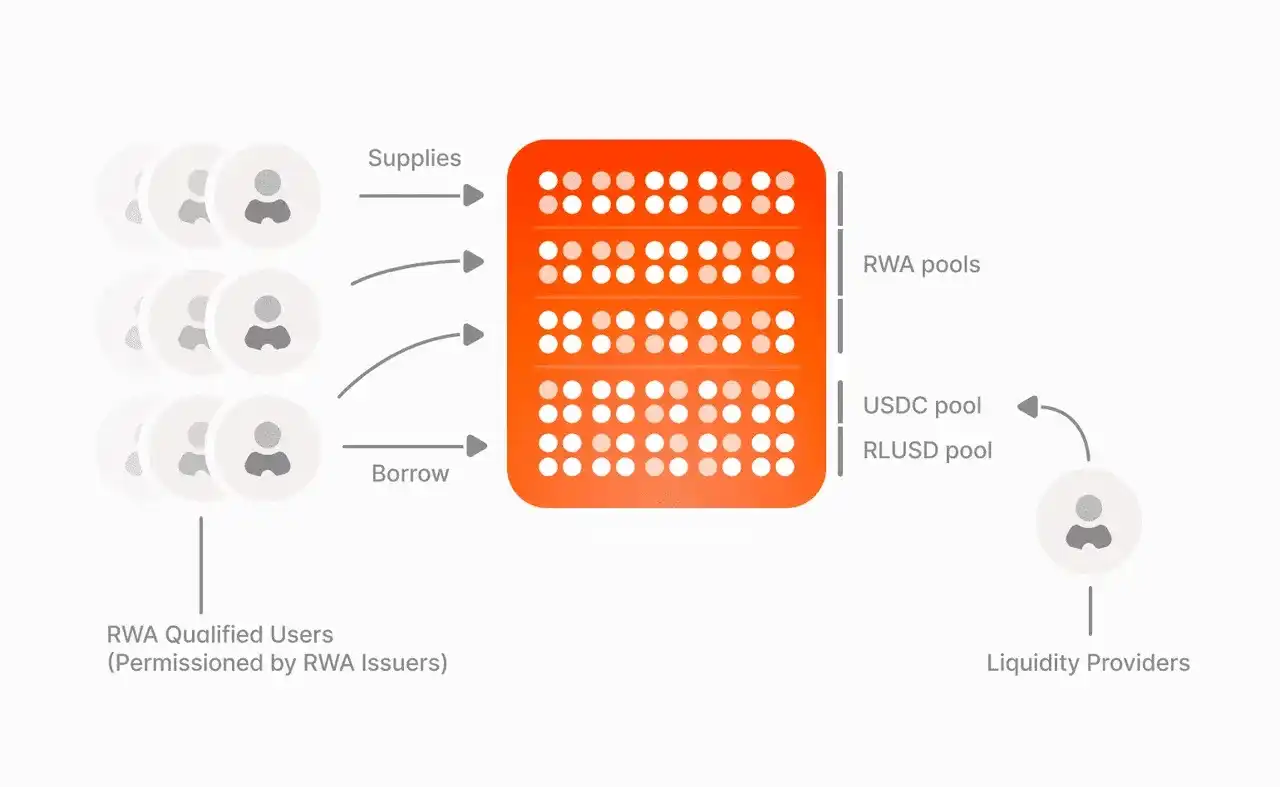
Source: BingX

More critically, while the market was halted and users couldn't withdraw, Aave's governance layer actually lowered the borrowing rates for the frozen Ethereum markets, aiming to protect borrowers who had leveraged rsETH. Since deposit rates are directly linked to borrowing rates, depositors with the lowest risk and principal security saw their deposit yields shrink further.

In traditional credit systems, lenders with the lowest risk enjoy priority in repayment. However, Aave completely inverted this rule. The reason is that borrowers engaged in rsETH leveraged trading are also the most active voting group in community governance. When risk erupts, high-risk participants holding governance power naturally prioritize protecting their own interests.

Aave launched an insurance mechanism called Umbrella in late 2025, attempting to address such bad debt risks. Users could stake Ethereum; if the protocol incurred bad debts, the staked assets would be used for compensation. However, after the Kelp DAO crisis erupted, 18,922 out of 23,507 staked aWETH positions entered an unstaking waiting period, with nearly 80% of the insurance pool's funds withdrawing collectively.

This mechanism ultimately failed completely. On-chain insurance relies on voluntary user participation, and capital providers inevitably choose to exit when real risk materializes—after all, their assets only face substantial loss when a crisis occurs. This leads to such insurance often existing during peaceful times but becoming ineffective precisely when protection is needed.

Morpho's operational model is entirely different. It abandons the unified shared liquidity pool. Anyone can create an independent, isolated lending market, pre-setting the loan asset, collateral asset, price oracle, and interest rate model. Once parameters are deployed, they cannot be modified. To adjust risk levels, one can only create a new market.
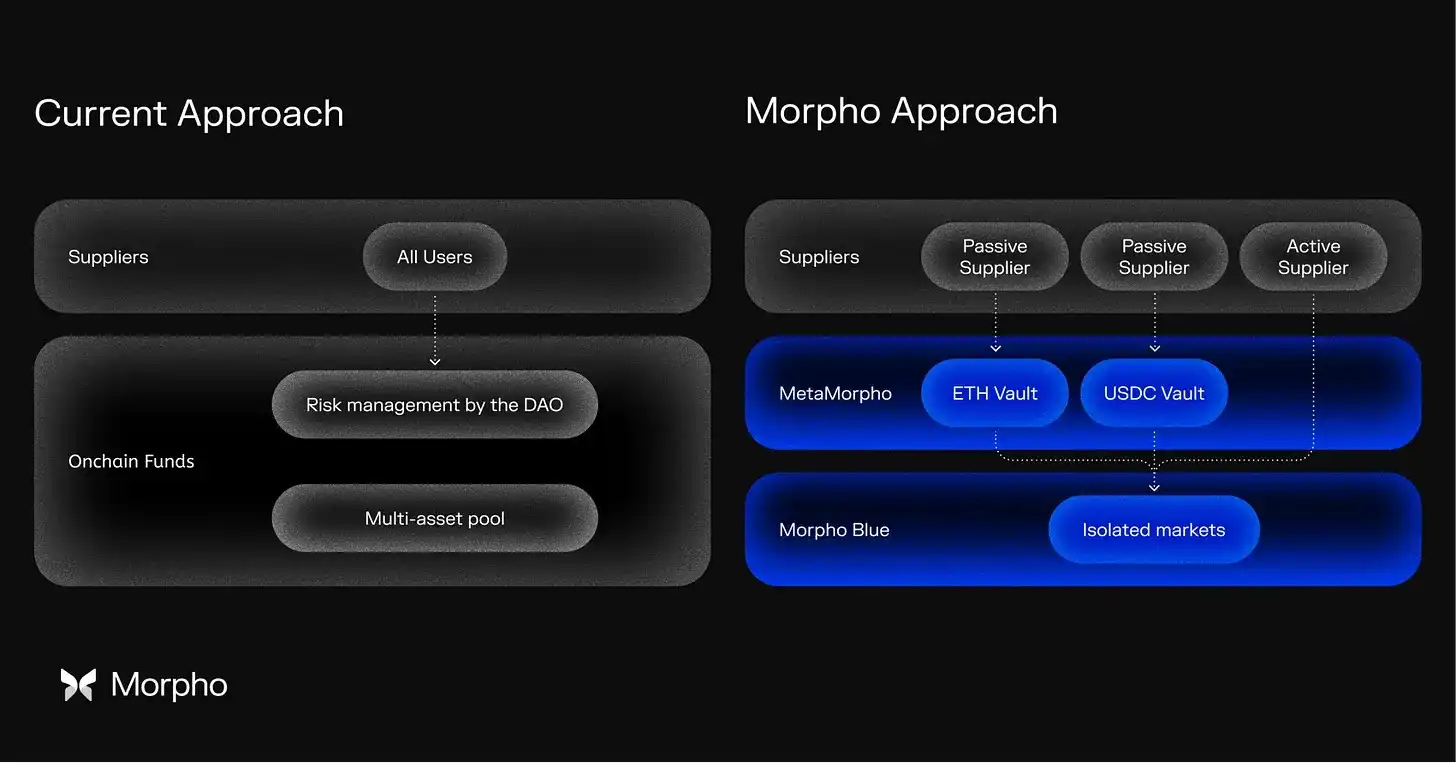
Differences in underlying architecture between the traditional DeFi lending model (represented by Aave) and Morpho's "Morphological" model.

Furthermore, Morpho introduces independent risk management institutions (Stewards), such as Gauntlet and Steakhouse Financial. These entities establish vaults, allocate funds to different markets based on their own analysis, and charge performance fees; if losses occur, they are confined within their own vaults. Gauntlet also provided risk advice for Aave, but in Aave's system, its professional opinions were often overruled by token holders seeking high yields through voting, a situation Morpho prevents at its root.

The Overlooked Hidden Cost

Aave and Morpho are currently the two most widely applied lending models in the crypto space: Aave uses the shared liquidity pool model where all deposits are aggregated, with risk rules set by community votes; Morpho advocates the isolated market model, where each lending pair is independent, with risks managed autonomously by professional institutions.

The Kelp DAO vulnerability exposed the flaws and weaknesses of the shared pool model. But even during stable periods without security incidents, this model harbors a long-overlooked hidden cost. Aave's three core markets on Ethereum (Ethereum, USDT, USDC) contribute 89% of the platform's lending volume. In these three markets, deposit rates are consistently 25% to 35% lower than borrowing rates. This spread essentially represents idle funds lying dormant in the liquidity pool; depositors cannot profit from them, yet borrowers still bear the full borrowing cost.

The interest rate mechanism adjusted based on utilization rates can push rates higher when risk increases but cannot activate idle funds when lending demand is low, leaving large amounts of assets stranded in the pool generating no yield. In these three markets alone, the annual value erosion due to idle funds amounts to approximately $52 million, close to a quarter of Aave's annualized revenue for one quarter. Even zeroing out the reserve ratio and canceling platform fees cannot solve the idle fund issue—it's an inherent shortcoming of the shared pool architecture.

Morpho's interest rate model aims to maintain a utilization rate of around 90%, significantly higher than Aave's 60% to 80% range. This model can sustain high utilization because deposits within the platform are not re-used as collateral for other loans, avoiding chain-liquidation risks at the source and thus eliminating the need to reserve large amounts of capital as a risk buffer. When lending demand is strong and funds are heavily borrowed, rates automatically increase, attracting more depositors; when lending demand is weak, rates decrease, stimulating borrowing. The entire system achieves dynamic balance without requiring community votes.
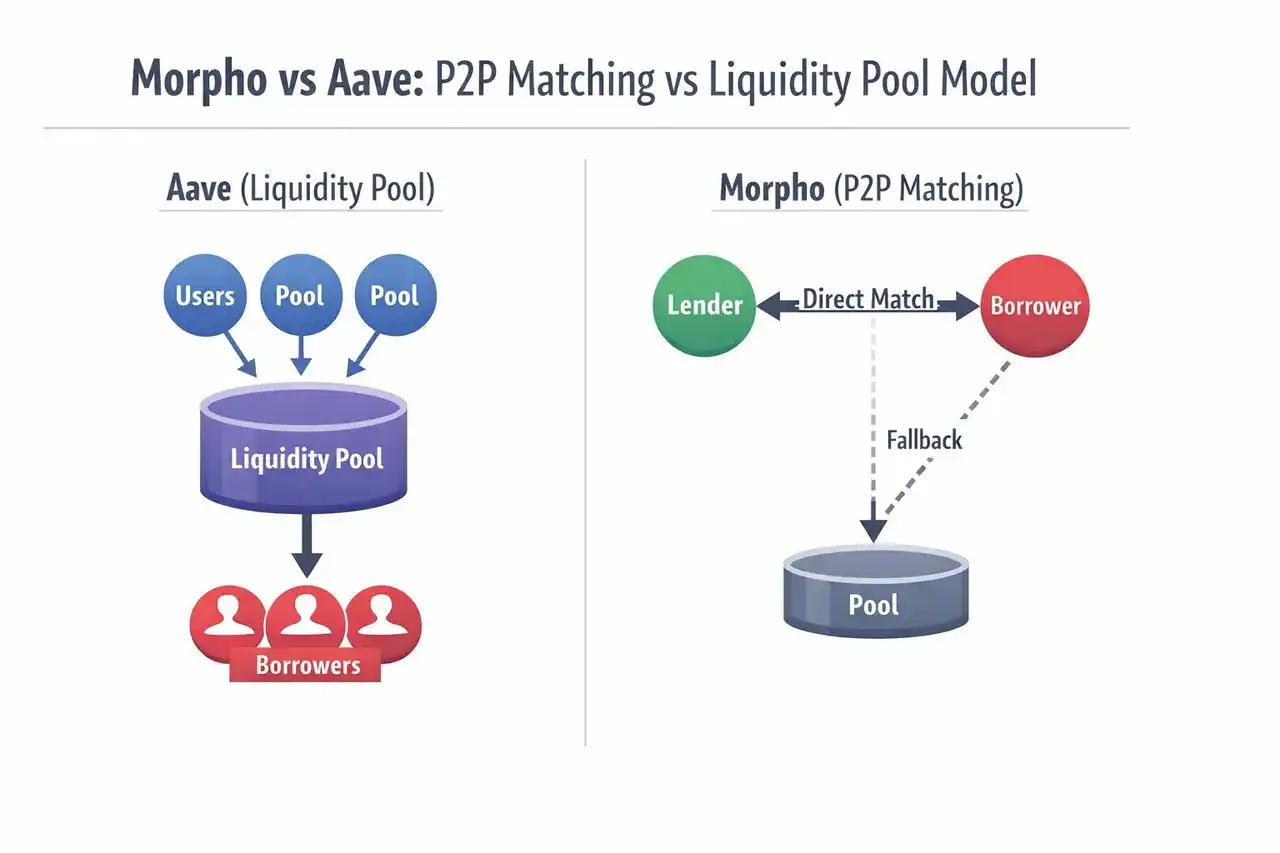
Source: Gate.com

Actual data confirms its advantage: even after deducting Steward fees, the yield offered to depositors by Morpho's top USDC vaults still exceeds that of Aave and Compound. Currently, Morpho's deposit-to-loan ratio is 41%, while Aave's is 39%, and the former's scale reaches tens of billions of dollars, meaning the yield advantage benefits all depositors on the platform day after day.

Institutional Choice: Which is More Trustworthy?

Surprisingly, all of Coinbase's crypto asset lending services are built on Morpho. The related loan scale has now surpassed $2 billion, and over 100 million platform users are indirectly enjoying the returns provided by Morpho.

Most users aren't even aware they are using DeFi services. Coinbase did not develop its own lending system nor choose another platform. The core reason is that Morpho's underlying architecture allows the platform to independently set risk parameters, select partner risk institutions, and maintain full control over the entire product experience.

Apollo Global Management, a global asset manager with over $1 trillion in assets under management and 30 years of experience in private credit, recently signed a four-year cooperation agreement, planning to acquire up to 90 million MORPHO tokens, accounting for 9% of the total token supply. The institution is connecting its tokenized fund assets to Morpho as collateral, with Gauntlet responsible for vault management and market stress testing.

Beyond that, Anchorage Digital, the first federally chartered native crypto bank in the US, has connected its institutional clients managing hundreds of billions to Morpho vaults; SG-FORGE, the compliant arm of French banking giant Société Générale, is the first licensed bank to implement DeFi lending business through Morpho.

These heavily regulated traditional financial institutions collectively chose Morpho, with a highly consistent core demand: the isolated market model allows them to meet their own compliance and risk control requirements without relying on DAO decisions. In contrast, all market rules in Aave inevitably involve community voting, completely incompatible with institutions' need for autonomous control.

Changes in the regulatory environment have further amplified this trend. The US "GENIUS Act" stipulates that stablecoin issuers cannot directly distribute investment returns, meaning stablecoin institutions require neutral underlying infrastructure to activate vast amounts of idle assets. US-related projections show that by 2028, the scale of stablecoin reserves invested in US Treasury bonds will surge from the current $120 billion to over $1 trillion. This massive pool of capital urgently needs a lending foundation that allows asset custodians to control their own risks, and Morpho is currently the most fitting choice.


Criptos en tendencia

Preguntas relacionadas

QWhat was the root cause of the massive $15 billion deposit outflow from Aave following the Kelp DAO exploit?

AThe root cause was Aave's governance mechanism. Earlier, the community had voted to increase the loan-to-value (LTV) ratio for rsETH to 93%, leaving a very thin safety margin of 7%. When fake rsETH tokens were deposited as collateral, it quickly drained the shared liquidity pool, causing the massive withdrawal.

QWhat is the fundamental difference in the operational models between Aave and Morpho as described in the article?

AAave uses a shared liquidity pool model where all deposits are pooled together to back all approved assets, with rules set by DAO governance. Morpho uses an isolated market model, where each lending market is separate with its own parameters set at creation, managed independently by professional risk stewards.

QWhy did Aave's Umbrella insurance mechanism fail during the crisis, according to the article?

AThe mechanism failed because it relies on voluntary participation. When the crisis hit, nearly 80% of the staked insurance funds (aWETH) entered the unstaking period and were withdrawn. Participants were incentivized to leave to avoid losses, rendering the insurance pool ineffective when it was needed most.

QWhat 'hidden cost' does the shared pool model like Aave's incur during normal market conditions?

AA significant hidden cost is idle capital due to low capital efficiency. In Aave's top three markets, the spread between deposit and borrow rates (25-35%) represents idle funds that earn no yield for depositors but whose cost is still borne by borrowers, leading to an estimated annual value drain of $52 million.

QWhy are regulated traditional financial institutions like Coinbase and Apollo Global Management choosing Morpho over Aave for their DeFi lending operations?

AThey choose Morpho because its isolated market model allows them to set their own risk parameters and choose their risk stewards, giving them full control and compliance. This is essential for meeting regulatory requirements, unlike Aave's model where all market rules are subject to community DAO votes.

Lecturas Relacionadas

Acciones A malheridas injustamente: Resiliencia, expectativas y confianza

En julio, las acciones tecnológicas globales se debilitaron repentinamente, afectando a mercados como Corea del Sur, Estados Unidos y Japón, lo que también presionó a los sectores tecnológicos de A-shares, con caídas consecutivas en el índice STAR 50 y el índice ChiNext. Sin embargo, este ajuste refleja principalmente la transmisión de riesgos externos, como la reducción del apalancamiento en las acciones coreanas, y no un cambio en los fundamentos. El mercado tecnológico chino es más diversificado que el de Corea del Sur, con narrativas duales: la cadena de suministro global de IA y la sustitución de importaciones en infraestructura de computación nacional. Los datos de ganancias en sectores clave como módulos ópticos y cables de fibra óptica siguen siendo sólidos, respaldando la lógica subyacente de la industria. Ante la volatilidad, el "equipo nacional" (fondos estatales) ha intervenido activamente, con anuncios de inversiones y recompras por cientos de miles de millones de yuanes por parte de empresas estatales, aseguradoras y casas de bolsa. Esto estabiliza la liquidez y las expectativas del mercado, enviando una señal de soporte político. Históricamente, estas intervenciones han coincidido con niveles de piso en el mercado. Más allá de la tecnología, otros sectores claves muestran fortaleza interna. El consumo se beneficia de una inflación al alza (IPC estable por encima del 1%) y signos de recuperación en sectores como el licor, con mejoras en inventarios. Los ciclos, liderados por el aluminio, tienen perspectivas de aumento de precios debido al equilibrio ajustado entre oferta y demanda global, altas ganancias y bajas valoraciones. Los activos financieros, como la banca, ofrecen dividendos estables. En resumen, la corrección tecnológica es un evento impulsado por factores externos. Con la acción estabilizadora del "equipo nacional" y la resiliencia de múltiples sectores (consumo, ciclos, finanzas), que cuentan con fundamentos sólidos y potencial de recuperación, se espera que el mercado de A-shares recupere su estabilidad.

marsbitHace 4 min(s)

Acciones A malheridas injustamente: Resiliencia, expectativas y confianza

marsbitHace 4 min(s)

Aún no llega la computadora cuántica, pero ya es un problema el 1,1 millón de bitcoins de Satoshi Nakamoto

Un problema de 1,1 millones de bitcoins de Satoshi surge antes de que lleguen los ordenadores cuánticos. Una herramienta de prueba de conocimiento cero permite migrar fondos de carteras modernas antes de un ataque cuántico, en tan solo 243 ms. Sin embargo, los antiguos bitcoins extraídos antes de 2012, incluidos aproximadamente 1,1 millones de BTC pertenecientes a Satoshi Nakamoto almacenados en direcciones P2PK, no pueden ser rescatados con esta técnica. Estas direcciones antiguas carecen de una ruta de derivación jerárquica (HD), lo que las hace criptográficamente inaccesibles para la solución. Esto plantea un dilema político, no técnico, para la comunidad Bitcoin. Se discuten cuatro opciones, todas problemáticas: 1) No actuar y permitir el robo, desestabilizando el mercado; 2) Congelar coercitivamente los fondos (como sugiere la propuesta BIP-361), violando el principio de propiedad; 3) Limitar severamente los retiros de direcciones vulnerables para ralentizar una venta masiva; o 4) Redistribuir forzosamente los fondos "abandonados" mediante un hard fork, rompiendo la inmutabilidad del libro mayor. El mercado ya está reaccionando a esta incertidumbre de gobernanza. Instituciones como Jefferies han reducido su exposición a Bitcoin citando este riesgo, a pesar de que los ordenadores cuánticos prácticos aún no existen. El verdadero peligro inmediato no es el hardware cuántico, sino la crisis de fe dentro de la comunidad sobre cómo proteger el valor de Bitcoin sin traicionar sus principios fundamentales de propiedad y código inquebrantable.

marsbitHace 15 min(s)

Aún no llega la computadora cuántica, pero ya es un problema el 1,1 millón de bitcoins de Satoshi Nakamoto

marsbitHace 15 min(s)

¿Dónde está el campo de batalla principal del próximo mercado alcista? La respuesta se esconde en estos dos tipos de activos

**¿Cuál será el foco de la próxima carrera alcista en criptomonedas? La respuesta está en estos dos tipos de activos.** El mercado de criptomonedas muestra signos de tocar fondo, con Bitcoin subiendo y fondos ETF entrando nuevamente. La narrativa central del próximo ciclo alcista será la **convergencia de las finanzas tradicionales y las finanzas en cadena (on-chain)**, impulsada por casos de uso reales como stablecoins, tokenización de activos, operaciones 24/7 y liquidación instantánea. Esta convergencia crea oportunidades de inversión en dos frentes: 1. **Aplicaciones nativas de criptofinanzas con ingresos reales**: Como **Hyperliquid (HYPE)**, una cadena de derivados cuyo volumen incluye ya activos tradicionales. Su ventaja reside en un modelo de negocio sostenible (con ingresos recurrentes) y una economía de token sólida, donde el 99% de los ingresos se usa para recomprar y quemar HYPE. 2. **Empresas tradicionales maduras que adoptan infraestructura cripto**: Ejemplificado por **Robinhood (HOOD)**, que acaba de lanzar su propia blockchain (Robinhood Chain) para operar con acciones tokenizadas y DeFi en 120 países. Su escala y compromiso real le dan una ventaja significativa sobre los meros proyectos piloto. En resumen, los mayores ganadores de la próxima fase serán aquellos proyectos y empresas que estén impulsando activamente la fusión de ambos mundos, aprovechando las ventajas de la tecnología blockchain para transformar los mercados financieros globales.

Foresight NewsHace 19 min(s)

¿Dónde está el campo de batalla principal del próximo mercado alcista? La respuesta se esconde en estos dos tipos de activos

Foresight NewsHace 19 min(s)

El camino lleno de obstáculos de Clarity: el proyecto de ley de criptomonedas en la lucha por un compromiso bipartidista en EE.UU.

Los legisladores estadounidenses buscan avanzar la ley Clarity, una legislación bipartidista para estructurar el mercado de criptoactivos, pero el camino está lleno de obstáculos. Tras un acuerdo inicial en el Comité Bancario del Senado en enero, vetado por el CEO de Coinbase, el proyecto se reanudó en mayo tras un compromiso sobre los rendimientos ("yield"). Sin embargo, los demócratas condicionan su apoyo a la inclusión de fuertes cláusulas éticas para los funcionarios electos, una demanda no resuelta que llevó a una votación partidista en el Comité Agrícola. En julio, los republicanos presionan para una votación en el pleno del Senado, pero las divisiones persisten. Temas como la protección al consumidor, el financiamiento ilícito y las exenciones para desarrolladores generan desacuerdos tanto entre partidos como dentro del Partido Republicano. Aunque existe consenso sobre la necesidad de una ley de estructura de mercado, el compromiso político es difícil. Reuniones recientes con la Casa Blanca buscan un lenguaje ético aceptable, pero algunos senadores demócratas son escépticos. Los objetivos a corto plazo de la comunidad cripto incluyen una acción simbólica en el Senado antes del receso de agosto, sentar las bases para una posible ley en 2026 y trabajar en un marco de compromiso que combine ética, rendimientos y otros aspectos clave. A pesar del terreno difícil, el proceso legislativo tradicional continúa.

marsbitHace 27 min(s)

El camino lleno de obstáculos de Clarity: el proyecto de ley de criptomonedas en la lucha por un compromiso bipartidista en EE.UU.

marsbitHace 27 min(s)

Trading

Spot

Artículos destacados

Cómo comprar DAO

¡Bienvenido a HTX.com! Hemos hecho que comprar DAO Maker (DAO) sea simple y conveniente. Sigue nuestra guía paso a paso para iniciar tu viaje de criptos.Paso 1: crea tu cuenta HTXUtiliza tu correo electrónico o número de teléfono para registrarte y obtener una cuenta gratuita en HTX. Experimenta un proceso de registro sin complicaciones y desbloquea todas las funciones.Obtener mi cuentaPaso 2: ve a Comprar cripto y elige tu método de pagoTarjeta de crédito/débito: usa tu Visa o Mastercard para comprar DAO Maker (DAO) al instante.Saldo: utiliza fondos del saldo de tu cuenta HTX para tradear sin problemas.Terceros: hemos agregado métodos de pago populares como Google Pay y Apple Pay para mejorar la comodidad.P2P: tradear directamente con otros usuarios en HTX.Over-the-Counter (OTC): ofrecemos servicios personalizados y tipos de cambio competitivos para los traders.Paso 3: guarda tu DAO Maker (DAO)Después de comprar tu DAO Maker (DAO), guárdalo en tu cuenta HTX. Alternativamente, puedes enviarlo a otro lugar mediante transferencia blockchain o utilizarlo para tradear otras criptomonedas.Paso 4: tradear DAO Maker (DAO)Tradear fácilmente con DAO Maker (DAO) en HTX's mercado spot. Simplemente accede a tu cuenta, selecciona tu par de trading, ejecuta tus trades y monitorea en tiempo real. Ofrecemos una experiencia fácil de usar tanto para principiantes como para traders experimentados.

387 Vistas totalesPublicado en 2024.12.11Actualizado en 2026.06.02

Cómo comprar DAO

Discusiones

Bienvenido a la comunidad de HTX. Aquí puedes mantenerte informado sobre los últimos desarrollos de la plataforma y acceder a análisis profesionales del mercado. A continuación se presentan las opiniones de los usuarios sobre el precio de DAO (DAO).

活动图片












