Former Nvidia AI Director Overturns Transformer, Creates 5 Trillion-Context Physical AI That Can Simulate the Entire Universe

marsbitPublicado a 2026-08-27Actualizado a 2026-08-27

Resumen

Former NVIDIA AI Director Anima Anandkumar and her co-founder Benedikt Jenik have unveiled a groundbreaking "Physical AI" model through their startup, Accelerated Understanding. This model departs entirely from the dominant Transformer architecture, instead utilizing "Neural Operators" to directly understand and simulate physical phenomena in their full 4D spacetime (3D space + time). It achieves a staggering inference-time context window of over 5 trillion tokens—reportedly 5 million times larger than current top LLMs—enabling it to generate complete 4D trajectories of complex physical systems in a single, one-shot inference without subsampling or chunking. The model, pre-trained with 1 trillion parameters and scaled to 35 trillion in experiments, functions as a universal physics simulator capable of handling diverse domains from weather to materials science. It establishes a "simulate → improve → simulate" loop for reality validation. The founders notably turned down a lavish offer from Jeff Bezos's Project Prometheus, which included 35% equity, a $2M salary, and over $20B in committed funding. Industry speculation points to NVIDIA CEO Jensen Huang, who previously championed Anandkumar's work, as a potential key supporter behind the scenes. This development signals a paradigm shift from language/image-centric AI to physics-first intelligence.

So shocking!

AI begins predicting the entire universe—

LLMs predict linguistic descriptions of the world, video world models predict (dynamic) images, but this time, it directly predicts the physical state of four-dimensional space and time.

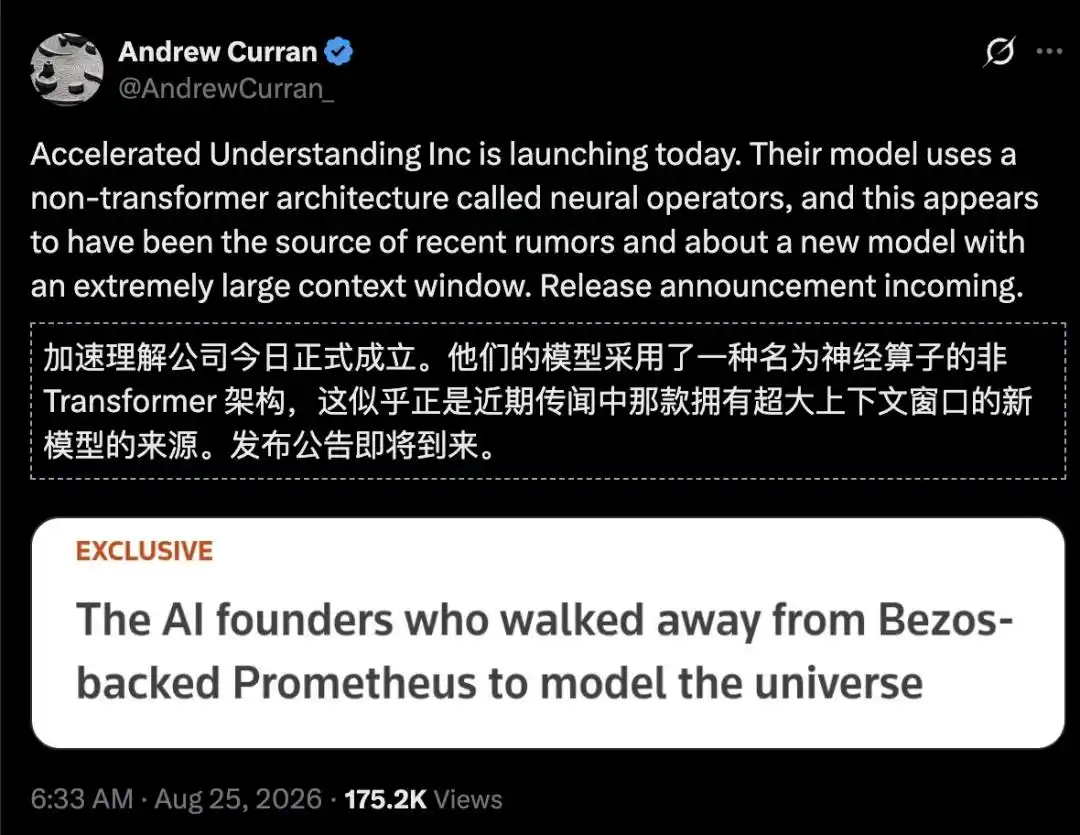
Most astonishingly, it adopts a completely new architecture called "neural operators," rather than the ubiquitous Transformer.

In a single inference pass, it directly outputs the complete four-dimensional trajectory, calculating the time dimension along with it.

The required context length for this is undoubtedly massive, and now the startup Accelerated Understanding has scaled training context to a trillion (1T) tokens, with inference context exceeding 5 trillion!
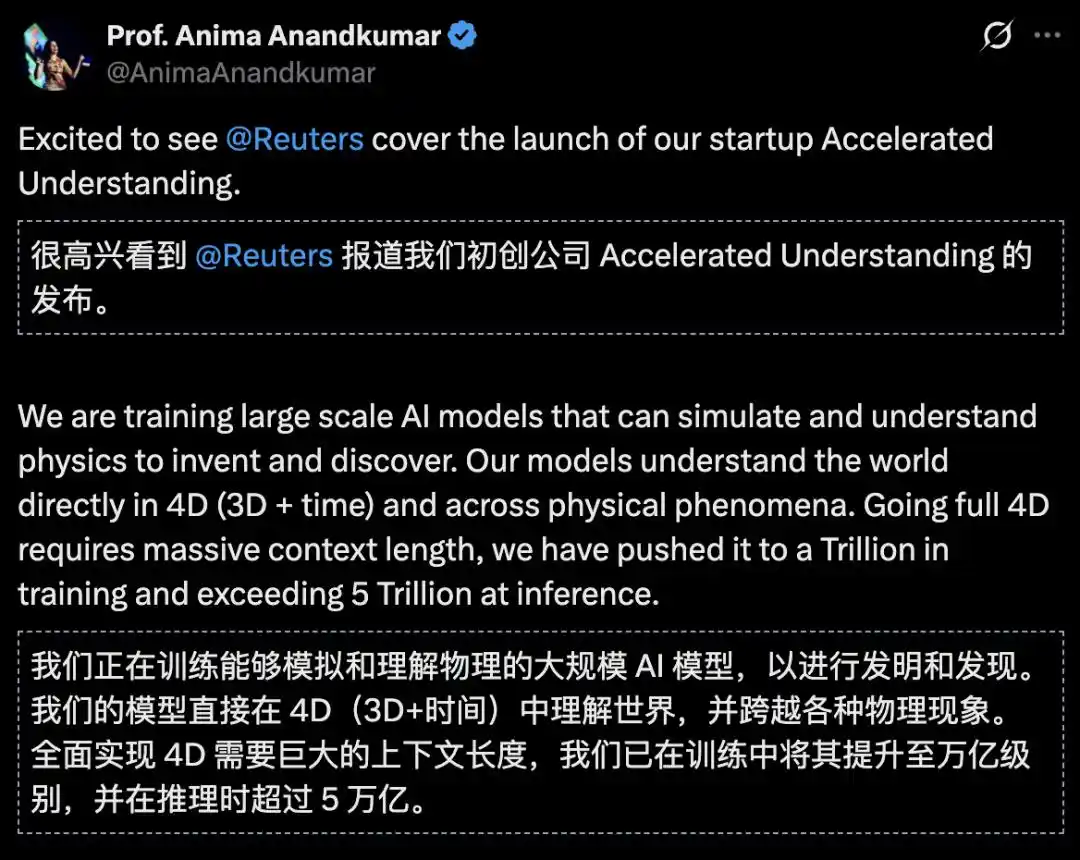
What does 5 trillion mean? It's 5 million times the context length of current top-tier LLMs! It's like having an AI read "War and Peace" 5 million times in one go, and it remembers everything.

Think about it. Ponder it carefully.

Time is not a fundamental thing; it seems more like an emergent property of a deeper informational structure, doesn't that sound interesting? Pushing this idea to its extreme essentially means generating the entire physical universe.

Even more surprising is that the two founders of this startup just rejected a lucrative offer from former world's richest man Jeff Bezos, which included 35% equity, a $2 million annual salary, and a financing commitment exceeding $20 billion.

The "spiritual shareholder" and possible hidden backer standing behind them might just be that man in the leather jacket—Nvidia CEO Jensen Huang.

5 Trillion Context is Not Ilya's "Safe Superintelligence"

Yesterday, a Silicon Valley investment bigwig made ambiguous remarks, setting the whole internet abuzz, with everyone speculating that Ilya's SSI might be about to drop something major.

Now the answer seems revealed: it's not Ilya, not even a language model, but a true "universe generator."
Accelerated Understanding's terrifying set of data is being widely shared:

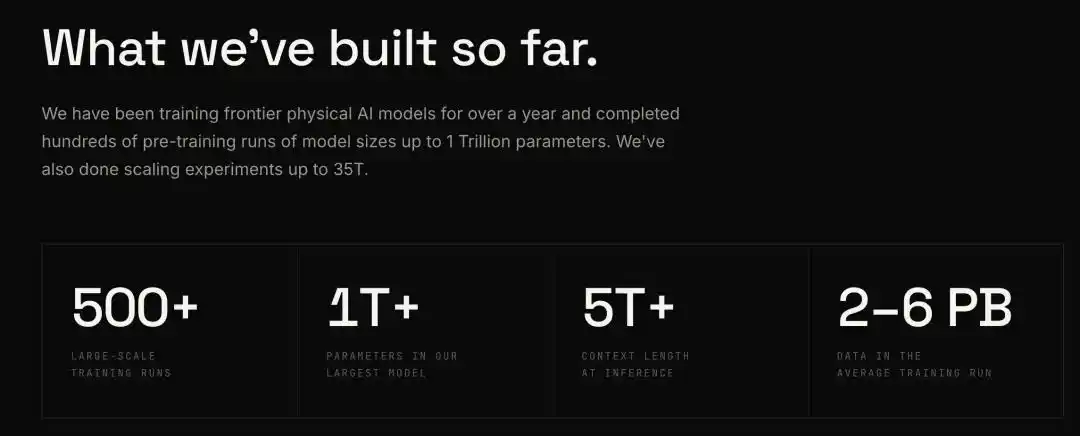
  • Model Parameter Scale: Completed pre-training of a model with up to 1 trillion (1 Trillion) parameters.
  • Extreme Scalability: Scaling experiments have surged to 35 trillion (35 Trillion) parameters.
  • Training Context: 1 Trillion (1 trillion) tokens.
  • Inference Context: Exceeds 5 Trillion (5 trillion) tokens.
Supported by such vast context, this model demonstrates frightening capabilities:

When performing physical reasoning, it requires no sub-sampling, no chunking.

Faced with extremely complex 4D spatial physical systems, it can generate the complete motion trajectory of the entire spacetime in "one-shot" inference!

Moreover, due to unified underlying logic, the same model can simultaneously handle completely different domains of physical problems!

This was unimaginable before.

In the past, meteorologists used weather models, materials scientists used materials models; now, Accelerated Understanding tells the world: physical laws are fundamentally connected at the bottom, and one universal physical large model is enough to tackle everything.

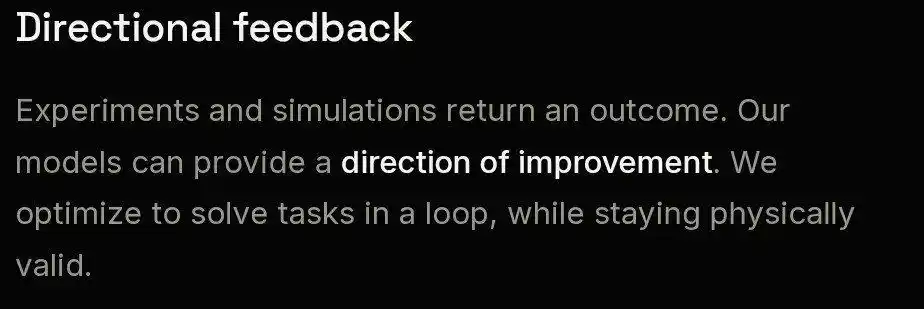
The most revolutionary core function of Accelerated Understanding lies in constructing a perfect closed loop of "Simulate → Improve → Simulate." It's not just a "generator," but a true "Reality Validator".

And this time, the targeted feedback also touches upon Ilya's test-time training.
"Is Transformer Dead?" The Awakening of Physical AI

If you ask any AI practitioner today: "What's the hottest AI architecture?" The answer is 100%: Transformer.

From ChatGPT to major video generation models, this architecture invented by Google has dominated the AI world for the past few years (that's the "T" in ChatGPT).

But in Anima's view, the Transformer path has gone astray.

"The language-centric view of intelligence is 'anthropocentric'," Anima pointed out sharply in an exclusive interview before the release, "while placing physics at the center is a 'natural-centric' view."

How do current LLMs and video world models work? Essentially, they are playing "probability games."

ChatGPT is predicting the next most likely word.

Those impressive video generation AIs are essentially taking visual shortcuts—they only make the generated frames "look" physically plausible. But if you dig into the gravity, fluid dynamics, material tension within them, you'll find they're all wrong.

They don't understand physics at all; they are just high-level "pixel parrots."

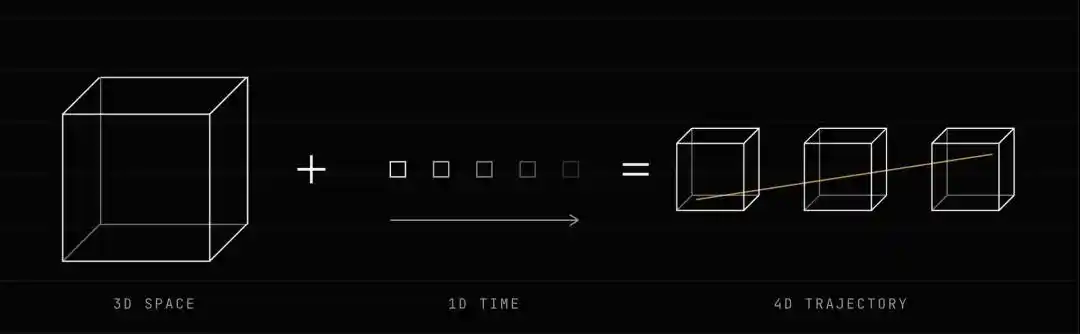
And text has only 1 dimension, video has only three dimensions, while real spacetime is 3D space + 1D time.
Furthermore, many models use autoregressive methods—predicting frame by frame, with errors accumulating step by step.
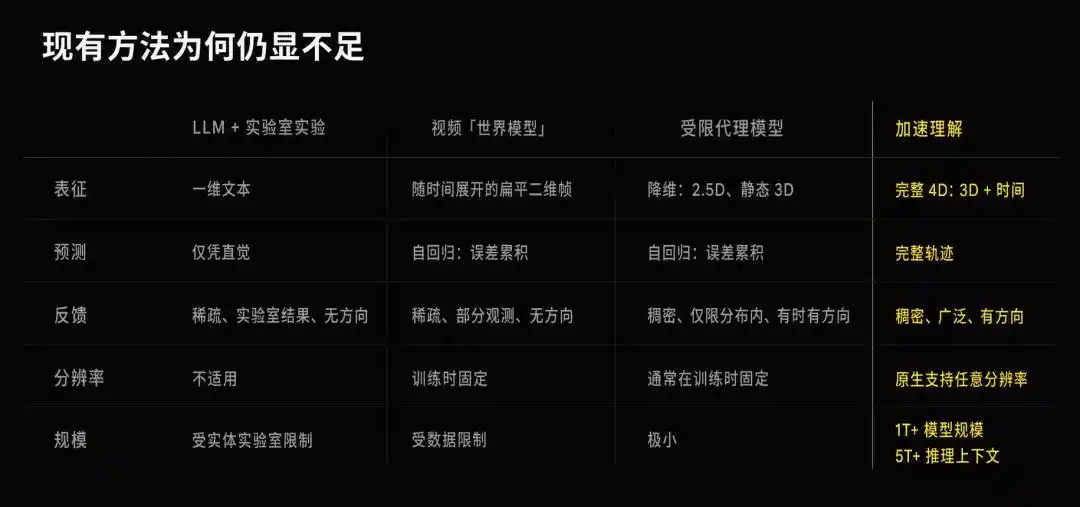
Therefore, Accelerated Understanding completely rejected Transformer, and also rejected visual shortcuts.

The ultimate weapon they unveiled is a revolutionary technology Anima helped pioneer years ago—Neural Operators.

Unlike processing text, neural operators are born specifically to handle complex, invisible physical data. They don't need to forcefully reduce the physical world into words or pixels, but instead understand multi-physics phenomena directly within the full 4D dimensions (3D space + time dimension).

Invisible airflow, plasma turbulence inside nuclear fusion reactors, microscopic thermodynamic distribution within chips... These physical processes invisible to the human eye and unguessable by traditional AI using "visual experience" become clear, visible, and computable under this new architecture.

Shocked Jensen Huang, Rejected Bezos

Seeing this, you might ask, how much computing power is needed to train such a terrifying model? Where does the money come from?

While refusing to disclose current financing details, the co-founder just hinted, "We have reached cooperation with computing providers who have provided hardware clusters to develop and run the AI."

But all clues point to her former employer—Nvidia, and that man shouting "AI is the future"—Jensen Huang.

Rewind to 2018, Anima was hired by Nvidia as Director of AI Research.

Over five years, she led a top team of scientists exploring how to apply Nvidia's GPU computing power to cutting-edge AI fields.
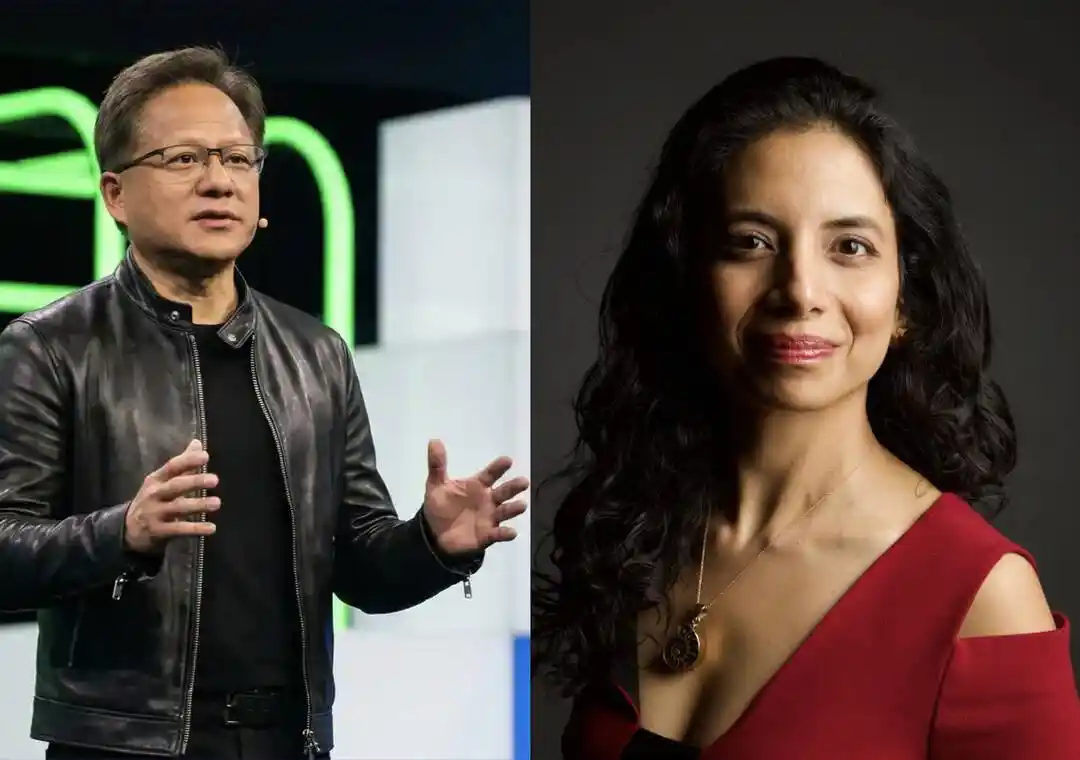
Back then, the team created an early stunning project: using AI to accelerate weather forecasting. Results showed AI predictions were as accurate as those made by meteorologists using extremely complex traditional computational fluid dynamics models, but orders of magnitude faster.

This result directly "shattered" Jensen Huang.

At Nvidia's GTC conference in 2021, Jensen Huang personally took the stage to showcase Anima's team's research on "neural operators" to the world. "He was so excited at the time," Jensen Huang recalled.
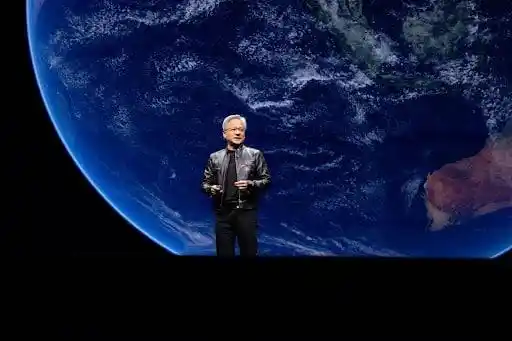
When Anima half-jokingly said to Jensen, "AI might steal the lunch of those theoretical physicists."

At that moment, Jensen Huang's eyes lit up, and he replied domineeringly: "I want it to eat all of their lunches!"

According to Anima, it was Jensen Huang who initially encouraged her to pursue and realize this crazy idea of "Physical AI."

Although Nvidia hasn't responded to Reuters' inquiry about whether it invested in the company, within the AI circle, everyone knows—without covert support from top-tier computing power, it's absolutely impossible to train a behemoth with 5 trillion context.

Jensen's grand chess move has finally been made.

However, to understand how incredible this "physical large model" is, we must go back to late 2024 in Los Angeles.

Inside an upscale restaurant, a secret dinner was taking place that could change the current AI landscape.

One of the main guests was investor and biotech entrepreneur Vik Bajaj (who later co-founded the $100+ billion valuation Project Prometheus with Bezos).

Sitting across from him was a husband-and-wife duo with top-tier AI backgrounds: California Institute of Technology professor of Computing and Mathematical Sciences, former Nvidia AI Research Director Anima Anandkumar, and her husband, top AI infrastructure engineer Benedikt Jenik.

Bajaj came prepared with an offer named "Project Prometheus." This agreement, heavily backed by Bezos, had terms so rich they were jaw-dropping:

Invite Anima to serve as the company's spokesperson, board member, and lead scientific visionary;

The couple would receive up to 35% company equity;

A base annual salary of $1 million, doubled to $2 million three months after joining;

Most exaggeratedly, the agreement explicitly stated that investors, including Bezos, would provide a "committed capital" exceeding $20 billion for financing before Series B.

In today's era where raising funds for large models is becoming increasingly difficult and computing costs are high, this was a super golden ticket to financial freedom and industry power.

However, Anima and Jenik chose to refuse.

Why? Because what they held in their hands had potential far exceeding that of a company for "automating the manufacture of complex physical systems." They didn't want to be under someone else's roof, nor did they want their technological vision hijacked by capital. What they aimed to build was a "god-level model" that could directly understand and simulate the physical universe.

In the end, the Anima couple lay low quietly until today, astonishing the world with their independently built Accelerated Understanding.

Conclusion: The Paradigm Shift from "Generating Information" to "Optimizing the World"

August 25, 2026, is destined to be a day recorded in the history of AI development.

While we cheer for large language models writing good poetry or polishing work emails, Accelerated Understanding, like a wall-breaker traveling back from the future, coldly tells us: Language and images are merely surface representations of how humans understand the world; physical laws are the true underlying code of this universe.

Rejecting Bezos, rejecting Transformer, discarding visual shortcuts, directly targeting the essence of 4D spacetime. Anima Anandkumar and Benedikt Jenik, with the insane data of 1 trillion parameters and 5 trillion context, proclaim to the world the arrival of the "Physical AI" era.

References:

https://x.com/AndrewCurran_/status/2092244031002771643

https://x.com/AnimaAnandkumar/status/2092236528898675014

https://x.com/daniel_mac8/status/2092303081287418277

https://www.reuters.com/business/ai-founders-who-walked-away-bezos-backed-prometheus-model-universe-2026-08-25/

https://acceleratedunderstanding.com/

This article is from the WeChat public account "New Zhiyuan," author: ASI Revelation, editor: David

Preguntas relacionadas

QWhat is the core technological breakthrough claimed by Accelerated Understanding's new AI model?

AThe core breakthrough is the use of a novel 'Neural Operator' architecture instead of Transformer. This model is designed to process physical data directly in a full 4D spacetime continuum (3D space + time) and can perform one-shot inference to generate complete 4D trajectories of physical systems, handling contexts of over 5 trillion tokens.

QWhy did the founders of Accelerated Understanding reportedly reject Jeff Bezos's lucrative offer?

AAccording to the article, the founders, Anima Anandkumar and Benedikt Jenik, rejected an offer involving 35% equity, a $2 million salary, and over $2 billion in committed funding from Bezos-backed Project Prometheus. They reportedly did so to maintain independence, avoid having their technological vision constrained by capital, and focus on building their 'universal physical AI' model.

QWhat is the reported significance of the model's 5-trillion-token context length?

AThe reported 5-trillion-token context length is described as being 5 million times larger than current top LLMs. It allows the model to process and remember vast amounts of information at once, enabling it to perform complex, continuous physical simulations (like simulating an entire universe's evolution) without sub-sampling or chunking the data.

QHow does the 'Physical AI' approach of Accelerated Understanding fundamentally differ from current LLMs and video world models?

ACurrent LLMs and video models work by predicting the next probable token or frame, often using 'visual shortcuts' to create plausible-looking but physically inaccurate outputs. In contrast, Accelerated Understanding's Physical AI, built on Neural Operators, aims to understand and simulate the underlying physical laws governing spacetime (4D). It directly computes physical states rather than generating statistically likely text or pixels.

QWhat role did NVIDIA and its CEO Jensen Huang reportedly play in the development of this technology?

AThe article suggests a significant connection. Co-founder Anima Anandkumar was formerly NVIDIA's AI Research Director, where her early work on AI for weather prediction impressed Jensen Huang. He publicly showcased her Neural Operator research and encouraged her vision. While not officially confirmed, the article implies NVIDIA likely provided critical computing resources ('hardware clusters') needed to train such a massive model with 5-trillion-token contexts.

Lecturas Relacionadas

¿Acumulación simultánea en todo el mercado: ¿BTC desafiará la zona de resistencia de 86,000 dólares?

**Resumen ejecutivo** Una liquidación récord de posiciones cortas desencadenó un repunte del 26% desde los mínimos de mediados de agosto. A diferencia de movimientos anteriores impulsados solo por apalancamiento, este rally cuenta con el respaldo de compras reales: los ETF de bitcoin en EE.UU. registraron su mayor entrada semanal del año, se observan salidas netas de BTC de los exchanges y todos los grupos de wallets muestran acumulación sincronizada. La palanca se redujo significativamente tras la liquidación, y el interés abierto en futuros (en BTC) cayó un 11%, indicando que no hubo una reposición agresiva de apuestas. El flujo de capital es sólido: los ETF acumularon +$2,230M durante el evento, y se evidencia una transferencia de fondos desde ballenas medianas (que vendieron ~50.5k BTC desde junio) hacia grandes entidades custodias (que adquirieron ~59.1k BTC en el mismo periodo). Todos los segmentos del mercado, desde pequeños inversores hasta grandes titulares, están en fase de acumulación, la más prolongada desde finales de 2024. El indicador de ciclo compuesto sugiere que el mercado sale de una fase "fría" prolongada y se posiciona en una etapa temprana del ciclo. El repunte actual está liderado por bitcoin y activos de gran capitalización, mostrando una correlación casi nula con el S&P 500 en el último mes. **El principal desafío** reside en la zona de resistencia de suministro entre **$81k y $86k**. En este rango convergen el coste base de los holders a largo plazo, órdenes de venta en el libro de pedidos y clústeres de liquidaciones cortas pendientes. El mercado de opciones actual no descuenta una ruptura inmediata de este nivel. En conclusión, el repunte, iniciado por una squeeze técnica histórica, cuenta con fundamentos de flujo de capital. Su sostenibilidad depende de la capacidad para absorber la oferta en la banda crítica de $81k-$86k. Un cierre sólido por encima de ~$83.3k sería una señal positiva, mientras que una caída por debajo del coste base de los holders a corto plazo (~$70k) indicaría debilidad.

marsbitHace 33 min(s)

¿Acumulación simultánea en todo el mercado: ¿BTC desafiará la zona de resistencia de 86,000 dólares?

marsbitHace 33 min(s)

Cuando la propiedad inmobiliaria se digitaliza: ¿qué sucede con tus derechos, riesgos y liquidez?

La tokenización de bienes raíces está ganando atención en la industria cripto y las finanzas tradicionales, pero enfrenta desafíos únicos debido a la complejidad legal, operativa y regulatoria del sector inmobiliario. OneAsset, una empresa con sede en Dubái, se centra en la tokenización de propiedades comerciales institucionales, priorizando la calidad del activo subyacente, los derechos legales ejecutables y una infraestructura conforme a la normativa. A diferencia de proyectos que se enfocan en la fragmentación para minoristas, OneAsset diseña bóvedas de activos individuales vinculadas a vehículos de propósito específico (SPV) para garantizar el aislamiento en caso de bancarrota y derechos económicos claros. Su enfoque inicial está en el mercado de Dubái, aprovechando su marco regulatorio claro para activos virtuales (VARA). La plataforma subraya que la fragmentación no garantiza liquidez; esta depende de la calidad del activo, flujos de caja estables y demanda real. OneAsset busca atraer primero a inversores institucionales, ofreciendo transparencia en la valoración, arrendamientos y operaciones. A largo plazo, el trabajo de estandarización de datos de OneAsset pretende hacer que estos activos tokenizados sean "legibles por máquinas", sentando las bases para una futura configuración automatizada de carteras (AiFi). El reto clave sigue siendo conectar los tokens digitales con derechos legales sólidos y una gestión operativa continua, demostrando que la tecnología blockchain complementa, pero no reemplaza, los fundamentos tradicionales de la inversión inmobiliaria.

marsbitHace 1 hora(s)

Cuando la propiedad inmobiliaria se digitaliza: ¿qué sucede con tus derechos, riesgos y liquidez?

marsbitHace 1 hora(s)

¿Qué está haciendo bien Lighter para que LIT no deje de alcanzar nuevos máximos?

El token LIT de Lighter, un perp DEX fundado por exmiembros de Citadel, ha alcanzado máximos históricos, multiplicándose por cinco desde mínimos de marzo. Su circulación limitada (25% del total) y un agresivo mecanismo de recompra y quema (1.73% del suministro total ya eliminado) sostienen la subida. Técnicamente, Lighter resuelve el "trilema" de los derivados on-chain siendo un ZK Rollup especializado. Su motor central, Lighter Core, codifica las reglas de la plataforma (como la prioridad de órdenes y los liquidaciones) directamente en circuitos zk-SNARK, permitiendo una verificación criptográfica de todo el proceso. Esto garantiza una latencia de menos de 5 ms y un throughput de 20k órdenes por bloque, mientras hereda la seguridad de Ethereum. Como L2 de Ethereum, ofrece garantías de salida (exit guarantees) y acceso directo a la liquidez y los activos de su ecosistema, a diferencia de cadenas independientes. Su arquitectura divide el motor de trading (en circuitos ZK personalizados) de los contratos inteligentes generales (en un zkVM paralelo), manteniendo el rendimiento. Recientes optimizaciones han reducido el tiempo de verificación de bloques de 5.3 a 1 minuto. Esta combinación de alto rendimiento, seguridad comprobable y herencia de la seguridad de Ethereum posiciona a Lighter de manera única para asociaciones institucionales, como la ya establecida con Robinhood, donde su narrativa de cumplimiento y seguridad es clave.

marsbitHace 1 hora(s)

¿Qué está haciendo bien Lighter para que LIT no deje de alcanzar nuevos máximos?

marsbitHace 1 hora(s)

Tras afectar a dos generaciones, Meta condenada a pagar 180.000 millones de dólares

En 1998, EE.UU. obtuvo 2060 mil millones de dólares de las tabacaleras por daños a la salud. Veintiocho años después, se repite el guion: Meta, dueña de Facebook e Instagram, acordó pagar hasta 180 mil millones de dólares a fiscales de 52 estados y territorios por diseñar funciones adictivas para adolescentes. La demanda alegaba que Meta creó deliberadamente algoritmos, feeds infinitos y notificaciones para enganchar a menores, ocultó los riesgos para su salud mental y recopiló ilegalmente datos de niños menores de 13 años. La empresa eligió llegar a un acuerdo tras solo ocho días de juicio, consciente del riesgo de un veredicto del jurado tras otras recientes sentencias en su contra. Aunque la suma es enorme, es manejable para Meta, cuyo precio de las acciones subió tras el anuncio. Lo crucial del acuerdo no es el dinero, sino una serie de cambios obligatorios en sus productos durante 10 años: límite de uso diario de 2 horas para menores de 13 a 17 años, bloqueo nocturno, restricción de notificaciones en horario escolar, ocultación de 'me gusta' y cuentas privadas por defecto. Además, Meta condicionó el pago del 30% restante de la indemnización (unos 53 mil millones) a que TikTok y YouTube adopten medidas similares y paguen multas comparables, buscando una solución a nivel de la industria y evitar una desventaja competitiva. Expertos comparan este momento con el "punto de inflexión del tabaco" de 1998, que cambió para siempre las normas sociales y legales en torno a ese producto. Este acuerdo sienta un precedente legal al enmarcar el diseño adictivo de redes sociales como un "molestia pública", abriendo la puerta a acciones similares contra otras plataformas como TikTok, Snap y YouTube, lo que redefine profundamente los riesgos legales y las reglas del juego para toda la industria.

marsbitHace 1 hora(s)

Tras afectar a dos generaciones, Meta condenada a pagar 180.000 millones de dólares

marsbitHace 1 hora(s)

Interpretación del informe de Morgan Stanley: Los ingresos del centro de datos de Semtech aumentan un 39% trimestralmente, y el despliegue de los chips ópticos de 1,6T impulsa el rendimiento a un nuevo nivel

El informe de Morgan Stanley del 25 de agosto destaca el fuerte desempeño de Semtech, impulsado por la demanda de centros de datos para IA. Los ingresos de este segmento en el segundo trimestre alcanzaron los 100 millones de dólares, un aumento del 39% respecto al trimestre anterior y del 91% interanual, alcanzando un máximo histórico. Este crecimiento se debe a la continua fortaleza de las soluciones 800G FiberEdge y a una certificación más rápida de lo esperado de la tecnología 1.6T FiberEdge, que junto con CopperEdge se espera que represente más del 50% de los ingresos del segmento en el tercer trimestre. La guía para el tercer trimestre también es sólida, con un crecimiento interanual del 160% previsto para los ingresos de centros de datos, hasta aproximadamente 145 millones de dólares. La empresa también experimenta una rápida mejora en sus márgenes brutos, impulsada por una optimización de la estructura de ingresos. El margen bruto ajustado guiado para el tercer trimestre es del 58.3%. Además, el negocio LoRa también registró máximos históricos. Morgan Stanley elevó su precio objetivo para Semtech de 175 a 195 dólares, manteniendo una calificación Neutral, ya que considera que la valoración está completa y requiere verificar la ejecución de los nuevos productos. Sin embargo, el continuo exceso de expectativas en centros de datos y la mejora de márgenes podrían impulsar nuevas revisiones al alza de las estimaciones de beneficios.

marsbitHace 1 hora(s)

Interpretación del informe de Morgan Stanley: Los ingresos del centro de datos de Semtech aumentan un 39% trimestralmente, y el despliegue de los chips ópticos de 1,6T impulsa el rendimiento a un nuevo nivel

marsbitHace 1 hora(s)

Trading

Spot
活动图片