DOJ, Europol Freeze $3.5M In Crypto After Dismantling Global Proxy Fraud Network

bitcoinistPublicado a 2026-03-14Actualizado a 2026-03-14

Resumen

US and European authorities dismantled SocksEscort, a global proxy service that used malware (AVrecon) to hijack over 369,000 devices in 163 countries, allowing criminals to hide their locations. The service, operating for years, generated at least $5.7 million from users who paid in cryptocurrency for anonymity. A coordinated law enforcement effort across multiple countries resulted in the seizure of 34 domains, takedown of servers, and freezing of $3.5 million in crypto. The network was linked to various crimes, including a $1 million cryptocurrency theft from a New York resident, bank fraud, and account takeovers.

A New York resident lost close to $1 million in cryptocurrency. That single case became one of the clearest examples of the damage done by SocksEscort — a for-hire proxy service that gave criminals across the globe a way to hide while they stole.

A Network Built On Hijacked Devices

US and European authorities announced Thursday they had shut down SocksEscort after years of operation. The service worked by infecting routers and other internet-connected devices with malware, turning them into cover points that masked the real locations of cybercriminals.

According to the Department of Justice, the network had quietly burrowed into at least 369,000 devices spread across 163 countries. Criminals could then route their attacks through those compromised machines, making them far harder to trace.

The malware at the heart of the operation — known as AVrecon — had been publicly identified by cybersecurity firm Black Lotus Labs as far back as July 2023. The network kept running anyway.
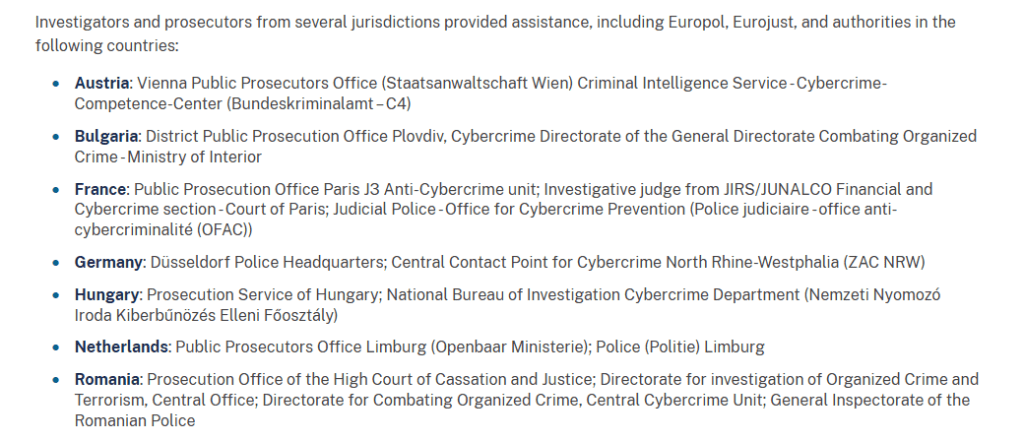
Source: DOJ

The takedown was not a single agency effort. Law enforcement from Austria, France, Germany, Hungary, the Netherlands, Romania, and the US worked the case together.

On the American side, the FBI’s Sacramento Field Office, the IRS Criminal Investigation Oakland Field Office, and the Department of Defense’s Defense Criminal Investigative Service all had a hand in it.

Europol and Eurojust provided cross-border coordination support. Black Lotus Labs and the nonprofit Shadowserver Foundation supplied technical intelligence that helped investigators connect the dots.

Bitcoin is now trading at $70,541. Chart: TradingView

Criminals Paid In Crypto To Stay Anonymous

SocksEscort did not just attract individual bad actors. It ran like a business. Customers paid to access the service, and they did so anonymously — using cryptocurrency to avoid leaving a financial trail.

Based on reports from Europol, the platform pulled in at least 5 million euros, roughly $5.7 million, from its paying users over the course of its run.

Authorities were ultimately able to seize 34 domains, take down about two dozen servers operating across seven countries, and freeze approximately $3.5 million in crypto tied to the operation.

Europol Executive Director Catherine De Bolle said proxy services of this kind give criminals the cover to carry out attacks, move illegal content, and dodge detection. She credited the international cooperation for exposing the infrastructure behind it.

Fraud Stretched From Bank Accounts To Crypto Wallets

The crimes enabled by SocksEscort went beyond any single method. Officials linked the network to bank fraud and cryptocurrency account takeovers dating back to 2020.

The New York victim’s case stood out for its scale, but reports indicate the damage was spread across multiple countries and target types.

Featured image from Pexels, chart from TradingView

Preguntas relacionadas

QWhat was the name of the proxy service dismantled by US and European authorities?

ASocksEscort

QHow many devices were infected by the malware used in the SocksEscort operation according to the Department of Justice?

AAt least 369,000 devices

QWhat was the name of the malware at the heart of the SocksEscort operation?

AAVrecon

QHow much cryptocurrency was frozen by authorities in connection with the SocksEscort network?

AApproximately $3.5 million

QWhich cybersecurity firm had publicly identified the AVrecon malware as far back as July 2023?

ABlack Lotus Labs

Lecturas Relacionadas

94.000 millones de yuanes, la mayor financiación de este año para robots humanoides ha aparecido

La empresa de robótica humana Neura, con sede en Múnich, ha completado una ronda de financiación Serie C de 14.000 millones de dólares (unos 94.900 millones de RMB), lo que supone la mayor inversión del año en este sector. Tras la operación, su valoración alcanza los 70.000 millones de dólares. La relevancia de esta ronda radica en la participación de inversores industriales como Schaeffler y Bosch, lo que señala un cambio estratégico: el foco pasa de la demostración tecnológica a la implementación práctica en fábricas. Neura, fundada por el experto en robótica industrial Armin Zeher, ha priorizado desde el inicio la aplicabilidad en entornos de producción real, contando ya con BMW como cliente. Otros inversores como NVIDIA, Amazon y Qualcomm aportan perspectivas complementarias en infraestructura de computación, logística y tecnología. El sector de la robótica humana está experimentando una afluencia masiva de capital, impulsada por dos factores clave: los avances en modelos de IA de gran escala, que mejoran la percepción y la toma de decisiones de los robots, y la creciente presión por la escasez y el encarecimiento de la mano de obra en la manufactura global. Actualmente, las empresas siguen dos caminos principales: los robots humanoides de propósito general (como Figure AI), con un horizonte comercial a más largo plazo, y los enfocados en escenarios industriales verticales y específicos (como Neura), que ofrecen una ruta de comercialización más rápida y definida. El campo de batalla real para estos robots ya no es el laboratorio, sino el suelo de la fábrica. Los escenarios de manufactura industrial, por su entorno estructurado y tareas repetitivas, se consideran los primeros en permitir una adopción a escala. Los entornos de trabajo peligrosos también tienen un gran potencial. Sin embargo, los principales retos para la adopción masiva ya no son puramente técnicos, sino de ingeniería y modelo comercial. Destacan los elevados costes de adaptación a cada línea de producción específica y la necesidad de desarrollar sistemas de mantenimiento y servicio locales robustos para garantizar la operación continua. La entrada de gigantes industriales históricos como inversores y la presencia inicial de robots en fábricas como las de BMW marcan un punto de inflexión: la confianza del sector se consolida y la pregunta central evoluciona de "si es posible" a "cómo hacerlo mejor, más rápido y de forma más estable".

marsbitHace 3 hora(s)

94.000 millones de yuanes, la mayor financiación de este año para robots humanoides ha aparecido

marsbitHace 3 hora(s)

Trading

Spot
Futuros
活动图片





