Crypto market’s weekly winners and losers – HYPE, CC, SOL, WLFI

ambcryptoPublicado a 2026-02-01Actualizado a 2026-02-01

Resumen

This week was largely negative for the crypto market, with Bitcoin (BTC) falling toward $78K and Ethereum (ETH) also losing ground. However, a few altcoins defied the trend. **Weekly Winners:** * **Hyperliquid (HYPE)** stood out, rallying from the low $20s to test the $32-$34 zone. * **Stable (STABLE)** climbed steadily, spiking near $0.026 ahead of a scheduled platform upgrade. * **Canton (CC)** saw a 29% rally from a $0.14 base before a pullback. * Other notable gainers included Zora (ZORA), Kite (KITE), and Sentient (SENT). **Weekly Losers:** * **Story (IP)** stumbled, shedding over 30% of its value. * **Solana (SOL)** had a decisive bearish week, dropping roughly 15%. * **World Liberty Financial (WLFI)** sank 26% despite reports of a major investment. * Other notable losers included Dogecoin (DOGE), Zcash (ZEC), and Sui (SUI). The article concludes that while the market punished many assets, it rewarded conviction in select places, emphasizing that short-term volatility is high but not directionless.

This hasn’t been a great week for crypto.

Bitcoin [BTC] slipped toward the $78K mark at press time, while Ethereum [ETH] gave up ground too. Most major tokens spent the week in the red, and optimism is a bit harder to find.

So buckle up, grab your coffee, and settle in! Here’s a look at the biggest moves from the past week.

Weekly winners

Hyperliquid [HYPE] swims against the tide

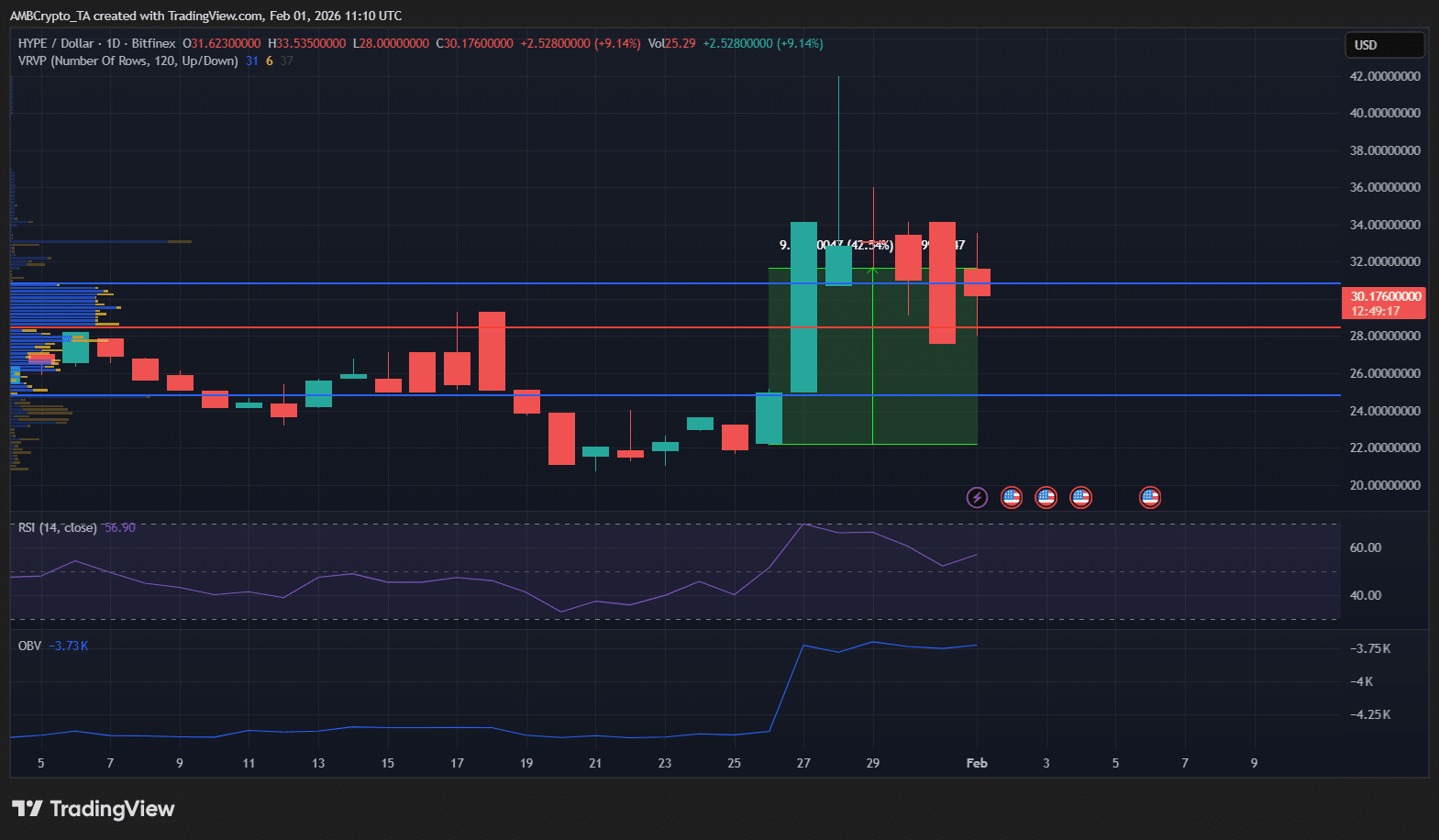
While most of the crypto market struggled this week, Hyperliquid [HYPE] stood out.

The chart saw HYPE pushing high over the past few sessions, rallying from the low $20s to test the $32-$34 zone before calming down.

Even after the pullback, price was well above recent support levels, so buyers were still active.

Source: TradingView

This came despite a weaker response over the week to the Fed’s latest policy decision and Chair Jerome Powell’s press conference.

Adding context, AMBCrypto previously reported that Hyperliquid’s market dominance jumped from around 18% in December to over 33% by the end of January.

That growing share is turning into tangible interest.

Stable [STABLE] extends climb ahead of upgrade

Stable [STABLE] also had a strong week. The token trended steadily higher through the week, from the mid-$0.01 range to spike near $0.026, before easing back toward $0.023 at press time.

RSI held above neutral levels, so buyers were still in control despite the short-term pullback.

For newer readers, StableChain is part of a growing group of payment-focused blockchains designed to remove common frictions like gas tokens for transfers.

It’s backed by Tether, and the recent positive USAT update likely helped fuel the move.

AMBCrypto previously reported that the platform is expecting an upgrade on the 4th of February, which will introduce gas waivers and smoother payment integrations.

Canton [CC] showed pace… before a reality check

Canton’s [CC] price pushed higher this week, rallying close to 29% from the $0.14 base to a local high near $0.18 before dipping.

The breakout was clean, with strong bullish candles and expanding volume confirming genuine participation. RSI was in the low 60s while CMF stayed positive, proving steady capital inflows.

That said, the latest pullback saw buyers taking a breather. Short-term consolidation won’t be too surprising.

Other notable winners

Away from the spotlight, a few newer names delivered standout moves. Zora [ZORA] stole the show with a big 38% surge in the last 24 hours.

Kite [KITE] and Sentient [SENT] weren’t far behind either, posting weekly gains of 23% and 38%, respectively. Smaller-cap tokens have gone up against the great dip of this week.

Weekly losers

Story [IP] stumbles with sell pressure

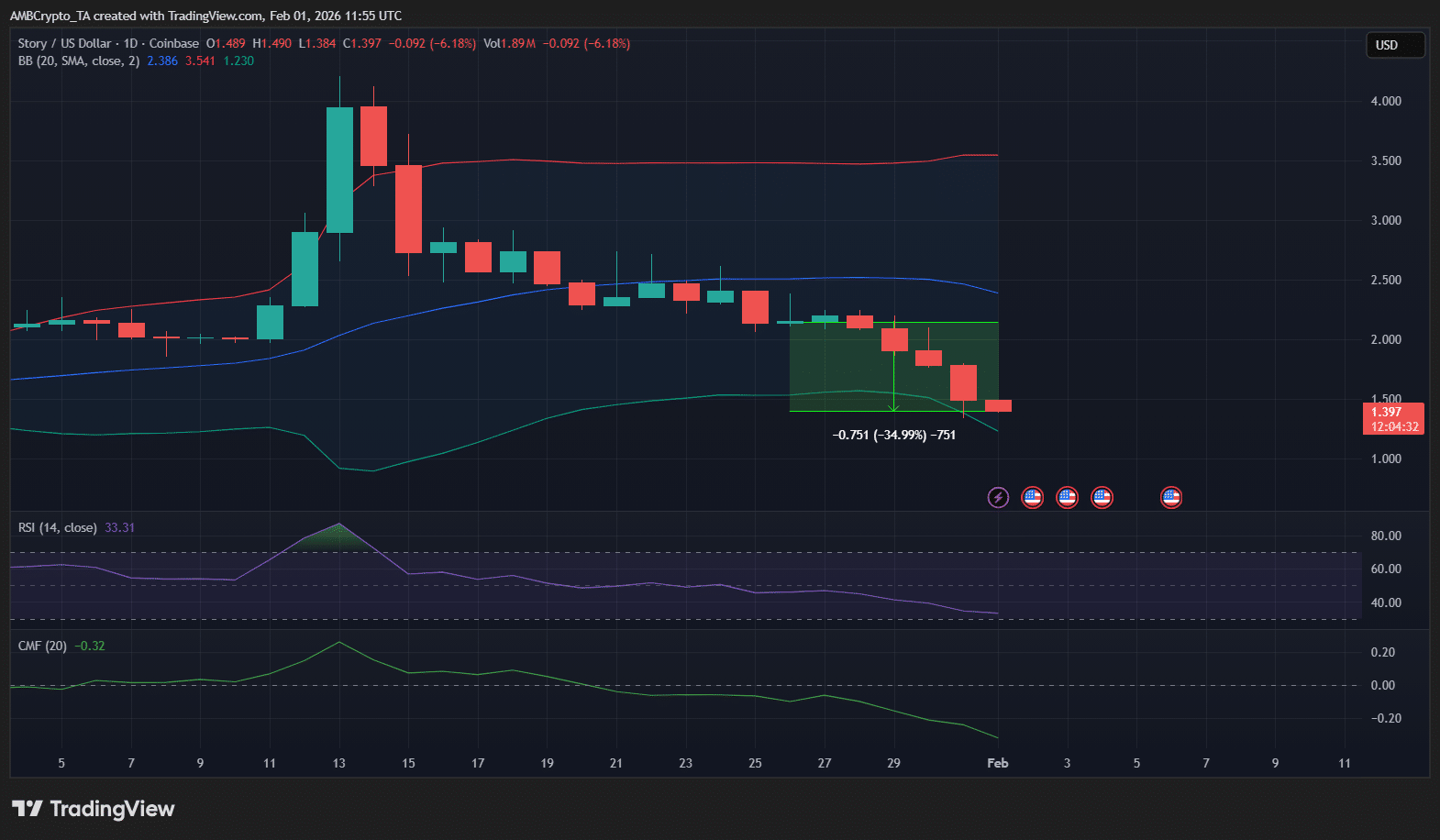
The last week saw Story’s [IP] price slide, shedding over 30% from the $2.10 region to trade closer to $1.40. The sell-off pushed IP below its mid-range Bollinger Band, with candles leaning toward the lower band.

Source: TradingView

RSI slipped into the low 30s, while CMF stayed deeply negative. Unless buyers step in soon, IP may continue to drift lower or consolidate at depressed levels.

Solana [SOL] slips and falls

Solana’s [SOL] last week went decisively bearish. Price dropped roughly 15% from the $120-125 zone to just above $105, with sellers firmly in control.

The decline was good enough to push RSI below 30, while  MACD was deep in negative territory too. Oversold conditions could invite a short-term bounce, but the greater structure still looks fragile.

World Liberty Financial [WLFI] sinks despite headline buzz

World Liberty Financial’s [WLFI] past week saw a brutal price fall of roughly 26%, tumbling from the $0.16-0.17 range to near $0.12. The drop pushed RSI below 30, and DMI showed sellers clearly dominating pace.

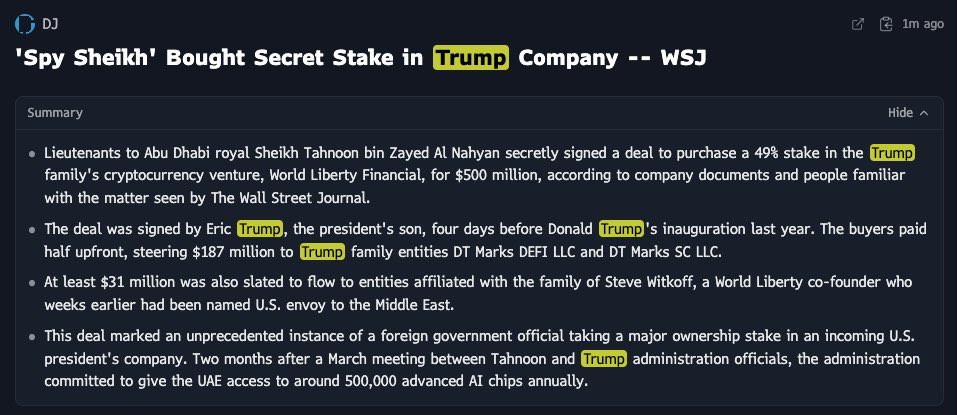
Source: X

Notably, the decline came even as reports surfaced of a senior UAE royal acquiring a 49% stake in World Liberty Financial for $500 million. That headline intrigue hasn’t translated into immediate price support.

Other notable losers

Losses weren’t limited to a single corner of the market. Dogecoin [DOGE] slipped roughly 15%, while Zcash [ZEC] fared worse, dropping close to 18% over the same period.

Sui [SUI] led the downside among this group, shedding around 22% as sellers remained aggressive.

Putting a messy week behind us…

The market has rewarded conviction in some places and punished it in others.

Short-term moves can be loud, but they’re rarely final. Zoom out, protect your capital, and remember that one volatile stretch doesn’t define the trend.

Back again next week!


Final Thoughts

  • A weak week for Bitcoin and Ethereum didn’t stop selective altcoins from posting gains.
  • Short-term volatility is high, but not directionless.
Next: Ethereum slides to $2,300 – $1.16B liquidations trigger whale buying
Share
  • Share
  • Tweet

Preguntas relacionadas

QWhich cryptocurrency stood out with significant gains despite the overall market downturn this week?

AHyperliquid [HYPE] stood out, rallying from the low $20s to test the $32-$34 zone.

QWhat was the primary reason behind Stable [STABLE]'s positive price movement during the week?

AStable [STABLE] extended its climb ahead of an upgrade on February 4th, which will introduce gas waivers and smoother payment integrations, backed by positive USAT updates and Tether's support.

QWhich major cryptocurrency experienced a bearish week with a price drop of approximately 15%?

ASolana [SOL] had a bearish week, dropping roughly 15% from the $120-125 zone to just above $105.

QDespite reports of a senior UAE royal acquiring a 49% stake, which token still saw a brutal price fall of about 26%?

AWorld Liberty Financial [WLFI] sank roughly 26% from the $0.16-0.17 range to near $0.12, despite headline buzz about the acquisition.

QAmong the smaller-cap tokens, which one delivered the biggest surge in the last 24 hours with a 38% gain?

AZora [ZORA] stole the show with a big 38% surge in the last 24 hours among smaller-cap tokens.

Lecturas Relacionadas

La SEC de EE.UU. quiere derogar una norma de 2005, ¿qué ven las acciones tokenizadas?

El 11 de junio, la SEC de EE. UU. propuso rescindir las Reglas 611 y 610(e) del Reglamento NMS, normas de 2005 que protegen las mejores cotizaciones en el mercado bursátil. La Regla 611 (norma de ejecución a través del precio) evita que las órdenes se ejecuten ignorando ofertas mejores en otros centros de negociación. La Regla 610(e) restringe las cotizaciones bloqueadas y cruzadas. La SEC argumenta que el mercado, ahora altamente automatizado y fragmentado, ha evolucionado, y que estas reglas añaden complejidad y costos de cumplimiento innecesarios, limitando la innovación. Su eliminación podría dar a los centros de negociación y brókeres más flexibilidad en el enrutamiento de órdenes y los mecanismos de ejecución. Esta propuesta es relevante para Web3 y las acciones tokenizadas, ya que la SEC menciona explícitamente que tecnologías como DLT y los contratos inteligentes permiten nuevas formas de negociación de valores. Las normas actuales, centradas en un marco de protección de cotizaciones, pueden no ser compatibles con mercados potencialmente las 24 horas y mecanismos como AMM en cadena. Una relajación de estas reglas podría abrir espacio para probar estructuras de negociación más innovadoras y eficientes para activos tokenizados, aunque persisten otros desafíos regulatorios clave. La propuesta está en período de comentarios públicos. La SEC estima que la eliminación podría ahorrar entre 54,2 y 77 millones de dólares anuales en costos de cumplimiento.

Foresight NewsHace 1 hora(s)

La SEC de EE.UU. quiere derogar una norma de 2005, ¿qué ven las acciones tokenizadas?

Foresight NewsHace 1 hora(s)

La transformación de Ethena y la ansiedad de Wall Street

En junio de 2026, el protocolo de moneda estable Ethena anunció una colaboración estratégica con el gigante de gestión de activos Janus Henderson (480.000 millones USD en AUM). Este acuerdo, que abarca inversión estratégica, gestión de tesorería y desarrollo de productos cotizados (ETPs), marca una transformación profunda para Ethena y refleja la creciente integración entre las finanzas tradicionales (TradFi) y las finanzas descentralizadas (DeFi). Ethena, conocido por su stablecoin USDe respaldada por una estrategia delta-neutral, se vio forzado a evolucionar tras una crisis en 2025 que expuso la dependencia de su modelo a las tasas de financiación de los contratos perpetuos. Su respuesta fue diversificar radicalmente las reservas de USDe, reduciendo la exposición a derivados al 20% e incorporando activos del mundo real (RWA) como fondos del Tesoro estadounidense, bonos corporativos y, ahora, fondos de CLO (obligaciones de préstamo garantizadas) de alto grado a través de Janus Henderson. La colaboración tiene cuatro capas clave: 1) Janus Henderson proporciona activos (su fondo JAAA de CLO) para las reservas de USDe; 2) Su plataforma ANTIK adquiere tokens de gobernanza ENA; 3) Integra sUSDe en sus herramientas de gestión de tesorería; 4) Ambos planean desarrollar productos ETP para distribuir USDe y ENA a clientes institucionales. Este movimiento de un gestor de activos tradicional actuando como canal de distribución para un protocolo DeFi surge de una ansiedad estructural en Wall Street. La claridad regulatoria, como la Ley GENIUS de EE.UU. de 2025, ha transformado la competencia en el sector de las stablecoins, donde actores como PayPal y BlackRock ya están establecidos. Para los gestores tradicionales, no participar implica riesgos mayores: perder el control sobre la "tokenización" de activos, enfrentar presiones por mayores rendimientos para sus clientes y, fundamentalmente, quedarse fuera del control de los puntos de entrada en la capa de liquidación de la economía digital, donde las stablecoins ya manejan volúmenes que superan a los de Visa. La evolución de Ethena, de ser un producto puramente criptonativo a un instrumento híbrido con RWA, y la decisión de Janus Henderson de integrarse profundamente en su ecosistema, señalan la disolución de los límites entre TradFi y DeFi. La moneda estable se ha convertido en el campo de batalla central para esta fusión, donde la colaboración estratégica supera a la confrontación.

Foresight NewsHace 1 hora(s)

La transformación de Ethena y la ansiedad de Wall Street

Foresight NewsHace 1 hora(s)

MoneyGram: ¿Por qué lanzamos nuestra propia stablecoin?

**MoneyGram lanza su propia stablecoin, MGUSD, para transformar los servicios financieros globales** Con más de 80 años en el sector de las remesas, MoneyGram introduce MGUSD, una stablecoin propia, no como un producto aislado sino como una pieza central de su estrategia para ofrecer servicios financieros más amplios y eficientes. Dirigida a los miles de millones de personas con acceso limitado a servicios bancarios, MGUSD permite a los usuarios mantener un saldo estable en dólares dentro de la app de MoneyGram. Esta innovación, desarrollada en la blockchain de Stellar con una arquitectura de cartera auto-custodiada, ofrece mayor control sobre los fondos. Los usuarios pueden almacenar valor, recibir transferencias globales, cambiar divisas y acceder a una red masiva de retiro de efectivo, todo desde una única plataforma. La tecnología blockchain opera de forma transparente para el usuario, centrándose en la utilidad práctica. A diferencia de otras stablecoins enfocadas en el comercio institucional, MGUSD se integra en la red existente de MoneyGram. Su valor radica en mejorar la infraestructura interna: agilizar la gestión de tesorería, reducir costos operativos y optimizar procesos de liquidación y financiación para agentes y socios, manteniendo la neutralidad entre diferentes stablecoins. La implementación rápida en aproximadamente un año fue posible gracias a una reestructuración organizativa hacia equipos multidisciplinares y ágiles. MoneyGram colabora con socios tecnológicos especializados como Stripe (emisor regulado), Crossmint (gestión de carteras), Fireblocks (tesorería empresarial), m0 (contratos inteligentes) y la Stellar Development Foundation. MoneyGram mantiene su compromiso con un ecosistema abierto, potenciando tanto la experiencia del usuario final como las capacidades de sus socios globales (bancos, billeteras digitales, agentes). El futuro de MGUSD se centra en seguir evolucionando para ofrecer un control financiero más estable, accesible y completo para poblaciones desatendidas en todo el mundo.

Foresight NewsHace 2 hora(s)

MoneyGram: ¿Por qué lanzamos nuestra propia stablecoin?

Foresight NewsHace 2 hora(s)

Trading

Spot
Futuros

Artículos destacados

Cómo comprar WLFI

¡Bienvenido a HTX.com! Hemos hecho que comprar Official World Liberty Financial (WLFI) sea simple y conveniente. Sigue nuestra guía paso a paso para iniciar tu viaje de criptos.Paso 1: crea tu cuenta HTXUtiliza tu correo electrónico o número de teléfono para registrarte y obtener una cuenta gratuita en HTX. Experimenta un proceso de registro sin complicaciones y desbloquea todas las funciones.Obtener mi cuentaPaso 2: ve a Comprar cripto y elige tu método de pagoTarjeta de crédito/débito: usa tu Visa o Mastercard para comprar Official World Liberty Financial (WLFI) al instante.Saldo: utiliza fondos del saldo de tu cuenta HTX para tradear sin problemas.Terceros: hemos agregado métodos de pago populares como Google Pay y Apple Pay para mejorar la comodidad.P2P: tradear directamente con otros usuarios en HTX.Over-the-Counter (OTC): ofrecemos servicios personalizados y tipos de cambio competitivos para los traders.Paso 3: guarda tu Official World Liberty Financial (WLFI)Después de comprar tu Official World Liberty Financial (WLFI), guárdalo en tu cuenta HTX. Alternativamente, puedes enviarlo a otro lugar mediante transferencia blockchain o utilizarlo para tradear otras criptomonedas.Paso 4: tradear Official World Liberty Financial (WLFI)Tradear fácilmente con Official World Liberty Financial (WLFI) en HTX's mercado spot. Simplemente accede a tu cuenta, selecciona tu par de trading, ejecuta tus trades y monitorea en tiempo real. Ofrecemos una experiencia fácil de usar tanto para principiantes como para traders experimentados.

626 Vistas totalesPublicado en 2025.09.01Actualizado en 2026.06.02

Cómo comprar WLFI

Discusiones

Bienvenido a la comunidad de HTX. Aquí puedes mantenerte informado sobre los últimos desarrollos de la plataforma y acceder a análisis profesionales del mercado. A continuación se presentan las opiniones de los usuarios sobre el precio de WLFI (WLFI).

活动图片