Berkshire Hathaway and SoftBank: One Must Die

marsbitPublicado a 2026-05-08Actualizado a 2026-05-08

Resumen

"Berkshire Hathaway vs. SoftBank: One Must 'Die'" In May 2026, with half-empty seats at its annual meeting, Berkshire Hathaway, under new CEO Greg Abel, faces investor pressure over its massive $397.4 billion cash pile—nearly 40% of its market cap. This hoard, largely in US Treasuries, resulted from 14 consecutive quarters of net equity sales, including massive Apple divestments. Abel inherits Buffett's "nothing looks attractive" stance in an expensive market likened to "a casino next to a church." However, Berkshire's significant underperformance versus the S&P 500 and a future of sustained high valuations could force a historic choice: returning capital via special dividends or breaking up the conglomerate. Berkshire's "death" would be a slow, existential one—the erosion of its value-investing identity post-Buffett. Conversely, SoftBank, led by Masayoshi Son, is in a frantic race against debt. It has pledged a staggering $64.6 billion for a 13% stake in OpenAI, financed by escalating parent-company debt (over ¥16.3 trillion), a historic $40 billion bridge loan, and the fire-sale of assets like Nvidia, T-Mobile, and Alibaba shares. The plan hinges on a successful OpenAI IPO and the $100 billion listing of its Roze AI unit to refinance. Son's high-wire act faces three correlated triggers for potential collapse: an OpenAI IPO delay or stumble, a sharp de-rating of its key liquid asset Arm (trading at 70x forward P/E), or a failure to refinance the massive 2027 bridge loan at...

Author: Le Ming

May 2, 2026, Omaha. This time, only a little over half of the 18,000 seats were filled—in the past, you had to scramble for tickets and queue up to get into the Berkshire Hathaway annual shareholders meeting, and hotels outside the venue were impossible to book.

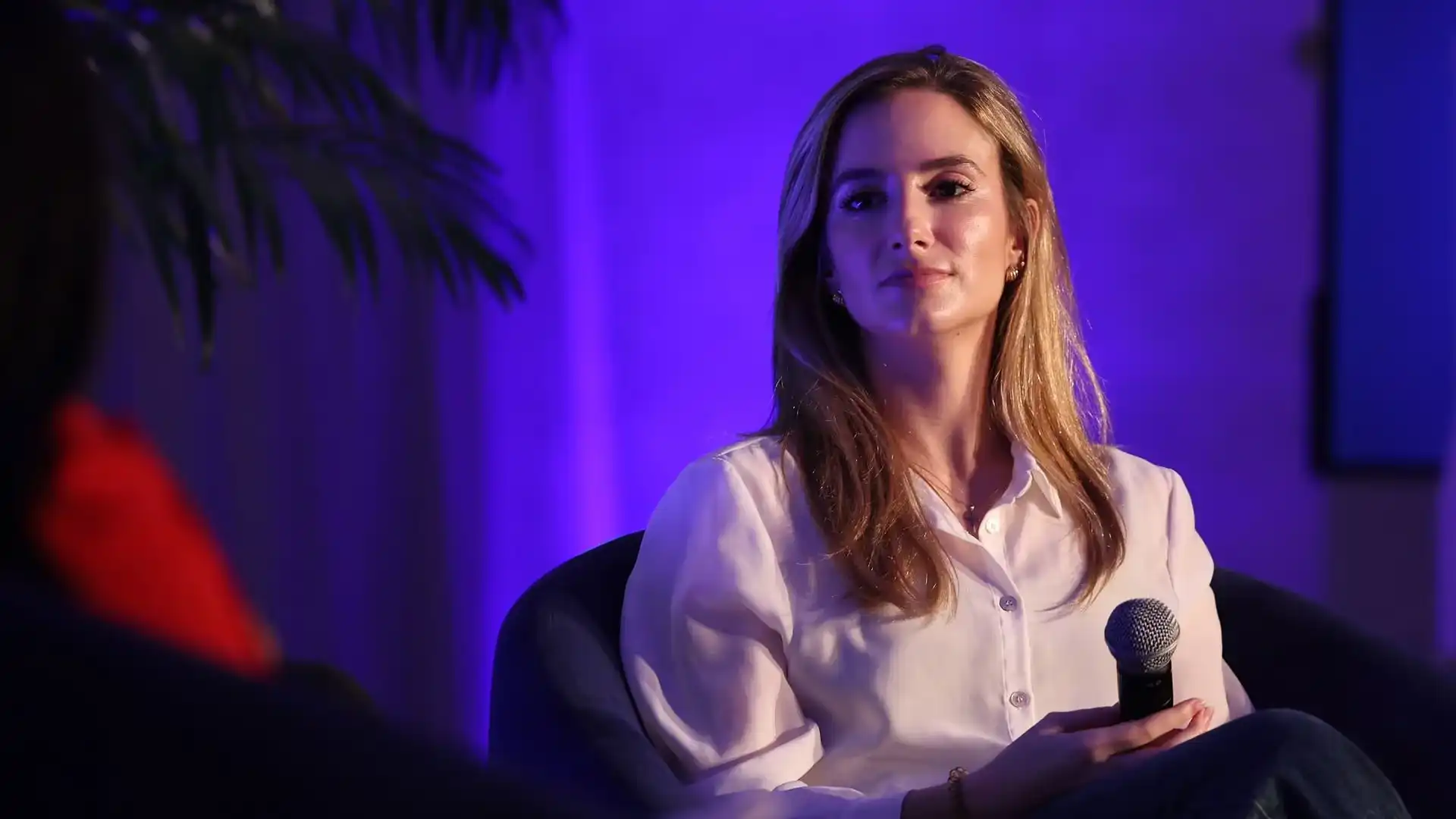
This time, the 95-year-old Warren Buffett was not presiding on stage as in previous years. The new CEO, Greg Abel, stood in front of the main screen, fielding investors' tough questions about why Berkshire was sitting on nearly $400 billion in cash.

That same week, six thousand miles away in Tokyo, Masayoshi Son's team was doing something else: bundling SoftBank Group's yet-unprofitable AI assets, preparing to load them into a new company called Roze AI, targeting a $100 billion valuation and planning a U.S. listing in the second half of 2026.

The reason is simple: SoftBank must continue to find money and continue investing for OpenAI's $64.6 billion check, which could ultimately balloon to nearly a trillion dollars.

One is holding $397.4 billion in cash, buying nothing, waiting for the market to crash; the other is carrying over 16.34 trillion yen (over $100 billion) of parent company interest-bearing debt, betting the market won't crash.

Berkshire Hathaway: Too Much Money Is a Disease

What does $397.4 billion mean?

It's nearly 40% of Berkshire's total market capitalization, double Buffett's average cash level over the past two decades.

Of this, $339.3 billion is directly held in U.S. short-term Treasury bonds, making Berkshire one of the U.S. Treasury's largest non-governmental creditors.

This pile of money wasn't passively accumulated; it was actively built.

For the past fourteen quarters, Berkshire has been a net seller of stocks each quarter. Apple, once its largest holding, has been continuously reduced for four quarters starting from Q3 2024, with cumulative sales of nearly 688 million shares, raising over $100 billion.

Buffett's explanation has always been the same: can't find anything cheap.

He wrote one sentence in his 2024 letter to shareholders—"Generally, nothing appears attractive." In a recent off-site interview during the annual meeting, he described the current market as "a church next to a casino," saying that of all the market sentiments he has experienced, this is the most gambling-like.

The problem is, he's been making this judgment for more than a year.

Berkshire's stock performance over the past twelve months has lagged the S&P 500 by about 40 percentage points. This is no small number—it's one of the largest relative drawdowns since Buffett took over Berkshire in 1965. The last time such a degree of underperformance occurred was during the final stages of the dot-com bubble in 1999.

At that time, Buffett said he would only buy in "cutting-edge industries like bricks, carpet, insulation, and paint." Two years later, the Nasdaq fell 78%, and he was proven right.

But this time, investors have waited more than two years. The market rises, Berkshire doesn't move; the market rises again, Berkshire still doesn't move. On January 1 of this year, when Buffett officially stepped down as CEO, Berkshire's stock price fell slightly—the market expressed a measured disappointment in the most restrained manner.

This is the situation Abel inherited. He is a Canadian accountant who worked his way up to Berkshire Vice Chairman, spending his entire career in heavy-asset, regulated, slow-growth businesses like utilities, railroads, and energy.

He is not Buffett, and he knows he is not Buffett. In his first letter to shareholders, he repeatedly emphasized "continuity" and "decentralization." At his first annual meeting, his answer to all suggestions about splitting up the conglomerate was an absolute "impossible."

Abel's dilemma is: he can neither deploy this cash (because the market is too expensive), nor can he continue to pretend this money doesn't exist (because investors are voting with their feet).

If the market continues to rise over the next five to ten years, he will eventually have to face a question that has never been seriously discussed in Berkshire's history—giving the money back. Either returning it to shareholders as a special dividend, or actually breaking up and selling off this behemoth stitched together from over 60 subsidiaries.

Will Berkshire die? Not suddenly. Its holdings are too diversified, its cash too abundant, its debt too low; any external shock would struggle to truly pierce it. But it will slowly, decently, become something else.

SoftBank's Problem: Too Little Money and Still Betting

Masayoshi Son's situation is the opposite mirror image of Abel's.

On February 27, 2026, SoftBank issued an announcement. The most critical sentence translates to: "SoftBank Group's cumulative investment in OpenAI is expected to reach $64.6 billion, representing an ownership stake of approximately 13%."

$64.6 billion, 13%. It's the most expensive single bet of this era.

To understand the madness of this number, one needs to see how SoftBank managed to afford it.

The parent company's interest-bearing debt has skyrocketed from 12.14 trillion yen in March 2025 to 16.34 trillion yen in December 2025. The parent company's so-called cash is only about 3.8 trillion yen, nearly one-third of which is actually unused committed credit lines, not real cash.

Where did this money come from? SoftBank took out $20 billion from pledging its holdings of Arm stock; and scraped together about $7.7 billion from pledging its holdings in the Japanese telecom subsidiary SBKK.

On March 27, 2026, SoftBank also signed an unprecedented $40 billion bridge loan, led by five banks—JPMorgan Chase, Goldman Sachs, Mizuho, SMBC, and MUFG—later expanded to eight. This is one of the largest bridge loans in Asian history. $30 billion of this money is directly used to follow-on invest in OpenAI. The term is 12 months, meaning SoftBank must repay $40 billion by March 2027.

This is why Son has seemed a bit "not himself" this year: He completely offloaded SoftBank's entire Nvidia stake, raising $5.8 billion. This was a one-time sell-off in October 2025. In a Tokyo speech in early December 2025, he admitted: "I didn't want to sell a single share of Nvidia, but I needed more money to invest in OpenAI. I sold Nvidia crying."

To scrape together money for OpenAI, Son has been "selling the family silver." SoftBank sold its T-Mobile holdings—56.9 million shares in the first three quarters of fiscal 2025, raising $12.7 billion; another 12.5 million shares in Q4, raising another $2.3 billion. Deutsche Telekom was completely sold off. Alibaba was completely sold off. At the end of April this year, SoftBank began organizing a $10 billion margin loan secured by OpenAI equity, with an interest rate as high as nearly 8%.

At the same time, SoftBank has been issuing bonds everywhere: In November 2025, SoftBank issued a 500 billion yen bond with a 3.98% coupon; in April 2026, it followed with a 418 billion yen, five-year 4.97% coupon subordinated bond—the most expensive retail bond in SoftBank's history and the highest coupon in the history of Japanese yen retail bonds for non-financial corporations. This shows that the market is already starting to become "suspicious" of SoftBank's debt.

The credit market's reaction is direct: SoftBank's 5-year credit default swap surged to 355 basis points in early March, an 11-month high.

Son's recent "lifeline" is hoping OpenAI can go public as soon as possible. Otherwise, if debt pressure becomes chronic, it could really blow up SoftBank.

However, while OpenAI CEO Sam Altman advocates for a Q4 2026 listing, CFO Sarah Friar advocates for a delay to 2027. The fact that the CEO and CFO are publicly split on this matter itself tells the market: the company internally isn't sure if it's ready.

One Must Die

Berkshire's death will be gentle.

It won't go bankrupt—its subsidiaries are high-quality cash cows, its debt level is extremely low. Even if the AI capital expenditure bubble bursts, even if data center demand is cut in half, even if the S&P 500 falls 50%, Berkshire's cash pile is enough for it to devour any cheap thing like a glutton over a decade.

Its death is the death of identity—the Buffett-style compound interest myth of "buying good businesses at cabbage prices" may no longer hold in a world where valuations are forever above 30 times P/E, in a world where ten-year Treasury yields have shattered all traditional valuation models.

Abel may perform very well as a "rational CEO"—continuing operations, continuing small buybacks, continuing to make some marginal acquisitions—but Berkshire as a narrative of capitalist discipline died the moment Buffett stopped writing letters. Its body remains, but its soul has left the stage.

SoftBank's death, however, could be violent. It has three death triggers; pulling any one could set off a chain reaction:

The first trigger is OpenAI. If its IPO is delayed until 2027 or even 2028, if Amazon's $35 billion commitment tied to the IPO ultimately fails to materialize, if OpenAI's revenue growth stops for a single quarter—even just one quarter—the valuation of that 13% stake on SoftBank's balance sheet will be revalued downward.

The second trigger is Arm. Arm is currently SoftBank's only truly liquid asset that is still highly valued by the market—market cap about $200 billion, with SoftBank holding 87%.

Arm's royalty revenue rose 26% year-on-year in Q3 FY2026, with data center-related royalties doubling, one of the pillars supporting SoftBank's entire valuation story.

But Arm is also currently the most susceptible target for re-pricing—once it returns from its current forward P/E of 70 times to a "normal" semiconductor company valuation, the coverage ratio for SoftBank's $20 billion Arm-collateralized loan will collapse.

The third trigger is the refinancing itself. The $40 billion bridge loan matures in March 2027. Before that, SoftBank must achieve at least one of the following: OpenAI's IPO, Roze AI's IPO, sell another batch of assets, or issue a bond of similar size to roll it over.

But each path is more expensive than the last—SoftBank's retail bond coupon has already risen from 3.98% in 2025 to 4.97% in 2026.

The probability of each of these three triggers individually is not high—OpenAI will likely go public, Arm likely won't crash immediately, and credit markets likely won't shut their doors to SoftBank overnight. But they have one non-negligible characteristic: they are highly correlated, not three independent events.

If the bubble doesn't burst, Son will ultimately be deified: Roze AI lists at a $100 billion valuation, OpenAI successfully IPOs, and in his 70s he will realize his proclaimed ASI (Artificial Superintelligence) narrative.

And Berkshire, under Abel's prudent management, will be gently, persistently, irreversibly marginalized by the market—until one day, a successor is forced to do what Buffett refused to do his entire life


Preguntas relacionadas

QWhat is the core difference in the current strategies of Berkshire Hathaway and SoftBank as depicted in the article?

AThe core difference lies in their capital allocation and risk posture. Berkshire Hathaway, under the guidance of Warren Buffett and now Greg Abel, is hoarding nearly $400 billion in cash and U.S. Treasury bills, actively selling stocks (like Apple) and waiting for a market downturn to buy undervalued assets. Conversely, SoftBank, led by Masayoshi Son, is aggressively leveraging itself—incurring over $100 billion in parent-level debt and selling core assets (like its holdings in Nvidia, T-Mobile, and Alibaba)—to fund a massive, concentrated $64.6 billion bet on OpenAI and other AI ventures. One is betting the market will crash (by holding cash), while the other is betting it will not crash (by continuing to invest at high valuations).

QWhat are the primary challenges faced by Greg Abel as the new CEO of Berkshire Hathaway, according to the article?

AGreg Abel faces the challenge of managing a vast cash pile of nearly $400 billion that is generating low returns in a market he deems overvalued. He cannot easily deploy this capital without violating Buffett's value investing principles, yet investors are growing impatient as Berkshire's stock performance lags significantly behind the S&P 500. His dilemma is balancing the continuation of Buffett's 'wait-for-a-bargain' philosophy with mounting pressure from shareholders. The article suggests his ultimate challenge may be deciding whether to return capital to shareholders via a special dividend or break up the conglomerate if the market remains expensive for an extended period.

QWhat financial risks does SoftBank face due to its massive investment in OpenAI?

ASoftBank faces severe financial risks stemming from its massive OpenAI investment, which is largely debt-financed. Key risks include: 1) **Liquidity and Refinancing Risk:** It has a $40 billion bridge loan maturing in March 2027 that must be repaid or refinanced, potentially at higher costs as its creditworthiness declines. 2) **Asset Concentration Risk:** Its financial health is heavily tied to the success and timely IPO of OpenAI. Any delay or setback in OpenAI's performance or public listing could trigger a valuation writedown and a liquidity crisis. 3) **Collateral Risk:** The value of key pledged assets, especially its Arm Holdings stake, is critical. A significant drop in Arm's stock price could breach loan covenants and force asset sales. 4) **Rising Debt Costs:** The company is already issuing debt at record-high interest rates (nearly 5% for retail bonds), indicating market skepticism and increasing its interest burden.

QHow does the article characterize the potential 'death' of Berkshire Hathaway and SoftBank?

AThe article characterizes their potential 'deaths' as fundamentally different in nature. **Berkshire Hathaway's 'death' is described as a slow, existential decline of its core identity.** It won't go bankrupt due to its strong subsidiaries and low debt, but the 'Buffett-era' narrative of phenomenal returns through value investing may end. With Buffett gone and the market persistently expensive, Berkshire risks becoming a conservatively managed holding company that is gradually marginalized, its soul gone even if its body survives. **SoftBank's potential 'death' is portrayed as a sudden, catastrophic financial collapse.** It is highly leveraged and dependent on the success of a few high-stakes bets (OpenAI, Arm). A trigger event—like an OpenAI IPO delay, an Arm stock crash, or a failure to refinance its massive bridge loan—could create a deadly domino effect, potentially leading to a liquidity crisis or insolvency.

QWhat are the three main 'triggers' identified in the article that could lead to SoftBank's collapse?

AThe three main interconnected triggers are: 1) **The OpenAI Trigger:** Any significant delay in OpenAI's IPO (beyond 2026), a failure to secure promised funding (like from Amazon), or a slowdown in OpenAI's revenue growth could lead to a downward revaluation of SoftBank's 13% stake, crippling its balance sheet. 2) **The Arm Trigger:** Arm Holdings is SoftBank's most valuable and liquid asset. If Arm's stock price falls significantly from its current high valuation (around 70x forward P/E), it could undermine the collateral for loans secured against it ($20 billion) and destroy a key pillar of SoftBank's valuation story. 3) **The Refinancing Trigger:** The $40 billion bridge loan maturing in March 2027 must be repaid or refinanced. If SoftBank cannot execute a successful IPO (OpenAI or Roze AI) or sell assets in time, it may need to refinance at prohibitively high interest rates, exacerbating its debt burden and potentially causing a credit market shutdown.

Lecturas Relacionadas

GensynAI : Que la IA no repita los errores de Internet

En los últimos meses, el auge de la IA ha atraído talento del sector cripto. Muchos proyectos exploran cómo la blockchain puede integrarse en la infraestructura de IA, pero pocos logran un modelo de negocio cerrado. Gensyn se distingue al enfocarse en el núcleo más costoso: el entrenamiento de modelos. Su propuesta es organizar recursos de GPU dispersos globalmente en una red abierta para entrenamiento de IA. Los desarrolladores pueden enviar tareas, los nodos aportan capacidad de cálculo, y la red verifica los resultados y distribuye incentivos. Esto aborda un problema crítico: la creciente centralización del poder de cálculo en grandes tecnológicas, donde el acceso a GPUs como la H100 se ha convertido en una barrera clave para la innovación. Gensyn destaca por cuatro razones: 1. Ataca la capa de infraestructura central de la IA (entrenamiento), no solo aplicaciones. 2. Ofrece un modelo de colaboración abierto que puede optimizar costes y eficiencia para equipos más pequeños. 3. Su principal barrera tecnológica y ventaja es la capacidad de verificar resultados y garantizar fiabilidad en un entorno distribuido. 4. Responde a una demanda real y creciente en un mercado ya validado, más allá de la narrativa cripto. En conclusión, la frontera entre cripto e IA se desdibuja. La IA necesita coordinación de recursos e incentivos para la colaboración global, áreas donde la tecnología blockchain puede aportar soluciones. Gensyn representa un paso hacia una infraestructura de IA más abierta y accesible, no solo controlada por unos pocos gigantes.

marsbitHace 4 hora(s)

GensynAI : Que la IA no repita los errores de Internet

marsbitHace 4 hora(s)

¿Por qué el desarrollo de la IA en China es tan rápido? La respuesta está dentro de sus laboratorios

El artículo explora las razones del rápido desarrollo de la IA en China, centrándose en la cultura organizativa de sus laboratorios. A diferencia del ecosistema estadounidense, que prioriza la innovación disruptiva, el capital y las "estrellas" científicas individuales, el enfoque chino se caracteriza por un pragmatismo basado en la ejecución en equipo, la ingeniería eficiente, la rápida iteración y un fuerte deseo de controlar la pila tecnológica clave. Los laboratorios chinos sobresalen como "seguidores rápidos", optimizando direcciones ya establecidas. Una cultura que valora menos el ego individual y más el trabajo en equipo, combinada con una gran afluencia de jóvenes investigadores y estudiantes integrados en proyectos centrales, facilita una adaptación ágil y un enfoque en tareas prácticas de mejora de modelos. Existe un respeto general dentro del ecosistema, que se percibe más como una comunidad que como tribus en competencia. En el ámbito industrial, se observa una mentalidad de "construir, no comprar", con muchas grandes empresas tecnológicas desarrollando sus propios modelos LLM fundamentales para mantener la soberanía tecnológica. El apoyo gubernamental existe pero es descentralizado. La demanda interna de IA está creciendo, potencialmente similar al mercado de la nube, y los desarrolladores muestran una fuerte admiración por herramientas como Claude. Aunque hay una gran necesidad de chips de Nvidia, también se utilizan alternativas locales como Huawei para inferencia. El ecosistema de datos es menos maduro que en Occidente, lo que fomenta soluciones internas. En conclusión, se están formando dos trayectorias distintas: una carrera impulsada por el capital y el prestigio en EE.UU. frente a una competencia industrial impulsada por la capacidad de ejecución, el ecosistema de código abierto y la autonomía tecnológica en China. El autor destaca la calidez y el enfoque pragmático de los investigadores chinos, subrayando que la competencia futura dependerá no solo de los modelos, sino también de las capacidades organizativas y la fuerza del ecosistema.

marsbitHace 6 hora(s)

¿Por qué el desarrollo de la IA en China es tan rápido? La respuesta está dentro de sus laboratorios

marsbitHace 6 hora(s)

3 años, 5 veces: el renacimiento de una fábrica de vidrio centenaria

Según CRU, la demanda de fibra óptica en centros de datos de IA creció un 75,9% anual, ampliando el déficit de oferta del 6% al 15%. Los precios de la fibra se triplicaron en meses. NVIDIA invirtió en Corning, Lumentum y Coherent (total 45 mil millones USD) para asegurar la cadena de suministro óptica. Corning, fundada en 1851, ve su valor subir un 316,81% en el último año, alcanzando 160 mil millones USD. Su crecimiento se debe a dos factores clave: la rigidez de la oferta (el proceso de fabricación de preformas es complejo y lento) y la transición forzada de cobre a fibra en infraestructuras de IA para mayor eficiencia y menor consumo energético. La fibra es crucial para la IA: su uso en bastidores de IA es 5-10 veces mayor que en centros tradicionales. Se espera que la demanda de fibra para IA represente el 35% del mercado total para 2027. Corning lidera en fibra especializada de baja pérdida, alta densidad y resistencia a la curvatura, esencial para transmisiones de 800G a 1,6T. Sus ingresos en comunicación óptica para empresas se duplicaron en dos años, superando los 30 mil millones USD en 2025, respaldados por acuerdos a largo plazo con Meta, NVIDIA y otros grandes clientes. Aunque no es el mayor fabricante global, Corning destaca en I+D (más de 10 mil millones USD anuales) y en su enfoque en el segmento premium de centros de datos de IA. El aumento de precios beneficia a toda la industria, como muestran los resultados de empresas chinas. El despliegue de Óptica de Co-Embalaje (CPO) y la posible adopción de fibra hueca son variables futuras clave. Sin embargo, la rápida apreciación de las acciones de Corning (multiplicando por 3 su relación P/E) ya refleja grandes expectativas, lo que podría aumentar la volatilidad si los pedidos no cumplen con el ritmo esperado.

marsbitHace 6 hora(s)

3 años, 5 veces: el renacimiento de una fábrica de vidrio centenaria

marsbitHace 6 hora(s)

Trading

Spot
Futuros

Artículos destacados

Cómo comprar ONE

¡Bienvenido a HTX.com! Hemos hecho que comprar Harmony (ONE) sea simple y conveniente. Sigue nuestra guía paso a paso para iniciar tu viaje de criptos.Paso 1: crea tu cuenta HTXUtiliza tu correo electrónico o número de teléfono para registrarte y obtener una cuenta gratuita en HTX. Experimenta un proceso de registro sin complicaciones y desbloquea todas las funciones.Obtener mi cuentaPaso 2: ve a Comprar cripto y elige tu método de pagoTarjeta de crédito/débito: usa tu Visa o Mastercard para comprar Harmony (ONE) al instante.Saldo: utiliza fondos del saldo de tu cuenta HTX para tradear sin problemas.Terceros: hemos agregado métodos de pago populares como Google Pay y Apple Pay para mejorar la comodidad.P2P: tradear directamente con otros usuarios en HTX.Over-the-Counter (OTC): ofrecemos servicios personalizados y tipos de cambio competitivos para los traders.Paso 3: guarda tu Harmony (ONE)Después de comprar tu Harmony (ONE), guárdalo en tu cuenta HTX. Alternativamente, puedes enviarlo a otro lugar mediante transferencia blockchain o utilizarlo para tradear otras criptomonedas.Paso 4: tradear Harmony (ONE)Tradear fácilmente con Harmony (ONE) en HTX's mercado spot. Simplemente accede a tu cuenta, selecciona tu par de trading, ejecuta tus trades y monitorea en tiempo real. Ofrecemos una experiencia fácil de usar tanto para principiantes como para traders experimentados.

412 Vistas totalesPublicado en 2024.12.12Actualizado en 2025.03.21

Cómo comprar ONE

Discusiones

Bienvenido a la comunidad de HTX. Aquí puedes mantenerte informado sobre los últimos desarrollos de la plataforma y acceder a análisis profesionales del mercado. A continuación se presentan las opiniones de los usuarios sobre el precio de ONE (ONE).

活动图片