Bitcoin price rallies to $19K, but analyst says a $17.3K retest could happen next

CointelegraphPublicado a 2023-01-13Actualizado a 2023-01-13

Resumen

Bitcoin price hit a year-to-date high near $19,000 as pro traders used leverage to propel the pump, but derivatives data hints at reasons for BTC price to retest $17,300.

Bitcoin price has gained 15% in the past 13 days, and during this timeframe, traders’ bearish bets in BTC futures were liquidated in excess of $530 million compared to bulls.

After rallying to $19,000 on Jan. 12, Bitcoin reached its highest price since the FTX exchange collapse on Nov. 8. The move was largely fueled by the United States Consumer Price Index (CPI) expectation for December, which matched consensus at 6.5% year-over-year — highlighting that the inflationary pressure likely peaked at 9% in June.

Furthermore, on Jan. 11, FTX attorney Andy Dietderich said $5 billion in cash and liquid cryptocurrencies had been recovered — fueling hopes of partial return of customer funds in the future. Speaking to a U.S. bankruptcy judge in Delaware on Jan. 11, Dietderich stated that the company plans to sell $4.6 billion of non-strategic investments.

Let’s look at derivatives metrics to understand whether professional traders are excited about Bitcoin’s rally to $19,000.

Margin use increased as Bitcoin price rallied to $18,300 and above

Margin markets provide insight into how professional traders are positioned, and margin is beneficial to some investors because it allows them to borrow cryptocurrency to leverage their positions.

For instance, one can increase exposure by borrowing stablecoins to buy Bitcoin. On the other hand, Bitcoin borrowers can only short the cryptocurrency as they bet on its price declining. Unlike futures contracts, the balance between margin longs and shorts isn’t always matched.

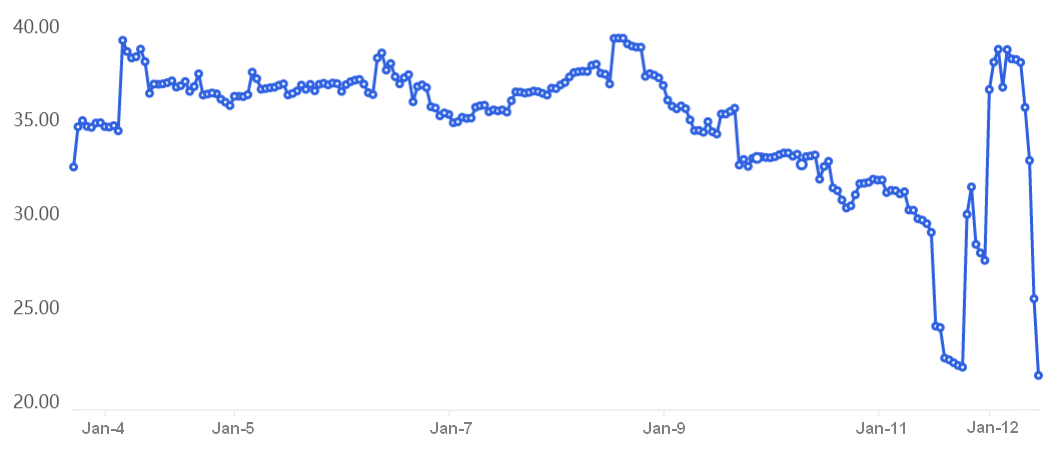
The above chart shows that OKX traders’ margin lending ratio firmly increased on Jan. 11, signaling that professional traders added leverage longs as Bitcoin rallied toward $18,300.

More importantly, the subsequent 2% correction on Jan. 12 that led Bitcoin to a $17,920 low marked the complete margin reversal, meaning whales and market makers reduced their bullish positions using margin markets.

Presently at 21, the metric favors stablecoin borrowing by a wide margin, indicating that bears are not confident about opening Bitcoin margin shorts.

Futures traders ignored the Bitcoin price pump

The long-to-short metric excludes externalities that might have solely impacted the margin markets. In addition, it gathers data from exchange clients’ positions on the spot, perpetual and quarterly futures contracts, thus offering better information on how professional traders are positioned.

There are occasional methodological discrepancies between different exchanges, so readers should monitor changes instead of absolute figures.

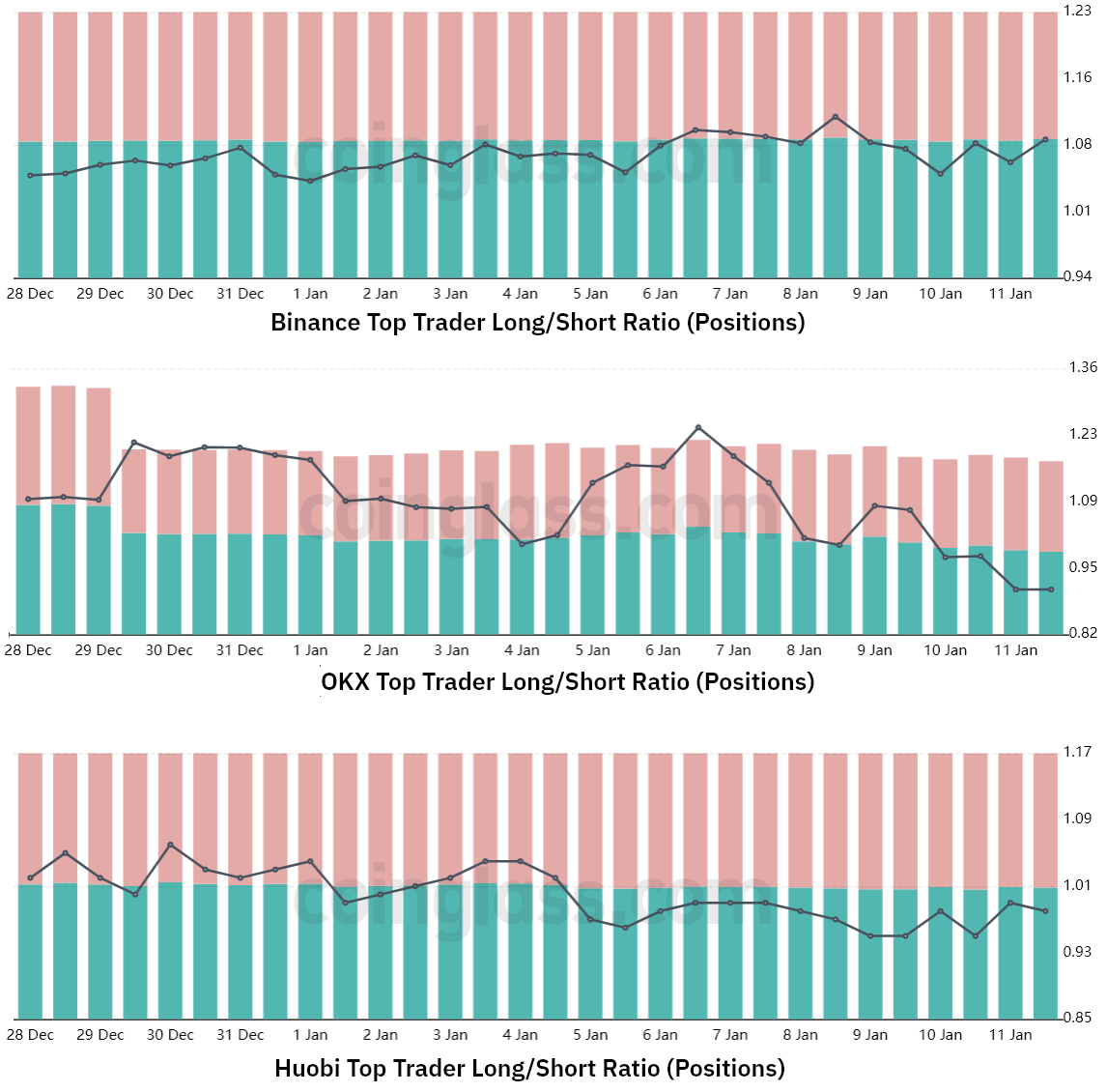
Exchanges' top traders Bitcoin long-to-short ratio. Source: Coinglass

Even though Bitcoin broke above the $18,000 resistance, professional traders have kept their leverage long positions unchanged, according to the long-to-short indicator.

For instance, the ratio for Binance traders stood firm at 1.08 from Jan. 9 until Jan. 12. Meanwhile, top traders at Huobi reduced their leverage longs as the indicator moved from 1.09 to the present 0.91. Lastly, at crypto exchange OKX, the long-to-short slightly increased favoring longs, moving from 0.95 on Jan. 9 to the current 0.97.

Traders using futures contracts were not confident enough to add leveraged bullish positions despite the price increase.

Bitcoin price could retest $17,300

While the margin data shows that sizable leverage was used to push Bitcoin above $18,000, it suggests that the situation was only temporary. Most likely, those professional traders deposited more margin and consequently reduced their leverage after the event. In essence, the metric looks very healthy because it indicates that margin markets are not overbought.

As for the top trader’s long-to-short, the absence of demand for leverage longs using futures contracts is somewhat concerning, but at the same time, it leaves room for additional purchasing power.

From a derivatives standpoint, even if Bitcoin retests $17,300, the bulls should not be concerned because the derivatives indicators show little demand from short sellers and no excessive leverage from buyers.


Lecturas Relacionadas

La Historia Completa del Fraude Severo en el que está Inmerso el Unicornio Cripto Blockstream

El artículo aborda las graves acusaciones de fraude contra Blockstream, la compañía cofundada por el pionero de Bitcoin, Adam Back. Un informe de investigación de la cuenta NatInfoSec señala múltiples irregularidades en su producto estrella, los Bitcoin Mining Notes (BMN). Las principales acusaciones incluyen: 1) Una discrepancia entre el hashrate necesario para cumplir con las obligaciones de los BMN (estimado en 20-45 EH/s) y el hashrate real reportado por Blockstream (15 EH/s), sin evidencia pública suficiente de infraestructura minera a esa escala. 2) La oferta de rendimientos fijos anormalmente altos (cercanos al 20%) en un sector volátil como la minería de Bitcoin. 3) El antecedente penal por fraude postal de Christopher William Cook, una figura clave en la división minera de Blockstream (Exacore), lo que no fue revelado en los documentos de los BMN. 4) Posibles riesgos de contagio para Bitcoin Standard Treasury Company (BSTR), una empresa relacionada con Back que planea salir a bolsa vía SPAC. BitMEX Research analizó las acusaciones, confirmando la probable veracidad del historial de Cook y la preocupación por los altos rendimientos, pero consideró insuficiente la evidencia sobre otros puntos, destacando la independencia legal entre BMN y BSTR. La comunidad debate intensamente, especialmente sobre la verificabilidad del hashrate y el origen de los pagos a los inversionistas. En conclusión, el artículo subraya que las acusaciones, aunque no son prueba definitiva de fraude, revelan importantes lagunas de transparencia en los BMN respecto al tamaño real de las obligaciones, el origen verificable de los rendimientos, la infraestructura minera subyacente y la divulgación de riesgos clave. Blockstream no había emitido una respuesta oficial sistemática al momento de la publicación.

链捕手Hace 48 min(s)

La Historia Completa del Fraude Severo en el que está Inmerso el Unicornio Cripto Blockstream

链捕手Hace 48 min(s)

a16z: En la era de la IA, la lucha por el talento comienza con la denominación de puestos

El concepto de "ingeniero desplegado en campo" (FDE) demuestra cómo el nombre de un puesto puede redefinir y elevar el valor de un rol tradicionalmente subestimado, como la implementación técnica en el sitio del cliente. Palantir popularizó este término, transformando la percepción de un trabajo de soporte en una capacidad estratégica clave. Esto ejemplifica el "arbitraje de títulos": crear nuevas denominaciones cuando una habilidad gana importancia, pero la terminología organizacional aún no refleja su valor. Un título no es solo una etiqueta, sino un lenguaje organizacional que otorga legitimidad, atrae talento y señala un cambio en la importancia estratégica del trabajo. En la era de la IA, este enfoque es crucial. La transformación con IA no solo se trata de herramientas más inteligentes, sino de crear nuevos roles de alto impacto, como el "ingeniero legal" o el "ingeniero de estrategia comercial". Para las empresas de IA que venden a otras empresas, nombrar estos nuevos puestos dentro de las organizaciones cliente es una estrategia que facilita la adopción, construye identidad y, en última instancia, crea ventajas competitivas. El resurgimiento del debate sobre el FDE refleja la naturaleza difusa de los productos de IA empresarial, donde los límites entre producto, servicio e implementación se desdibujan. El reto no es eliminar los servicios, sino identificar y renombrar las partes más valiosas y cercanas al cliente para integrarlas en el núcleo del aprendizaje y desarrollo del producto. Quien logre definir y organizar primero estas nuevas capacidades ganará una ventaja decisiva.

marsbitHace 2 hora(s)

a16z: En la era de la IA, la lucha por el talento comienza con la denominación de puestos

marsbitHace 2 hora(s)

Trading

Spot
Futuros
活动图片