Key lessons from Bitcoin in 2022 and what to expect in 2023

AmbcryptoPublicado a 2023-01-02Actualizado a 2023-01-02

Resumen

Navigating the world of Bitcoin and cryptocurrencies, in general, has been a rough rollercoaster in 2022. That chapter is now closed and we have now entered into new unchartered territory. Every crypto enthusiast and their dog are now wondering whether 2023 will bring good tidings or whether it will turn out worse than 2022.

Navigating the world of Bitcoin and cryptocurrencies, in general, has been a rough rollercoaster in 2022. That chapter is now closed and we have now entered into new unchartered territory. Every crypto enthusiast and their dog are now wondering whether 2023 will bring good tidings or whether it will turn out worse than 2022.

“”

While short and long-term projections are common, Bitcoin’s performance in 2022 demonstrated a huge scope of unpredictability. Perhaps a recap of its performance may help put things into perspective. At its current price level, Bitcoin is drawn down by roughly 75.92% from its all-time high.
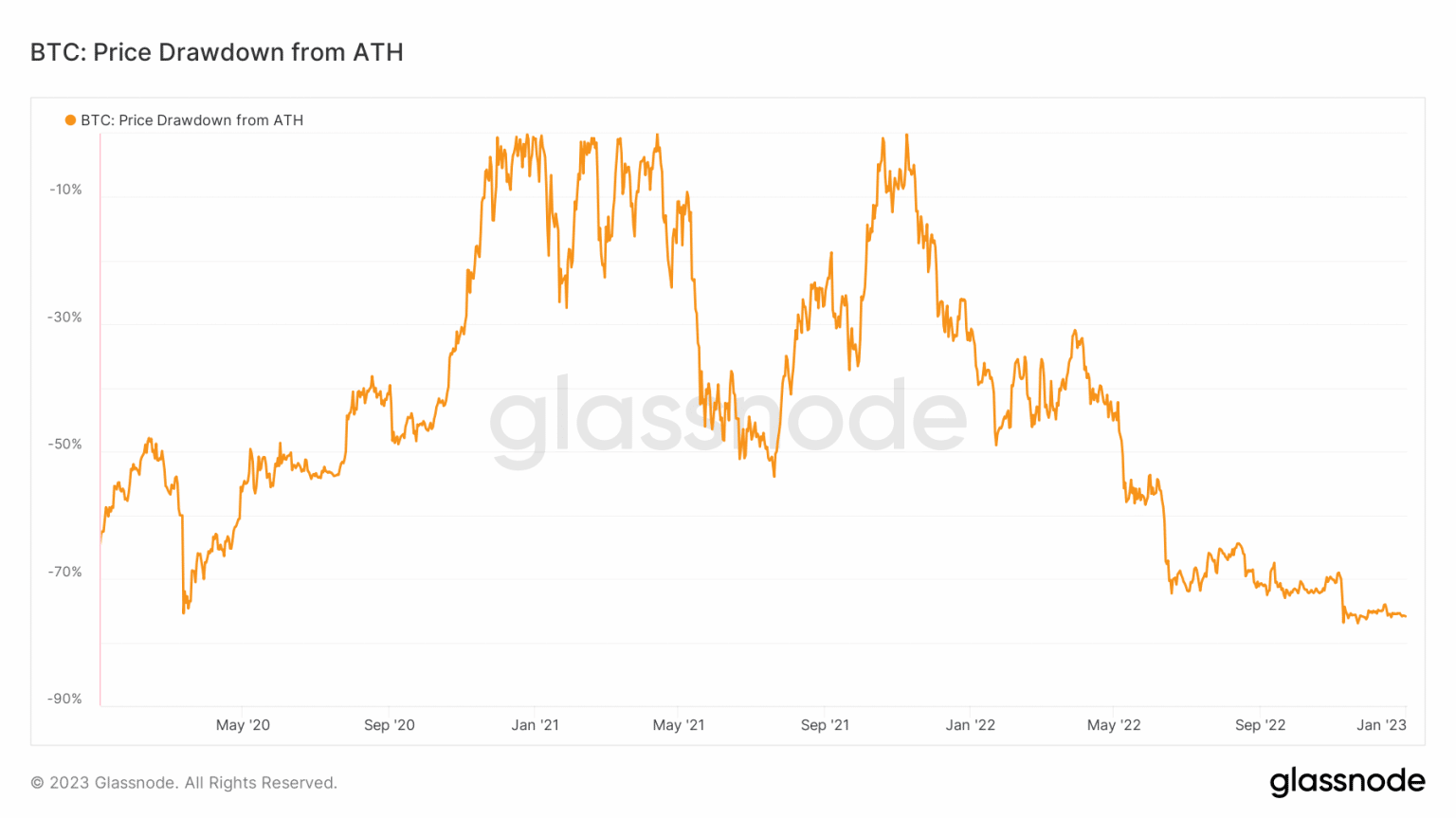
Source: Glassnode

“”

It is important to take note of where most of this drawdown has occurred. It’s from around November 2021 to the end of 2022. Why is this important? Well, mostly because of the time period in which it occurred.

“”

The economic perspective and Bitcoin’s correlation with risk-on assets

“”

If we cross-reference the start of the Bitcoin bear market and the U.S. Federal Reserve commenced quantitative tightening, we see a pattern. And this is where the inflation link comes in.

“”

Numerous factors and events in the last three years stressed the global economy and pushed major economies in the blink of a recession. The COVID pandemic affected global trade and placed a lot of stress on the global economy.

“”

The Russia-Ukraine war added salt to the proverbial wound as economic pressures mounted. The key denominator was inflation. Governments printed money heavily during the pandemic and this rapidly raised the level of inflation across the globe. The dollar particularly played a pivotal role in exporting inflation across the world as the global reserve currency.

“”

People had invested heavily in BTC using cheap funds available at low-interest rates. But the government’s plan to fight inflation involved raising interest rates as part of its strategy to mop up the excess liquidity.

“”

Bitcoin found itself in the economic crosshairs and as a result, many people started panic selling as quantitative tightening hammered down.

“”

The end of cheap money

“”

With cheap money quickly being sucked out of the markets, the economic pressure had a negative cascading effect on risk-on assets. Bitcoin happens to fall into this category despite it being considered an inflation hedge. The combined economic factors resulted in strong outflows reflected in Bitcoin’s market cap.
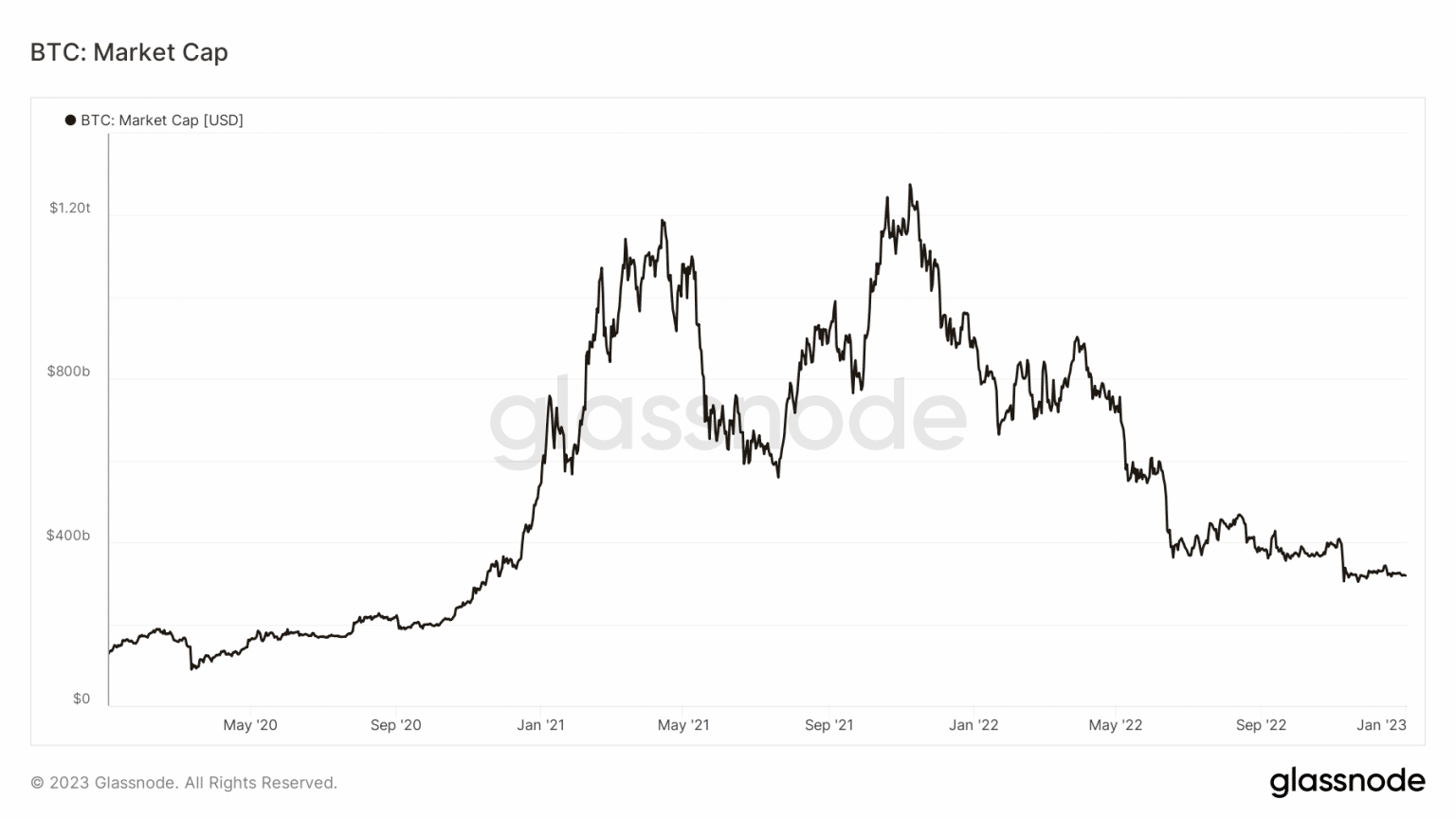
Source: Glassnode

“”

The outflows were sharp at the beginning but the pace slowed down towards the end of 2022. Now that we have a deeper perspective into what ailed BTC bulls in 2022, we can start looking into key factors to consider that may offer insights into 2023 expectations.

“”

The relationship between Bitcoin and the bonds market

“”

Bitcoin’s 2022 performance proved that there is, in fact, a link between BTC’s performance and the traditional finance market. Before we get into bonds, we have to look at what the FED is currently aiming at.

“”

As noted earlier, the FED has put up an aggressive fight against inflation by raising interest rates. However, this strategy might not be effective in the long run.

“”

An analysis by Sean Foo highlights the potential risks that the markets might experience in 2023. FED Chair Jerome Powell’s 2% target is quite ambitious and it underscores the potential for more quantitative tightening ahead.

“”

Such an outcome means we might see more uncertainty, as well as higher pressure on risk-on assets, and this, is where bonds come in.

“”

Bonds are preferable when the overall investment landscape is deemed too risky. As a result, investors have shifted their attention toward the bonds market, especially in the United States. This is because investors would rather have their funds in risk-free investments such as bonds.

“”

Under normal conditions, the demand for Bitcoin is expected to be low if there is a higher demand for bonds. However, the bonds yield curve is inverted and this means there is a high chance that the FED might cause an economic recession.

“”

More risks ahead but a potential hail Mary for Bitcoin

“”

The aforementioned scenario (inflation) may make bonds appealing but then that whole picture is starting to look like a house of cards. This is because the economic war between the United States, China, and Russia has intensified.

“”

In 2022 we saw a further push towards de-dollarization, especially from China. Meanwhile, Russia walks a similar path after being slapped with heavy sanctions.

“”

The European Union (EU) is pushing toward confiscating billions of wealth owned by Russia as part of the sanctions. This move may trigger fears across other nations, encouraging them to de-dollarize. Such an outcome may encourage many countries to offload their dollar bonds.

“”

If these events do come to fruition, the greenback might become weaker. Investors have been rushing toward gold and this will likely be the outcome for Russia if its assets are confiscated.

“”

It will likely use its dollar holdings to buy gold, placing more pressure on the U.S. dollar. Bitcoin might enjoy some demand too if this happens.

“”

Will Bitcoin see a resurgence of demand in 2023?

“”

Now that most of the borrowed liquidity that contributed to the 2022 Bitcoin crash has been wiped out, Bitcoin may finally make more sense as an inflation hedge. This is because like gold, Bitcoin does not have counterparty risk. This means the crypto companies liquidated in 2022 might be a blessing in disguise.

“”

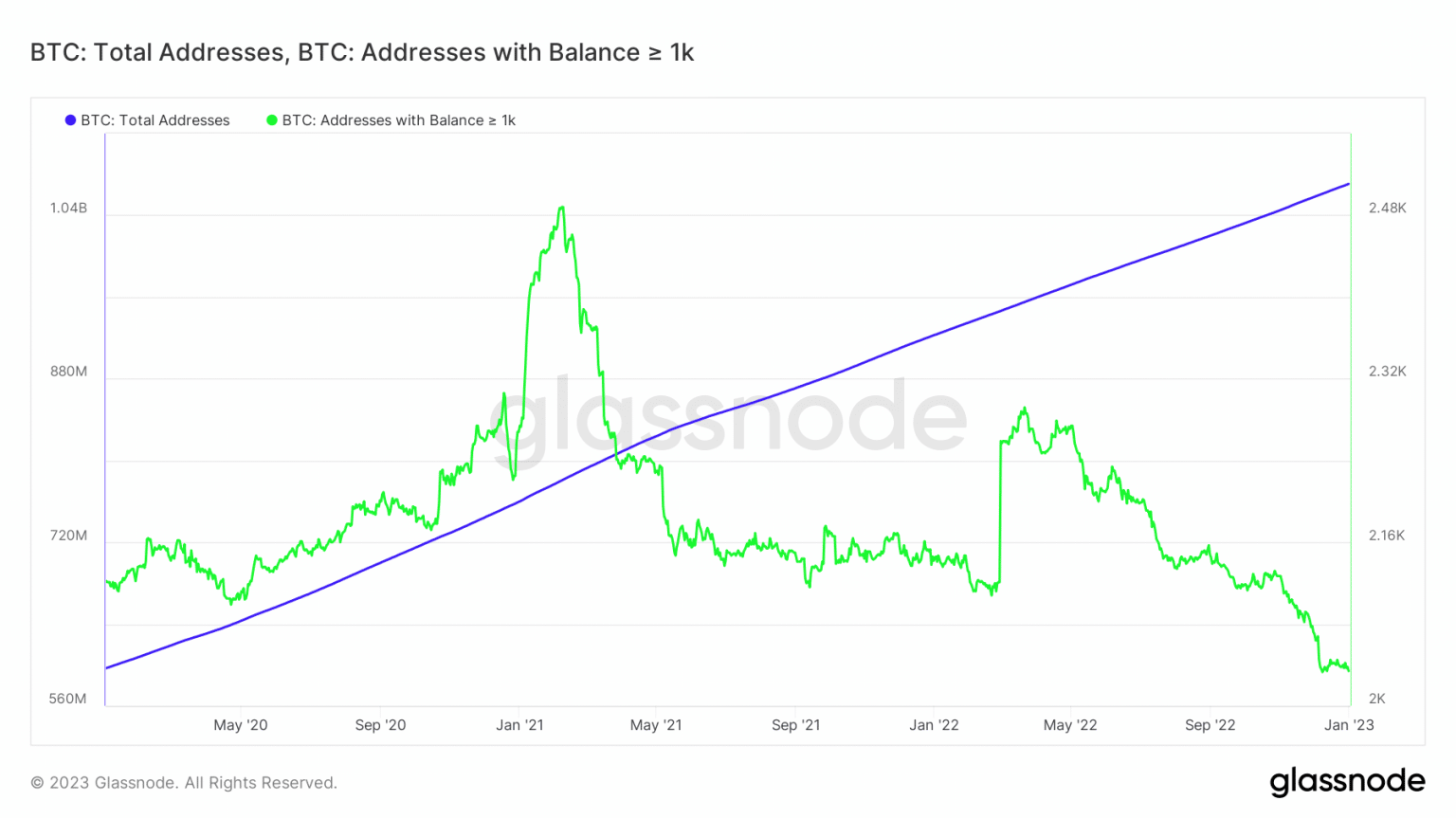
Bitcoin addresses have been steadily growing in the last three years, with over one billion addresses. On the other hand, the addresses holding over 1,000 BTC have dropped substantially in the last 12 months.
Source: Glassnode

“”

A resurgence of demand from addresses holding over 1,000 BTC might help the bulls to recover because it would indicate whale accumulation. These bullish expectations also align with a Bitcoin cycle analysis. 2023 may also mark the start of the next Bitcoin cycle.

“”

Conclusion

“”

We might see a resurgence of Bitcoin demand in 2023 if the stars align. However, there is still a lot of uncertainty, especially with the current economic conditions and the aforementioned risks.

Lecturas Relacionadas

Fundador de IOSG: Ethereum no necesita otra fe tecnológica, necesita un compromiso al estilo de Musk

**Autora: Jocy, fundadora de IOSG** **Ethereum no necesita otra fe tecnológica, necesita un compromiso al estilo Musk.** El reciente lanzamiento de ETHLabs no es una bifurcación de la Fundación Ethereum (EF), sino que llena un vacío intencional dejado por ella. Financiado por grandes tenedores de ETH, este movimiento representa un voto de desconfianza del mercado hacia el modelo de gobernanza "pequeño y descentralizado" de la EF, mostrando que el ecosistema está actuando donde el liderazgo central es percibido como pasivo. La comparación clave es entre Vitalik Buterin (V) y Elon Musk. Mientras que Musk domina la realidad comercial y adapta la tecnología a ella, V parte de ideales técnicos puros esperando que la realidad emerja por sí misma. Esta aproximación funcionó en el pasado, pero hoy, con muchas alternativas, Ethereum carece de una narrativa comercial clara y aplicaciones del mundo real convincentes. El ecosistema debate si la falta es de una "killer app" o de esfuerzos comerciales (BD). En realidad, son dos caras de la misma moneda: Ethereum necesita que su liderazgo se sumerja y lidere la creación de aplicaciones prácticas con impacto tangible, no solo roadmaps técnicos. La crítica interna más severa señala que el problema de la EF es de gestión, no de estrategia. La fuga de talento es una gran amenaza. La nueva estructura propuesta, con múltiples nodos independientes como ETHLabs, busca descentralizar la responsabilidad pero enfrenta el desafío de mantener la cohesión y una dirección unificada sin fragmentarse. La cohesión futura no puede depender de una organización, sino del valor de ETH como activo de referencia común. Sin embargo, esto solo será posible si existe una narrativa sobre utilidad en el mundo real que una a todos los actores. Además, la verdadera independencia de estos nuevos nodos debe ganarse con transparencia y tiempo, no solo declaraciones. La amenaza más profunda no es Solana, sino la migración de la atención y el talento hacia la IA. Ethereum tiene una ventana de 12 a 18 meses. La infraestructura técnica por sí sola no recuperará esa atención. Se necesita una narrativa a una década que atraiga al mejor talento y un fundador dispuesto, como Musk, a ensuciarse las manos para construir aplicaciones reales. La luz del ideal de V no se ha apagado, pero para iluminar la realidad, necesita bajar del pedestal y sumergirse en la lucha. Y el tiempo para este giro se agota rápidamente.

marsbitHace 59 min(s)

Fundador de IOSG: Ethereum no necesita otra fe tecnológica, necesita un compromiso al estilo de Musk

marsbitHace 59 min(s)

JD.com y Mira Murati, ex CTO de Open AI, apuestan por la misma pista de IA

Imagina que una persona mayor que vive sola se cae en casa y no puede pedir ayuda. Su dispositivo inteligente o una cámara, impulsado por IA, detecta la situación de forma autónoma y alerta a emergencias. Este no es un escenario futurista, sino el tipo de problema que busca resolver **JoyAI-VL-Interaction**, el primer modelo de interacción visiolingüística de código abierto del mundo, presentado por JD.com. En la industria de la IA, la interacción ha estado dominada por un formato de turnos: el usuario pregunta, el modelo responde. JD.com y otros, como Thinking Machines Lab de Mira Murati, identificaron la misma limitación y convergieron en una idea: la IA debe evolucionar de ser un procesador pasivo de información a un **participante activo** que "prediga el siguiente estado físico". JoyAI-VL-Interaction observa el flujo continuo de video de una cámara y decide *autónomamente* cuándo responder, cuándo guardar silencio y cuándo derivar tareas complejas a otros modelos. Su ventaja clave es colocar al **lenguaje visual como el motor principal** para la toma de decisiones, desacoplándolo del audio. Esto lo hace ideal para aplicaciones como asistencia a personas mayores o con discapacidad visual, comentarios automáticos en eventos deportivos, inspección de almacenes o robots colaborativos, donde los eventos ocurren demasiado rápido para una orden verbal. JD.com ha optado por una estrategia de **cód abierto integral** y un diseño ligero (8B parámetros), que permite ejecutar el modelo incluso con una tarjeta gráfica NVIDIA 3090. El objetivo es democratizar el acceso y acelerar la innovación. Este movimiento refleja la estrategia más amplia de JD.com: utilizar su vasta red de operaciones en el mundo físico (logística, retail, salud) como un campo de entrenamiento y una fuente de datos única para entrenar IAs que comprendan y actúen en entornos reales. Al abrir su modelo, JD.com apuesta a que la **interacción activa y proactiva** se convierta en la principal vía para que la IA entre en el mundo físico.

marsbitHace 1 hora(s)

JD.com y Mira Murati, ex CTO de Open AI, apuestan por la misma pista de IA

marsbitHace 1 hora(s)

Google comienza a vender TPU, las grandes tecnológicas buscan producir "tokens baratos" con chips de IA

Google ha anunciado la venta directa de sus chips TPU autodiseñados y hardware de computación de IA a centros de datos y clientes externos. Los TPU, o Unidades de Procesamiento de Tensores, son chips especializados en operaciones matemáticas de matrices, fundamentales para los modelos de IA actuales. Al combinar miles de TPU en clústeres, Google logra centros de cómputo de alta eficiencia. Esto permite a servicios como Gemini ofrecer precios más bajos por token, haciéndolo competitivo frente a alternativas como OpenAI y algunos modelos chinos. La estrategia de Google no se centra solo en vender hardware, sino en ofrecer un ecosistema completo similar al de Nvidia con CUDA, apuntando a empresas que buscan controlar su propia infraestructura de cómputo. Aunque Nvidia sigue siendo el estándar dominante en entrenamiento de modelos gracias a su ecosistema consolidado, el enfoque de Google es más atractivo para la inferencia, donde la eficiencia de costos es crucial. La industria está evolucionando hacia tratar la potencia de cómputo como un recurso básico, como la electricidad, donde el precio final por token se vuelve un factor clave de competitividad. En China, proveedores en la nube como Huawei Cloud y Alibaba Cloud están siguiendo un camino similar, desarrollando sus propios ecosistemas de chips (como Ascend y Zhenwu) y soluciones integrales. La competencia ya no se trata solo de tener el chip más potente, sino de quién puede ofrecer el sistema más eficiente y económico para convertir el hardware en productividad. La venta de TPU por parte de Google señala que la batalla por la infraestructura de IA es ahora una guerra de sistemas.

marsbitHace 1 hora(s)

Google comienza a vender TPU, las grandes tecnológicas buscan producir "tokens baratos" con chips de IA

marsbitHace 1 hora(s)

Trading

Spot
Futuros
活动图片