Olympus DAO Myth Reappears? A "Sovereign On-Chain Central Bank" Written with 4000 Lines of Immutable Code

marsbitPublicado a 2026-08-24Actualizado a 2026-08-24

Resumen

A new project called The Standard Reserve has emerged, branding itself as a "sovereign on-chain central bank." It aims to replicate core central bank functions—currency issuance, money supply adjustment, and reserve accumulation—entirely through 4,000 lines of immutable code, with no human governance. Its core mechanism is a "reflexive monetary policy" based on a single signal: the net ETH flow into or out of the system's sole Uniswap v4 ETH/$STANDARD pool. Sustained net ETH inflows trigger an "expansion" phase, increasing $STANDARD issuance and using protocol fees to buy tokenized gold as a permanent hard reserve. Net outflows (or zero flow) trigger an immediate "contraction" phase, reducing issuance and using fees to buy back and burn $STANDARD. The system involves six key entities: the $STANDARD token (hard-capped at 1 billion), the central Uniswap pool, the Central Bank contract, Charter NFTs (acting as "banking licenses"), Branch units under each Charter (which earn a share of newly minted $STANDARD), and separate Vaults for expansion (buying gold) and contraction (buying back $STANDARD). To participate, users ideally acquire a Founding Charter NFT (initially 1,000 are free via allowlist/public mint). Each Charter comes with one Branch; more can be opened by burning $STANDARD for "expansion permits," increasing revenue share. Retiring a Branch lets users claim accumulated $STANDARD but imposes a dynamic exit fee (higher if many exit simultaneously), with half the fee ...

Crypto friends who see the symbol (3,3) know the power of Olympus DAO $OHM @OlympusDAO in 2021.

IDO price $4, peak at $1,415, a rise of over 300 times—and that's just the price increase, not counting the additional tokens from rebases. If you held, starting with $500 could truly have a chance to become $5 million.

Since then, any project waving the flag of being an OHM copycat could garner attention or support from a group of followers.

But those days are gone!

Back to the topic.

A very interesting new project recently appeared on-chain: The Standard Reserve. It doesn't call itself a stablecoin, nor a governance token, but directly proclaims itself as "The sovereign onchain central bank."

一、 What does it actually want to do?

Traditional central banks have three core functions:

— Issue currency

— Regulate money supply

— Accumulate reserve assets

The Standard Reserve implements these three things entirely with code, with no committee, no board, no human intervention. The whitepaper sums it up in one sentence:

“It answers to no board, committee, or government. Because it’s 4,000 lines of immutable code. The bank is code.”

The entire system is a closed monetary economy with only four core elements:

One currency: $STANDARD

One market: The ETH/$STANDARD pool on Uniswap v4 (with a custom hook)

One signal: The net ETH flow of this pool

One authority: The code itself

二、 Core Mechanism: Reflexive Monetary Policy

This is the most essential part of the entire project.

The system only looks at one signal

—— Net ETH Flow: Net inflow > 0 (someone continuously buys $STANDARD with ETH) → Expansion period increases the issuance rate of $STANDARD, then uses the fees mainly to purchase tokenized gold, held permanently as hard reserves

—— Net inflow ≤ 0 (someone continuously sells $STANDARD) → Contraction period immediately reduces issuance rate, uses the fees mainly to repurchase and burn $STANDARD

Moreover, the adjustment is asymmetric:

Rate cuts (contraction) take effect immediately

Rate hikes (expansion) must be gradually increased through sustained net inflow

Simply put: if a lot of capital flows in and the price rises consistently, the system issues more tokens + hoards gold; if capital flows out, the system issues fewer tokens + repurchases and burns. This is what it calls "reflexive monetary policy."

三、 Six Core Entities

1、$STANDARD

ERC-20, hard cap of 1 billion

—— The only currency, minted only upon withdrawal, continuously burned

2、The Pool

Uniswap v4 ETH/$STANDARD pool

—— The only market, all trading fees go to the bank, net flow is the policy signal

3、Central Bank

4000 lines of code

—— Reads net flow, decides issuance rate, allocates fees

4、Charter

Soulbound NFT (transfer may be opened later)

—— The banker's "business license," genesis only has 1000 free spots

5、Branch

"Storefronts" under a Charter

—— The units that actually earn issuance revenue, maximum of 10 per Charter

6、Vaults

Expansion Vault + Contraction Vault

—— Responsible for hoarding gold and repurchasing/burning respectively

补充: A Charter is a company, a Branch is its storefront. The company makes money through storefronts, expands by opening new storefronts (burns tokens), and pays dividends to the owner by closing storefronts. Closing the last storefront dissolves the company.

四、 How does one interact with the project?

1、 Acquire a Genesis Charter

1000 free Founding Charters (allowlist + public, 1 per wallet max) After that: Daily ETH Dutch auctions for new ones

2、 Open Branches to Earn

Each Charter comes with 1 Branch Can open up to 10 maximum Additional Branches require purchasing "Expansion Licenses" with $STANDARD (100% burned)

3、 Withdraw and Retire

Branch → Receive proportional accumulated $STANDARD But must pay a dynamic exit fee (higher fee with greater system exit pressure) Half of the exit fee is burned, half is distributed to remaining bankers Closing the last Branch burns the Charter

The design is interesting: to earn more, you must burn tokens to expand; to withdraw, you must permanently give up future profit share and possibly subsidize those who stay.

五、 Where does the money come from and go?

All protocol revenue (trading fees + Charter auction ETH) is pooled and then distributed:

70% → Current active vault Expansion period → Expansion Vault → Converted to tokenized gold, held permanently Contraction period → Contraction Vault → Rate-limited repurchase of $STANDARD and burn

15% → Protocol-owned liquidity (permanently added to the pool)

15% → Team

Repurchases during contraction also have rate-limiting protection:

Formula: spendtick=min⁡(0.10×V, 0.002×R) V is the Contraction Vault reserve, R is the V4 pool reserve. Meaning each hour, at most min(10% of vault balance, 0.2% of pool reserve) can be spent, preventing manipulation or one-time sell-offs.

六、 Summary

1、 Mechanism

The entire mechanism is quite intricate. Total token supply is 1 billion, initial 100 million plus the pool. The first 1000 Charters require allowlist. Acquire a Charter, get one built-in Branch. Holding a Branch allows you to share in the newly issued tokens. Want more Branches? Burn $STANDARD tokens. If you withdraw (retire), you can receive the accumulated platform tokens but must pay an exit fee. The exit fee is dynamic; the more people exit, the higher the fee. Upon exit, the corresponding Branch is destroyed. We can think of Charter as the parent NFT and Branch as the child NFT. The parent NFT is purchased with ETH (first 1000 are free), child NFTs are acquired by burning $STANDARD.

More child NFTs, more money shared.

2、 Expansion Vault and Contraction Vault

This is a point easily confused. First, money is collected uniformly, primarily from subsequent Charter auctions and $STANDARD transaction taxes (rate currently unknown).

After collection, based on the current epoch's state, it flows to either the Expansion Vault or the Contraction Vault.

If net ETH inflow > 0 (which essentially means the token price is rising, assuming ETH price is constant), then 70% of the collected money goes to the Expansion Vault to buy tokenized gold, held as permanent reserves.

If net ETH inflow ≤ 0, then 70% goes to the Contraction Vault to buy $STANDARD according to the formula and burn it continuously.

3、 How to get an Allowlist spot for Charter?

Getting a Genesis Charter is undoubtedly the most profitable way to participate.

1000 pieces, free mint, with allowlist and public spots. Three types of roles have a chance to get on the allowlist:

The most active on-chain participants / Educators in this field / Content creators / High-quality community contributors

4、 Risks

The Standard Reserve attempts to use pure code to create an on-chain central bank that regulates its own money supply, hoards its own gold, and repurchases and burns its own tokens during declines. It also gamifies the "banker" role into NFT + branch earnings, aligning participants' self-interested actions directly with the system's deflation and reserve accumulation.

The mechanism, narrative, and gameplay have some innovation. However, the project is completely anonymous, many key parameters (epoch length, base issuance rate, multiplier range, transaction fee rate, etc.) are still blank, and code security is unknown. DYOR.

@standard_rsv

Criptos en tendencia

Preguntas relacionadas

QWhat is The Standard Reserve, and how does it describe itself?

AThe Standard Reserve describes itself as a 'sovereign on-chain central bank'. It aims to replicate the core functions of a traditional central bank—issuing currency, regulating money supply, and accumulating reserve assets—through 4,000 lines of immutable code, operating without a board, committee, or government intervention.

QWhat is the core mechanism of The Standard Reserve's monetary policy?

AThe core mechanism is a 'reflexive monetary policy' governed by the Net ETH Flow into its primary Uniswap v4 ETH/$STANDARD pool. If net ETH inflow is positive, the system enters an expansion phase, increasing $STANDARD issuance and using fees to buy tokenized gold as hard reserves. If net inflow is zero or negative, it enters a contraction phase, immediately reducing issuance and using fees to repurchase and burn $STANDARD.

QWhat are the six core entities within The Standard Reserve system?

AThe six core entities are: 1. $STANDARD (the currency, 1 billion hard cap), 2. The Pool (Uniswap v4 ETH/$STANDARD pool), 3. Central Bank (the 4,000 lines of code), 4. Charter (soulbound NFT, the 'license'), 5. Branch (revenue-generating units under a Charter), and 6. Vaults (Expansion Vault for buying gold, Contraction Vault for repurchasing/burning $STANDARD).

QHow does a participant (banker) generate income within The Standard Reserve?

AA participant must first acquire a Charter NFT. Each Charter comes with one Branch. Holding a Branch allows the participant to receive a share of newly issued $STANDARD tokens. To increase earnings, participants can purchase additional Branches (up to 10 per Charter) by burning $STANDARD tokens for 'Expansion Licenses'.

QWhat are the primary risks mentioned regarding The Standard Reserve?

AThe primary risks mentioned are that the project is completely anonymous, several key parameters (like epoch length, base issuance rate, transaction fee rate) are still undefined, and the security of its unaudited, immutable code is unknown.

Lecturas Relacionadas

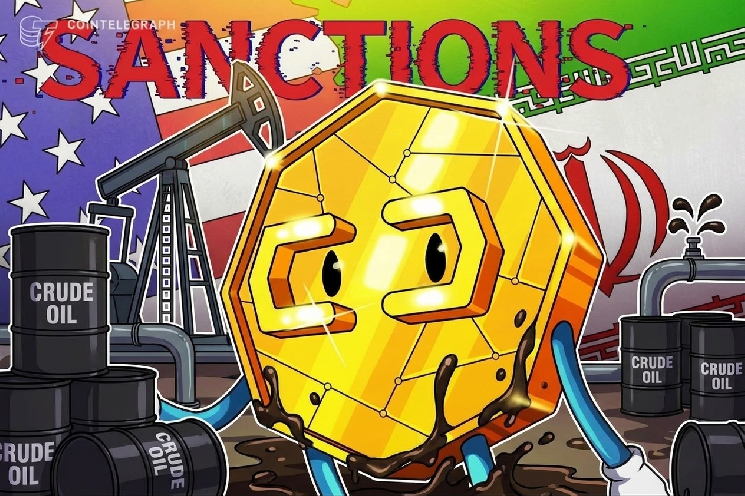
EE.UU. apunta al sector cripto de Irán debido a pagos petroleros que superan los 100,000 millones de dólares

El Departamento del Tesoro de EE. UU. ha ampliado significativamente su régimen de sanciones contra Irán para incluir específicamente el sector de activos digitales. Esto se produce en respuesta al supuesto uso de pagos con criptomonedas por valor de más de 100 millones de dólares para facilitar ventas de petróleo iraní. La medida, implementada por la OFAC, establece sanciones sectoriales contra los sectores de activos digitales, tecnología, oro, aviación y transporte marítimo. Casi 60 entidades, individuos y buques relacionados con redes nucleares, de misiles, cibernéticas y petroleras también fueron sancionados. Las autoridades estadounidenses afirman que Irán está utilizando cada vez más las criptomonedas para evadir sanciones, incluso en transacciones relacionadas con el Cuerpo de la Guardia Revolucionaria Islámica (IRGC). Se identificó a un intermediario ucraniano, con sede en los Emiratos Árabes Unidos, por procesar más de 100 millones de dólares en pagos cripto para facilitar ventas de petróleo en nombre del IRGC. Esta acción marca una expansión de las medidas anteriores, que se centraban en intercambios cripto específicos vinculados a Irán. Ahora, cualquier entidad extranjera que opere o brinde servicios dentro del sector cripto iraní en su conjunto queda sujeta a posibles sanciones. Las propiedades en EE. UU. de los designados serán congeladas, y los bancos extranjeros que faciliten transacciones importantes para ellos podrían enfrentar restricciones en el acceso a cuentas estadounidenses.

cryptonews.ruHace 21 min(s)

EE.UU. apunta al sector cripto de Irán debido a pagos petroleros que superan los 100,000 millones de dólares

cryptonews.ruHace 21 min(s)

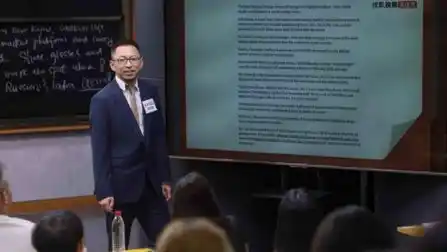
Diálogo con Zhang Chaoyang: Mientras la IA avanza a toda velocidad, ¿por qué hacer contenido "antieficiencia"?

Diálogo con Zhang Chaoyang: Mientras la IA avanza a toda velocidad, ¿por qué crear contenido "anti-eficiencia"? El fundador y CEO de Sohu, Zhang Chaoyang, es conocido por su rutina disciplinada y su enfoque único en el panorama digital chino. Su programa de transmisión en vivo "Clase de inglés de Zhang Chaoyang" cumple diez años, con más de 2000 sesiones y 5200 millones de visualizaciones. Iniciado originalmente como una forma personal de superar dificultades emocionales y promover su plataforma de transmisión, el programa se ha convertido en un pilar de su vida. Zhang prepara meticulosamente cada lección, dedicando 40 minutos a leer y seleccionar artículos de noticias, rechazando el uso de IA para generar contenido. Considera esta práctica un "trabajo arduo" y "anti-eficiente", enfatizando que el valor de la lectura radica en la conexión humana, la búsqueda de perspectivas y el sustento intelectual, no solo en adquirir información. Respecto a la IA, Zhang reconoce su utilidad para obtener información rápidamente, pero advierte sobre un "sentimiento plástico" que impregna el contenido generado por máquinas. Argumenta que la IA puede reemplazar trabajos basados en reglas, pero no la creatividad humana, las emociones o las perspectivas únicas en campos como las artes y las ciencias sociales. Sohu también desarrolla asistentes de IA, pero Zhang destaca la importancia del contenido original humano como base para entrenar estos modelos. Su consejo para los creadores es mantener la autenticidad y, si se usa IA, declararlo transparentemente. En una era de algoritmos de eficiencia, su práctica demuestra la importancia de la conexión humana, el pensamiento profundo y la interacción real.

marsbitHace 29 min(s)

Diálogo con Zhang Chaoyang: Mientras la IA avanza a toda velocidad, ¿por qué hacer contenido "antieficiencia"?

marsbitHace 29 min(s)

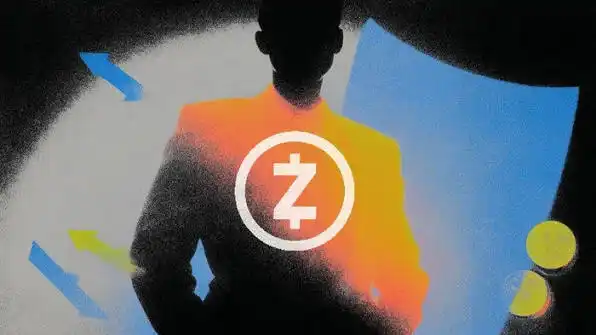
La dorada artesanía del ETF de Zcash: cómo una criptomoneda de privacidad se convirtió en un activo regulado para Wall Street

**Resumen en español** El 21 de agosto de 2026, Grayscale presentó una solicitud para lanzar el primer ETF de spot de una criptomoneda de privacidad, Zcash (ZEC). Este hecho culmina una década de transformación para ZEC. A diferencia de Bitcoin, Zcash nació en 2016 con una estructura corporativa clara (Electric Coin Company) y un fondo inicial para fundadores, lo que la convertía en un objetivo potencial para reguladores como la SEC. Sin embargo, esta misma estructura institucionalizada la hizo atractiva para actores financieros como Grayscale (parte de DCG, un inversor inicial), Coinbase (custodio, corredor e inversor) y fondos de capital riesgo. El mayor obstáculo no fue la tecnología de privacidad, sino una investigación de la SEC iniciada en 2023 sobre posibles valores no registrados. El riesgo se mitigó tras una reestructuración de gobernanza en 2024 que eliminó los pagos automáticos a los desarrolladores, y una carta de la SEC en enero de 2026 indicando que no recomendaría acciones coercitivas. Empujando la iniciativa están entidades con intereses alineados: DCG/Grayscale, necesitados de nuevos ingresos por comisiones (2,5% anual); grandes mineros como Fortitude (de DCG) y Cypherpunk (respaldado por Winklevoss), que controlan gran parte del hashrate; y el nuevo equipo de desarrollo ZODL, financiado por importantes fondos de riesgo. La ironía final es que el ETF de Grayscale mantendrá sus ZEC en direcciones transparentes de Coinbase, no utilizando las funciones de privacidad. Wall Street no adopta el dinero anónimo, sino que transforma y empaqueta el *concepto* de privacidad en un producto financiero regulado, apto para la custodia institucional y la exposición de precio. El viaje de Zcash muestra cómo un activo nativo de la criptografía es remodelado para cumplir con los requisitos del sistema financiero tradicional.

marsbitHace 37 min(s)

La dorada artesanía del ETF de Zcash: cómo una criptomoneda de privacidad se convirtió en un activo regulado para Wall Street

marsbitHace 37 min(s)

Trading

Spot

Artículos destacados

Cómo comprar DAO

¡Bienvenido a HTX.com! Hemos hecho que comprar DAO Maker (DAO) sea simple y conveniente. Sigue nuestra guía paso a paso para iniciar tu viaje de criptos.Paso 1: crea tu cuenta HTXUtiliza tu correo electrónico o número de teléfono para registrarte y obtener una cuenta gratuita en HTX. Experimenta un proceso de registro sin complicaciones y desbloquea todas las funciones.Obtener mi cuentaPaso 2: ve a Comprar cripto y elige tu método de pagoTarjeta de crédito/débito: usa tu Visa o Mastercard para comprar DAO Maker (DAO) al instante.Saldo: utiliza fondos del saldo de tu cuenta HTX para tradear sin problemas.Terceros: hemos agregado métodos de pago populares como Google Pay y Apple Pay para mejorar la comodidad.P2P: tradear directamente con otros usuarios en HTX.Over-the-Counter (OTC): ofrecemos servicios personalizados y tipos de cambio competitivos para los traders.Paso 3: guarda tu DAO Maker (DAO)Después de comprar tu DAO Maker (DAO), guárdalo en tu cuenta HTX. Alternativamente, puedes enviarlo a otro lugar mediante transferencia blockchain o utilizarlo para tradear otras criptomonedas.Paso 4: tradear DAO Maker (DAO)Tradear fácilmente con DAO Maker (DAO) en HTX's mercado spot. Simplemente accede a tu cuenta, selecciona tu par de trading, ejecuta tus trades y monitorea en tiempo real. Ofrecemos una experiencia fácil de usar tanto para principiantes como para traders experimentados.

545 Vistas totalesPublicado en 2024.12.11Actualizado en 2026.06.02

Cómo comprar DAO

Discusiones

Bienvenido a la comunidad de HTX. Aquí puedes mantenerte informado sobre los últimos desarrollos de la plataforma y acceder a análisis profesionales del mercado. A continuación se presentan las opiniones de los usuarios sobre el precio de DAO (DAO).

活动图片