12 Brokerages Laying the Groundwork, 34 Brokerages Participating in the IPO: Did You Get Allotted Shares in Unitree Robotics?

marsbitPublicado a 2026-08-14Actualizado a 2026-08-14

Resumen

Yushu Technology is going public with a market valuation of 60.9 billion yuan and a P/E ratio of 219x, raising over 6 billion yuan. At least 12 securities firms had indirectly invested before the IPO via limited partner (LP) models, primarily through top-tier PE funds. During the subscription phase, 34 securities firms participated in the offline share placement. As the lead underwriter, CITIC Securities played four roles: an early-stage investor (achieving ~1300% return), a mandatory co-investor in the科创板 listing, the underwriter earning fees (~145 million yuan), and the manager of the employee strategic placement plan. This represents deep, multi-layered involvement. For retail investors, the article highlights three key points: 1) "Indirect investment" through LPs is standard practice for many securities firms. 2) The total exposure of the securities sector to Yushu is significant, combining both pre-IPO stakes and IPO subscriptions. 3) With a 219x P/E ratio, underwriters, their investment arms, and clients are all heavily exposed, creating shared risk. The performance in 2026, with projected H1 revenue of 1.05-1.13 billion yuan, will be crucial to validate the high valuation and the humanoid robotics narrative.

Unitree Robotics is going public.

With a market cap of 60.9 billion yuan and a P/E ratio of 219 times, it aims to raise over 6 billion yuan, oversubscribing by 45%. The online subscription was overwhelming, resulting in a pitifully low allotment rate.

We previously discussed that Meituan is Unitree's largest external shareholder ('Wang Xing Becomes Wang Xingxing's Largest External Shareholder'), and Meituan is likely to reap huge profits.

Today, IT桔子 talks about those who act as both referees and players behind the scenes – the brokerages.

What you might not know is that for this Unitree IPO, at least 12 brokerages quietly "laid the groundwork" by investing before the listing. During the subscription phase, another 34 brokerages queued up to participate in the IPO.

And CITIC Securities, the lead underwriter for the listing, alone made money four times over on this single project.

12 Brokerages: They Bought In Long Ago

Unitree had 46 shareholders before going public. Peeling back the layers of these shareholders reveals the shadows of at least 12 brokerages.

How did they get in? Mostly not through direct purchases, but by taking detours.

For example, the fund Jinshi Growth is under CITIC Securities.

Before Unitree's listing, Jinshi Growth held 4.15%, making it the fifth-largest shareholder.

But the Jinshi Growth fund doesn't just contain CITIC's own money – Hualong Securities invested a bit, Huaan Securities invested a bit, and Hongta Securities also invested a bit. Everyone pools money together, hands it to CITIC's fund to invest – this is the so-called LP (Limited Partner) model.

You chip in a little, I chip in a little, we invest in star projects together, and share the profits upon listing.

Besides the Jinshi Growth route, there are other paths: Soochow Securities holds indirectly through Shenzhen Capital Group's fund, Guotai Junan and Haitong hold indirectly through the Shanghai Science and Technology Innovation Fund, CICC holds indirectly through CICC Capital...

With all these twists and turns, the core logic is one: the alternative investment subsidiaries of brokerages give money to top-tier PE funds, using them as a conduit to acquire Unitree shares.

This kind of operation isn't new in the industry, but it's quite rare to see 12 brokerages simultaneously appear on a single project's shareholder list.

CITIC Securities: One Dish, Eaten Four Times

If other brokerages are hitching a ride, then CITIC Securities is "driving the car, selling the tickets, and collecting the toll."

On the Unitree project, CITIC did four things simultaneously:

First, it was an early-stage investor. Through two Pre-IPO investments by Jinshi Growth and China Securities Investment, it invested roughly over 33 million yuan. Calculated at the issue price, this investment is now worth nearly 500 million yuan, with a return rate of around 1300%.

Second, it was a co-investor. The STAR Market has a rule: the sponsor must buy a bit too. CITIC, through CITIC Investment, bought over 800,000 shares for 122 million yuan, locked up for 24 months.

Third, it was the sponsor and lead underwriter. Unitree raised over 6 billion yuan this time. The sponsor fee plus underwriting fee add up to roughly 145 million yuan. This is CITIC's most direct "service fee" income.

Fourth, it was also the manager of the employee strategic placement asset management plan. Unitree's senior executives and core employees participated in the strategic placement, and their money is managed by CITIC's asset management plan, locked up for 36 months. Founder Wang Xingxing himself put in 15 million yuan.

Let's do the math: equity investment earned a 1300% return, co-investment locked for 24 months waiting for the lock-up to lift, sponsor/underwriting fees securely pocketed 145 million yuan, plus managing the employees' strategic placement funds.

One dish, eaten four times.

This model has a benefit: CITIC's own money is also locked in, so it has the incentive to do the project well and not just muddle through. But the question is: when you are both the largest institutional shareholder and the pricing sponsor, how much independence do you have left?

There's no standard answer to this question, but it's worth thinking about.

34 Brokerages Queued Up for the IPO

On the subscription day, it was another scene of excitement.

For Unitree's offline IPO subscription, 34 brokerages and their asset management subsidiaries participated. From top players like CITIC, Huatai, Guotai Junan, and Haitong, to mid-sized ones like Guoyuan, Zheshang, and Caitong, even foreign brokerages' China subsidiaries like JPMorgan and Goldman Sachs showed up.

These 34 firms together were allotted over 650,000 shares, amounting to roughly 98 million yuan.

Interestingly, some of these brokerages already indirectly held Unitree shares in the primary market through LPs, and now directly participated in the IPO through asset management products in the secondary market. That means adding another layer on top of their existing position.

Why are they still scrambling to buy even with a 219 times P/E ratio?

Simply put, brokerages judge that Unitree still has room to rise after listing. Offline IPO participation is not charity; it's based on calculated accounts.

These institutions believe that even at such a high P/E, there's still short-term profit to be made.

Three Things Worth Remembering for Ordinary Investors

First, "taking detours" is the norm. Most small and medium-sized brokerages don't hold shares directly but hold them indirectly through the LP model. This means a stable profit-sharing relationship has formed between the brokerage system and top-tier PE funds. You provide the money, I provide the project, and we share the profits.

Second, primary + secondary: brokerages' total exposure is larger than you think. 12 brokerages hold shares in the primary market, 34 participate in the secondary market IPO, with overlapping lists. Some brokerages both indirectly hold shares in the primary market and directly participate in the IPO in the secondary market. Combined, the brokerage system's actual exposure on Unitree is much larger than the direct shareholding ratio seen in the prospectus.

Third, at 219 times P/E, everyone is in the same boat. Unitree's estimated non-GAAP net profit for 2025 is about 590 million yuan. At 219 times P/E, the market cap is over 60 billion yuan. Is this valuation high? High. But the brokerage system, as a whole, is both the largest camp of institutional shareholders and the most core participant in pricing.

When the sponsor's own funds, employee strategic placement funds, and underwriting income are all locked in the same ultra-high valuation project, this is no longer just "aligned interests" – this is shared risk.

Is shared risk good? Yes. But the premise is that Unitree's post-listing performance can deliver.

In the first half of 2026, Unitree expects revenue of 1.05 to 1.13 billion yuan. Whether it can maintain high growth for the full year is a crucial test for the humanoid robot sector, moving from storytelling to performance scrutiny.

The brokerages have bet on Unitree with more than just underwriting fees.

In the first half of 2026, Unitree expects revenue of 1.05 to 1.13 billion yuan.

Whether it can maintain high growth for the full year is the key verification window for the humanoid robot sector to move from concept to performance. 12 brokerages laying groundwork in the primary market, 34 brokerages participating in the IPO in the secondary market, CITIC Securities eating one dish four times – under the high valuation of 219 times P/E, this is both aligned interests and shared risk.

This article is from the WeChat public account "IT桔子" (ID: itjuzi521), author: Judy

Criptos en tendencia

Preguntas relacionadas

QAccording to the article, how many securities companies are involved in the pre-IPO investment (through indirect holdings) of Unitree Robotics?

AAccording to the article, at least 12 securities companies are involved in the pre-IPO investment of Unitree Robotics, primarily through indirect holdings by acting as Limited Partners (LPs) in top private equity funds.

QWhat four roles does CITIC Securities play in the Unitree Robotics IPO, and what are the associated financial benefits or actions?

ACITIC Securities plays four roles: 1) Early-stage investor (via funds like Jinshi Growth), with a potential return of around 1300%. 2) Co-investor, purchasing over 800,000 shares locked for 24 months. 3) Sponsor and underwriter, earning an estimated 145 million RMB in fees. 4) Manager of the employee strategic placement asset management plan, managing funds from executives and core employees locked for 36 months.

QWhy did the 34 securities companies participate in the offline subscription of Unitree's shares despite the high P/E ratio of 219 times?

AThe 34 securities companies participated in the offline subscription because they calculated that there was still short-term profit potential, believing Unitree's stock price had room to rise even at a P/E ratio of 219 times.

QWhat does the article imply about the potential conflict of interest when a securities firm acts as both a major institutional shareholder and the IPO sponsor?

AThe article implies a potential conflict of interest, questioning the independence of the sponsor when it is also a major institutional shareholder. It asks how much independence remains when the firm responsible for pricing is also heavily invested in the company's success.

QWhat is the significance of 2026 for Unitree Robotics and the humanoid robot sector, according to the article's conclusion?

AAccording to the article, 2026 is a critical validation year for Unitree Robotics and the humanoid robot sector. Unitree's projected full-year performance will be key in determining whether the sector can transition from hype to demonstrating solid financial results, which affects all invested parties, including the securities firms.

Lecturas Relacionadas

¿Tendría sentido RWA sin DeFi?

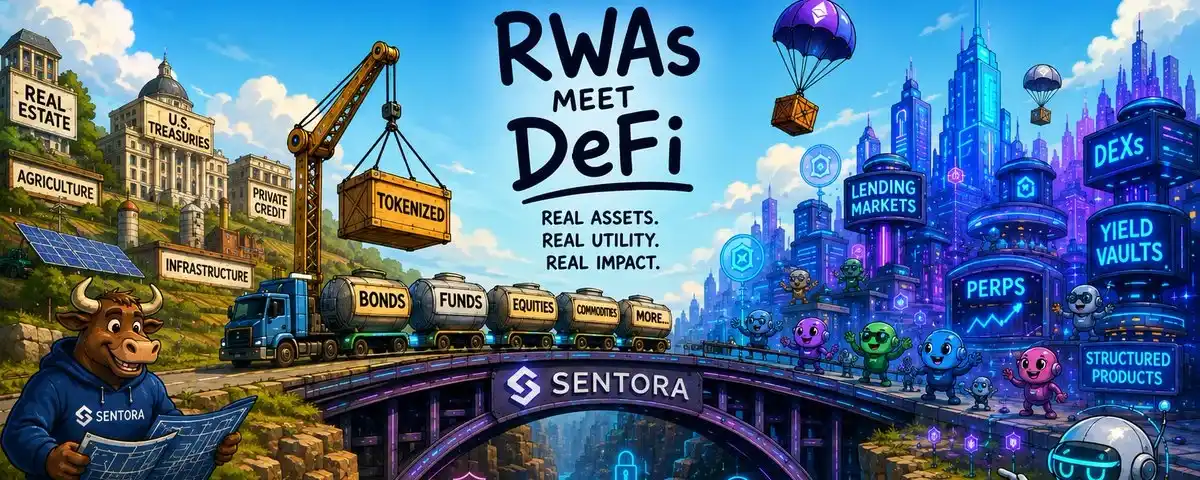
La discusión sobre RWA (Real World Assets) suele comenzar con una visión simple: tokenizar un activo como un bono del tesoro o una acción. Esto es útil, pero no transformador. Tokenizar es como poner un código de barras a un contenedor; es necesario, pero no crea toda la infraestructura comercial. Un token es un reclamo de propiedad direccionable; DeFi es el sistema operativo del mercado. La pregunta clave no es cuántos activos pueden tokenizarse, sino cuántos pueden valorarse, financiarse, cubrirse, comercializarse y liquidarse en condiciones de estrés sin coordinación fuera de cadena. La tokenización representa la propiedad; DeFi proporciona la utilidad real. Para que un RWA sea compatible con DeFi, necesita seis capas: derechos exigibles, fuentes de datos fiables, reglas claras de transferencia, liquidez secundaria ejecutable, parámetros de garantía realistas y vías creíbles de liquidación. Una contradicción técnica fundamental son los múltiples "relojes" bajo los que operan los RWA: la cadena de bloques se liquida en segundos, pero los mercados tradicionales cierran por la noche y los fines de semana, y los reembolsos pueden tardar días. Esta discrepancia crea un "vacío de liquidación" donde DeFi exige liquidez inmediata, pero el mundo real no puede proporcionarla. Por lo tanto, un RWA de baja volatilidad como un bono tokenizado puede ser una garantía más riesgosa que el ETH volátil pero líquido las 24 horas. La liquidez no es el TVL; es la capacidad de convertir una posición en el activo de liquidación necesario dentro de una ventana de tiempo aceptable. Un RWA tiene múltiples vías de salida (venta en el mercado, reembolso, préstamo garantizado), cada una con diferentes retrasos y riesgos. El apalancamiento es lo que libera la utilidad económica, pero también introduce fragilidad. Las tasas de garantía deben tener en cuenta la ejecutabilidad legal, la frescura de los datos del oráculo, los retrasos en el reembolso y la capacidad de los creadores de mercado. El riesgo en DeFi es el riesgo del activo multiplicado por el riesgo de la estructura del mercado. El riesgo de los RWA debe modelarse como un gráfico de relaciones entre nodos (flujos de efectivo subyacentes, custodios, oráculos, protocolos de préstamo, etc.), ya que las fallas rara vez están aisladas y se propagan a través de dependencias. Los bonos del tesoro tokenizados son solo el punto de entrada. Las fronteras más interesantes son los activos de potencia computacional y energía, que tienen perfiles de riesgo únicos y complejos. Las acciones tokenizadas y los contratos perpetuos presentarán la prueba más grande, conectando la propiedad de acciones globales con el apalancamiento nativo de las criptomonedas, pero también generarán riesgos interconectados que requerirán diseños arquitectónicos sólidos. Sin DeFi, los RWA tienen un valor limitado (mejor distribución, transparencia). La verdadera oportunidad surge cuando los activos ingresan a mercados de capital abiertos y programables, donde pueden ser utilizados como garantía. Un RWA es verdaderamente compatible con DeFi cuando todo el mercado que lo rodea puede sobrevivir a un fin de semana de estrés. La visión a largo plazo no es "tokenizar todo", sino que los activos productivos del mundo real sean direccionables por software, con el capital fluyendo sin problemas y los riesgos gestionados a la velocidad del mercado. El token es solo el código de barras. El mercado es la máquina que realmente funciona.

marsbitHace 18 min(s)

¿Tendría sentido RWA sin DeFi?

marsbitHace 18 min(s)

La intervención del gobierno en el mercado de bonos, ¿qué significa realmente?

El 19 de agosto de 2026, el Departamento del Tesoro de EE. UU. anunció que duplicaría al menos (hasta 40 mil millones de dólares) el tamaño máximo de sus operaciones de recompra de bonos del gobierno a largo plazo (10 a 30 años), vigente del 9 de septiembre al 4 de noviembre. La medida respondía a una fuerte presión vendedora que había llevado el rendimiento del bono a 30 años al 5.34%, su nivel más alto desde 2007. En una operación de recompra previa, los inversionistas ofrecieron vender cerca de 200 mil millones, pero el Tesoro solo compró 20 mil millones, lo que evidenció un severo desequilibrio. La reacción del mercado fue inmediata: los rendimientos de los bonos a largo plazo cayeron, las acciones subieron y el oro avanzó un 2.7%. Estas recompras, que retiran de circulación bonos antiguos y menos líquidos, buscan apoyar el funcionamiento del mercado, no reducir la deuda total. Expertos advierten que se trata de una solución táctica que no aborda las causas estructurales del alza de rendimientos: un déficit fiscal elevado, presiones inflacionarias y una menor demanda de compradores tradicionales como bancos centrales extranjeros. La intervención del Secretario del Tesoro, Scott Bessent, sugiere que las autoridades están vigilantes, pero el desafío fundamental de financiar una deuda pública que supera los 40 billones de dólares persiste. Se vigilarán los próximos datos económicos y subastas de bonos para evaluar la duración del alivio.

marsbitHace 20 min(s)

La intervención del gobierno en el mercado de bonos, ¿qué significa realmente?

marsbitHace 20 min(s)

¿Hasta cuánto le queda a EE.UU. para reiniciar el QE después del 'Bessent Put'?

El Tesoro de EE.UU. anunció el 19 de agosto un aumento de sus recompras de bonos a largo plazo, elevando la oferta por operación para bonos nominales a 10-20 y 20-30 años de un máximo de 2.000 a al menos 4.000 millones de dólares, con efecto desde el 9 de septiembre. Aunque la medida es pequeña en relación con el mercado total de deuda, su anuncio fuera del ciclo habitual de comunicaciones (QRA) hizo que los inversores la interpretaran como una señal de política: una posible creciente disposición del gobierno a intervenir para contener el aumento rápido de los rendimientos a largo plazo. El mercado comenzó a referirse a esta expectativa como el "Bessent Put", en referencia al subsecretario del Tesoro, Joshua Bessent. Analistas como Charlie McElligott de Nomura ven la acción como una declaración de intenciones para evitar que los costes de financiación a largo plazo restrinjan el gasto fiscal, la estrategia geopolítica o la financiación privada. Sin embargo, el Tesoro insiste en que se trata únicamente de una operación de apoyo a la liquidez. La presión sobre los bonos a largo plazo proviene de múltiples factores: grandes déficits fiscales y una elevada oferta de deuda del Tesoro, una prima por plazo en aumento, una fuerte emisión de deuda corporativa para financiar infraestructuras de IA (efecto expulsión) e incertidumbres relacionadas con Japón, un importante tenedor extranjero. En esencia, el "Bessent Put" refleja un cambio en la función de reacción política percibida por el mercado: la expectativa de que las autoridades podrían actuar de forma más proactiva si los rendimientos amenazan objetivos económicos o geopolíticos. No obstante, hay una gran distancia entre estas recompras limitadas y herramientas como el Control de la Curva de Rendimientos (YCC) o un nuevo Quantitative Easing (QE). La recompra del Tesoro es una operación de gestión de deuda, mientras que el QE implica la expansión del balance de la Fed. Para que se den pasos hacia políticas más intervencionistas, el entorno económico y de mercado tendría que deteriorarse significativamente. Por ahora, la medida abre el debate pero no marca el inicio de un nuevo QE. Su verdadero impacto será determinado por si el Tesoro y la Fed escalan su respuesta ante un posible nuevo repunte estructural de los tipos a largo plazo.

marsbitHace 23 min(s)

¿Hasta cuánto le queda a EE.UU. para reiniciar el QE después del 'Bessent Put'?

marsbitHace 23 min(s)

¡Ethereum finalmente "recupera sangre"! ETH regresa a la línea dorada, ¿en qué se diferencia este repunte?

Después de más de tres meses, el precio de Ethereum (ETH) ha superado los 2.300 dólares, alcanzando un nivel similar al de principios de mayo. Este repunte de aproximadamente el 25% en una semana ha sido más fuerte que el de Bitcoin, impulsando la relación ETH/BTC a 0,031. La capitalización de mercado de ETH ha vuelto a situarse entre los principales activos mundiales, en el puesto 72. La liquidación masiva de posiciones cortas (más de 13.300 millones de dólares, un 88,4% en cortos) ha amplificado la subida. Técnicamente, ETH ha superado una resistencia clave y ha vuelto a situarse por encima de su media móvil exponencial de 50 semanas (EMA50) por primera vez en este ciclo bajista, lo que se considera una señal alcista significativa. Los ETF de Ethereum muestran un fuerte flujo de entrada de capitales, superando recientemente a los de Bitcoin. En julio, los ETF de ETH registraron entradas netas equivalentes al 3,19% de sus activos, frente al 0,34% de los de BTC. Instituciones como Morgan Stanley y JPMorgan han aumentado significativamente su exposición a ETH. La participación en staking de ETH ha alcanzado un máximo histórico, con más de 41,1 millones de ETH (casi el 33,7% de la oferta) apostados. Sin embargo, el rendimiento por staking ha caído al 2,59%, lo que podría reducir su atractivo. Una próxima propuesta de mejora (EIP-8061) busca aumentar la eficiencia y flexibilidad para retirar fondos del staking. En resumen, el repunte de ETH cuenta con el apoyo de la mejora del sentimiento, los flujos de capital y los fundamentos, aunque su sostenibilidad a largo plazo dependerá de la evolución del mercado y la adopción de casos de uso como la tokenización y los agentes de IA.

marsbitHace 27 min(s)

¡Ethereum finalmente "recupera sangre"! ETH regresa a la línea dorada, ¿en qué se diferencia este repunte?

marsbitHace 27 min(s)

Trading

Spot

Artículos destacados

Cómo comprar CAP

¡Bienvenido a HTX.com! Hemos hecho que comprar Cap (CAP) sea simple y conveniente. Sigue nuestra guía paso a paso para iniciar tu viaje de criptos.Paso 1: crea tu cuenta HTXUtiliza tu correo electrónico o número de teléfono para registrarte y obtener una cuenta gratuita en HTX. Experimenta un proceso de registro sin complicaciones y desbloquea todas las funciones.Obtener mi cuentaPaso 2: ve a Comprar cripto y elige tu método de pagoTarjeta de crédito/débito: usa tu Visa o Mastercard para comprar Cap (CAP) al instante.Saldo: utiliza fondos del saldo de tu cuenta HTX para tradear sin problemas.Terceros: hemos agregado métodos de pago populares como Google Pay y Apple Pay para mejorar la comodidad.P2P: tradear directamente con otros usuarios en HTX.Over-the-Counter (OTC): ofrecemos servicios personalizados y tipos de cambio competitivos para los traders.Paso 3: guarda tu Cap (CAP)Después de comprar tu Cap (CAP), guárdalo en tu cuenta HTX. Alternativamente, puedes enviarlo a otro lugar mediante transferencia blockchain o utilizarlo para tradear otras criptomonedas.Paso 4: tradear Cap (CAP)Tradear fácilmente con Cap (CAP) en HTX's mercado spot. Simplemente accede a tu cuenta, selecciona tu par de trading, ejecuta tus trades y monitorea en tiempo real. Ofrecemos una experiencia fácil de usar tanto para principiantes como para traders experimentados.

498 Vistas totalesPublicado en 2026.06.26Actualizado en 2026.06.26

Cómo comprar CAP

Discusiones

Bienvenido a la comunidad de HTX. Aquí puedes mantenerte informado sobre los últimos desarrollos de la plataforma y acceder a análisis profesionales del mercado. A continuación se presentan las opiniones de los usuarios sobre el precio de CAP (CAP).

活动图片