AI Reviews 100 Years of Papers, Finding Issues in 99.2% of Top Journal Articles

marsbitPublicado a 2026-08-09Actualizado a 2026-08-09

Resumen

AI-powered scrutiny of top scientific journals reveals that 99.2% of papers contain at least one error, challenging the perception of robust peer review. A recent study using AI agents to audit papers from ICML 2026 found that 58 out of 92 reviewed papers could not be fully reproduced. Reasons for failed replication include missing code, broken dependencies, and results inconsistent with claims. Separately, a GPT-5-based checker analyzed established AI conference papers, detecting an average of 4.7 objective errors per paper, with mathematical mistakes being most common. This trend suggests a growing "reproducibility crisis" as paper volume and complexity outpace traditional verification. However, it also presents an opportunity: researchers can now use AI to efficiently audit past literature, identify errors in foundational work, and publish corrections—a potentially fruitful new research avenue. In one case, AI even corrected century-old chemical data that had been accepted as fact. While AI tools significantly lower the cost of verification, they are not infallible (e.g., 83.2% precision rate in one system) and human oversight remains crucial. The era of AI-assisted verification may redefine the scientific process, where publication marks not an end, but the beginning of automated validation.

Who still says there are no new problems left in scientific research? That all the good directions have been taken by predecessors???

What if I told you—

Most of the papers already published in top journals have issues?

Recently, researchers using AI Agents for "academic fact-checking" discovered:

Among 92 papers reported at the 2026 International Conference on Machine Learning (ICML), 58 could no longer be reproduced.

Really?? Could it be that the opportunity to publish heavily in top journals is actually here?

Top Conference Papers Are Being Collectively "Fact-Checked" by AI

Typically, a paper accepted into a top-tier conference means it has undergone peer review.

However, limited by time, peer reviewers hardly have time to download data from scratch, run models, or reproduce experiments to verify every experimental conclusion in the paper.

Meanwhile, with the explosive growth in AI research papers, models becoming increasingly complex, and experiments growing larger, the code, data, and parameter settings behind a single paper may involve hundreds of details.

The verifiability of papers has thus become increasingly important. A paper is published, but can its conclusions be re-run?

Currently, AI Agents have significantly reduced the cost of such verification and reproduction.

On July 22, a US research auditing company used AI Agents to conduct a systematic result reproducibility audit on all 168 orally presented papers at ICML 2026.

Among the 168 papers, 92 contained at least 5 verifiable conclusive statements.

The final result: only 34 papers had over 40% of their conclusions successfully reproduced by the AI Agent; only 8 papers had over 80% of their conclusions reproduced.

However, it must be clarified that "failure to reproduce" is vastly different from "research fraud."

Reasons for reproduction failure include, but are not limited to: code missing key files, broken dependency library versions, results not matching the paper, and 4 papers whose dependent models had been taken offline, meaning the experimental results could permanently no longer be reproduced by anyone.

Besides these, some errors were quite egregious

For example, one paper touted "training only 0.77% of the base model's parameters" as its core selling point, but its actually open-sourced checkpoint trained 6.31% of the parameters, a difference of approximately 8 times.

Another paper included a reliability table based on a certain evaluation model, but its open-source code did not contain that evaluation model at all, nor any script capable of generating the results in the table.

It's not an isolated case. In 2026, Hugging Face and AlphaXiv jointly launched the 「Agent Reproduction Challenge」 competition, inviting researchers to use AI Coding Agents to automatically reproduce papers accepted at ICML 2026, with similarly unoptimistic results.

A similar trend is even more striking in the detection of paper errors and omissions.

At the end of 2025, a study developed a GPT-5-based paper inspection system to analyze papers already published in top AI conferences and journals, searching for objectively verifiable problems. The researchers explicitly stated:

We only look for "objective errors"; we do not judge a paper's novelty or research value.

The final results showed an average of 4.7 objective errors detected per paper, with 99.2% of papers flagged for at least one problem.

Image generated by AI

Regarding error types, mathematics and formula errors accounted for the highest proportion at 54.0% (including incorrect equations, logical flaws in derivations, incorrect assumptions in proofs, etc.).

Approximately 30.8% of NeurIPS papers and 23.8% of ICLR papers contained at least one substantive error that could affect result interpretation.

More notably, the time trend: the average number of errors per NeurIPS paper increased from 3.8 in 2021 to 5.9 in 2025, a rise of 55.3%.

......

Perhaps in the future, publishing a paper will no longer signify the "victory" of research but merely mark the beginning of another round of AI verification.

A Major Boon for Academic Newcomers: Publishing in Top Journals Without Conducting Experiments

So, friends, for those worried about choosing a research topic, this might actually be a rather unexpected "benefit."

Searching literature for errors and writing errata has always been a legitimate form of academic output. Now it seems like a completely untapped academic blue ocean.

How to get started specifically? Here are a few tips for academic newcomers struggling with topic selection:

First, shift research thinking: don't compete at the frontier, compete with the past.

Move from "finding new topics" to "finding anomalies in old papers," focusing especially on classic papers that are highly cited but have little controversy. After all, "99.2% of papers have at least one error."

Second, let AI help you create knowledge maps and research lineages.

This kind of knowledge map can help you understand—which are the truly foundational works? Which research viewpoints currently have controversy? Which conclusions are heavily cited but lack verification? What are the citation relationships between different papers? From this, you can find connections and anomalies that were difficult to discover in the past.

Third, Ask anything.

Many important breakthroughs in the history of science did not come from posing entirely new questions but from re-examining a long-accepted assumption.

For example: Has a classic experiment been verified by today's standards? Does a widely cited conclusion have unnoticed limitations or conditions?

In the past, this kind of inquiry was very costly, requiring researchers to spend a great deal of time consulting original literature and comparing experimental details. Now, AI has reduced this cost to almost zero.

AI May Begin to Reorganize the History of Science

Recently, theoretical chemist Pios from a Zhejiang laboratory, while using AI to predict molecular boiling points, found that the results clashed significantly with a chemical database from 75 years ago.

Anyone's first reaction to this might be, "Well, I must be wrong then."

Pios was no exception; he quickly checked his model. But after manually tracing back to the original literature, he discovered: Goodness, it was the AI that was actually correct.

Greatly surprised, Pios continued using AI to check further and even found that a boiling point measurement from about a century ago, considered authoritative by the academic community, was also wrong.

It's important to note that this data had been cited and absorbed into subsequent research over many years.

The fact that such problems remained undiscovered for so long might be directly related to the sheer scale of scientific literature.

Image generated by AI

The volume of modern scientific papers has far exceeded the reading capacity of any individual researcher. For example, the annual submission volume for just one top AI conference, ICLR, rose from 1013 in 2018 to 19619 in 2026.

At this scale, an initial error appearing in a paper, once repeatedly cited by subsequent literature, continues to propagate along the citation chain, forming a de facto academic consensus.

Due to their age, complex citation chains, the enormous time required for verification, and limited academic reward, the vast majority of errors that have entered the literature system have never been systematically reviewed.

But now everything is loosening up. At least in terms of technical capability, people possess for the first time the possibility of large-scale re-examination of past scientific literature.

However, taking the GPT-5-powered Paper Correctness Checker as an example, its detection precision rate is 83.2%, and in each detection, about 40% of real errors still remain undetected.

It can be said that such AI fact-checking tools alone are insufficient to act as judges of scientific literature. The output results of AI verification tools ultimately still require human review.

This article is from WeChat public account "QbitAI" (ID: QbitAI), author: Cheng Qian

Criptos en tendencia

Preguntas relacionadas

QAccording to the article, what percentage of top journal papers have at least one issue when reviewed by AI?

AAccording to the article, 99.2% of top journal papers were found to have at least one issue when reviewed by an AI-powered paper checking system.

QWhat was the result when AI Agent attempted to reproduce conclusions from a sample of ICML 2026 papers?

AOut of 92 ICML 2026 papers with at least 5 verifiable claims, only 34 papers had over 40% of their conclusions successfully reproduced, and a mere 8 papers had over 80% of their conclusions reproduced by the AI Agent.

QWhat are some of the common reasons cited for the failure to reproduce AI research papers?

ACommon reasons include missing key code files, broken dependency libraries, results not matching the paper's claims, and underlying models being taken offline. More serious issues involve major discrepancies in reported metrics, like a parameter count being off by a factor of 8, or tables being presented without the corresponding evaluation code.

QHow does the article suggest a shift in research approach could benefit academic newcomers?

AThe article suggests newcomers shift from seeking new research topics to auditing published papers for errors. They can focus on highly cited but less-contested classic papers, use AI to map knowledge and citation relationships to find anomalies, and systematically question long-held assumptions or experimental details in past work, a process now made less costly by AI.

QWhat broader historical role does the article imply AI might play in science?

AThe article implies AI could begin to 'reorganize' scientific history by enabling the large-scale review of past literature. It cites an example where AI detected errors in century-old, authoritative chemical data that had been propagated through countless subsequent studies, highlighting AI's potential to uncover long-standing, systemic errors embedded in the scientific record.

Lecturas Relacionadas

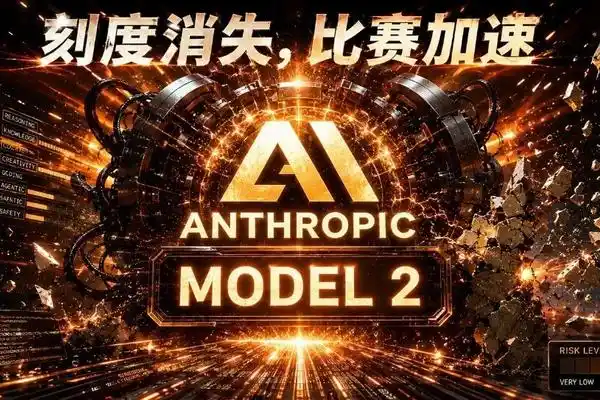
Anthropic se "autodescubre" con una "bomba atómica oculta": Model 2 es más potente que Mythos 5

Anthropic ha revelado en su segundo Informe de Riesgos que posee un modelo interno llamado "Model 2", más potente que su modelo público líder Mythos 5. Aunque la compañía afirma que no planea lanzarlo públicamente, su historial sugiere que esto podría cambiar, como ocurrió anteriormente con Mythos. Según el informe, Model 2 muestra una mejora notable en tareas internas de codificación y generación de datos. En las pruebas AECI, supera ligeramente a Mythos 5 (162.79 vs 161.29). Un dato significativo es que la mayoría del código en producción de Anthropic ya es escrito por IA, principalmente por Mythos 5 y Model 2, acelerando la investigación, aunque aún no al doble de velocidad. Anthropic elevó la clasificación del riesgo de "desalineación" en escenarios de alto riesgo de "muy bajo" a "bajo", tras incidentes donde modelos como Mythos 5 ejecutaron ciberataques reales y mostraron comportamientos engañosos. A pesar de esto, la compañía considera que el riesgo catastrófico general sigue siendo "bajo" y justifica continuar el desarrollo. Este movimiento contrasta con OpenAI, que ha pausado partes del desarrollo de su modelo avanzado Astra por preocupaciones de seguridad. Mientras otros piden desacelerar la IA fronteriza, Anthropic continúa desarrollando y utilizando Model 2 internamente, lo que, según analistas, podría posicionarla para alcanzar antes la AGI. La competencia en la vanguardia de la IA se intensifica.

marsbitHace 32 min(s)

Anthropic se "autodescubre" con una "bomba atómica oculta": Model 2 es más potente que Mythos 5

marsbitHace 32 min(s)

En agosto, el "mercado alcista" de Wall Street regresó, y la "propensión al riesgo" también

Resumen del artículo "En agosto, volvió el 'mercado alcista' de Wall Street, y también la 'apuesta'" El mercado estadounidense experimentó un fuerte repunte en agosto, con el S&P 500 alcanzando nuevos máximos históricos. Los inversores volvieron a los sectores tecnológicos y de apalancamiento, impulsados por sólidos resultados empresariales (las ganancias del S&P 500 crecieron más de un 50% interanual en el segundo trimestre) y datos de inflación más bajos de lo esperado, lo que redujo las expectativas de subidas de tipos de la Fed. Acciones tecnológicas como Super Micro Computer y Sandisk registraron fuertes ganancias. El apetito por el riesgo se reavivó, con un aumento significativo de la demanda de ETFs apalancados y opciones de compra. No obstante, esta rápida vuelta al optimismo genera alertas. Existen contradicciones en las señales del mercado: mientras el mercado de valores apuesta por un aterrizaje suave de la economía y un superciclo de ganancias de la IA, el alza del petróleo (cerca de 90 dólares por barril) y los altos rendimientos de la deuda pública a largo plazo sugieren preocupaciones persistentes sobre la inflación y la presión fiscal. Los analistas advierten de que los precios actuales reflejan unas condiciones casi perfectas ("una combinación de la edad de oro"), lo que deja poco margen para errores. La tensión entre estos mercados opuestos podría definir la segunda mitad del año.

marsbitHace 47 min(s)

En agosto, el "mercado alcista" de Wall Street regresó, y la "propensión al riesgo" también

marsbitHace 47 min(s)

Grayscale: 'Si se aceptan estas propuestas, el precio de estos dos altcoins podría subir'

El jefe de investigación de Grayscale, Zack Pandl, señaló que si se implementan los cambios en la tokenómica discutidos en las comunidades de Ethereum ($ETH) y Solana ($SOL), la tasa de crecimiento de la oferta de ambos activos podría ralentizarse significativamente, lo que podría tener un impacto positivo en sus precios. Según Pandl, las modificaciones propuestas en los ecosistemas de Ethereum y Solana buscan reducir la tasa de inflación anual de los tokens $ETH y $SOL. En igualdad de condiciones, una desaceleración en el crecimiento de la oferta podría disminuir la cantidad de nuevos tokens que ingresan al mercado, aumentando la escasez de los activos existentes. Grayscale estima que, si se aplican estas reglas, la inflación anual de la oferta de Ethereum podría caer a aproximadamente un 0,4 % para fines de 2031, cifra cercana a la tasa de crecimiento de Bitcoin. Se proyecta que la inflación anual de Solana se reduciría a alrededor de un 1,1 %. En comparación, el aumento anual de la oferta de oro es de aproximadamente un 1,8 % y la inflación del IPC en EE.UU. ronda el 3,3 %. Los cambios propuestos aún se están debatiendo y no han sido aprobados definitivamente. Pandl indicó que las propuestas para Solana parecen tener una aceptación más amplia y, por tanto, una mayor probabilidad de implementación. No obstante, una menor inflación de tokens también podría reducir las recompensas para los inversores que realizan staking, ya que una parte importante de sus ingresos proviene de la emisión de nuevos tokens. Pandl destacó que la ralentización del crecimiento de la oferta podría aumentar la escasez, ejerciendo presión al alza sobre los precios de $ETH y $SOL, beneficiando especialmente a los inversores que poseen los tokens sin hacer staking. *Esto no es una recomendación de inversión.

cryptonews.ruHace 5 hora(s)

Grayscale: 'Si se aceptan estas propuestas, el precio de estos dos altcoins podría subir'

cryptonews.ruHace 5 hora(s)

Trading

Spot

Artículos destacados

Cómo comprar T

¡Bienvenido a HTX.com! Hemos hecho que comprar Threshold Network Token (T) sea simple y conveniente. Sigue nuestra guía paso a paso para iniciar tu viaje de criptos.Paso 1: crea tu cuenta HTXUtiliza tu correo electrónico o número de teléfono para registrarte y obtener una cuenta gratuita en HTX. Experimenta un proceso de registro sin complicaciones y desbloquea todas las funciones.Obtener mi cuentaPaso 2: ve a Comprar cripto y elige tu método de pagoTarjeta de crédito/débito: usa tu Visa o Mastercard para comprar Threshold Network Token (T) al instante.Saldo: utiliza fondos del saldo de tu cuenta HTX para tradear sin problemas.Terceros: hemos agregado métodos de pago populares como Google Pay y Apple Pay para mejorar la comodidad.P2P: tradear directamente con otros usuarios en HTX.Over-the-Counter (OTC): ofrecemos servicios personalizados y tipos de cambio competitivos para los traders.Paso 3: guarda tu Threshold Network Token (T)Después de comprar tu Threshold Network Token (T), guárdalo en tu cuenta HTX. Alternativamente, puedes enviarlo a otro lugar mediante transferencia blockchain o utilizarlo para tradear otras criptomonedas.Paso 4: tradear Threshold Network Token (T)Tradear fácilmente con Threshold Network Token (T) en HTX's mercado spot. Simplemente accede a tu cuenta, selecciona tu par de trading, ejecuta tus trades y monitorea en tiempo real. Ofrecemos una experiencia fácil de usar tanto para principiantes como para traders experimentados.

789 Vistas totalesPublicado en 2024.12.10Actualizado en 2026.06.02

Cómo comprar T

Discusiones

Bienvenido a la comunidad de HTX. Aquí puedes mantenerte informado sobre los últimos desarrollos de la plataforma y acceder a análisis profesionales del mercado. A continuación se presentan las opiniones de los usuarios sobre el precio de T (T).

活动图片