Crypto hacks hit record high in H1 2026 – What’s fueling the surge?

ambcryptoPublicado a 2026-07-02Actualizado a 2026-07-02

Resumen

According to TRM Labs, crypto hacks reached a record high in the first half of 2026 with 207 incidents, more than double the 85 reported in H1 2025. While the number of breaches surged, the total value stolen fell to $972 million, less than half the $2.3 billion lost in the same period the previous year. Smart contract exploits were the most common attack type, constituting 125 cases. However, TRM Labs' Ari Redbord noted that three-quarters of the stolen value came from infrastructure failures like compromised keys and custody systems, highlighting a gap between improved code auditing and lagging operational security. Notably, North Korean-linked actors were responsible for 66% of the stolen funds. Major exploits, such as the $293 million attack on KelpDAO, triggered liquidity crises in protocols like Aave and contributed to a broader loss of confidence in DeFi, leading to significant capital outflows and a drop in Total Value Locked to a two-year low of $70 billion.

TRM Labs, a blockchain security firm, reported 207 crypto hacks in the first half of 2026, the most in any six-month period. The bulk of the crypto hack cases happened in Q2 (126 incidents), led by KelpDAO, Humanity, and Rhea Lend exploits.
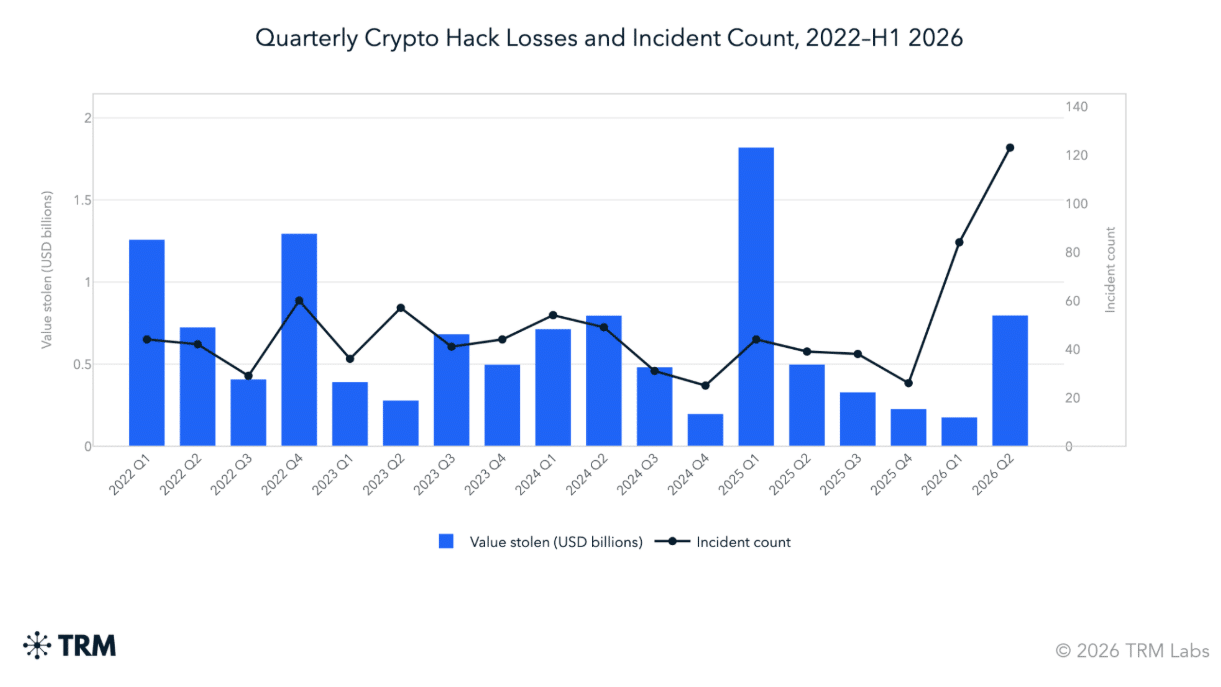
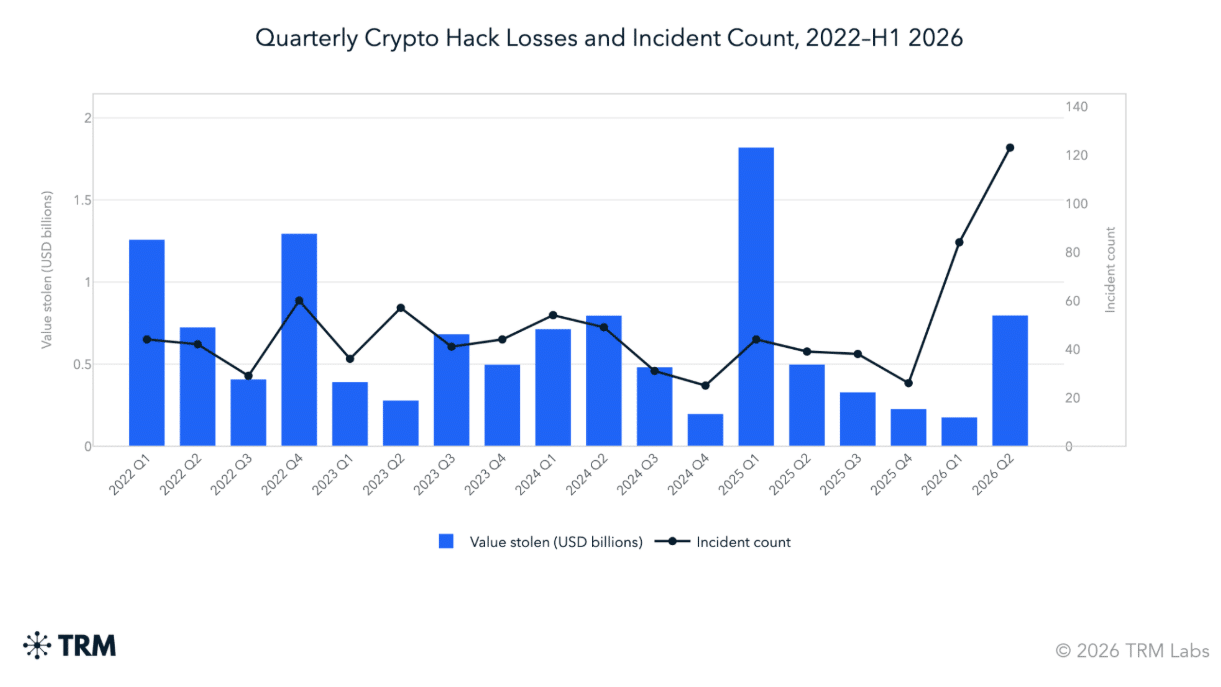
Source: TRM Labs

In the first half of 2025, 85 crypto hacks were reported. In other words, H1 2026 saw more than double the number of crypto hack cases over the same period. According to the report, most of the attacks were smart contract exploits, which accounted for 125 of the 207 incidents: a 60% dominance share in breaches.

Commenting on the same, Ari Redbord, global head of policy at TRM Labs, told AMBCrypto,

What I find most concerning is how concentrated these losses are in infrastructure failures. Three-quarters of all stolen value came from compromises of keys, custody systems, and signing infrastructure, not from smart contract bugs.

He concluded that,

The industry has improved at auditing code, but our operational security has not kept pace with our on-chain complexity.
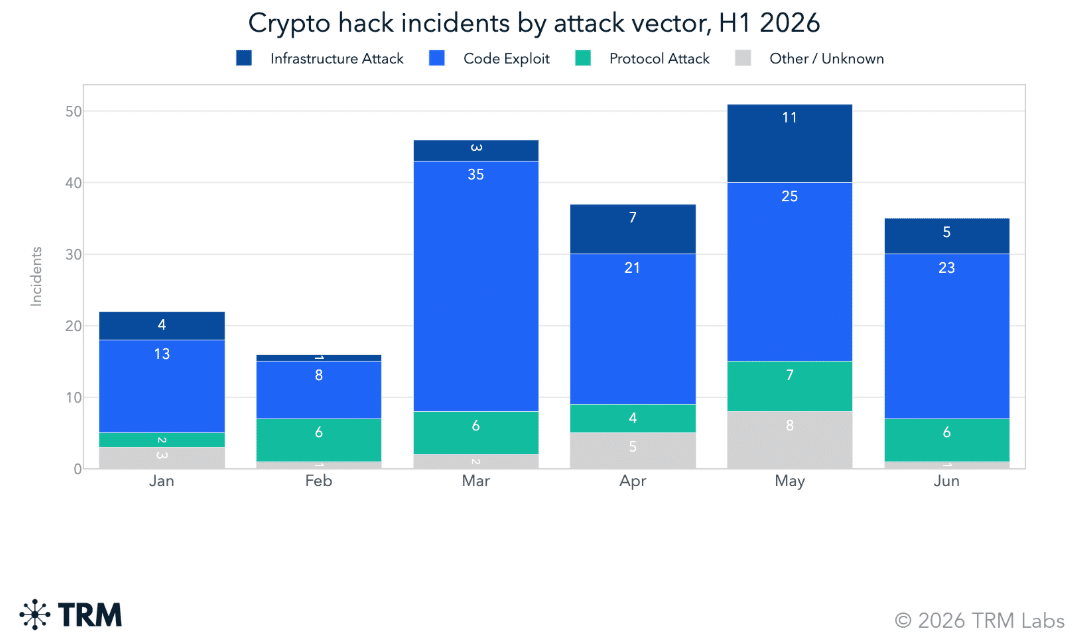
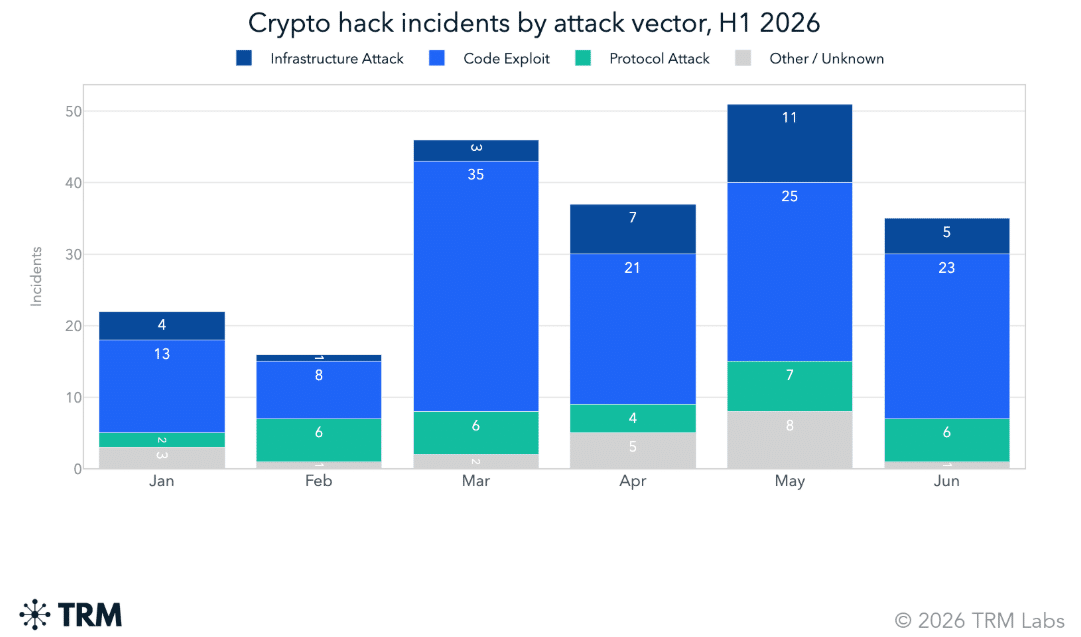
Source: TRM Labs

North Korea-linked actors drive 66% of crypto hacks

Despite the record number of breaches, the overall value stolen in 2026 was relatively small compared to 2025.

The report noted that $972 million was lost as of June, which was below half of about $2.3 billion lost over the same period in 2025. Still, 66% of the stolen funds were driven by North Korean-linked entities.

By the end of Q2 2026, North Korea-linked attackers’ share of stolen crypto funds was over 75%. However, intensified activity from other entities during the quarter reduced their dominance to 66% at press time. The impact of the hacks has been more devastating for the DeFi sector. Amid the broader bearish sentiment, the intensified crypto hacks further drove investors from the DeFi sector.

In fact, in the KelpDAO’s $293 million hack, the attacker used fake tokens and deposited them in the Aave lending protocol and borrowed $190M in legitimate assets (wETH). There was a sudden liquidity crunch and subsequent bank run in Aave as investors feared the worthless collateral deposited by the attacker. As a result, Aave pools reached full utilization, preventing some late depositors from withdrawing their funds.

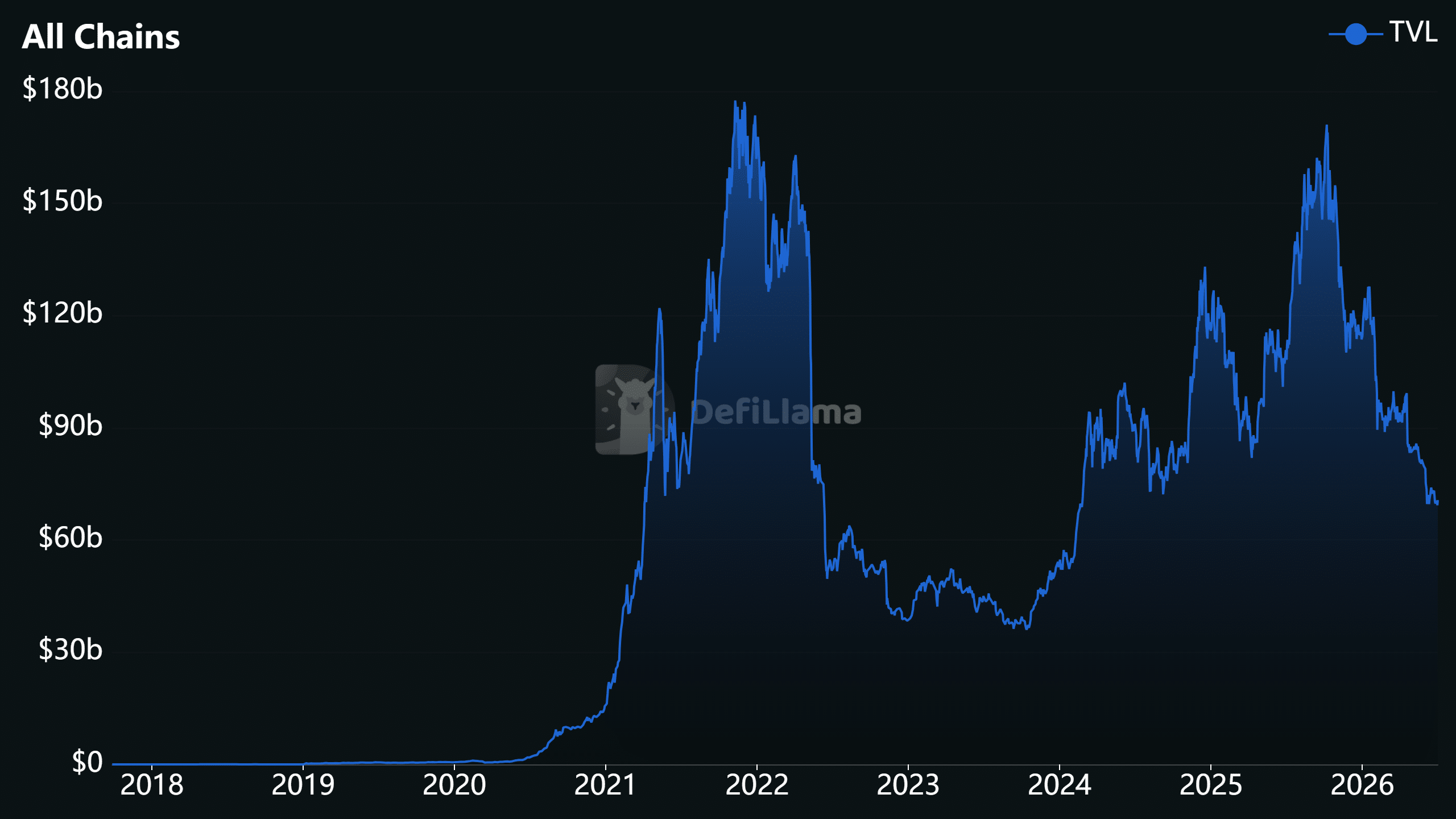
This added to broader DeFi security risk, which has triggered $55 billion in capital outflows in H1 2026. At the time of writing, the total DeFi TVL (total locked value) has hit a two-year low of $70 billion, up from $120B seen earlier in 2026.
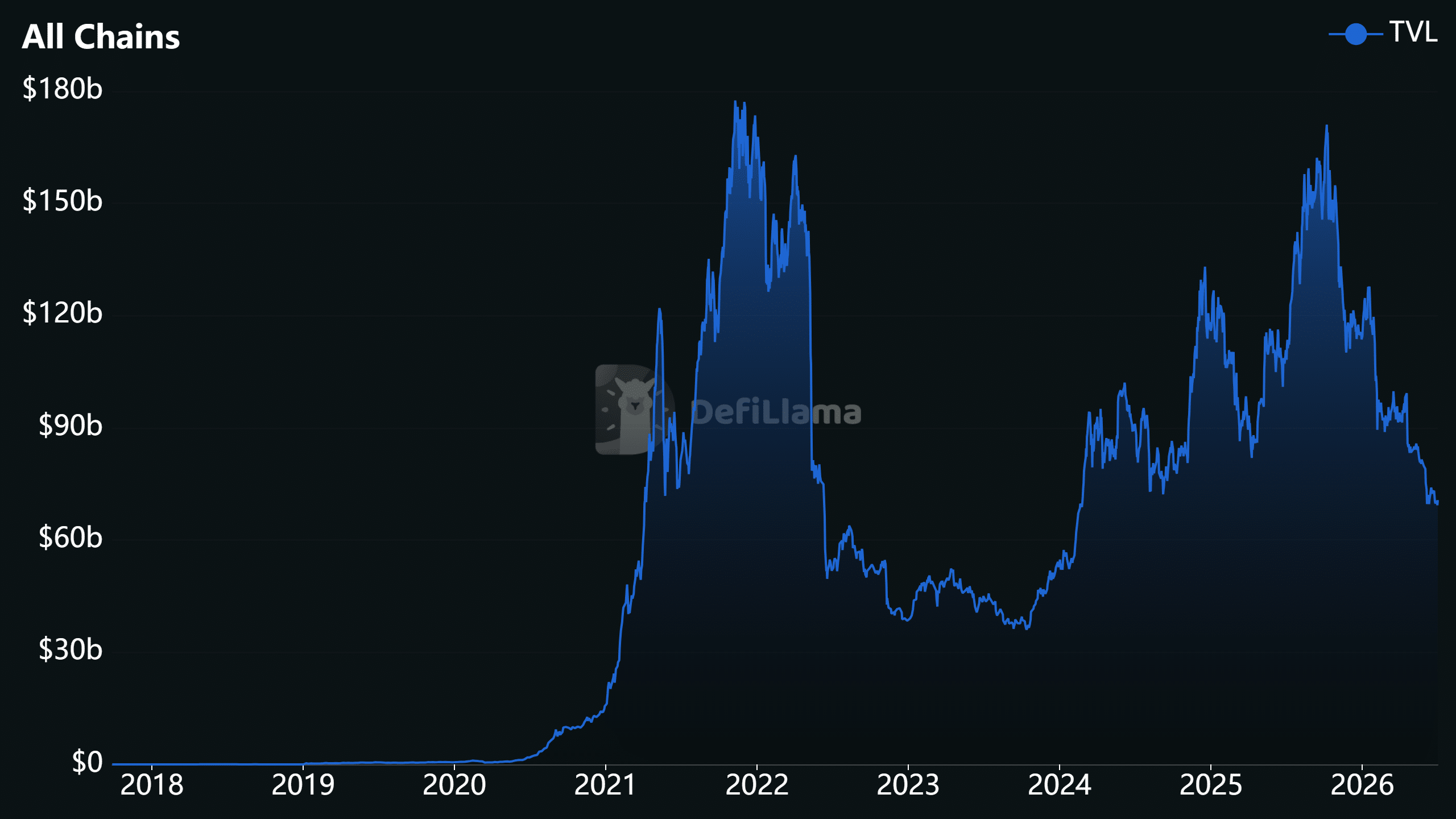
Source: DeFiLlama

Final Summary

  • Crypto hack cases hit a record high of 207 in H1 2026, but the stolen value was below $1B
  • North Korea-based threat actors accounted for $643M, or 66% of stolen funds over the same period.


Preguntas relacionadas

QAccording to the report, what was the total number of crypto hacks reported in H1 2026 and how does it compare to the same period in 2025?

AThere were 207 crypto hacks reported in the first half of 2026, which is more than double the 85 hacks reported in H1 2025.

QWhat percentage of the crypto hacks in H1 2026 were due to smart contract exploits, and what was identified as the main source of the majority of stolen value?

ASmart contract exploits accounted for 125 out of 207 incidents, or 60% of the hacks. However, the main source of stolen value (75%) was compromises of keys, custody systems, and signing infrastructure, not smart contract bugs.

QWhat percentage of the total stolen funds in H1 2026 were attributed to North Korea-linked entities?

ANorth Korea-linked entities were responsible for 66% of the total stolen funds in H1 2026.

QHow did the overall value stolen from crypto hacks in H1 2026 compare to the value stolen in H1 2025?

AThe total value stolen in H1 2026 was $972 million, which is less than half of the approximately $2.3 billion stolen in H1 2025.

QWhat was one significant consequence of the KelpDAO hack, as described in the article?

AIn the KelpDAO hack, the attacker used fake tokens as collateral on Aave to borrow legitimate assets, causing a liquidity crunch and a bank run on Aave. This led to some Aave pools reaching full utilization, preventing some depositors from withdrawing their funds.

Lecturas Relacionadas

Tras tres trimestres consecutivos de caída, ¿puede el mercado cripto encontrar una ventana de estabilización en el tercer trimestre?

El mercado cripto sufrió su peor trimestre desde 2022, con una caída del 12.6% en la capitalización total (ahora en $2.1 billones). El volumen de operaciones y el valor de las stablecoins también disminuyeron, señalando una salida generalizada de capitales. Bitcoin y Ethereum cayeron un 14.2% y 25.4% respectivamente, rompiendo su correlación con los mercados de riesgo tradicionales. Los ETFs de Bitcoin en EE.UU. registraron importantes salidas netas ($4.67 mil millones en Q2), aunque datos sugieren que el ciclo de ventas podría estar cerca de su fin. La atención del mercado se centra ahora en la reunión de la FED a finales de julio, cuya postura (halcón o paloma) podría definir el rango de trading de Bitcoin para el trimestre. El avance de la ley CLARITY en el Senado estadounidense se ha estancado, reduciendo la probabilidad de aprobación en 2026 y manteniendo una prima de riesgo regulatorio alta. Solo dos sectores mostraron crecimiento: los mercados de predicción (volumen +48.7%) y los coleccionables tokenizados (volumen +143% vs. Q1). El sentimiento general es de cautela. La lógica del mercado ha cambiado, priorizando fundamentos como la política monetaria y la regulación frente a los simples impulsos narrativos. Aunque las bases para una caída extrema parecen limitadas, la recuperación sostenida en Q3 depende críticamente de la FED y de un posible progreso regulatorio.

marsbitHace 12 hora(s)

Tras tres trimestres consecutivos de caída, ¿puede el mercado cripto encontrar una ventana de estabilización en el tercer trimestre?

marsbitHace 12 hora(s)

BIT Trading Moments: BTC aún presionado por la EMA 200 semanal, tras el rechazo podría reiniciar la caída, los valores de almacenamiento y semiconductores que subieron fuertemente anoche comenzaron a caer en la sesión nocturna

**BIT Trading Moments: BTC aún presionado por la EMA 200 semanal; almacenamiento y semiconductores caen en el after-hours** El mercado de cripto continúa su recuperación, con **Bitcoin** manteniéndose cerca de los $66,000. Enfrenta una fuerte resistencia en la zona de los $68,000, nivel que coincide con el costo promedio de los inversores en los últimos cinco meses y un punto de fallo anterior. Los analistas señalan que se encuentra atrapado entre la media móvil simple (MA) de 200 semanas (~$63,333) y la media exponencial (EMA) de 200 semanas (~$68,328). Se necesitaría un cierre semanal por debajo de $55,000 o por encima de $70,000 para confirmar una dirección de mayor alcance. Los ETF de Bitcoin registran entradas netas por sexto día consecutivo. En Wall Street, los **futuros de los principales índices** caen. Después de fuertes ganancias el martes, las acciones de **semiconductores y almacenamiento** retroceden en el after-hours: el ETF de semiconductores cae un 2.22%, Micron un 2.29% y SK Hynix casi un 5%. Sin embargo, **Super Micro Computer (SMCI)** se dispara más de un 20% tras el cierre, impulsada por sólidos pedidos. Otras noticias positivas incluyen un contrato de $266M de la Fuerza Aérea para **Rocket Lab**. A pesar del repunte bursátil, factores como el **crudo Brent por encima de $91** y el **rendimiento del bono estadounidense a 10 años subiendo a ~4.64%** generan preocupaciones inflacionarias y enfrían el optimismo. Las acciones relacionadas con cripto, como Coinbase y Robinhood, tuvieron un buen desempeño apoyadas por avances regulatorios. En Asia, los mercados siguieron la recuperación tecnológica. El **índice KOSPI de Corea del Sur** subió un 0.74%, con acciones de semiconductores mostrando volatilidad. El principal riesgo es el **yen japonés**, que tocó su nivel más bajo desde 1986, lo que genera temores a una intervención del gobierno. **Próximos eventos clave:** Este miércoles 22 de julio, el enfoque está en los eventos de **AMD AI** y los resultados financieros de **Alphabet (Google), Tesla e IBM** después del cierre. El jueves 23, la **decisión de tasas del BCE** y los resultados de **Intel** serán cruciales para el sentimiento del mercado.

marsbitHace 12 hora(s)

BIT Trading Moments: BTC aún presionado por la EMA 200 semanal, tras el rechazo podría reiniciar la caída, los valores de almacenamiento y semiconductores que subieron fuertemente anoche comenzaron a caer en la sesión nocturna

marsbitHace 12 hora(s)

Trading

Spot
活动图片




