After Rising 11 Times in a Year, Micron's Earnings Report Becomes a Stress Test for the AI Memory Market

marsbitPublicado a 2026-06-22Actualizado a 2026-06-22

Resumen

**Micron's Upcoming Earnings: A Crucial Test for the AI Memory Rally** Investors in AI memory stocks face a critical moment on June 24th, when Micron Technology reports quarterly earnings. The stock, having surged approximately 11-fold from $103 to $1,134 over the past year, carries immense market expectations. Wall Street consensus forecasts a staggering ~932% year-over-year jump in EPS to around $19.72 and ~270% revenue growth to ~$345 billion, largely driven by sold-out HBM (High Bandwidth Memory) capacity through 2026. Analysts have aggressively revised estimates upward over the last 90 days, with EPS expectations rising 68%. This creates a high bar: even strong results risk a sell-off if they fail to meet these elevated projections. Notably, price forecasts from institutions like Citi (predicting ~200% DRAM price increases in 2026) are already among the most bullish on Wall Street, not conservative. The key metric to watch is gross margin, guided to a record ~81%. Such peak profitability raises questions about sustainability in the historically cyclical memory sector. While management has signaled continued strength, the stock's direction post-earnings will likely hinge more on forward guidance for the next quarter and details on HBM capacity expansion for 2027, rather than the already-anticipated stellar past results. The report represents a major pressure test for the high-flying AI memory trade.

Author: Claude, Deep Tide TechFlow

Deep Tide Intro: Those betting on AI memory face a crucial test on June 24. Micron will announce its quarterly earnings after the market closes that day. Its stock price has soared from $103 a year ago to $1,134, roughly an 11-fold increase, with a market cap of $1.28 trillion. The market is betting on continued growth, with the Wall Street consensus expecting earnings per share (EPS) to skyrocket by about 932% year-over-year and revenue to grow by about 270% for the quarter. The higher the climb, the higher the expectations the earnings report must meet. This report is the moment to validate this bet and represents the toughest hurdle for this year's AI memory market rally.

If you hold Micron stock or are watching the AI, chip, or memory sector, this earnings report after the close on June 24 is worth paying attention to.

Micron's stock price has risen from $103 to $1,134 over the past year, an increase of about 11 times. Its market cap is $1.28 trillion, up about 297% year-to-date. At this level, anyone buying further up is certainly thinking "how much longer can this rally last?" The earnings report is the moment to validate this bet.

Currently, the market consensus remains bullish.

According to cryptobriefing, Wall Street expects Micron's EPS for this fiscal quarter to be around $19.72, compared to just $1.91 in the same period last year, a year-over-year increase of about 932%; revenue is expected to be around $34.5 billion, a year-over-year increase of about 270%. These numbers are supported by High Bandwidth Memory (HBM, specialized high-speed memory chips for AI accelerators). Micron's HBM production capacity for the full year 2026 is already completely sold out, with orders booked through the end of the year.

Analysts Have Been Revising All Year, Expectations Keep Chasing Higher

This rally didn't come out of thin air. Over the past three months, Wall Street has been consistently raising its profit forecasts for Micron, and doing so urgently.

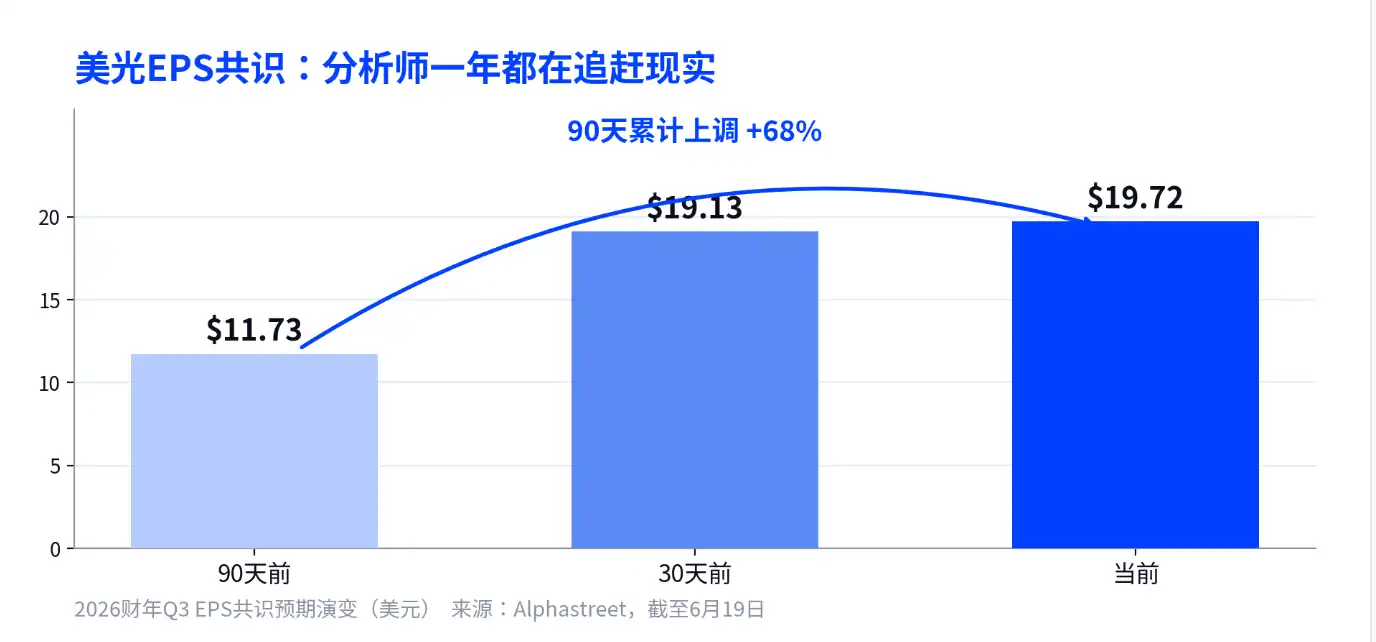
According to Alphastreet data, the consensus EPS for Micron this fiscal quarter was $11.73 90 days ago, rose to $19.13 30 days ago, and is now at $19.72, a cumulative increase of 68%. Wall Street's assessment of the company three months ago was nearly half of what it is now.

The 31 analysts' EPS forecasts range from $7.53 to $24.08, and revenue forecasts range from $19.7 billion to $40.1 billion, a huge gap. The steepness of this inflection point is something analysts themselves haven't fully figured out, forcing them to constantly revise estimates upwards based on actual data.

For the average investor, this is a double-edged signal.

Repeatedly raised expectations indicate that fundamentals are indeed exceeding expectations; but even if the earnings are good on report day, if they fall short of this pushed-to-the-limit consensus, the stock price could still fall.
Don't Believe "Citi Is Too Conservative," That's Actually One of the Most Aggressive Forecasts

There's a narrative on social platforms suggesting that Citi's assumptions on memory prices are too conservative, and that Micron's earnings will therefore significantly exceed expectations. This judgment has the direction wrong, and basing decisions on it could lead to pitfalls.

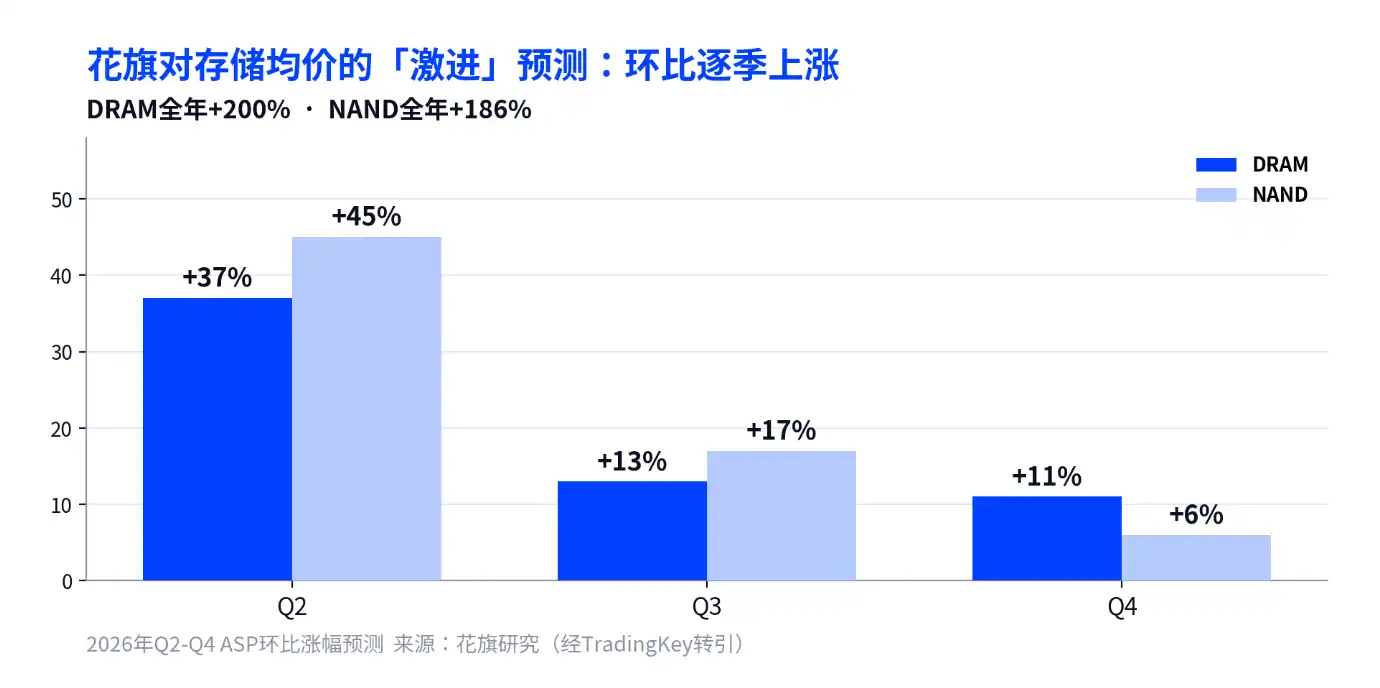
According to TradingKey, Citi forecasts DRAM average selling prices to rise about 200% for the full year 2026, with sequential increases of 37%, 13%, and 11% in Q2 to Q4, respectively; NAND flash prices to rise about 186% for the year, with sequential increases of 45%, 17%, and 6%. A 200% full-year increase is among the most aggressive forecasts on Wall Street for memory prices, not conservative. Based on this, Citi raised its price target to $1,200, while Deutsche Bank gave a target of $1,500; both extended their judgment of a memory shortage through 2028.
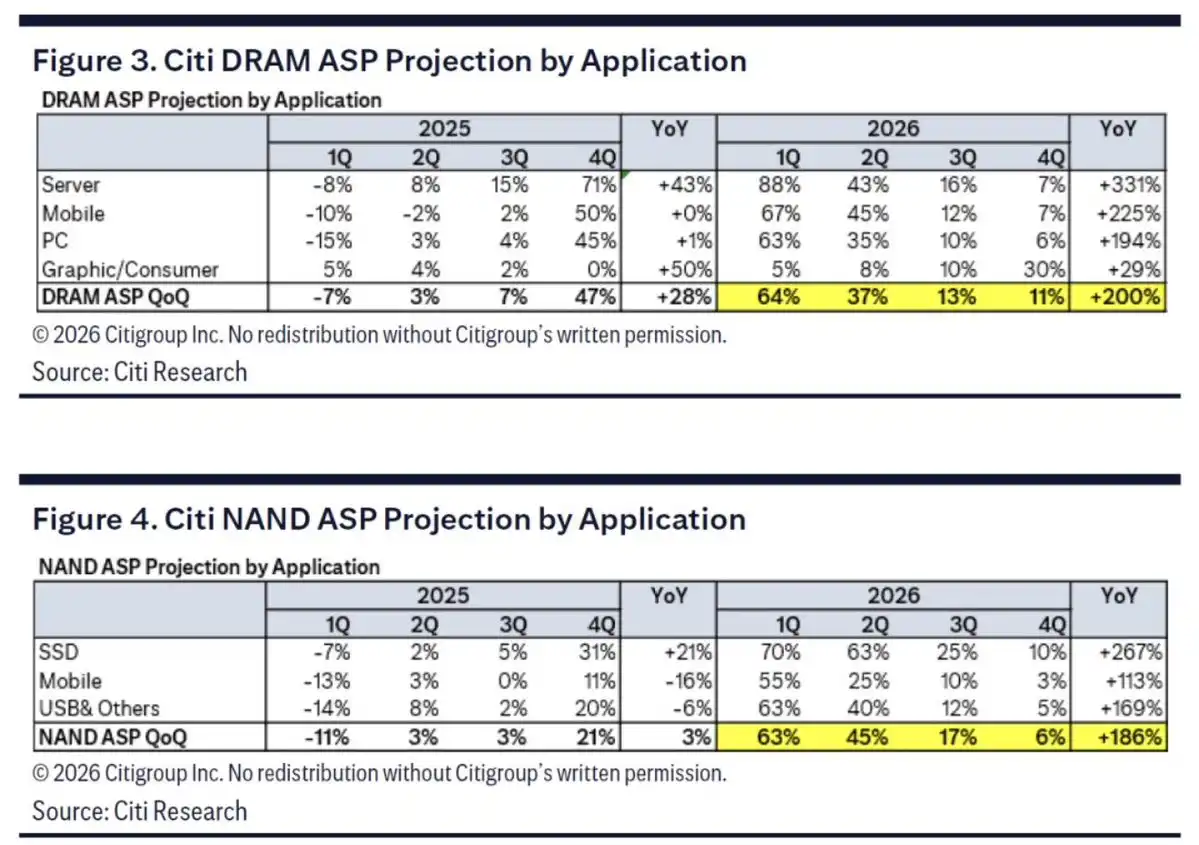
The risk lies here: even the most aggressive institutions have built their forecasts on "200% increases." The earnings report must surpass a bar that has already been repeatedly raised. Expecting to bet on an upside surprise based on "Citi underestimated" is not a solid logical foundation.
Gross Margin Around 81% is the Historical High, and Also the Day's Biggest Suspense

The figure to watch most closely in the earnings report is the gross margin.

According to TradingKey, Micron's own guidance is for revenue of $33.5 billion plus or minus $750 million, EPS around $19.15, and a gross margin around 81%. This is the company's highest historical gross margin and ranks among the top in the semiconductor industry. The net margin was 23.4% in the same period last year and 58.8% last quarter—more than doubling profitability in a year, a magnitude rarely seen in semiconductors.

The higher the gross margin, the more prominent the question of sustainability becomes. Micron has historically been one of the most cyclical tech stocks; everyone knows the boom and bust cycles of memory. On earnings day, any signs suggesting margins have peaked or that prices for mainstream memory categories are starting to soften, even if revenue numbers are impressive, will put pressure on the stock price.

According to TIKR, Micron's Executive Vice President of Global Operations, Manish Bhatia, said at a J.P. Morgan conference that the company's financial outlook is stronger than during the last earnings call, and this quarter is expected to set another free cash flow record; supply tightness for HBM, DRAM, and NAND will persist beyond 2026, and the ramp-up speed for HBM4 capacity is twice that of HBM3E last year. These statements are relatively optimistic, but they are all pre-earnings commentary; their truth will be verified by the day's data.

What Determines the Stock Price Direction is the Guidance, Not This Quarter's Performance

This quarter's revenue and profits are highly likely to be impressive—the market already expects that.

Which way the stock moves on the day depends more on Micron's guidance for the fourth fiscal quarter—for example, whether sequential growth can continue—that's the watershed. Next are the progress of HBM volume ramp and capacity allocation for 2027, as these two items determine whether the story for next year remains viable.

In the history of the memory industry, the easiest time to get caught is not when performance is worst, but when expectations are fullest. Micron is currently at the point of fullest expectations. If you plan to act after the earnings report, look at the guidance and HBM first, then at total revenue.


Criptos en tendencia

Preguntas relacionadas

QWhat is the primary risk for Micron's stock price following its June 24th earnings report, according to the article?

AThe primary risk is failing to meet or exceed the extremely high market expectations that have been built up. Even if the reported earnings are excellent, the stock price could still fall if the results do not surpass the elevated consensus estimates, which have been revised upwards multiple times. Furthermore, any sign in the guidance of peaking margins or a loosening in pricing for commodity memory could pressure the stock.

QWhy does the article state that the view 'Citigroup's forecast is too conservative' is incorrect?

AThe article argues this view is incorrect because Citigroup's forecast of a ~200% full-year price increase for DRAM is actually one of the most aggressive predictions on Wall Street, not a conservative one. Therefore, expecting Micron to significantly beat earnings based on the idea that Citigroup underestimated price growth is flawed logic.

QWhat specific financial metric is highlighted as the most critical to watch in Micron's earnings report, and why?

AThe gross margin is highlighted as the most critical metric. Micron's guidance points to a gross margin of approximately 81%, which would be a record high for the company and among the best in the semiconductor industry. The sustainability of this extremely high profitability is a major focus, as any indication that margins have peaked could negatively impact the stock despite strong revenue.

QWhat is the more important factor for determining Micron's stock price direction on earnings day: the Q3 results or the Q4 guidance?

AThe more important factor is the guidance for the fourth fiscal quarter (Q4). While the Q3 results are expected to be strong, the market has already largely priced this in. The stock's direction will depend more on whether Micron's forward-looking guidance indicates continued growth, particularly regarding HBM progress and 2027 capacity planning, which are crucial for sustaining the investment narrative.

QWhat evidence does the article provide to show that Wall Street expectations for Micron have been rising rapidly?

AThe article cites data from Alphastreet showing that the consensus earnings per share (EPS) estimate for Micron's current quarter was $11.73 ninety days ago, rose to $19.13 thirty days ago, and is now $19.72. This represents a cumulative upward revision of 68% over just three months, demonstrating how analysts have been chasing the actual performance data with increasingly higher forecasts.

Lecturas Relacionadas

Las ETF registran salidas netas continuas: ¿Están saliendo las instituciones?

Durante las últimas seis semanas, los ETF estadounidenses de Bitcoin han registrado salidas netas de aproximadamente 6.000 millones de dólares, la racha de pérdidas semanales más larga desde su lanzamiento en 2024. El fondo IBIT de BlackRock concentró gran parte de estas salidas. La venta proviene principalmente de inversores que accedieron a través de cuentas de corretaje de ETF, facilitando tanto la entrada como la salida, en lo que parece una "rendición colectiva" tras la aprobación regulatoria. Factores como el repunte de la inflación, un tono más agresivo de la Fed y la atracción de capital hacia sectores como la IA y nuevas OPVs han impulsado una reasignación de capital de riesgo. El Bitcoin, como activo de alta beta, ha sido de los primeros en sufrir. Las pérdidas realizadas aumentaron un 78%, con muchos vendiendo en el rango de 55.000 a 68.000 dólares. Aunque el ritmo de salidas se ha ralentizado notablemente, la presión estructural persiste, ya que el gran tamaño del IBIT convierte sus rescates en una fuente de presión de venta constante. El mercado se enfrenta ahora a la prueba de sostenerse sin el apoyo de los flujos de entrada de los ETF. Si las salidas del IBIT disminuyen y el precio se mantiene por encima de 60.000 dólares, la corrección podría considerarse un reajuste. Sin embargo, si las salidas continúan y el precio cae por debajo de 58.000 dólares, indicaría una salida más sostenida, obligando al mercado spot a absorber toda la presión de venta institucional por sí solo.

marsbitHace 43 min(s)

Las ETF registran salidas netas continuas: ¿Están saliendo las instituciones?

marsbitHace 43 min(s)

Concepto de Modelos del Mundo para Principiantes: Una Historia que va de la Psicología al Campo Principal de la IA

El concepto de "modelo mundial" (World Model) es actualmente una idea candente pero confusa en el campo de la IA. Su objetivo central es dotar a la máquina de un "simulador mental" o "tablero de arena interno" que le permita prever y ensayar posibles escenarios futuros antes de actuar en el mundo real. Esto es crucial para aplicaciones como la conducción autónoma (simular condiciones extremas), la robótica (entrenar en entornos virtuales) o la generación de contenidos. El concepto tiene raíces profundas. El psicólogo Kenneth Craik (1943) propuso que la mente humana construye "modelos a pequeña escala" de la realidad para predecir eventos. En IA, pioneros como Marvin Minsky y, más recientemente, investigadores como David Ha y Jürgen Schmidhuber (2018) con su trabajo "Recurrent World Models", sentaron las bases modernas. Los principales investigadores tienen visiones distintas pero complementarias: * **Yann LeCun** (Meta) critica los modelos de lenguaje grandes y aboga por un modelo mundial que comprenda la física subyacente, a través de arquitecturas como JEPA, que predicen en un espacio de representación abstracto, no en píxeles. * **Fei-Fei Li** (Stanford, World Labs) propone una clasificación basada en el ciclo de acción-observación: **Renderizadores** (generan píxeles, como Sora), **Simuladores** (generan estados 3D/físicos precisos) y **Planificadores** (generan acciones). * **El laboratorio FIB de la Universidad de Tsinghua** simplifica la división en modelos para **entender** el mundo (apoyo a la decisión) y para **predecir** el futuro (generación). Grandes empresas están impulsando el campo con diferentes enfoques: * **OpenAI** con **Sora** lo presenta como un "simulador del mundo" basado en generación de vídeo. * **Google DeepMind** con **Genie 3** crea mundos 3D interactivos en tiempo real a partir de texto. * **NVIDIA** con **Cosmos** ofrece una "plataforma de modelo base mundial" para IA física y simulación. Técnicamente, coexisten tres rutas principales: 1. **"Pintar"**: Modelos generativos de vídeo (Sora, Genie 3). Ventaja: realismo visual. Desventaja: coherencia física débil. 2. **"Calcular mentalmente"**: Predicción en espacio de representación abstracta (JEPA). Ventaja: eficiente, aprende estructura. Desventaja: menos interpretable. 3. **"Construir con bloques"**: Generación de entornos 3D con propiedades físicas explícitas (Omniverse). Ventaja: preciso y editable. Desventaja: costoso, menos generalizable. Un desarrollo reciente es el **World Action Model (WAM)**, que integra la predicción del estado futuro y la generación de acciones en un único sistema, acercándose a una capacidad "unificada de conocimiento y acción" para robots. A nivel industrial, se está formando una estructura en tres capas: **1) Soporte base** (datos, potencia de cálculo, sensores), **2) Plataformas tecnológicas** (genéricas o verticales) y **3) Aplicaciones** (conducción autónoma, robótica, juegos, etc.). La conducción autónoma es actualmente la aplicación más madura. La falta de una definición única no es necesariamente negativa. Refleja una fase temprana y dinámica donde diferentes enfoques (compresión del mundo en píxeles, geometría 3D, reglas de comportamiento) están explorando en paralelo. El objetivo final, sin embargo, es convergente: dotar a las máquinas de un modelo interno del mundo que sea **deducible, repasable y generalizable**, para actuar de forma más segura y eficiente. La unificación conceptual llegará, pero la confusión actual es señal de que el "modelo mundial" se ha convertido en un campo de batalla principal para el futuro de la IA.

marsbitHace 1 hora(s)

Concepto de Modelos del Mundo para Principiantes: Una Historia que va de la Psicología al Campo Principal de la IA

marsbitHace 1 hora(s)

"Reparando caminos a plena luz, cruzando en secreto por Chencang", ¿está Walsh preparando el camino para una "bajada de tipos" en septiembre?

El presidente de la Fed, Kevin Walsh, podría estar preparando el camino para una reducción de tasas en septiembre, según un análisis de Academy Securities. A pesar de su retórica "halcón" reciente, que ha logrado moderar las expectativas del mercado, la estrategia real podría ser allanar el camino para un recorte antes de las elecciones de mitad de mandato. El argumento señala que los objetivos políticos de la administración Trump favorecen tasas bajas, y que Walsh podría estar coordinando una narrativa de endurecimiento inicial para luego pivotar basándose en datos. Se cuestionan las métricas de inflación actuales, como el índice PCE, sugiriendo que podrían sustituirse por indicadores alternativos, como el índice de rentas para nuevos inquilinos, que muestran una inflación más baja. Datos en tiempo real de Truflation sitúan la inflación subyacente por debajo del 1.8%. Además, se argumenta que la inflación impulsada por la IA afecta principalmente a sectores específicos y es insensible a las subidas de tasas, que en cambio dañan a otros prestatarios. La recomendación de inversión es apostar por una bajada en el extremo corto de la curva de rendimientos, ser sobreponderado en energía (especialmente nuclear) y biotecnología, y ser cauteloso con las valoraciones de las megacap tecnológicas.

marsbitHace 1 hora(s)

"Reparando caminos a plena luz, cruzando en secreto por Chencang", ¿está Walsh preparando el camino para una "bajada de tipos" en septiembre?

marsbitHace 1 hora(s)

IBIT registra salidas por 1.300 millones en una semana: el mayor ETF de Bitcoin se convierte en un muro de presión vendedora que los alcistas deben superar

El ETF de Bitcoin de BlackRock, IBIT, experimentó una salida neta de 1.300 millones de dólares la semana pasada, representando aproximadamente el 73% de las salidas totales de los ETF spot de Bitcoin en EE.UU. Esta concentración de reembolsos en el fondo más grande convierte a este producto, antes principal canal de entrada institucional, en una fuente significativa de presión vendedora. Los datos de Farside Investors muestran que IBIT fue el único contribuyente negativo en las salidas del 26 de junio. Este cambio estructural plantea una prueba clave para el mercado: los compradores de Bitcoin fuera del ecosistema ETF ahora deben absorber la presión de venta cuando los titulares de ETF decidan reducir su exposición. El precio de Bitcoin se negociaba cerca de los 60.000 dólares, una zona de soporte crítica. La narrativa del "canal de entrada institucional" se ha invertido, mostrando que el mismo vehículo puede operar en ambas direcciones. Si bien los reembolsos del ETF no equivalen automáticamente a ventas directas en el mercado spot, representan un riesgo de transmisión. La escala de IBIT hace que sus flujos sean ineludibles para el sentimiento del mercado. El escenario futuro depende de si estas salidas se agotan rápidamente (un posible "capitulación") o si persisten, consolidando la narrativa del "muro de presión vendedora". Los próximos días determinarán si el mercado ha absorbido esta presión o si la recuperación debe ocurrir a pesar de la continua salida de fondos del principal ETF.

marsbitHace 2 hora(s)

IBIT registra salidas por 1.300 millones en una semana: el mayor ETF de Bitcoin se convierte en un muro de presión vendedora que los alcistas deben superar

marsbitHace 2 hora(s)

Trading

Spot

Artículos destacados

Cómo comprar F

¡Bienvenido a HTX.com! Hemos hecho que comprar Synfutures (F) sea simple y conveniente. Sigue nuestra guía paso a paso para iniciar tu viaje de criptos.Paso 1: crea tu cuenta HTXUtiliza tu correo electrónico o número de teléfono para registrarte y obtener una cuenta gratuita en HTX. Experimenta un proceso de registro sin complicaciones y desbloquea todas las funciones.Obtener mi cuentaPaso 2: ve a Comprar cripto y elige tu método de pagoTarjeta de crédito/débito: usa tu Visa o Mastercard para comprar Synfutures (F) al instante.Saldo: utiliza fondos del saldo de tu cuenta HTX para tradear sin problemas.Terceros: hemos agregado métodos de pago populares como Google Pay y Apple Pay para mejorar la comodidad.P2P: tradear directamente con otros usuarios en HTX.Over-the-Counter (OTC): ofrecemos servicios personalizados y tipos de cambio competitivos para los traders.Paso 3: guarda tu Synfutures (F)Después de comprar tu Synfutures (F), guárdalo en tu cuenta HTX. Alternativamente, puedes enviarlo a otro lugar mediante transferencia blockchain o utilizarlo para tradear otras criptomonedas.Paso 4: tradear Synfutures (F)Tradear fácilmente con Synfutures (F) en HTX's mercado spot. Simplemente accede a tu cuenta, selecciona tu par de trading, ejecuta tus trades y monitorea en tiempo real. Ofrecemos una experiencia fácil de usar tanto para principiantes como para traders experimentados.

308 Vistas totalesPublicado en 2024.12.21Actualizado en 2026.06.02

Cómo comprar F

Discusiones

Bienvenido a la comunidad de HTX. Aquí puedes mantenerte informado sobre los últimos desarrollos de la plataforma y acceder a análisis profesionales del mercado. A continuación se presentan las opiniones de los usuarios sobre el precio de F (F).

活动图片