JST Embarks on Its Second Buyback and Burn: Cumulative 10.96% of Total Supply Destroyed, Accelerating Entry into a New Era of Value Growth

marsbitPublicado a 2026-01-16Actualizado a 2026-01-16

Resumen

JST, the token of the JUST ecosystem, has completed its second major buyback and burn event on January 15, 2026, permanently removing 525 million JST (5.3% of total supply) worth over $21 million. Combined with the first burn, a total of 10.96% of JST's supply has been destroyed, accelerating its deflationary trajectory and reinforcing its value proposition. The buyback was funded by $10.19 million from JustLend DAO's Q4 2025 net profits and $10.34 million from accumulated reserve earnings, demonstrating the ecosystem's strong profitability and financial health. Key drivers include JustLend DAO's robust performance, with Total Value Locked (TVL) exceeding $7.08 billion, innovative products like sTRX (with over 9.3 billion TRX staked), and the widely adopted GasFree smart wallet, which has facilitated over $46 billion in transactions and saved users $36.25 million in fees. Additionally, growth from the USDD decentralized stablecoin ecosystem, which recently surpassed $1 billion in TVL, contributed significant incremental revenue. This burn signifies a fundamental shift for JST from a utility governance token to a yield-backed asset, directly tethering its value to the ecosystem's cash flow. The reduced supply increases scarcity, enhances per-token governance power for holders, and establishes a sustainable, transparent deflation model for DeFi. With a market cap surpassing $400 million and growing trading volume, JST is positioned for continued value appreciation driven by r...

On January 15, 2026, the JST token officially completed its second large-scale buyback and burn. This burn action not only demonstrates the project's firm commitment to its deflationary mechanism but also showcases the robust profitability and financial health of the JUST ecosystem to the entire cryptocurrency market with the destruction of 525,000,000 JST (5.3% of the total supply).

According to the JustLend DAO official announcement, the estimated value corresponding to this burn exceeds 21 million US dollars. Combined with the amount burned in the first round, the cumulative number of JST tokens burned has reached 1,084,890,753, accounting for 10.96% of the total supply. This means that in less than three months, JST has permanently removed over one-tenth of its total supply, a remarkable pace of deflation.

From a broader perspective, this burn marks a fundamental evolution in JST's value narrative. It is transitioning from a governance token to an equity asset anchored to the growth of the ecosystem's cash flow. This process not only enhances the scarcity and value foundation of the JST token but also provides a clear, practical path for the decentralized finance (DeFi) sector—one driven by real yield to fuel token value—demonstrating a transparent and sustainable new paradigm of deflation.

Strong Performance of JustLend DAO Ecosystem Forges the Financial Cornerstone for Large-Scale Buyback

Such a large-scale buyback and burn necessarily requires a solid financial foundation. The announcement clearly reveals the dual pillars of the funding source: $10,192,875 came from JustLend DAO's net profit in the fourth quarter of 2025, while another $10,340,249 originated from the project's accumulated stock of reserve earnings. These figures themselves are the most powerful proof of performance; they collectively point to a core fact: the JustLend DAO ecosystem not only possesses strong immediate profitability but also boasts a robust financial structure and sustainable cash flow, which form the solid foundation supporting its commitment to buybacks and its deflation strategy.

A deeper analysis of JustLend DAO's performance in Q4 2025 reveals clear growth trajectories. Firstly, as the flagship lending protocol of the JUST ecosystem, JustLend DAO benefits from the continuous improvement of the TRON infrastructure. Its Total Value Locked (TVL) broke through the $7.08 billion mark in the fourth quarter and has long been ranked among the top three in the lending market, with lending activity in its SBM market also climbing to a new cycle high.

It is worth noting that the $10,340,249 in stock earnings, which formed an important part of this buyback fund, can be traced back to the earnings from the reserve capital deposited in the SBM USDT market during the first JST buyback. The appreciation process of this capital is itself the most direct proof of the SBM market's strong profitability. It showcases JustLend DAO's sophisticated financial operation model: strategically reinvesting ecosystem profits for "self-regeneration" within the protocol, thereby providing an endogenous and sustainable source of funding for subsequent value returns.

On this basis, JustLend DAO's revenue structure is also showing a trend of diversification. While the traditional lending market, its core business, maintains steady growth, JustLend DAO has innovatively built a product matrix including sTRX (Staked TRX) and Energy Rental, greatly expanding the boundaries and depth of its value capture.

Among these, the sTRX service allows users to stake TRX to earn rewards while still flexibly participating in other DeFi activities. This innovative design significantly improves capital efficiency and user stickiness. As of January 15, the amount of TRX staked on the platform has surpassed 9.3 billion tokens. This staggering figure not only reflects the community's high recognition of the sTRX product but also generates considerable and sustainable service revenue.
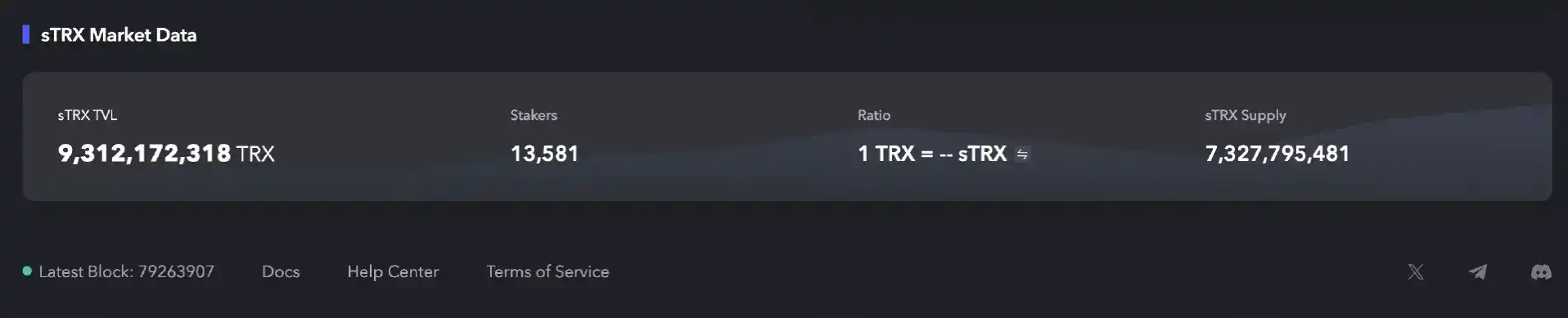
Meanwhile, the "Energy Rental" service, designed to reduce users' on-chain operation costs, has also demonstrated strong market appeal through active rate optimization. Since September 2025, the base rate for this service was significantly reduced from 15% to a more competitive 8%. The rate optimization directly stimulated market demand and transaction frequency, thereby creating steady incremental revenue for the protocol through more active leasing business.

While the core product matrix continues to perform strongly, JustLend DAO, focusing on lowering the participation threshold for the general user, innovatively launched the GasFree smart wallet in March 2025. This feature彻底打破了用户必须预先持有原生代币(TRX)以支付手续费这一长期困扰新手用户的壁垒 (completely breaks down the long-standing barrier for new users of having to hold the native token (TRX) in advance to pay transaction fees), allowing users to directly deduct and pay the required network fees from the token assets they are transferring (e.g., USDT). This design not only achieves ultimate operational convenience but also fundamentally broadens the accessibility of blockchain finance.

To accelerate the adoption of this innovative feature, JustLend DAO simultaneously launched a highly attractive 90% transfer fee subsidy campaign. With this support, users only need to pay an extremely low fee of approximately 1 USDT when using the GasFree function for USDT transfers. This combined strategy quickly ignited market demand. As of January 15, the total transaction volume driven by the GasFree smart wallet has exceeded $46 billion. This astonishing scale not only validates the market's strong desire for a frictionless transaction experience but has also directly saved users a cumulative total of over $36.25 million in network fee costs. This innovation, by significantly reducing actual usage costs and cognitive barriers, has introduced massive incremental users and capital flow into the ecosystem, constituting another powerful growth pole for the platform's network effects and revenue potential.

Meanwhile, another funding channel in the buyback and burn plan, namely the incremental revenue from the USDD multi-chain ecosystem (the portion exceeding $10 million), also constitutes a significant source of value. USDD, as the core decentralized stablecoin of the TRON ecosystem, has seen remarkable results from its multi-chain expansion strategy. It has been successfully deployed on mainstream public chains like Ethereum and BNB Chain, broadening its application scenarios and user base.

Its ecosystem value recently achieved a milestone breakthrough. On January 14, USDD's TVL historically surpassed the $1 billion mark. This means that in less than two months, USDD's TVL规模实现了惊人的100%增长 (achieved an astonishing 100% growth), its expansion speed and market acceptance fully confirming the strong momentum and deep asset appeal of this stablecoin within the multi-chain ecosystem. The rapid growth of its TVL and the continuous prosperity of its ecosystem significantly enhance the potential scale of this funding channel, providing an anticipated source of value for JST's subsequent quarterly buyback and burn plans.

Through deep integration with various DeFi protocols, USDD not only consolidates its peg stability but also creates continuous value inflow for the entire ecosystem. The inclusion of USDD ecosystem's excess income in the JST buyback and burn plan builds a value闭环 (closed loop) of "stablecoin + lending protocol + governance token". In this model, the expansion and prosperity of USDD and JustLend DAO directly power the deflation of JST, while the increase in JST's value in turn enhances the attractiveness and cohesion of the entire TRON DeFi ecosystem, creating a powerful internal synergy and value feedback effect.

Deepening Deflation Mechanism: Revolutionary Reshaping of JST's Value Foundation

In summary, the significance of this buyback and burn早已超越了单纯的价格支撑范畴 (has long surpassed the scope of mere price support); it is triggering a series of profound structural changes. Most fundamentally, it has completed the reshaping of JST's value support logic. JST is no longer merely a "utility token" for paying network fees or participating in governance votes; it has evolved into an "equity asset" directly anchored to the cash flow performance of JustLend DAO, USDD, and associated ecosystems.
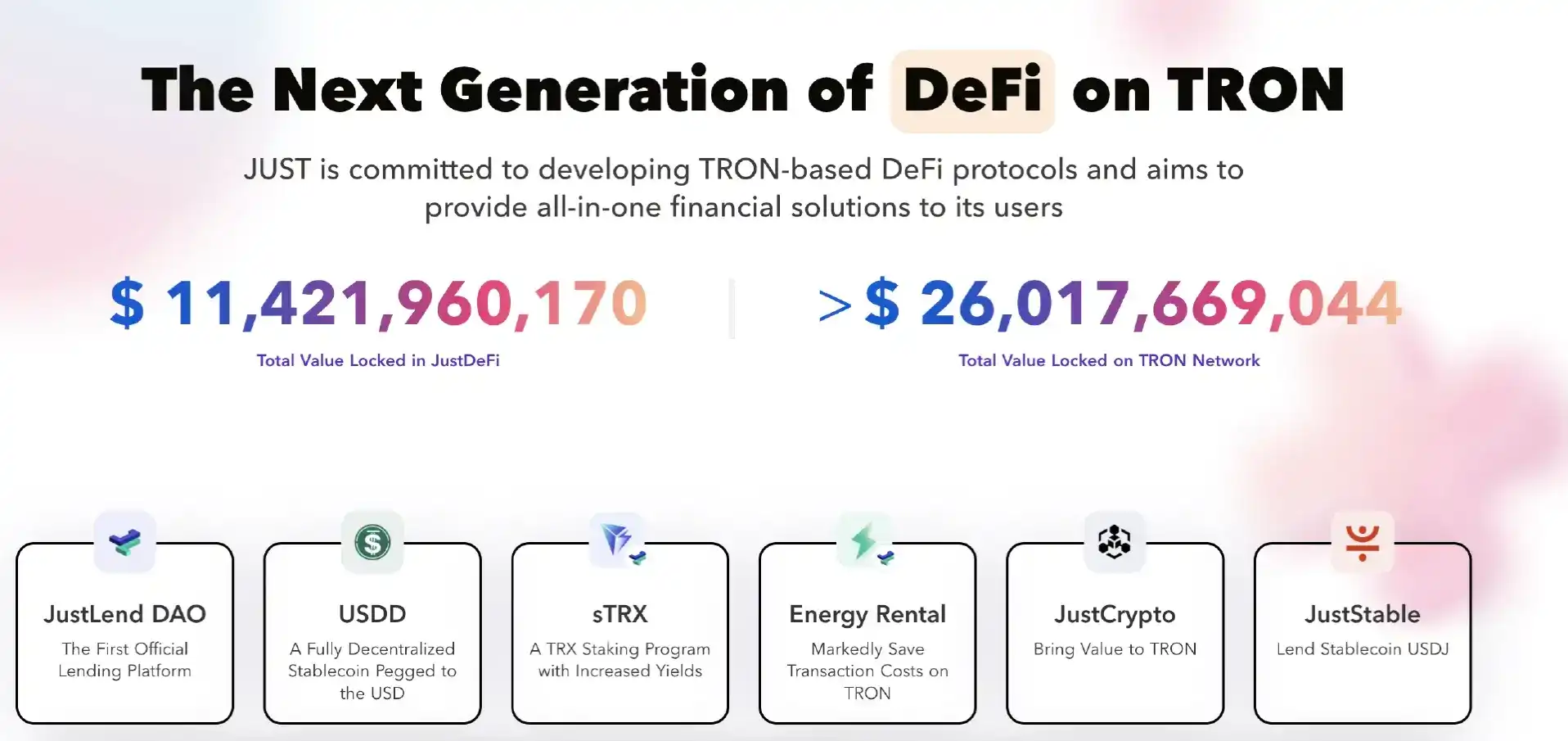
Through the buyback and burn mechanism, the profit growth of the ecosystem is continuously injected into the value foundation of the JST token, making holding JST equivalent to holding an equity certificate that shares in the future profit growth of the ecosystem. On January 8, CoinMarketCap data showed that JST's market cap historically broke through the $400 million mark. This is not just a numerical leap but substantial market recognition of its new positioning. Accompanying the rising market cap was increased activity of funds. On January 8, its 24-hour trading volume significantly increased by 21.92%, reaching $31.49 million, and its price had also risen 10.82% steadily over the past month, with a daily increase of 3.1%.

The synchronous expansion of trading volume and market cap at key junctures is not偶然的市场波动 (an accidental market fluctuation) but a clear "vote of confidence" from the capital markets in response to the improving fundamentals of the JUST ecosystem, particularly the profitability and value return mechanism demonstrated by the buyback and burn.

Secondly, the JST buyback and burn also带来治理权力的实质性增值 (brings substantial增值 to governance power). As the total token supply is irreversibly reduced, the governance weight in the protocol represented by each remaining JST in the market will increase accordingly. This means that long-term holders not only enjoy the economic benefits of value appreciation but also see their voice in key community decisions (such as parameter adjustments, new product launches, treasury fund usage, etc.) amplified simultaneously. This design deeply binds the interests of core community members to the long-term success of the protocol,极大地增强了社区的稳定性和参与感 (greatly enhancing community stability and sense of participation).

From a broader industry perspective, JST's buyback and burn practice provides a clear and借鉴的新范式 (new paradigm to emulate) for token economics in the DeFi field. Removing 10.96% of the total supply through two rounds of burns in an extremely short time not only demonstrates efficient execution but, more profoundly, deeply binds the protocol's financial success to the interests of token holders, thereby establishing a良性循环典范 (exemplary virtuous cycle) of "value creation - value return".

This model fundamentally reverses the old logic where token value relied on speculative narratives,转向由协议基本面现金流驱动的可持续路径 (turning towards a sustainable path driven by the protocol's fundamental cash flow), providing a solid and credible case study for the industry on how to build economic models with substantial value support.

Looking ahead, with JST buyback and burn becoming a quarterly routine, a clear, predictable deflation path has been laid out. The scarcity of JST will be a certain narrative that strengthens over time. Each quarterly report disclosure and the subsequent burn will serve as a catalyst for reassessing its intrinsic value. This burn is not an endpoint but the beginning of a more恢弘的价值累积篇章 grand chapter of value accumulation). A value revolution, supported by ecosystem profitability and driven by product synergy, has already pressed the accelerator.


Criptos en tendencia

Preguntas relacionadas

QWhat was the total amount of JST tokens burned in the second buyback and what percentage of the total supply did it represent?

A525,000,000 JST tokens were burned, representing 5.3% of the total supply.

QWhat is the cumulative amount and percentage of JST tokens burned so far through the two buyback events?

AThe cumulative amount burned is 1,084,890,753 JST tokens, which is 10.96% of the total supply.

QWhat were the two main financial pillars that funded the buyback and burn initiative?

AThe funding came from JustLend DAO's Q4 2025 net revenue of $10,192,875 and a reserve of accumulated earnings of $10,340,249.

QWhat innovative product significantly lowered the barrier to entry for new users by eliminating the need to hold TRX for gas fees?

AThe GasFree Smart Wallet, which allows users to pay network fees directly from the tokens being transferred (like USDT).

QWhat major milestone did the USDD ecosystem achieve recently, and what does it signify for the JST buyback mechanism?

AThe USDD ecosystem's Total Value Locked (TVL) historically surpassed $1 billion, signifying rapid growth and providing a substantial, predictable value source for future JST buyback and burn plans.

Lecturas Relacionadas

PA Gráfico Explicado | Entiende los Eventos Clave de Web3 en Agosto de 2026 con una Imagen

PA图说: Un resumen de los grandes acontecimientos de Web3 en agosto de 2026 Agosto de 2026 estará repleto de acontecimientos macroeconómicos, avances regulatorios, desbloqueos de tokens y ajustes en proyectos, que definirán las principales tendencias del mercado. 📌 **Macroeconomía y Política:** Se publicarán datos clave como el IPC y el empleo no agrícola de EE.UU. Tendrán lugar la reunión de la FED y el simposio anual de Jackson Hole. En el ámbito regulatorio, el Senado de EE.UU. presentará un nuevo borrador de la *Ley CLARITY*, mientras que la UE ampliará oficialmente la prohibición de criptoactivos a Bielorrusia. 🪙 **Desbloqueo de Tokens:** Habrá desbloqueos concentrados de tokens como ENA, AVAX, CONX, ZRO y KAITO, lo que podría generar volatilidad en el mercado. ⚠️ **Ajustes en Proyectos:** Varios proyectos o servicios, como Exchange Art, Ctrl Wallet, Zapper, NFTfi y Summer.fi, cesarán sus operaciones o realizarán ajustes. Se recomienda a los usuarios gestionar sus activos a tiempo. 💼 **Finanzas Corporativas:** Empresas como SpaceX, Circle y Nvidia publicarán sus resultados del segundo trimestre. La compañía de robótica Yushu Technology iniciará la suscripción para su OPV en la bolsa STAR, y Moonshot AI planea una ronda de financiación Pre-IPO. 🌐 **Eventos:** Se celebrarán conferencias destacadas como Bitcoin Asia 2026 y la Feria Internacional de Big Data 2026. En resumen, las principales líneas del mercado en agosto girarán en torno a las expectativas macroeconómicas, la implementación regulatoria, los desbloqueos de tokens y la reestructuración de la industria.

marsbitHace 59 min(s)

PA Gráfico Explicado | Entiende los Eventos Clave de Web3 en Agosto de 2026 con una Imagen

marsbitHace 59 min(s)

El 'Aguafiestas' más famoso de Wall Street vuelve a apuntar a Nvidia

Un informe reciente reveló que Michael Burry, el famoso gestor de fondos conocido por predecir la crisis de las hipotecas subprime y retratado en "The Big Short", ha tomado posiciones cortas en varias empresas tecnológicas, destacando su apuesta contra Nvidia. Según sus declaraciones en Substack, Burry cuestiona la sostenibilidad del auge de la IA, señalando dos problemas principales: una posible "financiación circular fuera de balance" y una "sobreestimación de la vida útil de depreciación" de los chips de IA por parte de los clientes de Nvidia, como Microsoft, Google y Meta. Esto, argumenta, podría inflar artificialmente la rentabilidad reportada en toda la cadena de suministro. La reacción del mercado fue mixta. Tras los anuncios de Burry, el precio de las acciones de Nvidia experimentó volatilidad, cayendo cerca de un 5% en un día después de un informe sobre posibles avales financieros a clientes, antes de estabilizarse alrededor de los 200 dólares. Las posiciones cortas de Burry, abiertas a 198,09 dólares y aumentadas a 210,28 dólares, mostraban ligeras pérdidas flotantes a finales de julio. El artículo analiza el historial de Burry después de su éxito en 2008, señalando aciertos en crisis estructurales (como la pandemia de 2020) pero también notables errores de tiempo, como sus apuestas fallidas contra Tesla y Palantir en el pasado. Su metodología, basada en el análisis minucioso del flujo de caja libre y los documentos financieros originales, es efectiva para identificar riesgos subyacentes pero no para predecir su momento de materialización. La posición de Burry no es unánime. Otros inversores destacados, como Steve Eisman (otro protagonista de "The Big Short"), se muestran cautelosos pero no apuestan directamente contra Nvidia, citando su fuerte crecimiento de ingresos. Jim Chanos coincide en la preocupación por las prácticas contables, pero enfoca sus ventas en corto hacia empresas de capital privado con alta exposición inmobiliaria, no contra los fabricantes de chips. El artículo concluye que, más allá de si Burry acertará esta vez, el verdadero valor para los inversores reside en el tipo de preguntas críticas que plantea: cómo se pueden maquillar las cifras contables, qué riesgos estructurales se pasan por alto y qué investigar cuando todo el mundo asume que "esta vez es diferente". Replicar sus apuestas específicas es menos relevante que adoptar un enfoque escéptico y fundamentado.

marsbitHace 1 hora(s)

El 'Aguafiestas' más famoso de Wall Street vuelve a apuntar a Nvidia

marsbitHace 1 hora(s)

Selección Semanal: Terremoto épico en la bolsa, la salida a bolsa de Changxin Technology redefine el panorama del almacenamiento, Saylor apunta a reanclar STRC alrededor del 8 de septiembre

**Resumen del artículo:** PANews presenta una selección semanal de contenido destacado. La IA impulsa nuevos campos de batalla en cripto, como las carteras para agentes de IA, con gigantes como Coinbase posicionándose. La volatilidad extrema sacude los mercados: la bolsa coreana sufre múltiples suspensiones, arrastrada por acciones como SK Hynix, mientras que el mercado de cripto muestra cierta calma en comparación. En macro, destaca la salida a bolsa de ChangXin Technology, alcanzando una capitalización de 3.35 billones tras una década de pérdidas y un trimestre extraordinario. Citi advierte sobre riesgos extremos en materias primas para 2026. La Fed mantiene tasas, pero revela una rara división interna con un sesgo "halcón". Figuras como Tom Lee ven la caída de acciones de IA como una liquidación de apalancamiento, no el fin de la burbuja. Raoul Pal insta a mantener la perspectiva a largo plazo en cripto. La escasez de canales de inversión para minoristas chinos impulsa la búsqueda de alternativas como activos tokenizados. Se exploran oportunidades en protocolos como Fake World Assets (FWA), que combina NFT y loterías, y en mecanismos como las "tarifas prioritarias" de Hyperliquid. El sector RWA crece, pero enfrenta problemas de utilización. En Web3, Ethereum proyecta mejoras masivas para 2030. Lido ejecuta una migración histórica de staking. La "guerra de las stablecoins" se intensifica con nuevos retadores como OUSD frente a USDC. **Información clave:** Alzas en índices bursátiles y acciones de mineros de Bitcoin que se转型 (transicionan) hacia IA. Michael Saylor apunta a realinear STRC alrededor del 8 de septiembre. Empresas cotizadas en EE.UU. poseen el 92.7% de las tenencias corporativas globales de BTC. Financiaciones significativas en startups de IA.

marsbitHace 1 hora(s)

Selección Semanal: Terremoto épico en la bolsa, la salida a bolsa de Changxin Technology redefine el panorama del almacenamiento, Saylor apunta a reanclar STRC alrededor del 8 de septiembre

marsbitHace 1 hora(s)

Cuando el mercado empieza a cuestionar el gasto de capital en IA: análisis completo de los resultados del Q2 de las cinco grandes tecnológicas

A finales de julio de 2026, los gigantes tecnológicos Alphabet (Google), Intel, Microsoft, Meta y Apple presentaron sus resultados del segundo trimestre. La narrativa común fue un fuerte crecimiento en los ingresos y ganancias, impulsado por la demanda de IA, pero una creciente inquietud del mercado sobre los masivos gastos de capital (CapEx) en infraestructura de IA y el momento en que se materializarán los retornos. **Google y Meta** experimentaron fuertes caídas en sus acciones (Google -7%, Meta casi -10%) después de informar aumentos significativos en su guía de gastos de capital para 2026 y un flujo de caja libre que se volvió negativo o casi desapareció. Los inversores castigaron la presión sobre la generación de efectivo a corto plazo. **Intel** mostró su crecimiento de ingresos más fuerte en 15 años, pero sus acciones tuvieron una volatilidad extrema ("montaña rusa") después de que también elevó su perspectiva de gastos de capital, lo que generó preocupaciones sobre la deuda y el flujo de caja libre. En contraste, **Microsoft** fue el claro favorito del mercado. Sus acciones registraron su mejor día en 18 años después de superar las expectativas, alcanzar los $100 mil millones en ingresos anualizados con Azure y, crucialmente, *reducir* su guía de gastos de capital para 2026 prometiendo un flujo de caja libre positivo, lo que calmó los temores de los inversores. **Apple**, a pesar de reportar récords de ingresos y ganancias, vio su valor evaporarse en $300 mil millones en un día debido a una guía de ingresos para el próximo trimestre inferior a lo esperado, citando limitaciones en la cadena de suministro y presión cambiaria. En resumen, los resultados confirmaron la sólida demanda de IA, pero marcaron un punto de inflexión: el mercado ya no premia solo el crecimiento, sino que exige claridad sobre el camino y el ritmo hacia la rentabilidad y el retorno del flujo de caja libre de estas enormes inversiones.

Odaily星球日报Hace 1 hora(s)

Cuando el mercado empieza a cuestionar el gasto de capital en IA: análisis completo de los resultados del Q2 de las cinco grandes tecnológicas

Odaily星球日报Hace 1 hora(s)

Trading

Spot

Artículos destacados

Cómo comprar JST

¡Bienvenido a HTX.com! Hemos hecho que comprar JUST (JST) sea simple y conveniente. Sigue nuestra guía paso a paso para iniciar tu viaje de criptos.Paso 1: crea tu cuenta HTXUtiliza tu correo electrónico o número de teléfono para registrarte y obtener una cuenta gratuita en HTX. Experimenta un proceso de registro sin complicaciones y desbloquea todas las funciones.Obtener mi cuentaPaso 2: ve a Comprar cripto y elige tu método de pagoTarjeta de crédito/débito: usa tu Visa o Mastercard para comprar JUST (JST) al instante.Saldo: utiliza fondos del saldo de tu cuenta HTX para tradear sin problemas.Terceros: hemos agregado métodos de pago populares como Google Pay y Apple Pay para mejorar la comodidad.P2P: tradear directamente con otros usuarios en HTX.Over-the-Counter (OTC): ofrecemos servicios personalizados y tipos de cambio competitivos para los traders.Paso 3: guarda tu JUST (JST)Después de comprar tu JUST (JST), guárdalo en tu cuenta HTX. Alternativamente, puedes enviarlo a otro lugar mediante transferencia blockchain o utilizarlo para tradear otras criptomonedas.Paso 4: tradear JUST (JST)Tradear fácilmente con JUST (JST) en HTX's mercado spot. Simplemente accede a tu cuenta, selecciona tu par de trading, ejecuta tus trades y monitorea en tiempo real. Ofrecemos una experiencia fácil de usar tanto para principiantes como para traders experimentados.

547 Vistas totalesPublicado en 2024.12.11Actualizado en 2025.03.21

Cómo comprar JST

Discusiones

Bienvenido a la comunidad de HTX. Aquí puedes mantenerte informado sobre los últimos desarrollos de la plataforma y acceder a análisis profesionales del mercado. A continuación se presentan las opiniones de los usuarios sobre el precio de JST (JST).

活动图片












