SushiSwap: $40 Million Restructuring Proposal Sparks Community Outrage

cryptodailyPublicado a 2024-04-09Actualizado a 2024-04-10

Table of Contents

SushiSwap: $40 Million Restructuring Proposal Sparks Community Outrage

SushiSwap has voted on the so-called "Labs model" aimed at enhancing development speed and efficiency. Voting on the proposal, which began on April 3, concluded today with more than 62% voting "Yay" for restructuring SushiSwap's DAO and treasury.

However, the proposal unveiled on March 26 by the SushiSwap team has ignited a fierce debate within the community, flagging issues such as lack of transparency, power centralization, and unfair allocation of project resources. Crucially, the ability of the 'ruling party' to hold such an outsized share of the vote raised serious concerns about the viability of decentralization voting.

Sushi Labs vs Sushi DAO

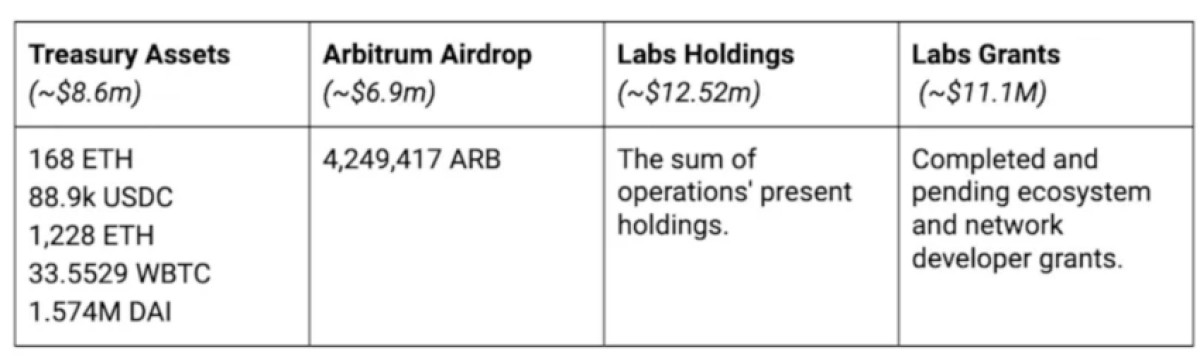
The proposal suggests creating "Sushi Labs" as a new entity with significant autonomy over project development and daily operations. This separate body would be granted a hefty financial package – a whopping 25 million SUSHI tokens, valued at roughly $38.5 million based on current market prices. Sushi Labs would receive a treasure trove of assets from the Sushi DAO treasury:

“We request that Sushi DAO award a grant of 25 million Sushi tokens to Sushi Labs, including assets from the Arbitrum airdrop, business development, and partner grants, Kanpai 2.0, Sushi 2.0, rewards, stablecoins, and ‘Sushi House’each address holdsfunds."
SushiSwap: $40 Million Restructuring Proposal Sparks Community Outrage
Deployment of Treasury Assets for Sushi Labs - source: SushiSwap

Titled "Evolving Sushi - Burū no Shinka [Signal]", the full text outlined a significant restructuring of the decentralized exchange (DEX)'s decentralized autonomous organization (DAO) and treasury.

This is not SushiSwap's first foray into utilizing treasury funds for ecosystem growth. In February 2023, the DEX launched Sushi Studios, a decentralized incubator that provides resources like funding and technical expertise to external developers and independently-funded projects. The DEX said the new platform aims to foster innovation without directly tapping into the DAO treasury. SushiSwap has not released any information on Sushi Studios since the launch. The community discussion thread was archived on March 6. It is uncertain whether the Sushi Studios framework is even still active.

SushiSwap's meteoric rise in August 2020 was almost immediately followed by controversy. The project's anonymous founder and former CEO, Chef Nomi, attempted to abruptly withdraw a large amount of SUSHI tokens, sparking fears of a "rug pull" and leading to a loss of community trust. Though Chef Nomi ultimately returned the funds, the incident eroded trust within the SushiSwap community from the get-go and cast a long shadow over the project's leadership and commitment to transparency.

Community members worry about Sushi Labs' potential power grab and argue that such a structure directly contradicts SushiSwap's core principle of decentralization. An opponent, identified as sushicitizens.eth, pledged a significant amount of SUSHI tokens (4.4 million or around $8 million at the time) against the proposal. Other members pointed out that the DEX neglected to announce the proposal on social media upon release.

The DAO Voting

The proposal utilized a Snapshot vote, a common method used in decentralized governance to determine voting power based on a specific point in time.

💡
Snapshot is a voting platform that allows DAOs and DeFi protocols to cast their votes without gas fees. Instead of voting by 'calling' on-chain smart contracts, in Snapshot users only need to connect their wallet to Snapshot's website and it will allow a vote to be cast on any open proposals on the site.

In the case of SushiSwap's proposal, a snapshot was taken to capture the SUSHI token holdings of all wallet addresses at a predefined time. The number of SUSHI tokens each address holds determines their voting power in the proposal.

The main issue is that the SushiSwap governance team (sushigov.eth) was top of the voting board, with 5.5 million SUSHI tokens cast in favor of the proposal. The ability to wield a large block of votes (about 73% for SushiSwap) swayed the vote and contradicted the DEX's ethos: decentralization.

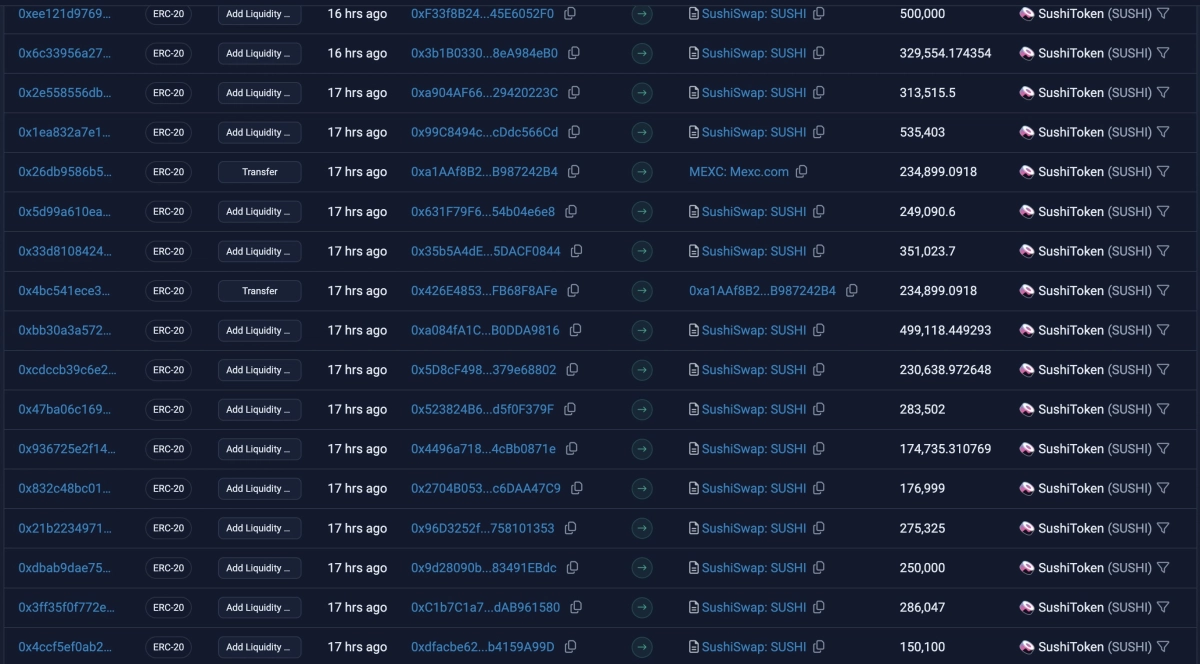
On April 3, a vocal opponent to the proposal, Naïm Boubziz, noted on X that suspicious transactions could be seen in the lead-up to the Snapshot vote. He pointed to instances where new wallets seemingly added liquidity to SUSHI pools just before the Snapshot date, potentially inflating their voting power. These same wallets withdrew liquidity shortly after the snapshot.
SushiSwap: $40 Million Restructuring Proposal Sparks Community Outrage
Transactions preceding the Snapshot vote - source: twitter.com

Community members also pointed out that 4 million SUSHI tokens, representing a substantial portion of the 5.5 million currently supporting the proposal, originated from the DEX's multisig wallet. This concentration of voting power raises questions about SushiSwap's transparency and potential conflicts of interest.

#Sushsiwap : Lol .

Sushiswap voted for themselves with the Ops multisig wallet.

Does this seem clearer to you now? https://t.co/NHtOQOXtt9 pic.twitter.com/OlDPSJ0BfN

— Naïm Boubziz (@BrutalTrade) April 8, 2024

Boubziz's accusations of potential manipulation surrounding the Snapshot vote have significantly escalated tensions within the SushiSwap community. While the exact intent behind the observed liquidity activity remains unclear without a formal investigation, these allegations raise serious questions about the fairness and integrity of the entire voting process.

In an April 8 post, the Sushi's CEO, also known as "Head Chef," confirmed that he had asked the Sushi team to vote using the OPs multisig wallet "due to the threat of a hostile takeover." Grey said that "Humpy," a SUSHI whale, has been pushing for "an extortive governance attack attempt" for almost half a year.

While Jared Grey cites the potential threat of a hostile takeover by a community member to justify the Sushi team's vote using the multisig wallet, this action raises a critical question: Doesn't this undermine the very foundation of a DAO?

DAOs are built on the principle of distributed power and community-driven decision-making. By centralizing a significant voting block in the hands of the Sushi team, Grey's decisions contradict the ethos of decentralization that SushiSwap claims to uphold. Overall, this incident highlights the ongoing tension between ensuring decentralized governance and safeguarding against potential attacks on projects through their DAOs.

Disclaimer: This article is provided for informational purposes only. It is not offered or intended to be used as legal, tax, investment, financial, or other advice.

Read on Observers Investment Disclaimer

Criptos en tendencia

Lecturas Relacionadas

Tras tres trimestres consecutivos de caída, ¿puede el mercado cripto encontrar una ventana de estabilización en el tercer trimestre?

El mercado cripto sufrió su peor trimestre desde 2022, con una caída del 12.6% en la capitalización total (ahora en $2.1 billones). El volumen de operaciones y el valor de las stablecoins también disminuyeron, señalando una salida generalizada de capitales. Bitcoin y Ethereum cayeron un 14.2% y 25.4% respectivamente, rompiendo su correlación con los mercados de riesgo tradicionales. Los ETFs de Bitcoin en EE.UU. registraron importantes salidas netas ($4.67 mil millones en Q2), aunque datos sugieren que el ciclo de ventas podría estar cerca de su fin. La atención del mercado se centra ahora en la reunión de la FED a finales de julio, cuya postura (halcón o paloma) podría definir el rango de trading de Bitcoin para el trimestre. El avance de la ley CLARITY en el Senado estadounidense se ha estancado, reduciendo la probabilidad de aprobación en 2026 y manteniendo una prima de riesgo regulatorio alta. Solo dos sectores mostraron crecimiento: los mercados de predicción (volumen +48.7%) y los coleccionables tokenizados (volumen +143% vs. Q1). El sentimiento general es de cautela. La lógica del mercado ha cambiado, priorizando fundamentos como la política monetaria y la regulación frente a los simples impulsos narrativos. Aunque las bases para una caída extrema parecen limitadas, la recuperación sostenida en Q3 depende críticamente de la FED y de un posible progreso regulatorio.

marsbitHace 6 hora(s)

Tras tres trimestres consecutivos de caída, ¿puede el mercado cripto encontrar una ventana de estabilización en el tercer trimestre?

marsbitHace 6 hora(s)

BIT Trading Moments: BTC aún presionado por la EMA 200 semanal, tras el rechazo podría reiniciar la caída, los valores de almacenamiento y semiconductores que subieron fuertemente anoche comenzaron a caer en la sesión nocturna

**BIT Trading Moments: BTC aún presionado por la EMA 200 semanal; almacenamiento y semiconductores caen en el after-hours** El mercado de cripto continúa su recuperación, con **Bitcoin** manteniéndose cerca de los $66,000. Enfrenta una fuerte resistencia en la zona de los $68,000, nivel que coincide con el costo promedio de los inversores en los últimos cinco meses y un punto de fallo anterior. Los analistas señalan que se encuentra atrapado entre la media móvil simple (MA) de 200 semanas (~$63,333) y la media exponencial (EMA) de 200 semanas (~$68,328). Se necesitaría un cierre semanal por debajo de $55,000 o por encima de $70,000 para confirmar una dirección de mayor alcance. Los ETF de Bitcoin registran entradas netas por sexto día consecutivo. En Wall Street, los **futuros de los principales índices** caen. Después de fuertes ganancias el martes, las acciones de **semiconductores y almacenamiento** retroceden en el after-hours: el ETF de semiconductores cae un 2.22%, Micron un 2.29% y SK Hynix casi un 5%. Sin embargo, **Super Micro Computer (SMCI)** se dispara más de un 20% tras el cierre, impulsada por sólidos pedidos. Otras noticias positivas incluyen un contrato de $266M de la Fuerza Aérea para **Rocket Lab**. A pesar del repunte bursátil, factores como el **crudo Brent por encima de $91** y el **rendimiento del bono estadounidense a 10 años subiendo a ~4.64%** generan preocupaciones inflacionarias y enfrían el optimismo. Las acciones relacionadas con cripto, como Coinbase y Robinhood, tuvieron un buen desempeño apoyadas por avances regulatorios. En Asia, los mercados siguieron la recuperación tecnológica. El **índice KOSPI de Corea del Sur** subió un 0.74%, con acciones de semiconductores mostrando volatilidad. El principal riesgo es el **yen japonés**, que tocó su nivel más bajo desde 1986, lo que genera temores a una intervención del gobierno. **Próximos eventos clave:** Este miércoles 22 de julio, el enfoque está en los eventos de **AMD AI** y los resultados financieros de **Alphabet (Google), Tesla e IBM** después del cierre. El jueves 23, la **decisión de tasas del BCE** y los resultados de **Intel** serán cruciales para el sentimiento del mercado.

marsbitHace 6 hora(s)

BIT Trading Moments: BTC aún presionado por la EMA 200 semanal, tras el rechazo podría reiniciar la caída, los valores de almacenamiento y semiconductores que subieron fuertemente anoche comenzaron a caer en la sesión nocturna

marsbitHace 6 hora(s)

Trading

Spot

Artículos destacados

Cómo comprar SUSHI

¡Bienvenido a HTX.com! Hemos hecho que comprar Sushi (SUSHI) sea simple y conveniente. Sigue nuestra guía paso a paso para iniciar tu viaje de criptos.Paso 1: crea tu cuenta HTXUtiliza tu correo electrónico o número de teléfono para registrarte y obtener una cuenta gratuita en HTX. Experimenta un proceso de registro sin complicaciones y desbloquea todas las funciones.Obtener mi cuentaPaso 2: ve a Comprar cripto y elige tu método de pagoTarjeta de crédito/débito: usa tu Visa o Mastercard para comprar Sushi (SUSHI) al instante.Saldo: utiliza fondos del saldo de tu cuenta HTX para tradear sin problemas.Terceros: hemos agregado métodos de pago populares como Google Pay y Apple Pay para mejorar la comodidad.P2P: tradear directamente con otros usuarios en HTX.Over-the-Counter (OTC): ofrecemos servicios personalizados y tipos de cambio competitivos para los traders.Paso 3: guarda tu Sushi (SUSHI)Después de comprar tu Sushi (SUSHI), guárdalo en tu cuenta HTX. Alternativamente, puedes enviarlo a otro lugar mediante transferencia blockchain o utilizarlo para tradear otras criptomonedas.Paso 4: tradear Sushi (SUSHI)Tradear fácilmente con Sushi (SUSHI) en HTX's mercado spot. Simplemente accede a tu cuenta, selecciona tu par de trading, ejecuta tus trades y monitorea en tiempo real. Ofrecemos una experiencia fácil de usar tanto para principiantes como para traders experimentados.

140 Vistas totalesPublicado en 2024.12.12Actualizado en 2026.06.02

Cómo comprar SUSHI

Discusiones

Bienvenido a la comunidad de HTX. Aquí puedes mantenerte informado sobre los últimos desarrollos de la plataforma y acceder a análisis profesionales del mercado. A continuación se presentan las opiniones de los usuarios sobre el precio de SUSHI (SUSHI).

活动图片












