After Senate Delay, Crypto Bill Faces Narrow Window for Passage

cryptonews.ruPublished on 2026-08-11Last updated on 2026-08-11

Abstract

The crypto market structure bill, CLARITY, faces a narrow path to passage after Senate delays. A key procedural vote is expected when the U.S. Senate returns in September, but lawmakers have only 36 scheduled working days left before the end of the year to resolve contentious issues. These include ethics provisions related to Donald Trump's digital asset ties and staking rewards rules. The bill, passed by the House over a year ago, has faced government shutdowns and opposition from Democrats concerned about "crypto corruption." Even if the procedural hurdle is cleared, limited time remains for final negotiations before the election recess. Post-election turnover could further complicate its passage. Amidst the legislative uncertainty, regulatory agencies like the SEC and CFTC have signaled they are prepared to establish crypto rules if Congress fails to act, with both agencies taking steps to coordinate oversight.

Following the U.S. Senate's return in September, a vote is expected to end debate on the Cryptocurrency and Digital Asset Market Structure Act (CLARITY), but it still faces significant hurdles on the path to passage.

Shortly before the Senate adjourned for a month-long recess last week, Majority Leader John Thune filed a cloture motion on the market structure bill to bring it to the floor for consideration. Lawmakers will return from recess on September 14th, but they have only 14 scheduled session days before the next break for the November elections, and another 22 days before the end of the year.

Within this 36-day window for passing CLARITY, many crypto industry advocates have publicly expressed optimism about the bill's prospects in Congress, but lawmakers have yet to announce agreement on many provisions that remain contentious. These include ethics provisions addressing U.S. President Donald Trump's ties to digital assets, as well as additional restrictions for crypto companies offering staking rewards in stablecoins.

The Senate has had 13 months to consider CLARITY since the House passed it last year. During that time, the Senate has faced several government shutdown threats, opposition from industry leaders, and pushback from many Democrats who argued the then-version of the bill enabled what they called Trump's "crypto corruption."

Related: Crypto Industry Will Be 'Just Fine' If CLARITY Fails: Chris Perkins

If the Senate holds a cloture vote in September, lawmakers will still have only a few days to resolve issues related to the bill before a potential floor vote and the pre-election recess. After November, when 33 Senate seats and all 435 House seats are up for grabs, the midterm election results could complicate the bill's discussion, as many members of Congress may leave their posts in 2027.

Will U.S. Regulators Act Amid Legislative Uncertainty?

With the market structure bill once again in limbo for at least a month, many experts are looking to financial agencies like the Commodity Futures Trading Commission (CFTC) and the Securities and Exchange Commission (SEC) for regulatory clarity. The bill is expected to grant the CFTC greater authority to oversee digital assets and enforce relevant rules, but while it remains under consideration, the agencies have indicated they will act if Congress does not.

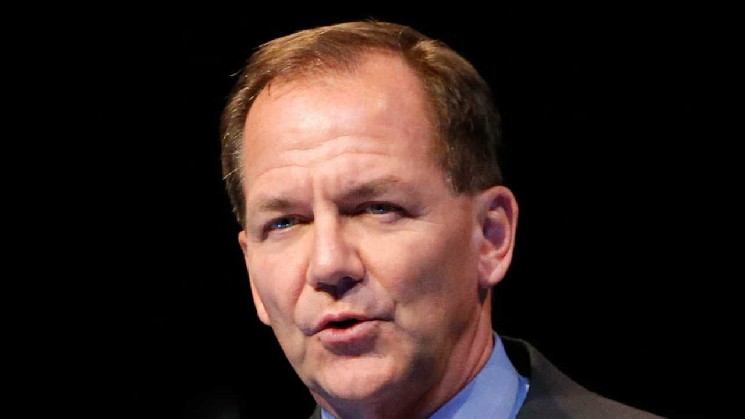
In a July interview, SEC Chair Paul Atkins stated that the agency "stands ready, willing, and able to write rules" to regulate cryptocurrencies if Congress does not pass CLARITY. Similarly, CFTC Chairman Michael Selig said in April that the commission "stands ready to take on the responsibility" of overseeing crypto markets, though his comments were contingent on lawmakers passing the market structure bill. Both agencies have taken steps to coordinate oversight of financial markets.

Magazine: BIP-110 Ended with a Whimper, CLARITY Vote Delayed: Hodler's Digest, Aug. 9

end-content

Trending Cryptos

Related Questions

QWhat is the main challenge facing the CLARITY Act in the U.S. Senate despite a planned cloture vote in September?

ADespite a planned cloture vote in September, the CLARITY Act faces significant hurdles. Legislators have only a narrow 36-day legislative window before the end of the year to resolve several contentious issues, including ethics provisions related to former President Trump's digital asset dealings and new restrictions on stablecoin reward programs. Furthermore, significant Democratic opposition remains, arguing the bill facilitates what they call Trump's 'crypto-corruption.'

QHow much legislative time does Congress have left to pass the CLARITY Act before the end of the year after the summer recess?

AAfter returning from recess on September 14, Congress has only 14 scheduled workdays before the pre-election break in November. Combined with the 22 scheduled workdays left for the remainder of the year after that, lawmakers have a total of approximately 36 days within the legislative calendar to advance and potentially pass the CLARITY Act before the year ends.

QWhy did some Democrats oppose earlier versions of the CLARITY Act?

AMany Democrats opposed earlier versions of the CLARITY Act because they argued it created conditions for what they termed the 'crypto-corruption' of former President Donald Trump. The bill's ethics provisions, which relate to Trump's connections with digital assets, were a point of significant controversy.

QWhat are U.S. financial regulators prepared to do if Congress fails to pass the CLARITY Act?

AIf Congress fails to pass the CLARITY Act, U.S. financial regulators like the SEC and CFTC have indicated they are prepared to step in. SEC Chairman Paul Atkins stated the agency is 'ready, willing, and able to craft rules' for crypto regulation, while CFTC Chairman Michael Selig said the commission is 'ready to take on the responsibility' of overseeing crypto markets. Both agencies have taken steps to coordinate their oversight efforts in the absence of legislation.

QHow could the upcoming November midterm elections impact the future of the CLARITY Act debate?

AThe November midterm elections could complicate the CLARITY Act debate. With 33 Senate seats and all 435 House seats up for election, the political composition of the next Congress may change. Furthermore, many current members of Congress may be leaving their seats, potentially resetting the legislative process and making it more difficult to reach an agreement on the bill in the new session starting in 2027.

Related Reads

Pax Silica vs. WAICO: The US Wants to Prohibit Europe from Using Chinese Artificial Intelligence

The United States is preparing to demand that European and other partners abandon Chinese artificial intelligence initiatives, threatening exclusion from the American-led "Pax Silica" coalition, according to a leaked U.S. State Department document. This ultimatum forces signatories of the "AI Opportunity Statement" to choose between the Western technological ecosystem and alternative frameworks, with China not explicitly named but clearly targeted. Pax Silica is a U.S. strategy for AI and semiconductor hegemony, launched in late 2025. Its European presence expanded significantly in mid-2026. Concurrently, China, Russia, and 27 other nations established the World AI Cooperation Organization (WAICO) in July 2026 as an independent intergovernmental platform promoting AI governance based on UN principles. This situation creates a difficult choice, especially for European nations balancing strategic autonomy with dependence on U.S. tech and security. It also pressures Global South countries with pragmatic ties to both Washington and Beijing. The formation of competing blocks risks fragmenting the global tech landscape, forcing companies to split supply chains, increasing costs, and potentially leading to incompatible standards and protocols. The era of open globalization in AI may be ending, replaced by geopolitical confrontation where technological sovereignty trumps economic efficiency. The decisions made will shape the global digital economy for decades.

cryptonews.ru22m ago

Pax Silica vs. WAICO: The US Wants to Prohibit Europe from Using Chinese Artificial Intelligence

cryptonews.ru22m ago

Robert Kiyosaki Shares His Mentor's Predictions About the Emergence of Bitcoin and AI

American entrepreneur and author of "Rich Dad Poor Dad," Robert Kiyosaki, discussed the influence of futurist R. Buckminster Fuller on his worldview, linking Fuller's past technological predictions to the emergence of Bitcoin and the development of artificial intelligence. In an X post, Kiyosaki also reflected on personal purpose, sharing his journey from the music business—where he worked with bands like The Police and Iron Maiden—to creating the "Cashflow" board game and writing his famous book. He described feeling an inner emptiness despite his success, a turning point that came after meeting Fuller, whom he studied with for three summers. Kiyosaki described Fuller as a "friendly genius" who foresaw world-changing developments like Bitcoin and AI. However, the core of his post focused on Fuller's philosophical impact, particularly a quote about belonging to the universe and finding purpose by dedicating one's life to the maximum benefit of others. The entrepreneur remains a vocal advocate for cryptocurrencies. He regularly advises buying Bitcoin during market panics, viewing it and assets like Ethereum, gold, and silver as hedges against traditional financial system failures. Kiyosaki has predicted a major market crash by 2026, seeing it as an opportunity for prepared investors, with long-term price targets including $750,000 for Bitcoin and $95,000 for Ethereum.

cryptonews.ru2h ago

Robert Kiyosaki Shares His Mentor's Predictions About the Emergence of Bitcoin and AI

cryptonews.ru2h ago

Etherealize CEO Calls Wall Street's Private Blockchains a 'Race to the Bottom'

Etherealize co-founder and CEO Vivek Raman criticized Wall Street's growing interest in private, permissioned blockchains, calling them a "race to the bottom." In an interview with CoinDesk, Raman argued that consortium networks fragment liquidity and return the industry to the siloed systems that blockchain technology was meant to overcome. He stated that closed networks do not interoperate, undermining two key advantages of the technology: system compatibility and liquidity concentration. Etherealize promotes Ethereum as an open, foundational layer for institutional players. Raman insists that privacy and access restrictions should be built on top of public infrastructure—at the application or L2 level—rather than creating separate, closed networks. He compared Ethereum to HTTP as a base layer, with additional permissioned and private layers akin to HTTPS. Examples of this new wave of "closed" solutions mentioned include Canton Network from Digital Asset, Circle's Arc project, and Stripe's Tempo. Raman termed this trend "consortium chains 2.0," recalling earlier initiatives like the R3 interbank consortium and the Hyperledger corporate ecosystem from 2016 that failed to gain significant traction. He reiterated his firm belief that a global, open, permissionless infrastructure is necessary as a foundational base layer. Raman previously noted in June that traditional financial institutions had begun implementing Ethereum-based solutions into real business processes.

cryptonews.ru2h ago

Etherealize CEO Calls Wall Street's Private Blockchains a 'Race to the Bottom'

cryptonews.ru2h ago

Trading

Spot

Hot Articles

How to Buy BILL

Welcome to HTX.com! We've made purchasing Billions Network (BILL) simple and convenient. Follow our step-by-step guide to embark on your crypto journey.Step 1: Create Your HTX AccountUse your email or phone number to sign up for a free account on HTX. Experience a hassle-free registration journey and unlock all features.Get My AccountStep 2: Go to Buy Crypto and Choose Your Payment MethodCredit/Debit Card: Use your Visa or Mastercard to buy Billions Network (BILL) instantly.Balance: Use funds from your HTX account balance to trade seamlessly.Third Parties: We've added popular payment methods such as Google Pay and Apple Pay to enhance convenience.P2P: Trade directly with other users on HTX.Over-the-Counter (OTC): We offer tailor-made services and competitive exchange rates for traders.Step 3: Store Your Billions Network (BILL)After purchasing your Billions Network (BILL), store it in your HTX account. Alternatively, you can send it elsewhere via blockchain transfer or use it to trade other cryptocurrencies.Step 4: Trade Billions Network (BILL)Easily trade Billions Network (BILL) on HTX's spot market. Simply access your account, select your trading pair, execute your trades, and monitor in real-time. We offer a user-friendly experience for both beginners and seasoned traders.

3.3k Total ViewsPublished 2026.05.07Updated 2026.06.02

How to Buy BILL

Discussions

Welcome to the HTX Community. Here, you can stay informed about the latest platform developments and gain access to professional market insights. Users' opinions on the price of BILL (BILL) are presented below.

活动图片