Tom Lee's Core Investment Logic for 2026: Companies Selling Scarce Assets Are Crushing the Market

链捕手Published on 2026-05-10Last updated on 2026-05-10

Abstract

Tom Lee, founder of Fundstrat and manager of the Granny Shots fund, argues "scarcity" is the core investment theme for 2026. His thesis states companies selling "scarce assets"—products or services with structurally constrained supply and explosively growing demand—are dominating the market due to strong pricing power. He identifies three key scarcity areas: 1) AI compute (e.g., NVIDIA, AMD), limited by advanced chip manufacturing capacity; 2) AI memory/HBM (e.g., Micron), facing complex production challenges; and 3) energy infrastructure (e.g., GE Vernova), with long lead times for equipment needed to power booming data centers. Lee provides a macro trading framework: peaking oil prices signal lower inflation and potential Fed rate cuts, which benefit growth assets like the S&P 500 and Magnificent 7 stocks. Despite the S&P reaching his initial 7300 target, he sees a potential "feel-like-a-bear-market" mid-year pullback as a buying opportunity, raising his year-end target to 7700. Investment themes are prioritized as: 1) Global labor scarcity + AI automation, 2) Cybersecurity + energy security. The conclusion is that identifying companies benefiting from fundamental supply-demand imbalances, not just chasing rallies, is the path to outperformance in 2026.

Original Title: Tom Lee's Core Investment Logic for 2026: 'Companies Selling Scarce Assets Are Crushing the Market'

Original Author: Chris Lee

Tom Lee, one of Wall Street's most accurate bulls and founder of Fundstrat and manager of the Granny Shots fund, recently stated that the single most crucial investment keyword for the 2026 market is 'scarcity.' He bluntly said, 'Companies selling scarce assets are crushing the market.' This seemingly simple statement contains a complete stock-picking logic, macro judgment, and profound bets on Federal Reserve policy and geopolitics.

I. Core Definition and Logic of Scarce Assets

The 'scarce assets' defined by Tom Lee are not traditional scarce goods like gold or collectibles, but **products or services where supply is severely constrained while demand is exploding.** This structural supply-demand mismatch grants sellers extremely strong pricing power, thereby driving excess returns.

He specifically highlights three key scarcity areas:

1. AI Computing Power: Companies like NVIDIA, AMD, and Intel. Training and running AI large models require massive amounts of GPUs and accelerator chips, but capacity expansion for TSMC's advanced nodes, CoWoS packaging, etc., faces physical limits. According to reports, the AI chip supply chain tightness will last at least until the end of 2026.

2. AI Memory (HBM High-Bandwidth Memory): Manufacturers like Micron and SanDisk. In AI servers, HBM is a bottleneck as critical as GPUs, with complex manufacturing processes and slow yield improvements; capacity is already fully booked by giants like NVIDIA.

3. Energy Infrastructure: Companies like GE Vernova (GEV). Data center power demand is exploding; by 2030, North American data center electricity consumption is projected to account for 9-10% of total power generation (only 3-4% in 2025). Delivery cycles for large equipment like gas turbines and transformers are as long as 2-3 years, with extremely slow capacity expansion.

Logical Chain: The demand brought by the AI revolution is explosive, while physical, process-related, and time constraints on the supply side cannot match it quickly. This imbalance is not a short-term phenomenon but a structural opportunity that will persist through 2026. Precisely because of this, these companies have high gross margins, strong pricing power, and their performance and stock prices far exceed market averages. This is also the core strategy of the Granny Shots fund - focusing on 'companies selling scarce things.' The fund's AUM has surpassed $4 billion, with capital voting with its feet.

II. Macro Background and Practical Trading Framework

Tom Lee emphasizes that the market is currently in a 'fog of war' with persistent geopolitical risks. However, he observes that oil prices may have peaked and provides a clear trading framework: when oil prices fall, buy assets negatively correlated with oil prices, including the S&P 500, Ethereum, and the Mag7 (Magnificent 7).

The logic is: Falling oil prices → easing inflationary pressures → increased expectations for Fed rate cuts → benefiting growth stocks and risk assets. While conflicts may push oil prices higher, a peak and subsequent decline in oil prices can instead become a positive signal to buy growth stocks. This provides investors with a practical guide for contrarian action in an uncertain environment.

III. Strong Earnings and Full-Year Market Outlook

This quarter's earnings season has been exceptionally bright: among companies that have reported, 87% exceeded expectations, by a significant margin of 19%. Tom Lee points out this is 'emerging market-level' earnings growth happening in the US, with the core driver being the productivity revolution brought by AI.

Market Path Judgment:

The S&P 500 has reached the 7,300 point target predicted at the start of the year, but **now is not the time to sell**.

A 'bear market-like' correction may occur mid-year, potentially driven by the market testing a new Fed chair or extended geopolitical conflicts.

Following the correction, a rebound is expected, with the full-year target revised up to at least 7,700 points, maintaining an overall bullish view.

He specifically reminds: The Mag7, cryptocurrency, and software sectors have already experienced one bear market-like episode. Investors shouldn't chase highs at 7,300 points, nor panic during a correction—the correction is precisely a good opportunity to add to positions in scarce assets.

IV. Theme Prioritization and Real-World Implications

Tom Lee ranks investment themes as follows:

1. Global Labor Scarcity + AI (Top Priority): An aging population pushes up labor costs, forcing companies to replace human labor with AI and automation—a structural trend lasting a decade.

2. Cybersecurity + Energy Security (Second Priority): Geopolitical tensions are prompting countries to increase investment in related infrastructure.

3. Seasonal Factors.

Last week's performance of Granny Shots stocks also validated this framework: top gainers like Qantas, Google, Caterpillar, Tesla, and AMD all fit the scarcity logic; some short-term pullbacks (e.g., GE Vernova, Sofi) were mostly due to guidance falling short of the market's exceedingly high expectations—normal volatility that doesn't change the long-term trend.

Conclusion: The Investment Code for 2026 is 'Scarcity'

Tom Lee's complete logical chain is clear and powerful: AI-driven structural demand + supply constraints = pricing power and excess returns for scarce assets. Amid macro uncertainty, peaking oil prices are a signal for growth stocks, a mid-year correction is an opportunity to add positions, and the full-year S&P 500 may challenge 7,700 points.

For investors, the real takeaway is not simply chasing rallies, but shifting mindset: from 'what's rising' to 'why it's rising.' Only by seizing companies with constrained supply and exploding demand can one achieve sustained excess returns in 2026. Scarcity is not a concept; it's the tangible, hard constraint of supply and demand—this is precisely the most important investment framework Tom Lee leaves for the market.


Trending Cryptos

Related Questions

QAccording to Tom Lee, what is the single most important investment keyword for 2026?

AScarcity.

QWhat is Tom Lee's definition of 'scarce assets' in the context of this article?

AScarce assets are products or services where supply is severely constrained while demand is experiencing explosive growth. This structural supply-demand mismatch gives sellers strong pricing power.

QWhat are the three primary categories of scarce assets that Tom Lee highlights?

AThe three categories are: 1. AI computing power (e.g., NVIDIA, AMD, Intel), 2. AI memory/HBM (e.g., Micron, SanDisk), and 3. Energy infrastructure (e.g., GE Vernova).

QWhat is the practical trading framework Tom Lee suggests based on oil price movements?

AHe suggests that when oil prices decline, investors should buy assets negatively correlated with oil, such as the S&P 500, Ethereum, and the Magnificent 7 (Mag7). The logic is that lower oil prices ease inflation pressure, increase expectations for Fed rate cuts, and benefit growth stocks and risk assets.

QWhat is Tom Lee's outlook for the S&P 500 index, including his key advice regarding market pullbacks?

AHe believes the S&P 500, having reached his initial 7300-point target, still has room to rise, with a full-year target of at least 7700 points. He expects a 'feel like a bear market' pullback mid-year but advises investors not to panic. Instead, he views such a pullback as an opportunity to add positions in scarce assets.

Related Reads

Apple Sues OpenAI Sparking Feud, Musk Slams Altman for Fraud, Altman Retorts with 'Space Data Center' Boast

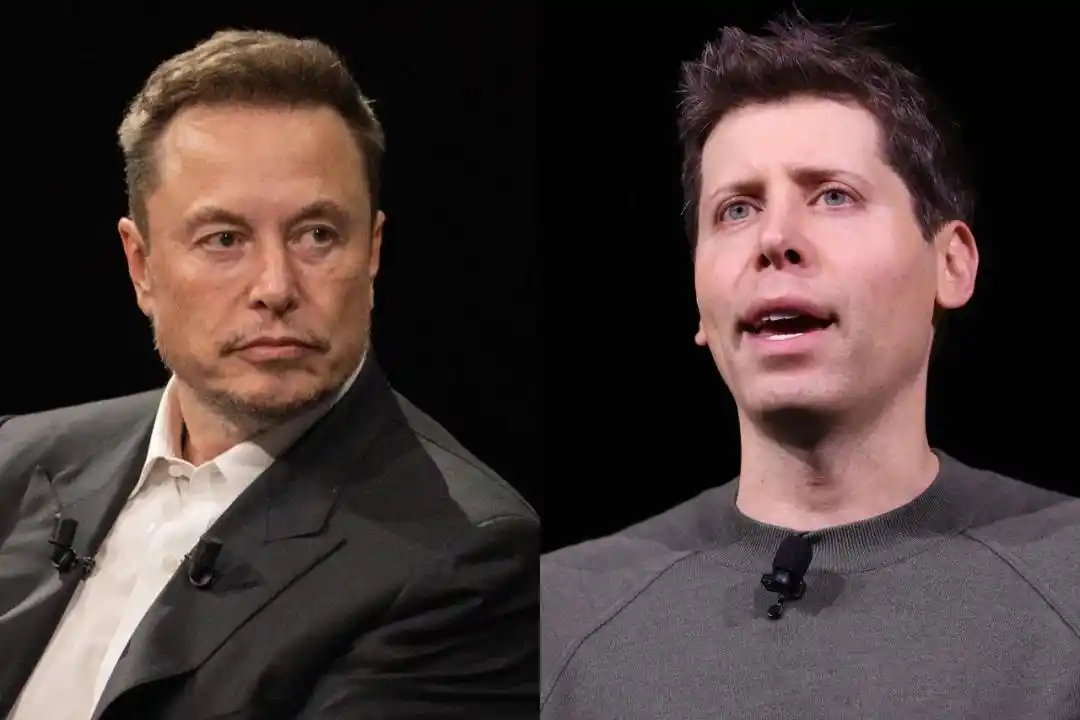
Apple Sues OpenAI as Musk-Altman Feud Escalates The public feud between Elon Musk and OpenAI CEO Sam Altman intensified, coinciding with their respective AI companies launching flagship models in the same week, highlighting fierce competition. On July 11, Musk posted on X, accusing Altman of taking "fraud to the next level" regarding OpenAI's commercial practices. Altman fired back, sarcastically suggesting Musk was the one selling "short-term space datacenter" concepts to public market investors. Musk countered with allegations that Altman "stole an open-source AI charity" and, amid Apple's recent lawsuit, "stole all of Apple's phone tech." He mockingly referenced Altman needing a "parole officer's" approval to travel. This exchange occurred against the backdrop of a significant legal development: Apple filed a lawsuit against OpenAI in a California federal court, alleging the AI company deliberately solicited Apple employees to leak confidential information on unreleased products to aid its own hardware plans. Apple demands OpenAI cease this activity, destroy proprietary materials, and redesign upcoming products. OpenAI responded, stating it has no interest in other companies' trade secrets and remains focused on innovation. This lawsuit could profoundly impact their two-year partnership where OpenAI provides key tech for Apple Intelligence and Siri. The rivalry extended to product releases. OpenAI launched GPT-5.6, while Musk's SpaceXAI unveiled Grok 4.5. Both are positioned as AI agents capable of multi-step tasks. GPT-5.6 is noted for strengths in broad reasoning, business workflows, and cybersecurity. Grok 4.5 is highlighted for higher efficiency in autonomous programming and developer workflows, with lower usage costs than GPT-5.6, though OpenAI's model reportedly still leads in areas like abstract reasoning. The differing strengths offer distinct choices for enterprises and developers based on their specific needs.

marsbit1h ago

Apple Sues OpenAI Sparking Feud, Musk Slams Altman for Fraud, Altman Retorts with 'Space Data Center' Boast

marsbit1h ago

Robinhood Chain's Success Proves Ethereum is Not Dead

Robinhood Chain's success demonstrates that Ethereum's L1+L2 model is thriving, not dying. Traditional crypto projects often focused on token sales and chose infrastructure to maximize token value. However, real-world businesses building cash-based products make different, pragmatic choices. When launching its chain, Robinhood chose Ethereum as its base layer and built a custom L2 using Arbitrum technology. It uses Ethereum blobs for data availability, ETH for gas, and relies on Ethereum for security. This mirrors Coinbase's earlier decision to build Base as an Ethereum L2. These are not ideological choices but sound business decisions driven by needs for security, liquidity, control, and predictable economics. The shift in the industry is from "token-centric" models to "cash business" models. Real companies serving broad user bases prioritize risk reduction, product improvement, and profit. For them, blockchain is infrastructure. The Ethereum L1+L2 "barbell" structure is ideal: the highly decentralized, neutral, and liquid L1 for settlement and security, combined with customizable, high-performance L2s for execution. This trend is positive for Ethereum and ETH. As more real businesses build on it, ETH becomes more integrated, distributed, and useful, strengthening its network effects and monetary premium. Robinhood's path—starting on an existing L2 and graduating to a dedicated one—is likely to become a standard playbook, proving the enduring utility of Ethereum's layered architecture for serious commercial adoption.

Odaily星球日报1h ago

Robinhood Chain's Success Proves Ethereum is Not Dead

Odaily星球日报1h ago

Tencent Heavily Invests in an IPO

"Tencent-Backed DPU Unicorn Leopard Cloud Intelligence Files for IPO on Shenzhen's ChiNext Board" Leopard Cloud Intelligence, a Shenzhen-based developer of Data Processing Unit (DPU) chips, has officially applied for an IPO on the ChiNext Board, aiming to become China's first publicly listed DPU company. Founded in August 2020 by Dr. Xiaoyang Xiao, a Stanford PhD graduate and serial entrepreneur who previously co-founded chip company RMI (acquired by Broadcom), the company focuses on the high-growth DPU sector. Its development accelerated following NVIDIA's formal introduction of the DPU concept in late 2020. The company has developed China's first high-performance, general-purpose programmable DPU SoC chip, boasting 400Gbps network bandwidth and claiming significant performance improvements and power savings over traditional solutions. Financially, Leopard Cloud's revenue grew exponentially from RMB 170,000 in 2023 to RMB 370 million in 2025, yet it remains unprofitable with substantial net losses. Its IPO application utilizes ChiNext's recently introduced fourth set of listing standards, which emphasize R&D and market valuation over short-term profitability. Tencent is the company's most significant backer and largest shareholder, holding a 19.78% stake after participating in multiple funding rounds. Other prominent investors include Sequoia Capital China, Shenzhen Capital Group, Five Dimensions Capital, and various government-guided funds from Shenzhen and Hangzhou. Pre-IPO, the company was valued at over RMB 14 billion. This listing is seen as a milestone for Shenzhen's semiconductor industry, complementing the recent successful IPO review of Yuexin Semiconductor (a Guangzhou-based wafer manufacturer) and signaling a wave of high-end hardware technology companies from the Greater Bay Area going public on the ChiNext Board.

marsbit2h ago

Tencent Heavily Invests in an IPO

marsbit2h ago

Trading

Spot

Hot Articles

How to Buy SCA

Welcome to HTX.com! We've made purchasing Scallop (SCA) simple and convenient. Follow our step-by-step guide to embark on your crypto journey.Step 1: Create Your HTX AccountUse your email or phone number to sign up for a free account on HTX. Experience a hassle-free registration journey and unlock all features.Get My AccountStep 2: Go to Buy Crypto and Choose Your Payment MethodCredit/Debit Card: Use your Visa or Mastercard to buy Scallop (SCA) instantly.Balance: Use funds from your HTX account balance to trade seamlessly.Third Parties: We've added popular payment methods such as Google Pay and Apple Pay to enhance convenience.P2P: Trade directly with other users on HTX.Over-the-Counter (OTC): We offer tailor-made services and competitive exchange rates for traders.Step 3: Store Your Scallop (SCA)After purchasing your Scallop (SCA), store it in your HTX account. Alternatively, you can send it elsewhere via blockchain transfer or use it to trade other cryptocurrencies.Step 4: Trade Scallop (SCA)Easily trade Scallop (SCA) on HTX's spot market. Simply access your account, select your trading pair, execute your trades, and monitor in real-time. We offer a user-friendly experience for both beginners and seasoned traders.

2.1k Total ViewsPublished 2024.03.29Updated 2026.06.02

How to Buy SCA

Discussions

Welcome to the HTX Community. Here, you can stay informed about the latest platform developments and gain access to professional market insights. Users' opinions on the price of SCA (SCA) are presented below.

活动图片