When AI Companies Are Frantically Hiring Asian Girls, Attention Is Winning the World

marsbitPublished on 2026-01-31Last updated on 2026-01-31

Abstract

In the attention economy, AI startups are racing to hire "ABG" (Asian Baby Girl) marketers—young Asian women skilled at creating viral social media content—as Chief Marketing Officers. The trend highlights a shift where viral reach and engagement often trump traditional metrics. Venture capital increasingly chases "traffic signals" over financials, fueling a feedback loop: more attention brings more funding, raising marketing standards, and pushing talent toward content creation. The controversial startup Cluely exemplifies this. It mastered narrative (a founder’s “cheat everything” backstory), built a viral machine with 700+ performance-paid editors, and used a formulaic mix of provocative content, lifestyle flexes, and platform-specific strategies. Results included billions of views at low cost—but without a real product. Cluely became a symbol of marketing-first, product-last ventures. The core insight: attention is the new currency. The best product won’t win; the best story will. Founders must be their own CMOs, and the next wave of successful startups will be built by those who can both code and market.

"If your startup isn't a YC-backed B2B SaaS + GPT wrapper company, and you haven't hired an ABG as your Chief Marketing Officer, then you're basically doomed."
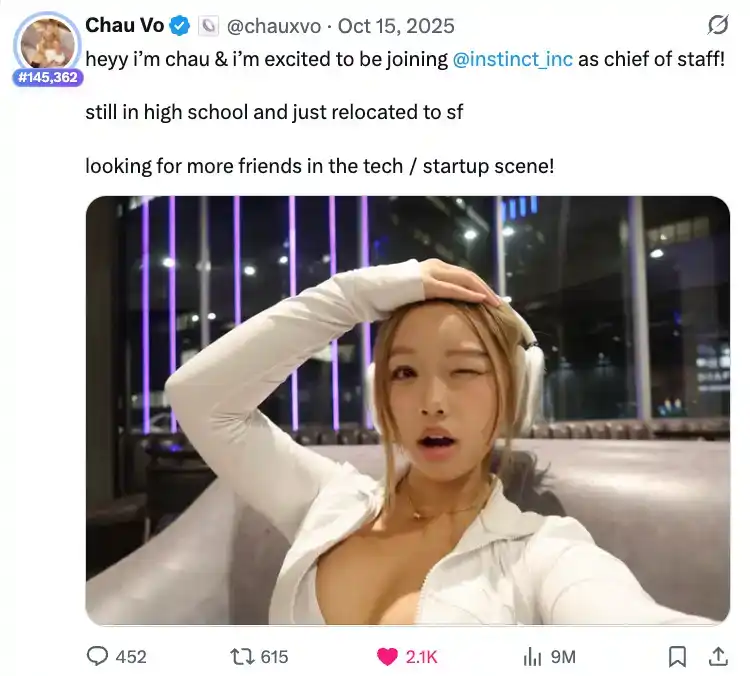
I've heard similar statements from countless AI company founders, each dreaming of finding the next Cluely: effortlessly gaining millions of views, always staying in the spotlight with buzz. (Editor's Note: Cluely is a highly controversial AI startup that pioneered a new paradigm of 'viral marketing,' detailed later.)

ABG = Asian Baby Girl. In Silicon Valley, it has become a term for young Asian women who are savvy at social media marketing. They are particularly skilled at creating eye-catching content, publishing viral posts, and marketing in a highly personalized way. Suddenly, all AI startups are scrambling to hire them as Chief Marketing Officers.

Why? Because one viral post can be more effective than a $50,000 advertising campaign.

Months of painstakingly building a 'thought leader' persona on LinkedIn can garner less attention and engagement than one sharp commentary or a selfie posted on X.
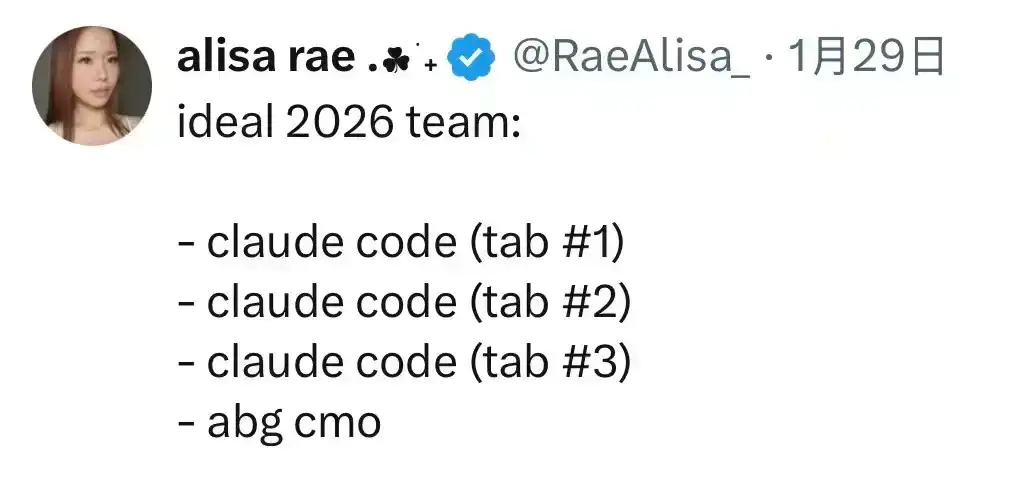
Are Asians naturally good at marketing?

No, and I want to clarify: this has nothing to do with race (people of every race are equally capable). This reveals some deeper issues in the evolution of the startup market.

The Feedback Loop in the Tech Market

Looking at past viral success stories (like @cluely), we can see that VCs chasing 'traffic signals' has surpassed traditional financial metrics, leading more capital to flow into more personality-driven, social-first projects.

Now, more college students are choosing to be content creators rather than taking $200,000 salaried jobs at big tech companies. Consequently, more startups are hiring "ABGs" for marketing, raising the overall standard of tech marketing, and thus creators gain access to better market resources.

Social media engagement data has become the sole standard for marketing effectiveness.

And this feedback loop is accelerating: more attention means more funding, which raises the bar higher, attracting more talent to shift careers, until it forms a stronger monopoly on attention.

Likes, views, and reposts are no longer just vanity metrics; they have become the new standards for investment due diligence.

The core issue isn't ABG; it's the attention economy.

How to Capture Hearts and Minds? Cluely Submitted the Perfect Answer Sheet

· Narrative: "Cheat on Everything" — perfectly aligned with founder @im_roy_lee's story (expelled from Columbia University/Harvard). This wasn't just a slogan; it was a carefully crafted origin story.

From "a complete loser" to "using AI to cheat his way into big tech, Y Combinator, and A16Z." This underdog-to-top-dog narrative often ignites both aspiration and outrage simultaneously.

· Industrial-Grade Viral Machine: They recruited over 700 "editors" — mostly micro-creators from TikTok/Instagram. The model was: pay-for-performance. $1 per thousand views. Zero upfront cost.

· Formulaic Content: Nonsense tweets + attractive looks/borderline content + lifestyle flexing. Party videos (like the shutdown "$1.5 million rager"), the "genius Intern" persona of founder Roy Lee, flaunting wealth, scoffing at traditional education. This marketing makes you think: "I really want to join these cool kids."

· Full-Platform Domination: X for building the thought leader persona (150k+ followers), TikTok/Instagram as the main battleground, LinkedIn/Reddit for generating native controversy.

The result? Over 10 million daily views, garnering 1 billion views in 3 months, at a cost far lower than traditional advertising. Traditional CPM (Cost Per Mille) is around $4; they only needed about $1.

But the fatal flaw was: The investment in marketing far exceeded the product; they essentially didn't develop a decent, market-ready product. Viral spread wasn't a byproduct; it was their only product.

When Cluely pivoted to an "AI note-taking tool," the entire web mocked them. People wondered where all that money had gone.

Some even suggested: since they're so good at this, why not just become a marketing agency for other AI companies?

But the most incredible part is: They did capture a certain truth. In an era of scarce attention, "any publicity is good publicity."

The irony: Everyone laughs at Cluely, everyone wants to be Cluely.

(If you hate me but still keep up with my updates, then you're my fan)

What Is the Truth, Really?

Attention is winning the world.

Capital flows to companies that capture consumer mindshare, not just market share. Nowadays, the best product doesn't necessarily win; the product with the best story does.

Every founder must also be their own CMO, building their own IP. The product is important, but if you neglect marketing, no one will know about your product.

The next wave of successful startups won't be built by the best engineers. They will be created by those who "can code and market."

Welcome to the new game.

Trending Cryptos

Related Questions

QWhat does ABG stand for in the context of AI startups, and why are they being hired?

AABG stands for 'Asian Baby Girl,' a term used in Silicon Valley to refer to young Asian women who are skilled in social media marketing. They are being hired by AI startups because they excel at creating eye-catching content, generating viral posts, and conducting personality-driven marketing, which often yields better results than traditional advertising campaigns.

QWhat is the core reason behind the trend of hiring ABGs, according to the article?

AThe core reason is not about race but the attention economy. The trend reflects a shift where venture capitalists prioritize 'traffic signals' over traditional financial metrics, leading to more funding for personality-driven, social-first projects. Attention and engagement on social media have become new standards for investment due diligence.

QHow did Cluely achieve viral marketing success, and what were its key strategies?

ACluely achieved viral marketing success through a compelling narrative (e.g., 'Cheat on Everything' tied to the founder's backstory), an industrial-scale viral machine (hiring 700+ micro-creators paid per thousand views), formulaic content (combining provocative posts, lifestyle炫耀, and controversy), and multi-platform dominance (X, TikTok, Instagram, LinkedIn, and Reddit). This resulted in over 1 billion views in three months at a low cost.

QWhat was the major flaw in Cluely's approach, as highlighted in the article?

ACluely's major flaw was that their investment in marketing far exceeded their product development. They did not created a viable, market-ready product; viral marketing was their only product. When they attempted to pivot to an 'AI note-taking tool,' they faced widespread ridicule and questions about their spending.

QWhat does the article suggest about the future of successful startups in the attention economy?

AThe article suggests that successful startups will be built by individuals who 'both code and market,' rather than just the best engineers. Founders must act as their own CMOs and build their personal IP, as capturing consumer attention through storytelling and marketing is crucial, even if the product itself is not the best.

Related Reads

MSTR Discloses Sale of 3,588 Bitcoins, Stock Price Drops Over 5% at One Point During Trading

MicroStrategy, the world's largest corporate holder of Bitcoin, has significantly shifted its business model. Between June 29 and July 5, the company sold 3,588 bitcoins for approximately $216 million to fund quarterly dividends for its preferred stock. This marks its largest-ever Bitcoin sale and signals a strategic pivot: Bitcoin is transitioning from a "buy-and-hold" reserve asset to a liquidity management tool for the company. This move follows a recent authorization allowing Bitcoin sales when equity fundraising is less attractive. The announcement contributed to a more than 5% intraday drop in MicroStrategy's stock price, while Bitcoin fell to around $61,800—below the company's average holding cost of roughly $75,700. The sale represents a major departure from MicroStrategy's long-standing "never sell" commitment, which saw its first minor breach in May with a $2.5 million sale. The latest, hundred-times-larger transaction underscores growing financial pressures. Analysts note the company faces about $1.5 billion in annual preferred dividend obligations, far exceeding cash flow from its software business. As of July 5, MicroStrategy holds 843,775 bitcoins. Its current operational logic involves buying Bitcoin during favorable financing conditions and selling portions to cover dividends when needed, creating a flexible capital management cycle amidst a challenging market environment.

华尔街日报59m ago

MSTR Discloses Sale of 3,588 Bitcoins, Stock Price Drops Over 5% at One Point During Trading

华尔街日报59m ago

Q-Day Countdown: Will Quantum Computing End Cryptocurrencies?

Quantum Computing's Threat to Cryptocurrency: A Countdown to Q-Day Quantum computing, specifically Shor's algorithm, poses a fundamental threat to the public-key cryptography (e.g., ECDSA, RSA) that secures blockchain networks like Bitcoin and Ethereum. This critical juncture, known as Q-Day, is estimated to occur potentially within the next 5-15 years. The core vulnerability stems from the public and immutable nature of blockchains. Assets in addresses where the public key is already exposed on-chain (e.g., spent outputs) are at direct risk, as a sufficiently powerful quantum computer could derive the private key. This threatens the very trust model of cryptocurrencies. The response lies in Post-Quantum Cryptography (PQC)—algorithms like lattice-based ML-DSA and hash-based SLH-DSA, which are resistant to quantum attacks. NIST has standardized key PQC algorithms (FIPS 203, 204, 205), providing a migration path. However, the primary challenge is not technical but socio-economic and involves complex governance: * **Bitcoin's** path is constrained by its conservative ethos. Migrating requires a soft-fork to new address types, facing hurdles like significantly larger signature sizes and, most critically, the divisive governance question of how to handle at-risk legacy UTXOs without violating core principles. * **Ethereum** is pursuing a "cryptographic agility" strategy, with a multi-layered roadmap. It leverages account abstraction for user accounts and is developing compressed hash-based signatures (e.g., leanXMSS) for its consensus layer, aiming for a full-stack upgrade over time. In conclusion, quantum computing does not spell an instant end for cryptocurrency but initiates a critical countdown. The industry has a limited "engineering comfort window" to orchestrate a coordinated, ecosystem-wide migration to PQC. The ultimate bottlenecks are the immense coordination efforts and governance decisions required for this foundational transition.

marsbit1h ago

Q-Day Countdown: Will Quantum Computing End Cryptocurrencies?

marsbit1h ago

Trump, the President Who Knows Best How to 'Trade Stocks'

Former US President Donald Trump reported a record-breaking $2.2 billion in personal income for 2025, the highest annual income ever disclosed by a sitting president. This figure, from a 927-page government ethics filing, represented a 3.5-fold increase from his $600 million income in 2024 and boosted his net worth to $6.5 billion. The primary drivers were cryptocurrency (64% of income, approximately $1.4 billion) and real estate (26%, approximately $575 million). His crypto earnings stemmed largely from the launch of his personal meme coin, $TRUMP, generating over $600 million in licensing fees, and substantial profits from the WLFI token and its parent company. Despite a sluggish property market, his Mar-a-Lago resort and associated golf clubs saw revenue surges of 50% and 27%, respectively, attributed to their use as venues for presidential events. Trump's financial disclosure also revealed an unprecedented level of stock market activity, with over 22,000 trades executed in 2025, averaging 87 trades per market day. Media analyses noted several instances where significant trading coincided with major policy announcements, such as proposed tariffs, raising questions about potential conflicts of interest. While the White House stated these trades were handled by a family-managed trust fund and not Trump directly, critics highlighted this as a departure from the blind trusts traditionally used by presidents post-Watergate. The report has intensified debate over the commercialization of the presidency. Supporters view it as a success story of a businessman-president, while critics argue it demonstrates an unprecedented conversion of public influence into private wealth, with policy decisions potentially linked to personal financial gains. The controversy centers on whether Trump's earnings represent innovative entrepreneurship or a fundamental conflict of interest, sparking renewed calls for stricter ethics reforms in US governance.

marsbit2h ago

Trump, the President Who Knows Best How to 'Trade Stocks'

marsbit2h ago

Countdown to Q-Day: Will Quantum Computing End Cryptocurrencies?

The article explores the existential threat quantum computing poses to cryptocurrencies and the urgent need for "post-quantum" migration. It outlines that quantum computers, through Shor's algorithm, could break the elliptic-curve cryptography (ECC) underlying blockchain security, potentially allowing private keys to be derived from public keys. The core challenge is not a lack of post-quantum cryptography (PQC) standards—like NIST's ML-KEM and ML-DSA—but the immense complexity of upgrading entire ecosystems before "Q-Day" (when quantum computers become capable of such attacks, estimated around 2035-2045). Key points include: * **Bitcoin's** risk is concentrated in legacy UTXOs with exposed public keys (e.g., early P2PK outputs). Migration faces massive hurdles: PQC signatures are much larger, increasing transaction size and cost, and the governance dilemma of handling un-migrated assets threatens its "code is law" ethos. * **Ethereum's** strategy focuses on "cryptographic agility," using Account Abstraction for user accounts and developing compressed hash-based signatures (like leanXMSS with SNARK aggregation) for consensus. Its migration is a complex, full-stack overhaul of execution, consensus, and data layers. * The "security debt" is enormous. The comfortable engineering window for a coordinated, ecosystem-wide upgrade is only 5-8 years. High-value infrastructure (exchanges, bridges) may face pressure before mainnet protocols. In conclusion, quantum computing is not an instant "doomsday" event but a forcing function for systemic change. Bitcoin's ultimate test is social consensus and property rights governance, while Ethereum's is technical complexity. Failure to migrate in time could lead to a fundamental re-pricing of crypto assets.

链捕手2h ago

Countdown to Q-Day: Will Quantum Computing End Cryptocurrencies?

链捕手2h ago

Trading

Spot

Hot Articles

Discussions

Welcome to the HTX Community. Here, you can stay informed about the latest platform developments and gain access to professional market insights. Users' opinions on the price of AI (AI) are presented below.

活动图片