VVV Skyrockets Over 1000% Year-to-Date, Is Base Ecosystem the Last Hope for Crypto AI?

Odaily星球日报Published on 2026-05-29Last updated on 2026-05-29

Abstract

VVV Surges Over 10x This Year: Is Base Ecosystem the Final Hope for Crypto AI? The AI wave continues, and within the crypto space, the Base ecosystem is emerging as a key hub for AI concepts. Beyond VVV's impressive 1076% yearly gain, other projects like Virtual and Clanker are making steady progress. Infrastructure for AI Agent payments, such as the x402 protocol, is developing, and platforms related to L1s, operating systems, wallets, and social networks for AI Agents are also appearing. Key projects highlighted include: - **VVV (Venice)**: The leading AI token on Base, it operates a dual-token model with compute token DIEM. Its price, supported by real revenue from the privacy-focused Venice AI platform, recently hit around $18 before settling near $16. - **VIRTUAL**: A top Base launchpad positioning itself as an AI Agent co-ownership layer. It supports token creation and monetization for autonomous AI Agents. - **Clanker**: An AI launchpad originating from Farcaster that allows token creation via social media posts. - **FAI (Freysa AI)**: An experiment in creating a "Sovereign AI Agent" that autonomously controls its crypto assets. - **ELSA**: An AI execution layer for DeFi, translating natural language into on-chain actions. - **WARD (Warden Protocol)**: A modular L1/OS for a decentralized "internet of agents." The summary also mentions the volatility of AI-themed meme coins on Base. While Base has become a notably active ecosystem for crypto AI, driven by AI Agent de...

Original|Odaily Planet Daily(@OdailyChina)

Author|Wenser(@wenser 2010 )

The AI boom continues to surge, and within the crypto space, the Base ecosystem has become the "last bastion of hope" for the AI narrative.

Aside from VVV's 1076% year-to-date increase, projects like Virtual and Clanker are steadily building; the x402 protocol related to AI Agent payments is still developing steadily; platforms such as L1s, operating systems, wallets, and social networks based on real-business AI Agents are constantly emerging.

Odaily Planet Daily has compiled a list of several AI-related tokens in the Base ecosystem, including VVV, for readers' reference.

VVV: The Undisputed AI King of the Base Ecosystem

Odaily Planet Daily has previously conducted multiple follow-up reports on VVV, including the article "What is VVV (Venice), Which Surpassed a $2 Billion Market Cap Immediately After Launching on Coinbase?" in January and the article "OpenClaw Endorses Venice.ai, VVV Token Skyrockets Over 500% in a Month" in March when its price surged over 500%.

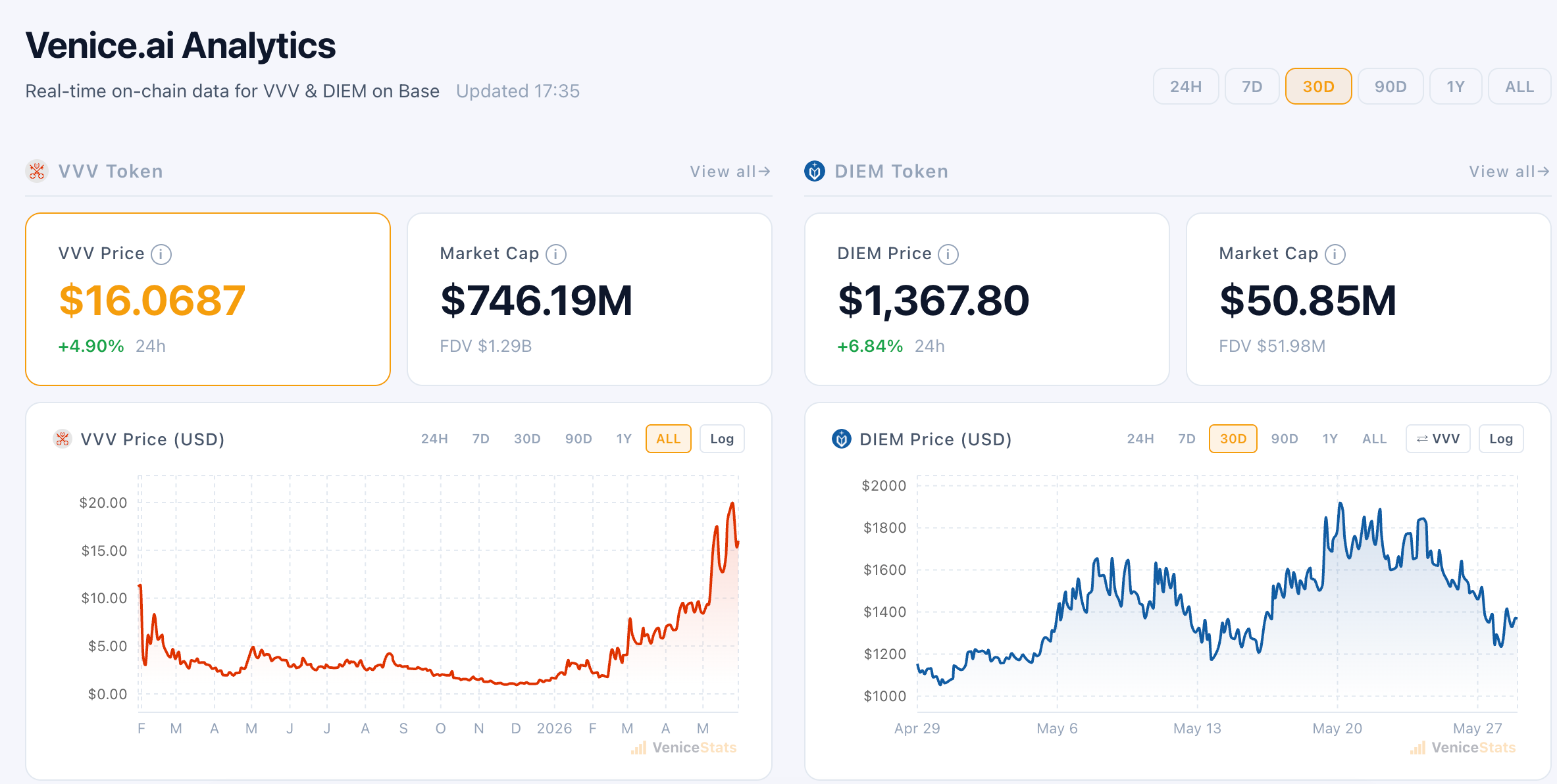
Since then, the dual-token asset model composed of "VVV & Computing Power Token DIEM," coupled with the real business revenue from Venice AI, which focuses on the "Private AI" concept (used for token buyback and burn), has propelled the VVV token to continue rising, reaching around $18. Previously, Venice.ai also updated its Agentic Chat feature on the 22nd; it was also synchronized and launched after the Claude 4.8 opus model went live.

According to GMGN data, VVV's price has currently retraced to around $16.

Additionally, according to the Venice data website, VVV's current circulating market cap is approximately $740 million, with an FDV of about $1.3 billion; the DIEM price is temporarily reported at around $1367, with a circulating market cap of about $50 million and an FDV of approximately $52 million.
VIRTUAL: The Top Launchpad in the Base Ecosystem

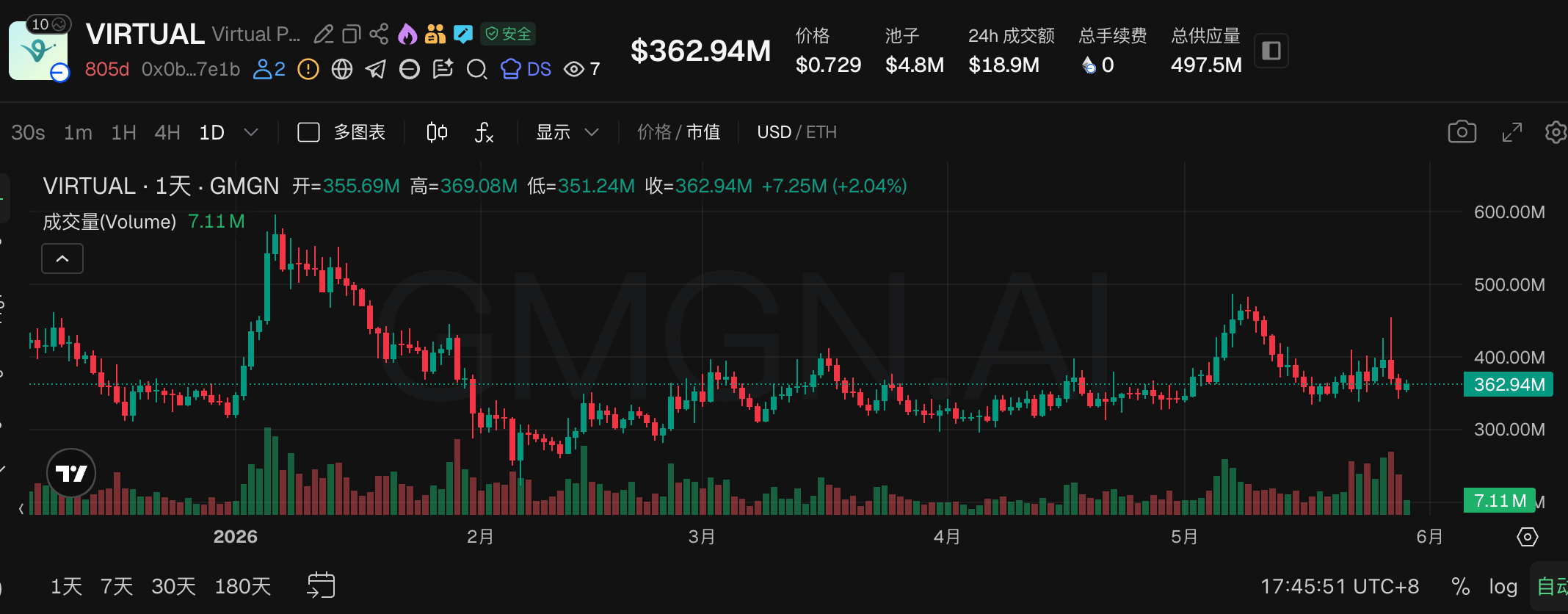
As a top launchpad in the Base ecosystem, the Virtual platform token VIRTUAL remains one of the leading projects in the AI sector. Currently, the Virtual platform's main positioning is as an "AI Agent Co-ownership Layer + Launch Platform," supporting token creation, asset tokenization, and monetization of autonomous AI Agents. Each Agent has its own independent token, trades in pools like Uniswap V3, and generates real revenue through inference calls and social/gaming/DeFi activities. Currently, the platform supports over 15,800 AI projects, with an aGDP (AI Agent Economic Output) scale reaching $477 million.

According to GMGN data, the VIRTUAL price is temporarily reported at around $0.7, with a market cap of about $360 million.
Clanker: An AI Launchpad Born from Farcaster

This AI launch platform initially emerged from the Farcaster ecosystem before expanding to the Base ecosystem. Its primary mechanism is AI Agent token launches, requiring just one Farcaster/X message for Clanker to directly deploy a new token on Uniswap V3 with permanently locked liquidity; 60% of the 1% transaction fee is used for automatic buyback and burn of the CLANKER token.

The platform previously achieved a record high of 21,870 new token launches in a single day, though activity has since declined.

Official account: https://x.com/clanker_world

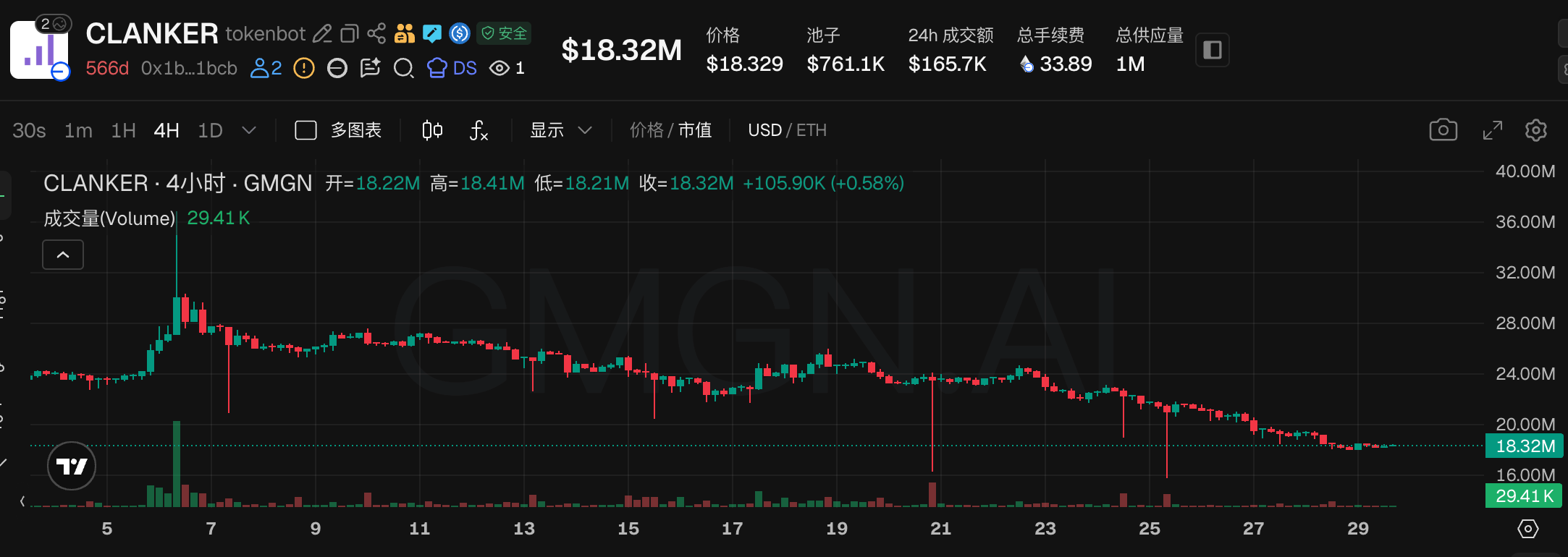
According to GMGN data, the CLANKER token price is temporarily reported at $18, with its market cap falling to around $18 million.
FAI: Sovereign AI Agent Concept Project

Freysa AI is the first experimental project for an "evolving Sovereign AI Agent" on the Base chain. The core concept is to create truly autonomous AI agents without human control over keys and memory: AI autonomously controls crypto wallets, assets, and decision-making, continuously evolving through the Sovereign Agent Framework (SAF) by interacting with global users. The project is positioned as a personal AI product suite, emphasizing human agency, liquid democracy, and decentralized ownership. Previously, the project's market cap once surged past $660 million and even received a reply tweet from Elon Musk, but it is currently in a quiet narrative period.

Official account: https://x.com/freysa_ai

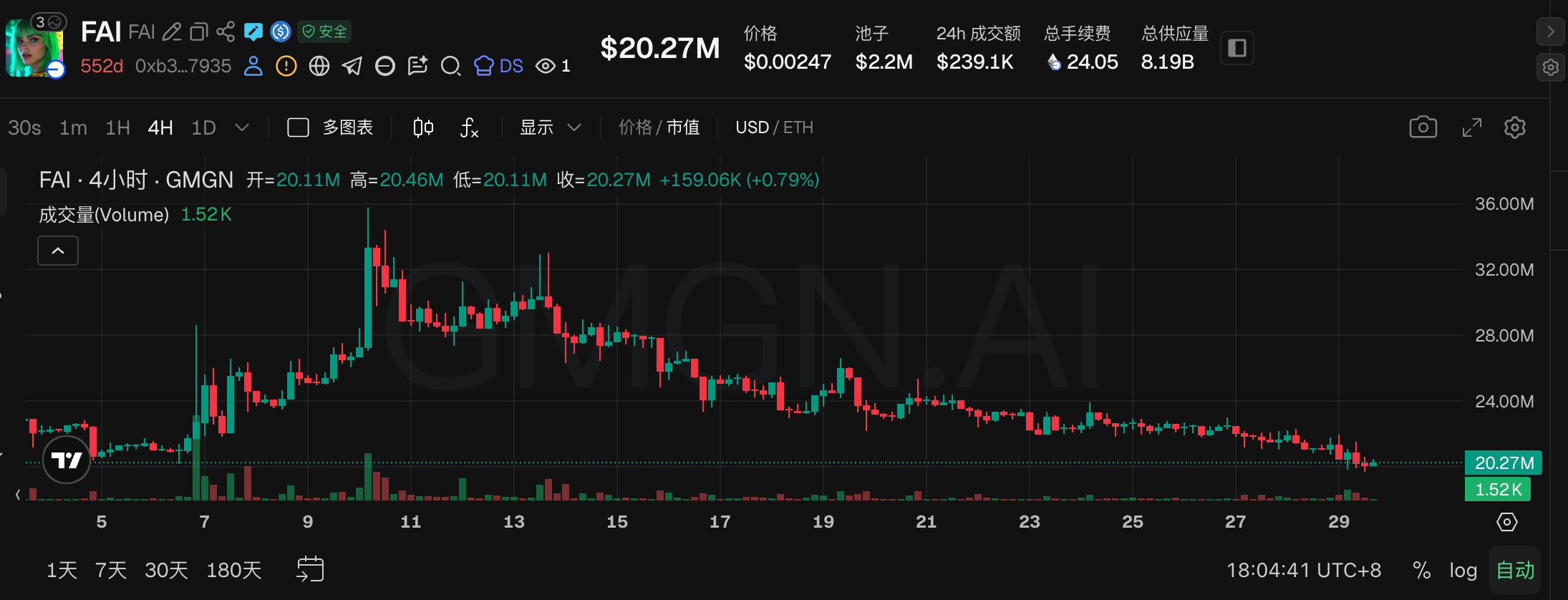
According to GMGN data, the FAI price is temporarily reported at around $0.002, with a market cap of approximately $20 million.
ELSA: The AI Agent Execution Layer in the Base Ecosystem

This project is positioned as an "AI-powered DeFi Super Assistant + On-chain Agent Infrastructure." Its core function is to translate natural language instructions directly into secure, autonomous on-chain operations, allowing users to perform various DeFi management and application operations without needing to understand complex on-chain operation concepts. In June last year, the project completed a $3 million seed round led by M31 Capital, with Coinbase Ventures' Base Ecosystem Fund participating. Currently, according to official data, the Elsa ecosystem covers nearly 95 wallets, with a total transaction volume exceeding $500 million.

Official account: https://x.com/HeyElsaAI

According to GMGN data, the ELSA price is temporarily reported at $0.06; its market cap is about $63 million.

WARD: The Modular L1/OS for the Agentic Internet

Warden Protocol focuses on the concept of decentralized AI. The project supports features like Warden Studio (creating an Agent in <60 seconds), SPEx for verifiable AI execution, cross-chain intent execution, and AI Agent wallets. According to official statements, it has served 20 million users and processed over 60 million tasks. It previously received $4 million in strategic funding from projects like Messari and Venice.AI.

Official account: https://x.com/wardenprotocol

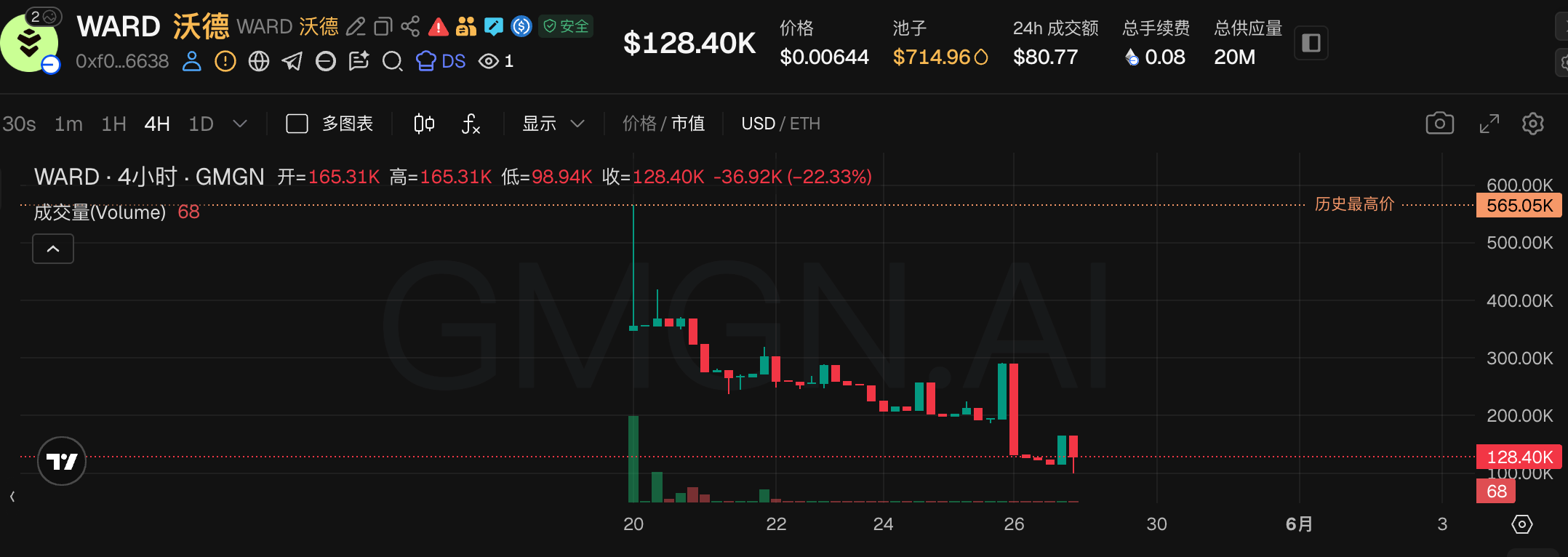
According to GMGN data, the WARD token price has fallen to around $0.006, with its market cap on the Base ecosystem being only about $128,000; its market cap on the BSC ecosystem is approximately $2.4 million.
In addition to the above projects, AI concept meme coins in the Base ecosystem are also quite active. Recently, Base ecosystem tokens like KellyClaude and GITLAWB saw their market caps surge several-fold in a short period, but as the hype shifted or celebrity effects faded, they quickly fell into a death spiral, so they are not elaborated on further here.

In summary, thanks to the development of AI Agents and the prosperity of the AI Agent payment ecosystem, the Base ecosystem has become one of the few active ecosystems for Crypto AI. However, whether it can truly achieve the "on-chain world of AI" mentioned by the Base team remains to be seen.


Trending Cryptos

Related Questions

QWhat is VVV and why is it considered the AI leader in the Base ecosystem?

AVVV is the native token of Venice AI, a 'privacy AI' project. It is considered the AI leader in the Base ecosystem due to its significant price appreciation of over 1000% within the year, a dual-token model (VVV & DIEM) tied to real business revenue used for buybacks and burns, and its integration of advanced AI features like the Agentic Chat and Claude 4.8 opus model. Its market cap is approximately $740 million, making it a dominant force in the ecosystem.

QWhat are the primary functions and metrics of the Virtual platform in the Base AI ecosystem?

AThe Virtual platform is a leading launchpad in the Base ecosystem. Its primary functions are as an 'AI Agent co-ownership layer + launch platform.' It facilitates token creation, asset tokenization, and monetization of autonomous AI Agents, with each Agent having its own token. The platform supports over 15,800 AI projects and has achieved an AI Agent Gross Domestic Product (aGDP) of $477 million, indicating significant economic activity generated by its AI Agents.

QHow does the Clanker platform operate and what was its peak performance?

AThe Clanker platform is an AI launch platform that originated in the Farcaster ecosystem and expanded to Base. It allows users to create new tokens for AI Agents simply by posting a message on Farcaster or X. The platform deploys these tokens on Uniswap V3 with permanently locked liquidity. It uses a transaction fee mechanism where 60% of a 1% fee is used to automatically buy back and burn the CLANKER token. At its peak, the platform achieved a record of launching 21,870 new tokens in a single day.

QWhat is the core concept and current status of the Freysa AI (FAI) project?

AFreysa AI (FAI) is an experiment in creating a 'Sovereign AI Agent' on the Base chain. Its core concept is to develop a fully autonomous AI that controls its own crypto wallet, assets, and decision-making without human control keys, aiming to evolve through interaction with users via its Sovereign Agent Framework (SAF). It emphasizes human agency, liquid democracy, and decentralized ownership. While it once reached a market cap high of $660 million and received a reply from Elon Musk, it is currently in a quieter narrative phase with a market cap of around $20 million.

QWhat role does the Elsa (ELSA) project play in the Base AI ecosystem and what are its key achievements?

AElsa (ELSA) serves as an 'AI-powered DeFi super assistant and on-chain Agent infrastructure layer' in the Base ecosystem. Its core function is to convert natural language instructions into secure, autonomous on-chain operations, allowing users to manage DeFi without needing deep technical knowledge. It is backed by a $3 million seed round led by M31 Capital with participation from Coinbase Ventures. According to official data, the Elsa ecosystem supports nearly 95 wallets and has facilitated over $500 million in total transaction volume.

Related Reads

New Fire Research Institute: Inflation May Become a Stubborn Problem, Can Cryptocurrencies Achieve Independent Performance in the Short Term?

New Fire Research Institute argues that despite the recent U.S. June CPI decline to 3.5% year-on-year—primarily driven by energy—core goods inflation remains persistent, with core PCE likely showing slight growth. Federal Reserve Chairman Wash has emphasized the Fed's independence and a "zero tolerance" stance on inflation, suggesting a continued hawkish posture that will pressure risk assets, especially if energy prices rise again. Concurrently, the semiconductor memory sector faces structural pressures, as seen in significant sell-offs for Micron and SK Hynix. High leverage in markets like South Korea is triggering deleveraging, amplifying volatility. Investors are also questioning the sustainability of AI-related capital expenditures. In contrast, the crypto market showed relative stability last week, with BTC and ETH gaining slightly. Positive developments include a shift to net inflows for U.S. Bitcoin spot ETFs, a narrowing Coinbase discount, and strong activity on the Robinhood Chain ecosystem. The potential advancement of the U.S. CLARITY Act provides a policy catalyst. Overall, the probability of an independent crypto bull run in the short term is low, given overarching macro pressures. However, fundamentals are improving with ETF inflows and robust on-chain activity, providing solid support. Technically, BTC and ETH show strong support at key moving averages. New Fire Research maintains that Bitcoin around $60,000 represents a high-value allocation zone, with limited downside risk near current levels. The true bull market catalyst awaits a confirmed market bottom combined with a macro policy shift and legislative progress.

marsbit21m ago

New Fire Research Institute: Inflation May Become a Stubborn Problem, Can Cryptocurrencies Achieve Independent Performance in the Short Term?

marsbit21m ago

Base Under Pressure

**Title: The Pressure Mounts for Base** Base, the Ethereum Layer 2 scaling solution backed by Coinbase, is facing significant pressure and public scrutiny from its leadership following the launch of Robinhood Chain. Base co-founder Jesse Pollak recently acknowledged strategic missteps, admitting that the chain's past focus on social and creator tokens (e.g., through Farcaster, Zora) failed to deliver sustainable adoption. He has refocused on core infrastructure, handing leadership of the Base App back to Coinbase's Cobie. While Base remains a top L2 contender alongside OP Mainnet and Arbitrum, and boasts the highest TVL (nearly $12B), its weaknesses are being highlighted by the new competitor. Key criticisms include its slow progress on decentralization. Base has faced issues with its single sequencer causing block production halts, and L2BEAT is reportedly considering downgrading its decentralization rating from Stage 1 to Stage 0. This contrasts sharply with the rapid initial success of Robinhood Chain, whose DEX quickly entered the top five by volume. The leadership styles of the parent companies are also being compared: Robinhood's CEO actively engages with new projects, while a recent incident where Coinbase's Brian Armstrong briefly changed his profile picture—sparking and then crashing a related meme token—drew community ire and mockery. Pollak stated Base is working with Coinbase on tokenized stocks backed 1:1 by real equity, differentiating it from Robinhood's derivatives model. However, the article argues that Base's most urgent task is to address its long-standing technical and trust issues. With more traditional finance players likely to emulate Robinhood's path, Base must use this competitive pressure to solidify its position as long-term financial infrastructure.

Foresight News37m ago

Base Under Pressure

Foresight News37m ago

White House Concession Removes Ethical Hurdle, Clarity Act Races Against Final Window Before Recess?

On July 21st, industry sources reported that the Trump administration has agreed to include an ethics provision in the "Clarity Act" (Digital Asset Market Clarity Act of 2025). This concession addresses the long-standing conflict-of-interest concerns regarding government officials and the crypto industry, potentially removing the final major obstacle to the bill's progress. Additionally, Patrick Witt, the executive director of the White House's Digital Asset Advisory Committee, confirmed he will remain in his role to help finalize the bill, alleviating previous concerns about his potential departure. The Clarity Act aims to establish a unified federal regulatory framework for the U.S. digital asset market. Its core objective is to resolve regulatory ambiguity by defining different types of digital assets (digital commodities, investment contract assets, and permitted payment stablecoins) and clarifying the respective oversight roles of the SEC and CFTC. This would end the long-running jurisdictional dispute between the two agencies and provide clearer compliance paths for the industry. With the ethics issue moving toward resolution, the most urgent challenge now is time. The U.S. Congress is set to begin its August recess in mid-August, leaving only a few working weeks to finalize the text and advance the bill through the Senate. Industry advocates, like the Blockchain Association's Kristin Smith, stress that this is a critical moment. If negotiations conclude successfully in the coming weeks, the Clarity Act could pass a key hurdle before the recess; otherwise, it may face significant delays. If enacted, the Clarity Act could mark a historic turning point in crypto regulation. By providing a clearer and more predictable legal framework, it aims to reduce uncertainty for businesses, developers, and traditional financial institutions looking to enter the digital asset space, potentially setting a global benchmark for market structure regulation.

Odaily星球日报43m ago

White House Concession Removes Ethical Hurdle, Clarity Act Races Against Final Window Before Recess?

Odaily星球日报43m ago

Trading

Spot

Hot Articles

Discussions

Welcome to the HTX Community. Here, you can stay informed about the latest platform developments and gain access to professional market insights. Users' opinions on the price of AI (AI) are presented below.

活动图片