Understanding Jensen Huang's Physical AI: Why Is Crypto's Opportunity Also Hidden in the 'Nooks and Crannies'?

marsbitPublished on 2026-01-23Last updated on 2026-01-23

Abstract

Jensen Huang's recent speech at Davos signals a pivotal shift in AI: the transition from the training-focused "brute force" era of AI 1.0 to the new paradigm of "Physical AI" and inference. This marks the next phase after Generative AI, focusing on real-world application and embodiment. Physical AI aims to solve the "last-mile" problem of AI: moving from digital intelligence to physical action. While LLMs have consumed vast digital data, they lack understanding of the physical world—like how to twist open a bottle cap. Physical AI requires three core capabilities: 1. Spatial Intelligence: AI must perceive and interpret 3D environments in real-time, understanding object properties, depth, and interaction dynamics. 2. Virtual Training Grounds: Systems like NVIDIA’s Omniverse enable simulation-to-real (Sim-to-Real) training, allowing robots to learn through vast virtual iterations without costly physical failures. 3. Electronic Skin and Touch Data: Sensors that capture tactile feedback—temperature, pressure, texture—are critical. This data is a new, untapped asset class. This shift opens significant opportunities for Crypto and Web3 ecosystems. DePIN networks can crowdsource hyperlocal spatial data from "every corner" of the world through token incentives. Distributed computing networks can provide edge-based rendering and inference power for low-latency physical responses. Tokenized data ownership and privacy-preserving sharing mechanisms can enable the scalable, ethical col...

What did Jensen Huang actually say at the Davos Forum?

On the surface, he was promoting robotics, but in reality, he was initiating a bold 'self-revolution.' With one speech, he ended the old era of 'stacking GPUs,' yet unexpectedly handed the Crypto sector a once-in-a-lifetime opportunity?

Yesterday, at the Davos Forum, Huang pointed out that the application layer of AI is exploding, and the demand for computing power will shift entirely from the 'training side' to the 'inference side' and the 'Physical AI side.'

This is very interesting.

As the biggest winner in the 'computing arms race' of the AI 1.0 era, NVIDIA is now actively advocating for a shift toward 'inference' and 'Physical AI,' sending a very clear signal: the era of 'brute force miracles' by stacking GPUs to train large models is over. From now on, AI competition will revolve around the 'application-first' principle for real-world implementation.

In other words, Physical AI is the second half of Generative AI.

Because LLMs have already read all the data accumulated by humans on the internet over decades, but they still don’t know how to twist open a bottle cap like a human. Physical AI aims to solve the problem of 'unity of knowledge and action' beyond AI’s intellectual capabilities.

The reason is simple: Physical AI cannot rely on the 'long reflex arc' of remote cloud servers. If ChatGPT is one second slower in generating text, you might just feel a lag. But if a bipedal robot is one second slower due to network latency, it might fall down the stairs.

However, while Physical AI seems like a continuation of generative AI, it actually faces three entirely new challenges:

1) Spatial Intelligence: Enabling AI to understand the three-dimensional world.
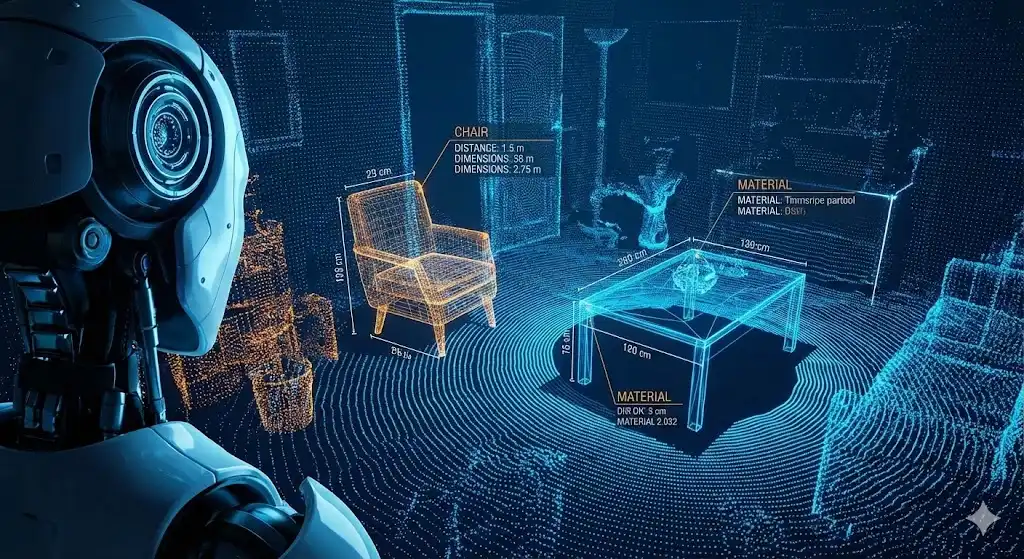
Professor Fei-Fei Li once proposed that spatial intelligence is the next North Star for AI evolution. For robots to move, they must first 'see' the environment. This isn’t just about recognizing 'this is a chair,' but understanding 'the chair’s position in 3D space, its structure, and how much force I should use to move it.'

This requires massive, real-time, 3D environmental data covering every corner, both indoors and outdoors;

2) Virtual Training Grounds: Allowing AI to train through trial and error in simulated worlds.
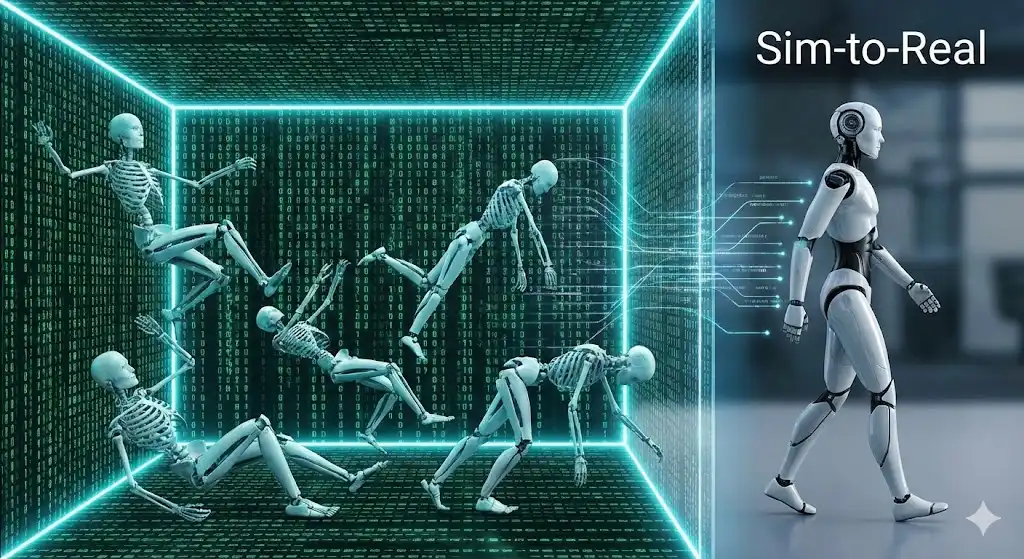
The Omniverse mentioned by Jensen Huang is essentially a 'virtual training ground.' Before entering the real physical world, robots need to train 'falling ten thousand times' in a virtual environment to learn how to walk. This process is called Sim-to-Real, or simulation to reality. If robots were to trial-and-error directly in the real world, the hardware wear-and-tear costs would be astronomically high.

This process demands an exponential increase in the throughput requirements for physics engine simulation and rendering computing power;

3) Electronic Skin: 'Tactile Data'—A Gold Mine Waiting to Be Mined.
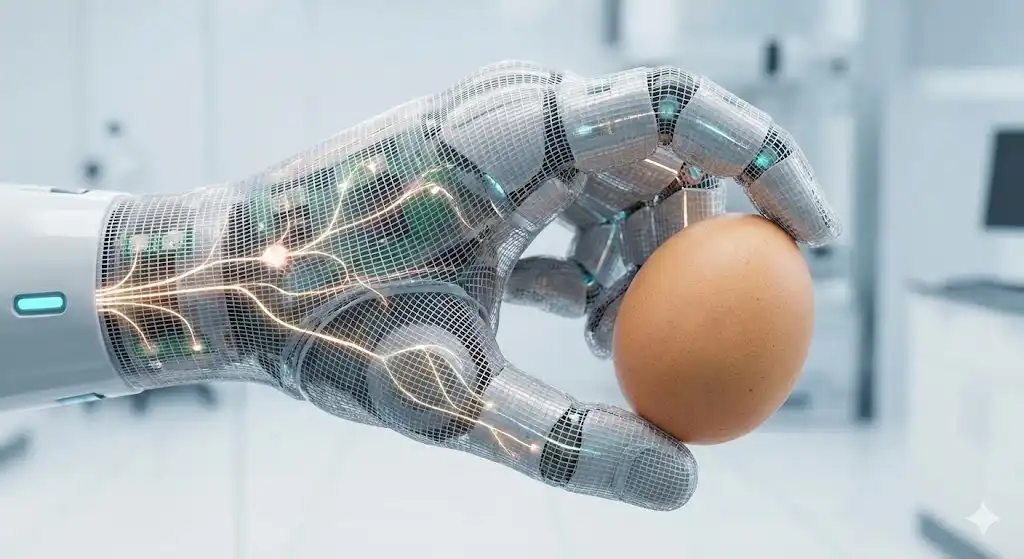
For Physical AI to have a 'sense of touch,' it needs electronic skin to perceive temperature, pressure, and texture. This 'tactile data' is a brand-new type of asset that has never been collected on a large scale before. This may require large-scale sensor deployment. At CES, Ensuring company demonstrated 'mass-produced skin' with a single densely packed hand integrating 1,956 sensors, enabling the robot to perform miracles like peeling an egg.

This 'tactile data' is a brand-new type of asset that has never been collected on a large scale before.

After reading this, you might feel that the emergence of the Physical AI narrative gives a significant opportunity for wearable devices, humanoid robots, and other hardware devices to shine—要知道, these were largely dismissed as 'big toys' just a few years ago.

Actually, I want to say that in the new landscape of Physical AI, the Crypto sector also has an excellent opportunity to fill ecological gaps. Let me give a few examples:

1. AI giants can deploy street-view cars to scan every main street in the world, but they can’t collect data from the nooks and crannies of streets, residential complexes, and basements. By using Token incentives provided by DePIN network devices to mobilize global users to supplement this data with their personal devices, it’s possible to fill these gaps;

2. As mentioned earlier, robots cannot rely on cloud computing power, but to utilize edge computing and distributed rendering capabilities on a large scale in the short term, especially for Sim-to-Real data processing. By leveraging distributed computing networks to pool and schedule idle consumer-grade hardware, it can be put to good use;

3. 'Tactile data,' besides requiring large-scale sensor applications, by its very name, will be extremely private. How to incentivize the public to share this privacy-sensitive data with AI giants? A feasible path is to allow data providers to obtain data ownership and profit-sharing rights.

To sum up:

Physical AI is the second half of the web2 AI赛道 that Huang has called for. For the web3 AI + Crypto sectors, such as DePIN, DeAI, DeData, isn’t it the same? What do you think?


Trending Cryptos

Related Questions

QWhat is Physical AI according to Jensen Huang's speech at the Davos Forum?

APhysical AI is the next phase of Generative AI, focusing on enabling AI to interact with and operate in the physical world. It addresses the 'integration of knowledge and action' by allowing AI to understand 3D environments, simulate actions in virtual training grounds, and process tactile data through electronic skin, moving beyond pure data training to real-world application.

QWhy does Physical AI require a shift from cloud-based computing to edge or distributed systems?

APhysical AI cannot rely on distant cloud servers due to latency issues. For example, a delay of one second might be acceptable for text generation by ChatGPT, but it could cause a bipedal robot to fall down stairs. Real-time responsiveness is critical, necessitating edge computing or distributed networks to reduce latency and ensure reliable operation in physical tasks.

QHow can Crypto and DePIN networks contribute to Physical AI development?

ACrypto and DePIN (Decentralized Physical Infrastructure Networks) can help by incentivizing global users to collect spatial data from hard-to-reach areas (e.g., alleys, basements) using token rewards. They can also leverage distributed computing resources for simulation training and rendering, and enable privacy-preserving data sharing through tokenized incentives for tactile data contribution and ownership.

QWhat are the three key challenges mentioned for Physical AI?

AThe three key challenges are: 1) Spatial Intelligence - AI must understand 3D environments, including object positions and physical interactions; 2) Virtual Training Grounds - AI requires simulated environments (e.g., Omniverse) for cost-effective trial-and-error training; 3) Electronic Skin - AI needs sensors to collect tactile data (e.g., pressure, temperature) for fine motor skills, which is a new type of data asset.

QWhy is tactile data important for Physical AI, and how can it be collected ethically?

ATactile data (e.g., pressure, texture, temperature) is crucial for Physical AI to achieve 'hand-eye coordination' and perform delicate tasks like handling objects. It can be collected ethically using token-based incentives in Crypto ecosystems, where contributors are rewarded for sharing data while maintaining privacy and data ownership rights, ensuring fair compensation and control over personal information.

Related Reads

Strategy's Loss in the Second Quarter Reaches $8.22 Billion Amid Bitcoin Decline

Strategy, the largest corporate holder of Bitcoin, reported a net loss of $8.22 billion for the second quarter. This loss was primarily driven by an $8.32 billion unrealized loss on its Bitcoin holdings due to a decline in the asset's price during the period. Despite these paper losses, the company increased its Bitcoin holdings to 843,775 BTC, a 25% growth since the start of the year. As part of a new monetization strategy, Strategy sold approximately $218.4 million worth of Bitcoin, mainly to fund dividends for preferred shareholders, with $216 million of that sold after Q2 ended. The company also built a $3.75 billion cash reserve, which it claims is sufficient to cover over two years of dividend and interest payments, aiming to insulate itself from Bitcoin's volatility while meeting obligations. Following the earnings release, Strategy's stock (MSTR) rose 4.7% in regular trading but corrected slightly after-hours. This pattern reflects how the company's accounting results are heavily tied to Bitcoin's price swings, even as its long-term strategy remains unchanged. The report indicates that Strategy is maintaining its core strategy of accumulating Bitcoin while building a financial buffer. This quarterly loss follows a recognizable pattern, with the company posting significant unrealized losses in previous quarters (e.g., $12.4 billion in Q4 2025 and ~$12.5 billion in Q1 2026) due to fair-value accounting. A key technical shift is its new monetization program, which introduces periodic selling pressure on the market, transitioning Strategy from a pure accumulator to a participant that occasionally adds supply. A critical question remains: how long can the cash reserve cover dividend obligations if a Bitcoin price downturn persists beyond two years?

cryptonews.ru7m ago

Strategy's Loss in the Second Quarter Reaches $8.22 Billion Amid Bitcoin Decline

cryptonews.ru7m ago

Will Terrorist Durov Ban Russian Officials?

Telegram founder Pavel Durov publicly reacted to being labeled a "terrorist" by Russian authorities, stating the designation came after he refused demands for mass surveillance and censorship on the platform. In a Telegram post, he highlighted that this status formally bans him from "publishing information online." Durov concluded with a statement widely circulated: Russian officials "clearly don't understand who can ban whom on the internet." This remark suggests Durov could potentially restrict official Russian government and officials' channels on Telegram, which continue to operate on the platform despite its formal blocking in Russia. The situation parallels previous, slow-moving state directives, like switching officials to domestic cars, contrasted with the current push to migrate all government communication to the Russian-made messenger MAX by 2030. However, reports indicate many officials still use Telegram via workarounds, fearing surveillance on MAX, while alternatives like BiP and KakaoTalk recently became inaccessible in Russia without a VPN. Durov has not specified any immediate actions against state channels. His statement is an initial response, with further developments depending on the authorities' reaction. The dynamic differs from 2020 when Russian regulators lifted a block on Telegram; now, Durov implies control from within the platform itself over the official accounts that persisted through that earlier blockade.

cryptonews.ru7m ago

Will Terrorist Durov Ban Russian Officials?

cryptonews.ru7m ago

DeepSeek V4 Official Version Arrives, New Capabilities Emerge, Value-for-Money King Enters the Fray

On July 31st, DeepSeek officially launched the public API beta for its DeepSeek-V4-Flash model. A key highlight is its performance on multiple Agent benchmark tests, reportedly nearing or even surpassing the level of the V4-Pro preview version from three months ago. Notably, the Flash model achieves this with significantly smaller scale (130B active parameters vs. Pro's 490B), suggesting that post-training optimization and data quality may be as crucial as raw model size. DeepSeek emphasized that the V4-Flash-0731 uses the same model architecture and size as its preview version, with improvements attributed solely to "re-trained post-training." The update also marks the official debut of DeepSeek's self-developed Agent framework, "Harness." The move signals DeepSeek's strategic push to position its cost-effective Flash model as a competitive base for Agent applications—scenarios requiring autonomous planning, tool usage, and complex task execution—where inference speed and cost are critical. By natively supporting OpenAI's Responses API format and adapting for code-generation scenarios, DeepSeek aims not just to be a cheaper alternative but to establish its own ecosystem in the Agent era. This release follows DeepSeek's record-breaking ~$50 billion fundraising round roughly two months prior, underscoring market confidence in its technology and commercialization prospects. The company is reportedly preparing for another funding round at a valuation of approximately $71 billion. The Flash model's advancement represents a step in fulfilling the high expectations that come with this valuation, setting the stage for the impending release of the V4-Pro official version and intensifying competition in the global Agent landscape.

marsbit11m ago

DeepSeek V4 Official Version Arrives, New Capabilities Emerge, Value-for-Money King Enters the Fray

marsbit11m ago

Trading

Spot

Hot Articles

Discussions

Welcome to the HTX Community. Here, you can stay informed about the latest platform developments and gain access to professional market insights. Users' opinions on the price of AI (AI) are presented below.

活动图片