The First Batch of Big Tech Employees Laid Off by AI Have Returned to Their Posts

Odaily星球日报Published on 2026-03-20Last updated on 2026-03-20

Abstract

The first wave of employees laid off by major tech companies, citing AI as the reason, are already being rehired. In late February, Block, led by Jack Dorsey, laid off over 4,000 employees, reducing its workforce from 10,000 to under 6,000, with Dorsey stating that "AI tools changed everything." However, within a month, some of those laid off began receiving offers to return. Reports indicate rehires occurred in departments like engineering and HR, with reasons ranging from "clerical errors" in termination to managers advocating for their return. The article argues that replacing humans with AI is often more cost-effective. For instance, enterprise-level AI can be expensive in terms of token usage, and training a reliable AI system, such as for customer service, may exceed the cost of human employee salaries. Examples like Klarna, which rehired客服 after initially replacing them with AI, support this. Additionally, the "Jevons Paradox" suggests that AI-driven efficiency gains don’t necessarily reduce workloads but may increase demands on remaining employees, adding to their burden. The piece criticizes companies using AI as a pretext for layoffs, arguing that AI cannot replace human organizational dynamics or strategic roles. Nvidia’s Jensen Huang is quoted condemning leaders who裁员 instead of leveraging AI for expansion. Ultimately, AI serves as a convenient excuse for cost-cutting, but its limitations and the essential role of humans in organizations mean that some layoffs a...

Original | Odaily Planet Daily (@OdailyChina)

Author | Golem (@web 3_golem)

The first batch of employees laid off by AI have returned to their posts.

On February 27, Jack Dorsey (founder of Twitter)'s fintech company Block laid off over 4,000 employees in one go, reducing the total headcount from 10,000 to less than 6,000. Jack's reason for the layoffs was that "AI tools have changed everything." It has long been a societal consensus that AI will eventually eliminate some professions, but the fact that it is first replacing white-collar workers in mid-to-high-level jobs has intensified workplace anxiety. (Related reading:Jack Dorsey's Company: 4,000 White-Collar Workers Are Being Replaced by AI)

However, less than a month later, some of the laid-off employees have already received invitations to return...

According to Business Insider, these rehired employees come from various departments, including engineering and recruitment. A design engineer at Block posted on LinkedIn that leadership told him he was laid off by mistake, a "clerical error"; an HR employee (in a since-deleted post) stated that they were rehired after their manager persistently advocated upwards for them; and another person mentioned receiving a call from Block out of the blue a week after being laid off and being asked to come back.

Jack has not publicly responded to the rehirings. Proportionally, these rehired employees represent only a very small fraction of those originally laid off, but it perhaps already indicates the problem: for some positions and tasks, AI is not as effective as humans.

First, from a usage cost perspective, an enterprise-grade AI employee is certainly more expensive than a regular human resource.

Hiring people to work costs money, hiring AI to work costs tokens. The standard base price for Claude Opus 4.6 is $5 per million tokens for input and $25 per million tokens for output; domestic large models are cheaper, with Qwen3.5 plus's standard base price being 0.8 RMB per million tokens for input and 4.8 RMB per million tokens for output.

Taking the recently popular OpenClaw as an example, a senior "shrimp farmer" within Odaily Planet Daily mentioned that using OpenClaw merely as a life and research assistant burned through about $6,000 worth of tokens in just over a month (they used the Claude 4.5/4.6 model). $6,000 a month – what kind of highly educated intellectual couldn't you hire for that (outside of Europe and America)?

If personal use is like this, the cost of integrating AI into enterprise work is even higher. Taking the simple replacement of customer service as an example, in regions with degree inflation, you can hire a good-looking college graduate as a customer service representative for 3,000 RMB. But training an AI customer service agent that can truly replace a human, handle complex tickets, connect to multiple knowledge bases, engage in multi-turn conversations, and remain stably online – that cost is definitely not something 3,000 RMB per month can cover.

In 2024, the Swedish payments company Klarna proudly laid off over 1,000 people, claiming its AI customer service could already handle the workload of 700 customer service agents. But in May 2025, Bloomberg and other media reported that Klarna had started rehiring people for customer service, and its CEO admitted that the company had indeed "moved too fast" with AI.

Furthermore, AI replacing human labor also faces the "Jevons Paradox".

The Jevons Paradox is an economic concept stating that an increase in efficiency does not necessarily lead to a reduction in the use of a resource. Instead, because the cost of use decreases and demand expands, the total usage may actually rise. Applying this theory to the workplace in the AI era means that when AI technological progress improves employee efficiency, companies will not allow employees to rest; instead, they will demand that they complete more tasks within the same unit of time.

So-called efficiency improvement has become another, more hidden form of increased burden. AI liberating human labor is completely a scam.

Capitalists also believe that in the AI era, companies simply won't need as many employees, as Jack said, "smaller teams with more intelligent tools." But in reality? The current situation is that after layoffs, the original work is not entirely inherited by AI; rather, the remaining employees, aided by AI, have taken on increased workloads.

If it were just单纯的工作任务也就罢了, but one must remember that, ultimately, a company is a human organization. Where there is organization, there is a "jianghu" (complex social dynamics). AI can integrate into the formal structure of a company, but it can never understand, nor integrate into, the informal/invisible structure of a company.

Therefore, when AI-driven layoffs occur, they cut not just labor, but organizational muscle. The remaining employees not only shoulder a heavier work burden but also swallow the anxiety, risk, and responsibility that originally belonged to the eliminated positions. There are fewer people to collaborate with, fewer people to execute, and most importantly, fewer people to take the blame.

During Nvidia's GTC 2026, Jensen Huang criticized companies that use AI efficiency gains as a reason for layoffs in an interview: "Those leaders who resort to layoffs in response to AI are simply because they can't think of a better way. They have no new ideas left in their heads. Even with the strongest tools, they won't use them for expansion," were Huang's exact words.
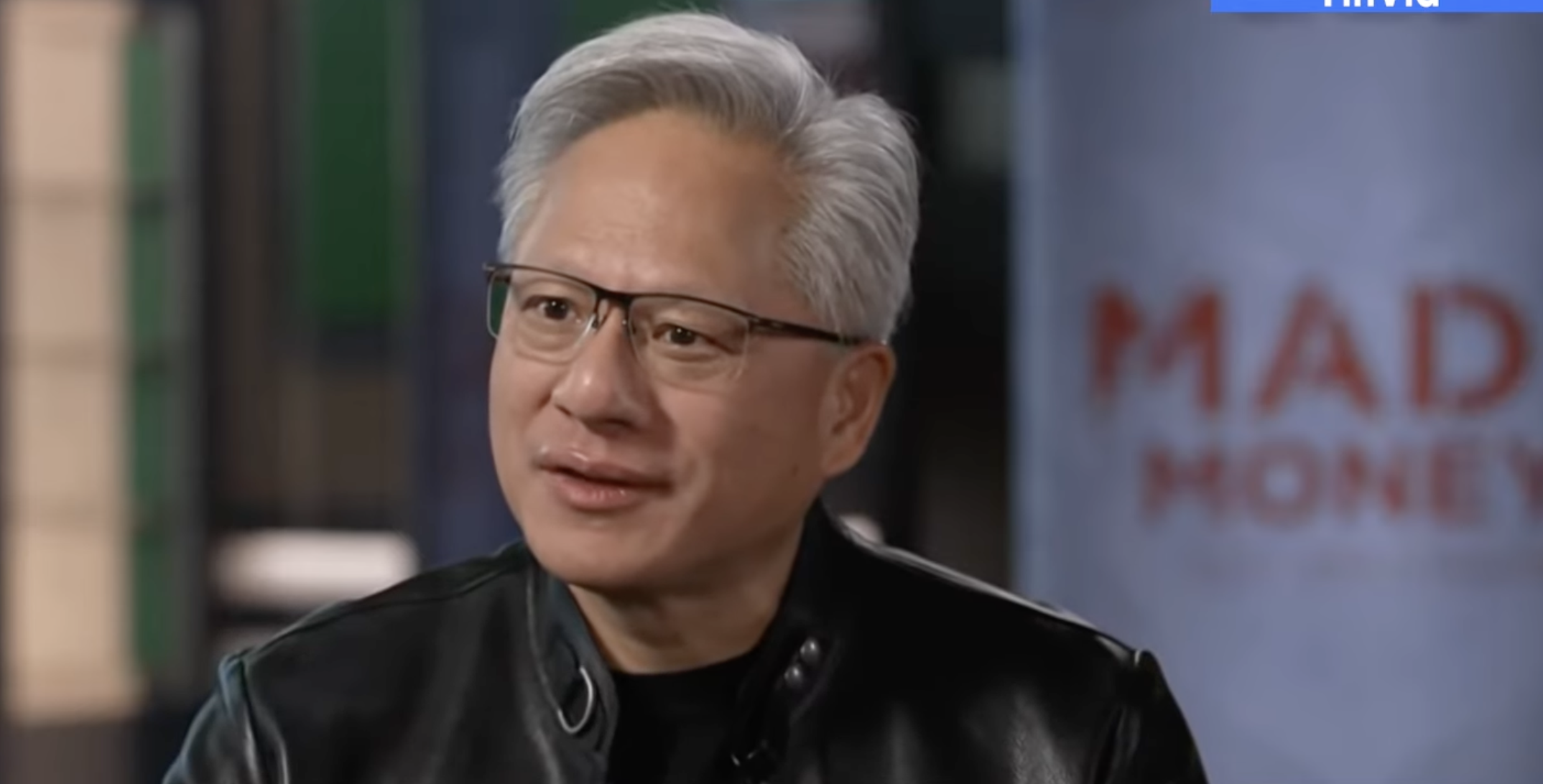
What Jensen Huang meant is that AI is not here to eliminate employees but to help companies expand and develop new businesses. Don't lay people off; instead, increase hiring. If management doesn't realize this, they are fools. But joking aside, managers in companies are often the cream of the crop of shrewd people. They certainly know the current high cost of AI and the continued necessity of human labor.

Layoffs in tech companies – perhaps AI is just a pretext, cost reduction is the real goal.

AI has become a universal excuse for layoffs in tech companies. In truth, what AI is really淘汰 isn't individuals, but those enterprises and businesses still living in the old era. When companies fail to keep up with AI advancements, leading to stagnant business growth and shrinking profits, the AI revolution instead becomes a new means for companies to PUA employees: reduce headcount, pressure costs, cram more work onto those who remain, and then let each person reflect on why they couldn't become someone more adapted to the AI era.

If they unfortunately cut a critical artery, they can just quietly ask them to come back. This method of layoffs is also common in Silicon Valley. In October 2022, after Musk completed the acquisition of Twitter, he laid off about half of the employees (over 3,000 people) in early November. He subsequently rehired dozens of laid-off employees because they were let go by mistake or key positions were found to be indispensable.

Returning to the present, ultimately, AI will change many things, but it is not yet magical enough to help companies compensate for strategic迟钝, business衰老, or managerial偷懒. The matter of being laid off by AI and then rehired, whether the underlying reason is the company realizing that some work doesn't just disappear with a statement like "AI changed everything," or whether it's just an excuse for cost reduction, is neither热血 (inspiring/heroic) nor a reversal.

It just shows us that before the future has truly arrived, some people have already been hurt by it提前.


Trending Cryptos

Related Questions

QWhat was the reason given by Jack Dorsey for the mass layoffs at Block in February?

AJack Dorsey stated that 'AI tools changed everything' as the reason for the layoffs.

QAccording to the article, what is one of the main reasons why some employees were rehired at Block?

ASome employees were rehired because they were mistakenly laid off due to a 'clerical error', as stated by a design engineer.

QWhat economic concept does the article use to argue that AI efficiency gains may not reduce workload but increase it?

AThe article uses the 'Jevons Paradox' to argue that AI efficiency gains lead to increased workload and demand rather than reducing it.

QWhat did Nvidia's CEO Jensen Huang criticize about companies that use AI as a reason for layoffs?

AJensen Huang criticized that leaders who use layoffs to respond to AI 'have no new ideas left in their heads' and are unable to use powerful tools for expansion.

QWhat does the article suggest is the real purpose behind many tech companies' AI-related layoffs, beyond the stated reason?

AThe article suggests that the real purpose behind many tech companies' AI-related layoffs is cost reduction, using AI as a convenient excuse.

Related Reads

Must-Watch Events Next Week|CLARITY Act Could Face Senate Vote; SpaceX, Circle to Report Earnings (8.3-8.9)

**Summary: Key Events and Developments to Watch (August 3-9)** The upcoming week is marked by significant financial disclosures, key legislative deadlines, and notable product updates. **Major Financial Events:** Several companies are scheduled to release their Q2 2026 earnings. American Bitcoin (ABTC) will report on August 3, followed by SpaceX and Hut 8 Mining Corp. on August 4, and Circle on August 5. Notably, a significant portion of SpaceX shares (up to 12% of total shares) will be unlocked on August 6 following their earnings release. **Key Legislative Deadline:** The U.S. Senate faces an August 7 deadline to secure 60 votes for the CLARITY Act, a bipartisan bill aiming to establish a federal regulatory framework for cryptocurrencies. The Senate may hold a full vote on the bill during the week. **Economic Data:** The U.S. July Non-Farm Payrolls report will be released on August 7, providing crucial labor market data. **Technology & Product Updates:** * **Shutdowns:** DeFi portfolio tracker Zapper and wallet app Ctrl Wallet will cease operations on August 3. * **Upgrades:** LayerZero will deprecate its v1 relayers on August 3. XRP Ledger's new version 3.3.0, featuring five new functions, is expected next week. * **AI:** Elon Musk announced that the advanced Grok 4.6 AI model is set for release around August 7. * **Bitcoin:** The BIP-110 forced signaling for a potential Bitcoin network change is scheduled to begin around August 8. **Other Notable Events:** Chinese robotics firm Unitree Tech has set its preliminary price inquiry for its IPO for August 5. South Korean exchange Upbit will delist AQT and AERGO tokens on August 3.

marsbit1h ago

Must-Watch Events Next Week|CLARITY Act Could Face Senate Vote; SpaceX, Circle to Report Earnings (8.3-8.9)

marsbit1h ago

Stocks Are Plummeting More Sharply Than Cryptocurrencies. Where Has the Money Gone?

Stock Markets Plunge Deeper Than Cryptocurrencies: Where Did the Money Go? In late July, Seoul's Kospi index triggered circuit breakers for two consecutive days, plummeting over 40% from its June high. The collapse was led by heavyweight stocks like SK Hynix, whose record profits still disappointed investors, and devastating leveraged ETFs, with one major product losing over 83% of its value. This signaled a global, forced deleveraging targeting the most crowded trades. Interestingly, while stocks exhibited extreme volatility akin to crypto markets, Bitcoin rose nearly 15% in July after a prior steep drop. Analysis shows the money fleeing equities did not flow into Bitcoin. Instead, Bitcoin had already absorbed its sell-off in May-June, when U.S. spot Bitcoin ETFs saw historic outflows. The true safe-haven beneficiary was gold, whose price rose over 20% year-on-year, highlighting a decoupling between Bitcoin and gold as "digital gold." The sell-off was a targeted unwinding of leveraged positions in tech and semiconductors, accelerated by broker-dealer risk management and shifts in the AI narrative, including new competition from Chinese memory chipmakers. The retreat path was clear: from high-valuation tech stocks to cash and U.S. Treasuries, then to gold. For Bitcoin to attract sustained institutional inflows, conditions like eased global liquidity pressure, a "soft-landing" Fed rate cut, and U.S. regulatory clarity via legislation like the stalled CLARITY Act are needed. Currently, Bitcoin is not a safe haven but an already-cleared asset. Its low correlation with tech stocks, however, makes it a potential diversification play for institutional portfolios once the storm passes. The money isn't here yet, but the positioning is underway.

marsbit1h ago

Stocks Are Plummeting More Sharply Than Cryptocurrencies. Where Has the Money Gone?

marsbit1h ago

In Conversation with Ray Dalio: We Are Currently in an AI Bubble, with 1% of My Portfolio in Bitcoin

Ray Dalio, founder of Bridgewater Associates, warns in an interview that the current AI boom shows classic bubble characteristics, which could lead to significant economic downturns as seen in past cycles like 1929 or 2000. He explains that speculative enthusiasm, fueled by debt and overvaluation, often precedes a crash when rising rates or taxation force asset sales, causing widespread losses and recession. Dalio also outlines his "Big Cycle" theory, describing an approximate 80-year pattern where widening wealth gaps, massive government deficits, and shifting geopolitical power (like China's rise) create internal conflict and global instability. He emphasizes that we are in a late-cycle, transitional phase where traditional powers like the US and UK face decline. For personal wealth protection, Dalio advises diversification beyond cash into assets like stocks, bonds, real estate, and particularly gold, which he prefers over Bitcoin. While he holds about 1% of his portfolio in Bitcoin as a non-printable hard asset, he views gold as more secure from technological or governmental threats. Regarding AI's impact, Dalio believes it will disproportionately benefit capital owners, worsening inequality by replacing both physical and cognitive labor. He suggests that human intuition and emotional intelligence, combined with AI, will be key for future workers. On taxation, Dalio argues that wealth taxes are impractical and risk triggering asset sell-offs, reducing productive investment. He points to the UK as a cautionary example of debt, low productivity, and political strife. Geopolitically, Dalio foresees a more regionalized world, with the US showing weakness in prolonged conflicts like with Iran, akin to past imperial declines. The ideal outcome, he suggests, is coexisting powerful blocs (e.g., Americas, China-Asia Pacific) without major war.

marsbit5h ago

In Conversation with Ray Dalio: We Are Currently in an AI Bubble, with 1% of My Portfolio in Bitcoin

marsbit5h ago

Trading

Spot

Hot Articles

Discussions

Welcome to the HTX Community. Here, you can stay informed about the latest platform developments and gain access to professional market insights. Users' opinions on the price of AI (AI) are presented below.

活动图片














