Tether launches privacy-focused health platform with on-device AI

cointelegraphPublished on 2025-12-10Last updated on 2025-12-10

Abstract

T Summary Tether has launched QVAC Health, a privacy-focused health platform that aggregates data from various wearables and wellness apps into a single, encrypted dashboard. The platform processes all data locally on the user's device using on-device AI and peer-to-peer model downloads, eliminating the need for external servers. It includes experimental computer-vision tools to estimate calories from meal photos and correlates this data with wearable information to identify patterns in activity, recovery, and sleep. Tether CEO Paolo Ardoino emphasized the platform's role as a "neutral ground for wellness data," reflecting the company's commitment to privacy. Future updates will enable direct Bluetooth Low Energy connections to certain wearables, bypassing manufacturer APIs and cloud services. This development aligns with growing privacy concerns in the crypto and tech sectors, as highlighted by comments from Ardoino and former White House adviser David Holtzman regarding the vulnerabilities of centralized data repositories. The move is part of a broader trend towards decentralized, privacy-preserving technologies, including initiatives from Ethereum's Vitalik Buterin and Circle's development of a privacy-enhanced stablecoin.

Tether has launched a new platform that aggregates data from multiple wearables and wellness apps into a single, locally processed dashboard, aiming to give users control over their biometric information.

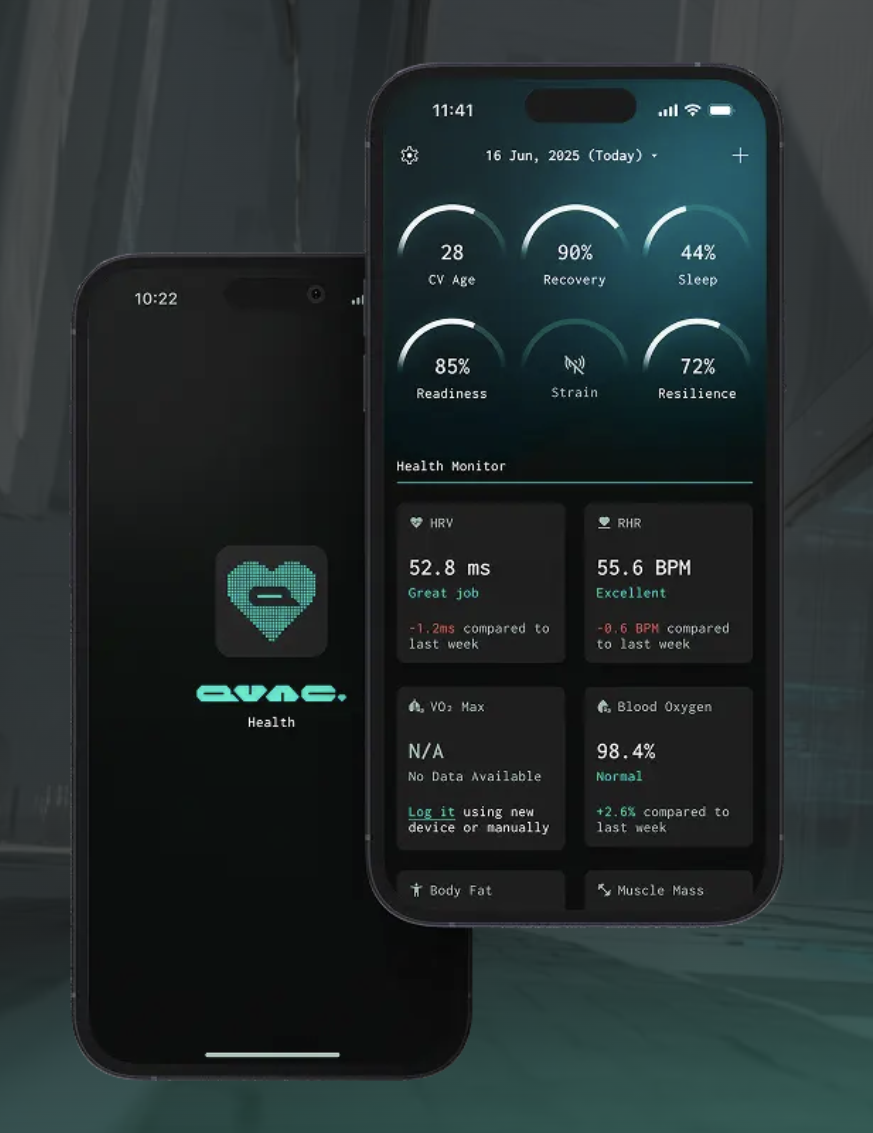
The platform, called QVAC Health, aggregates data from fitness trackers, nutrition apps and other wearables into an encrypted dashboard that works offline, using on-device AI and peer-to-peer model downloads to analyze activity, meals, symptoms and medication logs without relying on external servers.

The app includes experimental computer-vision tools that can estimate calories and macronutrients from meal photos and can correlate those logs with data from multiple wearables to identify patterns in activity, recovery or sleep, all processed locally on the user’s device, according to a Wednesday announcement.
Source: QVAC

Tether CEO Paolo Ardoino called the platform a “neutral ground for wellness data” that reflects the “company’s commitment to privacy-preserving local intelligence.”

Tether, the world’s largest stablecoin issuer, says future updates will include direct Bluetooth Low Energy connections that will let the app read data from certain wearables without routing information through manufacturer APIs or cloud services.

The platform is part of Tether Data’s QVAC project, which builds peer-to-peer, device-based AI systems designed to operate without relying on centralized platforms.

The global fitness-tracker market was valued at $52.29 billion in 2024 and is projected to grow to $189.98 billion by 2032, according to a Verified Market Research report. Major fitness-tracker manufacturers include Apple, Fitbit, Samsung, and Huawei.

Related: Australian fitness firm tanks 21% on Solana treasury gamble

Privacy concerns drive new developments across crypto

Tether’s new platform aligns with comments Ardoino made in 2024, when he argued that running local AI models directly on user devices was the only reliable way to prevent data from being harvested or exposed through centralized servers.

Former White House adviser David Holtzman told Cointelegraph in December 2024 that AI-driven data aggregation and future quantum threats make large data repositories especially vulnerable.

Holtzman noted that AI can rapidly assemble behavioral and transactional data to identify targets more precisely, while future quantum attacks could break today’s encryption standards across sectors. He said decentralized systems can help reduce these risks by avoiding large, centralized data stores.
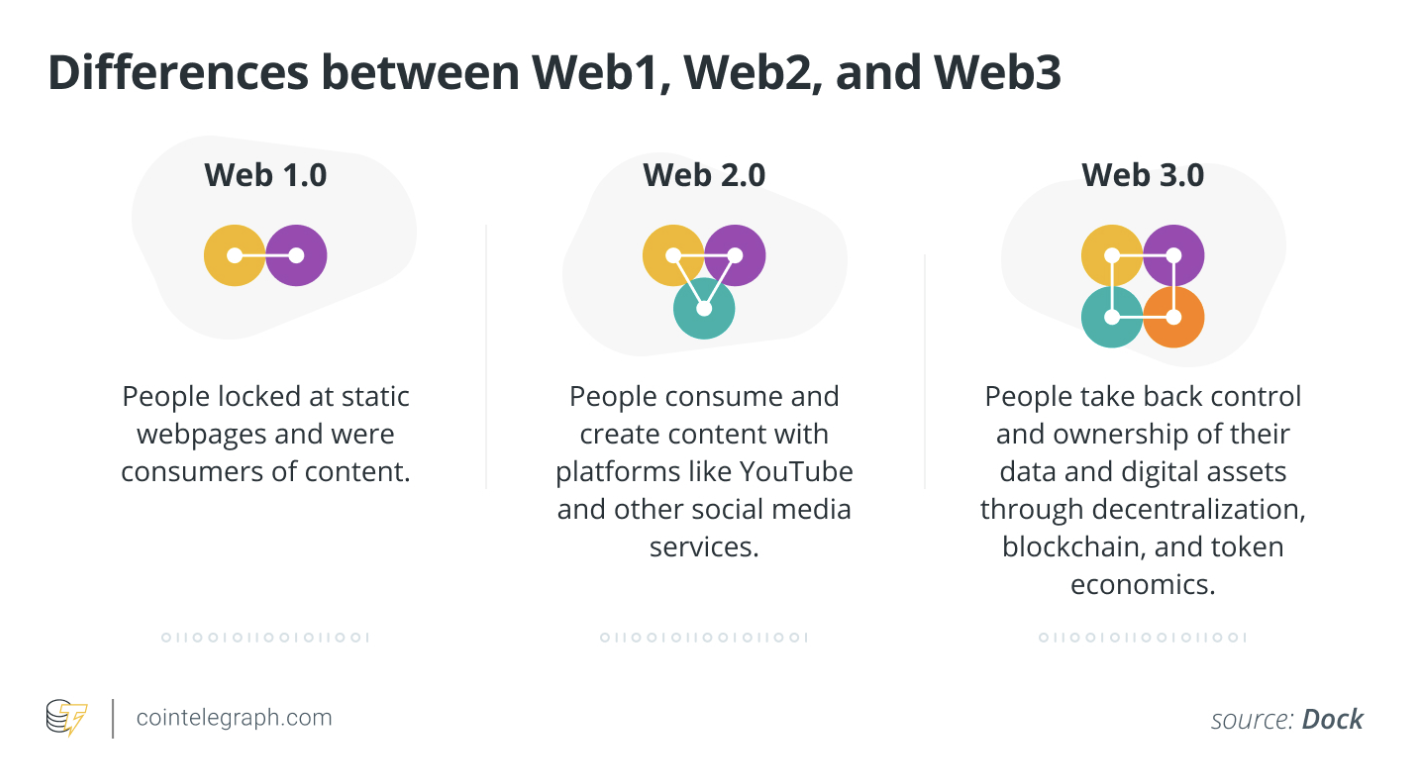
The evolution of the internet. Source: Dock/Cointelegraph

The various threats to privacy have spurred some action in the crypto community. In June, Ethereum co-founder Vitalik Buterin proposed a “pluralistic identity” model — a digital ID approach that lets people prove who they are or qualify for services without exposing all of their personal information.

In December, Fortune reported that Circle is developing a privacy-enhanced stablecoin called USDCx with Aleo, designed to give institutional users banking-level transaction privacy while preserving the ability to furnish compliance records when necessary.

Growing concerns over data exposure and surveillance have also fueled renewed interest in privacy-focused cryptocurrencies, with the Zcash protocol emerging as one of the beneficiaries.

Magazine: Meet the onchain crypto detectives fighting crime better than the cops

Trending Cryptos

Related Reads

Stocks Fell Even More Violently Than Crypto, Where Did the Money Go?

From June to late July 2026, global stock markets, particularly technology and semiconductor stocks, experienced severe declines, with South Korea's KOSPI index facing historic circuit breakers and shedding 40% from its June peak. Key catalysts included SK Hynix's earnings miss despite record profits and competitive pressures from China's CXMT IPO. A global forced deleveraging event unfolded, devastating highly leveraged instruments like the 2x leveraged SK Hynix ETF, which lost over 80% of its value. Surprisingly, Bitcoin showed relative stability during this period, rising roughly 15% from its July low. The article clarifies this wasn't due to an inflow of equity flight capital but because Bitcoin had already undergone a significant correction in May and June, with U.S. spot Bitcoin ETFs seeing record outflows. True safe-haven flows went to gold, severing Bitcoin's short-term "digital gold" narrative. The sell-off is characterized not as an AI story collapse but a liquidity-driven清算 of crowded leveraged positions, potentially halfway through according to some analysts. For substantial capital to return to Bitcoin, the article cites necessary conditions: eased global liquidity pressure, a soft-landing Fed rate cut, and regulatory clarity from the stalled U.S. CLARITY Act. The conclusion is that Bitcoin is not a current safe haven but a pre-cleared asset. Its decoupling from tech stocks highlights its potential future role as a non-correlated asset for institutional portfolios, positioning it favorably for when global capital reallocates post-crisis.

marsbit1h ago

Stocks Fell Even More Violently Than Crypto, Where Did the Money Go?

marsbit1h ago

"The Final Phase Before the New Cycle". What Will Happen to Bitcoin in August

"Bitcoin Faces Crucial Test in August: Experts Predict Consolidation or Further Decline" The price of Bitcoin (BTC) is expected to remain under pressure in August, with experts anticipating either consolidation within a narrow range or a potential drop below $60,000. Despite a double-digit recovery from its July low near $58,000, BTC ended the month trading around $63,500, still roughly 50% below its October 2025 peak of $126,200. Analysts cite several headwinds: a challenging macroeconomic environment with high US interest rates and persistent inflation, which makes fixed-income assets more attractive than speculative ones like crypto. Furthermore, competition for capital is intense, with many investors favoring AI-related stocks. This is reflected in significant outflows from US spot Bitcoin ETFs, with a record $4.5 billion leaving in June and a net outflow of $5.4 billion for the first half of the year. Historically, August is a weak month for crypto, with a median return of -7.49% from 2013 to 2025. Experts also note regulatory uncertainty in the US, particularly the stalled CLARITY Act, as a dampening factor. Despite the bearish near-term outlook, several experts view the current phase as the "last phase before a new Bitcoin cycle" begins, potentially in Q4 2024. This makes it a favorable time for accumulating Bitcoin for the long term. Key price levels to watch are support at $60,000-$61,000, with a break below $58,000 potentially leading to $53,000-$55,000. A move above $67,000 could target $70,000-$75,000, though this is considered a lower probability scenario.

cryptonews.ru1h ago

"The Final Phase Before the New Cycle". What Will Happen to Bitcoin in August

cryptonews.ru1h ago

Trading

Spot

Hot Articles

Discussions

Welcome to the HTX Community. Here, you can stay informed about the latest platform developments and gain access to professional market insights. Users' opinions on the price of AI (AI) are presented below.

活动图片