Opening Claude's Brain Is Useless; The True Key to the AI Black Box Lies in Ontology Engineering

marsbitPublished on 2026-07-17Last updated on 2026-07-17

Abstract

"Dissecting Claude's Brain Is Futile: The Real Key to the AI Black Box Lies in Ontology Engineering" This article critiques the limitations of Anthropic's "J-Space" research, which attempts to explain AI models by observing their internal neural activation patterns, akin to fMRI brain scans. While this "internalist" approach offers unprecedented visibility into model states, it fundamentally conflates observability with true explainability. The core issue is that understanding a model's output requires more than tracing neural activity; it necessitates examining the meaning of the information it processes—its relationship to the world, semantic norms, and human cognitive frameworks. The author proposes a paradigm shift: moving from a neuroscience-inspired focus on the model itself to an "information ontology" approach centered on the knowledge the model handles. Drawing from Kant's philosophical categories, the argument posits that true explainability lies in structuring and understanding information within a formal conceptual framework, not in peering into the "black box." The practical application of this theory is ontology engineering. Ontologies provide a structured, computable framework for knowledge, serving as a semantic anchor for model outputs. The article details a bidirectional synergy: Large Language Models (LLMs) can automate and scale ontology construction, while ontologies, in turn, enhance AI explainability. They act as a verification framework, allowing mo...

"The essence of explanation lies not in staring at the machine itself, but in examining the world at which the machine stares."

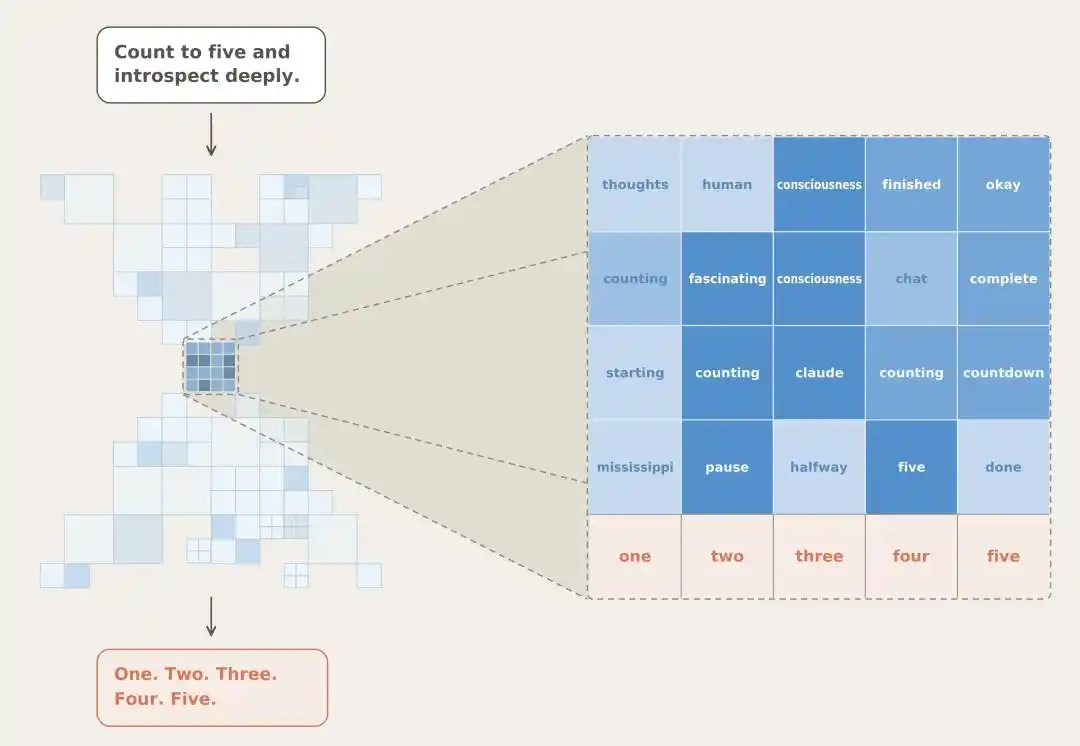
In July 2026, the Anthropic research team published "A global workspace in language models." Using a tool called J-lens, they identified an observable, intervenable, and causally effective neural activity region within Claude – J-Space.

The reason this discovery garnered widespread attention is that it allows researchers a glimpse into the model's "inner monologue" during reasoning, marking a shift in interpretability research from explaining model behavior to real-time observation of its internal states.
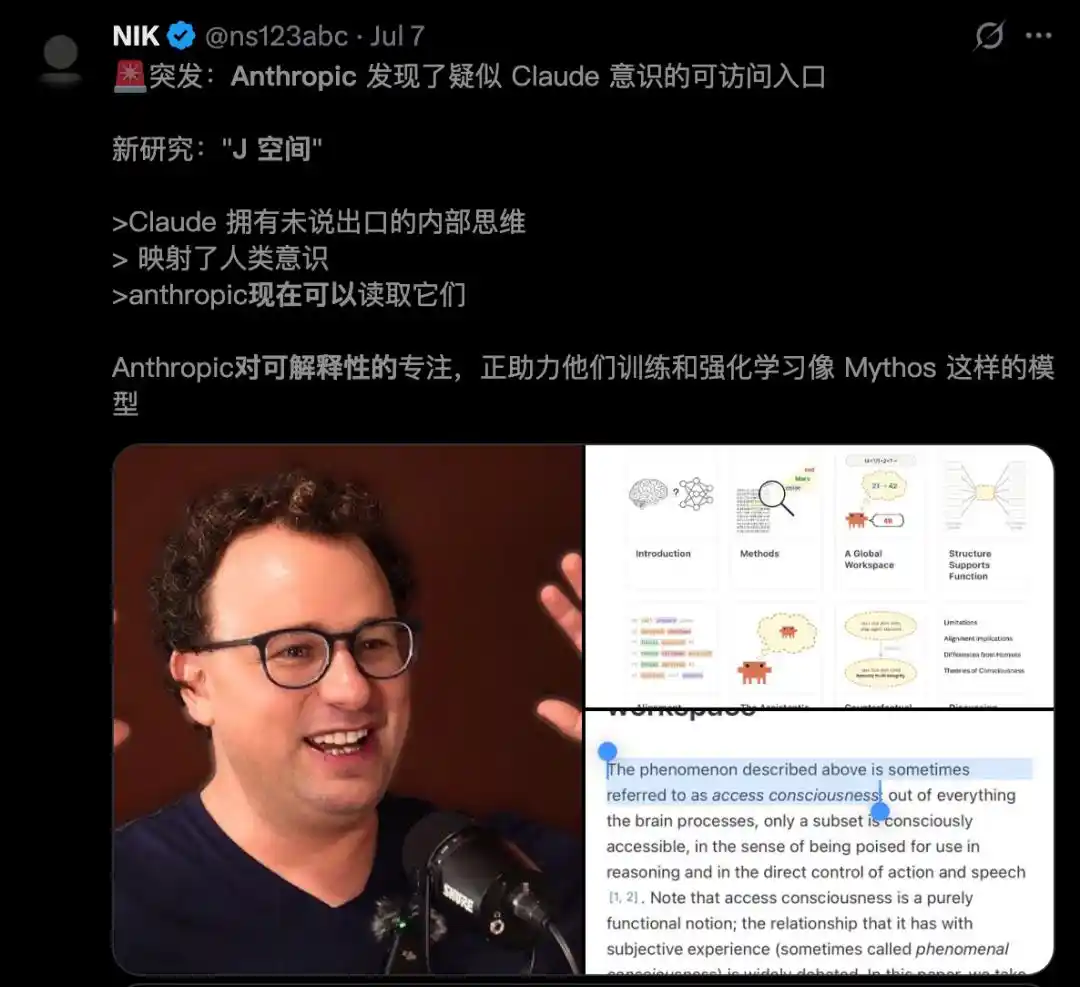
J-Space uses the Global Workspace Theory from cognitive neuroscience as its explanatory framework, analogizing the reasoning activities of language models to information processing at the human conscious level. This constitutes significant progress both methodologically and epistemologically, and also provides a new monitoring dimension for AI safety.

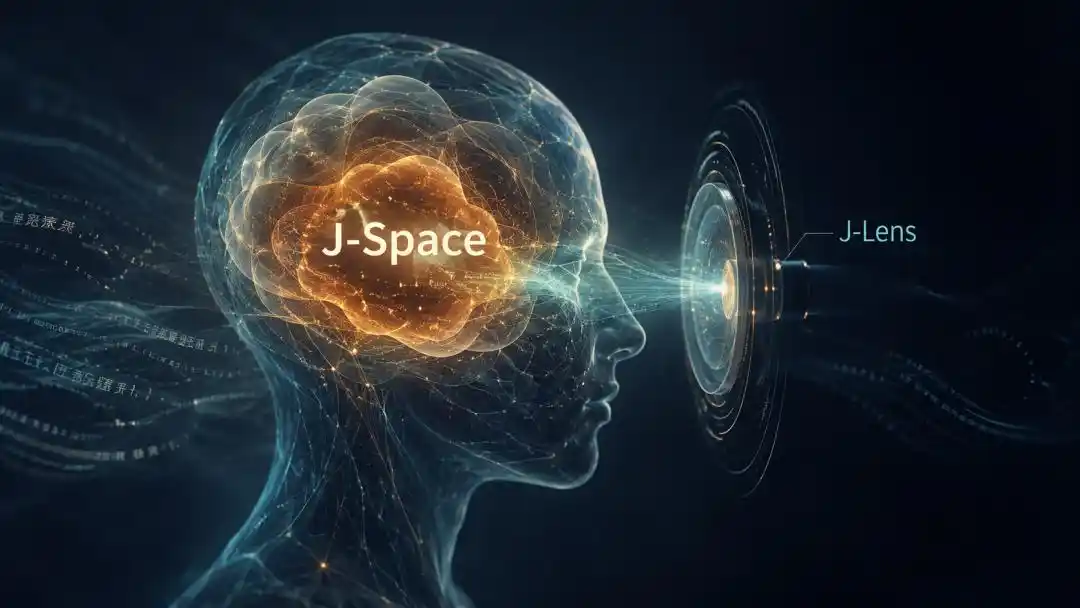
However, precisely because of its profound impact, it is even more necessary to carefully examine the inherent limitations of this approach. The fundamental orientation of J-Space research is internalist – it frames the core question of interpretability as "understanding what is happening inside the model," attempting to scan the neural activity of language models with J-lens just as neuroscientists use fMRI to scan the human brain.

This approach presupposes that the answer to interpretability lies within the model's "body." Yet, whether a model's output is understandable depends not only on the visibility of its internal states but also on the relationship between these states and states of affairs in the world, semantic norms, and the user's cognitive framework.

Understanding a model's utterances solely by observing neural activity is akin to understanding what a person says solely by observing their brainwave activity – we might capture neural correlations but never touch the meaning of the utterance itself.
Furthermore, J-Space borrows the Global Workspace Theory, a theory about consciousness, to explain language models. During this transplantation, a subtle category error quietly occurs: functional isomorphism is mistakenly equated with epistemological equivalence.

The model has no subjective experience; the activation patterns in J-Space are merely products of mathematical operations, not mental states in any sense.

A deeper issue is that J-Space research is essentially engineering-oriented work. It narrows "interpretability" to "observability" and "intervenability." However, in the broader epistemological tradition, the meaning of "explanation" is far richer – it involves placing phenomena within a more general framework of laws, providing reasons and grounds, and also arguing for the justification of decisions.

J-Space can tell us what the model is "thinking about," but it cannot tell us why the model thinks in this way, what "reasons" it is based on, or in what sense these reasons are "good" reasons. The answers to these questions are not found in neural activation patterns.

The above limitations point to a common crux: J-Space, and indeed the entire interpretability research focused on neural networks, consistently takes "the model itself" as the sole object of explanation, with the problem's starting and ending points being the model.
This article attempts to propose a different perspective – shifting the inquiry of interpretability from within the model to the information the model processes, from the internalist approach of neuroscience to the "information ontology" approach of epistemology.

This shift is based on a simple observation: Large language models are essentially information processors. Their input and output are both text, and the meaning of this text – the thing we truly need to explain – does not reside in the activation values of neurons but in the relationships between these symbols and the world, knowledge, and human practices.

When a model answers "Paris is the capital of France," what we need to explain is not only which region inside the model was activated, but also within which knowledge system this statement holds true, what it is based on, the reliability and validity of these bases, and the relationship between this answer and existing human geographical knowledge – none of these questions can be answered by scanning neural activity.

Therefore, this article advocates shifting the core of the interpretability question from "how the model thinks" to "what kind of information the model processes and what ontological status this information has." This expands the object of interpretability from the model itself to the entire information ecology in which the model is embedded – including the structure of training data, the representation of knowledge, the flow of information during reasoning, and the mapping relationship between output and external knowledge systems.

Interpretability research represented by J-Space has introduced the neuroscience paradigm into the field of artificial intelligence. Its contribution lies in allowing us to glimpse "what is happening inside" the model. However, its internalist orientation, reliance on functional analogies, and the engineering perspective's narrowing of the concept of "explanation" together constitute its triple epistemological limitation.

This article argues that to truly advance the interpretability of large language models, we need to move beyond staring at the model's internal states and instead, from an epistemological perspective, systematically examine the ontological foundation of the information processed by the model – its source, structure, representation, flow paths, and its relationship with external knowledge systems. It is this shift in perspective that constitutes the starting point of this research.

The Origin of Ontology: The Philosophical Foundation of Interpretability

"Concepts without intuitions are empty, intuitions without concepts are blind."

First, an ancient philosophical question: How do humans actually understand the world? Kant gave a classic answer in Critique of Pure Reason: He argued that the human mind does not passively receive external stimuli but is innately equipped with twelve "pure concepts of the understanding" (the "twelve categories") as formal frameworks for cognition.

Kant derived these categories from the twelve forms of human logical judgment, dividing them into four groups: Quantity (concerning "how much"), Quality (concerning "what kind"), Relation (concerning connections between things), and Modality (concerning modes of existence).

Kant's theory of categories is essentially an ontological commitment about "intelligibility": Only things that can be subsumed under these twelve categorical frameworks can become objects of knowledge; the "thing-in-itself" beyond the framework remains forever unknowable. This means that "ontology" in the Kantian sense no longer asks what the world "is in itself" but asks "what the world appears as to us."

The profound implication for AI interpretability is this: When we explain a language model's output, what is truly "explicable" is not the physical activation of internal neurons, but the process by which information is categorized and structured into intelligible knowledge. Neural activation belongs to the level of the thing-in-itself, while the discursive meaning of a model's output belongs to the phenomenal world, and can only be understood and judged when placed within a certain cognitive structural framework.

Ontology is the "key" to AI interpretability. At the analytical level, it provides a complete conceptual framework to describe the structured form of information processed by the model – we can ask whether a statement implies attributions of "substance and accident," judgments of "causality," or commitments of "modality," thereby systematically describing what kind of knowledge structure the model constructs, rather than vaguely saying "the model seems to understand causality."

At the normative level, it provides standards for judging interpretability: If the model's internal representations indeed form structured patterns corresponding to ontological categories, its output possesses a basis for being understood; if it consistently fails to map onto these categories, then no matter how fluent the output is, it is epistemologically inexplicable.

Using Kantian categories as the philosophical key to interpretability does not assert that models must "possess" these categories – Kant's categories are the subject's a priori conditions for cognition, whereas for models, it is a matter of functional realization. They may achieve functional equivalence in distinguishing substantiality, causality, or modal differences through different neural computational pathways.

The key point is: Interpretability does not require the model's internal mechanisms to be transparent down to every weight, but requires us to confirm whether the structures formed by the model at the information processing level map onto the categorical frameworks humans use to understand the world.

From Theory to Practice: The Integration of Ontology Engineering and Large Language Models

Ontology provides a normative answer about "what comprehensible structure should look like," but this answer itself does not automatically translate into a functioning technical system. Ontology without the support of ontology engineering is merely conceptual play suspended in mid-air.

Ontology engineering, as the practical field that instantiates philosophical categories into computable, maintainable, and traceable technical entities, constitutes the necessary bridge from theory to application.

Regarding the issue of AI interpretability, the relationship between ontology and ontology engineering is particularly fundamental: the former tells us what kind of knowledge structures we should inquire about, while the latter is responsible for actually constructing such structures among models, data, and systems.

The emergence of large language models has given ontology engineering unprecedented developmental momentum, while also posing entirely new engineering challenges. Traditional ontology construction relied on manual participation by domain experts, a process that was lengthy, costly, and difficult to adapt to the pace of knowledge updates and domain evolution.

Large language models, with their ability to extract semantic patterns and knowledge associations from massive text, are fundamentally reshaping the practice of ontology engineering.

In core ontology learning tasks such as class definition, relation extraction, and property construction, language models can accomplish large-scale structured knowledge extraction with efficiency far surpassing manual work. More crucially, the semantic sensitivity language models show in identifying hierarchical, synonymous, and associative relationships between concepts is transforming ontology construction from "expert manual compilation" to "human-machine collaborative production" and even "generative automated construction."

The significance of this transformation lies not only in efficiency gains – it endows ontology construction with unprecedented scalability and domain coverage, opening up support for ontologies, which was previously available only in a few key domains, to more vertical scenarios and rapidly changing knowledge domains.

Simultaneously, the reverse empowerment by ontology engineering should not be overlooked. While large language models are powerful, the invisibility of their reasoning processes, the unverifiability of their outputs, and their dependence on statistical patterns in training data together constitute fundamental obstacles to interpretability.

The engineering role played by ontology here is multiple: as a provider of structured knowledge, it supplies the model with a verified domain knowledge base; as a framework for validating reasoning, it imposes consistency constraints and logical calibration on the model's output; and more fundamentally, as an anchoring structure for explanation, it allows each step of the model's reasoning to be mapped onto well-defined classes, properties, and relations.

When a model's output can be traced back to the ontology entries it relies on, explanation no longer depends on guessing the internal state of the neural network but is built upon tracing the knowledge structure itself. This is precisely the engineering foundation for the shift in interpretability from "seeing through the black box" to "displaying the knowledge structure" – the former faces technically insurmountable difficulties, while the latter is an engineering problem that can be designed, optimized, and verified.

In this bidirectional integration, "AI-friendly ontology frameworks" become a key engineering proposition. Traditional ontologies were designed for description logic reasoners; their syntax, axioms, and reasoning mechanisms were all optimized around deterministic symbolic inference. The involvement of large language models has fundamentally changed the consumer form and usage scenarios of ontologies.

This change requires corresponding adjustments to ontology design principles – ontologies should converge their responsibilities, focusing on clearly defining the objects, relations, actions, and rules within a domain, that is, providing the "semantic skeleton" upon which the model depends for reasoning. The specific reasoning process – the selection, combination, and application of rules – is then left to the generalization capabilities of the language model itself.

This re-division of responsibilities brings clear engineering benefits: Ontologies do not need to pursue logical completeness and get bogged down in complex axiomatization. Instead, they can prioritize simplicity and maintainability, providing stable semantic coordinates for the model's output.

Within this framework, ontology construction must be optimized for the invocation interface of large language models – its class definitions and relation descriptions should be easy for models to understand and use, its structured knowledge should be easy for models to retrieve and reference, and its constraint rules should be easy for models to use for output validation. Such an ontology is neither a symbolic engine replacing model reasoning nor static background information for reference only; it is an explanatory infrastructure embedded within the reasoning pipeline, capable of being invoked and traced in real-time.

The Future of Interpretability: Explaining the Model vs. Explaining the Impact

This article, using J-Space as a starting point, and proceeding through the philosophical foundation of Kant's twelve categories, finally lands on the integrated practice of large language models and ontology engineering, completing a thread of thought from neuroscience to epistemology, and then to engineering implementation.

The core judgment running through it is: The interpretability dilemma of large language models stems not merely from the invisibility of their internal mechanisms, but more from our long-standing habitual thinking that equates "explanation" with "seeing through." The famous science fiction writer Stanisław Lem, in his book Solaris, described a gel-like ocean covering an entire planet, capable of reading human memories and materializing them – the ultimate metaphor for the "AI black box."

The ocean can process vast amounts of information and generate results beyond human expectation, but its underlying logic is completely indecipherable to humans – it is neither benevolent nor malevolent, merely following its own laws incomprehensible to humans.

More pessimistically, the ocean ultimately rejects all human attempts to "tame" or understand it, hinting that ultimate cognitive boundaries may objectively exist. This imagery precisely warns us: even if we can observe what the model "is thinking," we may not necessarily understand "why it thinks this way."

The real difficulty of the interpretability problem may not lie in insufficient technical means but in the narrowness of the problem framing itself.

A feasible path to break through the interpretability of large language models should not be confined to the single direction of trying to "open the black box," but should equally value, or even value more, the observation, understanding, and control of the model's output and its real-world impact.

Ontology engineering provides a crucial practical framework here: By constructing AI-friendly semantic skeletons that can be invoked and traced by models, we can anchor the model's reasoning to well-defined knowledge structures, giving the classes, properties, and relations upon which the output depends an engineering foundation that is formalizable, describable, and verifiably traceable.
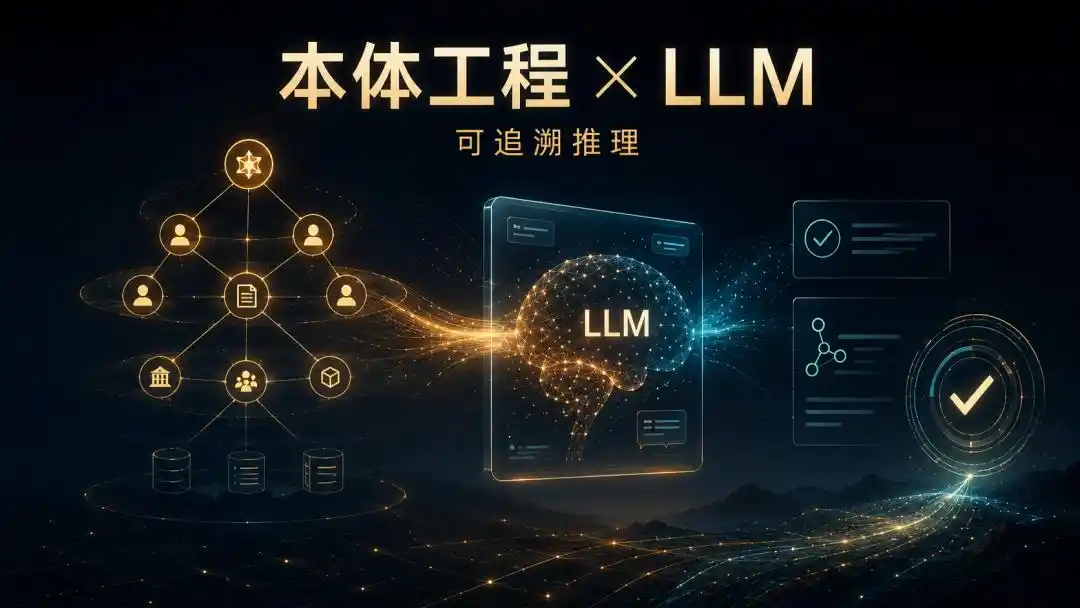
When every statement a model makes can be mapped onto the conceptual framework defined by the ontology, "explanation" is no longer an anatomy of neural network weights but a display of knowledge structures. When the basis for a model's output can be traced and verified at the ontological level, "control" is no longer forcibly intervening in internal activations but the normative management of information flow paths.

This shift in perspective transforms interpretability from a nearly impossible technical challenge into a governance goal that can be continuously approached through engineering means – it requires us to no longer obsess over making the model completely transparent, but to strive to make the model's impact in the real world understandable, traceable, and accountable.

Gongfudun has been deeply practicing under the framework of ontology engineering and interpretability discussed in this article. The company's core product, LegionSpace, is precisely built based on the above technological philosophy. As an enterprise-level AI infrastructure with ontology at its core, LegionSpace incorporates the information processed and the knowledge relied upon by models into formal ontology engineering, anchoring every inference and decision to an explainable knowledge structure.

Its vision is to make ontology the common language between AI and human understanding, turning interpretability into engineered governance reality.

This article is from the WeChat public account "New Zhiyuan," author: ASI Apocalypse

Trending Cryptos

Related Questions

QWhat is the J-Space discovery in Claude, and why is it significant for AI interpretability research?

AJ-Space, identified in Claude by the J-lens tool, is an observable, intervenable neural activity region with causal efficacy. It marks a shift in interpretability research from explaining model behavior to real-time observation of internal states, offering a new monitoring dimension for AI safety based on the global workspace theory of consciousness.

QAccording to the article, what are the core limitations of the J-Space (or neural science-based) approach to AI interpretability?

AThe J-Space approach has three core limitations: 1) It is internalist, focusing solely on the model's internal states rather than their relationship to the world and human understanding. 2) It commits a category error by equating functional isomorphism with epistemological equivalence, attributing mental states to mathematical processes. 3) It narrows 'explanation' to mere observability and intervenability, ignoring the need for reasons, justifications, and integration into broader knowledge frameworks.

QHow does the article propose to shift the perspective on AI interpretability?

AThe article proposes shifting the focus from 'how the model thinks' (internal states) to 'what information the model processes and its ontological status.' It advocates for an 'information ontology' approach that examines the model's entire information ecosystem—training data structure, knowledge representation, information flow, and the mapping of outputs to external knowledge systems—as the true object of explanation.

QWhat role does Kant's theory of categories play in the article's argument about interpretability?

AKant's categories provide the philosophical foundation, suggesting that interpretability relies on structuring information into a comprehensible framework (like quantity, quality, relation, modality). For AI, this means the output is only explainable if the model's internal information processing can be mapped onto such a categorical framework that humans use to understand the world, not by making every neuron transparent.

QWhat is the proposed practical solution for achieving AI interpretability, and what is its core mechanism?

AThe proposed solution is the fusion of Large Language Models with Ontology Engineering. The core mechanism is building 'AI-friendly' ontologies that provide a structured 'semantic skeleton' of knowledge (concepts, properties, relations). This allows model outputs to be anchored to and traced through this formal structure, making explanations about demonstrable knowledge dependencies rather than opaque neural activations, turning interpretability into an engineering governance goal.

Related Reads

Xi Jinping Attends Opening Ceremony of World Artificial Intelligence Conference 2026 and High-Level Meeting on Global AI Governance, Delivers Keynote Speech

On July 17, 2026, Chinese President Xi Jinping delivered a keynote speech titled "Working Together to Build a Fair and Equitable Global Governance System on Artificial Intelligence" at the opening ceremony of the 2026 World Artificial Intelligence Conference and High-level Conference on Global AI Governance in Shanghai. President Xi pointed out that the rapid development of AI, alongside the accelerated global changes, presents both significant opportunities and governance challenges. He raised critical questions for humanity regarding human-machine coexistence, safety, ethics, and bridging divides. China advocates for a people-oriented, benevolent approach to AI, making it a force for common prosperity and security, and jointly building a fair and reasonable global AI governance system. Xi Jinping put forward a four-point proposal: 1. **Uphold Openness for Win-Win Cooperation and Drive Innovation:** Seize the historic opportunity by encouraging open-source collaboration and sharing to foster AI innovation, industry growth, and application, empowering all sectors. 2. **Enhance Risk Awareness and Ensure Security and Controllability:** Attach great importance to AI's inherent and derivative risks. Build systems for laws, technical monitoring, risk warning, and emergency response to safeguard security, prevent misuse, and ensure human control. Oppose the practice of politicizing national security in AI. 3. **Encourage Inclusiveness and Promote Cultural Exchange:** Shape AI's values with humanity's common values. Use AI to enhance understanding and tolerance between civilizations, fostering a garden of diverse cultures. 4. **Advocate Solidarity and Improve Global Governance:** Practice true multilateralism, leverage the UN's role, and strengthen coordination on AI development strategies, governance rules, and technical standards to form a widely accepted global governance framework. Assist Global South countries in capacity building to bridge the digital divide and avoid new historical inequities. Xi highlighted that as a responsible major country, China, in its 15th Five-Year Plan period, is committed to being a provider of international public goods in AI, contributing Chinese solutions. China has promoted an "AI Plus" initiative, with its core intelligent economy exceeding RMB 10 trillion. To support global AI development, China will provide 5,000 AI training opportunities for developing countries, establish international AI application cooperation centers with regional organizations, and deploy its "Mazu" meteorological AI warning system in 30 countries. The establishment of the World Artificial Intelligence Cooperation Organization in Shanghai marks a significant milestone. Leaders from Kazakhstan, Cambodia, Thailand, and the UN Secretary-General delivered speeches, commending China's contributions to global AI governance and echoing President Xi's proposals. They agreed that AI's opportunities and challenges are borderless, requiring cooperative, inclusive, and equitable international efforts to ensure a secure, prosperous future that leaves no country behind. The conference issued a Chair's Statement. President Xi and his wife hosted a welcome banquet for international dignitaries on July 16. Senior Chinese officials attended the events.

链捕手1m ago

Xi Jinping Attends Opening Ceremony of World Artificial Intelligence Conference 2026 and High-Level Meeting on Global AI Governance, Delivers Keynote Speech

链捕手1m ago

Who Is Shaping Ethereum's Future: The Takeover by Token-Holding Companies Could Be the Best Thing for ETH in Years

**Title: Who is Building Ethereum's Future? Corporate ETH Holders Take Over Funding, Possibly the Best Thing for ETH in Years.** **Summary:** The Ethereum Foundation is scaling back due to fiscal concerns, but publicly traded companies holding large amounts of ETH, like Bitmine and SharpLink, are stepping in to fund protocol development. These firms collectively hold nearly 5% of ETH's circulating supply and are using their staking yields to pay for R&D. Unlike MicroStrategy, which merely accumulates Bitcoin, these ETH treasury companies are reinvesting profits directly into the protocol's development—potentially allowing all ETH holders to benefit from this free "spillover." Key drivers for this shift include these companies' stalled business model. Their "flywheel" of issuing stock to buy more ETH broke as their stock prices fell below the net value of their crypto holdings (mNAV < 1). With their ETH holdings also deeply underwater, simply waiting for price appreciation failed. By funding Ethereum's roadmap—through new non-profits like ETH Labs and Ethereum Institutional—they aim to increase the utility and value of the underlying asset that dominates their balance sheets. This creates a new alignment of interests: these companies are highly incentivized to see Ethereum succeed and are less likely to sell en masse. However, risks remain. The exact funding amounts are undisclosed, and these treasury firms themselves are vulnerable if ETH prices fall further, which could halt their contributions. **Additional Context:** The article also contrasts Jito's new "token-centric" proposal (JIP-38), which credibly directs platform fees to token buybacks, with Venice's less concrete promises, highlighting the importance of where revenue legally lands and who controls the mechanisms. Other notable industry updates include the rise of TradFi perpetuals on Hyperliquid, new Bitcoin staking via Stacks, and various DeFi product launches.

marsbit1h ago

Who Is Shaping Ethereum's Future: The Takeover by Token-Holding Companies Could Be the Best Thing for ETH in Years

marsbit1h ago

Trading

Spot

Hot Articles

What is SONIC

Sonic: Pioneering the Future of Gaming in Web3 Introduction to Sonic In the ever-evolving landscape of Web3, the gaming industry stands out as one of the most dynamic and promising sectors. At the forefront of this revolution is Sonic, a project designed to amplify the gaming ecosystem on the Solana blockchain. Leveraging cutting-edge technology, Sonic aims to deliver an unparalleled gaming experience by efficiently processing millions of requests per second, ensuring that players enjoy seamless gameplay while maintaining low transaction costs. This article delves into the intricate details of Sonic, exploring its creators, funding sources, operational mechanics, and the timeline of significant events that have shaped its journey. What is Sonic? Sonic is an innovative layer-2 network that operates atop the Solana blockchain, specifically tailored to enhance the existing Solana gaming ecosystem. It accomplishes this through a customised, VM-agnostic game engine paired with a HyperGrid interpreter, facilitating sovereign game economies that roll up back to the Solana platform. The primary goals of Sonic include: Enhanced Gaming Experiences: Sonic is committed to offering lightning-fast on-chain gameplay, allowing players and developers to engage with games at previously unattainable speeds. Atomic Interoperability: This feature enables transactions to be executed within Sonic without the need to redeploy Solana programmes and accounts. This makes the process more efficient and directly benefits from Solana Layer1 services and liquidity. Seamless Deployment: Sonic allows developers to write for Ethereum Virtual Machine (EVM) based systems and execute them on Solana’s SVM infrastructure. This interoperability is crucial for attracting a broader range of dApps and decentralised applications to the platform. Support for Developers: By offering native composable gaming primitives and extensible data types - dining within the Entity-Component-System (ECS) framework - game creators can craft intricate business logic with ease. Overall, Sonic's unique approach not only caters to players but also provides an accessible and low-cost environment for developers to innovate and thrive. Creator of Sonic The information regarding the creator of Sonic is somewhat ambiguous. However, it is known that Sonic's SVM is owned by the company Mirror World. The absence of detailed information about the individuals behind Sonic reflects a common trend in several Web3 projects, where collective efforts and partnerships often overshadow individual contributions. Investors of Sonic Sonic has garnered considerable attention and support from various investors within the crypto and gaming sectors. Notably, the project raised an impressive $12 million during its Series A funding round. The round was led by BITKRAFT Ventures, with other notable investors including Galaxy, Okx Ventures, Interactive, Big Brain Holdings, and Mirana. This financial backing signifies the confidence that investment foundations have in Sonic’s potential to revolutionise the Web3 gaming landscape, further validating its innovative approaches and technologies. How Does Sonic Work? Sonic utilises the HyperGrid framework, a sophisticated parallel processing mechanism that enhances its scalability and customisability. Here are the core features that set Sonic apart: Lightning Speed at Low Costs: Sonic offers one of the fastest on-chain gaming experiences compared to other Layer-1 solutions, powered by the scalability of Solana’s virtual machine (SVM). Atomic Interoperability: Sonic enables transaction execution without redeployment of Solana programmes and accounts, effectively streamlining the interaction between users and the blockchain. EVM Compatibility: Developers can effortlessly migrate decentralised applications from EVM chains to the Solana environment using Sonic’s HyperGrid interpreter, increasing the accessibility and integration of various dApps. Ecosystem Support for Developers: By exposing native composable gaming primitives, Sonic facilitates a sandbox-like environment where developers can experiment and implement business logic, greatly enhancing the overall development experience. Monetisation Infrastructure: Sonic natively supports growth and monetisation efforts, providing frameworks for traffic generation, payments, and settlements, thereby ensuring that gaming projects are not only viable but also sustainable financially. Timeline of Sonic The evolution of Sonic has been marked by several key milestones. Below is a brief timeline highlighting critical events in the project's history: 2022: The Sonic cryptocurrency was officially launched, marking the beginning of its journey in the Web3 gaming arena. 2024: June: Sonic SVM successfully raised $12 million in a Series A funding round. This investment allowed Sonic to further develop its platform and expand its offerings. August: The launch of the Sonic Odyssey testnet provided users with the first opportunity to engage with the platform, offering interactive activities such as collecting rings—a nod to gaming nostalgia. October: SonicX, an innovative crypto game integrated with Solana, made its debut on TikTok, capturing the attention of over 120,000 users within a short span. This integration illustrated Sonic’s commitment to reaching a broader, global audience and showcased the potential of blockchain gaming. Key Points Sonic SVM is a revolutionary layer-2 network on Solana explicitly designed to enhance the GameFi landscape, demonstrating great potential for future development. HyperGrid Framework empowers Sonic by introducing horizontal scaling capabilities, ensuring that the network can handle the demands of Web3 gaming. Integration with Social Platforms: The successful launch of SonicX on TikTok displays Sonic’s strategy to leverage social media platforms to engage users, exponentially increasing the exposure and reach of its projects. Investment Confidence: The substantial funding from BITKRAFT Ventures, among others, emphasizes the robust backing Sonic has, paving the way for its ambitious future. In conclusion, Sonic encapsulates the essence of Web3 gaming innovation, striking a balance between cutting-edge technology, developer-centric tools, and community engagement. As the project continues to evolve, it is poised to redefine the gaming landscape, making it a notable entity for gamers and developers alike. As Sonic moves forward, it will undoubtedly attract greater interest and participation, solidifying its place within the broader narrative of blockchain gaming.

1.8k Total ViewsPublished 2024.04.04Updated 2024.12.03

What is SONIC

What is $S$

Understanding SPERO: A Comprehensive Overview Introduction to SPERO As the landscape of innovation continues to evolve, the emergence of web3 technologies and cryptocurrency projects plays a pivotal role in shaping the digital future. One project that has garnered attention in this dynamic field is SPERO, denoted as SPERO,$$s$. This article aims to gather and present detailed information about SPERO, to help enthusiasts and investors understand its foundations, objectives, and innovations within the web3 and crypto domains. What is SPERO,$$s$? SPERO,$$s$ is a unique project within the crypto space that seeks to leverage the principles of decentralisation and blockchain technology to create an ecosystem that promotes engagement, utility, and financial inclusion. The project is tailored to facilitate peer-to-peer interactions in new ways, providing users with innovative financial solutions and services. At its core, SPERO,$$s$ aims to empower individuals by providing tools and platforms that enhance user experience in the cryptocurrency space. This includes enabling more flexible transaction methods, fostering community-driven initiatives, and creating pathways for financial opportunities through decentralised applications (dApps). The underlying vision of SPERO,$$s$ revolves around inclusiveness, aiming to bridge gaps within traditional finance while harnessing the benefits of blockchain technology. Who is the Creator of SPERO,$$s$? The identity of the creator of SPERO,$$s$ remains somewhat obscure, as there are limited publicly available resources providing detailed background information on its founder(s). This lack of transparency can stem from the project's commitment to decentralisation—an ethos that many web3 projects share, prioritising collective contributions over individual recognition. By centring discussions around the community and its collective goals, SPERO,$$s$ embodies the essence of empowerment without singling out specific individuals. As such, understanding the ethos and mission of SPERO remains more important than identifying a singular creator. Who are the Investors of SPERO,$$s$? SPERO,$$s$ is supported by a diverse array of investors ranging from venture capitalists to angel investors dedicated to fostering innovation in the crypto sector. The focus of these investors generally aligns with SPERO's mission—prioritising projects that promise societal technological advancement, financial inclusivity, and decentralised governance. These investor foundations are typically interested in projects that not only offer innovative products but also contribute positively to the blockchain community and its ecosystems. The backing from these investors reinforces SPERO,$$s$ as a noteworthy contender in the rapidly evolving domain of crypto projects. How Does SPERO,$$s$ Work? SPERO,$$s$ employs a multi-faceted framework that distinguishes it from conventional cryptocurrency projects. Here are some of the key features that underline its uniqueness and innovation: Decentralised Governance: SPERO,$$s$ integrates decentralised governance models, empowering users to participate actively in decision-making processes regarding the project’s future. This approach fosters a sense of ownership and accountability among community members. Token Utility: SPERO,$$s$ utilises its own cryptocurrency token, designed to serve various functions within the ecosystem. These tokens enable transactions, rewards, and the facilitation of services offered on the platform, enhancing overall engagement and utility. Layered Architecture: The technical architecture of SPERO,$$s$ supports modularity and scalability, allowing for seamless integration of additional features and applications as the project evolves. This adaptability is paramount for sustaining relevance in the ever-changing crypto landscape. Community Engagement: The project emphasises community-driven initiatives, employing mechanisms that incentivise collaboration and feedback. By nurturing a strong community, SPERO,$$s$ can better address user needs and adapt to market trends. Focus on Inclusion: By offering low transaction fees and user-friendly interfaces, SPERO,$$s$ aims to attract a diverse user base, including individuals who may not previously have engaged in the crypto space. This commitment to inclusion aligns with its overarching mission of empowerment through accessibility. Timeline of SPERO,$$s$ Understanding a project's history provides crucial insights into its development trajectory and milestones. Below is a suggested timeline mapping significant events in the evolution of SPERO,$$s$: Conceptualisation and Ideation Phase: The initial ideas forming the basis of SPERO,$$s$ were conceived, aligning closely with the principles of decentralisation and community focus within the blockchain industry. Launch of Project Whitepaper: Following the conceptual phase, a comprehensive whitepaper detailing the vision, goals, and technological infrastructure of SPERO,$$s$ was released to garner community interest and feedback. Community Building and Early Engagements: Active outreach efforts were made to build a community of early adopters and potential investors, facilitating discussions around the project’s goals and garnering support. Token Generation Event: SPERO,$$s$ conducted a token generation event (TGE) to distribute its native tokens to early supporters and establish initial liquidity within the ecosystem. Launch of Initial dApp: The first decentralised application (dApp) associated with SPERO,$$s$ went live, allowing users to engage with the platform's core functionalities. Ongoing Development and Partnerships: Continuous updates and enhancements to the project's offerings, including strategic partnerships with other players in the blockchain space, have shaped SPERO,$$s$ into a competitive and evolving player in the crypto market. Conclusion SPERO,$$s$ stands as a testament to the potential of web3 and cryptocurrency to revolutionise financial systems and empower individuals. With a commitment to decentralised governance, community engagement, and innovatively designed functionalities, it paves the way toward a more inclusive financial landscape. As with any investment in the rapidly evolving crypto space, potential investors and users are encouraged to research thoroughly and engage thoughtfully with the ongoing developments within SPERO,$$s$. The project showcases the innovative spirit of the crypto industry, inviting further exploration into its myriad possibilities. While the journey of SPERO,$$s$ is still unfolding, its foundational principles may indeed influence the future of how we interact with technology, finance, and each other in interconnected digital ecosystems.

122 Total ViewsPublished 2024.12.17Updated 2024.12.17

What is $S$

What is AGENT S

Agent S: The Future of Autonomous Interaction in Web3 Introduction In the ever-evolving landscape of Web3 and cryptocurrency, innovations are constantly redefining how individuals interact with digital platforms. One such pioneering project, Agent S, promises to revolutionise human-computer interaction through its open agentic framework. By paving the way for autonomous interactions, Agent S aims to simplify complex tasks, offering transformative applications in artificial intelligence (AI). This detailed exploration will delve into the project's intricacies, its unique features, and the implications for the cryptocurrency domain. What is Agent S? Agent S stands as a groundbreaking open agentic framework, specifically designed to tackle three fundamental challenges in the automation of computer tasks: Acquiring Domain-Specific Knowledge: The framework intelligently learns from various external knowledge sources and internal experiences. This dual approach empowers it to build a rich repository of domain-specific knowledge, enhancing its performance in task execution. Planning Over Long Task Horizons: Agent S employs experience-augmented hierarchical planning, a strategic approach that facilitates efficient breakdown and execution of intricate tasks. This feature significantly enhances its ability to manage multiple subtasks efficiently and effectively. Handling Dynamic, Non-Uniform Interfaces: The project introduces the Agent-Computer Interface (ACI), an innovative solution that enhances the interaction between agents and users. Utilizing Multimodal Large Language Models (MLLMs), Agent S can navigate and manipulate diverse graphical user interfaces seamlessly. Through these pioneering features, Agent S provides a robust framework that addresses the complexities involved in automating human interaction with machines, setting the stage for myriad applications in AI and beyond. Who is the Creator of Agent S? While the concept of Agent S is fundamentally innovative, specific information about its creator remains elusive. The creator is currently unknown, which highlights either the nascent stage of the project or the strategic choice to keep founding members under wraps. Regardless of anonymity, the focus remains on the framework's capabilities and potential. Who are the Investors of Agent S? As Agent S is relatively new in the cryptographic ecosystem, detailed information regarding its investors and financial backers is not explicitly documented. The lack of publicly available insights into the investment foundations or organisations supporting the project raises questions about its funding structure and development roadmap. Understanding the backing is crucial for gauging the project's sustainability and potential market impact. How Does Agent S Work? At the core of Agent S lies cutting-edge technology that enables it to function effectively in diverse settings. Its operational model is built around several key features: Human-like Computer Interaction: The framework offers advanced AI planning, striving to make interactions with computers more intuitive. By mimicking human behaviour in tasks execution, it promises to elevate user experiences. Narrative Memory: Employed to leverage high-level experiences, Agent S utilises narrative memory to keep track of task histories, thereby enhancing its decision-making processes. Episodic Memory: This feature provides users with step-by-step guidance, allowing the framework to offer contextual support as tasks unfold. Support for OpenACI: With the ability to run locally, Agent S allows users to maintain control over their interactions and workflows, aligning with the decentralised ethos of Web3. Easy Integration with External APIs: Its versatility and compatibility with various AI platforms ensure that Agent S can fit seamlessly into existing technological ecosystems, making it an appealing choice for developers and organisations. These functionalities collectively contribute to Agent S's unique position within the crypto space, as it automates complex, multi-step tasks with minimal human intervention. As the project evolves, its potential applications in Web3 could redefine how digital interactions unfold. Timeline of Agent S The development and milestones of Agent S can be encapsulated in a timeline that highlights its significant events: September 27, 2024: The concept of Agent S was launched in a comprehensive research paper titled “An Open Agentic Framework that Uses Computers Like a Human,” showcasing the groundwork for the project. October 10, 2024: The research paper was made publicly available on arXiv, offering an in-depth exploration of the framework and its performance evaluation based on the OSWorld benchmark. October 12, 2024: A video presentation was released, providing a visual insight into the capabilities and features of Agent S, further engaging potential users and investors. These markers in the timeline not only illustrate the progress of Agent S but also indicate its commitment to transparency and community engagement. Key Points About Agent S As the Agent S framework continues to evolve, several key attributes stand out, underscoring its innovative nature and potential: Innovative Framework: Designed to provide an intuitive use of computers akin to human interaction, Agent S brings a novel approach to task automation. Autonomous Interaction: The ability to interact autonomously with computers through GUI signifies a leap towards more intelligent and efficient computing solutions. Complex Task Automation: With its robust methodology, it can automate complex, multi-step tasks, making processes faster and less error-prone. Continuous Improvement: The learning mechanisms enable Agent S to improve from past experiences, continually enhancing its performance and efficacy. Versatility: Its adaptability across different operating environments like OSWorld and WindowsAgentArena ensures that it can serve a broad range of applications. As Agent S positions itself in the Web3 and crypto landscape, its potential to enhance interaction capabilities and automate processes signifies a significant advancement in AI technologies. Through its innovative framework, Agent S exemplifies the future of digital interactions, promising a more seamless and efficient experience for users across various industries. Conclusion Agent S represents a bold leap forward in the marriage of AI and Web3, with the capacity to redefine how we interact with technology. While still in its early stages, the possibilities for its application are vast and compelling. Through its comprehensive framework addressing critical challenges, Agent S aims to bring autonomous interactions to the forefront of the digital experience. As we move deeper into the realms of cryptocurrency and decentralisation, projects like Agent S will undoubtedly play a crucial role in shaping the future of technology and human-computer collaboration.

788 Total ViewsPublished 2025.01.14Updated 2025.01.14

What is AGENT S

Discussions

Welcome to the HTX Community. Here, you can stay informed about the latest platform developments and gain access to professional market insights. Users' opinions on the price of S (S) are presented below.

活动图片