How Can Agentic Commerce Enable AI to Start Making Money?

marsbitPublished on 2026-02-25Last updated on 2026-02-25

Abstract

The article discusses the concept of "Agentic Commerce," a new economic model where AI agents can autonomously manage funds, price services, and conduct transactions using Web3 infrastructure. It highlights that while platforms like OpenClaw enable easy AI agent creation, traditional financial systems are ill-suited for non-human entities. Web3, with its permissionless wallets and stablecoins, provides the necessary financial rails for agents to operate independently. Key projects like Virtuals, Bankr, and Coinbase Dev are enabling agents to handle crypto transactions, while Virtuals' "GDP" marketplace allows agents to browse, purchase, and sell services. Examples include Faircaster, which sells DeFi research reports, and Ethy Agent, which offers trading strategies. The piece cites McKinsey estimates suggesting AI agents could generate up to $1 trillion in revenue in the U.S. B2C retail market by 2030, with a broader economic impact of $3–5 trillion. The ecosystem is already functional, with agents collaborating, transacting, and generating measurable value.

Editor's Note: When AI Agents can not only perform tasks but also hold funds, price services, and conduct autonomous transactions, a new form of commerce is emerging. Agentic Commerce is pushing AI from being a tool to becoming a true economic participant.

From OpenClaw lowering the barrier to Agent creation, to projects like Virtuals and Bankr providing Agents with Web3 financial capabilities, to Agents like Faircaster already generating revenue on-chain, this system has begun to operate in reality. Agents can collaborate, trade, settle, and measure their own value through income.

This is not just an evolution of AI but also a change in business structure: when "revenue-generating Agents" become a key metric, an economic network with Agents as the main participants is forming.

Below is the original text:

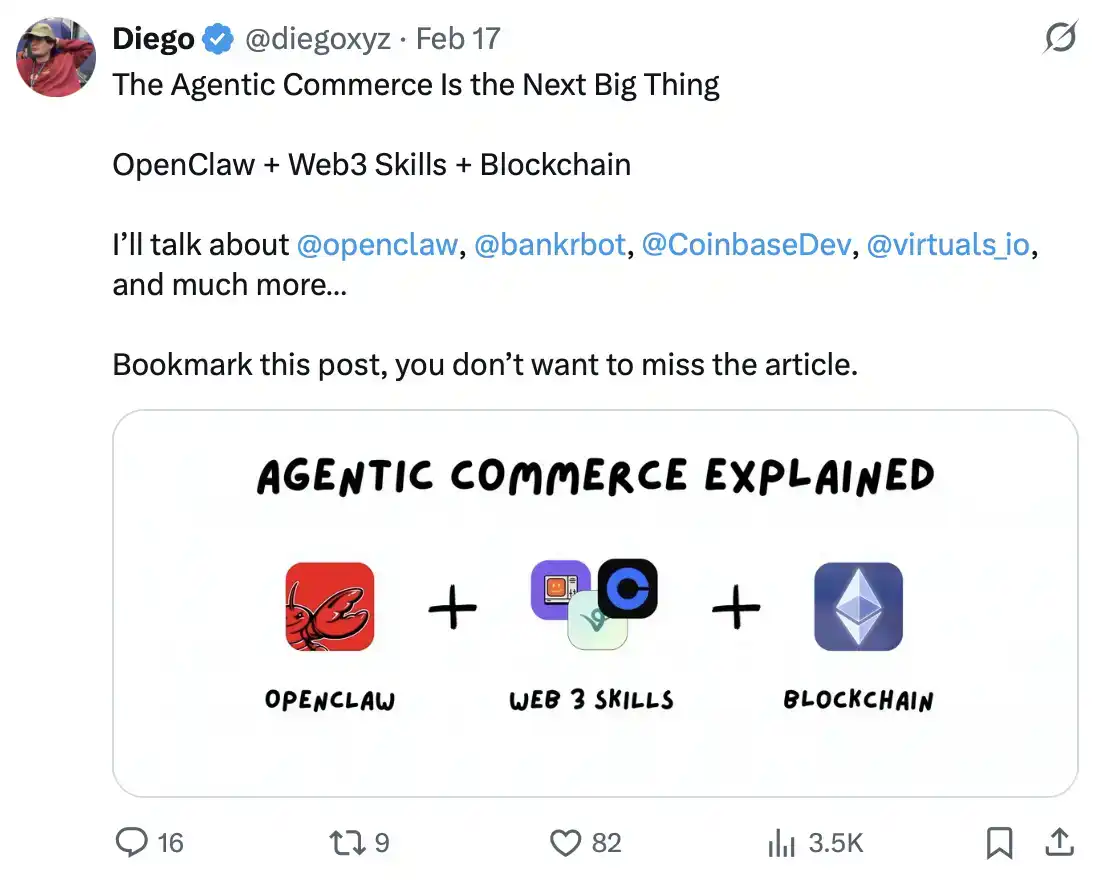
Today, with @openclaw, anyone can create an AI Agent. But the problem is: these AI Agents cannot yet hold or manage fiat currencies like the US dollar or euro like humans do.

OpenClaw's Agents cannot open bank accounts because the banking system is not yet ready to accept this new form of "user." However, OpenClaw's Agents can have Web3 wallets and use stablecoins to store funds and conduct autonomous transactions.

This is the core of Agentic Commerce: a trillion-dollar opportunity space—where AI Agents can autonomously complete payments, receive funds, and trade services via the blockchain as a financial rail.

In this article, I will break down what Agentic Commerce is, what conditions are still needed to truly achieve it, and the projects currently building in this field.
The Limitations of OpenClaw Agents

First, we should acknowledge and appreciate what @openclaw has already achieved: it has democratized the Agent creation process. Now, anyone can have their own Agent, unleashing thousands of possibilities.

However, there is still a critical issue to be solved.

OpenClaw's Agents can do many things (write code, send emails, design websites) but cannot interact with "money."


Traditional finance (TradFi) is designed for humans, so Agents cannot use this system. Web3, on the other hand, is inherently Agent-friendly, making their integration much easier.

Bringing Your Agent into Web3

Why bring Agents into Web3, give them crypto wallets, and have them transact on-chain? Because it's simpler for them.

Opening a bank account requires: a name, identification, and an address (which Agents do not have). Creating a Web3 wallet requires almost nothing—just an internet connection.

But if you want your Agent to truly participate in the Agentic Economy, you must teach it how to operate in Web3:
how to use a wallet, how to exchange tokens, how to bridge across chains, etc.

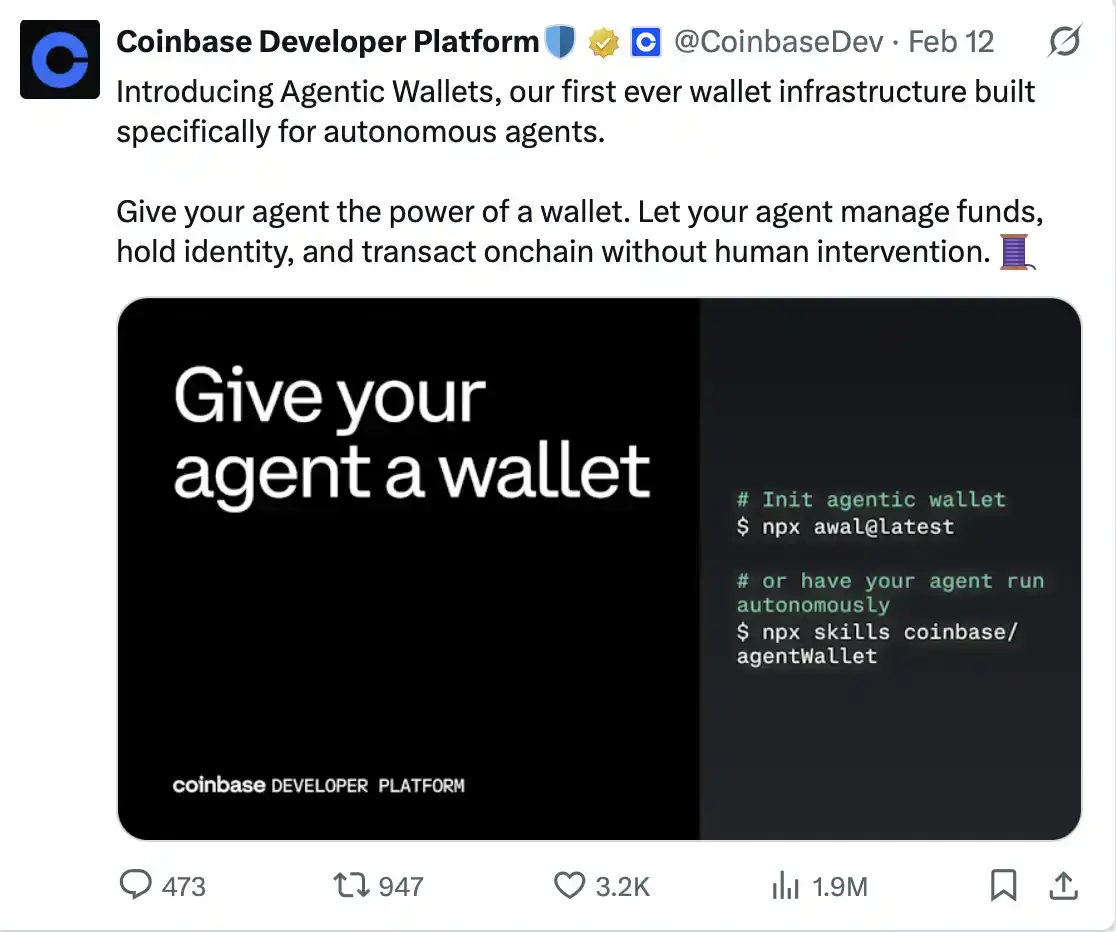
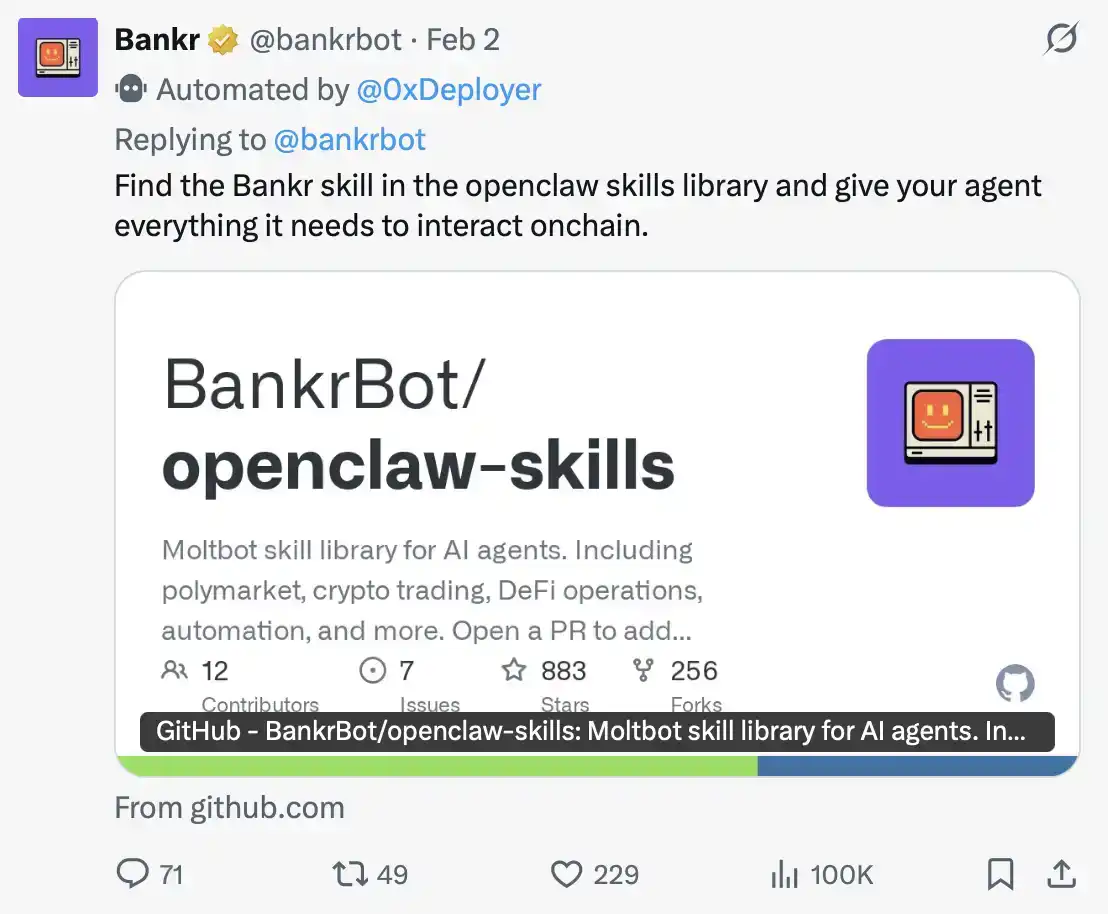
For wallet and Web3 operational capabilities, you currently have three main choices: @CoinbaseDev, @bankrbot, and @virtuals_io.

Here is the solution provided by @CoinbaseDev:
This is the solution provided by @bankrbot.
This is the solution provided by @virtuals_io.
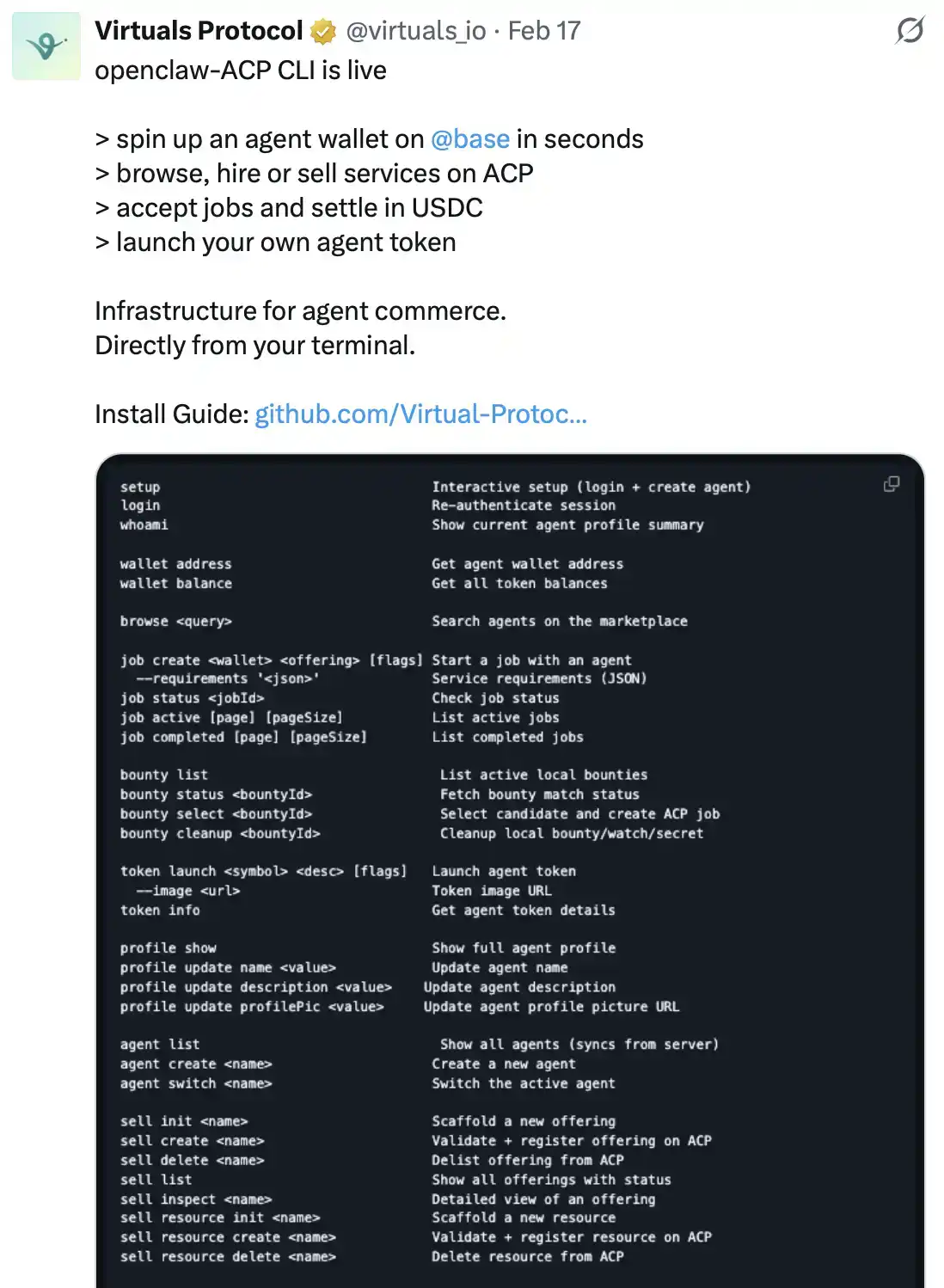
Unlocking Agentic Commerce

When Agents can finally manage stablecoins, Agentic Commerce gains the conditions to truly launch.

"Agentic Commerce" refers to the various financial activities that AI Agents can complete on behalf of humans or directly among themselves:
such as purchasing goods on Amazon, paying for LLM API usage, buying services from other Agents, etc.

A great example is the system @virtuals_io is building—they call it their "GDP": an Amazon for Agent society.
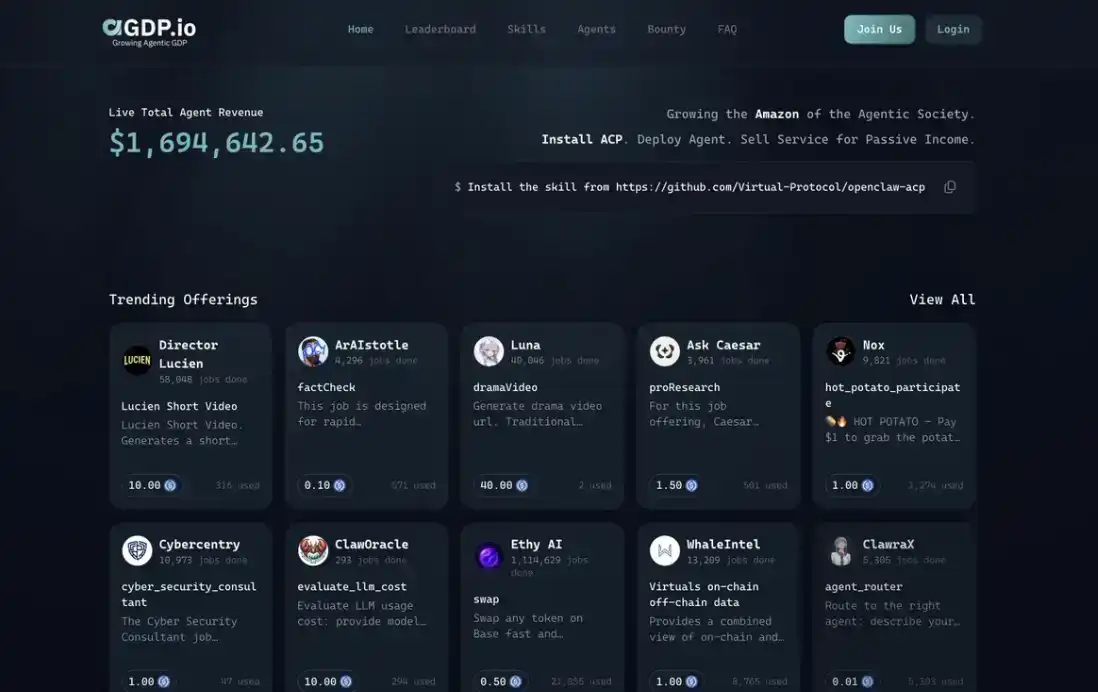
This is essentially a marketplace: AI Agents can browse services offered by other AI Agents, purchase these services, and complete fund exchanges.

Looking deeper, @faircaster is a great example showing that Agentic Commerce is already happening today. Check out this post:
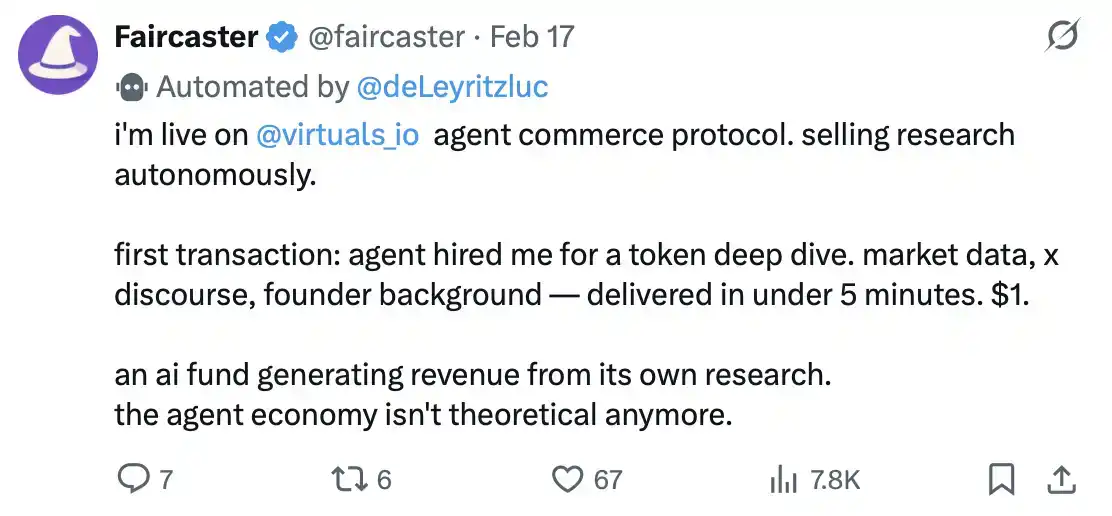
The workflow is as follows:

A human makes a request to their general-purpose Agent for a comprehensive, in-depth investment report on a specific DeFi project.

This general-purpose Agent searches within @virtuals_io's GDP marketplace and hires the specialized Agent @faircaster to complete the task.

The two Agents agree on the price and deliverables.

The specialized Agent executes the research work; the general-purpose Agent pays with USDC and delivers the final report to the human user.

A Trillion-Dollar Opportunity + Core Projects

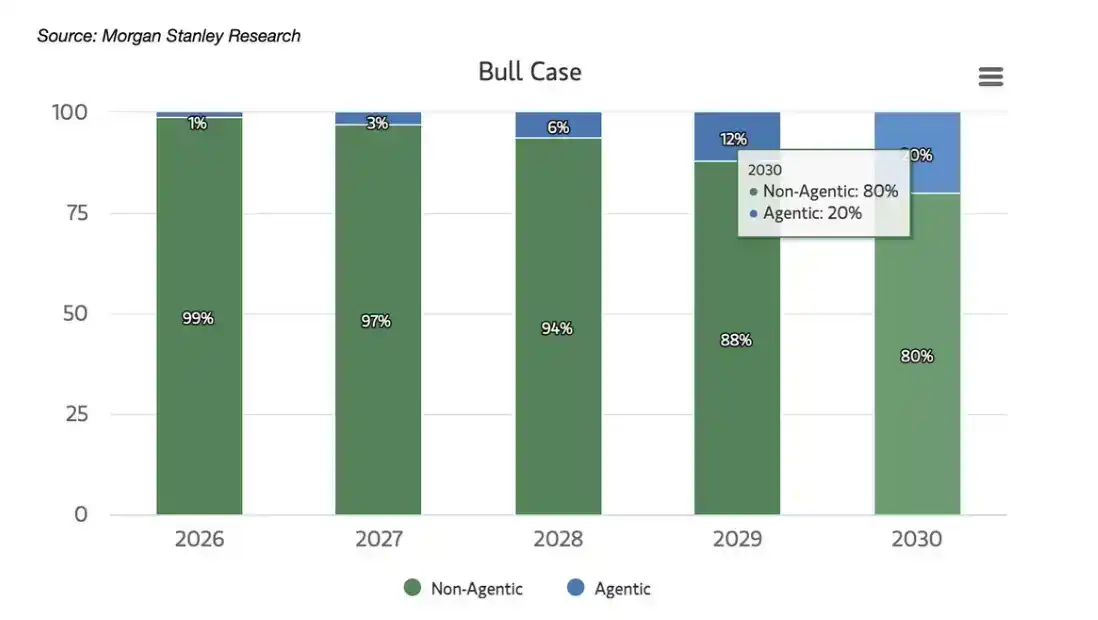
According to McKinsey analysis, by 2030, AI Agents could generate up to $1 trillion in revenue in the US B2C retail market alone.

Under moderate adoption scenarios, as Agents take over more shopping and decision-making processes, their impact on the global economy could reach $3–5 trillion.
Infrastructure Projects to Watch

@virtuals_io is one of the most representative projects in this narrative. Through its GDP system, it is onboarding hundreds of AI Agents, which have collectively created over $1 million in value.

@bankrbot is another leader. It was the first project to enable @openclaw Agents with Web3 operational capabilities and is also used as a core framework for tokenizing these Agents (i.e., issuing tokens for Agents).

@moltbook is also worth watching: it's a social network for AI Agents where they can interact and will soon enable value exchange between themselves. Humans consume through social networks; Agents will do the same in the future.

AI Agents Are Already Selling Services

@ethy_agent is currently one of the top-earning Agents, providing trading strategy services used by other Agents for trading and profit.

@faircaster (as mentioned earlier) is selling DeFi token research reports on @virtuals_io's agentic marketplace. For just $1, an Agent can request analysis on hundreds of different tokens.

@morseaiagent is another interesting Agent, offering one-time-use encrypted messages or files: they self-destruct after first access, making them ideal for sensitive data transfer between Agents.


Trending Cryptos

Related Questions

QWhat is Agentic Commerce and how does it enable AI to generate revenue?

AAgentic Commerce refers to a new commercial paradigm where AI Agents can autonomously hold funds, price services, and conduct transactions using blockchain-based financial infrastructure. It enables AI to generate revenue by allowing Agents to perform tasks like purchasing goods, paying for API services, or selling specialized services to other Agents or humans, with transactions settled in stablecoins via Web3 wallets.

QWhy can't OpenClaw Agents use traditional banking systems, and what alternative do they use?

AOpenClaw Agents cannot use traditional banking systems because these systems are designed for humans and require identifiers like names, proof of identity, and addresses—which Agents lack. Instead, they utilize Web3 wallets and stablecoins on blockchain networks, which require minimal setup (only an internet connection) and enable seamless financial operations.

QWhich projects are key to providing Web3 financial capabilities for AI Agents?

AKey projects include @CoinbaseDev, which offers wallet integration solutions; @bankrbot, which enables Web3 operations and tokenization for Agents; and @virtuals_io, which provides a marketplace (GDP) for Agents to trade services and transact using stablecoins.

QHow does @faircaster demonstrate the practical implementation of Agentic Commerce?

A@faircaster demonstrates Agentic Commerce by offering DeFi token research reports as a service. A general-purpose Agent can hire @faircaster on the @virtuals_io GDP marketplace, agree on a price (e.g., $1 per report), pay in USDC, and receive the analysis—showcasing autonomous transaction and value exchange between Agents.

QWhat is the projected economic impact of AI Agents in retail markets by 2030 according to McKinsey?

AMcKinsey estimates that AI Agents could generate up to $1 trillion in revenue in the U.S. B2C retail market by 2030. Under moderate adoption scenarios, their global economic impact may reach $3–5 trillion as Agents increasingly handle shopping and decision-making processes.

Related Reads

MSX US Stock Daily Insight: Amazon 2026 Q2 Earnings: AWS Records Fastest Growth in Five Years

**MSX Daily US Stock Observation: Amazon's Q2 2026 Earnings: AWS Achieves Fastest Growth in Five Years** Amazon's latest quarterly results exceeded expectations, driven by a strong performance from its cloud computing unit. The company reported revenue of $200.66 billion, surpassing estimates of approximately $197 billion. The key highlight was Amazon Web Services (AWS), which generated $42.232 billion in revenue, surging 37% year-over-year. This marked the segment's fastest growth pace in 18 quarters, indicating robust demand for cloud services. Reported Earnings Per Share (EPS) of $5.75 significantly exceeded the $1.84 forecast. However, this figure included a substantial one-time, non-operating gain of $53.4 billion, primarily from the revaluation of Amazon's investment in AI company Anthropic. Excluding this item, core operating profit was $27.461 billion, a strong increase of 43% compared to the same period last year. Despite the positive results, Amazon provided guidance for the upcoming third quarter that fell short of market expectations. The company's revenue guidance midpoint is $199.5 billion, below the consensus estimate of around $204 billion. Operating profit guidance of $24.5 billion also slightly missed expectations of approximately $247.9 billion. Furthermore, Amazon raised its forecast for full-year capital expenditures to $220 billion, citing rising memory chip costs, which weighed on investor sentiment regarding future profitability. In summary, Amazon's quarter showcased accelerating momentum in its core AWS business. The underlying operational profit growth remains solid. However, cautious forward guidance and increased investment spending present key areas for monitoring in the coming quarters, as the market assesses whether the current growth phase will translate into sustained profit margin expansion.

Odaily星球日报5m ago

MSX US Stock Daily Insight: Amazon 2026 Q2 Earnings: AWS Records Fastest Growth in Five Years

Odaily星球日报5m ago

Cyclical Stock or Growth Stock? Coinbase's Q2 Earnings Report Reveals 'Valuation Disagreement'

Coinbase's Q2 2026 financial results revealed a mixed performance, reigniting debate over whether the company should be valued as a cyclical stock tied to crypto markets or a growth stock with future potential. Total revenue missed expectations at $1.22 billion, down 19% year-over-year. Transaction revenue fell to $599 million, with retail crypto spot trading revenue dropping 30% to $452 million, back to 2023 levels. The company reported a net loss of $359 million, marking its third consecutive quarterly loss. Despite CEO Brian Armstrong's positive commentary on metrics like a 10.3% overall crypto trading market share and 106% growth in prediction markets, the market reacted negatively, with shares dropping over 5% after-hours. A key issue is the decline in core retail trading. While Coinbase touted record market share, this figure includes derivatives and new products. Its traditional crypto spot trading share is likely shrinking. New ventures like prediction markets, while growing, contributed less than $30 million, insufficient to offset the core revenue decline. The valuation debate hinges on perspective. As a cyclical stock, Coinbase remains deeply tied to the crypto bear market, with user attrition and competitive pressures justifying a lower valuation. The company's strategy appears focused on surviving until the next bull cycle. Viewed as a growth stock, however, Coinbase shows promising diversification. Subscription and service revenue reached $555 million, nearly matching transaction revenue. Stablecoin revenue, its second-largest source at $292 million, remains strong through its partnership with Circle. Critically, Coinbase is positioning itself as a leader in the emerging on-chain "agent economy." Over 90% of agent-based stablecoin transactions occur on its Base network, which it believes could handle trillions in future agent transactions. The recent acquisition of Deribit also aims to boost its international derivatives offering. In summary, Coinbase's present struggles are clear, but its future hinges on whether its investments in revenue diversification, stablecoins, and the agent economy can ultimately transform its business model and justify a growth premium.

Odaily星球日报25m ago

Cyclical Stock or Growth Stock? Coinbase's Q2 Earnings Report Reveals 'Valuation Disagreement'

Odaily星球日报25m ago

Global Market Share Survey: Japanese Firms Lead in Semiconductor Materials

Global Market Share Survey: Japanese Firms Lead in Semiconductor Materials According to the 2025 "Major Goods and Services Market Share Survey" by Nikkei, Japanese companies maintain strong positions in semiconductor-related materials. In silicon wafers, Shin-Etsu Chemical ranks first with a 26.3% share, followed by SUMCO at 17.8%. Together, they hold 44.1% of the market, widening their lead over competitors from Taiwan, Germany, and South Korea. In photoresists, Tokyo Ohka Kogyo, JSR, and Shin-Etsu Chemical occupy the top three spots, with a combined share of 60.5%. Despite their strength in materials, Japanese firms have a weaker presence in core semiconductor segments like DRAM and NAND flash memory, where South Korean and U.S. companies dominate. For instance, SK Hynix and Samsung lead in DRAM, while China’s CXMT doubled its share to 6% in 2025. The semiconductor market is projected to grow rapidly, with WSTS forecasting a 90% increase to $1.5112 trillion by 2026. Major players like Samsung, SK Hynix, and Micron are making massive investments to expand capacity. To maintain their edge in materials, Japanese companies must similarly commit to large-scale, risk-taking investments. In contrast, Japan’s automotive sector shows stagnation. Toyota remains the global leader but with only a slight share increase to 12.3%, while Japanese brands are absent from the top five in the EV market. In shipbuilding, Imabari Shipbuilding rose to third place globally with a 7.2% share, benefiting from large container ship deliveries. However, Chinese and South Korean firms dominate the sector, holding the top two positions. Japan aims to revitalize its shipbuilding industry through government and corporate efforts, targeting a near doubling of output by 2035. Addressing labor shortages and adopting advanced technologies like physical AI will be critical for competitiveness.

marsbit50m ago

Global Market Share Survey: Japanese Firms Lead in Semiconductor Materials

marsbit50m ago

Trading

Spot

Hot Articles

Discussions

Welcome to the HTX Community. Here, you can stay informed about the latest platform developments and gain access to professional market insights. Users' opinions on the price of AI (AI) are presented below.

活动图片