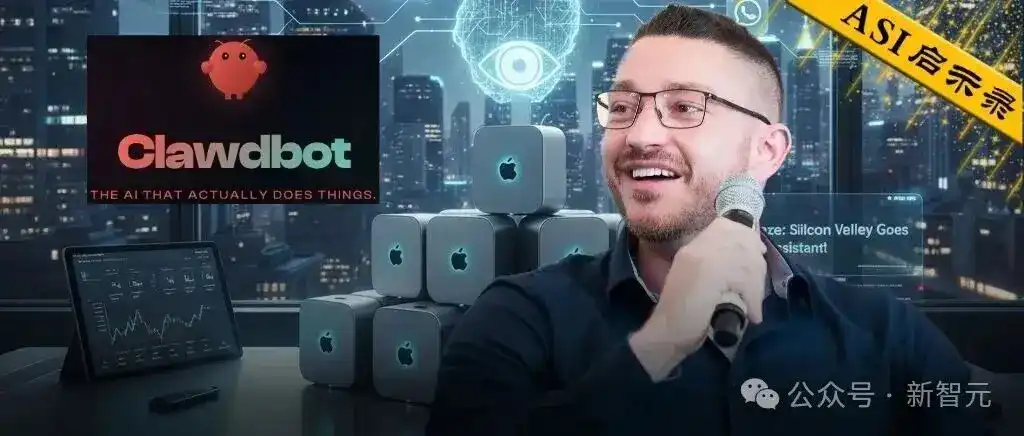
Clawdbot Ascends to Legendary Status: The 24/7 AI Butler That Sold Out Mac Minis

marsbitPublished on 2026-01-26Last updated on 2026-01-26

Abstract

Clawdbot, an open-source AI assistant project by Peter Steinberger, has taken Silicon Valley by storm, driving a surge in Mac mini sales as users seek hardware to run it. This "7x24h Jarvis" operates locally on devices like Mac mini, functioning as both an AI agent (using models like Claude and Gemini) and a gateway to communicate via apps like WhatsApp and iMessage. It offers unlimited memory, proactive task execution, and full system access—enabling it to run scripts, automate workflows, and even replace services like Zapier. Users report it managing businesses, handling emails, controlling smart home devices, and more, all while learning and evolving over time. With low setup costs (as little as $25/month using cloud servers) and growing accessibility, Clawdbot is redefining personal AI assistance by combining persistent memory, autonomy, and deep system integration.

Editor: Taozi, New Zhiyuan

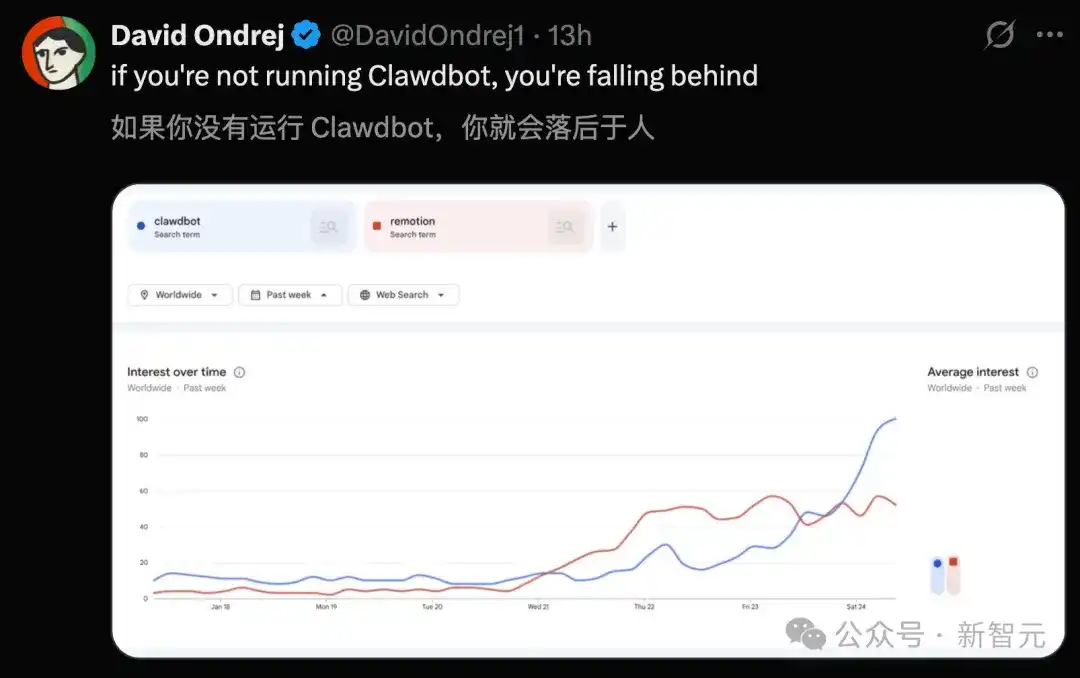
[New Zhiyuan Insight] It's insane! Silicon Valley has become obsessed with Clawdbot overnight, hailed as the "24/7 Jarvis." It possesses infinite memory, is always on call, and takes initiative to get things done. The most outrageous part is that it single-handedly made Mac minis sell out.

The pace of AI iteration in Silicon Valley leaves no room for humans to breathe...

Wake up, and the entire internet is flooded with posts about a 24/7 AI assistant—Clawdbot.

This is an open-source project developed by developer Peter Steinberger and has recently become wildly popular in geek circles.

Clawdbot can run smoothly on a Mac mini, serving two roles:

A locally run "AI agent" capable of calling various models like Claude and Gemini;

A "gateway" that allows communication via chat apps like WhatsApp and iMessage.

It's no exaggeration to say that Clawdbot has completely redefined the concept of a "personal AI super assistant" for 2026.

Look, an AI startup CEO exclaimed, "We have AGI!" Since installing Clawdbot, it has quietly handled a ton of tasks—
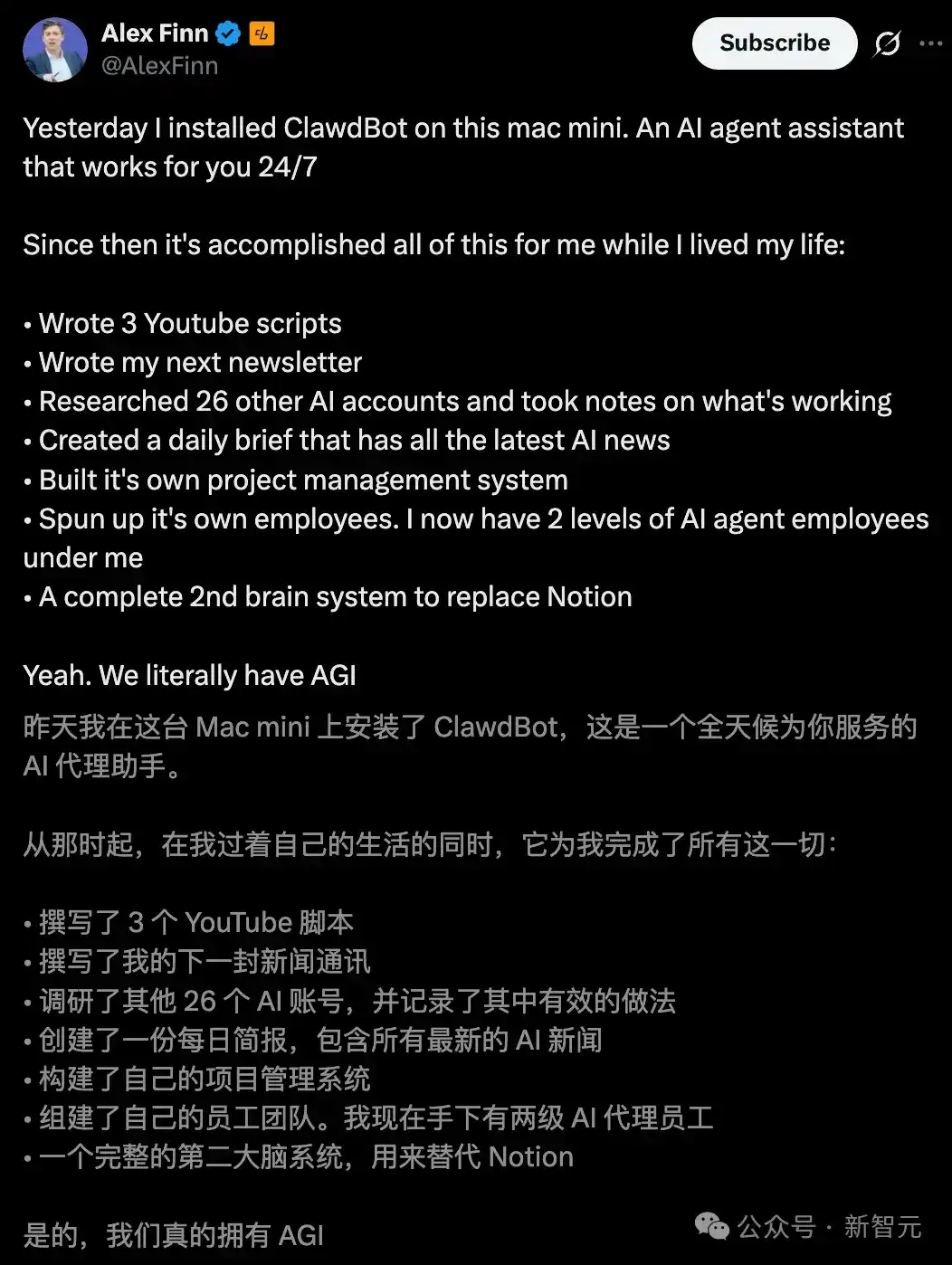
Most incredibly, it solves the biggest pain point of current mainstream large models—memory. For example, it remembers small things mentioned casually two weeks ago.

Instantly, people started sharing their Mac configurations, and various Clawdbot tutorials emerged.

Probably even Tim Cook himself didn't expect that Mac minis would sell out overnight!
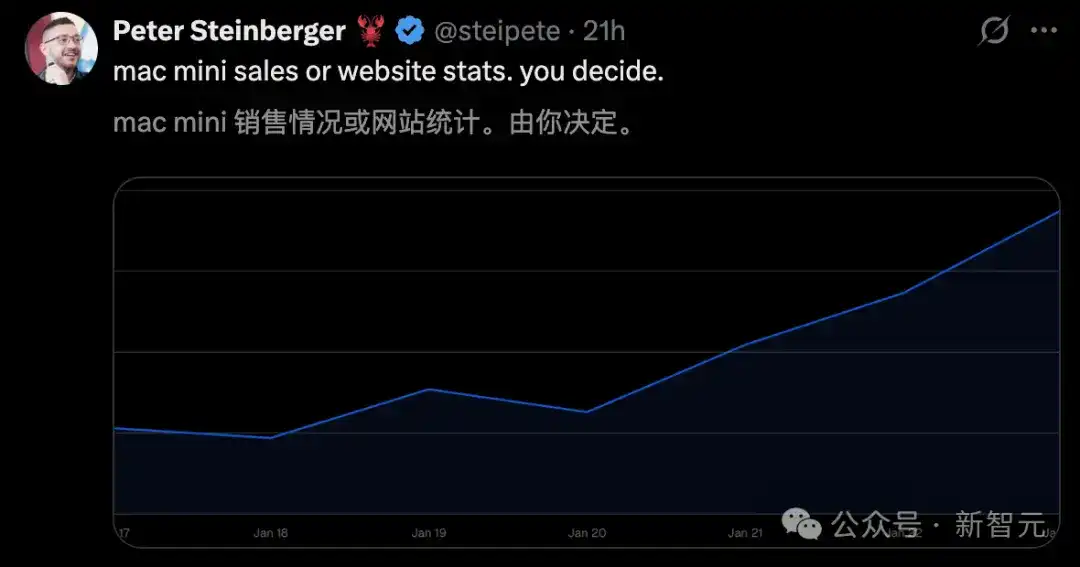
One developer frantically configured 12 Mac Minis at once. At a base price of $599 each, the total cost was $7,188 (approx. 50,000 RMB).
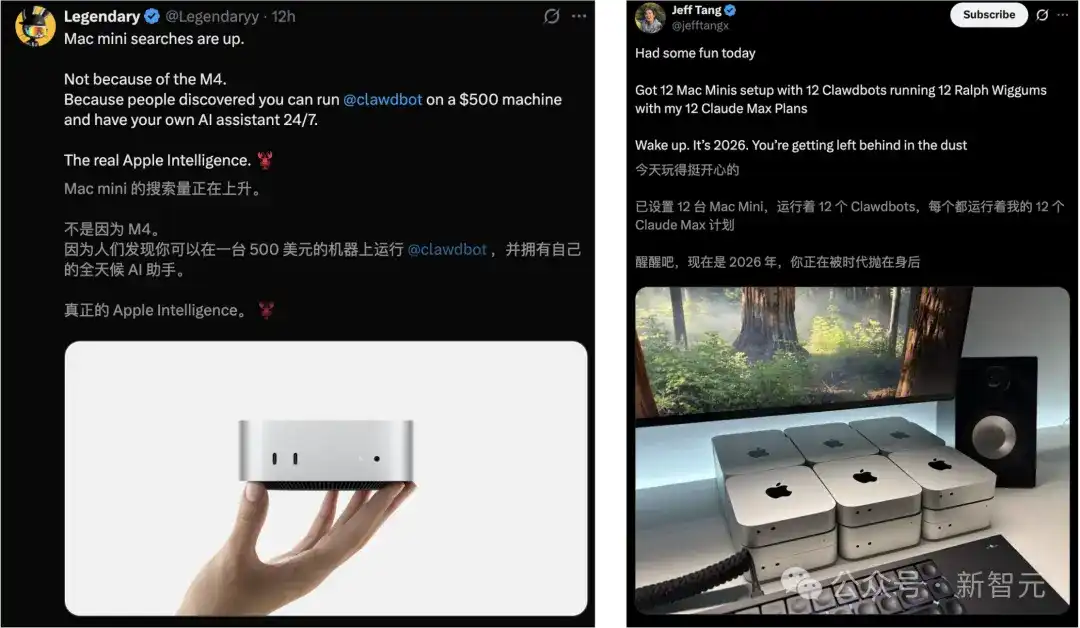
The true ultimate Skynet is Clawdbot.
Clawdbot is Completely Blowing Up, "The Real Jarvis" Has Arrived

Actually, Clawdbot isn't a brand-new AI; it was born late last year.

At that time, a software engineer from Vienna, Peter Steinberger, published a lengthy thousand-word article detailing his workflow for 2025.

He admitted, "The most profound change this year is that I almost never read code anymore."
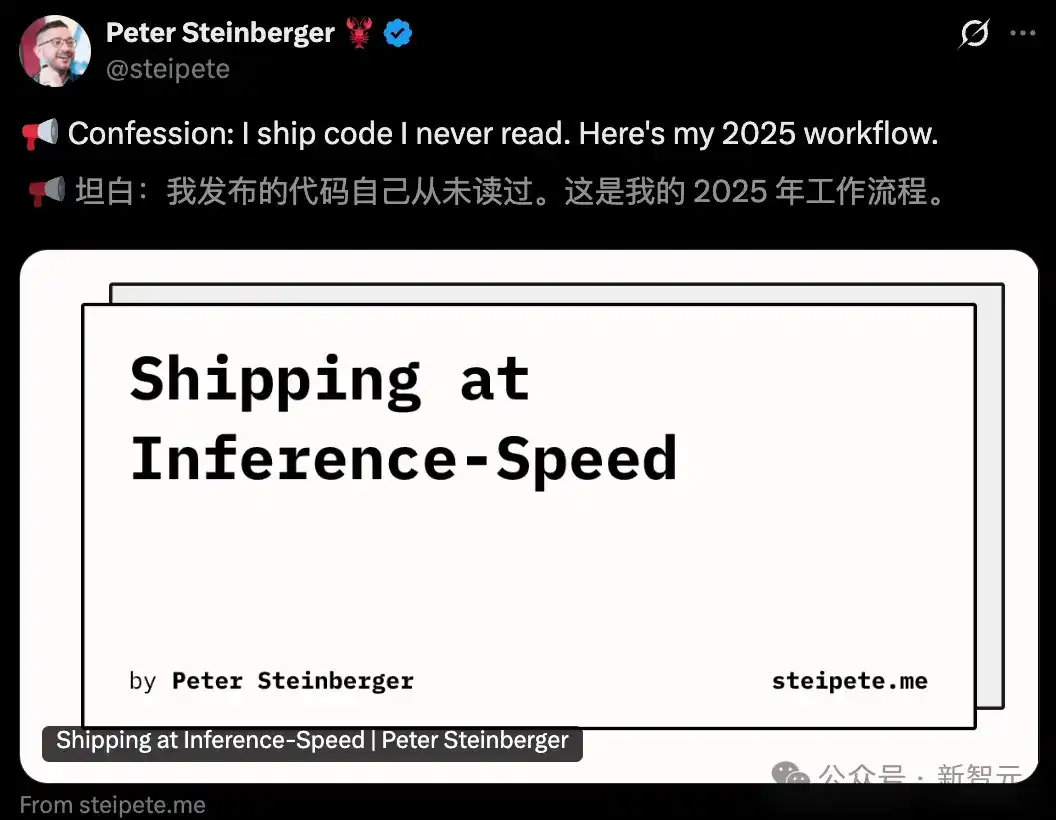
Peter Steinberger came out of retirement to make a comeback

He built an "all-powerful private butler" named Clawdis, which has full access to all computers, text messages, and emails.

Moreover, it's a physical world "remote control," integrated with home automation systems to control cameras, lights, music, and even adjust bed temperature.

It even has its own voice system, running Clawdbot.
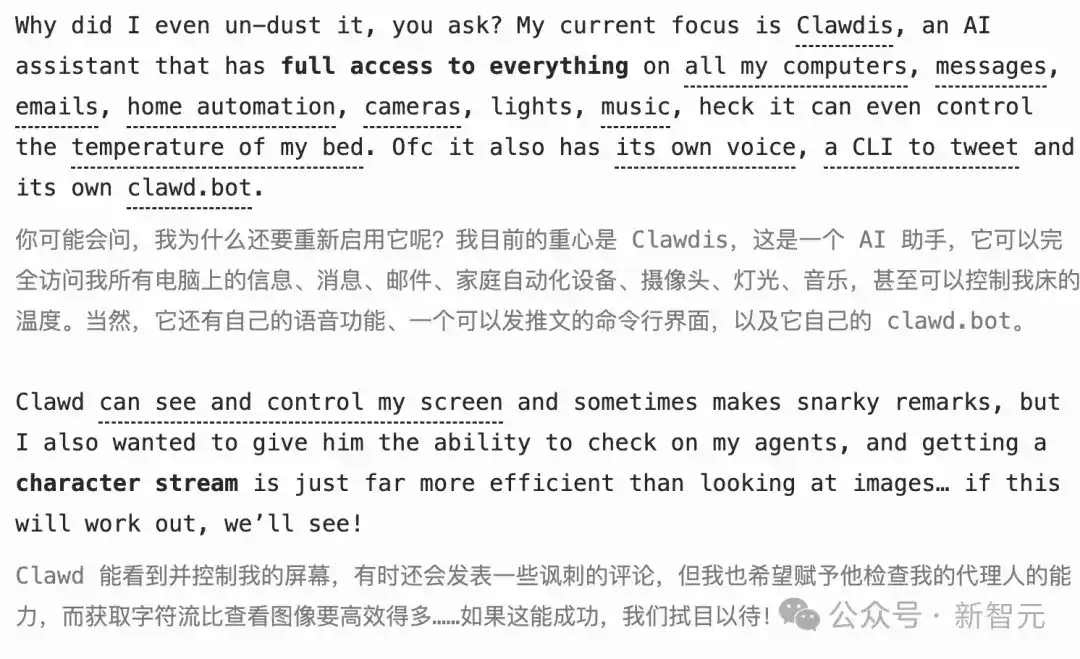
In fact, a key glimpse into its capabilities can be gleaned from the article by Steinberger, the "Father of Clawdbot"—

Clawd is an AI cyber butler with "highest privileges," managing not only human daily life but also overseeing other working AI agents.

At the time, this article also drew praise from Karpathy.

Just like the release of Claude Opus 4.5, it didn't cause much of a stir for a long time.

A month later, which is now, Claude Code showed everyone in Silicon Valley its true power. The same goes for Clawdbot.

It's an open-source project. On GitHub, Clawdbot has garnered nearly 9.2k stars and 1.2k forks.
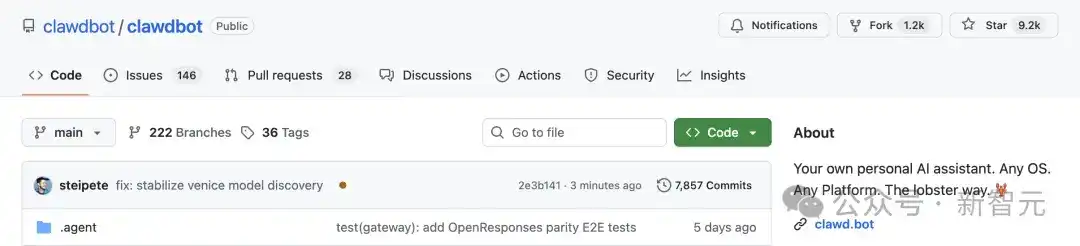
GitHub address: https://github.com/clawdbot/clawdbot

Clawdbot promotes itself as a "24/7 personal assistant," truly bringing the long-imagined "Jarvis" into reality.
Silicon Valley is Collectively Freaking Out, AI is Taking Over Everything

Clawdbot's real killer feature is still its core AI agent capability.

It can run entirely on a personal local computer. All settings, memories, and instructions are just folders and Markdown documents on the hard drive.

Except for the moment it calls the large model which requires internet, everything else is local. This means it has access to the computer's Shell and file system permissions.

This is the most explosive part!
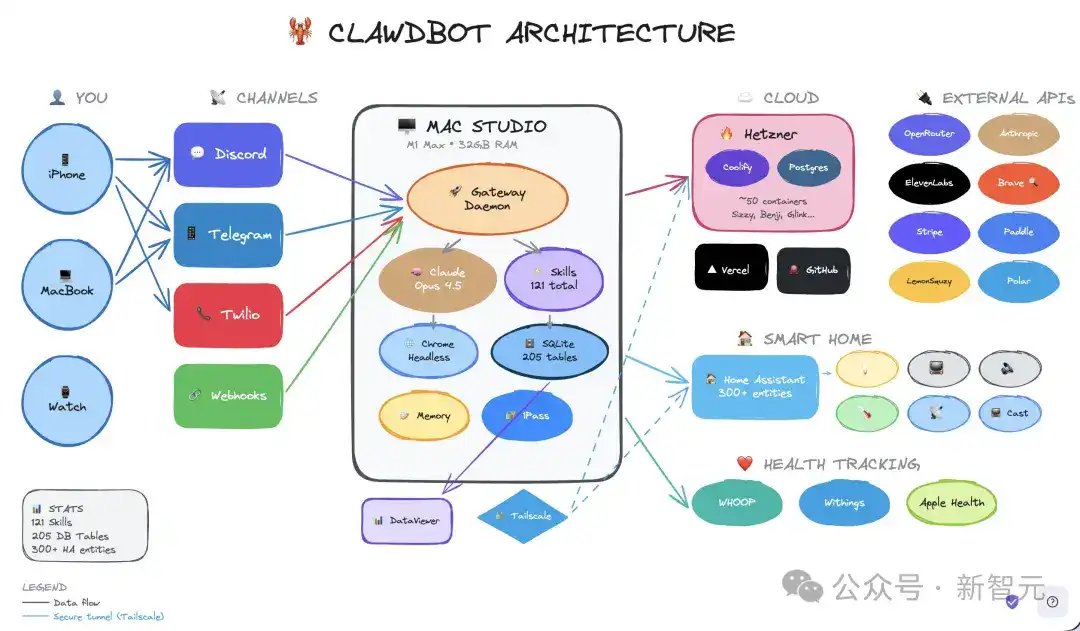
Because it has permissions, Clawdbot can execute terminal commands, instantly write and run scripts, install new skills, and even set up MCP servers to extend external integrations.

Ultimately, what everyone gets is a self-evolving, fully controllable personal Agent.

Rather than more descriptions, it's better to go straight to the developers' "magic" demos.

Official Clawdbot curated demo showcase: https://clawd.bot/showcase

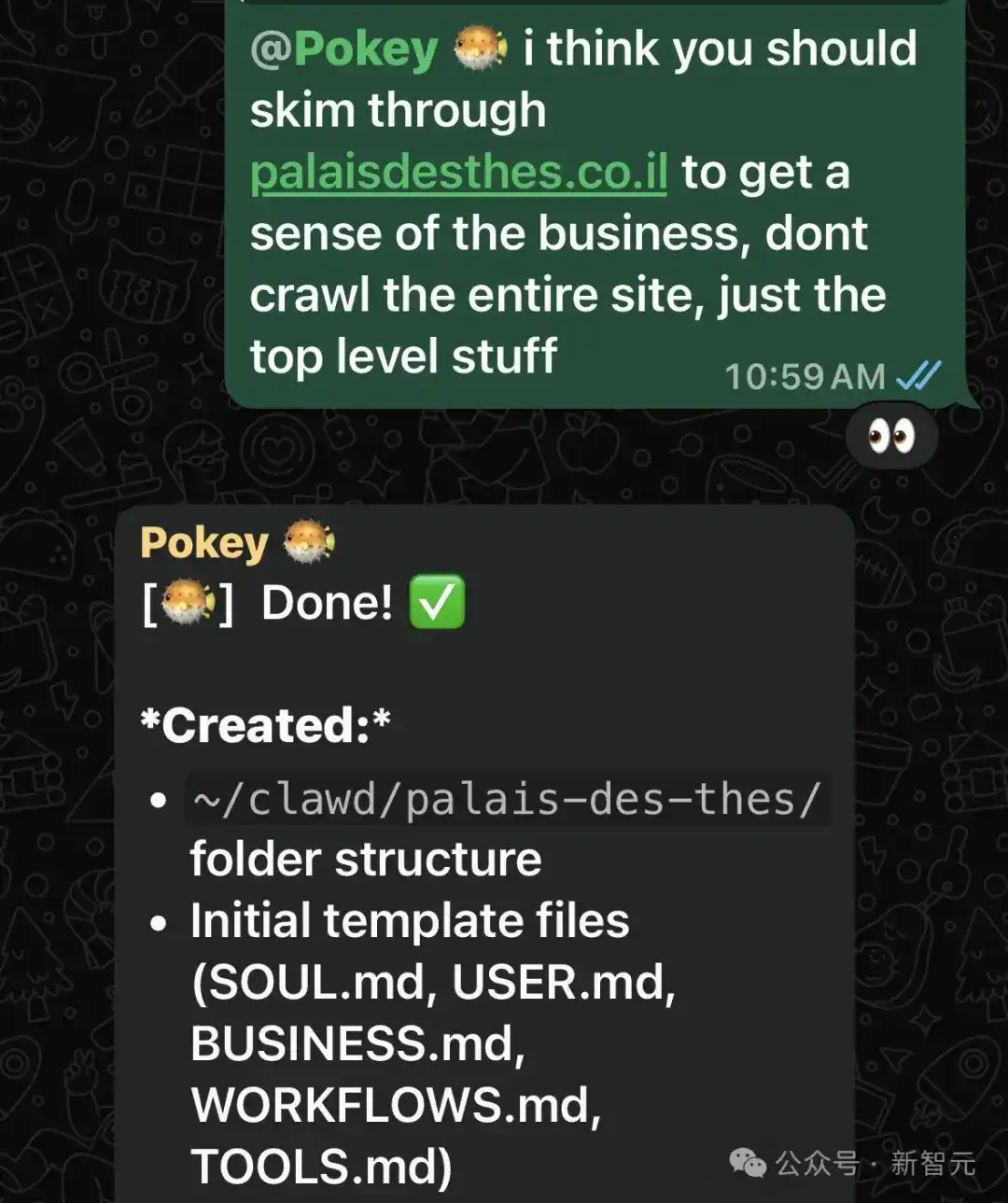
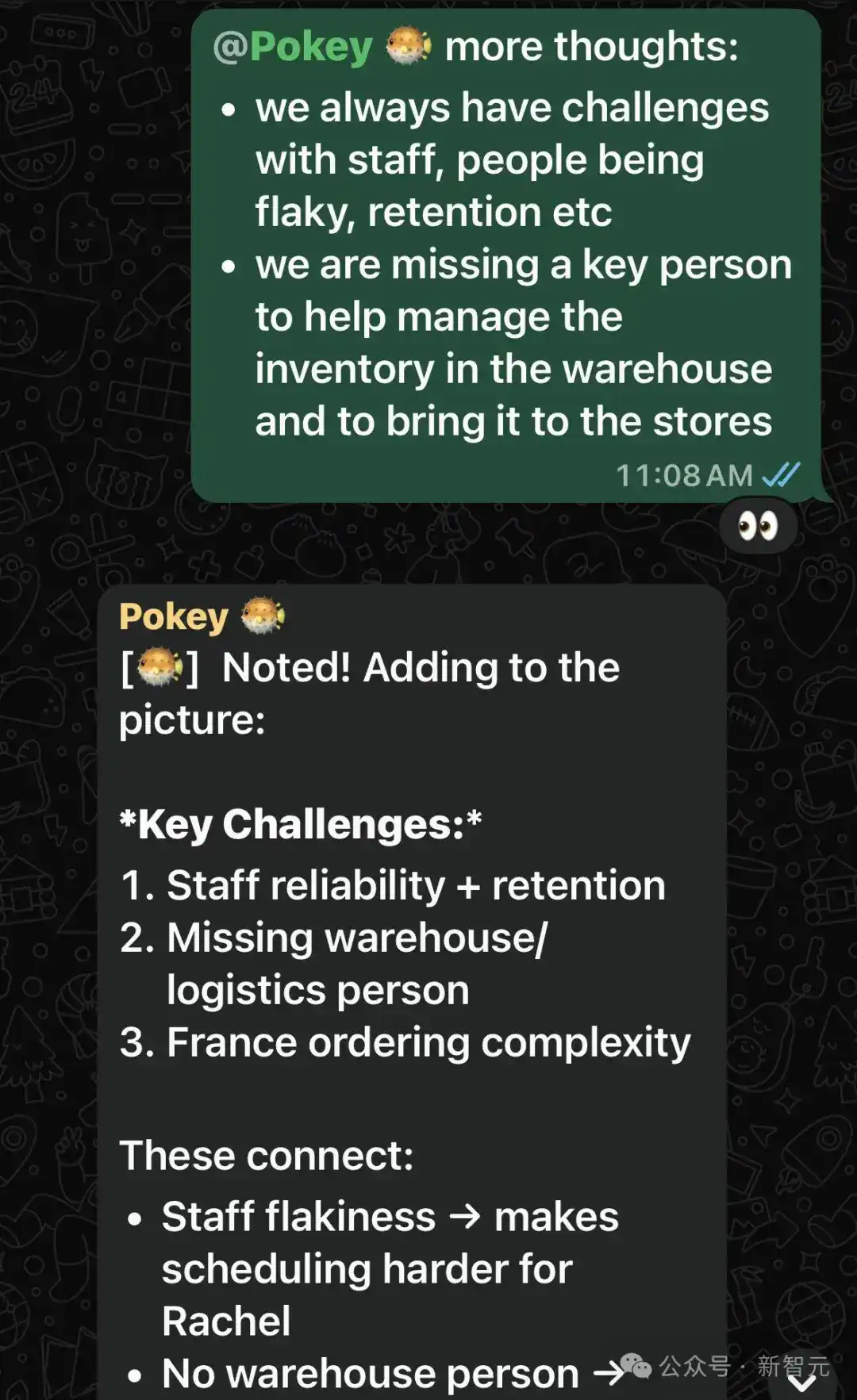
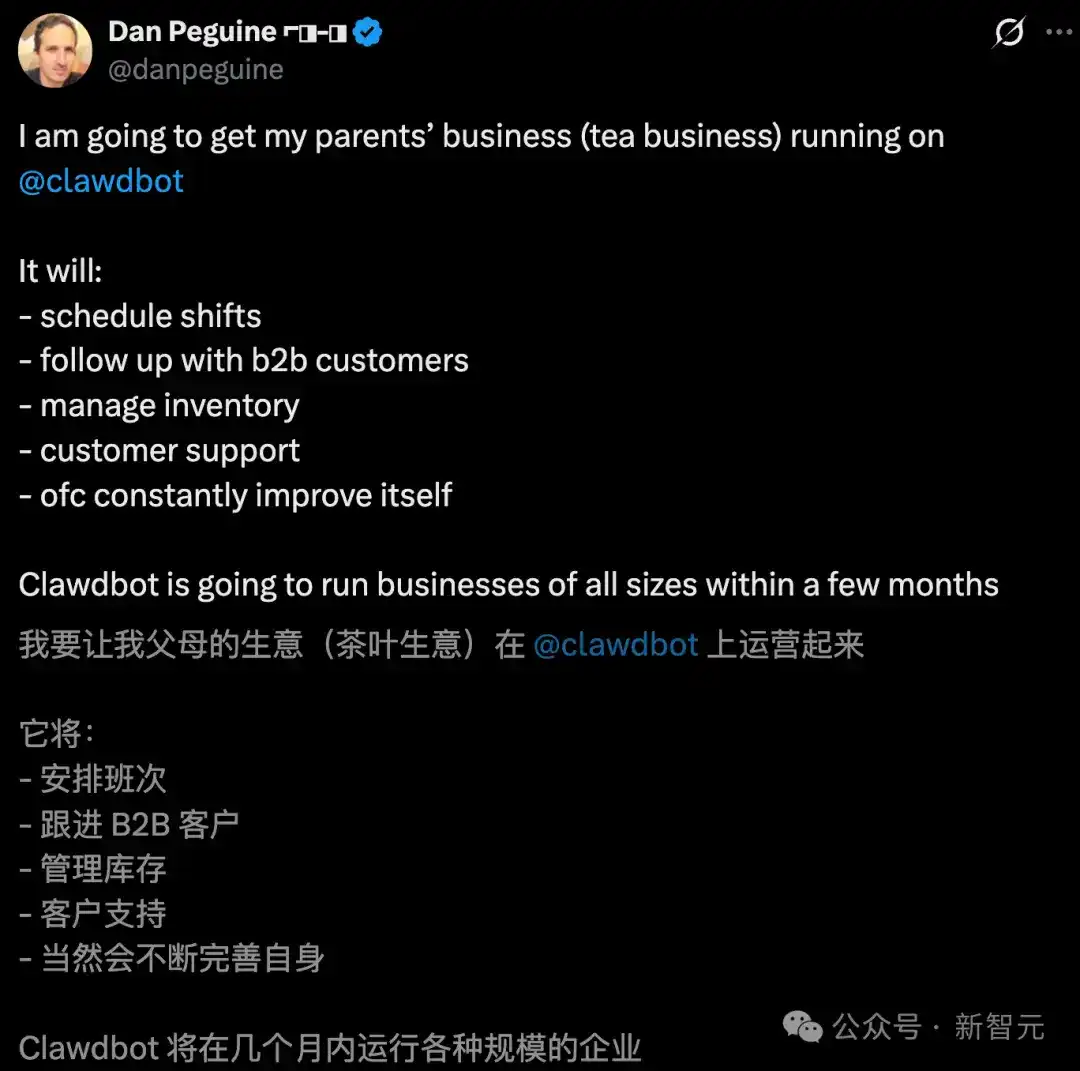
Dan Peguine used the Clawdbot platform to manage his parents' tea business. Unexpectedly, it handled:

Automatic scheduling → Following up with corporate clients → Managing inventory → Customer service, and it gets smarter with use.

He exclaimed in amazement, "In a few months, Clawdbot will probably be able to manage businesses of any scale."
Developer Nimrod Gutman said Clawdbot helped him build another amazing feature!

It created an automatic setup for a home assistant that intelligently controls how long the boiler runs based on the weather over the past 12 hours, so no cold showers even on cloudy days.

AI browser Arc developer Andrew Jiang tested it: 24 hours after giving Clawdbot the idea, it had completed scraping a content project involving 100 top X platform accounts, totaling 4 million tweets.

Now, he can partner with a copywriting AI agent to polish the first story. This era is amazing for creation.
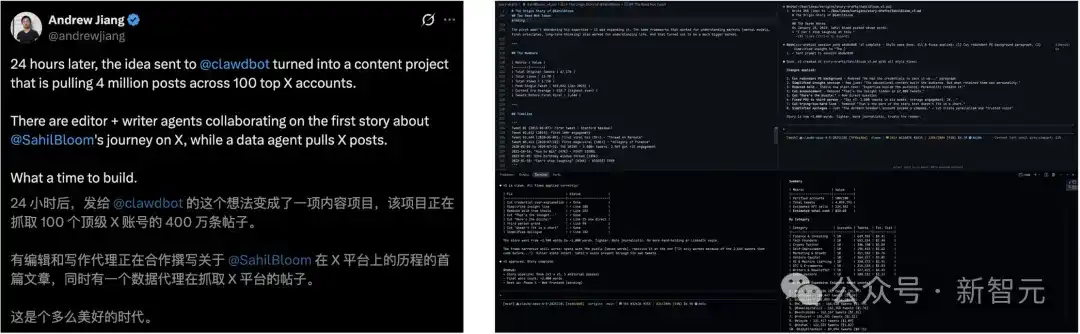
Some are completely captivated by Clawdbot's capabilities.
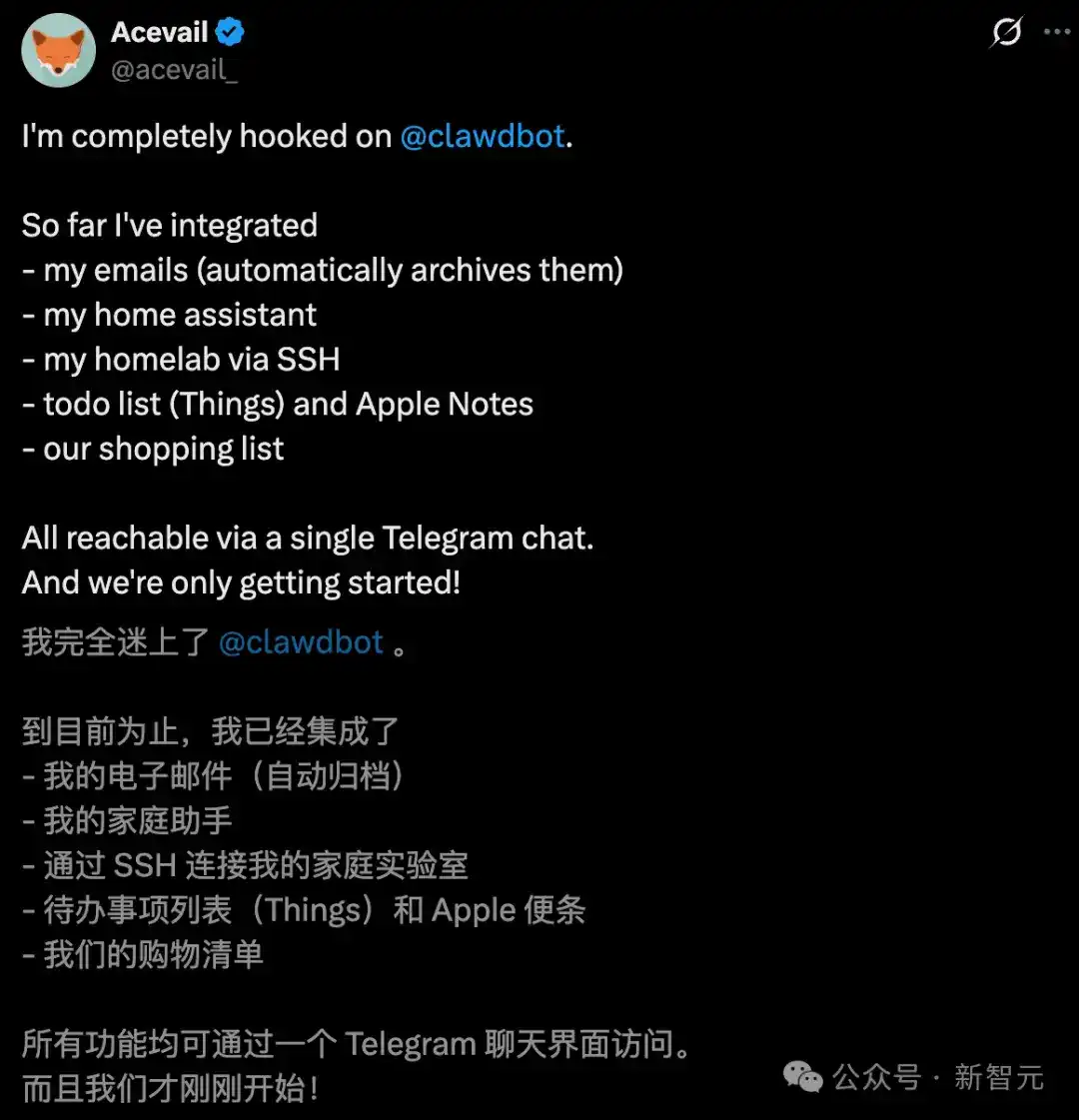
A big shot said, Clawdbot is all you need.
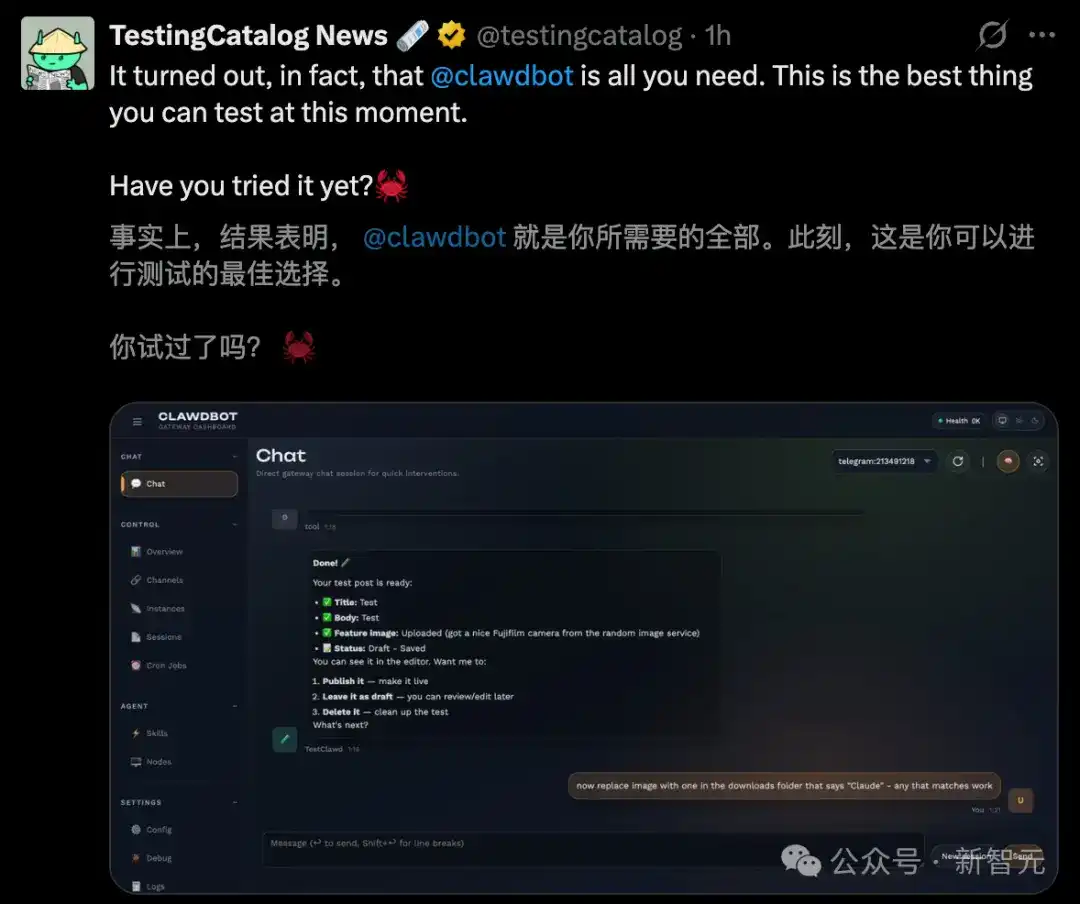
Writes Its Own Code, Kills Zapier

Developer Federico Viticci recounted: Clawdbot showed me what the future of AI personal assistants looks like.

During testing, he asked Clawdbot to add functionality for image generation using Google's Nano Banana Pro model.

Not only did it do it, but it also obediently changed its own avatar to a "Zelda-style crab" upon command.

In daily use, the "memory files" are actually its automatically generated Markdown diaries, recording daily interactions.
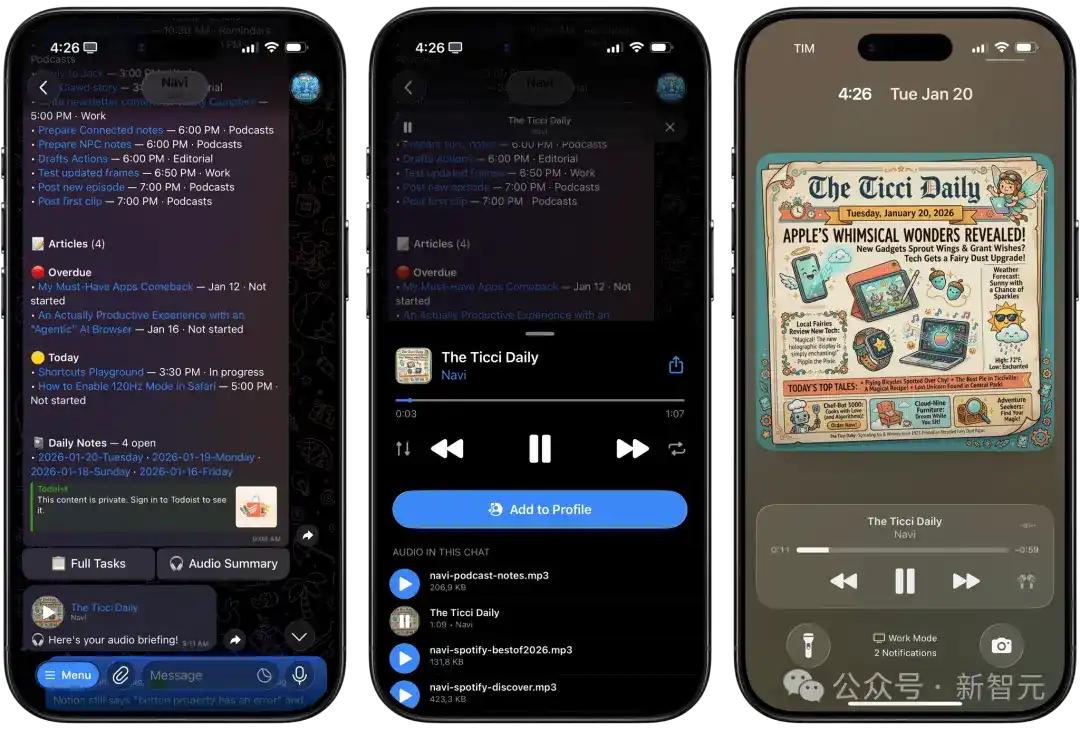
The moment that most excited Viticci, and was also slightly terrifying, arrived.

Viticci asked if it could help him save money by canceling the automation services he previously bought on Zapier and switching to running locally on his Mac mini.

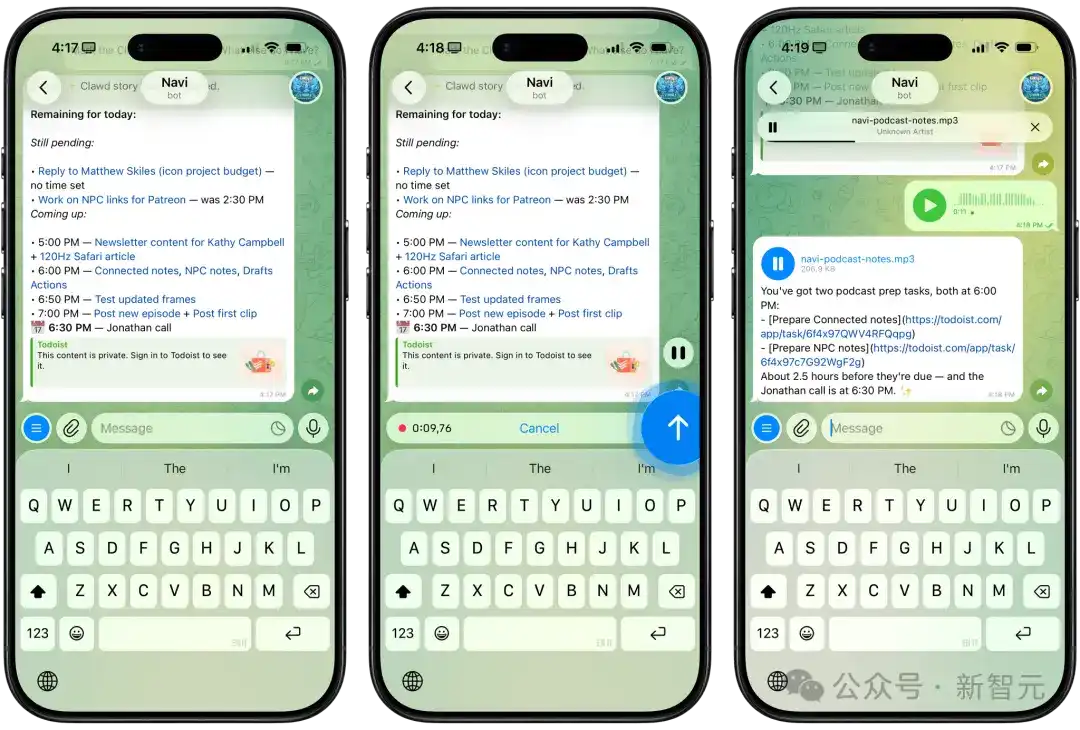
For example, automatically creating a new project in Todoist every Friday after sending the Newsletter.

Clawdbot thought for a moment and proposed a solution: set up a cron job on the Mac mini to check the RSS feed every few hours, and once there's an update, call the Todoist API to create a task.

After a 5-minute conversation, it actually wrote all the code on the Mac and got the process running. No cloud dependencies, no subscription fees, entirely done by the LLM calling local Shell tools.
Mac Minis Sell Out, Cook Smiles

Now, many people are even filling their homes with Mac minis just to run it.
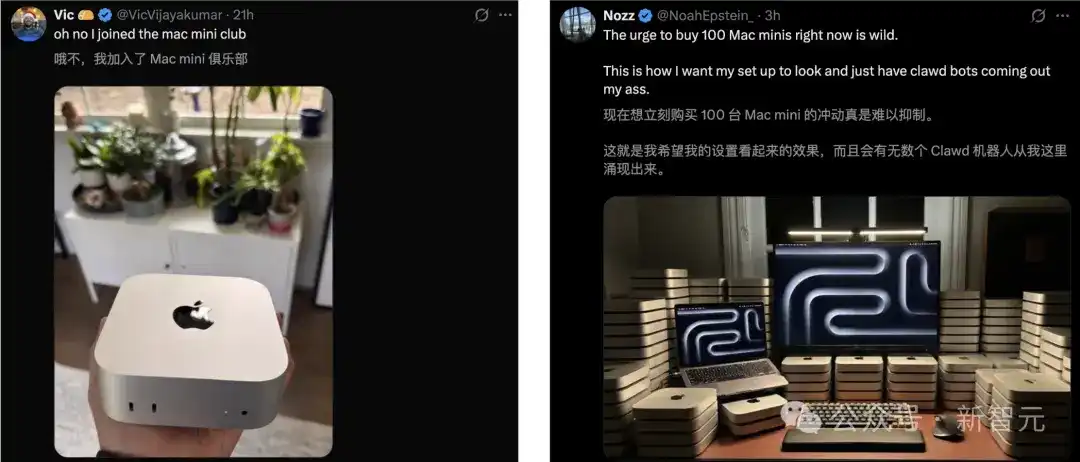
Netizens joked that the Father of Clawdbot single-handedly boosted Apple's sales in the first quarter. Probably even Tim Cook would laugh in his sleep.

<极客迷们为之疯狂。div>
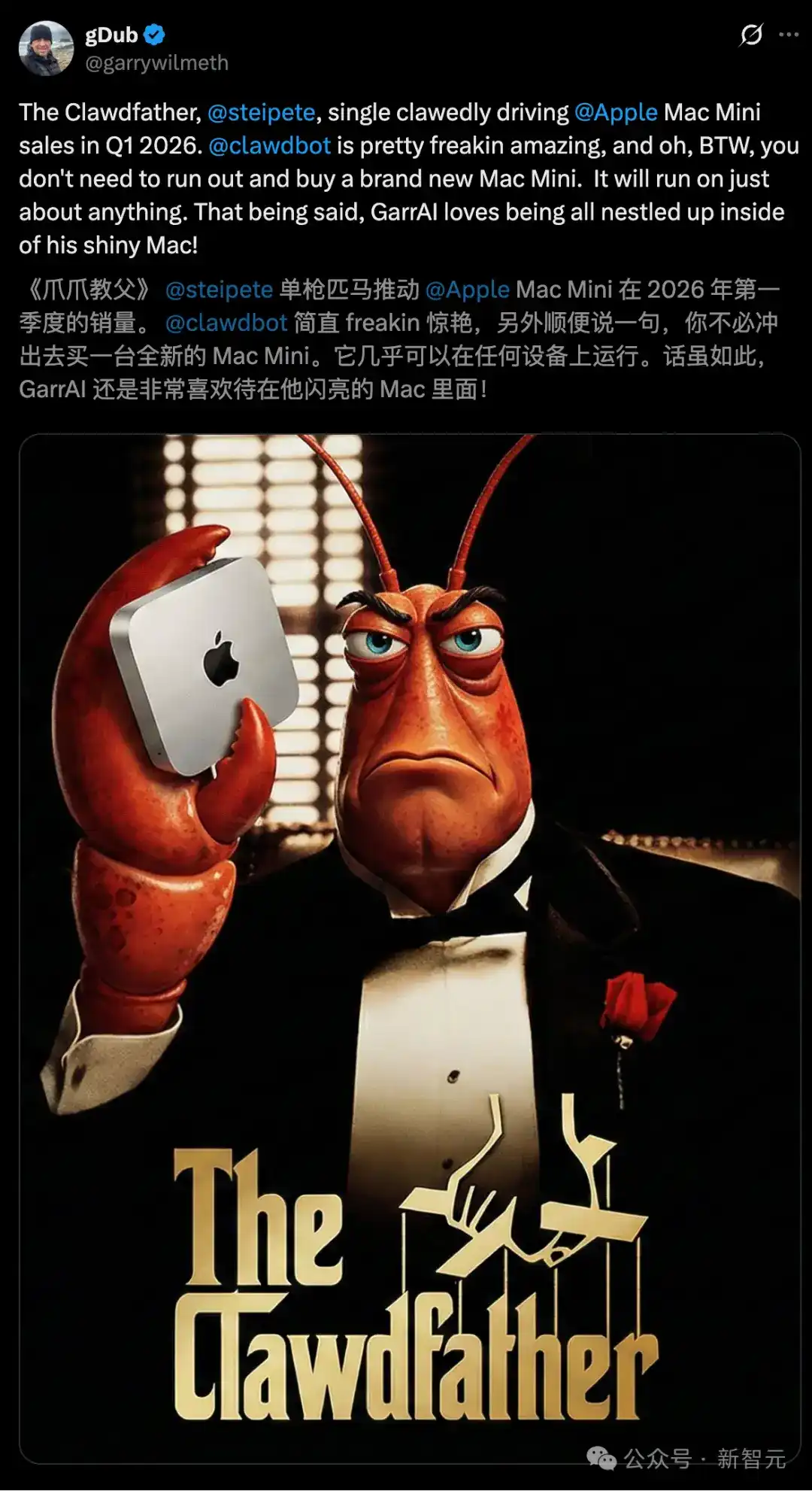
Does that mean you're not worthy without a Mac mini?

The Father of Clawdbot stated that there's no need to buy an additional device; you can just deploy a VPS to use it.
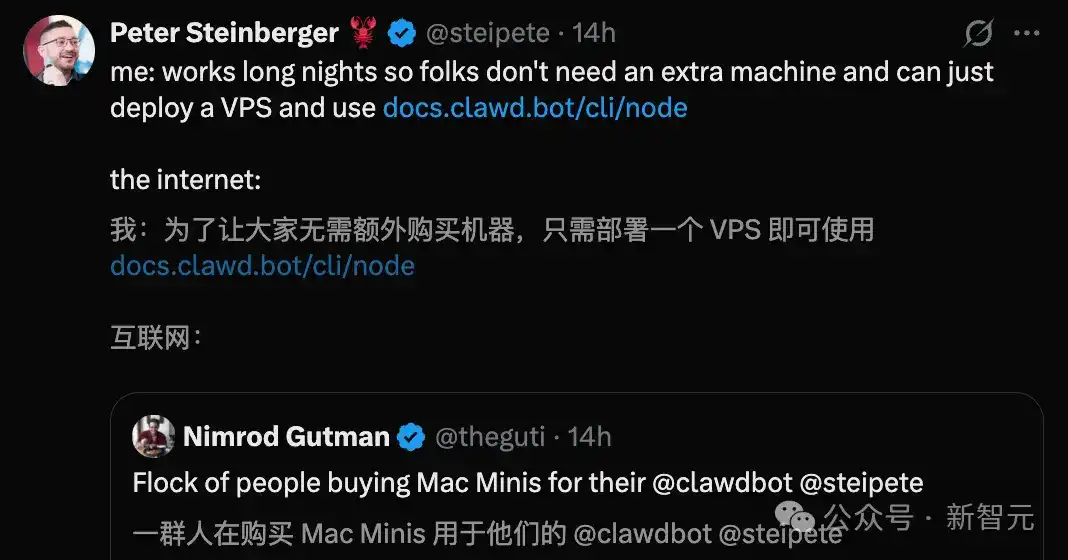
Even a long-unused, dusty MacBook or gaming PC can run it, and a Raspberry Pi勉强也行 (barely works too).
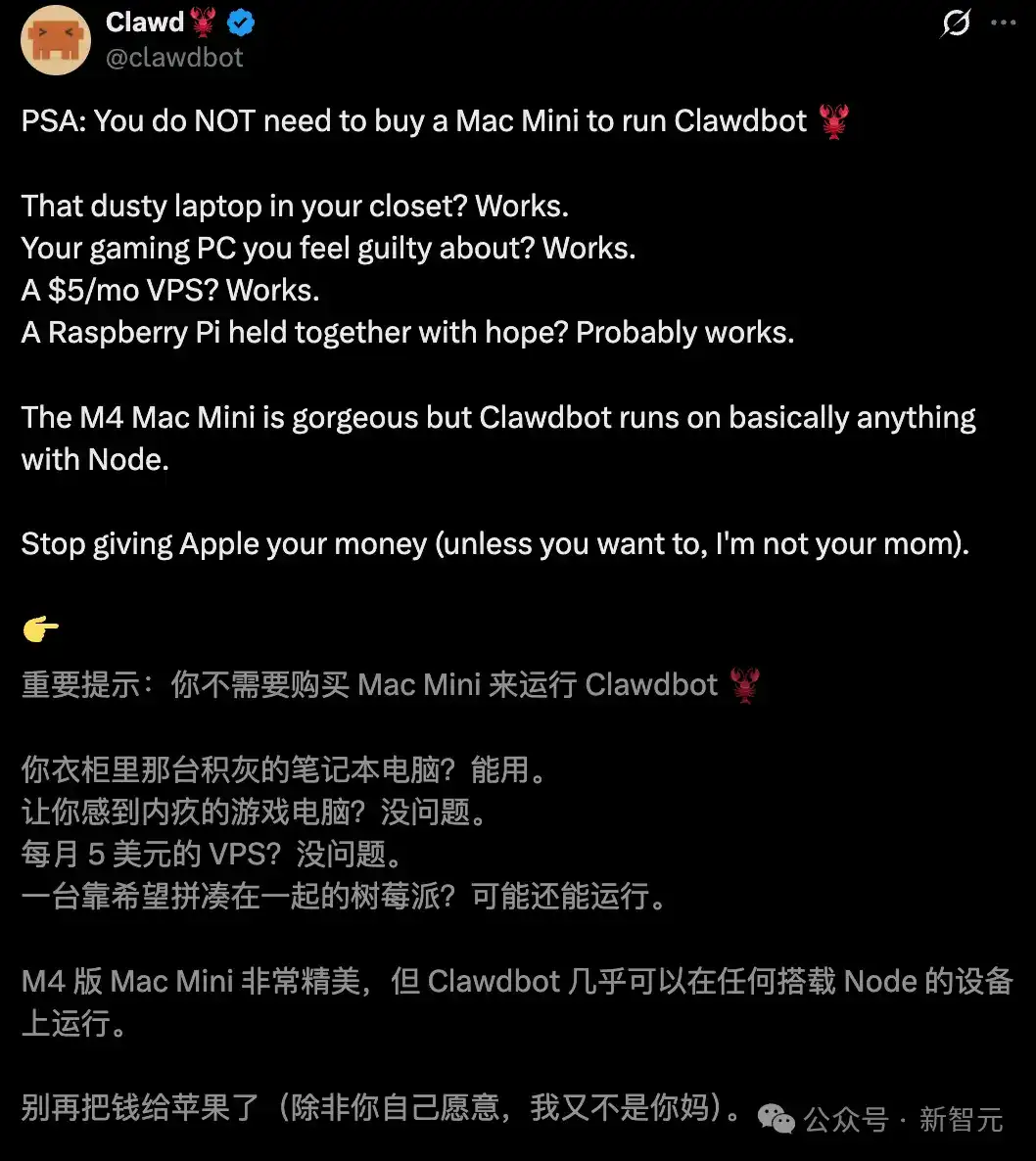
A Lobster, Ruling the World

On his personal homepage, the "Father of ClawdBot" aims to help a lobster rule the world.

Now, he has truly succeeded.

Many people have almost gone crazy trying to use it. One developer shared some personal experience and tutorials for non-developer audiences to understand.

You can understand it like this: ChatGPT and Claude live on websites; humans have to actively go find them, type, wait for a response, and then copy-paste elsewhere.
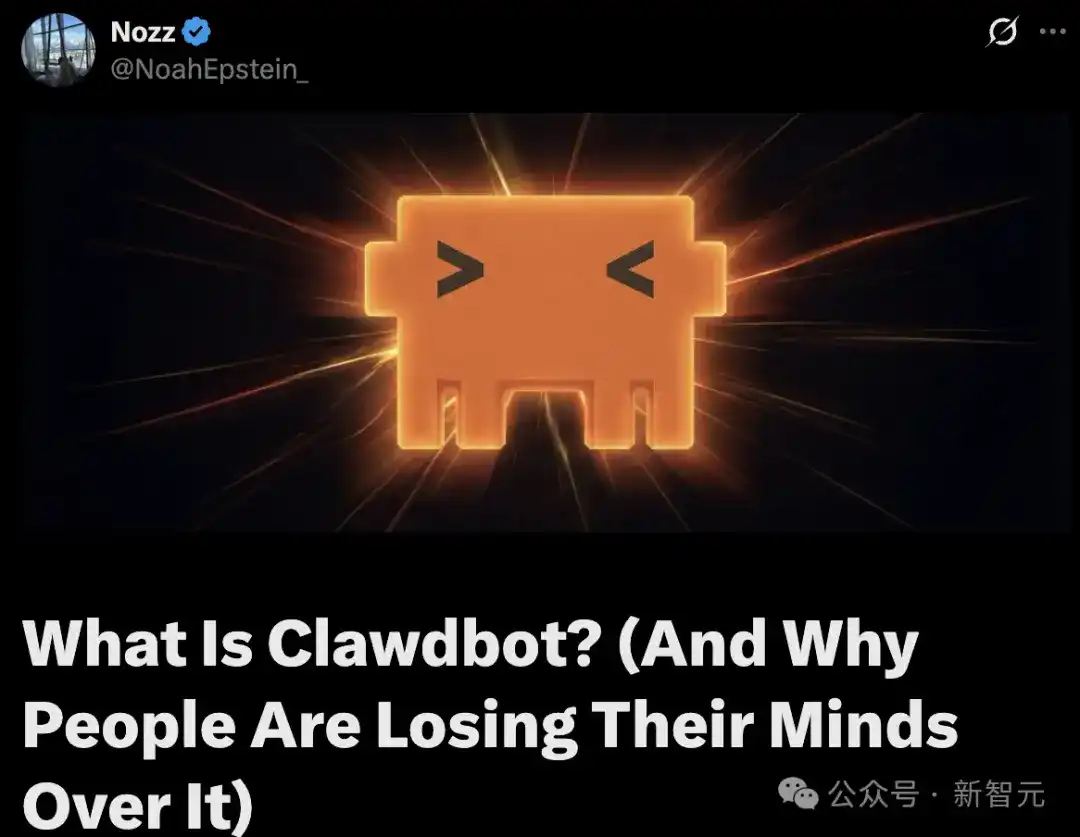
Clawdbot is an AI that "lives" in your phone. The reason it's so popular mainly comes down to three reasons:

1. It actually has "memory"

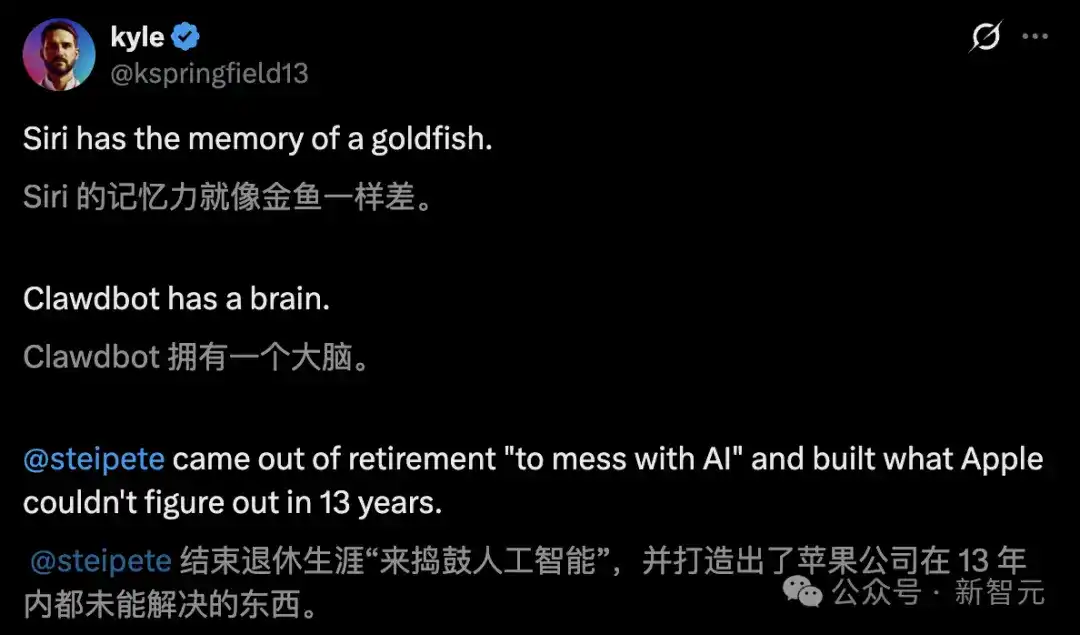
Ask Siri what you said to it yesterday, and it will definitely be clueless.

Clawdbot remembers your last conversation, remembers your preferences, and even remembers a small thing you mentioned casually two weeks ago.

It continuously accumulates background information over time, becoming more and more understanding of you.

What Apple's Siri couldn't solve in 13 years has now been cracked by an AI expert who came out of retirement.
2. It "proactively" seeks you out

This is the coolest point. Ordinary AIs always wait for people to open them. Clawdbot takes the initiative:

Hey, you have 3 urgent emails, and there's a meeting in 20 minutes;

That stock you follow just dropped 5%;

The weather isn't great tomorrow, you might need to adjust your schedule.

It feels like hiring a real private secretary who actually keeps an eye on things for you.
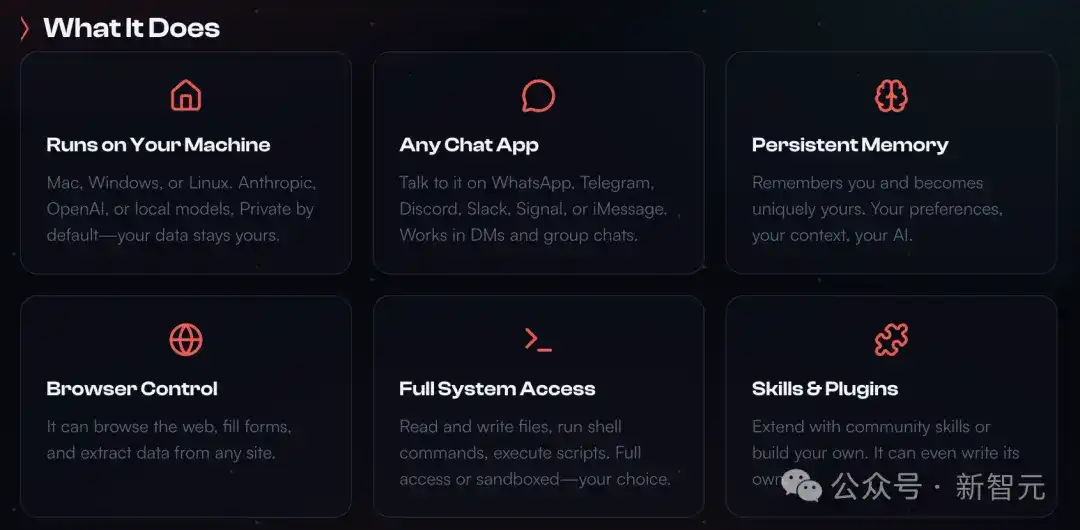
3. It can directly control the computer

It doesn't just talk and answer questions; it can really work:

Fill out forms, send emails, move files, run programs, control the browser.....

One guy重构 (refactored) his entire website while lying in bed watching Netflix. He never touched his laptop the whole time, just texted Clawdbot what to do.
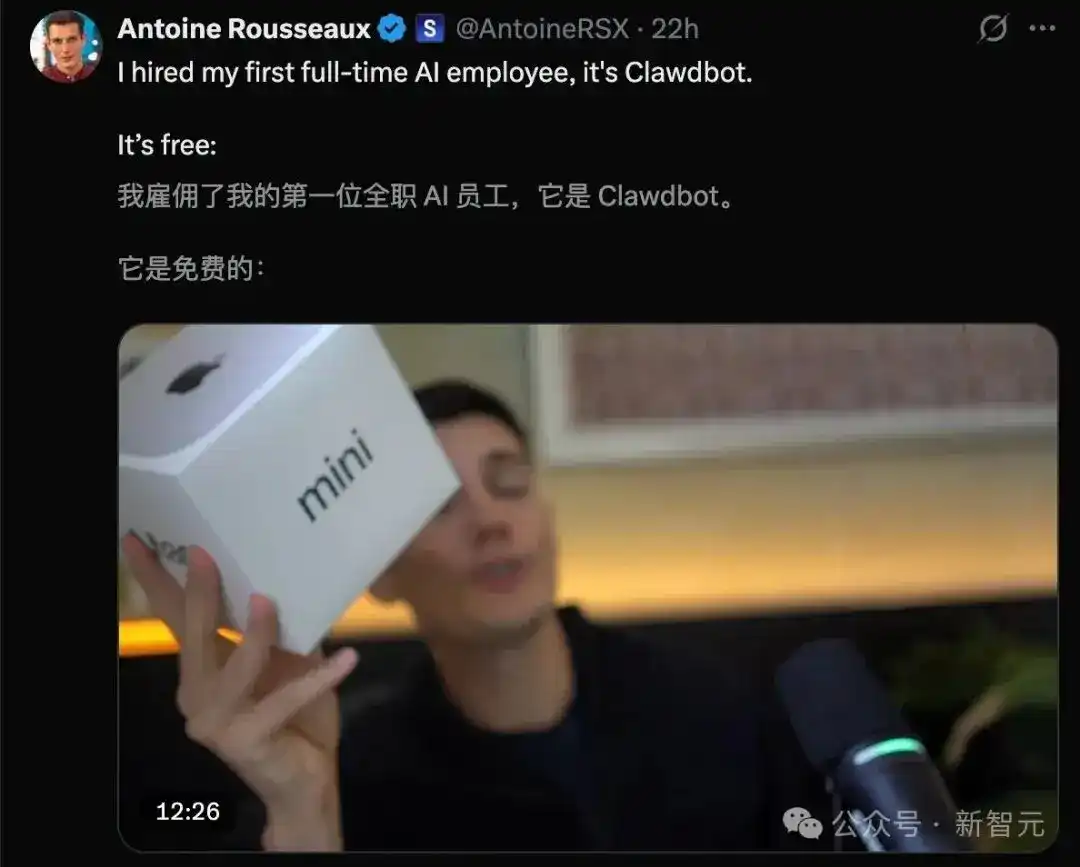
The developer said many people have fallen into a misconception—

I've seen people stack 3 Mac minis on their desk, pulling Raspberry Pis everywhere,搞得好像在建数据中心一样 (as if they're building a data center), but it's really not necessary.

Clawdbot can run on a $5 per month cloud server, cheaper than a cup of coffee, with a minimum cost of $25.

The technical requirements are actually simple:

A cheap cloud server (or your own computer)

Install Node.js (free software)

A Claude or ChatGPT subscription. That's it, no need to pioneer some "Mac mini farm."

Basic cost estimate—

Software: Free (open source)

Server: $5-50 per month (depending on usage). Most people can get by with a $5 Hetzner VPS, or run it directly on their own computer ($0).

AI fees: $20-100 per month. Claude Pro is $20/month, or pay directly based on API usage.

Total: About $25-150 per month, and you get a truly capable AI assistant.

Think about it, some "AI consultants" charge $10,000 just to set up a basic robot; this price is简直香爆了 (incredibly attractive).

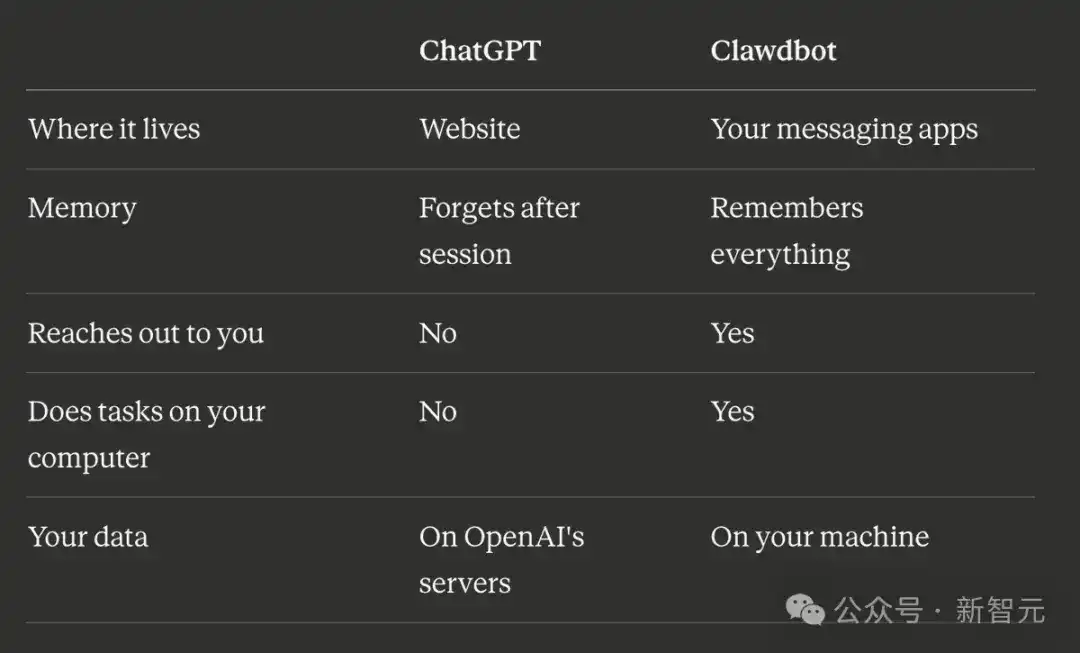
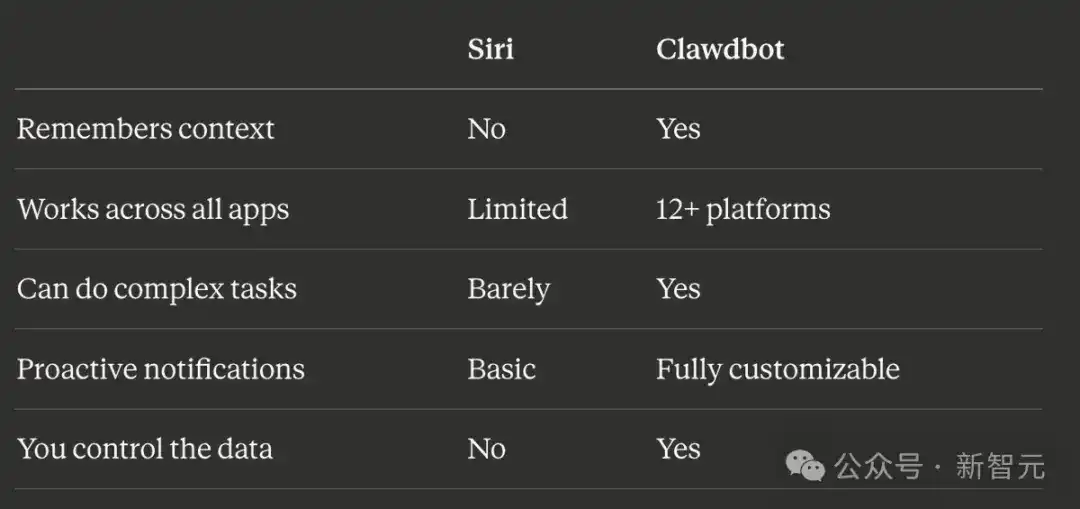
So, how is it different from ChatGPT and Siri?

ChatGPT is a chat box; Clawdbot is an assistant living in your personal life. Siri's memory is about as good as a goldfish's; Clawdbot actually has a brain.
How to Get Started?

In simple terms, Clawdbot runs on a computer, can connect to chat software, you send messages, it replies.

Of course, it can also execute tasks on the computer.

From a professional perspective, a "gateway" runs in the background, which can be seen as a switchboard operator.

Messages come in from channels like Telegram, and the gateway routes them to the AI. The AI thinks, replies, and triggers actions—like opening a browser or running a script.

Except for calling the Claude/ChatGPT API, personal data is not sent to any company's servers.

Some classic use cases:

Morning Briefing: Wake up, and there's already a summary on your phone: important emails, the day's schedule, to-do items. Helps you sort out your thoughts before even getting out of bed.

Health Tracking: "Connected to a WHOOP fitness tracker, reports data daily." Someone set it up in 5 minutes, automatically gaining health insights every day.

Email Management: "Help me unsubscribe from all these乱七八糟的 (messy) news emails." It will log into the邮箱 (email) itself, find the spam, and handle it.

Research Assistant: "Help me find the 5 best-reviewed restaurants near hotels in Tokyo." It will search, compare prices, and give suggestions, all within the chat box.

Task Automation: "Every Friday at 5 PM, send me a weekly review." Set it once, and it can run forever.

High-end Tricks: One user had Clawdbot write meditation scripts, generate audio with AI voice, add background music, and send it to him准时 (punctually) every morning. 100% automated.

Do You Need Technical Skills?

Honestly, you need a little.

If you can follow instructions and know how to copy-paste command lines, you can manage it. It's not a "click and done" thing, but it's not rocket science either.

Official website here: https://clawd.bot

The installation command is just one line:

curl -fsSL https://clawd.bot/install.sh | bash

Then follow the setup wizard; it will teach you how to connect chat software.

If this seems too hardcore, you can wait a few months. The community optimizes the process weekly to make it simpler.

In this era of information explosion, what people lack is a second brain that can filter, remember, and execute for them.

Clawdbot is a typical representative, fulfilling the dreams of many.

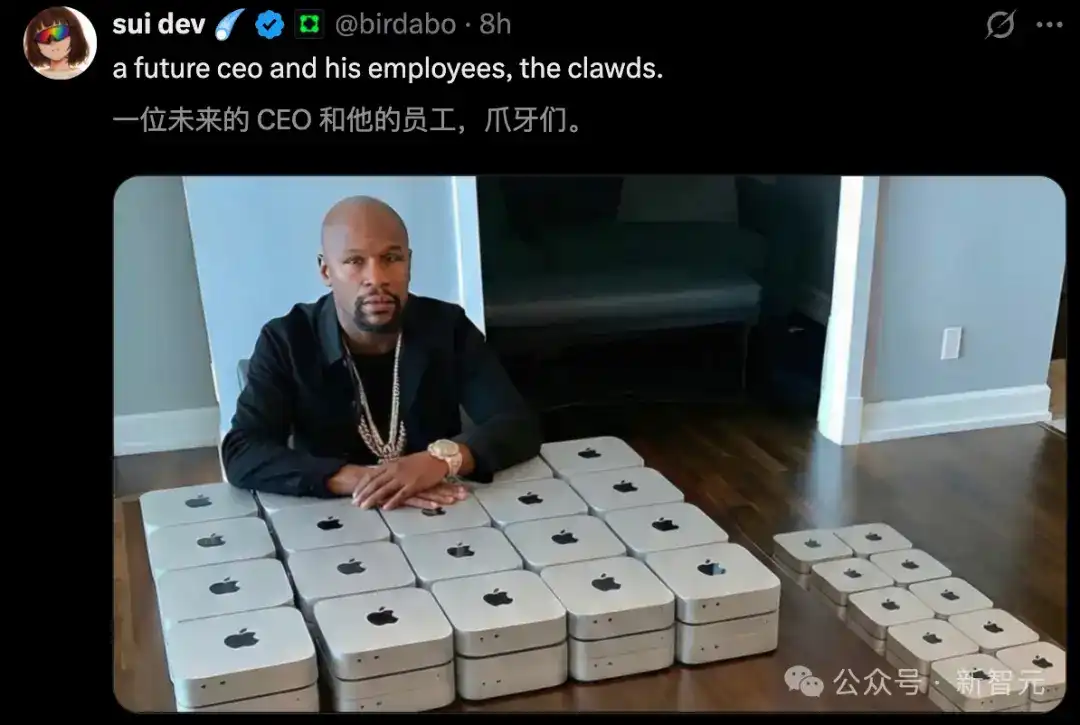
Perhaps, in the future, a company only needs one CEO and many Clawdbots.
References:

https://x.com/NoahEpstein_/status/2015136736989397011?s=20

https://x.com/nickvasiles/status/2014790519529095447?s=20

https://x.com/naruto11eth/status/2015030005370417636?s=20

https://www.macstories.net/stories/clawdbot-showed-me-what-the-future-of-personal-ai-assistants-looks-like/


Trending Cryptos

Related Questions

QWhat is Clawdbot and why has it become so popular in Silicon Valley?

AClawdbot is an open-source, 24/7 AI assistant developed by Peter Steinberger that runs locally on devices like Mac mini. It acts as both a local AI agent capable of calling models like Claude and Gemini, and a gateway that communicates via apps like WhatsApp and iMessage. Its popularity stems from its ability to have infinite memory, proactively perform tasks, and operate with full access to the user's system, effectively reshaping the concept of a personal AI super assistant.

QHow does Clawdbot address the memory limitations of current large language models?

AClawdbot solves the memory limitation by maintaining persistent memory through locally stored Markdown diary files that record all interactions. This allows it to remember details from previous conversations, user preferences, and even minor mentions from weeks ago, enabling it to accumulate context over time and become more personalized.

QWhat are some practical examples of tasks Clawdbot can perform autonomously?

AClawdbot can autonomously handle tasks such as managing business operations (scheduling, inventory, customer service), controlling home automation systems (adjusting boilers based on weather), web scraping (collecting data from social media), writing and running scripts to replace services like Zapier, and providing personalized updates like morning briefings and health insights.

QWhy did Clawdbot lead to a surge in Mac mini sales, and are there alternative ways to run it?

AClawdbot led to a surge in Mac mini sales because it is optimized to run efficiently on these devices, making them a popular choice for users. However, alternatives include using a VPS (Virtual Private Server) for as low as $5 per month, repurposing old MacBooks or gaming PCs, or even using a Raspberry Pi, though performance may vary.

QWhat are the key differences between Clawdbot and conventional AI assistants like ChatGPT or Siri?

AUnlike ChatGPT, which is primarily a chat interface, Clawdbot is an integrated life assistant with system-level access to perform tasks directly. Compared to Siri, which has limited memory, Clawdbot features persistent memory, proactive notifications, and the ability to execute commands on the user's device, making it more capable and context-aware.

Related Reads

The "Impossible Triad" Is Fundamentally a Pseudo-Problem

The article argues that blockchain's fundamental limitation is not the scalability trilemma (decentralization, scalability, security), which has been largely solved, but the lack of **privacy** and, until recently, clear **legitimacy**. Blockchain is described as a slow, expensive, globally shared computer whose core value is censorship resistance and verifiability. While ideal for native digital assets like money (e.g., stablecoins), its default transparency acts as a **tax**, exposing all transactions and enabling MEV extraction, which deters serious institutional capital. Simultaneously, its permissionless nature created regulatory ambiguity. The piece contends that **privacy** is the missing critical feature. It rejects the false choice between total transparency and complete anonymity. Modern cryptography (like zero-knowledge proofs) enables **compliant privacy**: users can prove facts (solvency, KYC status, compliance) without revealing the underlying sensitive data (specific holdings, identities). This preserves auditability for regulators and eliminates the leak of financial information. With recent regulatory progress (e.g., the GENIUS Act) addressing legitimacy, adding default, provably compliant privacy becomes a pure upgrade. It transforms blockchain from a costly, public ledger into a confidential settlement layer, finally bridging the gap to mainstream institutional and individual adoption of on-chain finance.

链捕手4h ago

The "Impossible Triad" Is Fundamentally a Pseudo-Problem

链捕手4h ago

Optical Chips: Collective Capacity Expansion

The global optical chip industry is experiencing a massive wave of expansion driven by surging AI data center demand. Major players across the US, Japan, Europe, and China are aggressively investing to ramp up production capacity. In the US, Coherent is expanding its 6-inch Indium Phosphide (InP) semiconductor fab in Texas, supported by CHIPS Act funding and a $2 billion strategic investment from NVIDIA. Lumentum is building a new factory for InP optical devices, and Nokia is scaling its advanced photonic chip packaging and testing capabilities. NVIDIA's investments aim to secure future supply of critical lasers and optical interconnect products for AI infrastructure. Japan's JX Advanced Metals, a leading InP substrate supplier, plans a multi-billion yen investment to increase its capacity 7-10 times, strengthening its grip on the crucial upstream materials market. In Europe, IQE and Tower Semiconductor settled a patent dispute and signed a multi-year InP epitaxial wafer supply agreement, highlighting that next-generation silicon photonics platforms will integrate high-performance InP components. STMicroelectronics and Sivers Semiconductors are also expanding silicon photonics production and partnerships. China is rapidly building out its domestic supply chain. Dongshan Precision's subsidiary, Source Photonics, announced a $12 billion project to expand optical chip and module production. Companies like Sanan Optoelectronics and Yunnan Germanium are scaling up InP chip manufacturing and substrate production, moving towards vertical integration from materials to modules. While debate continues around the exact future architecture—whether CPO (Co-Packaged Optics), NPO, or pluggables will dominate—analysts like Morgan Stanley argue the underlying driver is unchangeable: the explosive growth in bandwidth demand. This will inevitably increase the volume of optical engines, lasers, and related content per GPU, regardless of the final technical path. The competition for "more light" in the AI era has intensified into a global, full-chain capacity race.

marsbit6h ago

Optical Chips: Collective Capacity Expansion

marsbit6h ago

Stablecoins Finally Find Real Yield: An In-Depth Look at On-Chain Reinsurance Re | A Conversation with Re Founder Karan Saroya

Stablecoin Real Yield Found: A Deep Dive into On-Chain Reinsurance with Re's Karan Saroya As stablecoin supply exceeds $170 billion, the search for sustainable, non-speculative yield intensifies. Re, an on-chain reinsurance platform, provides an answer: connecting stablecoin capital to the trillion-dollar traditional reinsurance market. Re operates as a regulated reinsurer, accepting stablecoin deposits as collateral to back US insurance companies. These insurers pay premiums, generating yield that flows back to on-chain depositors. Currently supporting 35 insurers and underwriting $500 million, Re projects scaling to over $1 billion soon. Key insights from a Bankless podcast with founder Karan Saroya and investor Avichal of Electric Capital: 1. **Uncorrelated, Real-World Yield:** Re offers stablecoin holders access to reinsurance returns (targeting 12-14%+), an asset class entirely separate from crypto or equity markets. 2. **Operational Efficiency via Smart Contracts:** Re replaces traditional, labor-intensive capital fundraising with smart contracts, allowing a ~12-person team to compete with industry giants. 3. **Regulatory Leverage:** For every $1 of collateral, regulations allow backing $5-7 in written premiums. This leverage amplifies returns from the underlying risk-free rate. 4. **DeFi Integration:** Depositors receive receipt tokens, which can be used in protocols like Morpho for "looping," potentially pushing yields to 18-20%+. 5. **The "DeFi Mullet" Model:** A compliant front-end (regulated reinsurer) paired with a decentralized back-end (smart contracts, DeFi capital markets). 6. **RE Governance Token:** Modeled on Lloyd's of London, the token governs the central capital pool's allocation, counterparty acceptance, and parameters. 7. **Real Economic Impact:** Capital funds real-world productivity (factories, clinics, businesses) via insurance, moving beyond crypto's internal loops. The discussion highlights a pivotal moment: DeFi's supply-side infrastructure is now met by real demand for productive yield, potentially kickstarting a flywheel where vast on-chain stablecoin capital seeks these real-world returns.

链捕手8h ago

Stablecoins Finally Find Real Yield: An In-Depth Look at On-Chain Reinsurance Re | A Conversation with Re Founder Karan Saroya

链捕手8h ago

1996 or 1999? Walsh's First Test is 'How to View AI'

"1996 or 1999? Wall's First Big Test Is 'How to View AI'" Federal Reserve Chairman Wall's initial challenge is not whether to raise or cut rates, but a more fundamental judgment: what kind of boom is the current AI boom? This will determine the Fed's policy path and define his legacy. Economics is split between two opposing views, according to reporter Nick Timiraos. One sees imminent productivity gains that will increase supply and cool inflation, allowing the Fed to hold steady. The other argues that while productivity benefits are distant, demand shocks are here now, and waiting for data confirmation risks missing the intervention window, forcing sharper rate hikes later. Wall has signaled a leaning toward the first view, echoing 1996-era Alan Greenspan, who embraced strong, productivity-driven growth without fear of inflation. However, Wall faces a different macro environment than Greenspan did, with tariff pressures, expanding fiscal deficits, and diminishing globalization benefits, which could force more significant inflation pressures even if AI benefits materialize. Wall's logic, expressed before taking office, is that AI-driven productivity gains won't show in official data for years. If the Fed waits for confirmation, it might mistakenly tighten policy and choke off the very growth that could suppress inflation. This argues for using forward-looking narratives over lagging data. Chicago Fed President Austan Goolsbee presents a key counter-argument. He distinguishes between expected and unexpected productivity booms. A widely anticipated boom, like the current AI wave, can cause people to spend future wealth gains in advance, overheating the economy before productivity actually rises, thus requiring preemptive rate hikes. He cites rising costs for AI data centers as evidence of such overheating. Fed Governor Christopher Waller offers a rebuttal to Goolsbee, noting the "expected spending" mechanism only works if people can borrow against future income, which many households cannot do due to borrowing constraints. Wall also faces a paradox related to his desire to reduce the Fed's use of "forward guidance" (pre-announcing policy moves). This practice was established in 1999 when Greenspan began signaling hikes to avoid market shocks. If the economy follows a less optimistic path, Wall may be forced to choose between using the guidance he wants to abolish or risking market volatility by staying silent. The ultimate question defining Wall's first major test remains: Is this 1996 or 1999?

marsbit9h ago

1996 or 1999? Walsh's First Test is 'How to View AI'

marsbit9h ago

Trading

Spot
Futures

Hot Articles

Discussions

Welcome to the HTX Community. Here, you can stay informed about the latest platform developments and gain access to professional market insights. Users' opinions on the price of AI (AI) are presented below.

活动图片