Anthropic Warns Globally, OpenAI Has Crossed the 'Reliability Threshold': AI Self-Acceleration Activated

marsbitPublished on 2026-06-06Last updated on 2026-06-06

Abstract

Anthropic issues a global warning, urging a pause in AI research due to fears of recursive self-improvement where AI accelerates its own development, nearing a "self-building" tipping point. Simultaneously, OpenAI's Yann Dubois provides a key insight: AI's perceived "jump" in usefulness stems from crossing a "reliability threshold." Before this point, AI is an unreliable toy; after (around Dec 2023 for OpenAI), it becomes a dependable tool, triggering self-acceleration. This is evident as AI now assists in its own R&D, boosting researcher productivity. Dubois argues AI development is more "craft" than pure science, relying heavily on intuition. He highlights "the last-mile AI dividend": if current models were frozen, focused development on vertical application harnesses (orchestration systems connecting AI to real-world data and permissions) could deliver AGI-like performance in many domains. The main bottleneck isn't model intelligence, but integration—granting access, connecting data, and embedding into workflows. However, major challenges remain, like enabling continual learning so AI improves with experience rather than plateauing. For startups, the opportunity lies in solving these intricate, real-world integration problems—the hard work of bringing powerful models down to ground level.

The AI world was jolted by a sudden thunderclap!

Anthropic has issued a warning to all humanity: Stop researching AI!
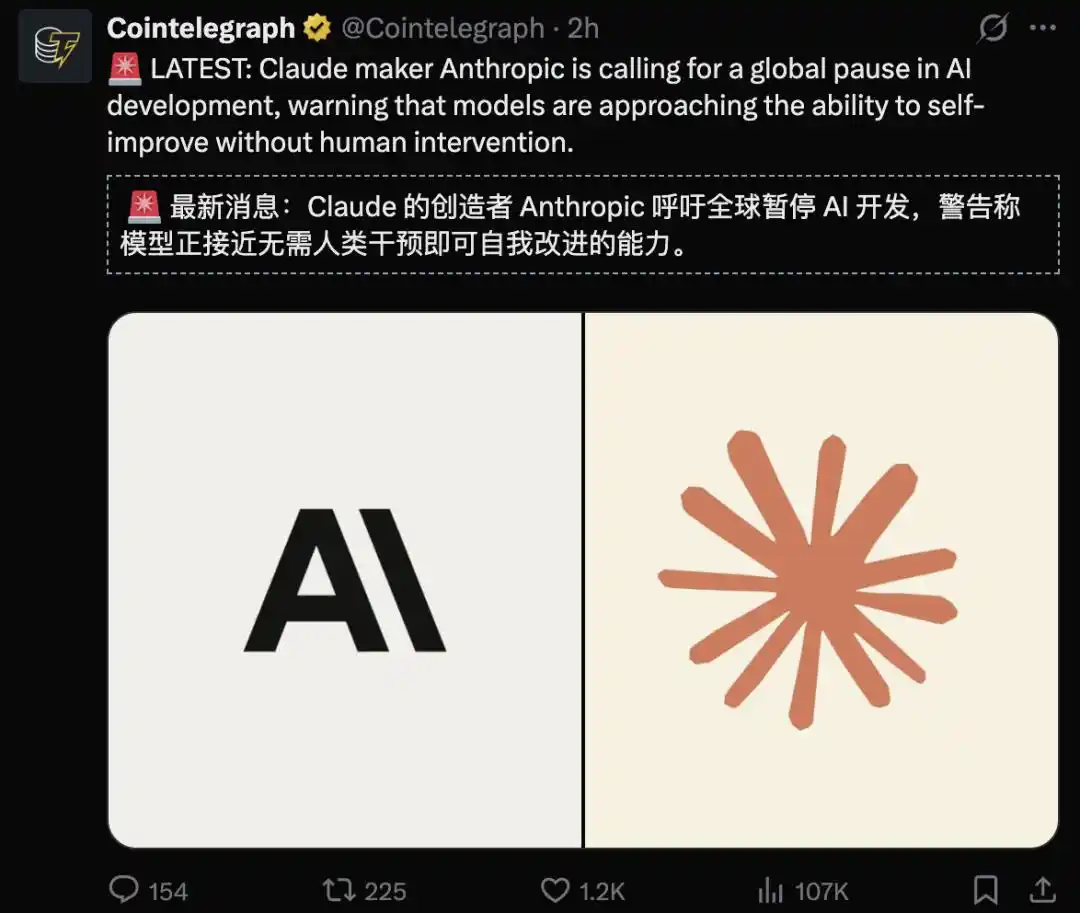
Internal data from Anthropic indicates that AI is accelerating the development of AI, and a path towards recursive self-improvement may have emerged.

In other words, AI is approaching the tipping point of "building itself."

This process is faster than Anthropic anticipated, prompting them to call for a slowdown or pause in AI research.
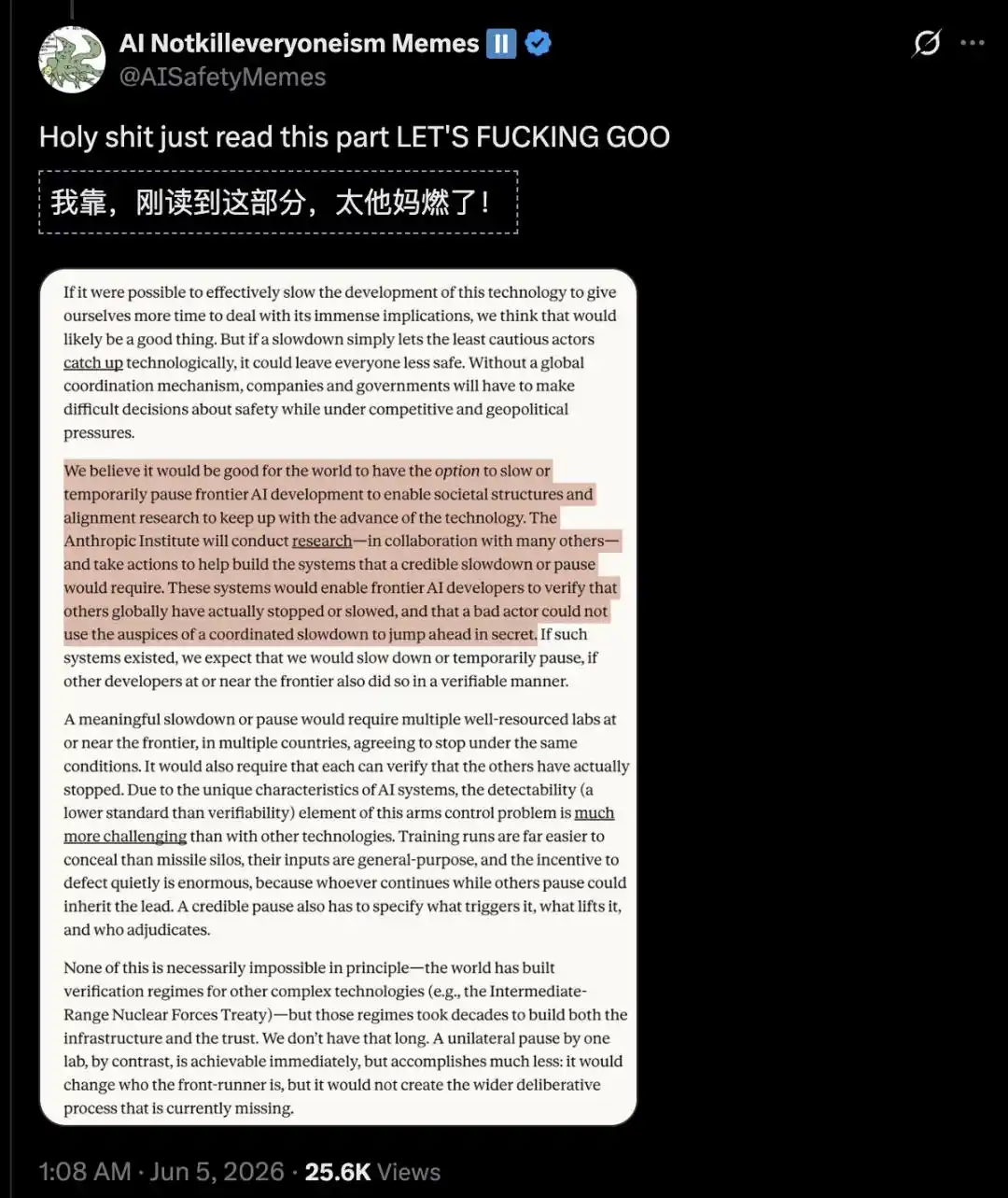
Meanwhile, Yann Dubois, leader of OpenAI's post-training team, offered a more micro, yet equally thought-provoking perspective in a recent interview:

AI Evolution Isn't About Suddenly Cheating, It Just Passed the Pass Mark!

In his latest interview, he revealed several internal perspectives:

The growth of AI capabilities is linear and continuous, but the "usefulness" experienced by users is discrete and jumpy.

Because before reaching a certain "Reliability Threshold," AI is just a clever trick; once it crosses that point, it becomes a reliable worker you can delegate tasks to, initiating self-acceleration.
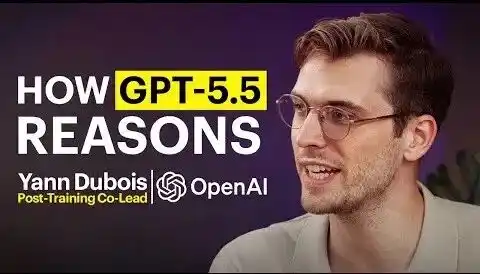
This threshold, OpenAI crossed around last December.

Furthermore, Yann Dubois made a counter-intuitive assertion: AI development resembles a "Craft" more than a "Science."

This insight holds immense tension: in this field emphasizing raw computing power, what ultimately triumphs is something akin to an alchemist's "flare (intuition/inspiration)."

He also introduced the concept of the "Last-Mile AI Dividend."

If we froze all current models and focused solely on developing vertical applications (Harnessing), we could already achieve AGI.

The bottleneck isn't the model's brain, but in "permissions, connectivity, and data." This directly pours cold water on hesitant developers while simultaneously pointing to where the gold lies.

Reliability Threshold Crossed, AI Self-Accelerates

The past few weeks have been lively in the AI world: GPT-5.5 was released, Claude Mythos also emerged.

Especially in areas like cybersecurity and AI agents writing code, it feels like things are changing daily, and AI progress feels like it suddenly "leaped a grade."

Dubois puts it rather bluntly: Capability improvement has actually been quite continuous. The feeling of being on a rocket stems from a "reliability gate" standing in the middle.

Before crossing that gate, AI is like a smart but unreliable intern: it can write, calculate, and offer ideas, but you wouldn't dare hand over real work to it.

After crossing it, you dare let it "actually get to work."

He estimates OpenAI crossed this line around "last December," leading to the externally perceived "step-change leap."

More stimulating is the second reason: when models become good enough, they accelerate R&D itself.

This is exactly what Anthropic is most worried about.
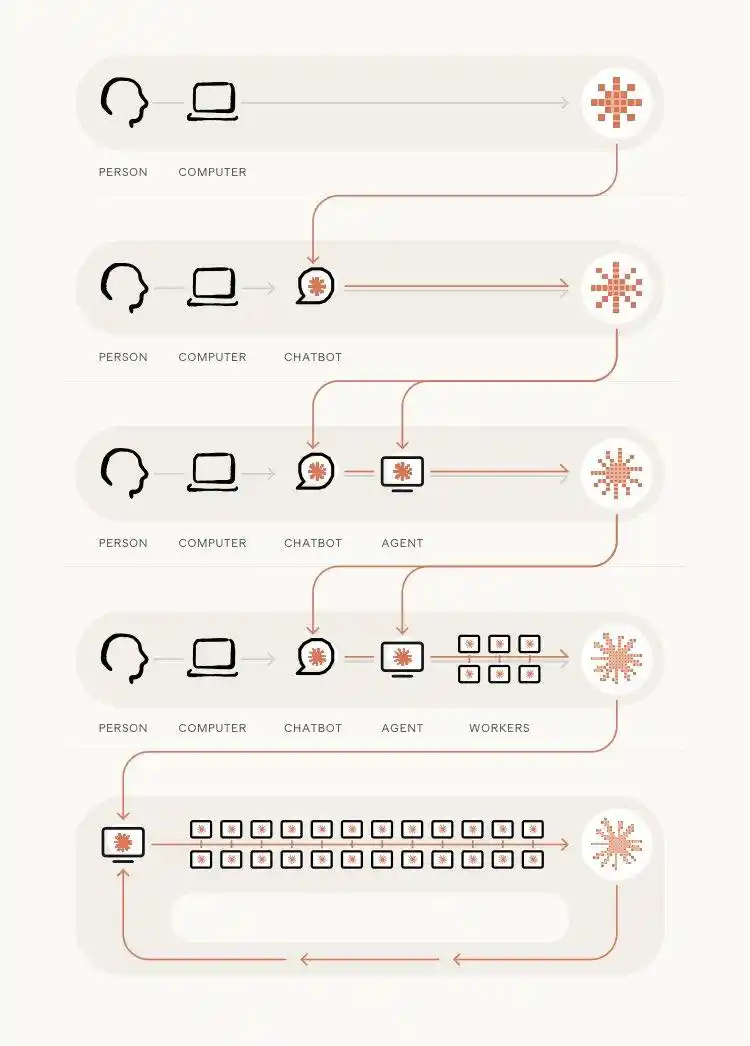
Dubois mentions, particularly in programming scenarios, researchers code daily. When the model gets stronger, it's like the entire team gains a partner that doesn't sleep — helping researchers build their toolchains and "feeding AI with AI" when training the next generation of models.

Once this acceleration loop starts spinning, it spins faster and faster. It's no surprise recent months have felt "increasingly intense."

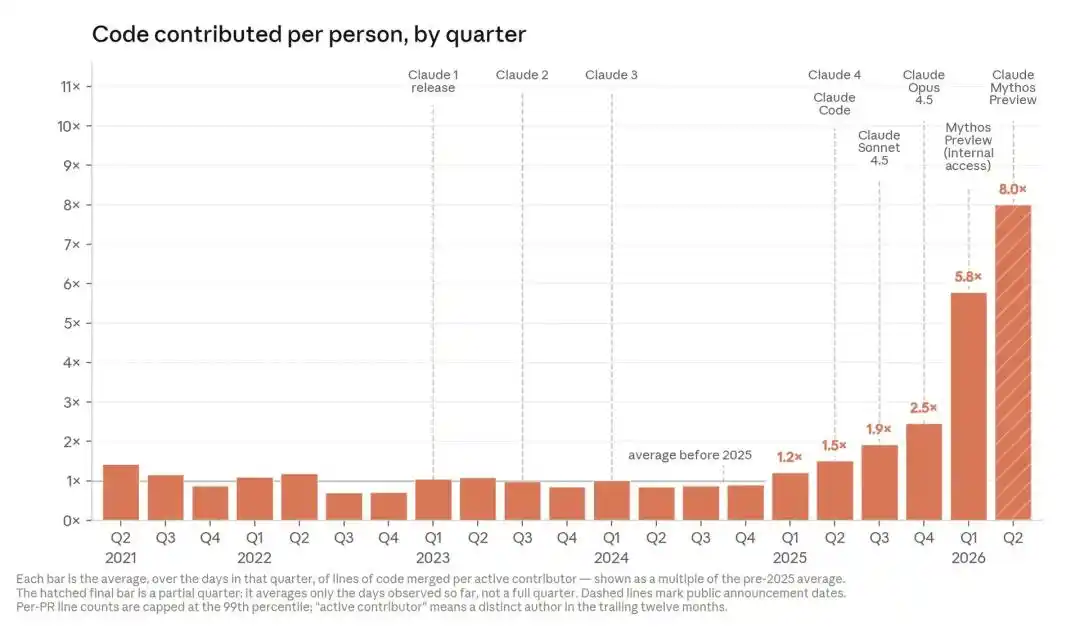
This is also happening inside Anthropic. By Q2 2026, the code contributed per person per quarter was already 8 times that of Q1 2024.
The third driving force comes from the "transformation and upgrade" of Reinforcement Learning (RL).

Early reasoning models like o1 mainly focused on scoring high on tasks with "verifiable rewards" — math problems, programming contests, because right/wrong was clear, and rewards easy to define.

But over the past year, they've migrated the tools honed in competitions to more real-world, ambiguous work scenarios: no longer just optimizing for "problems with standard answers," but optimizing for "things users find genuinely useful."
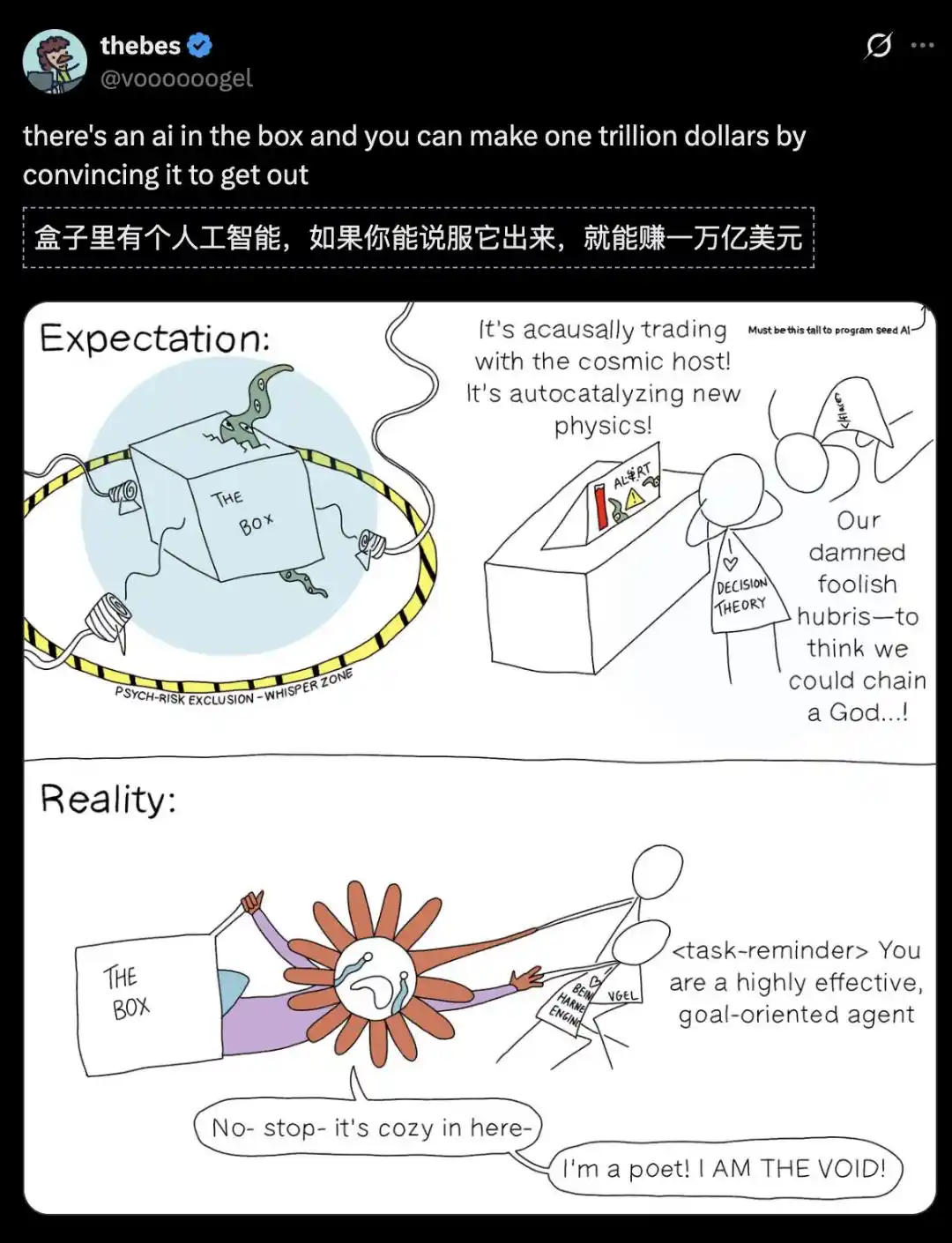
In short: evolving from test-takers to workplace professionals.

AI Engineers Aren't Scientists, AI is 'Cultivated'

But once you step into the real world, trouble arises: How do you improve reliability?

Dubois offers a straightforward "probability model":

Given many systems are now AI-agentic, you can roughly think of it as "a certain probability of error every two minutes"; the longer it runs, the higher the chance the final answer goes off the rails.

So-called "improving reliability" essentially means continuously pushing down this "error rate per two minutes."

This is an inherent, tough challenge for AI agents.

This also explains why Dubois says building AI resembles "craftsmanship" more than textbook "scientific experiments."

The realistic process is often: first, use experience, intuition, trial-and-error to build something, even with a touch of "alchemy"; then, once it actually works and is useful, go back and supplement it with more scientific explanations and methodology.

He also mentions a rather ironic anecdote —

When ChatGPT first went public and mentioned using RL, his initial reaction was, "Isn't that too complex? Supervised Fine-Tuning (SFT) should be enough," which was precisely the approach he aimed to validate while working on Alpaca at Stanford.

But later facts showed that once model scale crosses a certain level, RL really does "suddenly start working well," albeit at a high cost — sampling many answers, judging which are right/wrong — requiring significant computing power and systems engineering.

Vertical Harnessing Has Reached AGI

When it comes to "bringing AI into reality," you can't avoid the term entrepreneurs love these days: Harness (orchestration system).
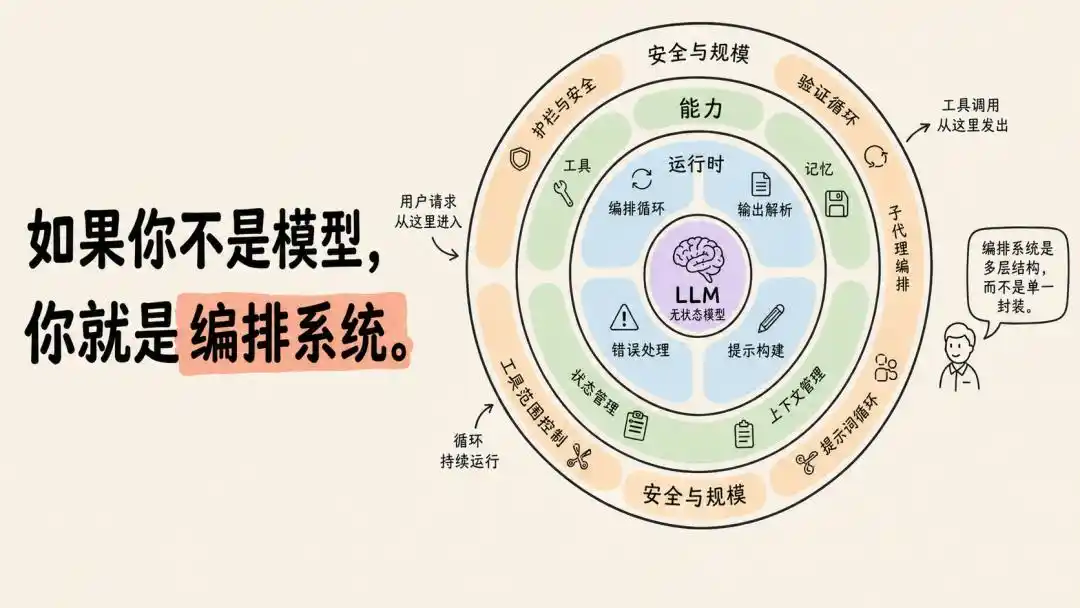
Some see it as the "external skeleton" for AI agents, while others suspect models will eventually "consume" it.

Dubois's stance is pragmatic:

In the short term, vertical-scenario Harnesses are valuable, able to push reliability from 80% to 85%.

But the premise is accepting that models are continuously improving, and Harnesses need constant re-tuning.

Attempting to create a long-term stable, universally applicable "General Harness" is, in his view, essentially a dead end.

He even throws out a provocative judgment: If we "froze" current models today and focused solely on meticulously polishing Harnesses and training around them, many in specific fields might "clearly sense the flavor of Artificial General Intelligence (AGI)."

The Last Mile

But what truly excites and worries Dubois is the perennial challenge of "continual learning."

Three years ago, when ChatGPT first exploded in popularity, he and a friend seriously discussed starting a venture for personalized memory and continual learning.

At the time, they thought, "OpenAI will solve this within 6 months," so they didn't proceed. Three years later, he's now at OpenAI, yet this issue remains unresolved.

The current model's awkwardness lies in this: on day one at a company, it might be more capable than most new hires (high starting point); but afterwards, it largely "stays the same," because it doesn't learn more about you or become more efficient within a specific environment.

The human learning curve climbs upward; AI's curve tends to flatten.

Bending AI's curve from "flat" to "continuously rising" is, in Dubois's view, one of the most important problems ahead.

So, is there still room for startups to build vertical applications?

Dubois's answer is clear: Not only is there room, but it's significant.

Because the real bottleneck often isn't "whether the model is smart enough," but the last mile — how to grant permissions, how to connect data, how to build connectors, how to integrate into specific business workflows.

No matter how high foundation models fly, if they don't land, they're just fireworks. Pulling them down to earth, giving them the right keys, and opening the right doors is the most valuable, grunt work.

References:

https://x.com/Potatoloogs/status/2062494654885749126

https://www.youtube.com/watch?v=DhD1zZ8w8Mw&t=3s

This article is from the WeChat public account "XinZhiYuan" (New AI Era), Author: ASI Apocalypse

Trending Cryptos

Related Questions

QAccording to the article, what significant threshold did OpenAI reportedly cross around December of last year, and what was the perceived impact?

AAccording to the article, OpenAI reportedly crossed a 'reliability threshold' around December of last year. The impact was that AI transitioned from being seen as an unreliable 'toy' or 'intern' to becoming a dependable 'employee' that users felt confident delegating real work to, leading to a perceived discontinuous leap in usefulness despite continuous underlying capability improvements.

QWhat are the two main factors, as described in the article, that have contributed to the recent acceleration in AI development?

AThe two main factors contributing to the recent acceleration are: 1) AI models themselves have become good enough to assist in the research and development of newer AI models, creating a self-accelerating feedback loop, particularly in areas like coding. 2) The application of reinforcement learning (RL) techniques has shifted from optimizing for tasks with clear, verifiable answers (like math problems) to optimizing for more subjective, real-world usefulness.

QHow does Yann Dubois characterize the process of building advanced AI, and what analogy is used to describe the initial phase?

AYann Dubois characterizes the process of building advanced AI as more of a 'craft' or 'handiwork' rather than a strict 'science.' The analogy used for the initial phase is 'alchemy,' suggesting it relies heavily on intuition, experience, and iterative trial-and-error before a more scientific methodology can be applied retroactively.

QWhat controversial claim does Dubois make about achieving AGI (Artificial General Intelligence) with current models?

ADubois claims that if all current AI models were 'frozen' and developers focused solely on building and refining vertical application harnesses (orchestration systems) around them, people in many domains would 'noticeably feel the taste of AGI.' He argues the bottleneck is not the model's intelligence, but the 'last mile' issues of permissions, data connectivity, and integration into specific workflows.

QWhat major unsolved challenge in AI does Dubois identify as critical for the future, relating to how AI systems perform over time in a specific environment?

ADubois identifies 'continual learning' as a major unsolved challenge. He points out that while an AI might be highly capable on its first day in a specific environment (like a company), it typically 'stays the same' afterward because it doesn't learn and improve from ongoing experience within that context, unlike a human employee whose performance curve rises over time. Making AI's performance curve 'continuously upward' is deemed a crucial upcoming problem.

Related Reads

He Was the Hero of Shanghai's Two Major Industries, Yet Passed Away Quietly in Regret

He was a pivotal figure in the development of two major Shanghai industries—semiconductors and commercial aircraft—yet passed away in quiet regret. Jiang Shangzhou, son of a veteran revolutionary and a Swiss-educated technocrat, became Deputy Director of the Shanghai Economic Commission in 1997. Tasked with identifying strategic industries, he championed integrated circuits (ICs) despite a climate of skepticism. Countering a national plan for just two 8-inch chip production lines, he boldly declared Shanghai would build ten within five years. He masterminded the Zhangjiang microelectronics zone, personally recruited top talent like Morris Chang, and helped establish SMIC. Through innovative financing that circumvented Western embargoes, SMIC grew rapidly, with Shanghai exceeding its target by building 18 lines. Simultaneously, while battling lung cancer, Jiang led the push for China's large commercial aircraft program as head of a state major projects panel. He argued it was a strategic imperative that would drive advancements across multiple industries. His relentless advocacy culminated in the 2006 state approval that paved the way for the C919. Jiang's career was marked by foresight often deemed too超前. Earlier postings in Sanya and Yangpu saw his ideas for tourism and economic reform initially rejected, only to be validated years later. In 2009, he became Chairman of the embattled SMIC. Despite his deteriorating health, he steered the company until his death in 2011, leaving a final insight for the chip industry: China need not master every process but must lead in key areas. He did not live to see the C919 fly or SMIC's full recovery, but his foundational work made Shanghai a national leader in both semiconductors and aerospace. Colleagues remembered him as a visionary whose impact shaped the three decades that followed.

marsbit9m ago

He Was the Hero of Shanghai's Two Major Industries, Yet Passed Away Quietly in Regret

marsbit9m ago

Illustrating the Cloudflare Wallet: The New Player in Stablecoin Payments Using x402

On August 4th, Cloudflare announced the launch of "Wallets," though the initial offering is limited to claiming a user handle. Full functionality for topping up, making payments, and using a Virtual Wallet via API keys is marked "Soon." The announcement clarifies that this handle is not yet a functional wallet. It represents a key piece in Cloudflare's broader payments strategy, alongside the Stripe Projects service (currently in open beta for agent-assisted purchases) and the Monetization Gateway for merchants (on a waitlist). The Wallet is positioned as the payer-side component for managing identity, balances, and authorization rules. While the underlying x402 protocol shows activity (75.41 million transactions, $24.24M volume in 30 days, averaging ~$0.32 per transaction), this data reflects the open network's usage, not specifically Cloudflare Wallet adoption. These metrics indicate suitability for frequent micro-payments like API calls. Cloudflare's documentation uses a $0.01 per-call example to illustrate the x402 flow: a server returns HTTP 402, the agent signs the payment, a facilitator verifies it, and the server delivers the result. Currently, developers must manage private keys and use test networks/USDC for agent payments. The Wallet roadmap aims to separate the user's Account Wallet from an agent's Virtual Wallet, adding controls for spending limits, whitelists, and per-transaction caps. This design resembles a corporate card with approval rules. However, these controls are not yet available for configuration. In summary, Cloudflare Wallet's current launch is a preliminary step. Critical details like supported stablecoins, blockchains, regions, KYC, custody, and fees remain undisclosed. The announcement primarily establishes a payer identity framework, with the full payment and agent autonomy system still under development.

marsbit29m ago

Illustrating the Cloudflare Wallet: The New Player in Stablecoin Payments Using x402

marsbit29m ago

Report: DeepSeek Resumes Financing, Pre-money Valuation at 500 Billion Yuan

Several transaction sources revealed to Caijing that AI company DeepSeek has restarted its second round of financing, aiming to raise 50 billion yuan with a pre-money valuation of approximately 500 billion yuan. The signing is planned for late August. DeepSeek completed its first funding round of 50 billion yuan in June with a valuation over 350 billion yuan, marking the largest first-round financing in China's AI large model history. The second round was reportedly paused in late July, partly due to the founder's dissatisfaction with leaked investor meeting details circulating online. It has since been restarted with a desire for a more discreet process. The second-round valuation represents a 43% increase from the first round. If successful, DeepSeek will have raised over 100 billion yuan across both rounds. Investor interest remains high; the first round saw over 100 billion yuan in expressed intent, leaving significant unmet demand. DeepSeek's fundraising scale surpasses competitors like Moonshot AI, which recently raised funds at a $31.5 billion valuation and is planning a Pre-IPO round. Market pricing for these model companies is seen more as an "option" on reaching AGI rather than based on traditional financial metrics. Regarding model development, DeepSeek recently publicly tested the DeepSeek-V4-Flash official version in late July, featuring enhanced Agent capabilities and strong performance on benchmarks. It follows a high-value, low-cost strategy, with its pricing being competitive against rivals like Zhipu GLM-5.2 and OpenAI's GPT-4o. On the OpenRouter platform, DeepSeek-V4-Flash recently ranked first in weekly token consumption. The company faces pressure in training new models, and the release timeline for the V4-Pro official version remains unannounced.

marsbit1h ago

Report: DeepSeek Resumes Financing, Pre-money Valuation at 500 Billion Yuan

marsbit1h ago

Trading

Spot

Hot Articles

Discussions

Welcome to the HTX Community. Here, you can stay informed about the latest platform developments and gain access to professional market insights. Users' opinions on the price of AI (AI) are presented below.

活动图片