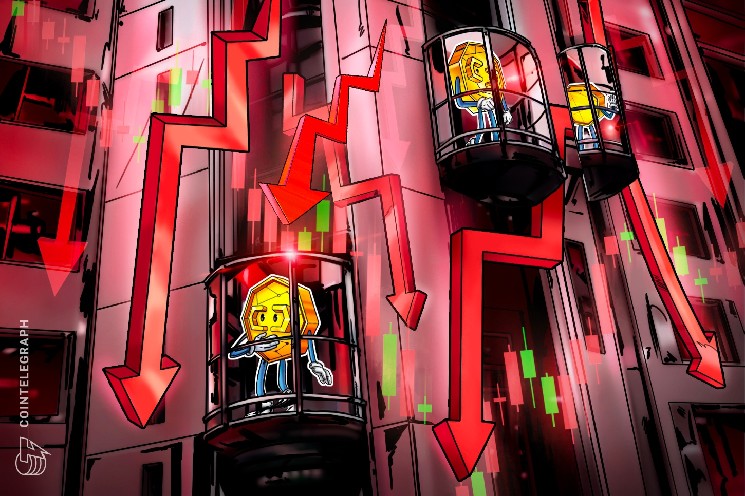
On Tuesday, artificial intelligence trading faced its most intense stress test of the year. It started with a sharp decline in the South Korean stock market led by Samsung Electronics and SK Hynix, before the sell-off spread to the US trading session, hitting memory, storage, and semiconductor stocks particularly hard.
The South Korean KOSPI index tumbled nearly 10% at one point on Tuesday, triggering a 20-minute trading halt. Samsung Electronics and SK Hynix, core players in the global AI supply chain, both suffered heavy losses. According to The Wall Street Journal, the downturn subsequently spread to US stocks, with the Nasdaq Composite closing down 2.2% and the S&P 500 falling 1.4%. AI and chip-related stocks led the decline as investors began reassessing the uncertainties surrounding data center construction costs and future revenue realization.
Some view this global AI stock sell-off as "GLM's DeepSeek moment," mirroring the AI stock plunge triggered by DeepSeek's release in early 2025, where an overly powerful open-source model sparked skepticism about US AI dominance. Investment bank Jefferies noted in a report that GLM-5.2 has entered the top three in the global large language model rankings.
Nathan Lambert, a senior research scientist at Allen Institute for AI and author of Interconnects, called it a "step change" for open-source agent models and compared the market reaction to the shock caused by DeepSeek R1 in early 2025. This discussion within tech circles was quickly picked up by financial media. Barron's interpreted Tuesday's tech stock decline as the return of "cheap Chinese AI" concerns, agreeing this drop is a repeat of January's DeepSeek shock. Gavekal Research analyst Will Denyer was quoted saying GLM-5.2 is one of the most impressive Chinese challenges to US AI dominance yet. For investors, the issue is not just stronger Chinese models, but whether the current valuations of US tech giants, supported by hundreds of billions in data center spending, can hold if cheaper, open-source models become good enough.
Arun Sai, senior multi-asset strategist at Pictet Asset Management, told the Financial Times that the market is facing two pressures simultaneously: growing doubts about AI investment returns and rising interest rate expectations due to US economic resilience. Ben Inker, co-head of asset allocation at GMO, also noted that these stocks had risen too much and were due for a pullback.
The extent of the decline in US chip stocks suggests money is not fleeing the entire tech sector, but rather the hardware chain that previously benefited most from the AI infrastructure narrative. Eric Johnston, chief equity and macro strategist at Cantor Fitzgerald, summarized current trading as selling "the companies spending the most money," pointing to hyperscalers like Alphabet, Amazon, and Meta, which still plan to invest hundreds of billions in AI data centers.
The South Korean market decline might be more attributable to specific events. Lee Chan-jin, head of South Korea's Financial Supervisory Service, said on Monday that the country's previous approval of leveraged single-stock ETFs related to Samsung and SK Hynix was too hasty. The market was also hit by MSCI's decision not to include South Korea on its watchlist for developed market status, dashing investors' expectations of passive fund inflows for now.
Sell-side analysts are focusing on Micron's upcoming earnings report. Dilin Wu, strategist at Pepperstone Group, told Bloomberg that Micron's report this week will be a key test for hardware chain sentiment; strong results would directly benefit Samsung and SK Hynix. Lee Jae Mahn, a strategist at Hana Securities in Seoul, noted that SK Hynix's rally relative to Samsung has been too fast, reflecting excessive optimism.
Another unsettling variable for the market is the increasing reliance on debt to finance AI infrastructure. The Guardian cited Ipek Ozkardeskaya, senior analyst at Swissquote, who noted that SpaceX's pursuit of large-scale debt financing soon after its IPO has renewed investor concerns about major tech companies over-investing in AI infrastructure and supporting this race through debt.
However, bulls are not ready to declare the AI trade over. Dan Ives, global head of technology research at Wedbush Securities, stated in a Tuesday report that the South Korean market pullback would pressure US tech stocks, but he still believes the AI revolution is in its early stages, calling this more of a "gut check" for the tech trade. Jonathan Schiessl, deputy chief investment officer at Westminster Asset Management, also termed this decline a necessary correction after overheating, not the end of the story.
This suggests Tuesday's drop is more a market repricing of the AI trade rather than a denial of AI demand itself. The core question shifts from "Will AI grow?" to "Is the price paid for that growth too high?": Who can convert capital expenditure into cash flow, whose valuation is already overstretched, and who will be forced to sell when leverage and crowded trades unwind.