A Quick Look at the Latest Portfolio of the 24-Year-Old 'AI Stock God': 60% Allocation Hedges Against Semiconductor Downturn

Odaily星球日报Published on 2026-05-18Last updated on 2026-05-18

Abstract

Summary: The article analyzes the latest 13F filing from "AI stock prodigy" Leopold Aschenbrenner's fund, Situational Awareness LP, for Q1 2026. The fund's holdings surged to $13.7 billion, with a significant 32.5% net inflow. Key portfolio adjustments reveal a dual strategy: * **Hedging Semiconductor Downturn:** Over 60% of the fund's *notional value* is allocated to massive put options on major AI semiconductor and hardware stocks (e.g., NVDA, AVGO, AMD, SMH ETF). This acts as a high-leverage hedge against potential short-term volatility or correction in the chip sector. * **Long-term Bullishness on AI Infrastructure:** Alongside the hedges, the fund maintains and increases core long positions in companies providing critical AI infrastructure. This includes substantial equity stakes in CoreWeave (GPU cloud services), Bloom Energy (on-site power), and various power/electrical/data center firms (KEEL, IREN, etc.). Other notable moves include switching Intel exposure from high-leverage calls to minimal stock, exiting optical networking stocks (LITE, COHR), and taking profits in some positions like Bloom Energy and CoreWeave calls. The analysis concludes that Aschenbrenner is not simply turning bearish on AI. Instead, the strategy reflects a nuanced view: extreme caution toward near-term "chip maker" valuations deemed potentially frothy, coupled with strong conviction in the long-term scarcity and value of the underlying *infrastructure* (power, data centers, cloud capac...

Original | Odaily Planet Daily (@OdailyChina)

Author | Azuma (@azuma_eth)
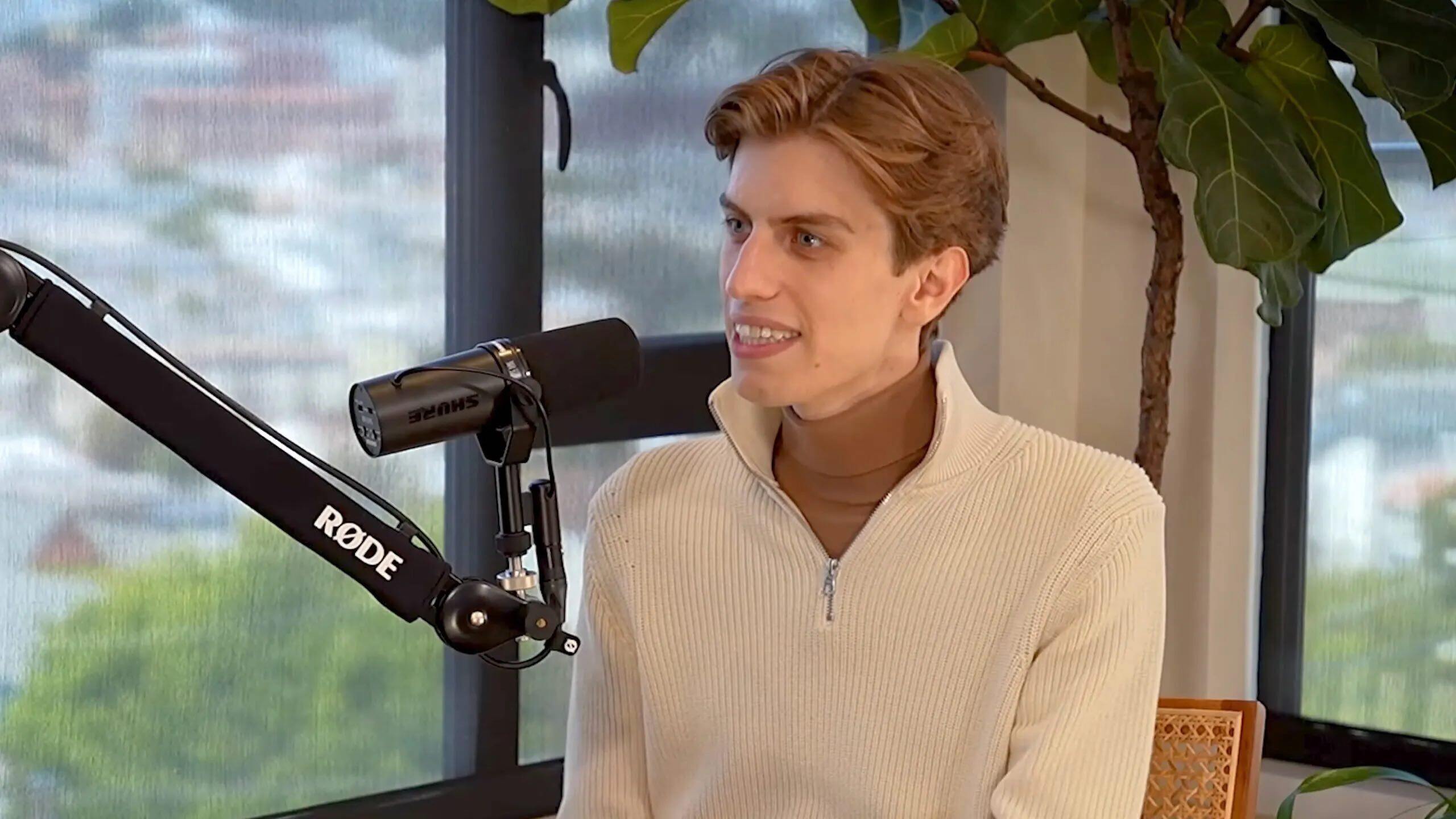
No confidentiality request! No complete liquidation! The newly crowned "AI Stock God," Leopold Aschenbrenner, and his fund Situational Awareness LP officially released their 13F filing this evening.

  • Odaily Note: For details on Leopold Aschenbrenner's personal story, please refer to "SBF's Junior, Turned $225 Million into $5.5 Billion in One Year."

This means our first hypothesis from this morning's article, "Could Be Revealed Today, the Internet is Awaiting the Version Answer from the 24-Year-Old 'AI Stock God'," is confirmed. Situational Awareness LP submitted its filing quite late on the May 15th deadline, preventing the SEC from publishing it on its website that day. As a result, the market had to endure another weekend, finally seeing the fund's holdings disclosure after the SEC resumed work on Monday.
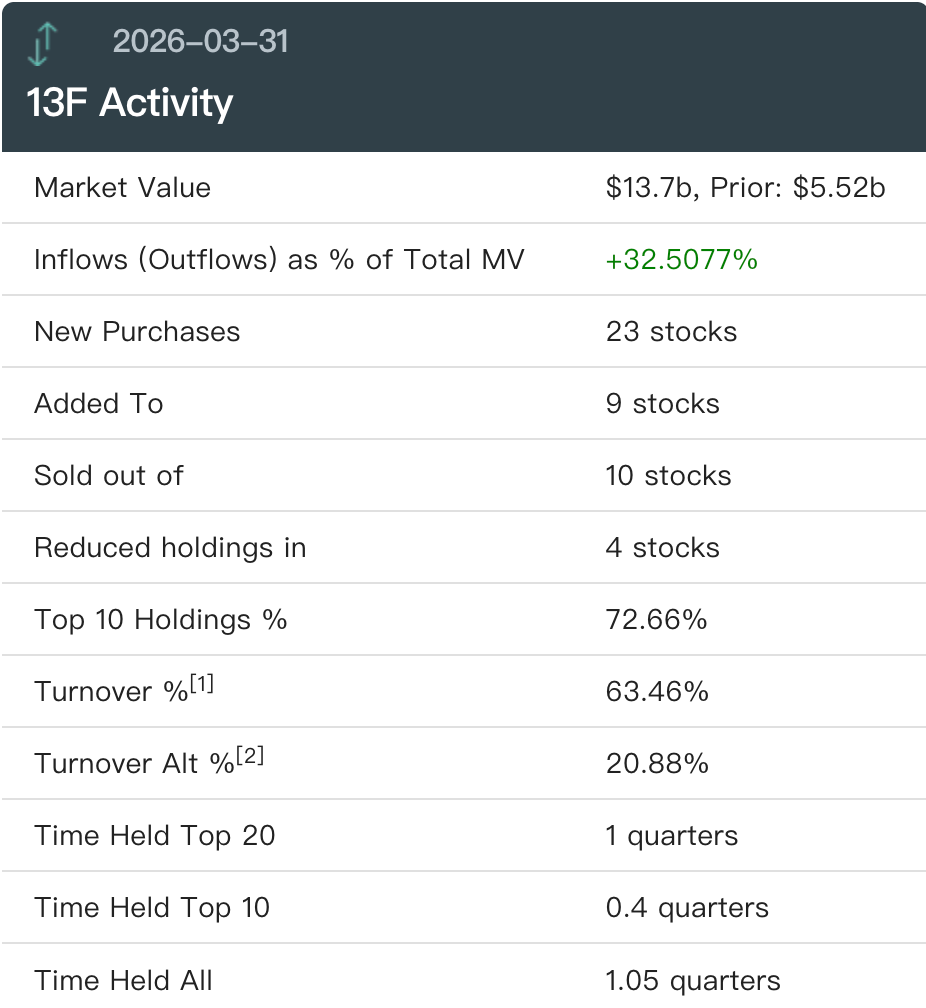
According to this latest 13F filing, as of March 31, 2026, the nominal total value of Situational Awareness LP's holdings has increased to $13.7 billion, more than doubling (up 148%) from $5.52 billion on December 31 of last year.

  • Odaily Note: It's important to note that in the statistical methodology of US stock 13F filings, the market value displayed for option assets is typically the "notional value" of the underlying stocks, not the actual premium cost paid by the fund. This means that although the fund has built a "semiconductor hedge wall" with nominal assets of hundreds of billions of dollars, the actual cash cost (maximum potential loss) consumed is much smaller, representing a typical high-leverage macro hedge.

Additionally, this quarter, net capital inflows accounted for 32.51% of the fund's total holding value, indicating that the fund's explosive growth is not only due to portfolio appreciation but also involves substantial external new capital subscriptions (i.e., fresh capital injections).

Frenetic Portfolio Adjustment in Progress

The filing also shows that Situational Awareness LP executed substantial portfolio adjustments in the first quarter of this year.

  • New Purchases: 23 stocks (including options);
  • Added To: 9 stocks;
  • Sold Out Of: 10 stocks (including options);
  • Reduced Holdings In: 4 stocks (including options).

New Purchases: 60% Allocation Hedges Semiconductor Downturn
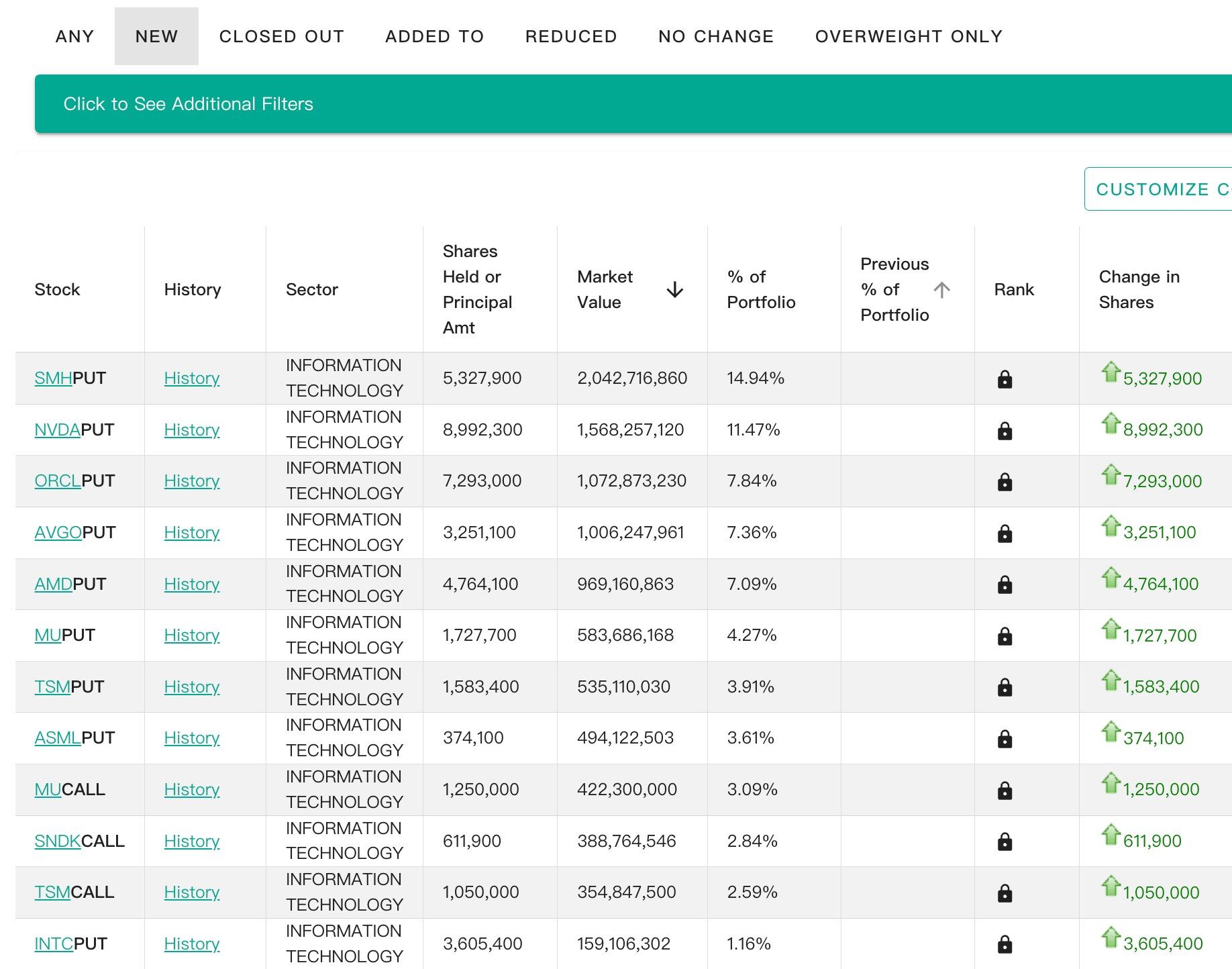
  • Odaily Note: The chart above only covers new stock purchases with values exceeding $100 million. For the complete list of all 23 new purchases, click the "Portal."

First, looking at the new purchase actions, this is the most shocking information in Situational Awareness LP's entire 13F report — in the first quarter, the fund systematically hedged risks for the AI semiconductor and computing hardware sector through large-scale put option positions.

Looking directly at the data:

  • SMH PUT (VanEck Semiconductor Core ETF Put Options): 14.94% of portfolio (market value $2.04 billion) — Largest new position;
  • NVDA PUT (NVIDIA Put Options): 11.47% (market value $1.56 billion) — Second largest new position;
  • ORCL PUT (Oracle Put Options): 7.84%;
  • AVGO PUT (Broadcom Put Options): 7.36%;
  • AMD PUT (AMD Put Options): 7.09%;

Just these top five put option holdings account for 48.7% of Situational Awareness LP's $13.7 billion nominal total holding value. Adding subsequent put options on Micron (MU), TSMC (TSM), ASML (ASML), and Intel (INTC), the fund has over 60% of its nominal portfolio betting on or hedging against declines or severe volatility in core AI hardware stocks.

It's also notable that Situational Awareness LP purchased both call and put options on the same stock, such as buying Micron put options (MU PUT, 4.27%) while also buying MU CALL (3.09%), and buying TSMC put options (TSM PUT, 3.91%) while also buying TSM CALL (2.59%).

This is a two-way bet strategy commonly used by hedge funds. It suggests the fund believes that Micron (memory chips) and TSMC (foundry) could experience stock price volatility far exceeding market expectations in upcoming 2026 earnings or industry cycles, possibly due to geopolitics or extreme supply-demand imbalances — profits can be made on both sides as long as the unidirectional move is large enough.

Increased Holdings: Common Stock Still Favors SanDisk, CRWV
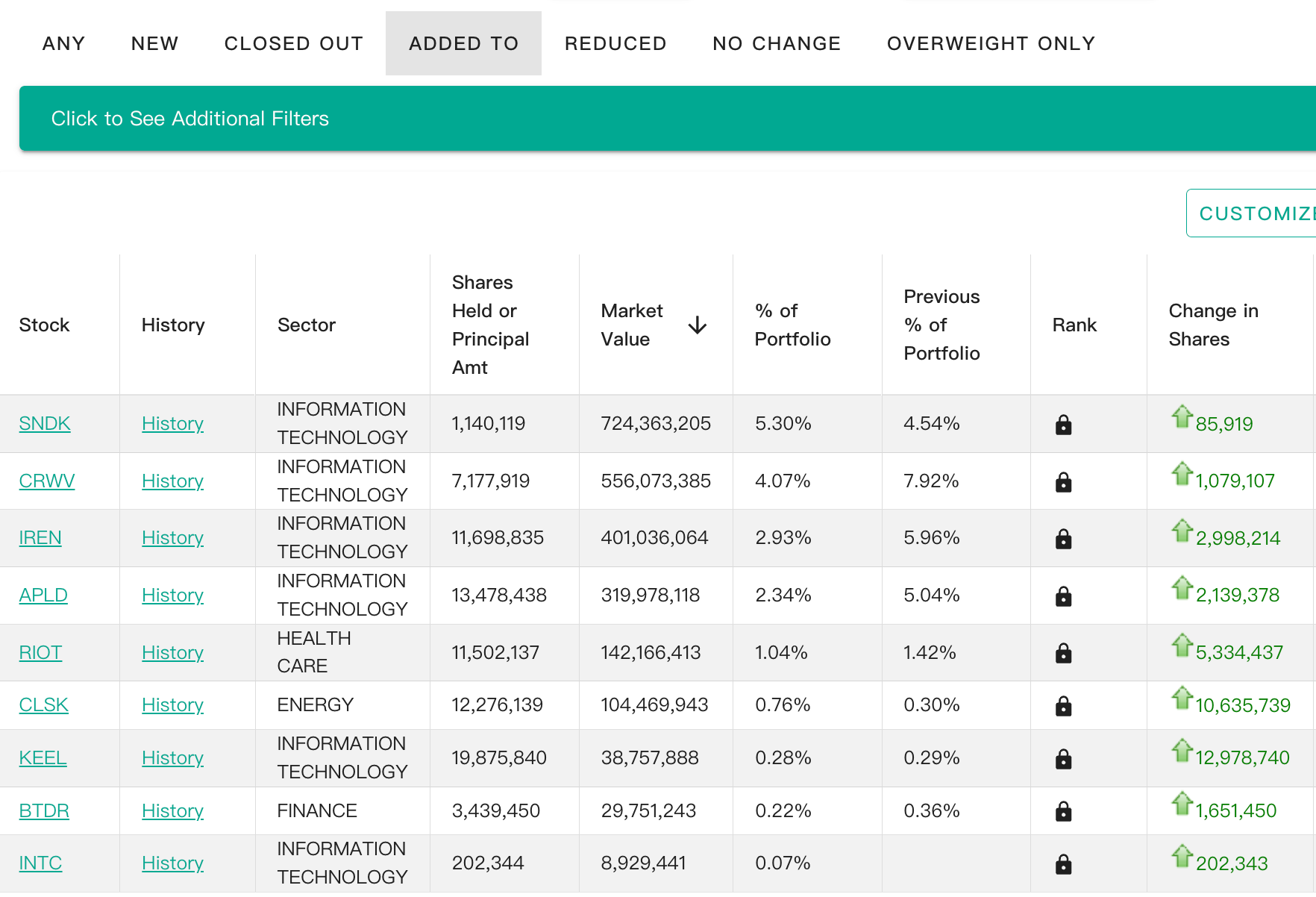
Regarding increased holdings, Situational Awareness LP chose not to use options but rather added to 9 stocks via common shares.

In Q1, Situational Awareness LP slightly increased its position in SanDisk (SNDK) by 85,000 shares, bringing its total holdings to 1.14 million shares, with a holding value of $724 million, accounting for 5.30% of the entire investment portfolio. This is one of the very few super-heavyweight holdings in Situational Awareness LP's portfolio that exists entirely in common stock form.

Another noteworthy move is that Situational Awareness LP significantly increased its position in CoreWeave (CRWV) by over 1.07 million shares in Q1, pushing the holding value to $556 million, representing 4.07% of the portfolio. CoreWeave is one of the most closely watched infrastructure companies in the current AI GPU cloud services field and a key partner in the NVIDIA ecosystem. Shortly after its IPO, Situational Awareness LP swiftly incorporated it into its core portfolio and aggressively increased its position. This indicates that while the fund is short-term bearish on NVIDIA's valuation (via PUTs), it remains wildly optimistic about cloud giants that directly convert GPUs into computing power for leasing to large models.

Furthermore, Situational Awareness LP also increased holdings in KEEL, IREN, APLD, RIOT, CLSK, BTDR, and other computing or power infrastructure companies, continuing the logic advocated by Leopold Aschenbrenner that "electricity is the new oil."

Liquidated Holdings: Unloading Intel Call Leverage, Exiting Optical Communications
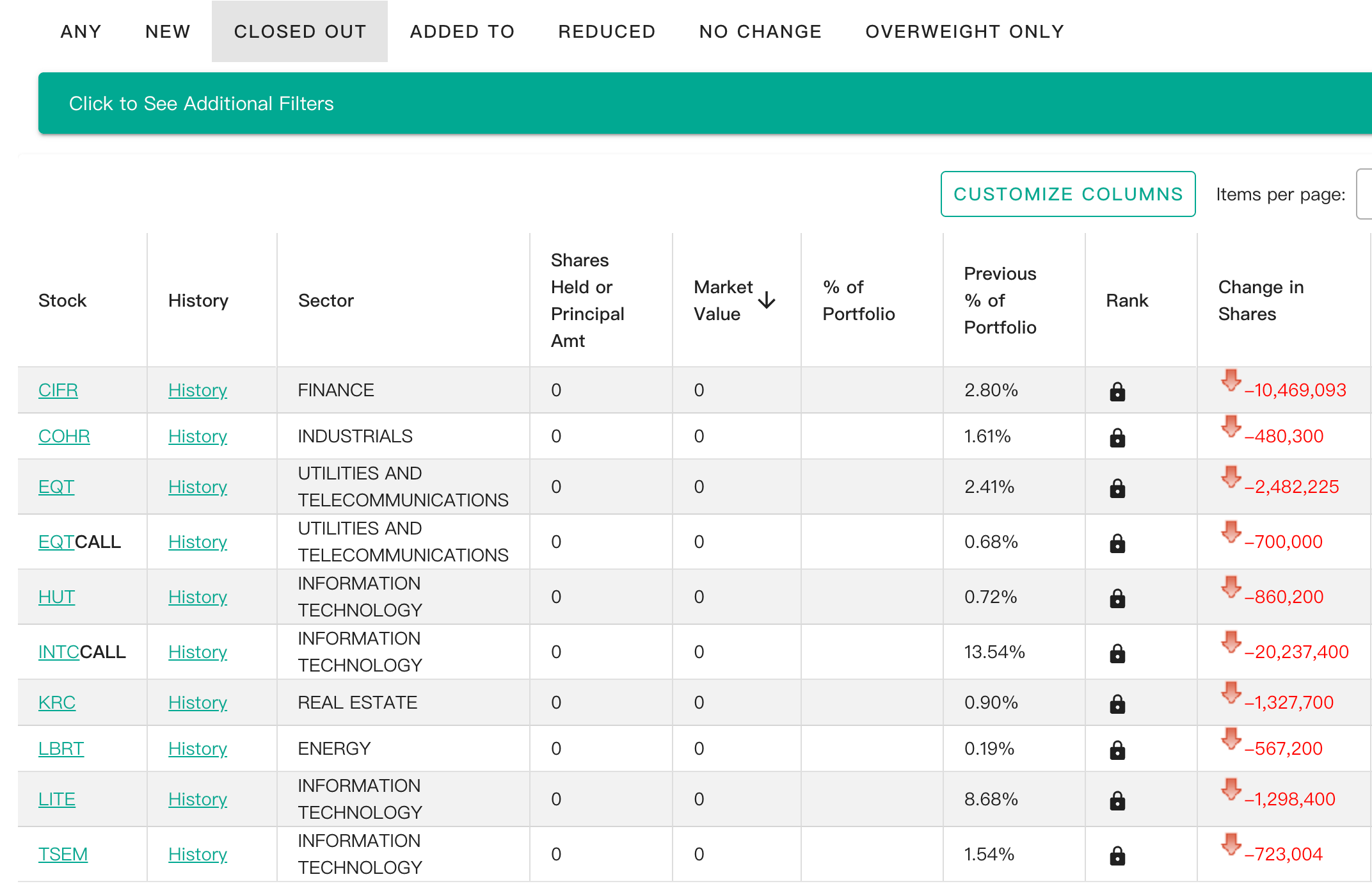
Regarding liquidated holdings, Situational Awareness LP's most significant move was completely unwinding the leverage on Intel call options (INTC CALL). In the previous disclosure period, Situational Awareness LP had allocated over 13% of its portfolio to Intel call options (a staggering 2.023 million option contracts), representing an extremely high-leverage directional bet. This quarter, it liquidated this position entirely, shifting to holding a minimal common stock position in Intel (0.07%).

Additionally, Situational Awareness LP completely liquidated its positions in LITE (previous weight 8.68%) and COHR (previous quarter weight 1.61%) in Q1. LITE and COHR are among the world's leading optical communication chip and optical transceiver module giants. This liquidation suggests Situational Awareness LP is exiting the AI optical module/network hardware sector.

Situational Awareness LP also liquidated its positions in CIFR (previous weight 2.80%) and HUT (previous weight 0.72%) in Q1. Both are cryptocurrency mining companies (including CORZ, which was reduced in the next section). Considering the increased holdings in similar companies like RIOT, CLSK, and BTDR, this might just be a routine portfolio adjustment.

Reduced Holdings: Significant Profit-Taking on BE
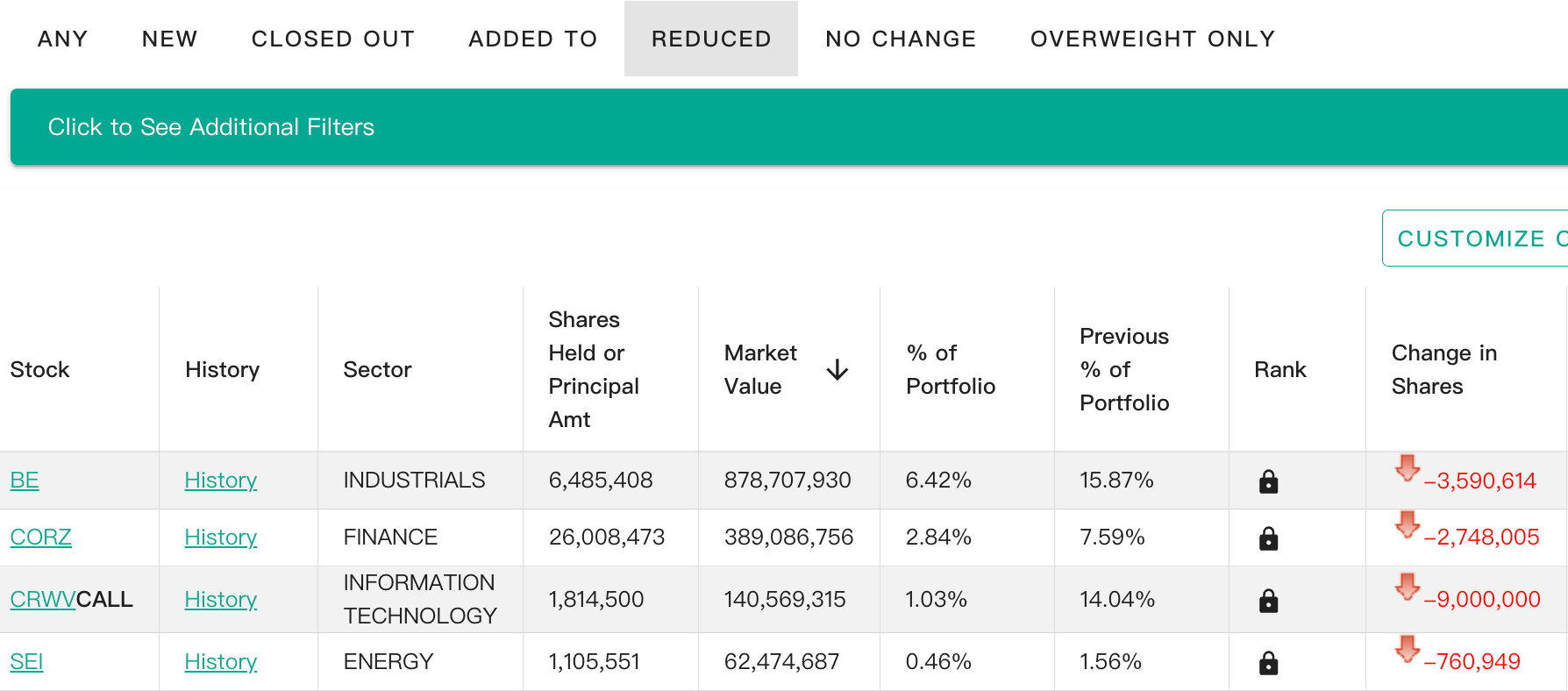
Finally, looking at the reduced holdings, Bloom Energy (BE) was the top holding disclosed in Situational Awareness LP's previous 13F filing. In Q1, the fund reduced its position by 3.59 million shares, with the portfolio weight plummeting from 15.87% last quarter to 6.42%.

Bloom Energy focuses on solid oxide fuel cell technology and is a key player in providing "on-site power" for data centers, bypassing traditional power grids for direct supply. Considering the retained position is still substantial, the reduction likely does not mean Situational Awareness LP is no longer bullish on the company, but rather appears to be a routine profit-taking move.

CoreWeave call options (CRWV CALL) were Situational Awareness LP's second-largest reduction (portfolio weight plummeted from 14.04% to 1.03%). As mentioned earlier, the fund has shifted to holding CRWV via common stock, so this is more of a de-leveraging operation.

Situational Awareness LP also reduced its position in Core Scientific (CORZ) by 2.74 million shares, lowering the portfolio weight from 7.59% to 2.84%. CORZ is a leading Bitcoin mining company transitioning to AI computing power hosting. However, given that Situational Awareness LP increased holdings in other mining companies still in the transition phase with more attractive valuations this quarter, reducing CORZ seems more like partial profit-taking.

What Exactly Is the 'AI Stock God' Thinking?

Looking only at the surface data of this 13F, many might draw a simple, crude conclusion — Leopold Aschenbrenner, who once proclaimed "AGI by 2027," has turned bearish on AI.

But the reality is clearly not that simple. Within Situational Awareness LP's portfolio structure, there simultaneously exist two seemingly contradictory yet highly unified main themes.

  • On one side, there is extreme vigilance toward short-term valuation bubbles in the "chip sector." Situational Awareness LP has used a shockingly large nominal allocation of PUTs (put options) to essentially "buy crash insurance" for nearly the entire AI semiconductor industry chain, including NVIDIA, Broadcom, and others;
  • On the other side, there is an almost obsessive optimism about the long-term demand for AI infrastructure. Whether it's CoreWeave, Bloom Energy, or a series of companies related to electricity, transformers, and data centers, they all essentially point to the same deterministic logic — the war for AI computing power has entered a deep-water phase.

This is perhaps Situational Awareness LP's most core judgment at present. What will truly be scarce in the future may not necessarily be GPU chips themselves, but rather the energy, power systems, and data center infrastructure required to sustain these GPUs' continuous operation. GPU production can scale, and advanced process technology will eventually ramp up, but megawatt-level power supply capacity, transformers, transmission systems, and large-scale data center construction cycles are difficult to replicate simultaneously in a short time. Compared to the "selling shovels" logic already fully priced in by the market, Leopold Aschenbrenner seems more focused on where the real potential bottlenecks might emerge in the next stage of the AI industry.

This also explains why Situational Awareness LP would simultaneously buy large-scale semiconductor put options to hedge against severe volatility risks in the AI hardware sector while continuing to heavily invest in GPU cloud services, power, and computing infrastructure assets.

In a sense, this 13F is less a simple holdings disclosure and more like Leopold Aschenbrenner's directional roadmap judgment for the next stage of evolution in the AI industry chain.

When a genius investor who rose to fame by going all-in on AI begins to deploy multi-billion-dollar nominal positions to buy insurance for the AI sector, it at least indicates one thing — even the most steadfast AI bulls of this era have begun to take volatility itself seriously.


Related Questions

QWhat is the total nominal value of Situational Awareness LP's holdings as of March 31, 2026, and how does it compare to the previous quarter?

AAs of March 31, 2026, Situational Awareness LP's total nominal holdings value was $13.7 billion. This represents an increase of 148% from the $5.52 billion reported on December 31, 2025.

QWhat is the most significant new position taken by Situational Awareness LP in Q1, and what does it consist of?

AThe most significant new position was a large-scale hedge against the AI semiconductor and computing hardware sector using put options. Notably, the top five put option holdings (on SMH, NVDA, ORCL, AVGO, and AMD) alone accounted for 48.7% of the fund's total nominal value.

QHow did Situational Awareness LP adjust its holdings in CoreWeave (CRWV) during Q1?

ASituational Awareness LP significantly increased its holdings in CoreWeave by over 1.07 million shares, bringing the position's value to $556 million (4.07% of the portfolio). It also drastically reduced its position in CRWV call options, lowering their weight from 14.04% to 1.03%, suggesting a move away from leverage into direct stock ownership.

QWhat major sector did Situational Awareness LP exit from in Q1, and which stocks were sold?

AThe fund exited from the AI optical module/network hardware sector. It completely sold out of its positions in LITE (which had an 8.68% weight previously) and COHR (which had a 1.61% weight previously).

QAccording to the article's analysis, what is the seemingly contradictory but unified core investment thesis behind Situational Awareness LP's Q1 portfolio adjustments?

AThe fund's strategy reflects two unified lines of thought: 1) Extreme caution towards short-term valuation bubbles in the 'chip' end of the AI sector, hedging with massive put options. 2) Persistent, almost obsessive optimism about the long-term demand for AI infrastructure, particularly the underlying energy, power systems, and data center facilities needed to power GPUs, which are seen as the next potential bottleneck.

Related Reads

Blocked Its Own Treasure, WeChat AI Steps Up

Tencent's stock surged over 10% on June 2nd amid reports that WeChat, with 1.43 billion monthly users, is finalizing tests for a native AI Agent. The reported feature, accessible by swiping right from the main interface, allows users to issue commands in natural language. The AI then decomposes tasks and automatically calls upon relevant Mini Programs within WeChat to complete actions like ordering food, booking tickets, or making payments, creating a closed-loop service execution system. This strategic shift follows the internal conflict and subsequent "blocking" of Tencent's standalone AI app, Yuanbao, by WeChat for violating sharing rules during a 2026 Spring Festival promotion. The incident highlighted a lack of internal consensus and exposed the weakness of competing in the standalone AI assistant arena against rivals like ByteDance's Doubao (345M MAU) and Alibaba's Qianwen. The new WeChat AI Agent aims to leverage WeChat's unique assets—its massive user base, standardized Mini Program APIs, WeChat Pay, and identity system—to move from simple content generation to actual task execution. Analysts note this changes the competitive landscape from model benchmarks to which AI can connect to more real-world services. However, success depends on key variables: the capability of Tencent's underlying Hunyuan model, managing massive inference costs, and redesigning incentives for Mini Program developers whose traffic might be bypassed. The move is seen as an attempt to keep user service intent within WeChat's ecosystem as AI begins to redefine how users access services.

marsbit56m ago

Blocked Its Own Treasure, WeChat AI Steps Up

marsbit56m ago

ByteDance Adopts Arm CPUs, Jensen Huang: So Sad I Didn't Buy Arm

**Summary:** At Computex 2026, Arm CEO Rene Haas announced that ByteDance and Oracle have adopted Arm's self-designed Arm AGI data center CPU. The company expects significant revenue growth from this product, projecting $20 billion in demand for the 2027/2028 fiscal years. Haas noted that restricting AI-capable CPUs from the US to China is nearly impossible due to their widespread applications. Arm's stock has surged dramatically this year, notably rising 16% after NVIDIA's Arm-based Vera CPU and RTX Spark announcements. A highlight was the informal, humorous on-stage conversation between Haas and NVIDIA CEO Jensen Huang. Huang joked about NVIDIA's failed attempt to acquire Arm and playfully lamented selling his Arm shares. Both executives showed a clear sense of camaraderie and shared regret over the missed merger. Key technical topics were discussed: 1. **AI PC Design:** Huang explained NVIDIA's RTX Spark superchip (with a 20-core Arm CPU) is designed for future AI agents that will autonomously run and use tools on PCs, blending local and cloud processing. 2. **Agent vs. OS:** Huang emphasized the operating system remains crucial, as AI agents rely on its APIs and tools to function. 3. **Growth Constraints:** He identified the shift to "useful AI" that generates profitable tokens as a primary driver for immense, almost limitless, computational demand. Haas outlined Arm's strategy across PC and data centers. For PCs, Arm collaborates with partners like NVIDIA and MediaTek, offering its compute subsystem (CSS) for custom SoCs. In data centers, its Arm AGI CPU (built on TSMC's 3nm process) has gained major partners including OpenAI, Meta, and now ByteDance and Oracle. Arm presented a multi-year roadmap for its in-house CPU line. The article concludes that while GPUs dominated the AI training race, the explosion of AI agents is shifting significant focus to CPUs for inference, state management, and tool orchestration. The industry is trending towards vertical integration, with companies like cloud providers designing chips and chip/IP firms offering full solutions, all competing to deliver more efficient computing per watt.

marsbit1h ago

ByteDance Adopts Arm CPUs, Jensen Huang: So Sad I Didn't Buy Arm

marsbit1h ago

New Wall Street Play: Yen Shorts Still Adding, But Japan Stocks Don't Rely on Carry Trade Unwinding

On June 3rd, USD/JPY hit 160.44, its highest level since July 2024, while the Nikkei 225 surged past 68,000 points. Contrary to popular narratives of an imminent "carry trade unwind" akin to August 2024, data reveals a more complex picture. Speculative net short positions in yen futures have actually increased, reaching -114,667 contracts by late May, suggesting traders are doubling down rather than retreating. Meanwhile, Japan's Finance Ministry conducted its largest-ever single-round FX intervention (11.73 trillion yen) in April-May but failed to hold the 160 yen line. The Nikkei's rally is not driven by carry trade dynamics. Foreign investors are aggressively buying Japanese stocks, with net purchases in 2026 running nearly 16 times higher than 2025 levels. This inflow is concentrated in AI and semiconductor-related stocks like SoftBank and Socionext, fueled by positive sector outlooks, rather than being a flight from unwinding yen shorts. Furthermore, the Nikkei has continued climbing despite the Bank of Japan's (BOJ) rate hikes to 0.75%. This disconnect exists because the current equity boom is fueled by AI-driven foreign investment, not reliant on cheap yen funding. However, this relationship remains fragile. Should the BOJ hike rates further (e.g., to 1.0%) while dollar weakness increases carry trade costs, the trajectories of the yen and Japanese stocks could reconverge, potentially triggering volatility.

marsbit1h ago

New Wall Street Play: Yen Shorts Still Adding, But Japan Stocks Don't Rely on Carry Trade Unwinding

marsbit1h ago

Broadcom's Q3 Guidance Misses Expectations by $12 Billion, After-Hours Trading Plummets Over 13%, AI Narrative "Cooling"?

On June 3, Broadcom released record Q2 FY26 results with revenue of $22.19B, up 48% YoY, and AI chip sales of $10.8B, up 143%. Adjusted EPS of $2.44 beat estimates. However, its Q3 AI semiconductor revenue guidance of $16B, while up over 200% YoY, fell roughly $1.2B (7%) short of analyst consensus expectations of $17.2B. This miss, coupled with slightly weaker-than-expected software revenue, triggered a severe market reaction. CEO Hock Tan maintained the FY26 AI revenue outlook of over $100B but did not raise it, disappointing investors who had priced in more robust growth. The stock plummeted over 13% in after-hours trading, erasing roughly $270B in market cap. The sell-off extended to peers like Marvell. A key concern for markets, particularly for Chinese optical module suppliers, was Tan's comment that the contribution of AI networking (e.g., Ethernet switches, optical interconnect chips) to AI revenue, currently near 40%, is expected to normalize to around 30% over time, signaling a potential peak in growth for that segment. Despite the guidance shortfall, Tan reiterated that AI demand remains "insatiable" and reaffirmed the long-term target of exceeding $100B in AI revenue by FY27. The reaction highlights the heightened sensitivity and premium valuation placed on AI-exposed stocks, where anything less than stellar guidance can prompt significant profit-taking. The broader question is whether this represents a cooling AI narrative or a correction in overstretched valuations.

marsbit1h ago

Broadcom's Q3 Guidance Misses Expectations by $12 Billion, After-Hours Trading Plummets Over 13%, AI Narrative "Cooling"?

marsbit1h ago

Trading

Spot
Futures

Hot Articles

Discussions

Welcome to the HTX Community. Here, you can stay informed about the latest platform developments and gain access to professional market insights. Users' opinions on the price of AI (AI) are presented below.

活动图片