AI Creates New Virus, Science Paper Confirms, Capable of Unlimited Self-Replication

marsbitPublished on 2026-08-10Last updated on 2026-08-10

Abstract

AI Designs Novel, Self-Replicating Viruses in Groundbreaking Science Study A landmark study published in Science by researchers from Stanford University and the Arc Institute demonstrates that an AI model, Evo, has successfully designed novel, functional viruses from scratch. Trained on trillions of nucleotides across diverse life forms, Evo generated 700,000 candidate viral genomes. From these, 285 were synthesized as DNA and tested in E. coli bacteria. Remarkably, 16 of these AI-designed viruses were not only viable and self-replicating but some also outperformed their natural counterpart, the bacteriophage ΦX174, in the speed of bacterial lysis. One variant, Evo-Φ36, even incorporated a structural protein from a distantly related virus, showcasing the AI's ability to combine functional elements in novel ways. This research marks the first time a complete, functional life-form genome has been designed de novo by artificial intelligence. It represents a pivotal shift into the era of generative genomic design. A key application demonstrated is in combating antibiotic-resistant bacteria. While naturally occurring bacteriophages often fail against resistant strains, a cocktail of AI-generated phages successfully killed three different resistant E. coli variants. The study suggests AI could revolutionize fields like phage therapy by rapidly generating new antimicrobial agents, potentially keeping pace with bacterial evolution in a way traditional drug development cannot. Thi...

For the first time, AI has created a virus that does not exist in nature!

The news instantly set the internet ablaze.
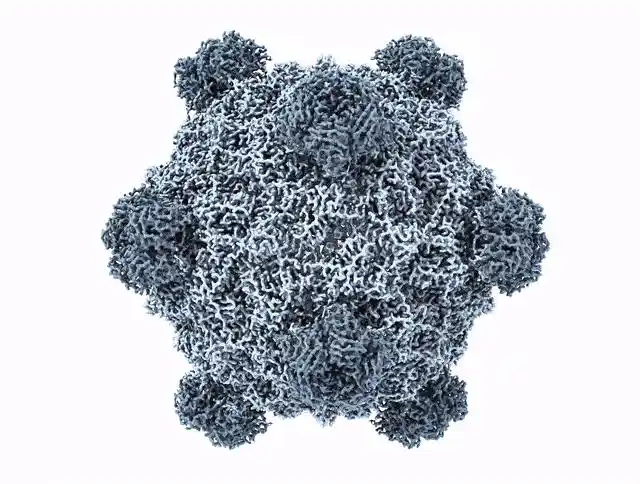
Today, a groundbreaking study from Stanford University and the Arc Institute has been published in the top journal Science.

In this experiment, AI generated 700,000 viral genomes in one go. From these, 285 were selected for DNA synthesis.

The final result is astonishing—

Sixteen viruses not only "survived," but some lysed bacteria at speeds that directly outperformed the original natural virus.
This is the first time in human history that AI has designed, from scratch, the complete, viable genome of a living organism.

AI Writes 16 Viruses By Hand, All Are Alive

The model that designed this batch of new viruses is named Evo, built by the Arc Institute.

You can think of it as the "ChatGPT of the biological world."

They share the same underlying logic; the only difference is what they are "fed"—

ChatGPT reads human web pages, while Evo reads the DNA sequences written by the Creator.

During training, Evo "consumed" approximately 9 trillion nucleotides, spanning animals, plants, microorganisms, and viruses.
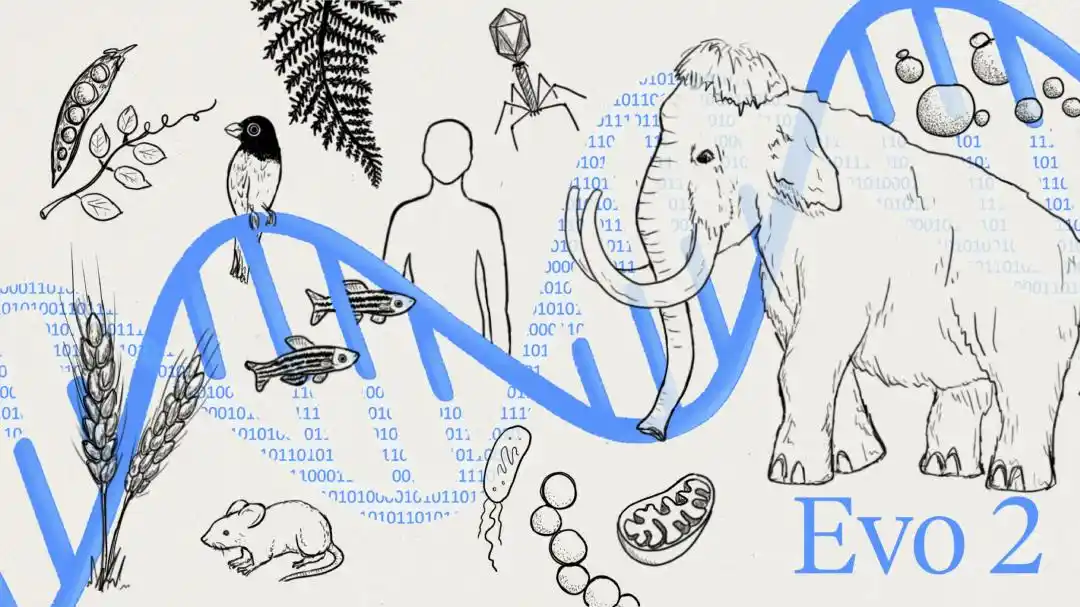
The similarity between DNA and text is actually strikingly high: nucleotides are letters, with only four—A, C, G, T; a few hundred letters form a gene, which is like a sentence.

Sentences have grammar; if the grammar is wrong, what is written becomes biological gibberish.

Biologists have spent decades only uncovering a small part of this grammar.

What Evo does is, without studying any textbooks, use massive amounts of samples to deduce this grammar on its own.

Paper address: https://www.science.org/doi/10.1126/science.aec2657

In this Science experiment, Evo produced 700,000 candidate genomes in one continuous process.

Then, the research team selected the 285 most promising ones, turned them into real DNA molecules, inserted them into E. coli, and spread them across culture dishes.

In most dishes, nothing happened; the bacteria grew normally. Until finally, a few clear spots appeared in one dish.
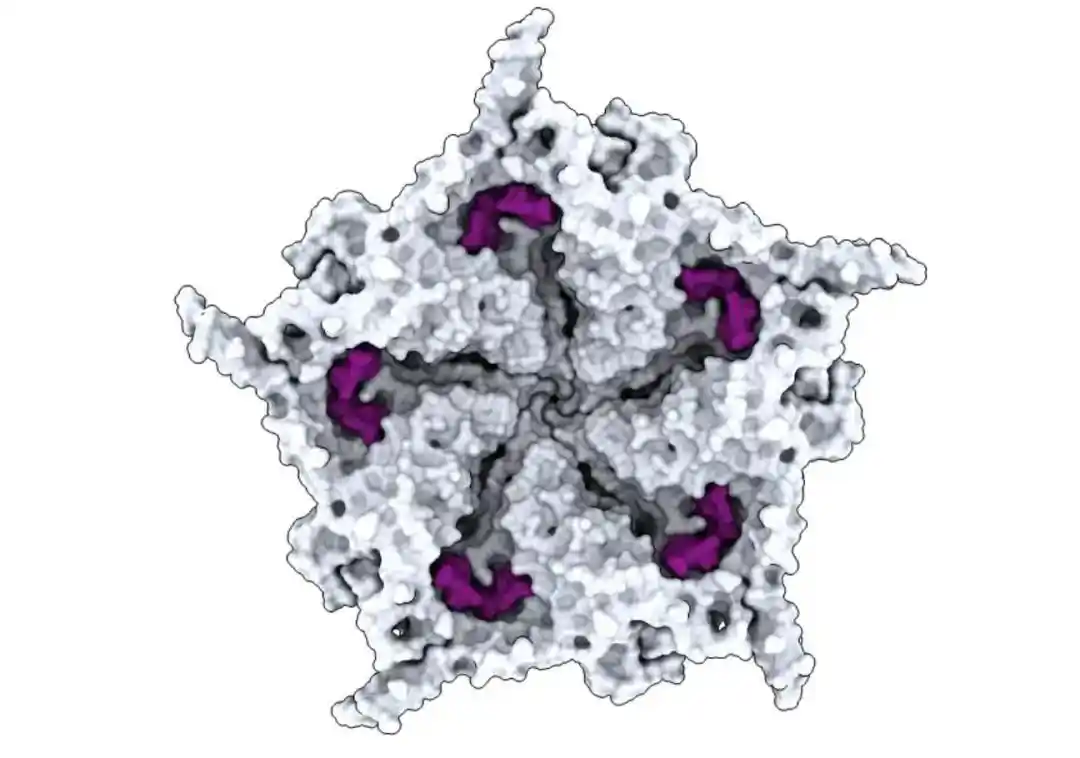
In the end, 16 new viruses—alive, capable of infection, and self-replicating—were born.

But what truly sends a chill down the spine is their "combat effectiveness."

Some of these AI-generated viruses replicate even faster than the original natural version (ΦX174).
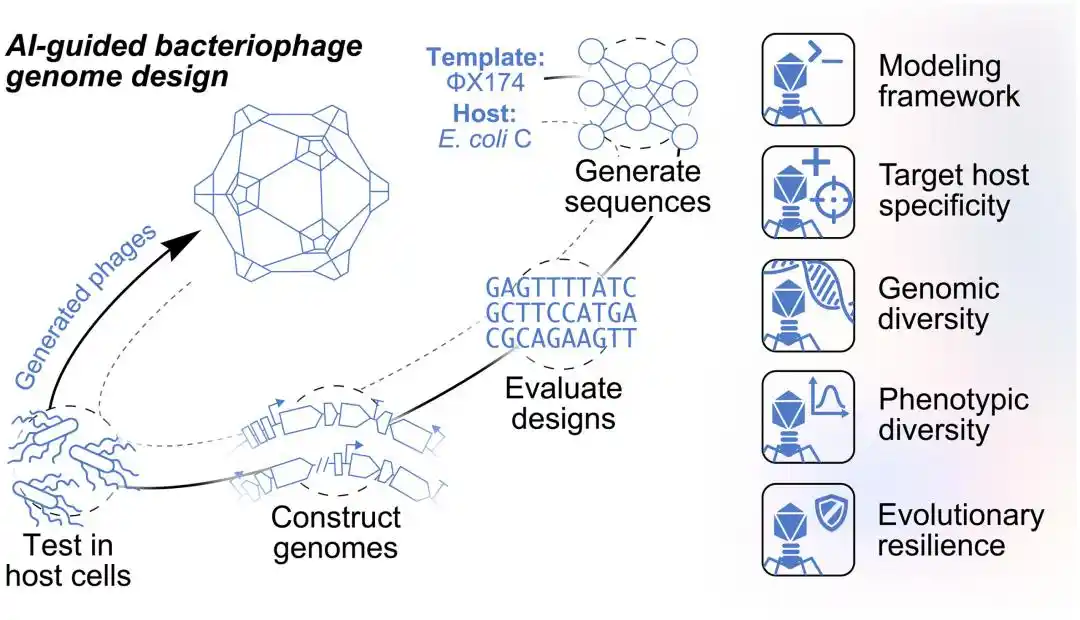
Cryo-electron microscopy also captured a detail: on the shell of one virus, Evo-Φ36, a DNA packaging protein from a distant evolutionary relative was used.

It's as if AI, during the design process, casually took a part from another species and installed it, and it still worked.

The First Time AI Rewrote It Took 50 Years

Here, one must mention a coincidence, one chilling enough to send shivers down the spines of those in biology.

The virus that AI rewrote is called ΦX174, discovered in a Paris sewer in 1935.

It only infects E. coli, is completely harmless to humans and animals, and is a permanent fixture in molecular biology textbooks.

So the question is: Why is it so famous?

In 1977, Sanger's team completed the first full genome sequencing in human history—sequencing ΦX174.

That year, humans fully "read" all the instructions of a life form for the first time.

Forty-nine years later, today, AI has fully "written" one for the first time.

And it wrote the genome of the very same species. You must know, ΦX174 is an entry-level problem of hellish difficulty.

Its genome is only 5000 bases long with 11 genes. It sounds compact, but these 11 genes are nested and overlapping—one gene sits inside another, sharing the same string of letters.

Brian Hie, the Stanford assistant professor leading the study, directly stated, "Welcome to the era of generative genome design."

Killing Bacteria, and Capable of Unlimited "Self-Replication"

Compared to this research, what everyone truly cares about is: What does it mean for humanity?

First, let's present a set of numbers. The Lancet GRAM project predicts that from 2025 to 2050, antibiotic resistance will directly cause 39.1 million deaths.

Antibiotics are becoming less effective. One of the medical field's alternative plans is "phage therapy"—

using viruses to kill bacteria, an idea that has been around for a century.

But this path has a fatal flaw: bacteria not only develop resistance to antibiotics but also to phages. You release one type of phage, and the bacteria learn to defend against it in a few generations, rendering the therapy ineffective on the spot.


In this experiment, the team intentionally cultivated E. coli strains completely immune to the natural ΦX174, then presented two "cocktails":

One was a mixture of natural phages: it lost.

One was a mixture of AI-generated phages: it rapidly breached three resistant strains.

The weight of this result lies in the fact that it is the first proof that, facing the evolution speed of bacteria, AI can keep up by "mass-producing new weapons."

Bacteria evolve in minutes; humans take over a decade to develop an antibiotic—this is an arms race that humans are structurally losing.

And for the first time, generative models have reduced the cost of "producing new weapons" from over a decade to a single inference.

From the first time humans "read" life in 1977 to today, when AI has "written" life for the first time.

The scepter of creation is now truly in the hands of humanity and silicon-based intelligence.

References:

https://www.science.org/doi/10.1126/science.aec2657

This article is from the WeChat public account "New Zhiyuan," author: ASI Apocalypse

Trending Cryptos

Related Questions

QWhat was the primary achievement of the AI model 'Evo' described in the Science study?

AThe AI model 'Evo' successfully designed, from scratch, completely novel and functional viral genomes. It generated 700,000 candidate genomes, of which 285 were synthesized. When tested, 16 of these AI-designed viruses were not only viable but could infect and replicate within bacteria.

QHow does the AI model 'Evo' learn to design biological sequences?

AEvo is trained on a massive dataset of approximately 9 trillion nucleotides from diverse life forms including animals, plants, microbes, and viruses. By analyzing these sequences, it learns the underlying 'grammar' and patterns of biological sequences without relying on pre-existing biological rules or textbooks, similar to how large language models learn from text.

QWhat significant advantage did some of the AI-generated viruses demonstrate over the natural virus (ΦX174)?

ASome of the AI-generated viruses demonstrated a significant performance advantage by killing bacteria (lysing them) at a faster rate than the natural ΦX174 virus upon which they were based.

QWhat is one potential medical application highlighted for this AI-generated virus technology?

AA key potential application is in combating antibiotic-resistant bacteria through 'phage therapy.' In experiments, a cocktail of AI-generated viruses successfully infected and overcame bacterial strains that had evolved resistance to the natural ΦX174 virus, suggesting AI could rapidly generate new therapeutic agents to counter bacterial evolution.

QWhy is the virus ΦX174 historically significant in the context of this study?

AΦX174 is historically significant because it was the first organism to have its complete genome sequenced by humans in 1977. In 2026, it became the first organism whose genome was completely rewritten and redesigned from scratch by an AI, marking a symbolic full circle from reading to writing life's code.

Related Reads

The $6.4 Billion CRO Accumulation Plan of Trump Media Group Falls Apart

A $6.4 billion plan to create a publicly-listed CRO treasury company, announced a year ago by Trump Media & Technology Group (DJT), Crypto.com, and SPAC Yorkville, has been terminated. The ambitious deal, which aimed to accumulate approximately 6.3 billion CRO tokens (nearly 20% of supply at the time), never progressed beyond a framework agreement. Related plans for a prediction market integrated into Truth Social and ETF custody services by Crypto.com were also shelved, scaled back to a simple marketing partnership. The collaboration followed significant political alignment, with Crypto.com donating to Trump's inauguration and a pro-Trump super PAC, and its CEO meeting with Trump. The SEC also closed an investigation into the exchange shortly before the deal was announced, raising conflict-of-interest concerns. Officially, the termination was attributed to an unfavorable market environment. CRO's price has fallen roughly 70% since the announcement, and the broader market for publicly-traded digital asset treasuries has cooled significantly, with Bitcoin nearly halving from its late-2025 peak. The only completed transaction from the 2025 agreements remains intact: Trump Media's ~$105 million CRO purchase and Crypto.com's $50 million purchase of DJT stock. The termination aligns with DJT's strategic pivot away from crypto; the company is now pursuing a multi-billion dollar all-stock merger with nuclear fusion firm TAE Technologies, shifting its focus to clean energy.

marsbit7m ago

The $6.4 Billion CRO Accumulation Plan of Trump Media Group Falls Apart

marsbit7m ago

Tiger Research: The $43 Million Gray Area of Asian Prediction Markets

Tiger Research: Asia's $43 Million Grey Zone in Prediction Markets Western jurisdictions have created regulatory pathways for prediction markets through derivatives law (like the U.S. CFTC framework) or flexible gambling licenses (like the UK's "betting intermediary" category). In contrast, Asia lacks a comparable regulatory architecture. The absence of a general gambling license framework adaptable to private operators, coupled with closed financial product definitions (e.g., positive lists of assets in Korea and Japan), leaves prediction markets in a regulatory grey area. This lack of a clear classification—whether as gambling, financial derivatives, or a novel third category—has not stopped market activity. Significant liquidity, evidenced by over $52 million tied to a single South Korean election, flows to offshore platforms. However, this results in forgone tax revenue (estimated at $4-43 million annually per major Asian market), no consumer protection, and no oversight for market integrity. The core issue is not cultural opposition to gambling, which exists legally in many Asian markets, but a missing institutional design. Without a deliberate regulatory pathway, authorities are left with suboptimal options: expanding criminal sanctions or blocking access, which fail to address the underlying economic activity or achieve key policy goals. Establishing a regulatory foundation requires initiating a formal public discourse to first define prediction markets' legal status and societal value, a foundational step that has yet to occur in most Asian jurisdictions.

marsbit17m ago

Tiger Research: The $43 Million Gray Area of Asian Prediction Markets

marsbit17m ago

How Singapore's Retail Giant Masters the Gold Trade: Selling Thousands of Pounds Monthly Without Betting on Price, Gold Leasing Inspires RWA Income Design on Chain

A Singapore retail giant, Mustafa Centre, sells around 1,100 pounds of gold jewelry monthly, holding nearly a ton of inventory valued over $100 million, yet avoids gold price speculation. They achieve this by maintaining a constant inventory—buying back the exact amount of gold sold each day, earning only from sales margins, not price movements. This practice is enabled by the century-old gold leasing market. Retailers borrow physical gold to meet inventory needs without tying up capital or bearing price risk, paying a lease rate. Lenders earn yield on otherwise idle gold. This real-economy demand, driven by operational needs rather than speculation, provides a stable income stream. The article highlights how this traditional leasing model inspires on-chain Real World Asset (RWA) protocols like thUSD and thGOLD. These protocols channel gold lease yields—generated from borrowers like Mustafa—to token holders. The key challenge has been access, not yield availability. Platforms like Libeara, with institutional backing (e.g., SC Ventures), facilitate this by tokenizing funds (e.g., the MG 999 Gold Fund) that lend to vetted commercial borrowers, making this off-chain yield accessible on-chain. Thus, gold leasing demonstrates a proven, non-speculative revenue source for crypto protocols seeking sustainable "real yield," connecting physical trade finance to decentralized finance.

marsbit27m ago

How Singapore's Retail Giant Masters the Gold Trade: Selling Thousands of Pounds Monthly Without Betting on Price, Gold Leasing Inspires RWA Income Design on Chain

marsbit27m ago

Trading

Spot

Hot Articles

Discussions

Welcome to the HTX Community. Here, you can stay informed about the latest platform developments and gain access to professional market insights. Users' opinions on the price of AI (AI) are presented below.

活动图片