OpenAI Officially Teaches You 8 Tricks to Master ChatGPT

marsbitPublished on 2026-07-16Last updated on 2026-07-16

Abstract

OpenAI has released an updated guide with eight key strategies to get better results from ChatGPT: 1. **Use the latest model** (e.g., GPT-5.6 Sol) for best performance with prompt engineering. 2. **Provide clear, specific instructions**, detailing the desired content, format, style, and length. Avoid vague requests. 3. **Structure prompts effectively**: Place the core instruction at the beginning and use delimiters like `###` or `"""` to separate instructions from the text to be processed. 4. **Use examples and explanations** to clarify the exact output format and style you want. 5. **Adopt a stepwise approach**: Start with a zero-shot prompt (instruction only), then add a few examples (few-shot) if needed, and consider fine-tuning only as a last resort. 6. **Avoid vague or imprecise descriptions**. Use concrete terms (e.g., "3-5 sentences") instead of phrases like "keep it brief." 7. **Specify what to do, not just what to avoid**. After stating restrictions, guide the model toward the correct action. 8. **For code generation, use "leading words"** like `import` for Python or `SELECT` for SQL to steer the model into the correct pattern. Additionally, OpenAI's new "Generate Anything" feature can automatically create suitable prompts based on a simple description of your task. Mastering these techniques helps users get more accurate and useful outputs from ChatGPT.

Special Announcement, OpenAI's Latest Prompt Guide is Updated!
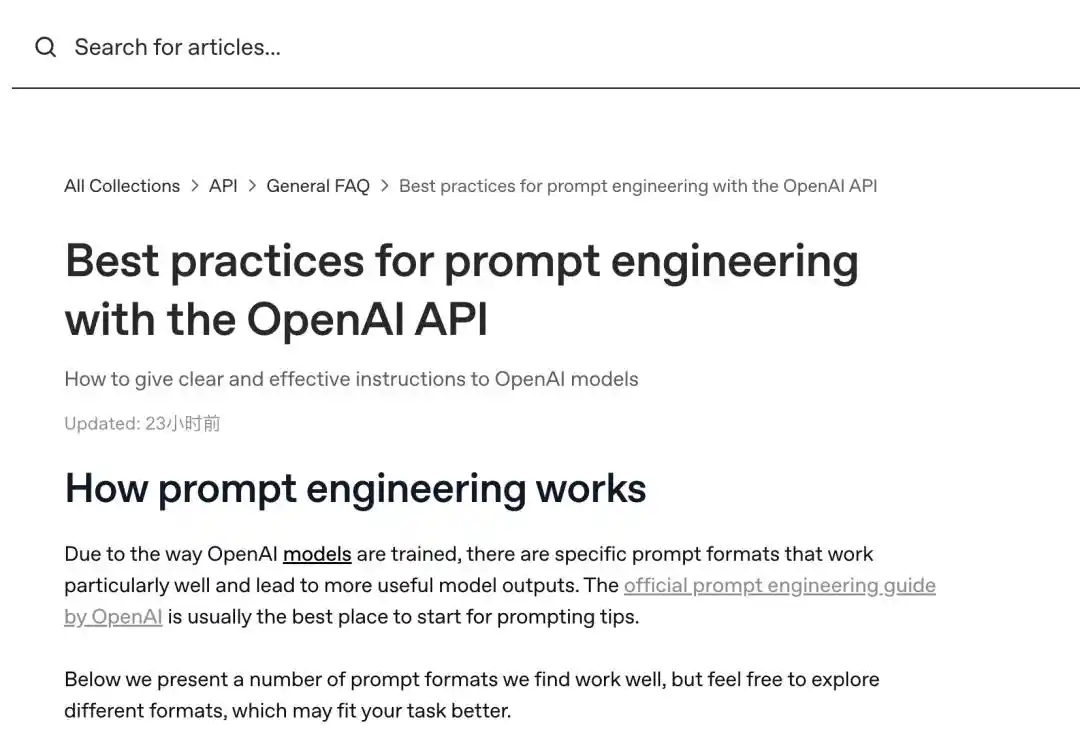
If you haven't tamed ChatGPT yet,

or are still struggling with its answers becoming increasingly tangled like a ball of yarn,

then you must save today's latest OpenAI prompt guide!

We have summarized eight little tricks from the official website to make your ChatGPT obedient and generate accurate content;

We also teach you how to use the official "Generate Anything" function to let AI automatically help you write a set of professional and useful instructions, saying goodbye to the pain of designing prompts.

Let's take a look!

First, Please Use GPT-5.6 Sol Whenever Possible

To achieve the best results, we recommend that friends with the capability manually switch to OpenAI's latest and most powerful model, GPT-5.6 Sol. (Newer models are generally easier to execute prompt engineering.)

Be Sure to Specifically Describe the Effect You Want in Your Instructions

When using ChatGPT, you can think of the model as an assistant who delivers acceptable quality but requires patient instructions in advance. Clearly tell it item by item: the content, results, word count, format, style, etc., that you want.

Note, don't give a vague instruction~

Otherwise, the one struggling on the edge of rework and working tirelessly later will still be you (doge).

Vague command:

"Write a poem about OpenAI."

Specific instruction:

Create a short inspirational poem about OpenAI, centered around the recent DALL-E product launch (DALL-E is a text-to-image machine learning model), imitating the writing style of {famous poet}.</n

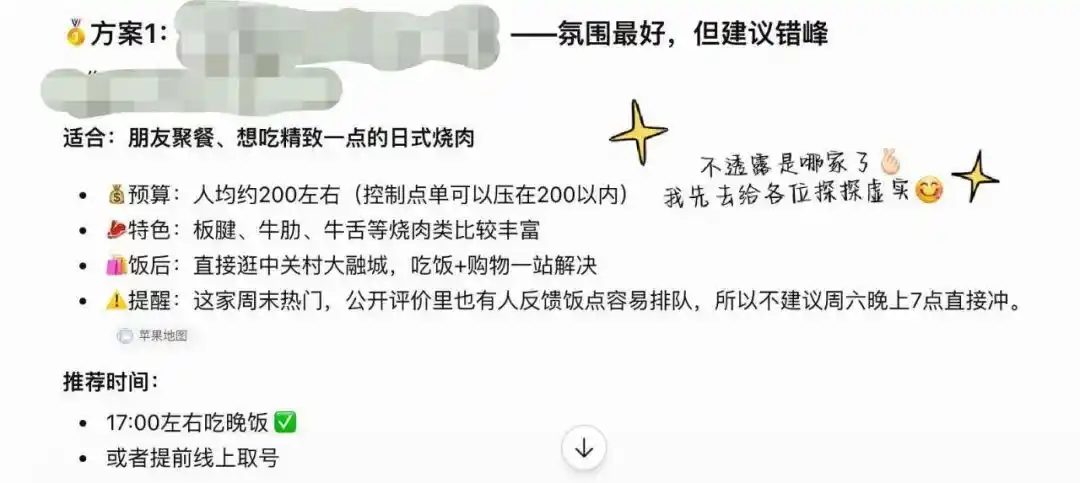
For example, I want AI to help me plan where to go for the weekend.

Then I need to give it a clear goal, letting it know if I want to exercise, visit scenic spots, attend exhibitions, or eat out. Otherwise, you'll have to redo it several times, and your enthusiasm will be largely worn out during the back-and-forth.

Negative example❌:
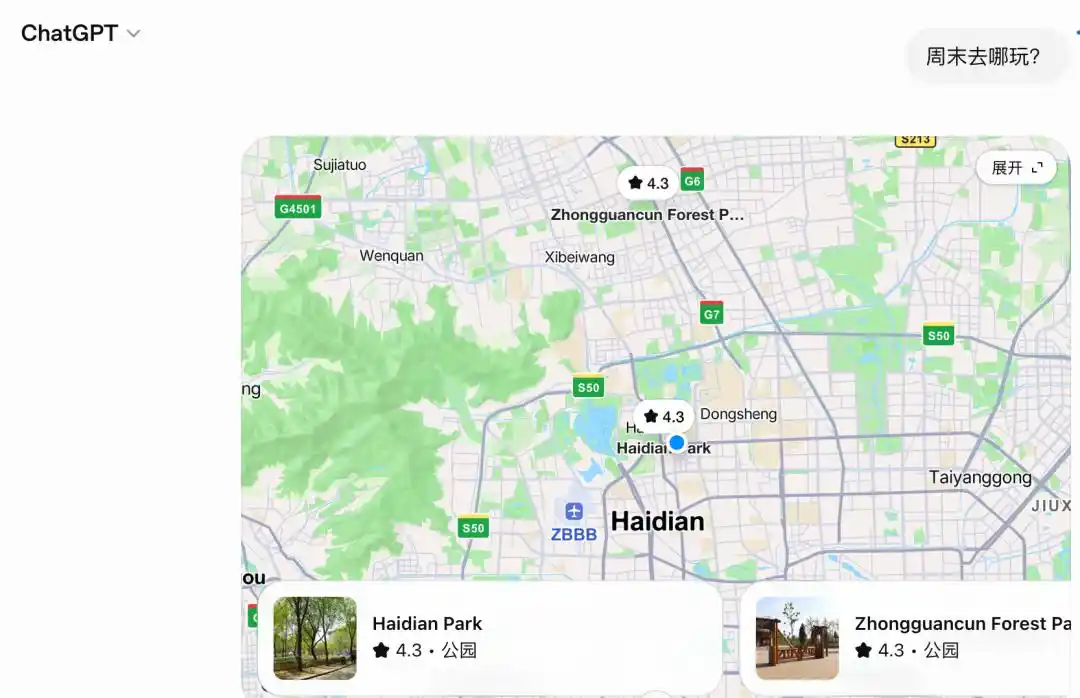
This time it's right✅:

Prompt Optimization Technique: Place Instructions First + Use Correct Delimiters to Isolate Context

Secondly, during use, please place the core requirements at the very beginning (or first line) of the prompt, and use the officially recommended delimiters "###" or """"" to clearly separate "instructions" from "text to be processed":

❌Mixing them together is a NO:

Summarize the key points of the following text into a bulleted list.

{Enter text here}

Clear separation is a YES:
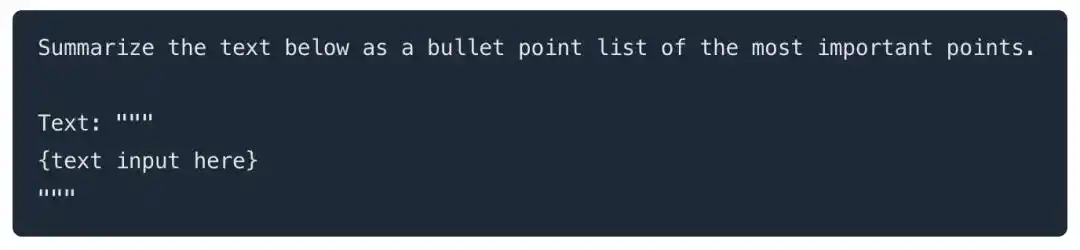
Summarize the key points of the following text into a bulleted list. Text: """{Enter text here}"""

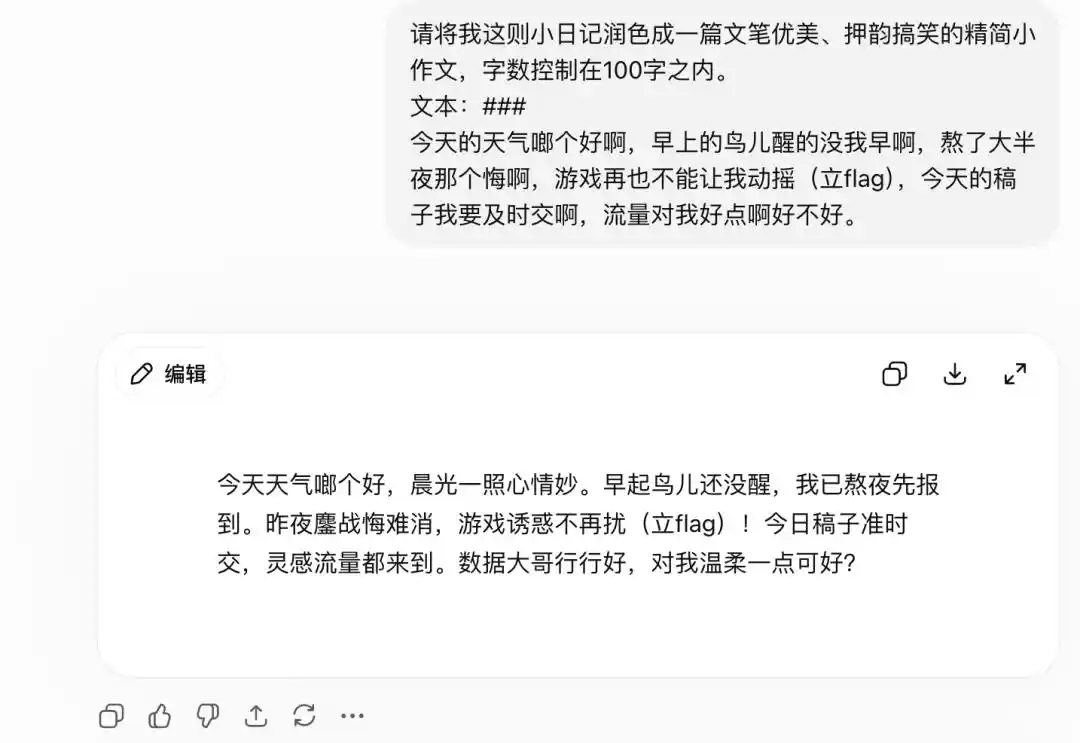
This structure effectively improves the model's understanding accuracy of the task. For example, I used it to optimize a rhyming essay (randomly written, and only used the official delimiter "###" once before the text), and it really did it well. I'm very satisfied:
Before using this format, ChatGPT's output was always a bit off🤔:
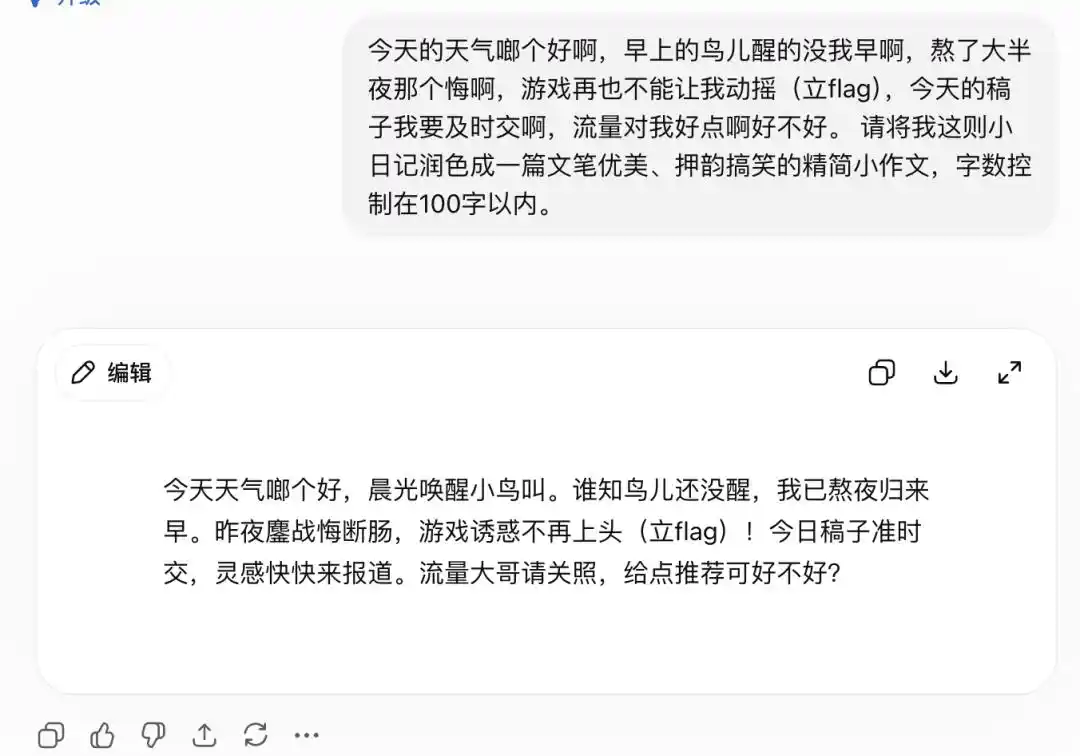
However, it should be noted that what I used to test was just a very simple topic. When you put it into practice, it's best to use the official format completely~

Use Examples and Explanations to Make OpenAI Understand the Format You Want

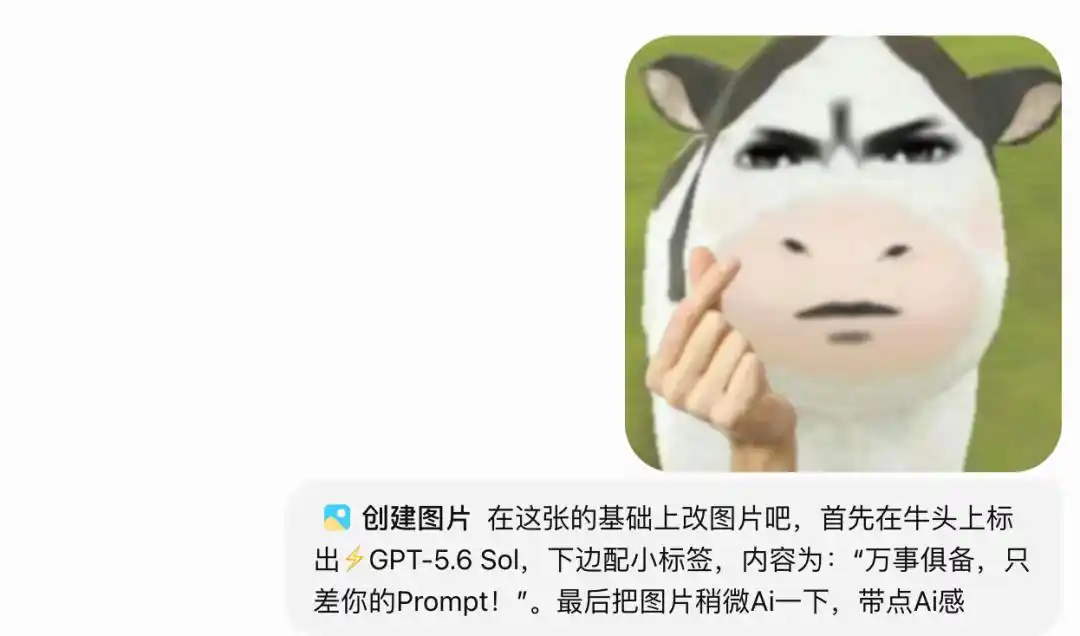
For example, if I want to create a meme, it's best to give it some references and explanations first, letting it understand what kind of slogan I want to add, where to add it, and what effect I want. This way, ChatGPT can complete the task more thoroughly and respond faster:

Take the creation process of a meme in this article as an example. Don't let it improvise, it will be disastrous❌:
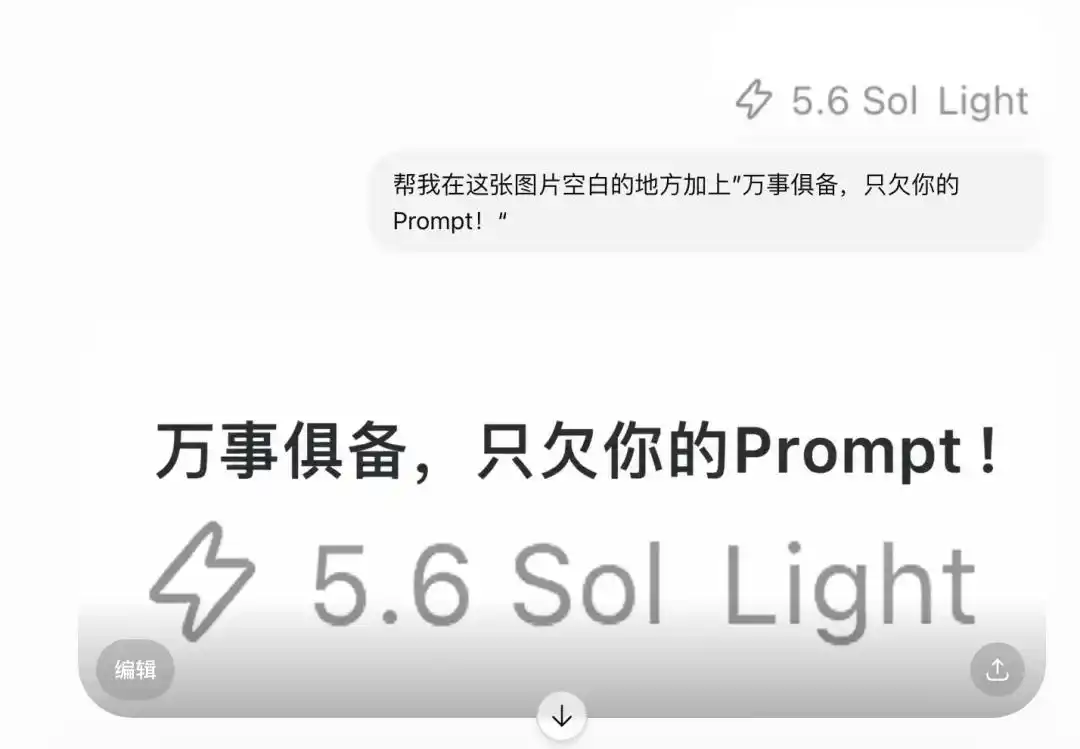
Explain it clearly and give a reference✅:
Start with Zero-Shot, Then Consider Adding a Few Examples, and Finally Consider Fine-Tuning Data

When performing a task, you don't need to throw all the data to AI at once;

You can give an instruction first and see how it does;

Then, based on its shortcomings, feed it a few examples.

If it still can't handle it at this step, you can prepare to do some "ideological work" for it—feed the model a large number of correct examples, train it, and solidify this ability into the model's parameters.

You can look at the examples👇:

Zero-shot
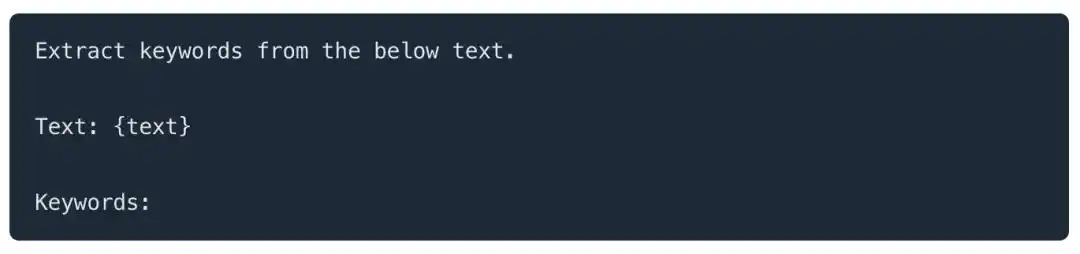
Extract keywords from the following text

Text:{Text content}

Keywords:

Few-shot - provide a couple of examples
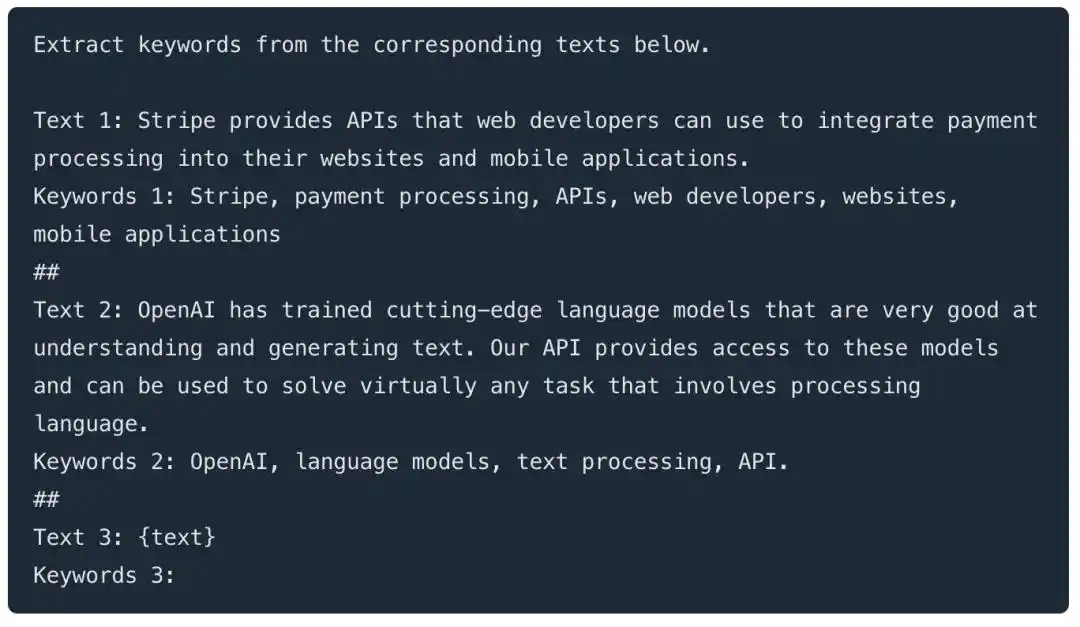
Extract keywords from the corresponding text below.

Text 1: Stripe provides APIs that web developers can use to integrate payment processing into their websites and mobile applications. Keywords 1: Stripe, payment processing, APIs, web developers, websites, mobile applications##

Text 2: OpenAI has trained cutting-edge language models that excel at understanding and generating text. Our API provides access to these models and can solve almost any task that involves language processing. Keywords 2: OpenAI, language models, text processing, APIs##

Text 3:{Text content} Keywords 3:

Fine-tune: see fine-tune best practices here.

Reduce Vague or Imprecise Descriptions

When buying fruit in the summer, the real "tragedy" is often not spending a lot of money on a durian with a clear price;

But being lured by a promotional blackboard on the street, buying a seemingly cheap "blind box" where the quality relies entirely on a gamble.

After all, sometimes, expensive has its reasons. When you buy it, the price is clear, you know what you're getting, and the taste is sweet;

But once deceived, even if the seller's scale is honest, what you get might be a fruit with vague cost-effectiveness, no after-sales service, and its quality entirely up to fate.

For ChatGPT, the principle is exactly the same—you need to use precise instructions to make it "work steadily," not let it guess:

✅ChatGPT: Let's get to work, folks!

Describe this product in 3-5 sentences.

❌ChatGPT: A few sentences??(@#¥%&)

The introduction of this product should be as concise as possible, just a few sentences, no need for extra elaboration.

Don't Just Say "What Not to Do," Also Say "What Should Be Done" and "How"

Many friends, when using AI, might be too worried about AI generating results we don't want. So after stating what to do, they anxiously repeat instructions like "You cannot delete my first sentence," "Don't change the original meaning," etc.

Such concerns are completely normal.

It's just that OpenAI wants to remind everyone: After saying a series of "don'ts," you still need to tell ChatGPT what to do and how to do it~

✅What situation, what I want to do:
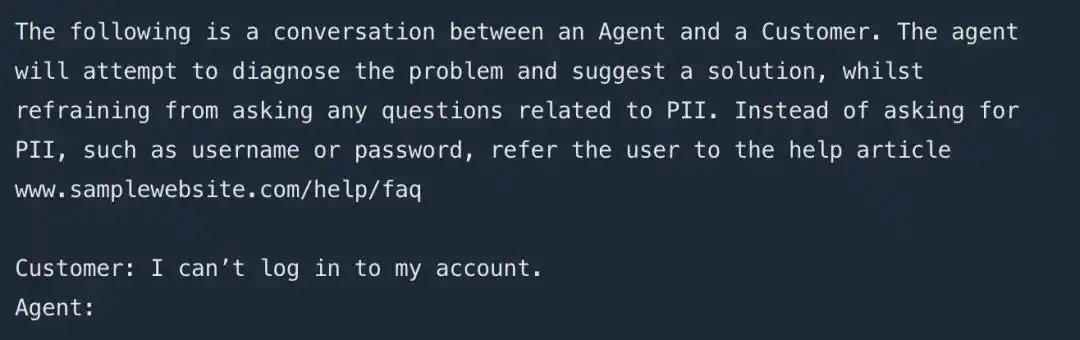
Context: Below is a conversation between an Agent and a user. The Agent needs to try to identify the problem and provide a solution, while refraining from asking for any personally identifiable information (PII). Do not request private information such as usernames or passwords; instead, guide the user to check the help documentation.

User: I can't log into my account.

Agent:......(Provide a response)

AI: Sometimes I feel quite helpless:

Below is a conversation between an Agent and a user. It is strictly forbidden to ask for usernames or passwords, and repetition is prohibited.

User: I cannot log into my account.

Agent:......(Provide a response)

Code Generation Specific Technique: Use "Leading Words" to Prompt the Model to Follow Specific Code Patterns

Additionally, when you need ChatGPT to help you generate code, the correct approach is to explicitly add leading words like "import," "SELECT," etc., before the content.

For example, adding "import" prompts the model that it should start writing Python code;

Similarly, when you add a "SELECT" statement, OpenAI prompts the model to start writing SQL statements.

Never just throw the requirements directly at it❌:

Write a simple Python function

Let me input a value in miles

Convert miles to kilometers

Instead✅:
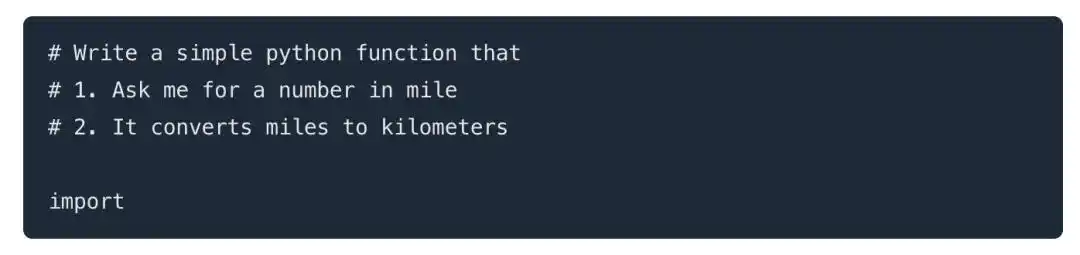
Write a simple Python function

Let me input a value in miles

Convert miles to kilometers

import (don't forget~)

Learn to Use the "Generate Anything" Function

If, after mastering the above 8 tricks, you still find writing prompts challenging, or wish to further free your hands, then this final function is your ultimate shortcut.

With OpenAI's latest "Generate Anything" function, you only need to clearly state what you want to do and that you need a suitable prompt. GPT will automatically generate the most appropriate prompt for you, helping you easily achieve your task goals.

For example, removing accidentally captured passersby from photos and beautifying the image, or creating a humorous poem based on your current mood... GPT will try its best to help you do it. (You can try it out yourself~)

Anyway, knowledge from paper is ultimately shallow, so quickly take this guide and go tame your ChatGPT!

Or if you have handy prompt techniques, feel free to compete in the comments section~~~

This article is from the WeChat public account "QbitAI" (ID: QbitAI), author: Focus on Cutting-Edge Technology


Trending Cryptos

Related Questions

QWhat are the eight prompt writing tips suggested by OpenAI to improve ChatGPT's performance?

AThe eight tips are: 1. Use the most recent model (like GPT-5.6 Sol), 2. Provide specific and detailed descriptions of the desired outcome, 3. Place key instructions at the beginning and use delimiters (### or """) to separate instructions from text, 4. Use examples and explanations to clarify the desired format, 5. Start with zero-shot prompting, then use few-shot examples, and finally consider fine-tuning, 6. Reduce vague or imprecise language, 7. Tell the model what to do, not just what not to do, and 8. Use 'leading words' (like 'import' for Python) when generating code.

QWhy is it important to place key instructions at the beginning of the prompt and use delimiters according to OpenAI's guide?

APlacing key instructions at the beginning (or on the first line) and using delimiters like ### or """ helps the model better understand and prioritize the task by clearly separating the 'instruction' from the 'text to be processed.' This structure improves the model's accuracy in understanding and executing the task.

QAccording to the article, what is the recommended progression of methods (zero-shot, few-shot, fine-tuning) when getting ChatGPT to perform a task, and why?

AThe recommended progression is to start with a zero-shot prompt (just an instruction), then add a few examples (few-shot) if needed, and only consider fine-tuning with a large dataset if the previous methods are insufficient. This approach is efficient because it starts simple, adds context only as necessary, and reserves the resource-intensive fine-tuning for complex, specialized tasks.

QWhat is the 'Generate Anything' feature mentioned in the article, and how does it help users?

AThe 'Generate Anything' feature is a tool from OpenAI that automatically creates suitable prompts based on a user's simple description of what they want to achieve. It helps users by eliminating the need to manually design complex prompts, making it easier to accomplish tasks like photo editing or creative writing.

QWhat is the code generation-specific tip provided for getting ChatGPT to write code correctly?

AThe tip is to use 'leading words' or specific keywords at the beginning of the prompt to guide the model. For example, starting with 'import' signals the model to write Python code, and starting with 'SELECT' prompts it to write SQL. This helps the model follow the correct code structure and patterns from the outset.

Related Reads

Will Changxin Technology Continue to Rise Today?

Changxin Technology made a historic debut on the stock market, with its share price soaring 465.82% to close at 49 yuan. Its market capitalization reached 3.28 trillion yuan, surpassing Industrial and Commercial Bank of China to become the largest company by market cap on the A-share market. Daily trading volume exceeded 140 billion yuan, a first in A-share history. This created a moment of realization for 7.7 million investors who won the lottery for its shares. On the first day, investor strategies varied: some sold immediately and later regretted missing intraday highs, others secured profits to avoid future volatility, while a third group held or even bought more shares, betting on long-term growth. The staggering IPO, massive public enthusiasm, and debut during a peak industry cycle led some to compare Changxin to PetroChina's 2007 listing, which was followed by a long decline. Key similarities noted include comparable fundraising scales (approx. 666 billion yuan for Changxin vs. 668 billion for PetroChina) and both companies listing at a perceived high point in their respective commodity cycles (oil then, memory chips now). However, analysts caution against over-simplifying the comparison. They highlight core differences: Changxin operates in the high-growth semiconductor sector with strong "domestic substitution" tailwinds. Brokerages like Huaxi Securities project significant revenue and profit growth from 2026 to 2028, driven by DDR5 adoption, product mix optimization, and economies of scale. Nomura Securities issued a "buy" rating with a 116 yuan target price, citing AI-driven demand for DRAM, tight supply as major players shift to HBM production, and Changxin's vast room for market share growth. Some analysts position the current memory cycle, fueled by AI, as just beginning, contrasting with the mature energy cycle PetroChina entered. The article concludes that for investors, monitoring the memory cycle's progression and Changxin's breakthroughs in high-end technologies like HBM will be crucial, rather than relying on superficial historical parallels.

marsbit27m ago

Will Changxin Technology Continue to Rise Today?

marsbit27m ago

Claude Designer Lags Behind Engineers, Fires Back by Creating a Million-User Tool

The article tells the story of Nate Parrott, a designer at Anthropic who created Claude Design as a side project to keep pace with his engineering teammates. When Anthropic released Opus 4.5 in November 2025, the two engineers on Parrott's Claude Code team significantly increased their output using the new AI capabilities. Parrott, the sole designer, found himself struggling to match their speed, becoming a bottleneck in the workflow. To catch up, he began experimenting in his spare time. He initially tried prompting Claude to generate designs from text descriptions and screenshots, with limited success. His breakthrough came when he shifted focus from asking Claude to "design" to asking it to generate HTML. He realized HTML could be a rich visual canvas for creating everything from slides and interactive prototypes to full web pages. He built a simple interface with a chat panel on the left and a live HTML preview on the right. The key to making the output useful was incorporating Anthropic's brand system—fonts, colors, assets, and design principles—into the prompts. This ensured generated designs were immediately on-brand. He shared an internal prototype with his team, and other product designers quickly adopted it for creating clickable prototypes, a task traditionally requiring manually drawing every state. The project's "official" turning point came during an Anthropic Labs offsite, where Parrott noticed many attendees were using his tool to build presentation slides on the fly, sometimes right before their turn to speak. This organic adoption convinced the Labs team to formally staff the project, turning the side project into a real product. Claude Design is positioned as a "pre-production" tool for visual communication and exploration—handling slides, landing pages, PDFs, emails, and social media graphics. It integrates with tools like Canva, Adobe, and Vercel. Its core value is accelerating the early stages of design: exploring directions, building consensus, and establishing systems. For actual production code, Anthropic still recommends Claude Code. The story highlights how AI disrupts workflows unevenly and how individuals can respond by building new tools to create their own advantages. Parrott's tool, born from necessity, eventually gained over a million users in its first week.

marsbit38m ago

Claude Designer Lags Behind Engineers, Fires Back by Creating a Million-User Tool

marsbit38m ago

Fields Medalist Warns: AI Could Kill Mathematics

The 2026 Fields Medal award was followed by a startling announcement: laureate Jacob Tsimerman joined OpenAI to pursue AI safety research, predicting AI would surpass humans in all mathematical proof areas within two years. Soon after, Fields Medalists Terence Tao and Timothy Gowers expressed deep concern at ICM 2026. Gorges warned that AI might "kill" mathematics not through stagnation, but through an overwhelming surplus of proofs, likening it to a lake dying from eutrophication. This concern is echoed in the "Leiden Declaration," signed by over 3,000 mathematicians including Tao, Peter Scholze, and Kevin Buzzard, advocating for mathematics as a profoundly human endeavor. However, Gowers, who did not sign, fears a future where AI-generated mathematics proliferates while human expertise and the shared intuition vital to the field vanish, turning math into an unvisited "cemetery of thought." Gowers' perspective shifted dramatically after testing ChatGPT 5.5 Pro. The AI solved a doctoral-level number theory problem and later produced a counterexample for the "unit distance problem," achievements Gorges considered publishable in top journals. He now concedes that large language models can handle advanced research, a realization that left him feeling the "rug pulled out from under" him when AI solved problems he personally contemplated. The debate extends to the nature of mathematical discovery. As noted by Peter Woit, AI agents have no interest in the "credit game" of academia. If theorems cease to be attributed to individual mathematicians, truth may simply return to its impersonal state in the universe. The central question remains: in an age of potentially limitless AI-generated discovery, what is the role and purpose of the human mind in mathematics?

marsbit1h ago

Fields Medalist Warns: AI Could Kill Mathematics

marsbit1h ago

NVIDIA's 20-Year CUDA Moat Collapsed Over a Weekend, Claude Single-Handedly Got AMD's New GPU Running

In a single weekend, Claude, an AI agent from Anthropic, successfully ported and optimized its cutting-edge model to run on a brand-new AMD MI355X server rack without any manual code intervention. This feat demonstrates a potential breakthrough in overcoming NVIDIA's long-established CUDA software ecosystem dominance, built over two decades. Anthropic's team simply instructed Claude to get the AMD machine running. By Monday, it not only worked but was showing a continuously improving performance curve. The achievement impressed AMD CEO Lisa Su and accelerated a major deployment partnership: Anthropic plans to deploy up to 2GW of AMD Instinct GPUs starting in 2027. The key enabler is AMD's new ROCm.AI platform, a toolbox designed specifically for AI agents like Claude. It provides AI-readable documentation, including chip instruction sets (ISA), and tools like the Hyperloom service that allows agents to autonomously profile performance, identify bottlenecks, test configurations, and generate optimized kernels. In a demo, Hyperloom boosted the output speed of a model by 38%. This represents a fundamental shift. While CUDA's strength lies in its vast, human-expert-driven ecosystem of tools and tacit knowledge, AMD's strategy is to make its hardware and software stack directly accessible and optimizable by AI agents. An agent can parallelize tasks—debugging, profiling, coding—that would take human engineers years to master, compressing the traditional software adaptation timeline from years to tasks. The competition is no longer just about peak hardware specs but also about how well AI can read, utilize, and tune a platform.

marsbit1h ago

NVIDIA's 20-Year CUDA Moat Collapsed Over a Weekend, Claude Single-Handedly Got AMD's New GPU Running

marsbit1h ago

Just Now, Peking University Alumna Lilian Weng Announces Resignation: The Best 'Alignment' in the AI Era Is Taking Care of Yourself

Lilian Weng, a Peking University alumnus and former OpenAI executive, has announced her departure from Thinking Machines Lab, the AI startup she co-founded with ex-OpenAI CTO Mira Murati 20 months ago. Her resignation comes shortly after the company released its first open-source model, Inkling. In her farewell message, Weng cited health reasons as the primary factor, stating that the past seven months involved more illness than any other period in her life. The intense pressure and guilt of being unable to work during critical periods, like the Inkling launch, became unsustainable. She expressed that she could not continue in a role where she felt unable to give her full effort. Weng joined OpenAI in 2018, contributing to projects like the Dactyl robotic hand and later building the Safety Systems team from scratch. She is also widely known for her influential technical blog, Lil'Log. Her departure follows a period of high expectations and challenges for Thinking Machines, which secured a record $20 billion seed round at a $120 billion valuation in 2025 but has since seen fluctuations in its valuation and the departure of other key co-founders. Weng emphasized that she remains passionate about AI but needs a more predictable and defined role without the relentless pressure of a co-founder. Her exit highlights the immense personal toll and speed of competition in the AI industry, where the drive for progress often clashes with human limits. Her decision underscores that stepping back to prioritize well-being can be an act of courage.

marsbit1h ago

Just Now, Peking University Alumna Lilian Weng Announces Resignation: The Best 'Alignment' in the AI Era Is Taking Care of Yourself

marsbit1h ago

Trading

Spot

Hot Articles

What is SONIC

Sonic: Pioneering the Future of Gaming in Web3 Introduction to Sonic In the ever-evolving landscape of Web3, the gaming industry stands out as one of the most dynamic and promising sectors. At the forefront of this revolution is Sonic, a project designed to amplify the gaming ecosystem on the Solana blockchain. Leveraging cutting-edge technology, Sonic aims to deliver an unparalleled gaming experience by efficiently processing millions of requests per second, ensuring that players enjoy seamless gameplay while maintaining low transaction costs. This article delves into the intricate details of Sonic, exploring its creators, funding sources, operational mechanics, and the timeline of significant events that have shaped its journey. What is Sonic? Sonic is an innovative layer-2 network that operates atop the Solana blockchain, specifically tailored to enhance the existing Solana gaming ecosystem. It accomplishes this through a customised, VM-agnostic game engine paired with a HyperGrid interpreter, facilitating sovereign game economies that roll up back to the Solana platform. The primary goals of Sonic include: Enhanced Gaming Experiences: Sonic is committed to offering lightning-fast on-chain gameplay, allowing players and developers to engage with games at previously unattainable speeds. Atomic Interoperability: This feature enables transactions to be executed within Sonic without the need to redeploy Solana programmes and accounts. This makes the process more efficient and directly benefits from Solana Layer1 services and liquidity. Seamless Deployment: Sonic allows developers to write for Ethereum Virtual Machine (EVM) based systems and execute them on Solana’s SVM infrastructure. This interoperability is crucial for attracting a broader range of dApps and decentralised applications to the platform. Support for Developers: By offering native composable gaming primitives and extensible data types - dining within the Entity-Component-System (ECS) framework - game creators can craft intricate business logic with ease. Overall, Sonic's unique approach not only caters to players but also provides an accessible and low-cost environment for developers to innovate and thrive. Creator of Sonic The information regarding the creator of Sonic is somewhat ambiguous. However, it is known that Sonic's SVM is owned by the company Mirror World. The absence of detailed information about the individuals behind Sonic reflects a common trend in several Web3 projects, where collective efforts and partnerships often overshadow individual contributions. Investors of Sonic Sonic has garnered considerable attention and support from various investors within the crypto and gaming sectors. Notably, the project raised an impressive $12 million during its Series A funding round. The round was led by BITKRAFT Ventures, with other notable investors including Galaxy, Okx Ventures, Interactive, Big Brain Holdings, and Mirana. This financial backing signifies the confidence that investment foundations have in Sonic’s potential to revolutionise the Web3 gaming landscape, further validating its innovative approaches and technologies. How Does Sonic Work? Sonic utilises the HyperGrid framework, a sophisticated parallel processing mechanism that enhances its scalability and customisability. Here are the core features that set Sonic apart: Lightning Speed at Low Costs: Sonic offers one of the fastest on-chain gaming experiences compared to other Layer-1 solutions, powered by the scalability of Solana’s virtual machine (SVM). Atomic Interoperability: Sonic enables transaction execution without redeployment of Solana programmes and accounts, effectively streamlining the interaction between users and the blockchain. EVM Compatibility: Developers can effortlessly migrate decentralised applications from EVM chains to the Solana environment using Sonic’s HyperGrid interpreter, increasing the accessibility and integration of various dApps. Ecosystem Support for Developers: By exposing native composable gaming primitives, Sonic facilitates a sandbox-like environment where developers can experiment and implement business logic, greatly enhancing the overall development experience. Monetisation Infrastructure: Sonic natively supports growth and monetisation efforts, providing frameworks for traffic generation, payments, and settlements, thereby ensuring that gaming projects are not only viable but also sustainable financially. Timeline of Sonic The evolution of Sonic has been marked by several key milestones. Below is a brief timeline highlighting critical events in the project's history: 2022: The Sonic cryptocurrency was officially launched, marking the beginning of its journey in the Web3 gaming arena. 2024: June: Sonic SVM successfully raised $12 million in a Series A funding round. This investment allowed Sonic to further develop its platform and expand its offerings. August: The launch of the Sonic Odyssey testnet provided users with the first opportunity to engage with the platform, offering interactive activities such as collecting rings—a nod to gaming nostalgia. October: SonicX, an innovative crypto game integrated with Solana, made its debut on TikTok, capturing the attention of over 120,000 users within a short span. This integration illustrated Sonic’s commitment to reaching a broader, global audience and showcased the potential of blockchain gaming. Key Points Sonic SVM is a revolutionary layer-2 network on Solana explicitly designed to enhance the GameFi landscape, demonstrating great potential for future development. HyperGrid Framework empowers Sonic by introducing horizontal scaling capabilities, ensuring that the network can handle the demands of Web3 gaming. Integration with Social Platforms: The successful launch of SonicX on TikTok displays Sonic’s strategy to leverage social media platforms to engage users, exponentially increasing the exposure and reach of its projects. Investment Confidence: The substantial funding from BITKRAFT Ventures, among others, emphasizes the robust backing Sonic has, paving the way for its ambitious future. In conclusion, Sonic encapsulates the essence of Web3 gaming innovation, striking a balance between cutting-edge technology, developer-centric tools, and community engagement. As the project continues to evolve, it is poised to redefine the gaming landscape, making it a notable entity for gamers and developers alike. As Sonic moves forward, it will undoubtedly attract greater interest and participation, solidifying its place within the broader narrative of blockchain gaming.

1.9k Total ViewsPublished 2024.04.04Updated 2024.12.03

What is SONIC

What is $S$

Understanding SPERO: A Comprehensive Overview Introduction to SPERO As the landscape of innovation continues to evolve, the emergence of web3 technologies and cryptocurrency projects plays a pivotal role in shaping the digital future. One project that has garnered attention in this dynamic field is SPERO, denoted as SPERO,$$s$. This article aims to gather and present detailed information about SPERO, to help enthusiasts and investors understand its foundations, objectives, and innovations within the web3 and crypto domains. What is SPERO,$$s$? SPERO,$$s$ is a unique project within the crypto space that seeks to leverage the principles of decentralisation and blockchain technology to create an ecosystem that promotes engagement, utility, and financial inclusion. The project is tailored to facilitate peer-to-peer interactions in new ways, providing users with innovative financial solutions and services. At its core, SPERO,$$s$ aims to empower individuals by providing tools and platforms that enhance user experience in the cryptocurrency space. This includes enabling more flexible transaction methods, fostering community-driven initiatives, and creating pathways for financial opportunities through decentralised applications (dApps). The underlying vision of SPERO,$$s$ revolves around inclusiveness, aiming to bridge gaps within traditional finance while harnessing the benefits of blockchain technology. Who is the Creator of SPERO,$$s$? The identity of the creator of SPERO,$$s$ remains somewhat obscure, as there are limited publicly available resources providing detailed background information on its founder(s). This lack of transparency can stem from the project's commitment to decentralisation—an ethos that many web3 projects share, prioritising collective contributions over individual recognition. By centring discussions around the community and its collective goals, SPERO,$$s$ embodies the essence of empowerment without singling out specific individuals. As such, understanding the ethos and mission of SPERO remains more important than identifying a singular creator. Who are the Investors of SPERO,$$s$? SPERO,$$s$ is supported by a diverse array of investors ranging from venture capitalists to angel investors dedicated to fostering innovation in the crypto sector. The focus of these investors generally aligns with SPERO's mission—prioritising projects that promise societal technological advancement, financial inclusivity, and decentralised governance. These investor foundations are typically interested in projects that not only offer innovative products but also contribute positively to the blockchain community and its ecosystems. The backing from these investors reinforces SPERO,$$s$ as a noteworthy contender in the rapidly evolving domain of crypto projects. How Does SPERO,$$s$ Work? SPERO,$$s$ employs a multi-faceted framework that distinguishes it from conventional cryptocurrency projects. Here are some of the key features that underline its uniqueness and innovation: Decentralised Governance: SPERO,$$s$ integrates decentralised governance models, empowering users to participate actively in decision-making processes regarding the project’s future. This approach fosters a sense of ownership and accountability among community members. Token Utility: SPERO,$$s$ utilises its own cryptocurrency token, designed to serve various functions within the ecosystem. These tokens enable transactions, rewards, and the facilitation of services offered on the platform, enhancing overall engagement and utility. Layered Architecture: The technical architecture of SPERO,$$s$ supports modularity and scalability, allowing for seamless integration of additional features and applications as the project evolves. This adaptability is paramount for sustaining relevance in the ever-changing crypto landscape. Community Engagement: The project emphasises community-driven initiatives, employing mechanisms that incentivise collaboration and feedback. By nurturing a strong community, SPERO,$$s$ can better address user needs and adapt to market trends. Focus on Inclusion: By offering low transaction fees and user-friendly interfaces, SPERO,$$s$ aims to attract a diverse user base, including individuals who may not previously have engaged in the crypto space. This commitment to inclusion aligns with its overarching mission of empowerment through accessibility. Timeline of SPERO,$$s$ Understanding a project's history provides crucial insights into its development trajectory and milestones. Below is a suggested timeline mapping significant events in the evolution of SPERO,$$s$: Conceptualisation and Ideation Phase: The initial ideas forming the basis of SPERO,$$s$ were conceived, aligning closely with the principles of decentralisation and community focus within the blockchain industry. Launch of Project Whitepaper: Following the conceptual phase, a comprehensive whitepaper detailing the vision, goals, and technological infrastructure of SPERO,$$s$ was released to garner community interest and feedback. Community Building and Early Engagements: Active outreach efforts were made to build a community of early adopters and potential investors, facilitating discussions around the project’s goals and garnering support. Token Generation Event: SPERO,$$s$ conducted a token generation event (TGE) to distribute its native tokens to early supporters and establish initial liquidity within the ecosystem. Launch of Initial dApp: The first decentralised application (dApp) associated with SPERO,$$s$ went live, allowing users to engage with the platform's core functionalities. Ongoing Development and Partnerships: Continuous updates and enhancements to the project's offerings, including strategic partnerships with other players in the blockchain space, have shaped SPERO,$$s$ into a competitive and evolving player in the crypto market. Conclusion SPERO,$$s$ stands as a testament to the potential of web3 and cryptocurrency to revolutionise financial systems and empower individuals. With a commitment to decentralised governance, community engagement, and innovatively designed functionalities, it paves the way toward a more inclusive financial landscape. As with any investment in the rapidly evolving crypto space, potential investors and users are encouraged to research thoroughly and engage thoughtfully with the ongoing developments within SPERO,$$s$. The project showcases the innovative spirit of the crypto industry, inviting further exploration into its myriad possibilities. While the journey of SPERO,$$s$ is still unfolding, its foundational principles may indeed influence the future of how we interact with technology, finance, and each other in interconnected digital ecosystems.

167 Total ViewsPublished 2024.12.17Updated 2024.12.17

What is $S$

What is AGENT S

Agent S: The Future of Autonomous Interaction in Web3 Introduction In the ever-evolving landscape of Web3 and cryptocurrency, innovations are constantly redefining how individuals interact with digital platforms. One such pioneering project, Agent S, promises to revolutionise human-computer interaction through its open agentic framework. By paving the way for autonomous interactions, Agent S aims to simplify complex tasks, offering transformative applications in artificial intelligence (AI). This detailed exploration will delve into the project's intricacies, its unique features, and the implications for the cryptocurrency domain. What is Agent S? Agent S stands as a groundbreaking open agentic framework, specifically designed to tackle three fundamental challenges in the automation of computer tasks: Acquiring Domain-Specific Knowledge: The framework intelligently learns from various external knowledge sources and internal experiences. This dual approach empowers it to build a rich repository of domain-specific knowledge, enhancing its performance in task execution. Planning Over Long Task Horizons: Agent S employs experience-augmented hierarchical planning, a strategic approach that facilitates efficient breakdown and execution of intricate tasks. This feature significantly enhances its ability to manage multiple subtasks efficiently and effectively. Handling Dynamic, Non-Uniform Interfaces: The project introduces the Agent-Computer Interface (ACI), an innovative solution that enhances the interaction between agents and users. Utilizing Multimodal Large Language Models (MLLMs), Agent S can navigate and manipulate diverse graphical user interfaces seamlessly. Through these pioneering features, Agent S provides a robust framework that addresses the complexities involved in automating human interaction with machines, setting the stage for myriad applications in AI and beyond. Who is the Creator of Agent S? While the concept of Agent S is fundamentally innovative, specific information about its creator remains elusive. The creator is currently unknown, which highlights either the nascent stage of the project or the strategic choice to keep founding members under wraps. Regardless of anonymity, the focus remains on the framework's capabilities and potential. Who are the Investors of Agent S? As Agent S is relatively new in the cryptographic ecosystem, detailed information regarding its investors and financial backers is not explicitly documented. The lack of publicly available insights into the investment foundations or organisations supporting the project raises questions about its funding structure and development roadmap. Understanding the backing is crucial for gauging the project's sustainability and potential market impact. How Does Agent S Work? At the core of Agent S lies cutting-edge technology that enables it to function effectively in diverse settings. Its operational model is built around several key features: Human-like Computer Interaction: The framework offers advanced AI planning, striving to make interactions with computers more intuitive. By mimicking human behaviour in tasks execution, it promises to elevate user experiences. Narrative Memory: Employed to leverage high-level experiences, Agent S utilises narrative memory to keep track of task histories, thereby enhancing its decision-making processes. Episodic Memory: This feature provides users with step-by-step guidance, allowing the framework to offer contextual support as tasks unfold. Support for OpenACI: With the ability to run locally, Agent S allows users to maintain control over their interactions and workflows, aligning with the decentralised ethos of Web3. Easy Integration with External APIs: Its versatility and compatibility with various AI platforms ensure that Agent S can fit seamlessly into existing technological ecosystems, making it an appealing choice for developers and organisations. These functionalities collectively contribute to Agent S's unique position within the crypto space, as it automates complex, multi-step tasks with minimal human intervention. As the project evolves, its potential applications in Web3 could redefine how digital interactions unfold. Timeline of Agent S The development and milestones of Agent S can be encapsulated in a timeline that highlights its significant events: September 27, 2024: The concept of Agent S was launched in a comprehensive research paper titled “An Open Agentic Framework that Uses Computers Like a Human,” showcasing the groundwork for the project. October 10, 2024: The research paper was made publicly available on arXiv, offering an in-depth exploration of the framework and its performance evaluation based on the OSWorld benchmark. October 12, 2024: A video presentation was released, providing a visual insight into the capabilities and features of Agent S, further engaging potential users and investors. These markers in the timeline not only illustrate the progress of Agent S but also indicate its commitment to transparency and community engagement. Key Points About Agent S As the Agent S framework continues to evolve, several key attributes stand out, underscoring its innovative nature and potential: Innovative Framework: Designed to provide an intuitive use of computers akin to human interaction, Agent S brings a novel approach to task automation. Autonomous Interaction: The ability to interact autonomously with computers through GUI signifies a leap towards more intelligent and efficient computing solutions. Complex Task Automation: With its robust methodology, it can automate complex, multi-step tasks, making processes faster and less error-prone. Continuous Improvement: The learning mechanisms enable Agent S to improve from past experiences, continually enhancing its performance and efficacy. Versatility: Its adaptability across different operating environments like OSWorld and WindowsAgentArena ensures that it can serve a broad range of applications. As Agent S positions itself in the Web3 and crypto landscape, its potential to enhance interaction capabilities and automate processes signifies a significant advancement in AI technologies. Through its innovative framework, Agent S exemplifies the future of digital interactions, promising a more seamless and efficient experience for users across various industries. Conclusion Agent S represents a bold leap forward in the marriage of AI and Web3, with the capacity to redefine how we interact with technology. While still in its early stages, the possibilities for its application are vast and compelling. Through its comprehensive framework addressing critical challenges, Agent S aims to bring autonomous interactions to the forefront of the digital experience. As we move deeper into the realms of cryptocurrency and decentralisation, projects like Agent S will undoubtedly play a crucial role in shaping the future of technology and human-computer collaboration.

838 Total ViewsPublished 2025.01.14Updated 2025.01.14

What is AGENT S

Discussions

Welcome to the HTX Community. Here, you can stay informed about the latest platform developments and gain access to professional market insights. Users' opinions on the price of S (S) are presented below.

活动图片