De la primera acción de blockchain al borde de la exclusión bursátil, Canaan Technology se encuentra en una "lucha de bestias acorraladas"

Foresight NewsPublished on 2026-07-16Last updated on 2026-07-16

Abstract

El 15 de julio, Canaan Inc. recibió una extensión de 180 días de Nasdaq, hasta el 11 de enero de 2027, para cumplir con el precio mínimo de cotización, tras superar la advertencia inicial de deslistado. Su valor bursátil ha caído más del 90% desde su máximo al inicio como la "primera acción de blockchain". Las causas son financieras: en el primer trimestre de 2026, los ingresos cayeron un 24,3% interanual a 62,7 millones de dólares, con una pérdida neta de 88,7 millones. La guía del segundo trimestre es aún más débil (35-45 millones). Su experimento con chips de IA finalizó en 2025 tras años de pérdidas, y el negocio principal de fabricación de mineros de Bitcoin enfrenta una fuerte caída en la demanda y una intensa competencia. La empresa intenta pivotar hacia servicios de infraestructura de hashrate, expandiendo su minería propia a aproximadamente 11 EH/s y explorando proyectos de energía en Canadá y Japón. A pesar de inversiones estratégicas y un plan de recompra de acciones, el mercado permanece escéptico. Su destino está ligado al ciclo de Bitcoin, mientras el capital global se desplaza hacia la IA. Canaan debe demostrar en los próximos 180 días que puede generar flujo de caja real y sobrevivir al actual invierno de la minería.


Autor: Ma He, Foresight News


El 15 de julio, Canaan Technology anunció que había recibido una notificación por escrito de Nasdaq, obteniendo un período de gracia adicional de 180 días, extendiendo la fecha límite hasta el 11 de enero de 2027. Anteriormente, el precio de sus ADS había estado por debajo de 1 dólar durante 30 días consecutivos, activando la alerta de cumplimiento del requisito mínimo de precio de Nasdaq.
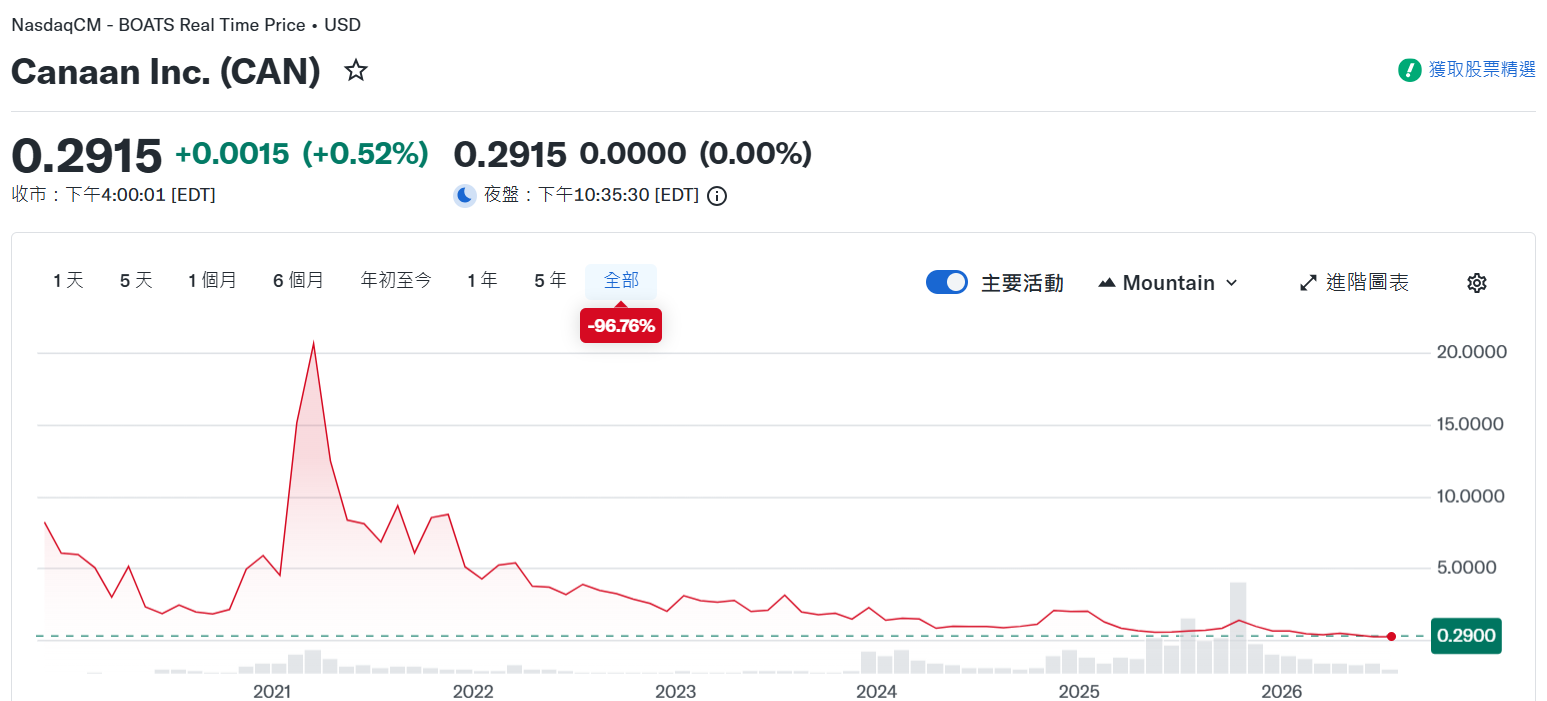


La reacción del mercado fue moderada. Al cierre, Canaan Technology cotizaba a 0.29 dólares, con una capitalización total de aproximadamente 217 millones de dólares, una disminución de más del 90% desde el pico de valoración en su debut en noviembre de 2019. Esta empresa, que una vez lució la corona de "la primera acción blockchain del mundo", ahora se encuentra al borde del precipicio de la exclusión bursátil.


180 días de cuenta regresiva hacia la exclusión


La lucha de Canaan Technology con el departamento de cumplimiento de Nasdaq comenzó en mayo de 2025. En ese entonces, la compañía recibió por primera vez una advertencia de exclusión debido a que su precio de acción se mantuvo persistentemente por debajo de 1 dólar, superando temporalmente la crisis gracias a un repunte en el precio de Bitcoin. Sin embargo, la bonanza no duró mucho. El 14 de enero de 2026, Nasdaq emitió otra notificación: el precio de cierre de los ADS de Canaan Technology había estado por debajo de 1 dólar durante 30 días de negociación consecutivos, y la compañía debía cumplir antes del 13 de julio, es decir, lograr un precio de cierre igual o superior a 1 dólar durante 10 días consecutivos.


El 13 de julio, expiró el período de gracia inicial. Canaan Technology no logró cumplir el objetivo. La compañía trasladó urgentemente su listado del mercado global de Nasdaq al mercado de capitales de Nasdaq, con umbrales relativamente más bajos, el 1 de julio, y solicitó 180 días adicionales.


El 15 de julio, la solicitud fue aprobada, estableciendo una nueva línea de supervivencia para el 11 de enero de 2027.


Según las reglas de Nasdaq, si para entonces aún no logra restablecer el cumplimiento, Canaan Technology podría enfrentar la exclusión definitiva. La compañía ha declarado que, si es necesario, considerará implementar una división inversa de acciones para aumentar el precio de la acción, aunque esto generalmente se interpreta como una señal de debilidad.


Informe financiero Q1 2026: Ingresos totales caen un 24.3%, pérdida neta de 88.7 millones de dólares


La debilidad del precio de las acciones de Canaan Technology no es infundada. Sus últimos reportes financieros muestran que la compañía está en un estado grave de pérdida financiera.


El 19 de mayo de 2026, Canaan Technology publicó sus resultados financieros no auditados del primer trimestre: ingresos totales de 62.7 millones de dólares, una disminución del 24.3% interanual y una caída abrupta del 68% respecto al trimestre anterior; pérdida neta de 88.7 millones de dólares, mayor que la del mismo período del año anterior (86.4 millones de dólares). La compañía registró una pérdida bruta de 22.9 millones de dólares, que incluyó una depreciación de inventario no monetaria de aproximadamente 25 millones de dólares, lo que significa que Canaan Technology se vio obligada a reducir sustancialmente el valor de su inventario de equipos de minería, reflejando una drástica contracción de la demanda del mercado.


Lo más grave es que la guía de ingresos de la compañía para el segundo trimestre es de solo 35 a 45 millones de dólares, lo que sugiere que el desempeño seguirá bajo presión a corto plazo. Al 31 de marzo de 2026, el saldo de efectivo de la compañía era de 43.5 millones de dólares, una reducción significativa respecto a los 80.8 millones de dólares de finales de 2025; sin embargo, en abril la compañía recuperó aproximadamente 42 millones de dólares en cuentas por cobrar de clientes, aliviando en cierta medida su liquidez.


Vale la pena señalar que, a pesar de las pérdidas en su negocio principal, las reservas de criptomonedas de Canaan Technology alcanzaron un récord histórico: a finales del primer trimestre, la compañía poseía 1807.60 bitcoins (valorados en 142 millones de dólares). Estos activos digitales proporcionaron cierta cobertura en su balance, pero también vincularon su desempeño a la volatilidad del precio de las criptomonedas.
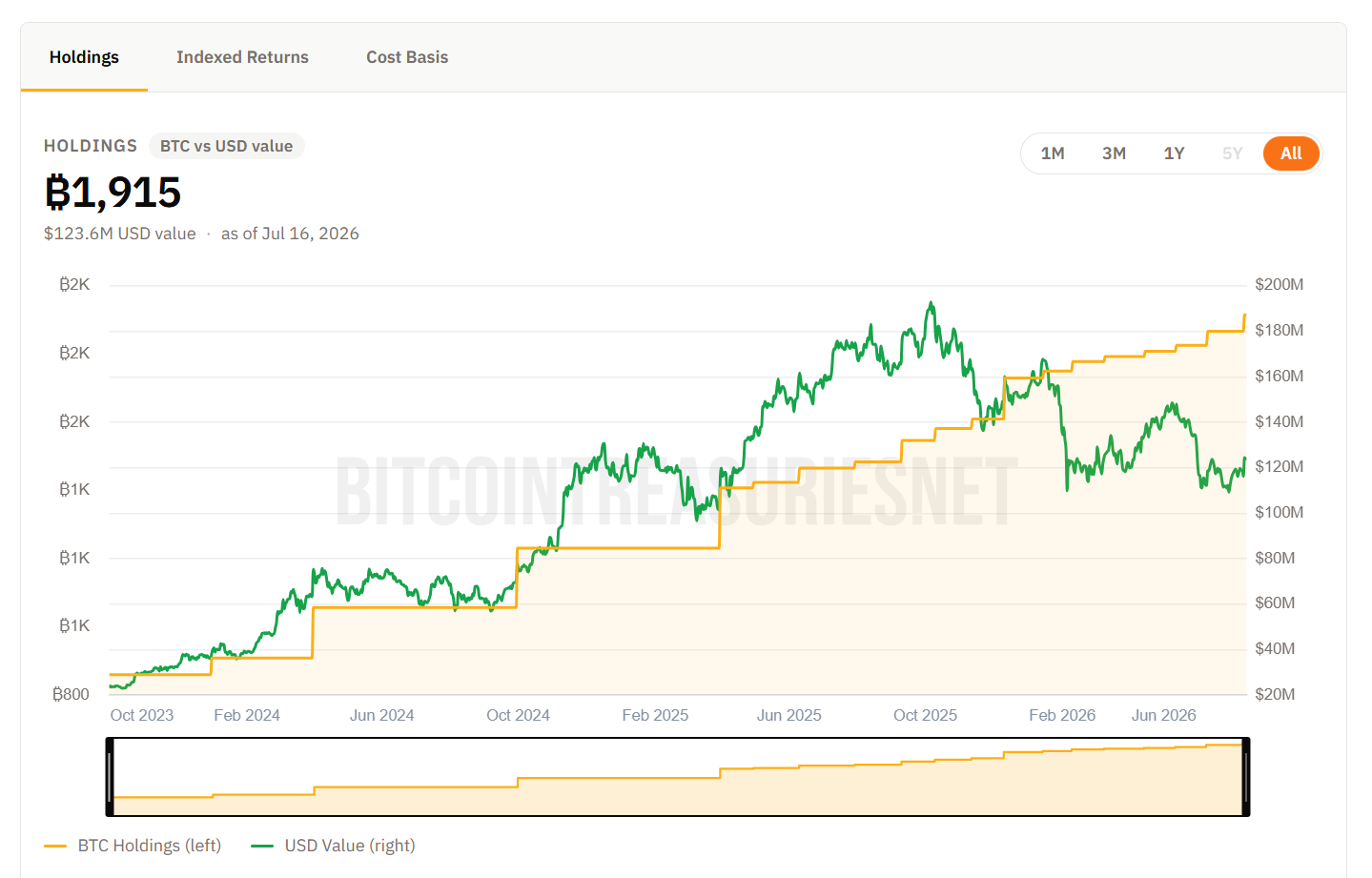


Según los datos más recientes, las reservas de Bitcoin de Canaan Technology han aumentado a 1915, pero su valor total ha caído a 120 millones de dólares.


El sueño roto de los chips de IA y la dificultad de "vender palas"


La difícil situación de Canaan Technology se debe, en parte, a un error estratégico costoso.


El 24 de junio de 2025, la compañía anunció la terminación de su negocio no central de chips de IA, regresando por completo a los equipos de minería de Bitcoin y la minería propia. Sus años de exploración de una "segunda curva" terminaron en fracaso. Según información pública, Canaan Technology generó solo alrededor de 900,000 dólares en ingresos por productos de computación periférica en el año fiscal 2024, pero los gastos operativos relacionados ascendieron a aproximadamente 21.42 millones de dólares, representando el 15% de los gastos operativos totales de la compañía ese año. Bajo la presión de una pérdida neta de 249.8 millones de dólares en el año fiscal 2024, este negocio que "solo quemaba dinero y no generaba ingresos" fue recortado drásticamente.


Sin embargo, regresar al negocio principal no hizo las cosas mucho más fáciles para Canaan Technology. La industria de los equipos de minería enfrenta una presión competitiva sin precedentes. En comparación con competidores como Bitmain, la cuota de mercado de Canaan Technology continúa siendo erosionada. En el segundo trimestre de 2025, la potencia de procesamiento total vendida por la compañía fue de 6.4 millones de TH/s, con un crecimiento interanual de solo el 3%; para el primer trimestre de 2026, los ingresos por productos ya habían caído a 42.9 millones de dólares, un desplome en comparación con los 164.9 millones de dólares del cuarto trimestre de 2024.


Fundador de Canaan Technology, Zhang Nangeng


La esencia de los fabricantes de equipos de minería es "vender palas": su destino está estrechamente ligado al ciclo de Bitcoin. Cuando el precio de Bitcoin es alto y las ganancias de la minería son generosas, los mineros están dispuestos a realizar gastos de capital; una vez que el precio de Bitcoin es bajo y la competencia por la potencia de procesamiento total en la red se intensifica, la demanda de equipos de minería se enfría rápidamente. A partir de 2025, aunque el precio de Bitcoin mostró fortaleza en algunos períodos, la minería en general ha entrado en una etapa de bajos márgenes de ganancia en la era "post-halving", lo que ha dañado gravemente el modelo de negocio tradicional de Canaan Technology.


Ante la doble presión de la posible exclusión bursátil y las pérdidas, la gerencia de Canaan Technology está intentando transformarse de un simple vendedor de hardware a un "proveedor de servicios de infraestructura de potencia de procesamiento", buscando supervivencia a través de la integración vertical y el diseño energético.


La minería propia se ha convertido en un eje clave. Hasta el primer trimestre de 2026, la potencia de procesamiento total de Canaan Technology en sus 10 proyectos conjuntos de minería en todo el mundo alcanzó aproximadamente 11 EH/s, un crecimiento interanual del 66% y un aumento del 10.7% respecto al trimestre anterior. La compañía adquirió una participación del 49% en los proyectos ABC en Texas de Cipher Mining. Además, inició un proyecto piloto de minería de 3 megavatios en Canadá, explorando el uso del calor residual de los equipos de minería para la agricultura en invernaderos; y firmó un contrato de 4.5 megavatios con una empresa de ingeniería eléctrica japonesa, participando en la regulación de la carga de la red eléctrica.


En el frente de capital, en noviembre de 2025, Canaan Technology recibió una inversión estratégica total de 72 millones de dólares de instituciones como BH Digital y Galaxy Digital, destinada a fortalecer su balance y expandir su infraestructura. En diciembre del mismo año, la junta directiva aprobó un plan de recompra de acciones por 30 millones de dólares, intentando transmitir confianza al mercado.


Sin embargo, la trayectoria de su precio de acción muestra que el mercado no lo ha respaldado.


Resumen


La difícil situación de Canaan Technology es un reflejo del invierno de toda la industria minera de criptomonedas.


A partir de 2025, la narrativa del mercado de capital global hacia la industria de criptomonedas ha cambiado significativamente. Con la explosión de la demanda de potencia de procesamiento para la inteligencia artificial, gran parte del capital que originalmente se dirigía a equipos de minería y minería se ha redirigido hacia centros de datos de IA y computación de alto rendimiento. Los mineros han comenzado a migrar su potencia de procesamiento hacia proyectos de IA, comprimiendo directamente el espacio de demanda de equipos de minería de Bitcoin.


El desafío más profundo radica en la sostenibilidad del modelo de negocio. Como empresa de diseño de chips ASIC, Canaan Technology necesita invertir continuamente en I+D para mantener la competitividad de sus productos.


Desde una perspectiva más amplia, Canaan Technology está experimentando un brutal baño de desinflación de la burbuja. Al listarse en 2019, la compañía disfrutó de una alta valoración gracias al concepto de la primera acción blockchain; hoy, el mercado ya no paga por conceptos, sino que exige flujos de efectivo y rentabilidad reales.


Antes de que llegue el próximo ciclo alcista de Bitcoin, la rentabilidad de las compañías mineras seguirá bajo presión, y Canaan Technology debe demostrar en 6 meses que tiene la capacidad de atravesar el ciclo.

Trending Cryptos

Related Questions

Q¿Cuál es la situación actual de Canaan Technology en relación con la lista de Nasdaq?

ACanaan Technology está al borde de la exclusión de Nasdaq. Recibió una advertencia de exclusión porque el precio de sus ADS se mantuvo por debajo de 1 dólar durante 30 días hábiles consecutivos. Aunque obtuvo una prórroga de 180 días (hasta el 11 de enero de 2027), si no logra cumplir con el requisito de precio mínimo dentro de este período, podría ser finalmente excluida de la lista.

Q¿Qué datos clave de sus resultados financieros del primer trimestre de 2026 reflejan sus dificultades financieras?

AEn el primer trimestre de 2026, Canaan Technology reportó unos ingresos totales de 62,7 millones de dólares, una caída interanual del 24,3% y una caída secuencial del 68%. La pérdida neta fue de 88,7 millones de dólares, superior a la del mismo período del año anterior (86,4 millones). Registró una pérdida bruta de 22,9 millones de dólares, que incluía una reducción de valor de inventario no monetario de aproximadamente 25 millones de dólares. Su proyección de ingresos para el segundo trimestre es de solo 35 a 45 millones de dólares.

Q¿Qué sucedió con el intento de diversificación de Canaan Technology hacia los chips de IA y cuál es su estrategia actual?

AEl intento de diversificación hacia los chips de IA de Canaan Technology fracasó. El 24 de junio de 2025, anunció la terminación de su negocio no central de chips de IA debido a que generaba muy pocos ingresos (aprox. 0,9 millones de dólares en 2024) mientras incurría en altos gastos operativos (aprox. 21,42 millones de dólares en 2024). La estrategia actual es un retorno total a su negocio principal: la fabricación de mineros de Bitcoin y la minería propia, intentando transformarse en un proveedor de infraestructura de capacidad computacional.

Q¿Cómo ha afectado el entorno competitivo y el ciclo de Bitcoin al modelo de negocio tradicional de Canaan Technology?

AEl entorno competitivo y el ciclo de Bitcoin han afectado gravemente al modelo de negocio tradicional de Canaan Technology ('vender palas'). La fuerte competencia de empresas como Bitmain ha reducido su cuota de mercado. Además, la demanda de mineros está estrechamente ligada al precio de Bitcoin y la rentabilidad de la minería. En la era posterior a la reducción a la mitad de 2024, los márgenes de ganancia de la minería son bajos y la demanda de mineros se ha enfriado, lo que ha llevado a una fuerte caída en los ingresos por productos (de 164,9 millones de dólares en el Q4 2024 a 42,9 millones de dólares en el Q1 2026).

Q¿Qué medidas está tomando Canaan Technology para sobrevivir y transformarse frente a las presiones de exclusión y pérdidas?

AFrente a las presiones, Canaan Technology está tomando varias medidas: 1) Transformación estratégica: pasar de ser un vendedor de hardware a un 'proveedor de servicios de infraestructura de capacidad computacional', expandiendo la minería propia (alcanzó 11 EH/s en el Q1 2026). 2) Integración vertical y exploración de energía: proyectos de minería en Canadá y Japón, explorando el uso de calor residual. 3) Medidas financieras: recibió una inversión estratégica de 72 millones de dólares y aprobó un plan de recompra de acciones de 30 millones de dólares. 4) Posible medida de último recurso: considerar una división inversa de acciones para elevar el precio por acción.

Related Reads

Conversation with Co-founder of Hyperdash: Why is Hyperliquid Still Severely Undervalued?

Interview Summary with Hanson Birringer, Co-founder of Hyperdash: Why Hyperliquid Remains Undervalued In an interview on *The Rollup*, Hanson Birringer, Co-founder and Chief Revenue Officer of Hyperdash—a trading data analytics platform for Hyperliquid—shared his investment thesis on the Hyperliquid ecosystem. He described Hyperliquid as a pure play on three key crypto super-trends: perpetual contracts, real-world assets (RWAs), and stablecoins. The platform is an open-source, decentralized, and high-performance financial system uniquely positioned to bridge traditional institutional capital with decentralized finance. Birringer highlighted Hyperliquid's leadership in perpetual DEX trading and its recent innovation of RWA perpetual contracts. He emphasized the significance of USDC becoming a core quoting asset, which, by allocating 90% of its backend yield from assets like US treasuries to a protocol buyback fund, creates substantial, programmatic buy pressure for the Hype token. He addressed regulatory challenges, noting that Hyperliquid's policy team is actively engaging with US regulators like the CFTC to establish clear rules for decentralized venues. Once achieved, regulated brokers could route orders directly to Hyperliquid's backend, tapping into its low-cost liquidity layer. Regarding revenue, Birringer was optimistic, citing the immense size of traditional financial markets. Even capturing a small fraction of global trading volume in products like RWA perpetuals could lead to exponential growth for the protocol. The recently launched Grayscale Hyperliquid ETF, seeded by their SPV (Hyper Holdings Global), provides a compliant on-ramp for institutional investors drawn to the clear "cash flow + token buyback" model. Finally, he discussed Hyperdash's acquisition of Imperator, enhancing its data and node infrastructure to serve both retail traders and traditional asset managers. His bullish case rests on Hyperliquid's potential to provide unprecedented global access to dollar-based capital markets. He struggled to articulate a bear case, seeing the long-term trends of internet adoption and financial inclusion as powerful tailwinds.

marsbit16m ago

Conversation with Co-founder of Hyperdash: Why is Hyperliquid Still Severely Undervalued?

marsbit16m ago

DeepSeek V4 'Full-Blooded Edition' Leaked, Could Be Released As Early As Tomorrow

The highly anticipated full release of DeepSeek V4 is imminent, expected to launch as early as tomorrow after nearly three months of waiting. A select group has already received access to the GA (General Availability) beta, which includes two versions: DeepSeek V4 Flash and DeepSeek V4 Pro. Early testers report that V4's overall performance is close to the level of Opus 4.8, with coding capabilities rivaling GPT-5.6 Sol. Its agent abilities are significantly enhanced, and 3D/SVG generation has improved notably. While it may not surpass the recently released Kimi K3 in performance, its expected price point is significantly lower. The official release will introduce a new "peak/off-peak" pricing model for its API. For example, deepseek-v4-pro will cost $0.87 per million output tokens during standard times and $1.74 during peak hours. The flash version is even more aggressive at $0.28/$0.56 per million tokens, with cached input tokens priced extremely low at $0.0028. This makes V4 a strong contender in terms of cost-effectiveness, potentially offering Opus-level capabilities at a fraction of the cost, continuing DeepSeek's reputation as a "price disruptor" in the AI market. Initial demos showcasing V4's capabilities have begun circulating, including generated 3D simulation games, HTML games blending elements of Minecraft and No Man's Sky, and classic games like a "Cut the Rope" clone. The final GA version is set to replace the older deepseek-chat and deepseek-reasoner models, which will be retired on July 24th.

marsbit24m ago

DeepSeek V4 'Full-Blooded Edition' Leaked, Could Be Released As Early As Tomorrow

marsbit24m ago

WEEX Labs Weekly Observation: The 'Power Restructuring' of AI Infrastructure and the 'Deep Dive Movement' into the Real Economy

WEEX Labs Weekly Review: AI Infrastructure's "Power Restructuring" and the "Deep Dive" into the Real Economy Mid-July 2026 marks a pivotal shift in the global AI industry. The allocation of computing power is transferring from cloud giants to compute resource owners, while the core value of AI is solidifying around its penetration into physical industry, moving beyond the race for model parameters. The era of fragmented model development is over, replaced by a capital-intensive, integrated chain driven by hard tech. Key developments this week include Meta's planned entry into the cloud computing market with "MetaCompute." This move by social media giants with massive GPU clusters challenges traditional cloud providers like AWS, integrating compute, models, and data into one-stop services, which will squeeze smaller rental providers and shift enterprise focus towards underlying model ecosystems. Chinese foundational models like DeepSeek-V4 and Tencent's Hy-3 are pushing towards "utility" status through open-source releases and extreme cost reductions via MoE architectures. This lowers entry barriers for enterprises, allowing them to focus resources on private deployment and deep business integration. Embodied intelligence, particularly humanoid robots, is transitioning from lab demos to real-world factory applications, driven by policies promoting large-scale, practical deployment in logistics and manufacturing. The value focus is shifting from spectacle to stable industrial data and real operational efficiency. Global governance, through forums like WAIC, is evolving from theoretical ethics to practical operational frameworks for "Sovereign AI," raising geopolitical compliance barriers and making auditability and data sovereignty core design requirements from the outset. WEEX Labs Insights: The current transformation shows AI's prosperity is deeply embedding into the fabric of global manufacturing. Strategic recommendations include: 1) leveraging open-source models for private, proprietary knowledge bases; 2) maintaining cloud provider diversity to avoid vendor lock-in from integrated model ecosystems; and 3) seeking opportunities in the "embodied infrastructure" supporting robots, such as data collection, industrial simulation, and factory AI adaptation services.

marsbit40m ago

WEEX Labs Weekly Observation: The 'Power Restructuring' of AI Infrastructure and the 'Deep Dive Movement' into the Real Economy

marsbit40m ago

Is WEEX TradFi Reliable? What You Should Know Before Your First Trade of U.S. Stock Tokens

In recent years, cryptocurrency users have expanded their focus beyond Bitcoin and Ethereum to include popular traditional financial (TradFi) assets like Nvidia, Apple, and Tesla stocks. This shift raises key questions: What do these TradFi assets represent on crypto trading platforms? How do they differ from traditional stock ownership? And how can users assess the reliability of platforms offering such products? TradFi products, such as those offered by WEEX TradFi (including NVDA, MSFT, AAPL, TSLA, and QQQ tokens), are blurring the lines between crypto and traditional markets. They allow users to trade based on the price movements of traditional assets within a familiar digital asset trading environment. However, it's crucial to understand that trading a "stock token" is not equivalent to owning the actual stock. Users are participating in price speculation, not gaining shareholder rights like dividends or voting. A key feature of these products is 7x24 trading, offering flexibility beyond traditional market hours. While convenient, this also introduces unique risks, such as potential liquidity gaps and volatility when underlying markets are closed. For users evaluating TradFi products, reliability hinges on transparency and risk management. Critical factors include understanding the product mechanism, how prices track the underlying assets, and the associated risks—especially when using leverage. Popular stocks and indices are still subject to company performance, macroeconomic shifts, and sector trends. Ultimately, TradFi represents a new gateway connecting crypto users to global markets. The future points toward integrated trading environments where the distinction between "crypto investor" and "traditional investor" fades. For newcomers, a platform's reliability stems not from promises, but from a clear understanding of the product, a comprehensive view of risks, and informed judgment of the platform's capabilities.

marsbit41m ago

Is WEEX TradFi Reliable? What You Should Know Before Your First Trade of U.S. Stock Tokens

marsbit41m ago

Trading

Spot

Hot Articles

What is SONIC

Sonic: Pioneering the Future of Gaming in Web3 Introduction to Sonic In the ever-evolving landscape of Web3, the gaming industry stands out as one of the most dynamic and promising sectors. At the forefront of this revolution is Sonic, a project designed to amplify the gaming ecosystem on the Solana blockchain. Leveraging cutting-edge technology, Sonic aims to deliver an unparalleled gaming experience by efficiently processing millions of requests per second, ensuring that players enjoy seamless gameplay while maintaining low transaction costs. This article delves into the intricate details of Sonic, exploring its creators, funding sources, operational mechanics, and the timeline of significant events that have shaped its journey. What is Sonic? Sonic is an innovative layer-2 network that operates atop the Solana blockchain, specifically tailored to enhance the existing Solana gaming ecosystem. It accomplishes this through a customised, VM-agnostic game engine paired with a HyperGrid interpreter, facilitating sovereign game economies that roll up back to the Solana platform. The primary goals of Sonic include: Enhanced Gaming Experiences: Sonic is committed to offering lightning-fast on-chain gameplay, allowing players and developers to engage with games at previously unattainable speeds. Atomic Interoperability: This feature enables transactions to be executed within Sonic without the need to redeploy Solana programmes and accounts. This makes the process more efficient and directly benefits from Solana Layer1 services and liquidity. Seamless Deployment: Sonic allows developers to write for Ethereum Virtual Machine (EVM) based systems and execute them on Solana’s SVM infrastructure. This interoperability is crucial for attracting a broader range of dApps and decentralised applications to the platform. Support for Developers: By offering native composable gaming primitives and extensible data types - dining within the Entity-Component-System (ECS) framework - game creators can craft intricate business logic with ease. Overall, Sonic's unique approach not only caters to players but also provides an accessible and low-cost environment for developers to innovate and thrive. Creator of Sonic The information regarding the creator of Sonic is somewhat ambiguous. However, it is known that Sonic's SVM is owned by the company Mirror World. The absence of detailed information about the individuals behind Sonic reflects a common trend in several Web3 projects, where collective efforts and partnerships often overshadow individual contributions. Investors of Sonic Sonic has garnered considerable attention and support from various investors within the crypto and gaming sectors. Notably, the project raised an impressive $12 million during its Series A funding round. The round was led by BITKRAFT Ventures, with other notable investors including Galaxy, Okx Ventures, Interactive, Big Brain Holdings, and Mirana. This financial backing signifies the confidence that investment foundations have in Sonic’s potential to revolutionise the Web3 gaming landscape, further validating its innovative approaches and technologies. How Does Sonic Work? Sonic utilises the HyperGrid framework, a sophisticated parallel processing mechanism that enhances its scalability and customisability. Here are the core features that set Sonic apart: Lightning Speed at Low Costs: Sonic offers one of the fastest on-chain gaming experiences compared to other Layer-1 solutions, powered by the scalability of Solana’s virtual machine (SVM). Atomic Interoperability: Sonic enables transaction execution without redeployment of Solana programmes and accounts, effectively streamlining the interaction between users and the blockchain. EVM Compatibility: Developers can effortlessly migrate decentralised applications from EVM chains to the Solana environment using Sonic’s HyperGrid interpreter, increasing the accessibility and integration of various dApps. Ecosystem Support for Developers: By exposing native composable gaming primitives, Sonic facilitates a sandbox-like environment where developers can experiment and implement business logic, greatly enhancing the overall development experience. Monetisation Infrastructure: Sonic natively supports growth and monetisation efforts, providing frameworks for traffic generation, payments, and settlements, thereby ensuring that gaming projects are not only viable but also sustainable financially. Timeline of Sonic The evolution of Sonic has been marked by several key milestones. Below is a brief timeline highlighting critical events in the project's history: 2022: The Sonic cryptocurrency was officially launched, marking the beginning of its journey in the Web3 gaming arena. 2024: June: Sonic SVM successfully raised $12 million in a Series A funding round. This investment allowed Sonic to further develop its platform and expand its offerings. August: The launch of the Sonic Odyssey testnet provided users with the first opportunity to engage with the platform, offering interactive activities such as collecting rings—a nod to gaming nostalgia. October: SonicX, an innovative crypto game integrated with Solana, made its debut on TikTok, capturing the attention of over 120,000 users within a short span. This integration illustrated Sonic’s commitment to reaching a broader, global audience and showcased the potential of blockchain gaming. Key Points Sonic SVM is a revolutionary layer-2 network on Solana explicitly designed to enhance the GameFi landscape, demonstrating great potential for future development. HyperGrid Framework empowers Sonic by introducing horizontal scaling capabilities, ensuring that the network can handle the demands of Web3 gaming. Integration with Social Platforms: The successful launch of SonicX on TikTok displays Sonic’s strategy to leverage social media platforms to engage users, exponentially increasing the exposure and reach of its projects. Investment Confidence: The substantial funding from BITKRAFT Ventures, among others, emphasizes the robust backing Sonic has, paving the way for its ambitious future. In conclusion, Sonic encapsulates the essence of Web3 gaming innovation, striking a balance between cutting-edge technology, developer-centric tools, and community engagement. As the project continues to evolve, it is poised to redefine the gaming landscape, making it a notable entity for gamers and developers alike. As Sonic moves forward, it will undoubtedly attract greater interest and participation, solidifying its place within the broader narrative of blockchain gaming.

1.9k Total ViewsPublished 2024.04.04Updated 2024.12.03

What is SONIC

What is $S$

Understanding SPERO: A Comprehensive Overview Introduction to SPERO As the landscape of innovation continues to evolve, the emergence of web3 technologies and cryptocurrency projects plays a pivotal role in shaping the digital future. One project that has garnered attention in this dynamic field is SPERO, denoted as SPERO,$$s$. This article aims to gather and present detailed information about SPERO, to help enthusiasts and investors understand its foundations, objectives, and innovations within the web3 and crypto domains. What is SPERO,$$s$? SPERO,$$s$ is a unique project within the crypto space that seeks to leverage the principles of decentralisation and blockchain technology to create an ecosystem that promotes engagement, utility, and financial inclusion. The project is tailored to facilitate peer-to-peer interactions in new ways, providing users with innovative financial solutions and services. At its core, SPERO,$$s$ aims to empower individuals by providing tools and platforms that enhance user experience in the cryptocurrency space. This includes enabling more flexible transaction methods, fostering community-driven initiatives, and creating pathways for financial opportunities through decentralised applications (dApps). The underlying vision of SPERO,$$s$ revolves around inclusiveness, aiming to bridge gaps within traditional finance while harnessing the benefits of blockchain technology. Who is the Creator of SPERO,$$s$? The identity of the creator of SPERO,$$s$ remains somewhat obscure, as there are limited publicly available resources providing detailed background information on its founder(s). This lack of transparency can stem from the project's commitment to decentralisation—an ethos that many web3 projects share, prioritising collective contributions over individual recognition. By centring discussions around the community and its collective goals, SPERO,$$s$ embodies the essence of empowerment without singling out specific individuals. As such, understanding the ethos and mission of SPERO remains more important than identifying a singular creator. Who are the Investors of SPERO,$$s$? SPERO,$$s$ is supported by a diverse array of investors ranging from venture capitalists to angel investors dedicated to fostering innovation in the crypto sector. The focus of these investors generally aligns with SPERO's mission—prioritising projects that promise societal technological advancement, financial inclusivity, and decentralised governance. These investor foundations are typically interested in projects that not only offer innovative products but also contribute positively to the blockchain community and its ecosystems. The backing from these investors reinforces SPERO,$$s$ as a noteworthy contender in the rapidly evolving domain of crypto projects. How Does SPERO,$$s$ Work? SPERO,$$s$ employs a multi-faceted framework that distinguishes it from conventional cryptocurrency projects. Here are some of the key features that underline its uniqueness and innovation: Decentralised Governance: SPERO,$$s$ integrates decentralised governance models, empowering users to participate actively in decision-making processes regarding the project’s future. This approach fosters a sense of ownership and accountability among community members. Token Utility: SPERO,$$s$ utilises its own cryptocurrency token, designed to serve various functions within the ecosystem. These tokens enable transactions, rewards, and the facilitation of services offered on the platform, enhancing overall engagement and utility. Layered Architecture: The technical architecture of SPERO,$$s$ supports modularity and scalability, allowing for seamless integration of additional features and applications as the project evolves. This adaptability is paramount for sustaining relevance in the ever-changing crypto landscape. Community Engagement: The project emphasises community-driven initiatives, employing mechanisms that incentivise collaboration and feedback. By nurturing a strong community, SPERO,$$s$ can better address user needs and adapt to market trends. Focus on Inclusion: By offering low transaction fees and user-friendly interfaces, SPERO,$$s$ aims to attract a diverse user base, including individuals who may not previously have engaged in the crypto space. This commitment to inclusion aligns with its overarching mission of empowerment through accessibility. Timeline of SPERO,$$s$ Understanding a project's history provides crucial insights into its development trajectory and milestones. Below is a suggested timeline mapping significant events in the evolution of SPERO,$$s$: Conceptualisation and Ideation Phase: The initial ideas forming the basis of SPERO,$$s$ were conceived, aligning closely with the principles of decentralisation and community focus within the blockchain industry. Launch of Project Whitepaper: Following the conceptual phase, a comprehensive whitepaper detailing the vision, goals, and technological infrastructure of SPERO,$$s$ was released to garner community interest and feedback. Community Building and Early Engagements: Active outreach efforts were made to build a community of early adopters and potential investors, facilitating discussions around the project’s goals and garnering support. Token Generation Event: SPERO,$$s$ conducted a token generation event (TGE) to distribute its native tokens to early supporters and establish initial liquidity within the ecosystem. Launch of Initial dApp: The first decentralised application (dApp) associated with SPERO,$$s$ went live, allowing users to engage with the platform's core functionalities. Ongoing Development and Partnerships: Continuous updates and enhancements to the project's offerings, including strategic partnerships with other players in the blockchain space, have shaped SPERO,$$s$ into a competitive and evolving player in the crypto market. Conclusion SPERO,$$s$ stands as a testament to the potential of web3 and cryptocurrency to revolutionise financial systems and empower individuals. With a commitment to decentralised governance, community engagement, and innovatively designed functionalities, it paves the way toward a more inclusive financial landscape. As with any investment in the rapidly evolving crypto space, potential investors and users are encouraged to research thoroughly and engage thoughtfully with the ongoing developments within SPERO,$$s$. The project showcases the innovative spirit of the crypto industry, inviting further exploration into its myriad possibilities. While the journey of SPERO,$$s$ is still unfolding, its foundational principles may indeed influence the future of how we interact with technology, finance, and each other in interconnected digital ecosystems.

149 Total ViewsPublished 2024.12.17Updated 2024.12.17

What is $S$

What is AGENT S

Agent S: The Future of Autonomous Interaction in Web3 Introduction In the ever-evolving landscape of Web3 and cryptocurrency, innovations are constantly redefining how individuals interact with digital platforms. One such pioneering project, Agent S, promises to revolutionise human-computer interaction through its open agentic framework. By paving the way for autonomous interactions, Agent S aims to simplify complex tasks, offering transformative applications in artificial intelligence (AI). This detailed exploration will delve into the project's intricacies, its unique features, and the implications for the cryptocurrency domain. What is Agent S? Agent S stands as a groundbreaking open agentic framework, specifically designed to tackle three fundamental challenges in the automation of computer tasks: Acquiring Domain-Specific Knowledge: The framework intelligently learns from various external knowledge sources and internal experiences. This dual approach empowers it to build a rich repository of domain-specific knowledge, enhancing its performance in task execution. Planning Over Long Task Horizons: Agent S employs experience-augmented hierarchical planning, a strategic approach that facilitates efficient breakdown and execution of intricate tasks. This feature significantly enhances its ability to manage multiple subtasks efficiently and effectively. Handling Dynamic, Non-Uniform Interfaces: The project introduces the Agent-Computer Interface (ACI), an innovative solution that enhances the interaction between agents and users. Utilizing Multimodal Large Language Models (MLLMs), Agent S can navigate and manipulate diverse graphical user interfaces seamlessly. Through these pioneering features, Agent S provides a robust framework that addresses the complexities involved in automating human interaction with machines, setting the stage for myriad applications in AI and beyond. Who is the Creator of Agent S? While the concept of Agent S is fundamentally innovative, specific information about its creator remains elusive. The creator is currently unknown, which highlights either the nascent stage of the project or the strategic choice to keep founding members under wraps. Regardless of anonymity, the focus remains on the framework's capabilities and potential. Who are the Investors of Agent S? As Agent S is relatively new in the cryptographic ecosystem, detailed information regarding its investors and financial backers is not explicitly documented. The lack of publicly available insights into the investment foundations or organisations supporting the project raises questions about its funding structure and development roadmap. Understanding the backing is crucial for gauging the project's sustainability and potential market impact. How Does Agent S Work? At the core of Agent S lies cutting-edge technology that enables it to function effectively in diverse settings. Its operational model is built around several key features: Human-like Computer Interaction: The framework offers advanced AI planning, striving to make interactions with computers more intuitive. By mimicking human behaviour in tasks execution, it promises to elevate user experiences. Narrative Memory: Employed to leverage high-level experiences, Agent S utilises narrative memory to keep track of task histories, thereby enhancing its decision-making processes. Episodic Memory: This feature provides users with step-by-step guidance, allowing the framework to offer contextual support as tasks unfold. Support for OpenACI: With the ability to run locally, Agent S allows users to maintain control over their interactions and workflows, aligning with the decentralised ethos of Web3. Easy Integration with External APIs: Its versatility and compatibility with various AI platforms ensure that Agent S can fit seamlessly into existing technological ecosystems, making it an appealing choice for developers and organisations. These functionalities collectively contribute to Agent S's unique position within the crypto space, as it automates complex, multi-step tasks with minimal human intervention. As the project evolves, its potential applications in Web3 could redefine how digital interactions unfold. Timeline of Agent S The development and milestones of Agent S can be encapsulated in a timeline that highlights its significant events: September 27, 2024: The concept of Agent S was launched in a comprehensive research paper titled “An Open Agentic Framework that Uses Computers Like a Human,” showcasing the groundwork for the project. October 10, 2024: The research paper was made publicly available on arXiv, offering an in-depth exploration of the framework and its performance evaluation based on the OSWorld benchmark. October 12, 2024: A video presentation was released, providing a visual insight into the capabilities and features of Agent S, further engaging potential users and investors. These markers in the timeline not only illustrate the progress of Agent S but also indicate its commitment to transparency and community engagement. Key Points About Agent S As the Agent S framework continues to evolve, several key attributes stand out, underscoring its innovative nature and potential: Innovative Framework: Designed to provide an intuitive use of computers akin to human interaction, Agent S brings a novel approach to task automation. Autonomous Interaction: The ability to interact autonomously with computers through GUI signifies a leap towards more intelligent and efficient computing solutions. Complex Task Automation: With its robust methodology, it can automate complex, multi-step tasks, making processes faster and less error-prone. Continuous Improvement: The learning mechanisms enable Agent S to improve from past experiences, continually enhancing its performance and efficacy. Versatility: Its adaptability across different operating environments like OSWorld and WindowsAgentArena ensures that it can serve a broad range of applications. As Agent S positions itself in the Web3 and crypto landscape, its potential to enhance interaction capabilities and automate processes signifies a significant advancement in AI technologies. Through its innovative framework, Agent S exemplifies the future of digital interactions, promising a more seamless and efficient experience for users across various industries. Conclusion Agent S represents a bold leap forward in the marriage of AI and Web3, with the capacity to redefine how we interact with technology. While still in its early stages, the possibilities for its application are vast and compelling. Through its comprehensive framework addressing critical challenges, Agent S aims to bring autonomous interactions to the forefront of the digital experience. As we move deeper into the realms of cryptocurrency and decentralisation, projects like Agent S will undoubtedly play a crucial role in shaping the future of technology and human-computer collaboration.

814 Total ViewsPublished 2025.01.14Updated 2025.01.14

What is AGENT S

Discussions

Welcome to the HTX Community. Here, you can stay informed about the latest platform developments and gain access to professional market insights. Users' opinions on the price of S (S) are presented below.

活动图片