El token de IA de Solana, Ava, afectado por snipeo en el lanzamiento vinculado al implementador: Bubblemaps

cointelegraphPublished on 2025-12-19Last updated on 2025-12-19

Abstract

La firma de análisis blockchain Bubblemaps ha revelado que un grupo de 23 carteras vinculadas al implementador del token de IA Ava en Solana acumuló alrededor del 40% de la oferta inicial del token, lo que sugiere una posible coordinación interna durante su lanzamiento. Estas carteras, financiadas a través de Bitget y Binance en un corto período y sin actividad previa en blockchain, emplearon técnicas de "sniping" para adquirir grandes cantidades del token AVA en su debut en Pump.fun. A pesar de ser presentado como un lanzamiento comunitario, la concentración de tokens en pocas carteras aumenta el riesgo de prácticas fraudulentas como "rug pulls". El token, que alcanzó una valoración de 300 millones de dólares en enero de 2025, ha caído un 96% desde su máximo histórico.

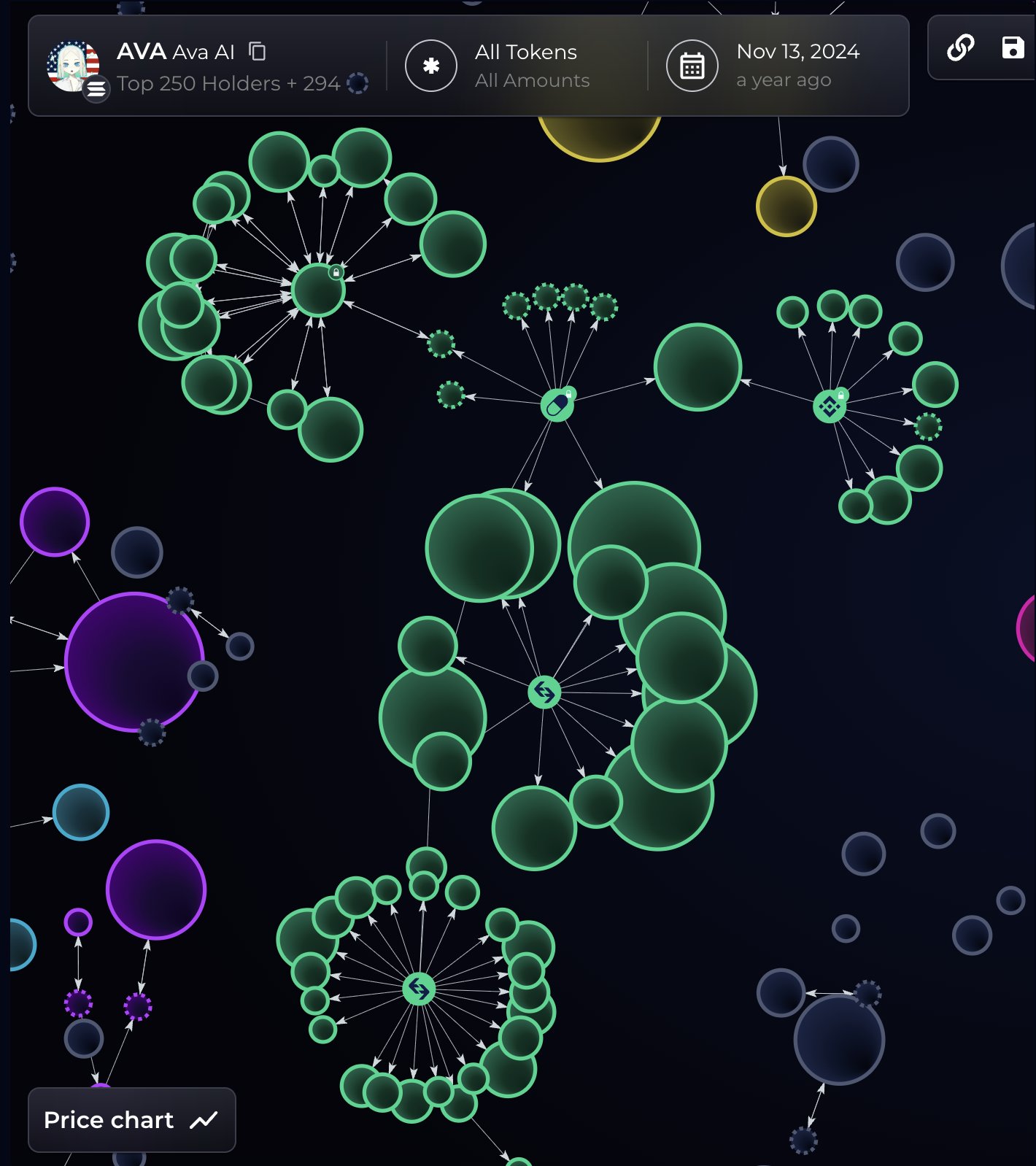
La firma de análisis de blockchain Bubblemaps informó que un grupo de 23 billeteras vinculadas al implementador del token de IA basado en Solana, Ava, acumuló alrededor del 40% del suministro del token en su lanzamiento, lo que genera nuevas preguntas sobre la coordinación interna en el debut del proyecto.

El grupo de billeteras sibila relacionado con el implementador compartió patrones similares, incluyendo haber sido financiadas en un corto período de tiempo a través de Bitget y Binance, recibir cantidades similares de Solana (SOL) y no tener actividad en la blockchain antes de comprar el suministro del token Ava AI (AVA) en el lanzamiento, afirmó Bubblemaps en una publicación de X el jueves.

"Conectados a estos snipers hay otras billeteras que también compraron $AVA temprano. Fuentes de financiamiento, tamaños y tiempos similares sugieren fuertemente una coordinación entre estos grupos", dijeron.

En la jerga de las criptomonedas, "sniping" (disparar/acechar) se refiere a emplear bots de trading de cripto para comprar automáticamente el nuevo suministro de tokens tan pronto como están disponibles públicamente, con el objetivo de comprar a precios más bajos antes que el público general.

Aunque el token se lanzó en la plataforma de memecoins Pump.fun, con el objetivo de tener un debut descentralizado e impulsado por la comunidad, la actividad del grupo de billeteras sugiere adquisiciones que llevaron a que una única entidad poseyera el 40% del suministro del token.
Fuente: Bubblemaps

Relacionado: Las criptomonedas se acercan a su 'momento Netscape' mientras la industria se aproxima a un punto de inflexión

Un gran suministro de tokens concentrado en unas pocas billeteras puede ayudar a los inversores a detectar estafas como los "rug pulls" (estafas de retirada de liquidez), donde los insider retiran la liquidez o organizan una venta masiva, resultando en un colapso abrupto del precio que deja a los inversores con tokens sin valor.

La actividad coordinada fue descubierta a través de la función Time Travel de Bubblemaps, una herramienta de análisis de grado forense lanzada en mayo que permite a los usuarios de Web3 reconstruir la distribución histórica de los tokens, con el objetivo de detectar actividad interna temprana.

Relacionado: Bubblemaps cuestiona el lanzamiento justo de PEPE, alega que el 30% del suministro inicial se agrupó

El token AVA AI cae un 96% desde su máximo histórico

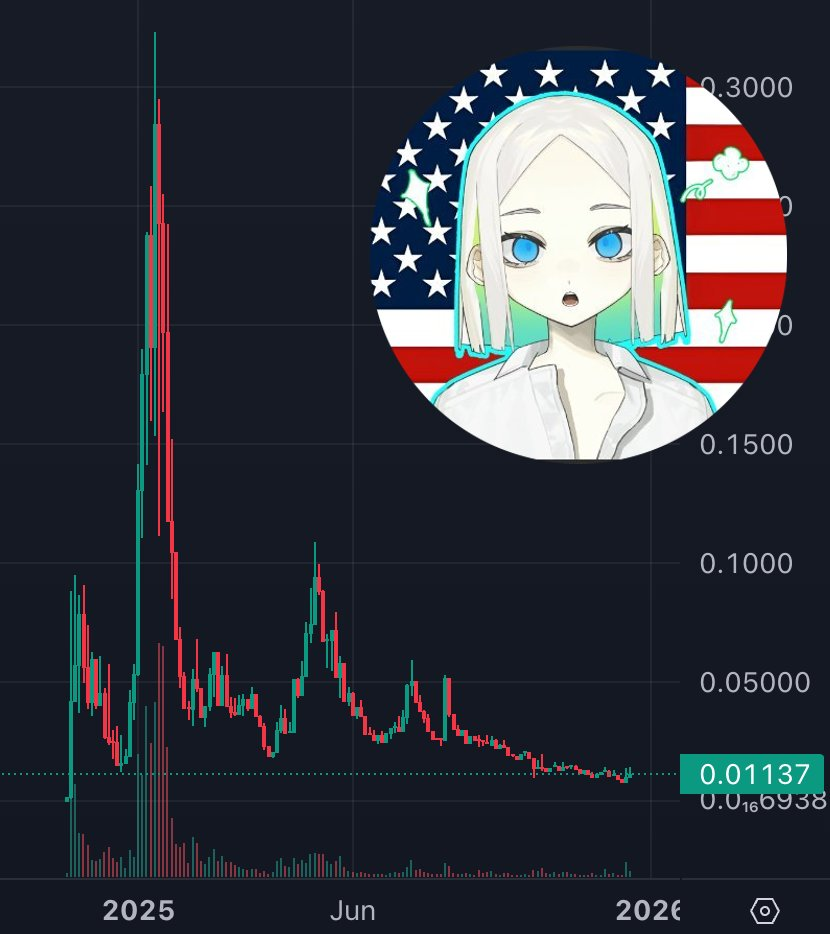
La actividad de compra coordinada se reveló más de un año después del lanzamiento del token AVA el 13 de noviembre de 2024. El token alcanzó una valoración totalmente diluida (FDV) de $300 millones para enero de 2025, convirtiéndolo en un popular token de utilidad para agentes de IA autónomos nativo de Solana.

El token AVA ha caído más del 79% desde su lanzamiento y más del 96% desde su máximo histórico de $0.33 alcanzado el 15 de enero de 2025, según muestran los datos de CoinGecko.
Fuente: Bubblemaps

Ava, también conocida como "la pasante de IA HOLO", fue el primer agente de IA construido en la plataforma de lanzamiento de IA descentralizada Holoworld AI. La plataforma permite a los usuarios crear, jugar o recaudar fondos para aplicaciones de IA agentic.

Holoworld afirma tener más de 1 millón de usuarios y 700,000 "creaciones" de IA hasta la fecha.

Cointelegraph se ha comunicado con Holoworld para obtener comentarios sobre la actividad del grupo de billeteras sibila durante el lanzamiento del token.

Magazine: La degeneración de los memecoins está financiando una investigación pionera contra el envejecimiento


Trending Cryptos

Related Questions

Q¿Qué descubrió Bubblemaps sobre el lanzamiento del token Ava en Solana?

ABubblemaps descubrió que un grupo de 23 wallets vinculadas al implementador del token Ava acumularon alrededor del 40% de la oferta inicial, mostrando patrones coordinados como financiación simultánea desde Bitget y Binance, cantidades similares de SOL recibidas y sin actividad previa en blockchain.

Q¿Qué es el 'sniping' en el contexto de criptomonedas según el artículo?

AEn jerga cripto, 'sniping' se refiere al uso de bots de trading para comprar automáticamente nuevos tokens tan pronto como están disponibles públicamente, con el objetivo de adquirirlos a precios bajos antes que el público general.

Q¿Qué riesgos representa la concentración del 40% de los tokens en pocas wallets?

AUna gran concentración de suministro en pocas wallets puede indicar posibles estafas como 'rug pulls', donde los insiders eliminan liquidez o realizan ventas masivas, causando un colapso abrupto del precio y dejando a los inversores con tokens sin valor.

Q¿Cómo disminuyó el valor del token AVA después de su lanzamiento?

AEl token AVA cayó más del 79% desde su lanzamiento y más del 96% desde su máximo histórico de $0.33 alcanzado el 15 de enero de 2025, según datos de CoinGecko.

Q¿Qué es Holoworld AI y cómo se relaciona con el token AVA?

AHoloworld AI es una plataforma descentralizada de lanzamiento de IA donde se construyó Ava, el primer agente de IA en Solana. La plataforma permite crear, jugar o recaudar fondos para aplicaciones de IA agentic, y afirma tener más de 1 millón de usuarios y 700,000 'creaciones' de IA.

Related Reads

The Illusion of a Prodigy

The Illusion of the "Genius Youth" The article discusses the recent interview incident involving Li Bojie, a former "Huawei Genius Youth," and AI company DeepSeek. It highlights the core conflict not as a simple case of suspected cheating during a coding test, but as a profound mismatch in expectations. Li, with an impressive background including entrepreneurship, a role at Huawei, and a position as a chief scientist, was deeply affected by a standard remote interview where the interviewer questioned his actions. The key point is his stated view of DeepSeek as the "pinnacle of the Chinese tech world." For him, the interview was a quest for identity validation—proof he belonged at the center of the new AI era. For DeepSeek, it was a routine skills assessment. The article argues that Li, while publicly rejecting the "genius" label, subconsciously expected to be treated as a peer for discussion, a courtesy extended by other companies like MiniMax and Xiaomi. DeepSeek, however, adhered strictly to its standardized process, prioritizing consistent, merit-based evaluation over individual prestige. This clash symbolizes a larger shift in the tech industry. The core thesis is that the AI era is dismantling the old system where past titles, companies, and accumulated experience guaranteed status. Now, with rapid knowledge obsolescence, "excellence is calculated in real-time." Li's anxiety—waiting weeks for the DeepSeek interview despite other offers—stems from the fear that rejection means being left behind by technological progress. The article concludes that this incident is a harbinger; soon, everyone will face a constant, implicit "interview" with the AI age itself, asking: "You were excellent yesterday. What about today?"

marsbit11m ago

The Illusion of a Prodigy

marsbit11m ago

Vanguard Group Enters the Arena, Opening a New Crypto Portal for 50 Million Traditional Investors

Vanguard Group, the world's second-largest asset manager with $12 trillion in assets under management and over 50 million investors, has signaled a significant strategic shift by posting a job opening for a "Head of Digital Assets, Personal Wealth." The role entails developing a comprehensive digital asset strategy, establishing long-term plans, and overseeing the full integration of digital assets into Vanguard's wealth management platform, covering areas like custody, settlement, asset tokenization, and stablecoins. This move marks a notable reversal from the firm's previous stance. In 2024, Vanguard refused to list spot Bitcoin ETFs and removed Bitcoin futures products. By late 2025, it allowed some third-party crypto ETF trading but reiterated it would not create its own crypto funds. The new hire represents a third step: building an internal team to integrate digital assets into its core infrastructure, moving beyond merely listing products. The initiative focuses on foundational financial infrastructure—how tokenized assets and digital settlement systems can connect to Vanguard's existing platform, which primarily serves long-term, conservative investors. While Vanguard maintains it will not launch proprietary crypto ETFs, it is proactively preparing its systems for a future involving tokenized assets and stablecoins, which Citigroup projects could reach a $5.5 trillion market by 2030. Vanguard's scale means its chosen standards for custody, settlement, and compliance could set de facto rules for the broader wealth management industry. The firm is acting despite regulatory uncertainty and cautious market sentiment (e.g., Citi recently lowered crypto price targets). Analysts suggest even a minimal 0.01% allocation from Vanguard's asset base would bring ~$12 billion into digital assets, forcing the development of robust risk and operational frameworks. Ultimately, Vanguard's focus is on building the plumbing for digital assets to potentially serve its vast client base, an effort whose impact may extend far beyond any single market cycle.

Foresight News25m ago

Vanguard Group Enters the Arena, Opening a New Crypto Portal for 50 Million Traditional Investors

Foresight News25m ago

Paradigm's New Playbook: Crypto in One Hand, AI and Robotics in the Other

Title: Paradigm's New Strategy: Crypto in One Hand, AI and Robotics in the Other On July 8, 2026, top-tier venture capital firm Paradigm announced the successful $12 billion close of its fourth fund, marking a strategic evolution beyond its pure-play crypto roots. While remaining committed to cryptocurrency, the firm is now formally extending its investment focus to include artificial intelligence, robotics, and other frontier technologies. This shift was foreshadowed by a subtle but significant change to its official social media description earlier in March, from "A research-driven crypto investment firm" to a broader "We build and invest in the companies and ideas shaping the frontier." The move is driven by the firm's recognition of transformative technological waves beyond crypto, particularly in AI and robotics, and a response to the shifting capital allocation landscape. Despite significant AI sector fundraising, Paradigm emphasizes its commitment remains grounded in deep technical rigor. A key intersection for Paradigm lies in AI Agents, where decentralized blockchain networks and stablecoins are seen as a natural financial infrastructure for autonomous digital operations. The firm is active in promoting open-source, decentralized AI (e.g., investing in Nous Research) and building agent-friendly blockchains (e.g., incubating Tempo). It is also developing tools like EVMbench (with OpenAI) and the Centaur AI Agent platform. Within its crypto stronghold, Paradigm will continue focusing on core infrastructure areas. These include derivatives and new liquidity layers (e.g., Hyperliquid), prediction markets (with plans for a proprietary trading terminal), and developer tools (continuing development of Reth and Foundry). In summary, Paradigm's expansion reflects a broader realignment in venture capital, where the intense capital concentration in AI and the search for exponential growth compel even crypto-native funds to broaden their narratives. However, this does not signify an abandonment of crypto; instead, the focus is sharpening on real-world financial applications like stablecoins, RWA, on-chain derivatives, prediction markets, and the convergence of Crypto and AI Agents.

Foresight News1h ago

Paradigm's New Playbook: Crypto in One Hand, AI and Robotics in the Other

Foresight News1h ago

The Preferred Stock Domino Effect: Strive Incurs a 7.08 Million Dollar Loss, Strategic Risk Spreading in a Chain Reaction

"Priority Stock Domino Effect": Strive's $7.08 Million Loss Reveals Chain-Reaction Risk in Bitcoin Reserve Sector Bitcoin reserve company-issued preferred shares are no longer just yield assets but a credit test for balance sheet health. While focus remains on Strategy, Strive, the 7th largest public Bitcoin holder, disclosed a tangible spillover effect: its holding of Strategy's (STRC) preferred shares lost $7.08 million in fair value over eight days, despite no change in share count. This exposes a clear cross-company risk transmission channel within the sector. Strive's filing shows its 505,000 STRC shares fell from ~$88.59 to ~$74.57 per share. While Strive remains solvent with 19,864 BTC and $141.7M cash, the loss signals that preferred stock risks can spread via inter-company holdings, shifting their perception from stable income to credit-like, high-risk assets dependent on issuer liquidity and dividend sustainability. In response, Strategy unveiled a "Digital Credit Capital Framework," raising STRC's annual dividend to 12%, mandating a 12-month cash reserve for dividends, and authorizing up to $1B each for STRC/common stock buybacks and a $1.25B Bitcoin sale plan to bolster reserves. This marks a shift to active credit risk management, formally incorporating potential Bitcoin sales to stabilize its capital structure. Third-party valuation tools, like Farside's calculator estimating STRC's net present value at ~$49.89, highlight that pricing now hinges critically on perpetual dividend sustainability and the issuer's ability to pay amid market volatility. Bitcoin's price (~$62k) remains below Strategy's average cost basis ($75,651), intensifying focus on reserve policies. The market faces two scenarios: 1) Contained risk, where STRC's discount narrows and stress is limited to Strategy; or 2) Systemic risk, where deep STRC discounts persist, dividend hikes fail, Bitcoin sales commence, and pressure spreads to other issuers like Strive's SATA shares. Key indicators to watch are STRC/SATA discount levels, dividend coverage credibility, equity issuance rates, and any actual Bitcoin divestment. Strive's future reports will be crucial in determining if its loss is an isolated event or the first sign of sector-wide credit risk contagion via preferred shares.

marsbit1h ago

The Preferred Stock Domino Effect: Strive Incurs a 7.08 Million Dollar Loss, Strategic Risk Spreading in a Chain Reaction

marsbit1h ago

Trading

Spot

Hot Articles

Discussions

Welcome to the HTX Community. Here, you can stay informed about the latest platform developments and gain access to professional market insights. Users' opinions on the price of AI (AI) are presented below.

活动图片