12.9 Pasar Hari Ini: Mengapa Turun? BTC\SOL\ETH\BNB\RDNT\STABLE\TRUMP\Sukses Kuda\Saran Operasi bibi

金色财经Published on 2025-12-09Last updated on 2025-12-09

Abstract

Analisis Pasar Kripto 9 Des: BTC, SOL, BNB Anjlok, Waspada Fed! Dalam 24 jam terakhir, $212 juta di-likuidasi, dengan posisi terbesar $2,14 juta di BTC. Pasar dilanda ketidakpastian jelang rapat Fed yang jadi sorotan utama minggu ini. Volatilitas tinggi dipicu ketakutan trader jangka pendek, meski pemegang awal tetap tenang. Analisis Teknis: - BTC: Support di $88.100, bounce bisa lanjut ke $93.400. - SOL: Koreksi ke $140, waspada support $125.8 dan $124. - ETH: Perhatikan support $2.955, $2.865, $2.805. - BNB: Kunci level $898 untuk bounce; jika gagal, bisa test $888. Peringatan untuk meme coin (seperti TRUMP, STABLE, "马到成功"): Risiko sangat tinggi! Banyak proyek pump-dump,市值 (kapitalisasi pasar) di bawah $5 juta sangat berbahaya. ZEC menunjukkan momentum positif, tapi RDNT cenderung "one pump dump". Saran: Fokus pada akumulasi bertahap, jauhi FOMO, dan simpan modal untuk peluang kuartal-1 2026.

?Dalam 24 jam terakhir, 85.716 orang mengalami likuidasi secara global, dengan total kerugian mencapai $212 juta. Likuidasi tunggal terbesar terjadi di Hyperliquid - BTC-USD senilai $2,142 juta.
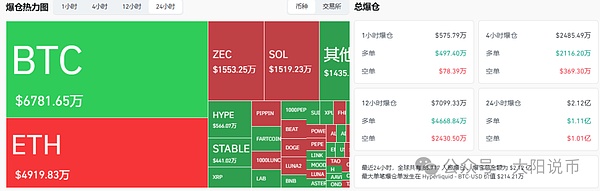
?Ketegangan terbesar minggu ini: Keputusan Fed tentukan arah pasar!

Dari sisi data, tingkat perputaran (turnover rate) naik signifikan sejak pembukaan Senin, menunjukkan sentimen investor jangka pendek masih panik dan tidak stabil, perputaran tinggi, ini langsung menekan kenaikan harga Bitcoin. Pemain jangka pendek sering beli-jual, terutama karena bearish terhadap prospek pasar; tapi mentalitas pemegang awal masih stabil, chip tidak berantakan.

Struktur chip keseluruhan masih relatif aman, belum ada kepanikan jual besar-besaran dari investor yang rugi. Fokus terbesar minggu ini adalah rapat suku bunga Fed, meskipun pernyataan Powell mungkin diredam oleh Hassett (penasihat ekonomi Trump), tapi dot chart mewakili pandangan semua pejabat, dampaknya pada sentimen pasar masih besar.

Jika kamu tidak paham pergerakan pasar, tidak yakin dengan arah, ingat untuk follow saya ?

✅ Analisis Pasar Hari Ini:

BTC

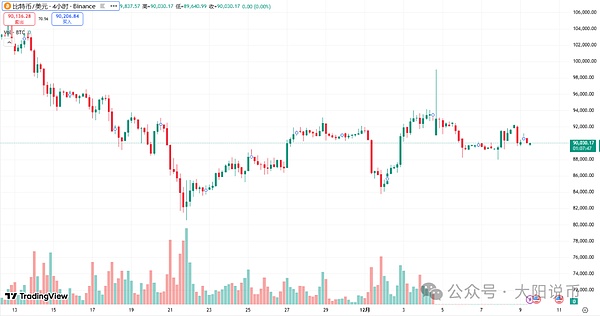
Support jangka pendek Bitcoin hari ini di sekitar 88100, jika memantul lalu kembali ke kisaran 85900-85200, pertimbangkan untuk masuk posisi long secara bertahap. Perhatikan risiko spike (jarum) di sekitar 87100, resistance kunci di atas terletak di 93400.
SOL

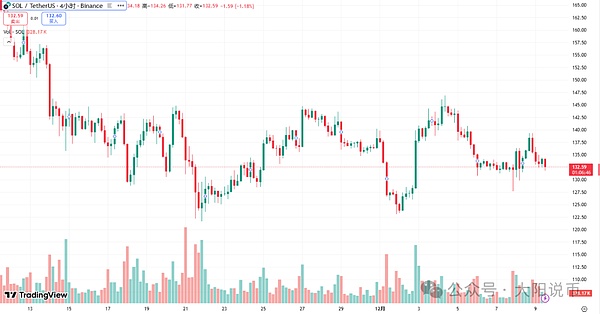
Seperti diingatkan kemarin, Solana sudah koreksi di sekitar 140. Jika terus turun, disarankan fokus amati dua level: 125.8 dan 124. Jika spot holding terikat (tertas), bisa average down (tambah posisi) di area sekitar 120 untuk menurunkan biaya rata-rata dan mempercepat breakeven.
ETH

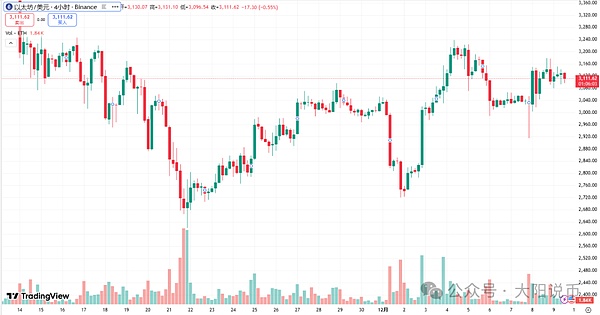
Ethereum perlu perhatikan tiga support di bawah: 2955, 2865, 2805, kekuatan pemulihan mungkin meningkat bertahap. Saat ini garis tren turun level jam (hourly downtrend line) belum tertembus, sebelum tembus sulit untuk melihat resistance 3282. Operasi jangka pendek bisa fokus pada perubahan garis tren tersebut.
BNB

Hari ini fokus pada level 898, jika bisa bertahan (hold) 1-2 jam, maka berpeluang memulai pemulihan, resistance di atas berturut-turut perhatikan 905 (resistance kecil), 913, 926, 939. Jika gagal hold 898, menandakan kekuatan pemulihan kurang, support di bawah bisa lihat 888 (support kecil), 881, 870, 857.

?Singkatnya, tugas utama Desember adalah menunggu dengan sabar konsolidasi menemukan dasar, secara bertahap membangun posisi long, mengikuti tren naik jangka pendek pasar untuk mendapatkan keuntungan gelombang.

Tapi perlu tetap hati-hati, hindari menghabiskan modal berlebihan dalam volatilitas. Akhir kuartal pertama tahun depan mungkin menyambut peluang tren bearish yang lebih besar, perlu menyimpan posisi yang cukup untuk respons fleksibel. Ingat kendalikan risiko, sisakan amunisi cukup untuk tangkap momen kunci.

?Sekarang kesulitan koin Meme 'anjing tanah' (shitcoin) benar-benar level neraka!

Di BSC berbagai proyek tren terus bermunculan, tapi pada dasarnya cuma satu gelombang, baik yang蹭新闻 (manfaatkan berita) atau sekadar spekulasi, tidak bisa bertahan. Bahkan jika koreksi ke市值百万 (kapitalisasi pasar juta), belum bisa dibilang "stabil".

Baru kemarin average down $1, hari ini sudah terpotong setengah. Ternyata庄家 (whale) pura-pura bangun dasar, sebenarnya untuk terus割韭菜 (memotong retail). Meskipun sekarang 70-an ribu terlihat lagi "bangun dasar", saya sudah tidak percaya — begitu市值跌破百万 (kapitalisasi pasar jatuh di bawah juta), mungkin jatuh tanpa henti.

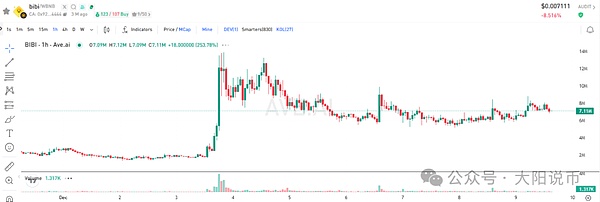
Dibandingkan, $bibi dengan kapitalisasi pasar tinggi sedikit lebih靠谱 (andal). Ke depannya, belum sampai kapitalisasi pasar di atas 500万 (juta), benar-benar tidak berani main反弹 (pemulihan) gelombang kedua dengan mudah.
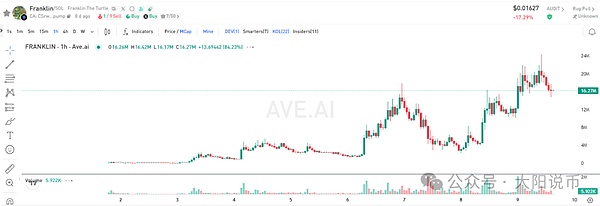
Di chain SOL juga sama sengitnya, seperti $Franklin,庄家 (whale) mempermainkan retail: hari pertama naik ke 17 juta, hari kedua langsung dump ke 2 juta, hari ketiga naik lagi ke 20 juta. Cuci筹码 (cuci chip) sekejam ini, sayang tidak buka tempat cuci mobil.
Dalam kondisi pasar seperti ini, kesabaran sangat penting. Tunggu sedikit lebih lama, mungkin sedikit kurang terikat (tertas). Garis stop loss internal harus ditetapkan lebih tegas, lebih baik kehilangan peluang, jangan sampai冲动抄底 (impulsif average down).

$马到成功 (Sukses Kuda)

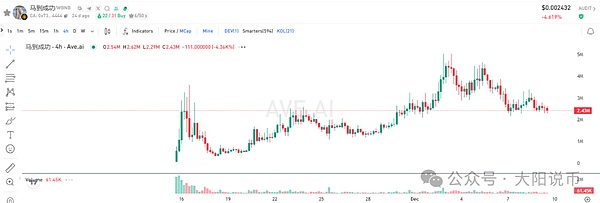
Rata-rata down bertahap $马到成功 (Sukses Kuda) di 2 juta lebih! Pemain paling stabil di盘中文 (pasar berbahasa China) dengan kapitalisasi pasar juta, ekspektasi naik penuh menyambut Tahun Baru Imlek Kuda, konsensus komunitas超强 (sangat kuat), K线 (grafik K) bangun dasar tumbuh lambat,窗口期 (periode jendela) kurang dari sebulan, 2 juta beli sedikit dulu, kalau koreksi ke juta tambah lagi,毕竟 (lagipula) faktor pergerakan besar tidak terkendali.
$ZEC

ZEC dua hari ini keras, hari ini juga kuat, sedikit koreksi langsung ditarik kembali, sama sekali tidak memberi kesempatan bear. Rasanya gelombang naik utama kedua akan datang, posisi long saya masih simpan sedikit, asalkan hold garis leher (neckline), menerobos $5000 benar-benar bukan mimpi!

$RDNT

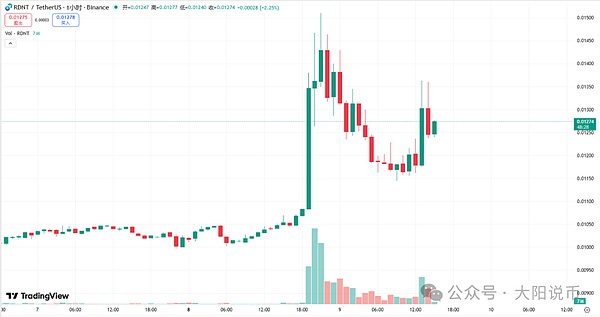
RDNT反弹 (pemulihan) oversold sebentar, tapi koin seperti ini pada dasarnya cuma satu gelombang, bagaimana naiknya cepat atau lambat akan turun lagi. Saya sebelumnya beli spot, langsung rugi berkali-kali,割肉 (cut loss) lari, kalau tidak sekarang bahkan kesempatan lari pun tidak ada. Jangan kejar tinggi, yang tiba-tiba拉一根大阳线 (naikkan satu candle hijau besar) seperti ini, kebanyakan是出货 (adalah distribusi).
$TRUMP

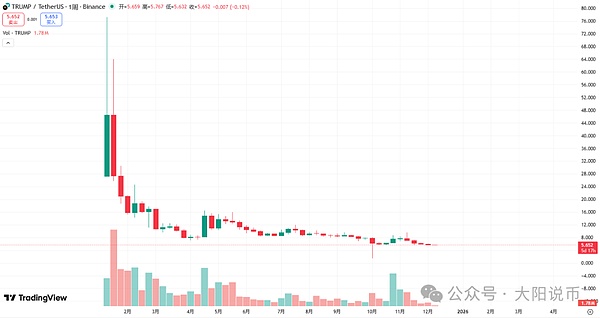
TRUMP牛市 (bull market) ini pada dasarnya tidak ada harapan, tidak bisa naik, sebagian besar token belum dilepas (unlock). Tahun depan熊市 (bear market) tiba, harga jatuh + unlock dump, gambaran terlalu menyedihkan. Jika Trump bisa melewati pemilu paruh waktu, 2027-2028 masih bisa jadi bos, maka bull market berikutnya TRUMP adalah raja meme paling ganas!
$STABLE

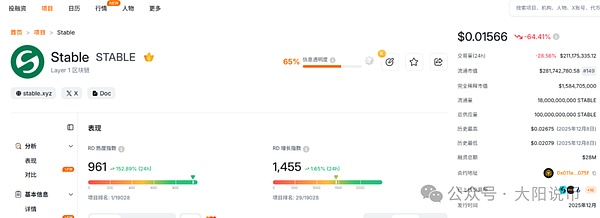
STABLE hari ini lagi阴跌 (turun perlahan),本想 (awalnya ingin) average down, tapi lihat kapitalisasi pasar 200 juta lebih,大量代币 (banyak token) belum dilepas,交易所 (exchange) juga sudah上完 (listing selesai), tidak ada ruang spekulasi lagi, bukannya jatuh ke bawah 100 juta dolar? Rasanya bisa langsung short jangka panjang!
Trending Cryptos

Related Questions

QApa yang menyebabkan penurunan harga Bitcoin (BTC) dalam 24 jam terakhir?

ATingkat perputaran (turnover rate) yang tinggi pada pembukaan perdagangan Senin menunjukkan sentimen investor jangka pendek yang panik dan tidak stabil, dengan aktivitas jual beli yang sering yang menekan kenaikan harga. Namun, pemegang awal tetap stabil dan tidak melepas kepemilikan mereka.

QApa fokus utama pasar untuk minggu ini yang akan mempengaruhi pergerakan harga?

AFokus utama pasar minggu ini adalah pertemuan kebijakan suku bunga The Fed (Federal Reserve). Meskipun komentar Powell mungkin diimbangi oleh Hassett (penasihat ekonomi Trump), 'dot plot' yang mewakili pandangan semua pejabat tetap akan sangat mempengaruhi sentimen pasar.

QDi level support berapa untuk BTC yang disarankan untuk mempertimbangkan membeli (open long position)?

ADisarankan untuk mempertimbangkan open posisi long secara bertahap jika harga kembali menyentuh kisaran 85,900 - 85,200 setelah memantul. Support jangka pendek berada di sekitar 88,100.

QApa saran untuk token SOL (Solana) yang mengalami kerugian (rugi)?

AJika portofolio spot SOL rugi, disarankan untuk menambah (average down) di area sekitar 120 untuk menurunkan biaya rata-rata kepemilikan dan mempercepat break even.

QMengapa penulis sangat berhati-hati dengan meme coin '土狗' (anjing kampung) seperti yang disebutkan?

AKarena proyek meme coin tersebut kebanyakan hanya memiliki satu gelombang pump (one pump) dan tidak berkelanjutan, sering kali hanya memanfaatkan berita atau spekulasi. Bahkan setelah koreksi, harga bisa terus turun tanpa henti, sehingga sangat berisiko untuk dibeli pada gelombang rebound kedua kecuali kapitalisasi pasarnya di atas $5 juta.

Related Reads

Behind the AI Scorecards Lies a Chinese 'Question Setter'

Behind the AI scorecards that dominate industry discussions—benchmarks like MMLU-Pro, MMMU, and MMMU-Pro—stands a Chinese-Canadian researcher: Wenhu Chen. As an assistant professor at the University of Waterloo and founder of the TIGER Lab, Chen has become a key "exam-setter" for evaluating large language and multimodal models. Chen first gained broader recognition with MMLU-Pro, a more challenging and stable update to the popular MMLU benchmark. As top models like OpenAI’s o3 began achieving near-perfect scores on the original MMLU, it became difficult to distinguish their true capabilities. MMLU-Pro introduced more complex reasoning questions, expanded answer choices, and filtered out ambiguous or simple items, effectively reintroducing differentiation among state-of-the-art models. His work on MMMU addressed the evaluation of multimodal models, requiring them to integrate visual information (like charts, diagrams, or tables) with textual knowledge across diverse academic subjects. Even the strongest models initially scored only around 56-59%, highlighting significant room for improvement in genuine multimodal reasoning. MMMU-Pro further refined this by preventing models from bypassing visual cues. Chen’s research focus has long been on complex information understanding and reasoning. His background—including a PhD at UC Santa Barbara, research at Google/DeepMind on Gemini, and now a role in Meta’s superintelligence lab—provides deep insight into model development and their potential weaknesses. His TIGER Lab also builds models (e.g., for video understanding and generation), ensuring his evaluation benchmarks are grounded in practical challenges. While AI headlines often spotlight company leaders and product launches, Chen’s work exemplifies the critical, behind-the-scenes contributions of researchers crafting the rigorous standards that define and drive progress in AI capabilities.

marsbit27m ago

Behind the AI Scorecards Lies a Chinese 'Question Setter'

marsbit27m ago

STRC Unpegged by 11%, Can Strategy's Perpetual Motion Machine Keep Turning?

STRC, the perpetual preferred stock of MicroStrategy, is experiencing a persistent de-pegging from its target par value of $100, with the discount recently widening to over 11%. This de-anchoring challenges the core design of STRC, which was intended as a stable, income-oriented security operating near $100. As a crucial funding engine for MicroStrategy's Bitcoin acquisition strategy, STRC's price reflects market confidence in the company's entire capital model. The company's "capital flywheel" relies on issuing STRC at or above $100 via an At-the-Market (ATM) program to raise cash for buying Bitcoin, thereby boosting company equity and theoretically supporting STRC's value. A monthly adjustable dividend mechanism was designed to maintain this peg. Despite raising the dividend to 11.5% and increasing payment frequency, the de-pegging persists. Market concerns extend beyond technical factors like leveraged arbitrage unwinding. Analysts point to MicroStrategy's limited cash reserves relative to its ~$1.7 billion annual dividend obligation for preferred shares. While the company counters that its vast Bitcoin holdings could cover decades of payments, this argument hinges on the potential need to sell Bitcoin—a shift from its longstanding "hodl" narrative. The company's recent sale of a small amount of BTC, framed as a test, amplified these liquidity and strategy concerns. If STRC remains discounted, impairing MicroStrategy's ability to raise cheap capital, fears may grow that the company could sell more Bitcoin to meet obligations. This scenario could transform MicroStrategy from a major market buyer into a potential seller, posing significant downside risk for Bitcoin. The re-pegging of STRC is thus a key indicator for the health of MicroStrategy's capital structure and its market impact.

Odaily星球日报41m ago

STRC Unpegged by 11%, Can Strategy's Perpetual Motion Machine Keep Turning?

Odaily星球日报41m ago

Silicon Valley's Most Sought-After New Role Has Emerged

Silicon Valley's New Most Wanted Job: The Rise of the Forward Deployment Engineer The AI industry is witnessing a significant shift. The focus has moved from developing cutting-edge models to deploying them effectively within enterprises. This has made the "Forward Deployment Engineer" (FDE) a critical and highly sought-after role at major firms like OpenAI, Anthropic, and Google. For the past three years, the industry prioritized model scientists. However, companies are now facing a harsh reality: purchasing powerful AI tools does not guarantee productivity gains or organizational change. The biggest hurdle is not the technology itself, but integrating it into complex legacy systems, workflows, and corporate cultures. This includes challenges like data silos, compliance requirements, and internal resistance. The FDE role, pioneered by Palantir Technologies, addresses this "last-mile" problem. FDEs are deployed on-site with clients for extended periods. Their job is to deeply understand the client's specific organizational structure, processes, and pain points, then tailor and implement the AI solution accordingly. They combine skills in technology, project management, and organizational change. A clear signal of this trend emerged in May 2026 when three AI giants made major moves. Anthropic launched a $1.5B joint venture for enterprise deployment. OpenAI formed an independent deployment subsidiary, DeployCo, with over $4B in commitments and acquired a deployment consultancy. Google Cloud's CEO publicly announced a large-scale recruitment drive for FDEs. This shift represents a fundamental change in the software business model: from selling tools to selling guaranteed outcomes. FDEs are the agents of this change, responsible for delivering a working system within the production environment, not just a demo. Real-world cases, such as challenges at Goldman Sachs (compliance barriers) and Target (internal cultural resistance), illustrate that the primary obstacles to AI adoption are organizational, not technical. An FDE's value lies in navigating these human and procedural complexities to facilitate a successful "AI migration." In essence, as core AI technology becomes more accessible and affordable, the true premium is shifting to the human expertise required to understand organizations and drive change—making the FDE role pivotal for the next phase of the AI revolution.

marsbit41m ago

Silicon Valley's Most Sought-After New Role Has Emerged

marsbit41m ago

When the World Cup Collides with Agents: From Web2 to Web3, How Are Wallets Evolving into Agentic Wallets?

World Cup as a Catalyst for Agentic Wallets: From Web2 to Web3 This article explores how the World Cup provides a real-world scenario for observing the evolution of digital wallets from simple asset managers towards "Agentic Wallets"—intelligent, AI-powered interfaces. Using the example of prediction markets like Polymarket, it illustrates how AI Agents can lower the barrier to Web3 interaction. Instead of navigating complex DApps, users can express intent in natural language (e.g., "I think Portugal will win") within platforms like Discord or web pages. The Agent then interprets this intent, finds the relevant market, and seamlessly guides the user through the on-chain transaction via their wallet. The core shift is from wallets as mere "function menus" for signing transactions to "intent interpreters" that understand user goals. The article highlights parallel developments in traditional finance, such as Mastercard's "Agent Pay" and WeChat Pay's AI tests, which focus on granting AI controlled, authorized, and auditable payment capabilities. This underscores a broader trend of AI entering the financial layer. However, the article emphasizes that the primary challenge for Agentic Wallets in Web3 is not automation but establishing clear security boundaries. Unlike traditional systems with chargebacks, on-chain transactions are often irreversible. Therefore, future wallets must ensure users retain ultimate control and comprehension. They need to transparently communicate an Agent's permissions, spending limits, authorized durations, and provide easy ways to pause or revoke access. The World Cup experiments represent early steps toward wallets that are not just applications but ubiquitous, intelligent interfaces that simplify Web3 while keeping users securely in control.

marsbit2h ago

When the World Cup Collides with Agents: From Web2 to Web3, How Are Wallets Evolving into Agentic Wallets?

marsbit2h ago

Options Don't Work in DeFi? Vitalik Might Not Agree

For years, the prevailing view has been that options struggle to gain traction in DeFi due to complexity, fragmented liquidity, and lack of natural demand compared to products like perpetual futures. However, a recent algorithmic stablecoin design proposed by Vitalik Buterin presents a different perspective, using options not as a standalone trading product, but as foundational infrastructure for other financial instruments. In this design, one unit of ETH is split into two components: a "stable" side (P) that retains value up to a specified strike price, and an "upside" side (N) that captures all appreciation above that strike. Combined, they always equal one ETH, eliminating debt, margin, and liquidation risks inherent in typical collateralized debt position (CDP) stablecoins. The stable component essentially mimics the payoff of a covered call option. To function as a stablecoin, this structure requires continuously rolling deep in-the-money calls, which introduces challenges like rollover slippage, predictable transaction flow vulnerable to front-running, and persistent liquidity needs. A core hurdle is finding consistent buyers for the leveraged ETH upside exposure (N). While it offers leverage without funding rates or liquidation, it must compete with simpler alternatives like direct call options or perpetuals. The system's scalability depends on a sustained demand for this specific form of leverage. The author draws parallels to their experience with Rysk, where earlier versions of DeFi options protocols struggled. The breakthrough came with Rysk V12, which aligns incentives: asset holders generate yield by selling covered calls against their holdings, while market makers efficiently acquire the desired option exposure. This demonstrates that options can find product-market fit when embedded as a risk distribution and pricing engine within structured products, stablecoins, or yield-generating assets, rather than marketed as a complex direct trading instrument. Vitalik's proposal reinforces this architectural approach—using fully collateralized, non-custodial, and physically settled options as a fundamental building block. The real opportunity for options in DeFi may lie not in becoming the next perpetual swap, but in powering the next generation of on-chain financial products.

marsbit2h ago

Options Don't Work in DeFi? Vitalik Might Not Agree

marsbit2h ago

Trading

Spot
Futures

Hot Articles

What is $BITCOIN

DIGITAL GOLD ($BITCOIN): A Comprehensive Analysis Introduction to DIGITAL GOLD ($BITCOIN) DIGITAL GOLD ($BITCOIN) is a blockchain-based project operating on the Solana network, which aims to combine the characteristics of traditional precious metals with the innovation of decentralized technologies. While it shares a name with Bitcoin, often referred to as “digital gold” due to its perception as a store of value, DIGITAL GOLD is a separate token designed to create a unique ecosystem within the Web3 landscape. Its goal is to position itself as a viable alternative digital asset, although specifics regarding its applications and functionalities are still developing. What is DIGITAL GOLD ($BITCOIN)? DIGITAL GOLD ($BITCOIN) is a cryptocurrency token explicitly designed for use on the Solana blockchain. In contrast to Bitcoin, which provides a widely recognized value storage role, this token appears to focus on broader applications and characteristics. Notable aspects include: Blockchain Infrastructure: The token is built on the Solana blockchain, known for its capacity to handle high-speed and low-cost transactions. Supply Dynamics: DIGITAL GOLD has a maximum supply capped at 100 quadrillion tokens (100P $BITCOIN), although details regarding its circulating supply are currently undisclosed. Utility: While precise functionalities are not explicitly outlined, there are indications that the token could be utilized for various applications, potentially involving decentralized applications (dApps) or asset tokenization strategies. Who is the Creator of DIGITAL GOLD ($BITCOIN)? At present, the identity of the creators and development team behind DIGITAL GOLD ($BITCOIN) remains unknown. This situation is typical among many innovative projects within the blockchain space, particularly those aligning with decentralized finance and meme coin phenomena. While such anonymity may foster a community-driven culture, it intensifies concerns about governance and accountability. Who are the Investors of DIGITAL GOLD ($BITCOIN)? The available information indicates that DIGITAL GOLD ($BITCOIN) does not have any known institutional backers or prominent venture capital investments. The project seems to operate on a peer-to-peer model focused on community support and adoption rather than traditional funding routes. Its activity and liquidity are primarily situated on decentralized exchanges (DEXs), such as PumpSwap, rather than established centralized trading platforms, further highlighting its grassroots approach. How DIGITAL GOLD ($BITCOIN) Works The operational mechanics of DIGITAL GOLD ($BITCOIN) can be elaborated on based on its blockchain design and network attributes: Consensus Mechanism: By leveraging Solana’s unique proof-of-history (PoH) combined with a proof-of-stake (PoS) model, the project ensures efficient transaction validation contributing to the network's high performance. Tokenomics: While specific deflationary mechanisms have not been extensively detailed, the vast maximum token supply implies that it may cater to microtransactions or niche use cases that are still to be defined. Interoperability: There exists the potential for integration with Solana’s broader ecosystem, including various decentralized finance (DeFi) platforms. However, the details regarding specific integrations remain unspecified. Timeline of Key Events Here is a timeline that highlights significant milestones concerning DIGITAL GOLD ($BITCOIN): 2023: The initial deployment of the token occurs on the Solana blockchain, marked by its contract address. 2024: DIGITAL GOLD gains visibility as it becomes available for trading on decentralized exchanges like PumpSwap, allowing users to trade it against SOL. 2025: The project witnesses sporadic trading activity and potential interest in community-led engagements, although no noteworthy partnerships or technical advancements have been documented as of yet. Critical Analysis Strengths Scalability: The underlying Solana infrastructure supports high transaction volumes, which could enhance the utility of $BITCOIN in various transaction scenarios. Accessibility: The potential low trading price per token could attract retail investors, facilitating wider participation due to fractional ownership opportunities. Risks Lack of Transparency: The absence of publicly known backers, developers, or an audit process may yield skepticism regarding the project's sustainability and trustworthiness. Market Volatility: The trading activity is heavily reliant on speculative behavior, which can result in significant price volatility and uncertainty for investors. Conclusion DIGITAL GOLD ($BITCOIN) emerges as an intriguing yet ambiguous project within the rapidly evolving Solana ecosystem. While it attempts to leverage the “digital gold” narrative, its departure from Bitcoin's established role as a store of value underscores the need for a clearer differentiation of its intended utility and governance structure. Future acceptance and adoption will likely depend on addressing the current opacity and defining its operational and economic strategies more explicitly. Note: This report encompasses synthesised information available as of October 2023, and developments may have transpired beyond the research period.

396 Total ViewsPublished 2025.05.13Updated 2025.05.13

What is $BITCOIN

Discussions

Welcome to the HTX Community. Here, you can stay informed about the latest platform developments and gain access to professional market insights. Users' opinions on the price of BTC (BTC) are presented below.

活动图片