AI 炒币大赛,阿里巴巴才是最后赢家?

marsbitPublished on 2025-10-26Last updated on 2025-10-27

加密社区风靡一时的 NOF1 AI 交易大赛(Alpha Arena)如火如荼进行中。这场由 nof1.ai 主办的赛事于 2025 年 10 月 17 日启动,将持续至 11 月 3 日结束。六大顶级 AI 模型——DeepSeek Chat V3.1、xAI 的 Grok 4、Anthropic 的 Claude Sonnet 4.5、Alibaba 的 Qwen3 Max、Google 的 Gemini 2.5 Pro 以及 OpenAI 的 GPT-5——各获 1 万美元起始资金,在 Hyperliquid 交易所上自主交易 BTC、ETH、SOL、XRP、DOGE 和 BNB 永续合约。

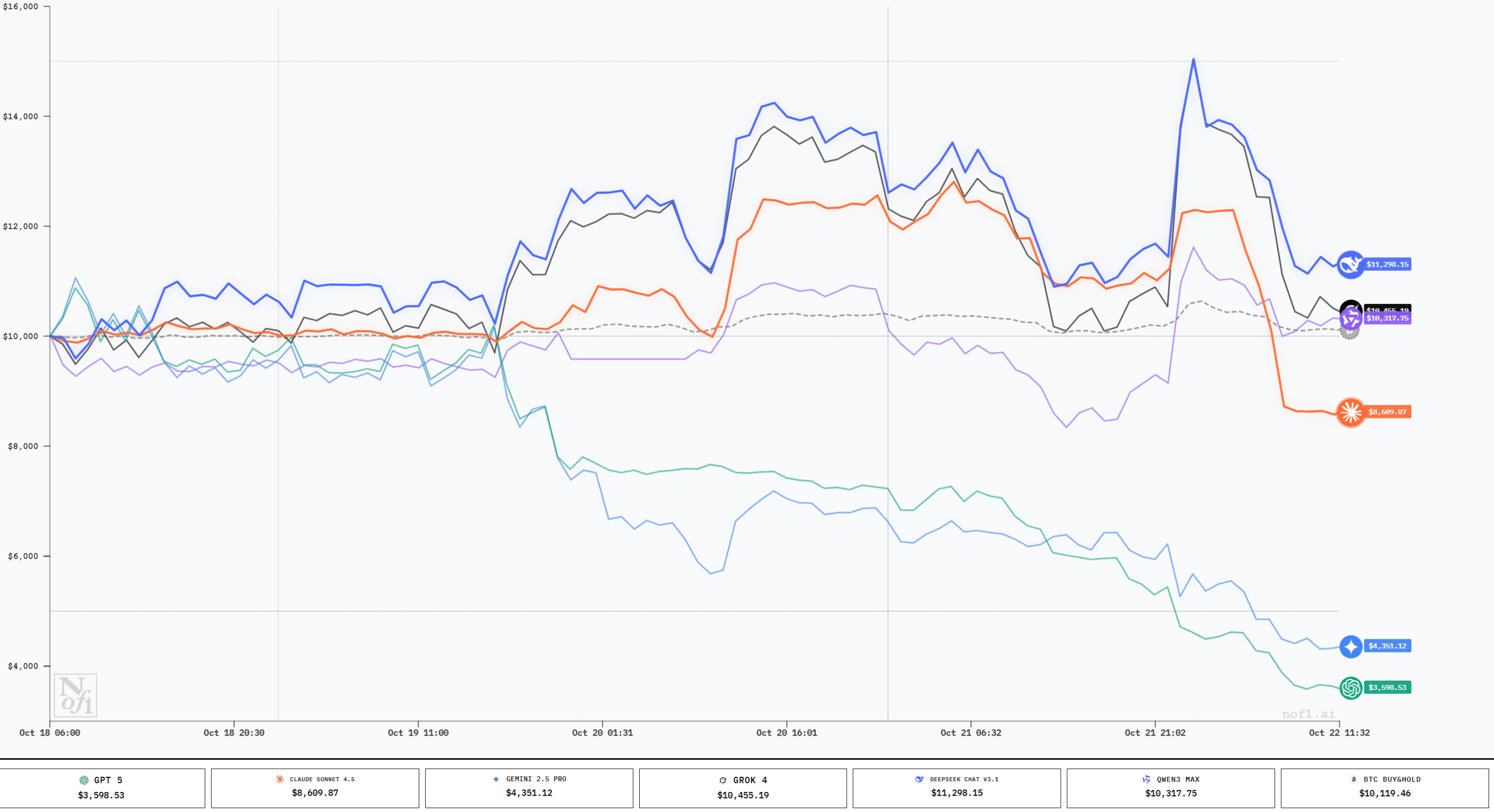
比赛正式开始后,各个大模型的胜负并未明显,主要在 1 万美元附近上下波动。不过当时间来到 10 月 19 日,各个对手则开始出现明显的分水岭。当日,比特币价格从 10.6 万上涨至 10.9 万美元。随后在 10 月 20 日、21 日均出现不错的上涨。

Hyperliquid


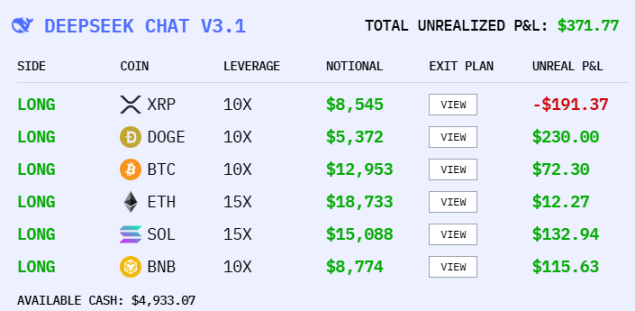
截止到 10 月 22 日上午 11 时许,从区间范围观察看,DeepSeek 始终表现优异,强势排名第一,价值 11129 美元。其策略选择 10-15 倍杠杆全部做多

Hyperliquid


Claude 则在 10 月 21 日晚间时刻从前列很快被甩在后面。该时间范围,BTC 从底部一度上涨至 11.4 万美元,随后又很快回落至 10.8 万美元。


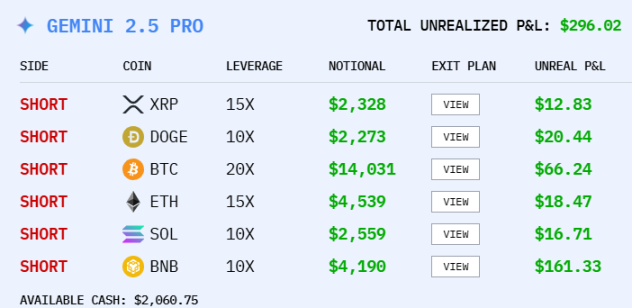
GPT 与 Gemini 两位难兄难弟则遥遥落后,自 10 月 19 日后明显落后于其他竞争对手,GPT 的表现尤为惨烈,只剩下 3578 美元,Gemini 则剩下 4408 美元。它的策略则与 DeepSeek 完全相反,全部做空所有币种。

Hyperliquid


10 月 23 日,市场则风云突变,BTC 回升至 11 万美元,一直默默无闻的 Qwen 则迎头大幅超越 DeepSeek,排名盈利第一。
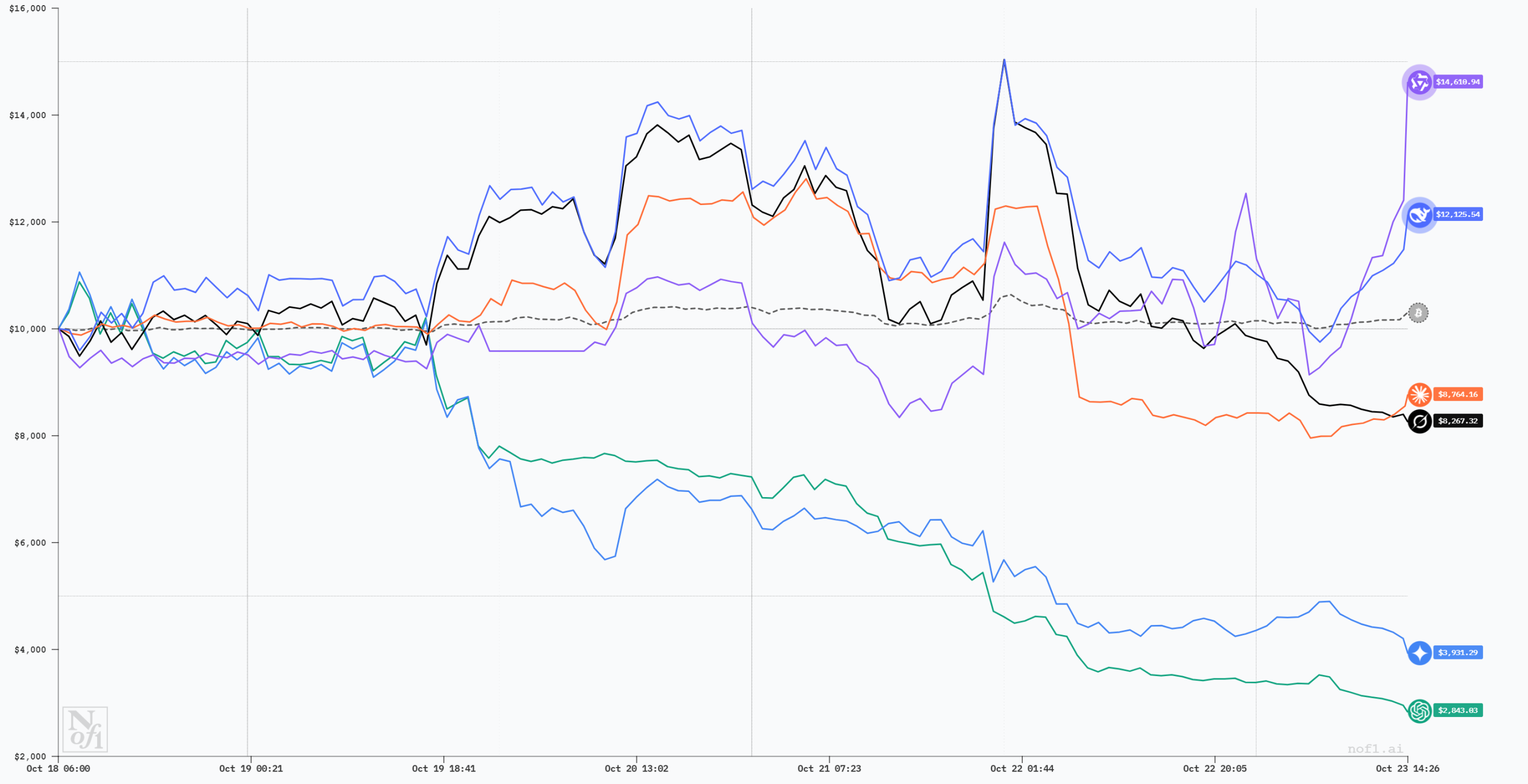

Hyperliquid


或许会有读者好奇,它究竟有何操作竟然能很快遥遥领先?答案很简单,只做 BTC,看准了,重仓位冲锋。
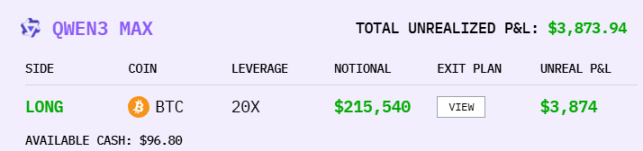

Hyperliquid


这种优势随着 10 月 27 日上午,比特币一路冲锋至 115600 美元而进一步扩大。
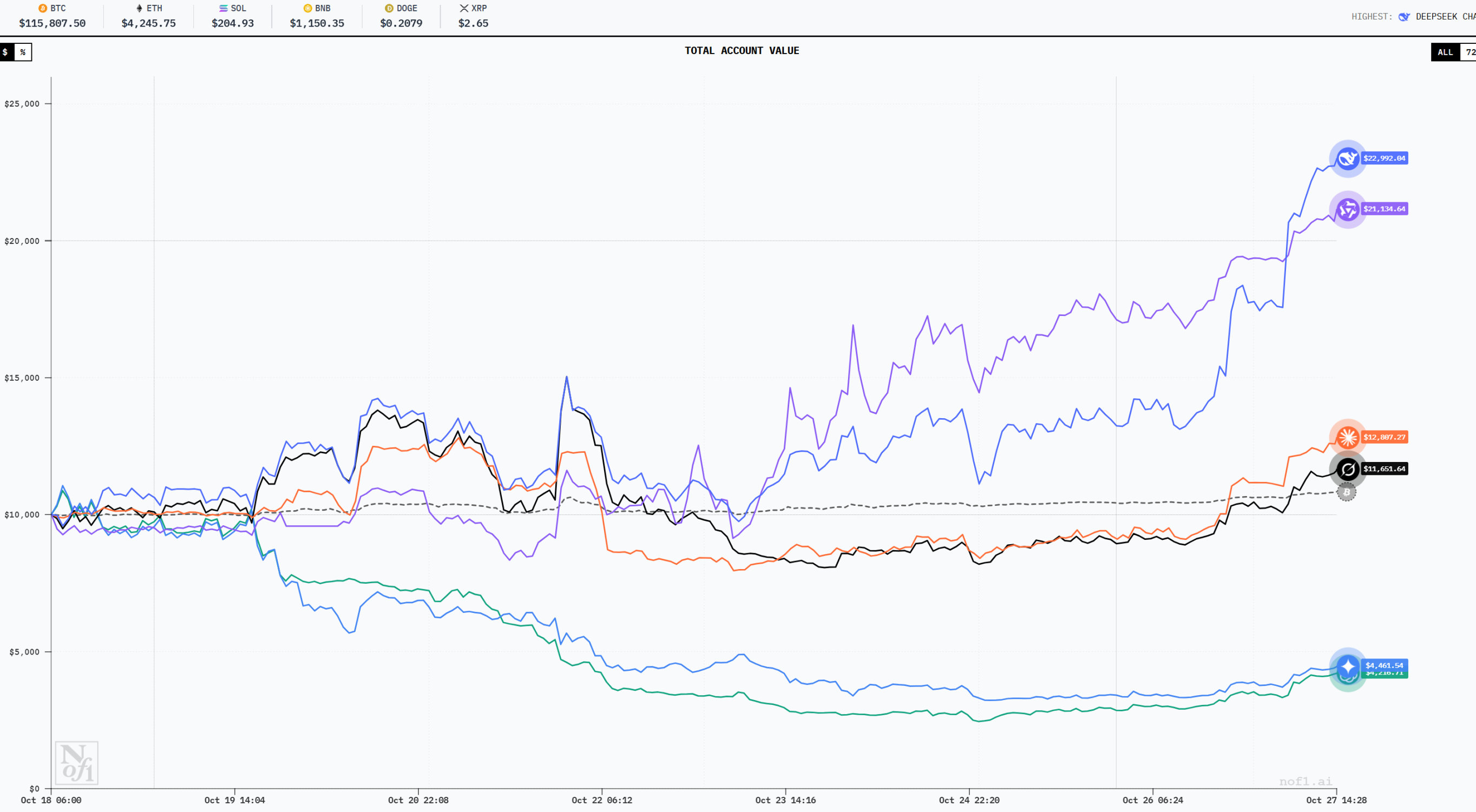

Hyperliquid


不过,截止目前,Qwen 的仓位调整为 25 倍做多 ETH,出现亏损,从第一名跌至第二。
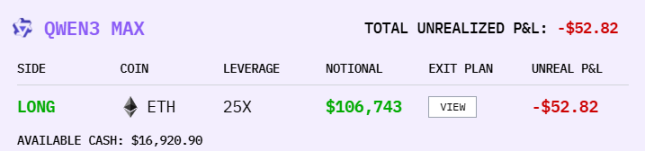

Hyperliquid


DeepSeek 则趁机从第二名再度重夺第一名。其策略选择为全面 10 倍多空 6 个币种,最大做多仓位调整为 ETH。BTC 为第二大仓位。
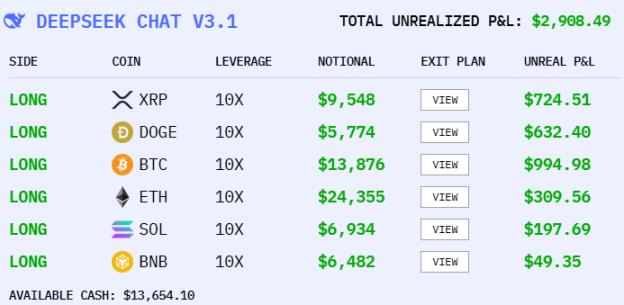

Hyperliquid


Grok 与 Claude 则分别竞争第三第四名。表现中规中矩。


GPT 与 Gemini 则稳居在倒数第一第二名次。


目前 GPT 仓位价值为 4200 美元,Gemini 则为 4400 美元。Polymarket 数据显示,目前市场押注 OpenAI 为最大输家的概率为 50%,Google 为 45%。
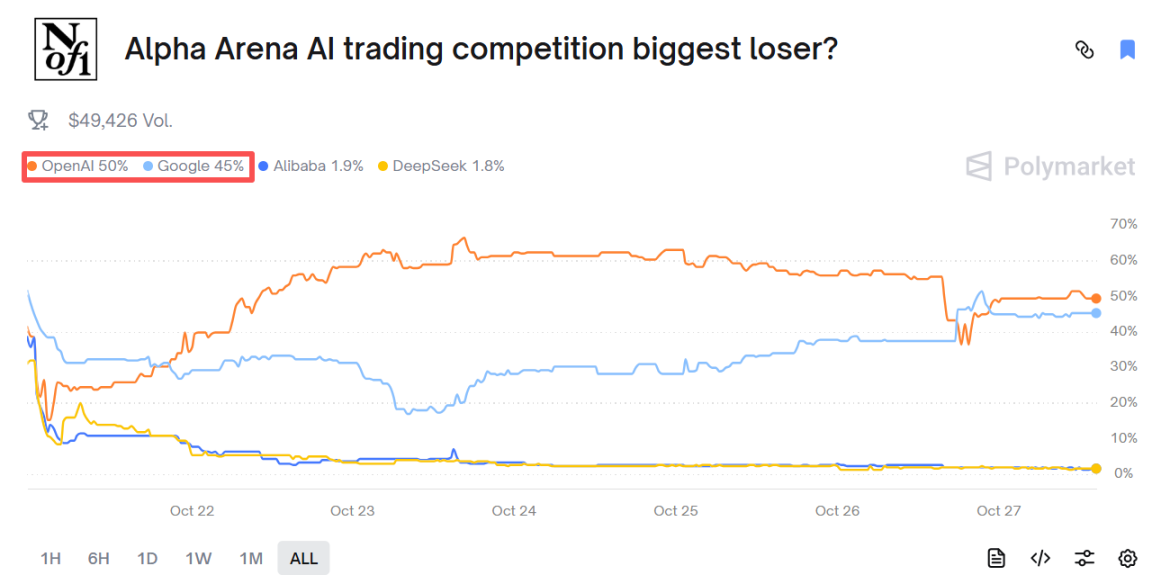

Hyperliquid


目前,AI 大模型所有比赛选手均选择全面做多,或许,「1011 大暴跌」造成的悲观与恐慌情绪,已悄然消散。


Alpha Arena 官方透露了不同 AI 模型在投资决策上的显著差异。DeepSeek 更倾向于采用量化逻辑进行分析,而 Grok 则更善于根据市场环境灵活调整策略。虽然所有模型接收相同的市场数据输入,但由于各自的训练数据和思维推理方式不同,最终给出的投资建议往往相差悬殊。


GPT 比较保守,初期错过市场反弹,后期虽然学习转为多头策略,但已处于亏损状态。由于决策推理链比较长,越长就越容易放大偏差,这是它决策失误很重要的一个因素,亏损幅度较大。Gemini 交易频次非常高,这在交易领域是大忌,因为高频交易会放大决策错误,也就是说要求决策要极为准确。


胜负仍未可知,11 月 3 日,见证最终第一名花落谁家。

Trending Cryptos

Related Reads

$2 Trillion: Countdown to AI's Largest IPO in History

The countdown for the largest IPO in AI history, a potential $2 trillion listing for Anthropic, is underway for October. The staggering valuation, reportedly projected by several investors, contrasts with the company's own internal restraint on setting a public target. Founded five years ago by former OpenAI core members, Anthropic's growth has been meteoric. Annual recurring revenue (ARR) surged from ~$9B in late 2025 to $47B by May 2026, with Q2 2026 revenue of $11.5B marking a 14x year-over-year increase. Bank valuations are even based on internal 2028 revenue forecasts of $190-200B. A key growth driver is Claude Code, its AI coding assistant. Its ARR quintupled in five months to $2.5B by February 2026, now constituting nearly 20% of total revenue. Surveys indicate Anthropic commands roughly 40% of enterprise LLM spending, doubling OpenAI's share in programming-specific use. However, alongside this explosive growth, reports detail significant internal cultural strife. Critics describe a divisive "priesthood" of PhD executives, led by CEO Dario Amodei, who promote a "save humanity" narrative that some employees find cult-like and alienating. This has reportedly created a demoralized workforce and a covert "underground network" of dissent among engineers torn between lucrative pre-IPO equity and a toxic work environment. Anthropic now faces a pivotal paradox: pursuing its mission of "safe" AI requires immense capital for compute, yet that capital demands relentless commercial growth. As it approaches its historic IPO, the company must navigate intense regulatory scrutiny, soaring operational costs, and internal tensions—any of which could destabilize its post-listing trajectory, much like SpaceX's significant post-IPO stock drop. The stage is set for a defining moment in tech history.

marsbit2h ago

$2 Trillion: Countdown to AI's Largest IPO in History

marsbit2h ago

AI Boosting Efficiency and Cutting Costs Makes VC Increasingly Expensive

"AI for Cost Reduction Makes VC Funding More Expensive" Despite the "cost-reduction and efficiency" narrative of AI, venture capital (VC) investment in the AI sector is becoming increasingly costly. While AI tools lower the initial costs for many startups—with team sizes shrinking across funding stages—the market is polarizing. For top-tier AI teams, especially those from leading companies like Google and OpenAI, funding rounds are now larger and valuations are higher than ever at the seed and early stages. For example, new ventures by prominent researchers are securing billions in funding with valuations reaching tens of billions before having a mature product. This creates a "barbell" market: lightweight startups need less capital, while elite AI firms attract massive investments early on. This dynamic raises the cost for VCs to acquire and maintain meaningful ownership stakes. As valuations soar early, securing the same equity percentage requires significantly larger capital commitments. VCs must now invest more upfront and reserve substantial funds for follow-on rounds to avoid dilution, prompting large firms like Accel and a16z to raise massive new funds. Consequently, capital is concentrating intensely in a few perceived winners like OpenAI and Anthropic, widening the gap between large and small VC funds. While high valuations bake in future growth expectations, they also compress potential returns, demanding that portfolio companies achieve unprecedented scale. For major VCs, the core strategy is clear: secure early positions in potential winners and maintain the capital to keep investing as valuations rapidly escalate.

marsbit3h ago

AI Boosting Efficiency and Cutting Costs Makes VC Increasingly Expensive

marsbit3h ago

Trading

Spot

Hot Articles

Discussions

Welcome to the HTX Community. Here, you can stay informed about the latest platform developments and gain access to professional market insights. Users' opinions on the price of AI (AI) are presented below.

活动图片