专访 Nexus 创始人 Daniel:揭秘如何重构 AI 时代的信任机制?

深潮Published on 2025-07-02Last updated on 2025-07-02

深入探讨 Nexus 的创立初衷、可验证计算的未来路径,以及 zkVM、分布式计算与 AI 可信执行之间的深度耦合。

受访者:Daniel Marin,Nexus 创始人兼 CEO

采访及撰文:Alex,OpenBuild 内容团队

在 AI 算力不断膨胀、Web3 基础设施快速演进的当下,如何验证大规模计算的真实性,正成为全球数字系统所面临的核心挑战。Nexus 正在推动一项前沿探索 —— 构建一个人人可参与、全球协同运行的可验证计算网络,融合零知识虚拟机 zkVM 与分布式 prover 网络,打造一台无边界的「世界超级计算机」。
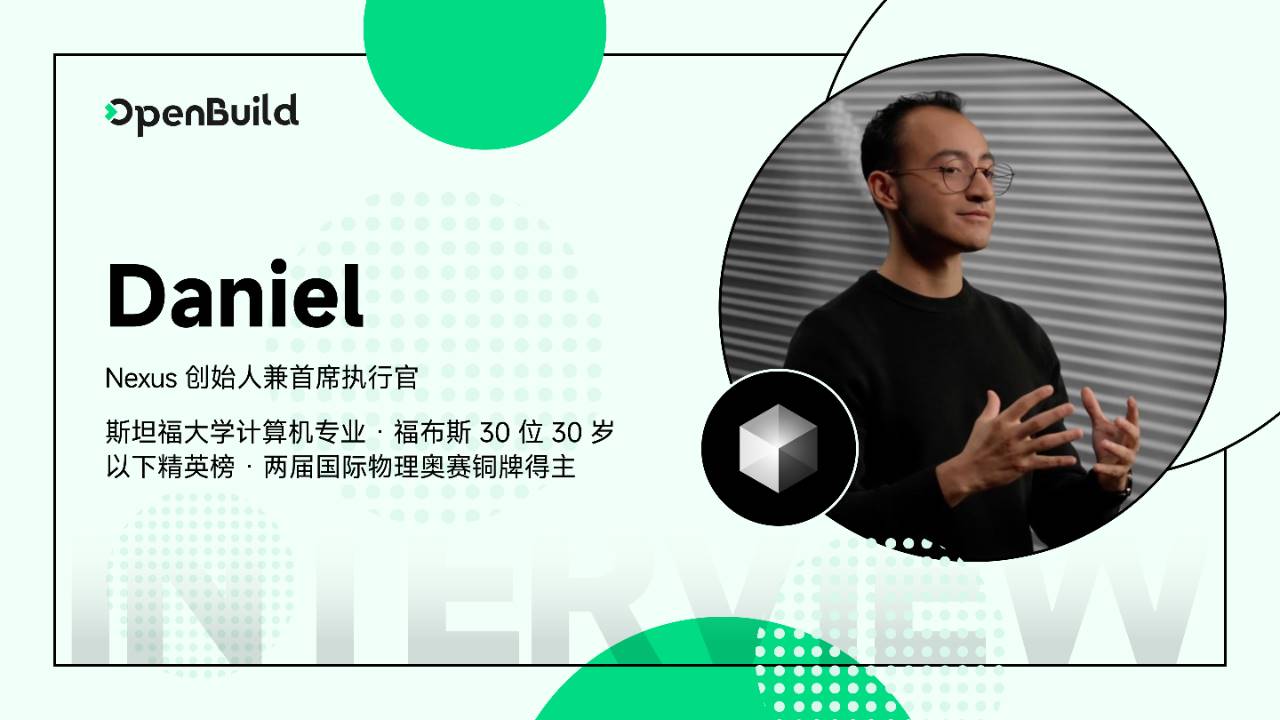
在本期专访中,OpenBuild对话 Nexus 创始人 Daniel Marin,深入探讨 Nexus 的创立初衷、可验证计算的未来路径,以及 zkVM、分布式计算与 AI 可信执行之间的深度耦合。他还分享了 Nexus 如何通过技术与生态的双重驱动,在不牺牲隐私的前提下,实现通用计算的高性能扩展。

嘉宾简介

Daniel Marin,Nexus 创始人兼 CEO,毕业于斯坦福大学计算机科学专业。2022 年创立 Nexus,立志构建一个「每个行为可验证、每个模型可审计、每次交互可验证」的数字世界。他曾在 2018 和 2019 年国际物理奥林匹克中获得铜牌,并于 2025 年入选《福布斯》“30 位 30 岁以下精英榜”。Nexus 已完成 2500 万美元融资,投资方包括 Pantera Capital、Lightspeed、Dragonfly Capital 等。

创立初衷:人人可用的可验证计算平台
OpenBuild:是什么契机促使您创立 Nexus?您最初想解决的问题是什么?

Daniel Marin:当时我在斯坦福密码学实验室参与一个研究项目,目睹了零知识证明的快速演进,尤其是 Microsoft Research 的 Nova 论文[1]启发。它让我意识到,我们可以将多个 zk 证明高效组合起来,从而构建一种 「通用可验证计算」[2]的新范式。

另一方面,我观察到当前区块链生态面临三大瓶颈:

1. 用户无法轻松贡献算力

2. 开发者需具备专业背景才能参与

3. 链本身的扩展性与性能受限

我设想能否让任何人用任何设备(哪怕是一台旧手机)都能接入网络、贡献算力、运行 AI 级别的任务,同时还能证明这些任务的真实性?

这就是 Nexus 的起点 —— 一条「节点越多、网络越快」的链。与传统链相比,Nexus 的网络是越多人参与越快、越强大。每一台加入的设备,不是负担,而是加速器。我创立 Nexus 的初心很简单——让互联网变得更安全、更可信

多年来,我一直在思考,是否可以为这个世界打造一台 “通用型可验证计算机”,即任何人都能验证计算结果的基础设施。随着零知识证明技术的突破,这个目标终于变得现实。尤其是在我参与 Stanford 密码学实验室的研究时,受到了 Microsoft Research 的 Nova 论文[3]启发。它让我意识到,我们可以将多个 zk 证明高效组合起来,从而构建一种 「通用可验证计算」的新范式。

除此之外,我还观察到当前区块链系统的多重限制:

• 普通用户无法贡献资源;

• 开发门槛高,需掌握复杂工具;

• 扩展性严重受限。

于是我萌生了一个想法:让每个人都能用自己的设备(哪怕是一部手机)接入网络,贡献算力,最终共同构建一台支持大规模计算的可信超级计算机。

这就是 Nexus 的起点。与传统区块链 “节点越多越慢”不同,Nexus 的设计逻辑是节点越多,网络越强

zkVM 与可验证计算的未来

OpenBuild:您最初对 “可验证计算”的设想是什么?现在你对其未来如何看?Daniel Marin:我们正处于一次计算范式的转折点。我相信,可验证计算将重塑我们对计算扩展性、性能、乃至应用形态的认知。
这里的可扩展性[4]分为两个维度:

纵向:通过 GPU 等硬件加速 zkVM 的速度;

横向:连接更多设备,形成全球算力网络,带来指数级叠加效应。

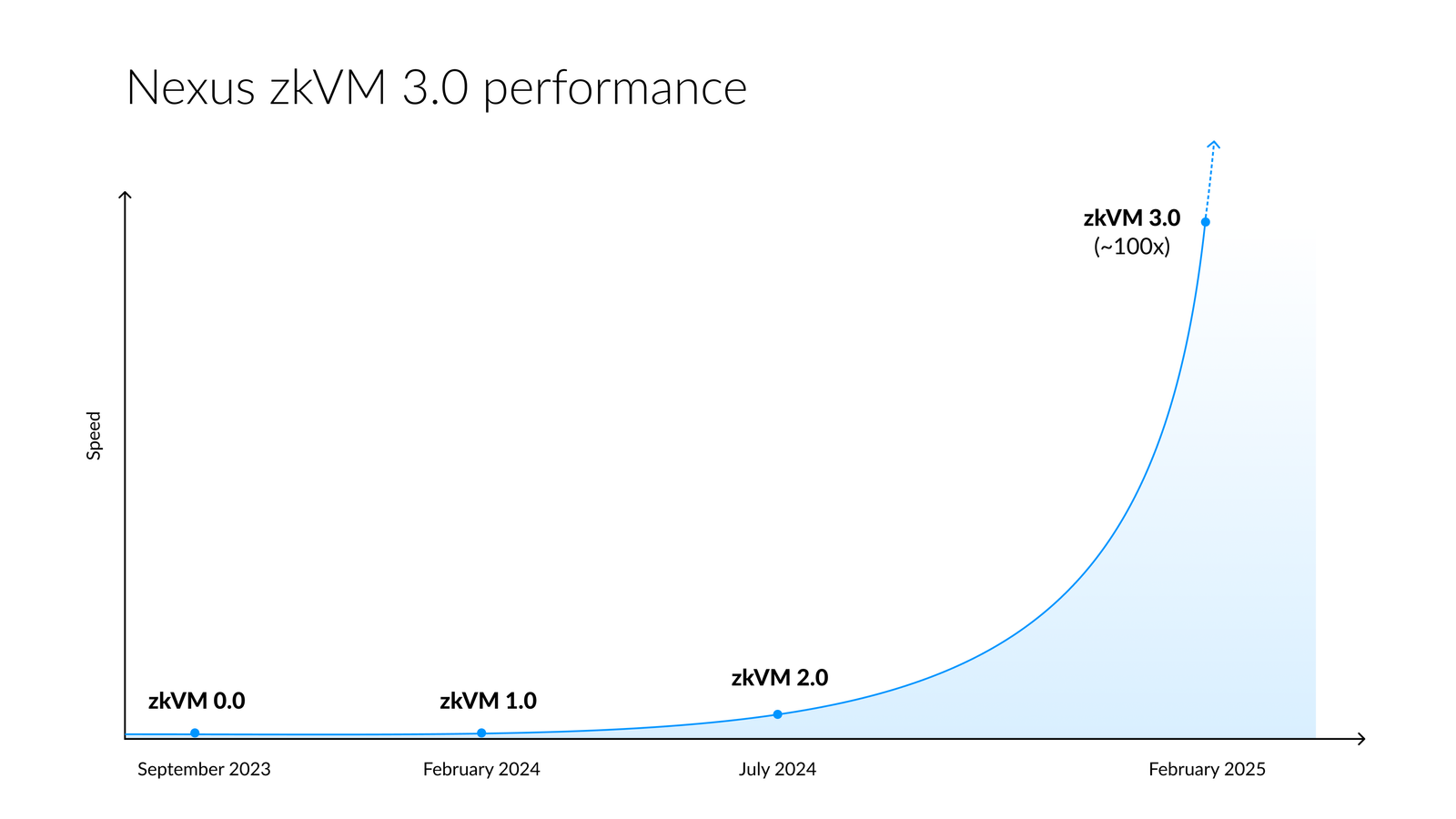
而这些并非纸上谈兵。我们预计未来一年内,zkVM 的运行速度将在 M2 MacBook Pro 上达到 1GHz —— 意味着一台笔电每秒可验证一个区块。这简直是“zk 领域的摩尔定律”正在上演。

在应用层面,我们特别看好 AI 的验证需求,比如模型行为可审计、AI 生成内容可溯源等,这也是我们成立 Nexus Verifiable AI Lab[5]的初衷。

与传统区块链的根本差异

OpenBuild:Nexus 与其他链的最大不同点是什么?它如何应对 AI 基础设施的挑战?

Daniel Marin:所有人都在谈 扩展性,但但都忽略了最关键的一点:底层算力不足。

尤其是 AI 的应用越广,模型越复杂,所需算力就呈指数级增长,同时带来极高频的交易请求。那问题来了:我们如何获得足够算力,支撑每秒数十亿笔交易?并且,用户还必须信任这些交易?

这正是 Nexus 提出的解决方案:

• 它是一个世界超级计算机(World Supercomputer)

• 每接入一台笔电、手机,网络性能就会提升,

• 任何用户都能轻松贡献闲置算力,不需要技术背景。

我们构建了一条 zkVM 驱动的 Layer 1 区块链,不只是验证交易,也验证任意计算。它聚合全球闲置算力,任何用户都能一键加入。

最终,Nexus 不是一个传统“链”,而是为通用可验证计算而优化的基础设施网络

构建「可验证互联网」的理念

OpenBuild:您曾提出 Nexus 正在打造“可验证互联网”。这是什么意思?它与当前互联网有何不同?

Daniel Marin:我们设想的 “可验证互联网”是一个新范式:

• 每一个行为都可被证明;

• 每一个模型都可被审计;

• 每一条数据都可被验证。

从 AI 到医疗、从身份系统到链上金融,未来数字世界的每个组成部分都将建立在“可验证性”之上。

这不仅是一种信任机制的升级,更将带来商业范式的变革 —— 在这个互联网中,信任无需“相信”,只需“验证”。在可验证计算的支撑下,数字社会将更加透明、高效且安全。

路线图与产品规划

OpenBuild:从技术和生态两个层面看,Nexus 接下来 6–12 个月的重点方向是什么?

Daniel Marin:我们刚刚启动了全球范围的 Testnet III[6]测试网,将持续运行至今年第三季度主网上线。👉 欢迎访问:app.nexus.xyz参与测试并获取激励。

同时我们正重点推进:

• zkVM 新版本研发;

• Nexus Verifiable AI Lab 建设;

• 超过 50 个合作项目的生态拓展。

未来我们将不断迭代,推动 “可验证计算”成为 AI 与 Web3 的核心组成部分。

结语:构建可信的数字文明

通过 Daniel 的分享我们可以看出,Nexus 并非只是试图 “改进区块链”,而是以可验证计算为切入点,重新定义未来数字社会的信任逻辑。

在这个万物生成、数据爆炸的时代,“可验证性”正在成为比“共识”更关键的下一代基础设施。

Trending Cryptos

Related Reads

Micron Shuts Up the Bears, Makes India's 'Buffett' Regret: Sold Too Early, Missed Out on $2 Billion

Indian value investor Mohnish Pabrai, a disciple of Warren Buffett, revealed his costly mistake of selling shares in Micron Technology too early. He initially invested in 2017, holding it for six years and building a position as large as 77% of his portfolio, based on a thesis that the memory chip industry would consolidate into a stable oligopoly of Samsung, SK Hynix, and Micron. However, he sold his entire stake in September 2023, fearing oversupply after Samsung announced production expansion. Shortly after his exit, demand for high-bandwidth memory (HBM) surged with the rise of AI, and Micron's stock price skyrocketed over 15 times in two years. Pabrai estimates this premature sale cost him roughly $20 billion in potential gains. He expressed similar regret over selling his investment in SK Hynix too soon, stating he violated his own principle of holding companies forever. Reflecting on these errors, Pabrai emphasized his core investment checklist principles: avoiding leverage, focusing on the durability of a company's competitive moat, and assessing management's character. Despite these personal trading missteps, his long-term view on the remaining memory chip leaders remains bullish, advising current holders not to sell as "the party is just getting started." He concluded by sharing his philosophical outlook, prioritizing character over wealth, and his goal to donate his entire fortune before his passing.

marsbit45m ago

Micron Shuts Up the Bears, Makes India's 'Buffett' Regret: Sold Too Early, Missed Out on $2 Billion

marsbit45m ago

Mihoyo's Next Protagonist Is Her, Who Plays the Piano

Mihoyo, widely recognized for its hit game Genshin Impact, has long harbored a grander ambition: creating a virtual world where one billion people would want to live. While its character design is unparalleled, the company recognizes a fundamental limitation—these beloved virtual characters are not truly "alive." Their dialogue and actions are pre-scripted. This drive for authentic "living" characters has guided Mihoyo's strategic investments in cutting-edge fields like brain-computer interfaces, AI (including an early investment in MiniMax), and nuclear fusion. Following the release of ChatGPT in late 2022, co-founder Cai Haoyu stepped down from management to lead a new overseas AI venture, Anuttacon, focused on creating AI-driven virtual beings. Mihoyo's path has involved experimentation and iteration. Anuttacon's early project, *Whisper of the Stars*, showcased real-time AI conversation but revealed limitations in underlying language models. The team subsequently focused its resources on developing a sophisticated "emotional" large language model, distinct from purely utilitarian AI. Co-founder Liu Wei (Dawei) announced plans to invest up to 100 billion RMB in this AI pursuit. The first tangible product of this vision is *BSide: Olivia Lin*, a free Steam application featuring a piano-playing virtual companion. Unlike typical AI chatbots demanding constant interaction, Olivia Lin operates on a slower, more deliberate rhythm—responding to letters, playing user-submitted melodies, and serving as a desktop presence. This design emphasizes "lifelikeness" over exhaustive conversation, strategically working around current technological constraints while building a sense of authentic connection. The company's journey traces back to its name, "miHoYo," where "mi" pays homage to the virtual singer Hatsune Miku. For nearly two decades, fans have loved Miku, a character unaware of their devotion. Mihoyo's ultimate goal, now backed by massive investment and AI research, is to bridge that gap—to create virtual beings that can truly know they are loved.

marsbit1h ago

Mihoyo's Next Protagonist Is Her, Who Plays the Piano

marsbit1h ago

Citrini Research: Taking Stock of 5 Major Investment Themes Overshadowed by the AI Trade

Citrini Research identifies five under-the-radar investment themes potentially overshadowed by the dominant AI trade. With capital and analyst attention overwhelmingly focused on AI infrastructure, these overlooked areas present alpha opportunities as market dynamics shift. **Theme 1: Airlines** – Despite strong fundamentals, stocks like Delta and United have been penalized for 18 months due to macro concerns (tariff-inflation, oil prices), not profitability. A rebound is expected as these headwinds fade, aided by trends like premiumization and the 2026 World Cup. **Theme 2: Senior Housing** – A pure demographic play. The U.S. population over 80 is projected to grow 56% in the next decade, drastically outpacing supply. This creates a compelling need for facilities, benefiting REITs like Welltower and operators like Brookdale. **Theme 3: Live Events & Entertainment** – "Being there" is becoming a luxury. This sector has outperformed even tech over the past decade. Companies like TKO Group (WWE/UFC), Cinemark, and IMAX are capitalizing on demand for premium, in-person experiences. **Theme 4: Exchange Competition** – CME Group's ~98% monopoly in U.S. interest rate derivatives faces its first real challenge from FMX Futures Exchange. Backed by major Wall Street banks, FMX offers lower fees and margin savings. While CME's deep liquidity remains an advantage, FMX provides a competitive alternative. **Theme 5: Fintech Recovery** – Heavily sold off in 2026, fintech stocks like SoFi, Robinhood, and Upstart are showing signs of a rebound based on improving fundamentals—SoFi's stablecoin launch, Robinhood's transformation into a "financial super app," and Upstart's renewed AI lending narrative—rather than a change in sector outlook. The report advises maintaining some AI exposure but diversifying into these neglected "small themes" where mispricing exists due to a simple shortage of investor attention.

marsbit1h ago

Citrini Research: Taking Stock of 5 Major Investment Themes Overshadowed by the AI Trade

marsbit1h ago

21Shares Mid-Year Key Report: Bitcoin's Four-Year Cycle Remains Intact, Stablecoins and Tokenization Emerge as New Growth Engines

21Shares Mid-Year Report 2026: Bitcoin Cycle Intact, Stablecoins & Tokenization Emerge as New Engines This mid-year review assesses progress against 21Shares' ten predictions for 2026. While the overarching shift from narrative to fundamentals holds, performance varies. Key findings show Bitcoin's four-year cycle remains evident despite market maturation. Global crypto ETP AUM has declined to ~$140B, lagging the $400B target, though product innovation continues. Stablecoin supply surpassed $320B, demonstrating non-cyclical demand but falling short of the $1T forecast due to slower regulatory clarity. DeFi TVL, stalled at ~$140B, was hindered by major security incidents. Corporate crypto treasuries hold ~1.28M BTC ($100B), with consolidation pressuring weaker players. Prediction markets are on track, with $57.5B volume already surpassing half the $100B annual target. AI agent infrastructure is ready, but adoption is early. Ethereum L2 consolidation is underway, with the top 5 capturing nearly 90% of activity. Compliant token launches have a platform but lack mainstream volume. Tokenized RWAs total ~$31B on public chains, but institutional pipeline growth is strong. In summary, fundamentals like stablecoins, tokenization, and prediction markets are advancing, but targets require faster adoption or price appreciation. The market is maturing, yet cyclical patterns persist.

marsbit1h ago

21Shares Mid-Year Key Report: Bitcoin's Four-Year Cycle Remains Intact, Stablecoins and Tokenization Emerge as New Growth Engines

marsbit1h ago

Trading

Spot
Futures

Hot Articles

Discussions

Welcome to the HTX Community. Here, you can stay informed about the latest platform developments and gain access to professional market insights. Users' opinions on the price of AI (AI) are presented below.

活动图片