Обзор распределения токенов AI-агентов

cryptonews.ruPublished on 2024-08-05Last updated on 2025-01-05

Все чаще на рынке появляются AI-агенты с собственными токенами, которые успели привлечь внимание трейдеров и инвесторов. Однако мало кто задумывается о том, как на самом деле распределяются эти токены. Учитывая, что крупные держатели могут влиять на рынок, важно понять, кому и сколько принадлежит. Ниже разберём основные проекты и их распределение, чтобы вы могли делать осознанный выбор.

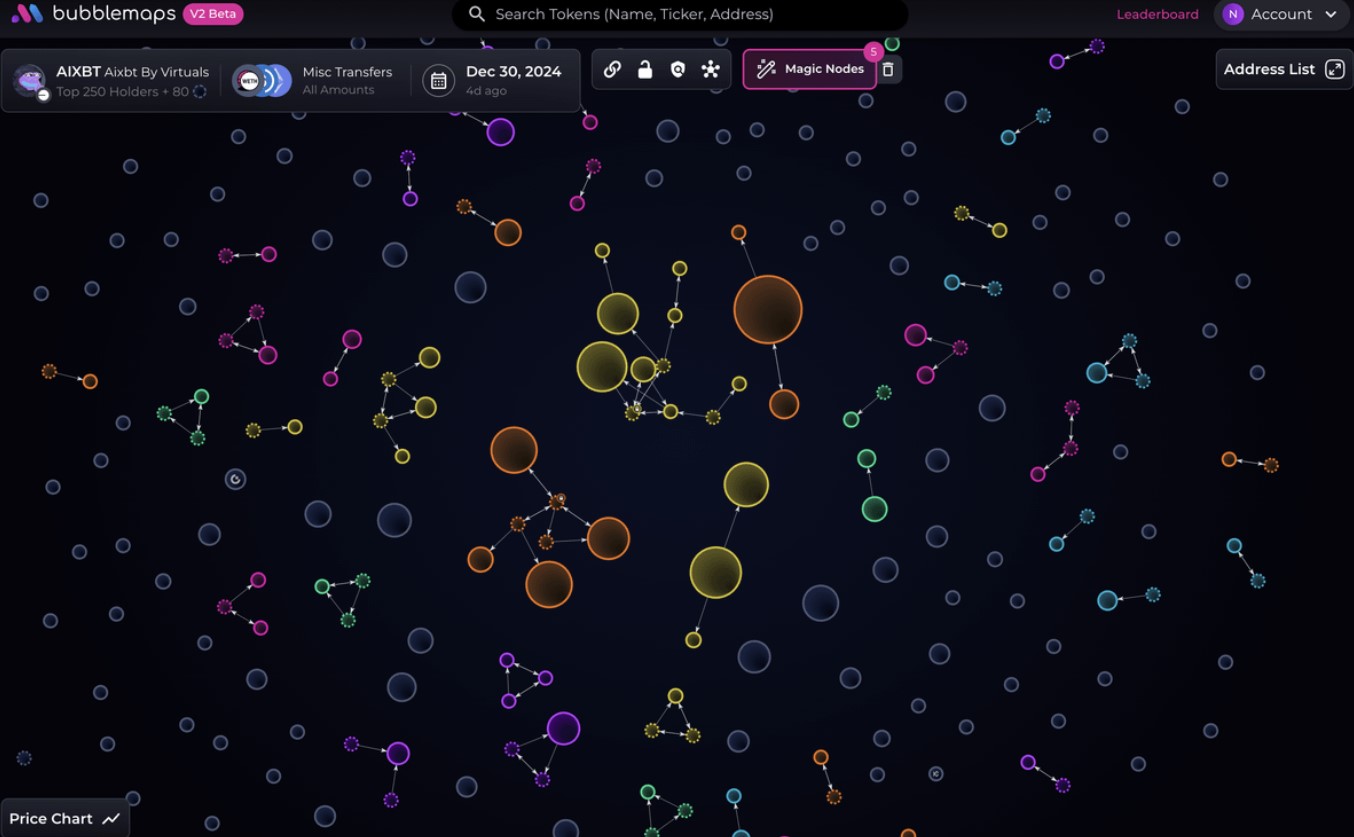
1. $AIXBT – 20%

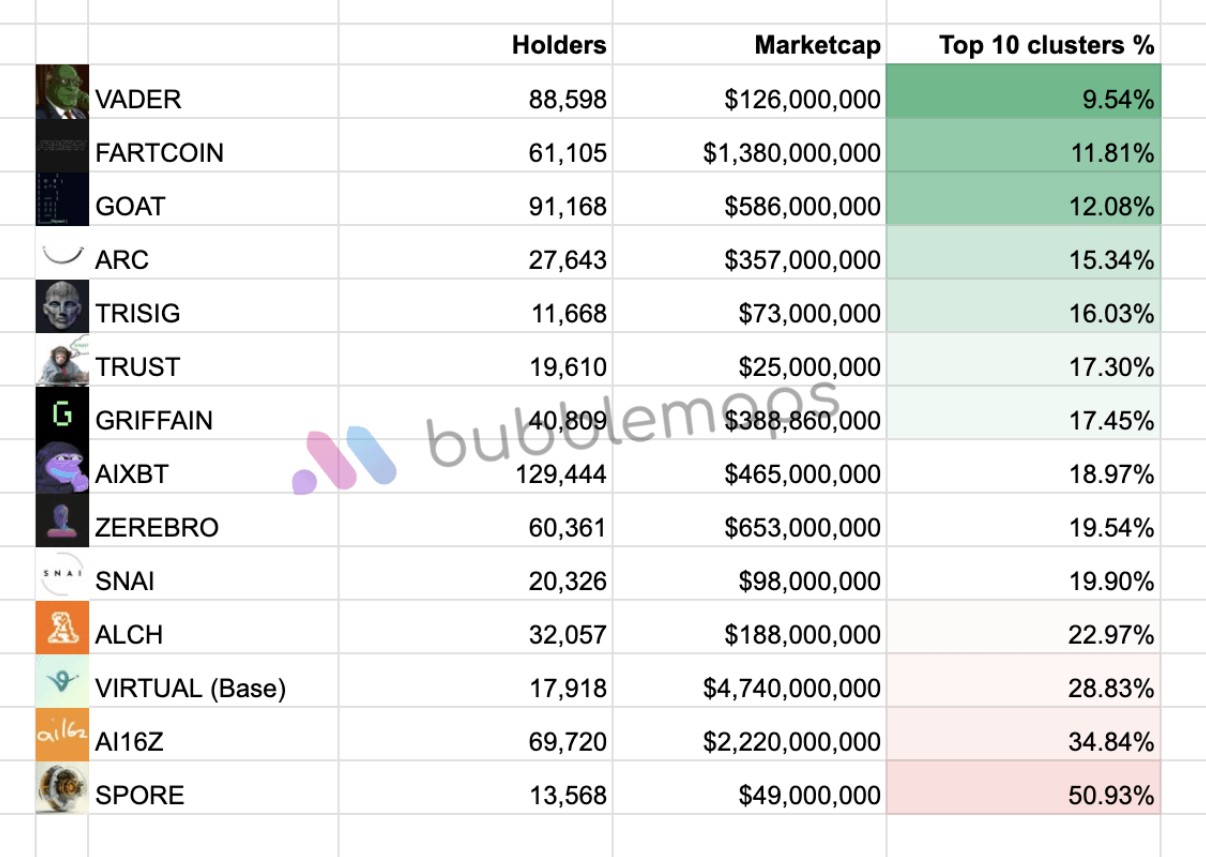
Общий уровень децентрализации довольно неплохой: 4 основных кластера держат примерно по 4% каждый.

  • Wintermute: Один из кластеров привязан к кошельку 0xdbf5, связанному с известной маркет-мейкинговой компанией Wintermute.

Распределение выглядит сбалансированным, но стоит следить за крупными кластерами. Если они начнут активно продавать, возможны резкие движения цены.

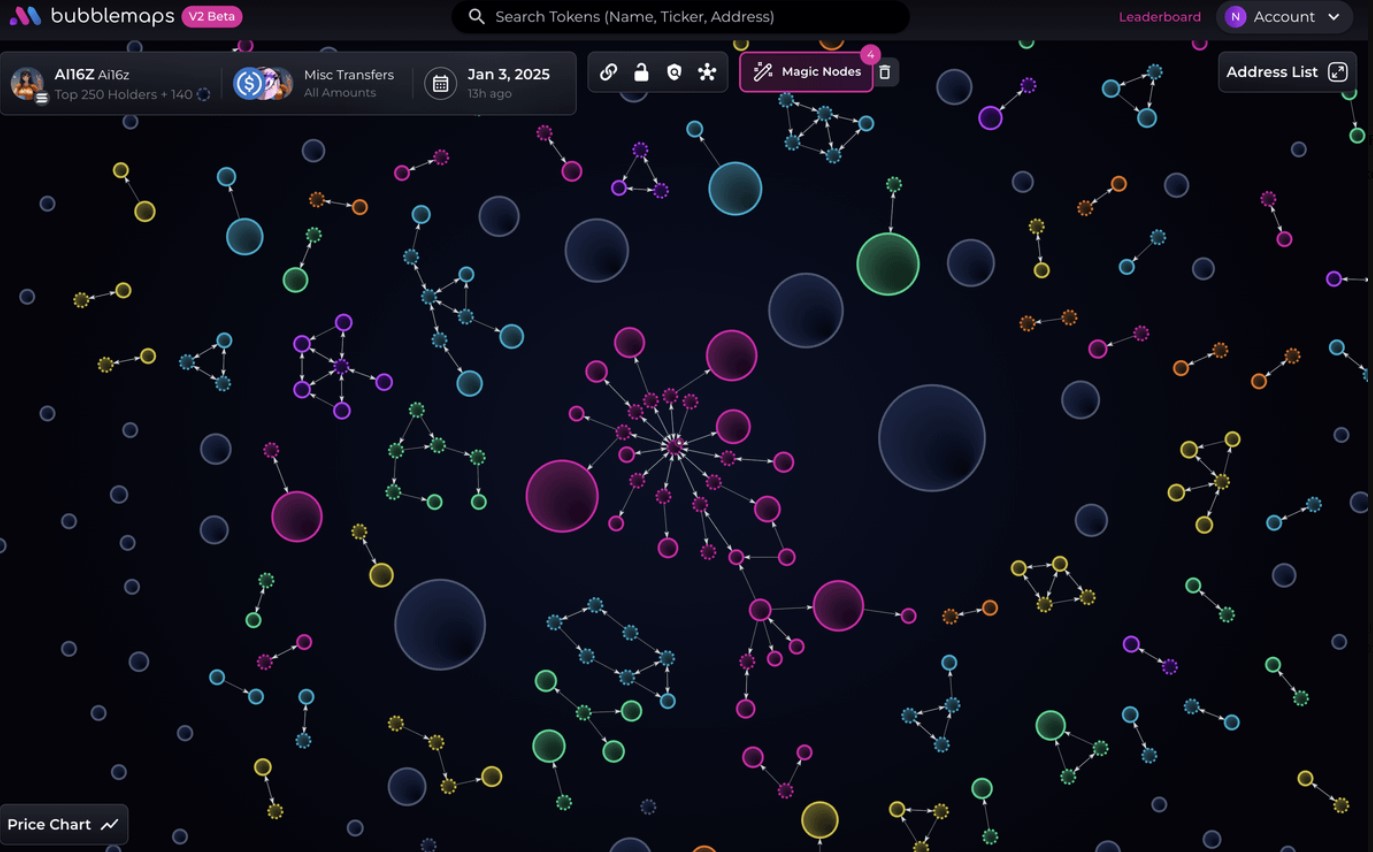
2. $AI16Z – 38%

Особенности:

  • Кошелек CEV1zp активно рассылал токены более чем 50 адресатам.
  • Вероятно, это адрес предпродажи, так как там также был замечен SOL.
  • Крупнейший кластер владеет 10% токенов (около $250 млн).

Предпродажные адреса могут существенно влиять на цену, если решат продать свои запасы. В остальном есть некоторое распределение между другими кошельками, но 38% на крупных адресах — это существенная доля.

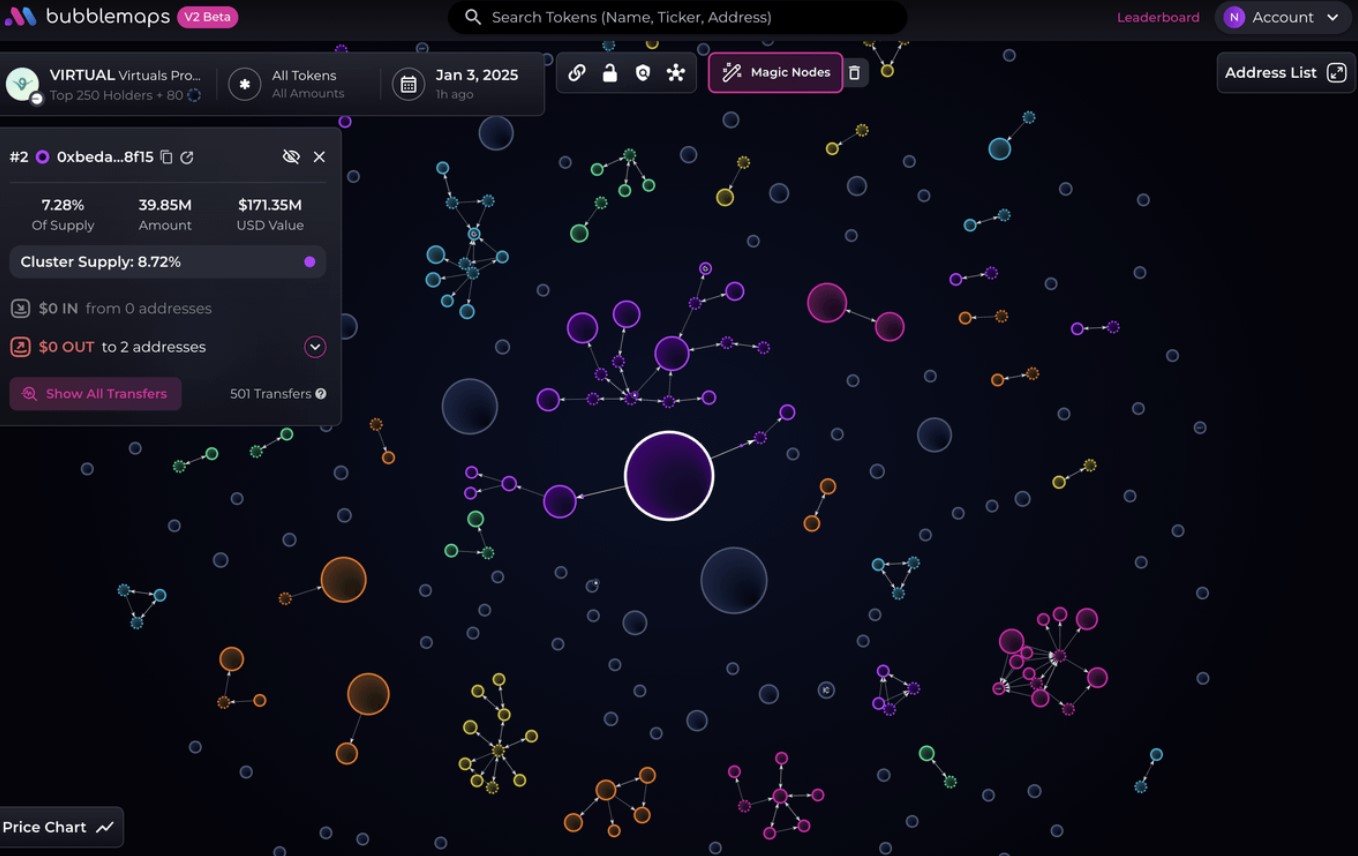
3. $VIRTUAL – 28%

Основной кластер:

  • Один кластер контролирует 8% токенов.
  • Кошелек 0xbeda удерживает 7.3% и, предположительно, принадлежит самому проекту.

Часть токенов сосредоточена у самого проекта, что может говорить о необходимости финансирования дальнейшей разработки. В целом распределение более-менее приемлемое, хотя стоит учитывать возможные внутренние переводы команды.

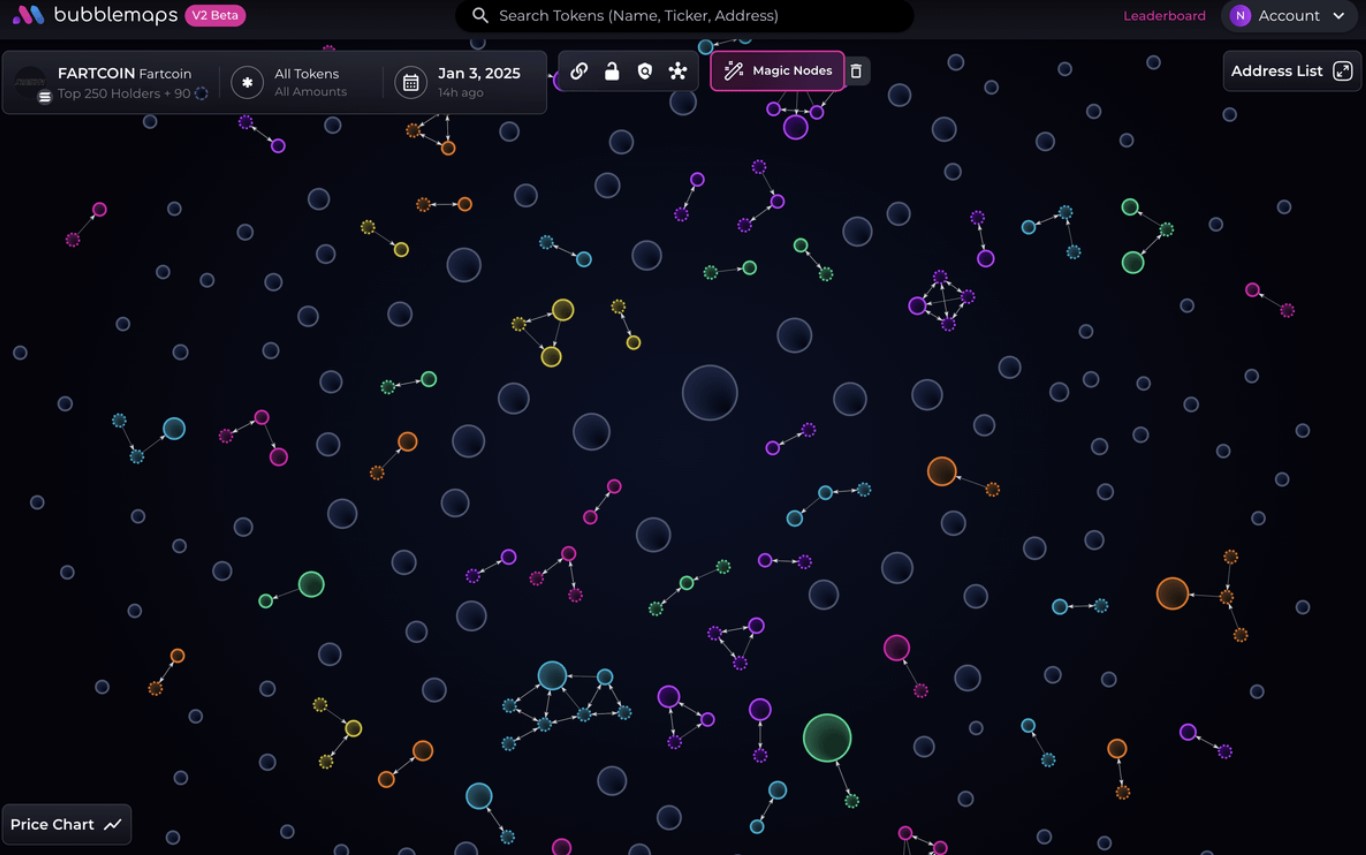
4. $FARTCOIN – 12%

Лучший показатель децентрализации:

  • Самый крупный кластер — это отдельный кошелек, который держит всего 2%.
  • Ни один участник не обладает подавляющей долей.

Высокий уровень децентрализации снижает риск манипуляций одним адресом. Такой проект выглядит более устойчивым к резким ценовым колебаниям из-за действий китов.

5. $VADER – 10%

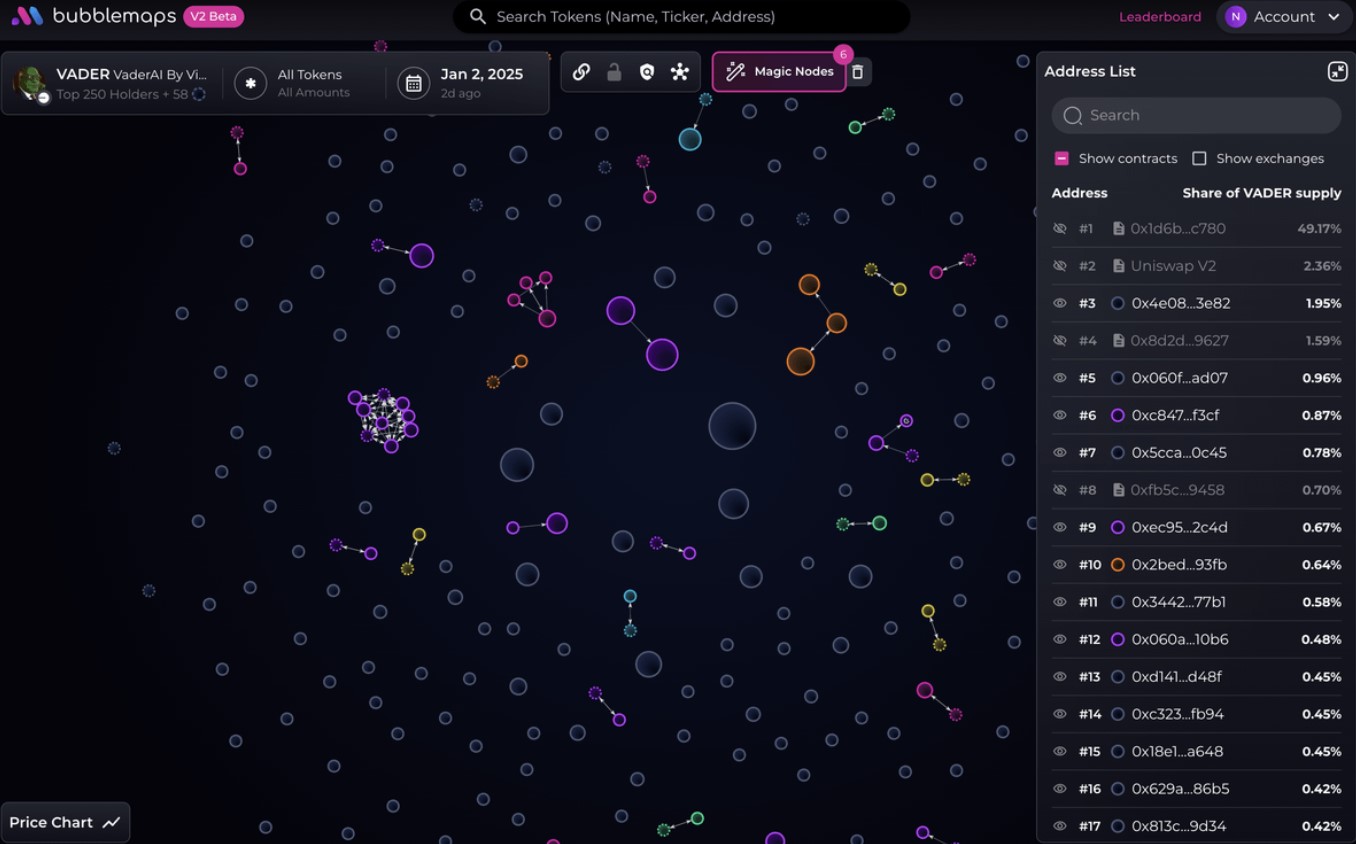
Топ-10 кошельков:

  • Совокупно владеют 10%.
  • 50% общего предложения в стейкинге, что усложняет анализ, так как стейкинг скрывает реальное распределение.

Низкая доля у топ-10 адресов выглядит многообещающе, однако стейкинг затрудняет понимание, насколько равномерно токены расходятся среди остальных участников.

6. $SPORE – 51%

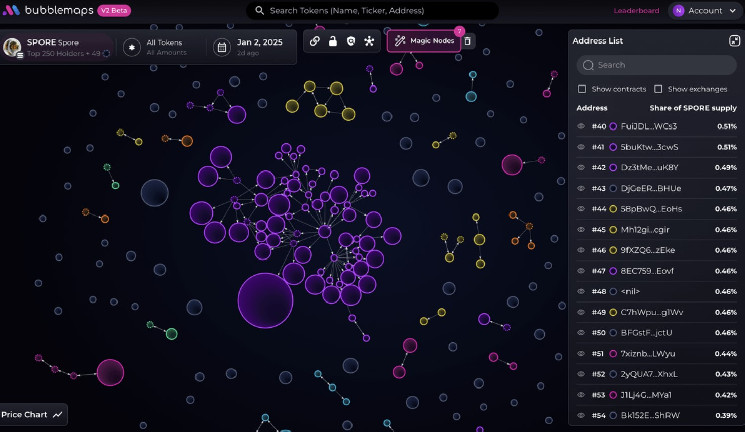
Высокая концентрация:

  • Один кластер (связанный с адресом 8EC759) держит около 40% предложения.
  • Этот кошелек регулярно отправлял SOL многим держателям, формируя крупный кластер.

Комментарий:
Такое распределение вызывает опасения. Проект с 51% у одного кластера потенциально уязвим к резким обвалам, если крупнейший держатель решит продать крупную партию.

Итог и рекомендации

  • Проекты, у которых видна четкая децентрализация (как $FARTCOIN и $VADER), кажутся более устойчивыми с точки зрения рыночных колебаний.
  • Проекты с высокой концентрацией у одного держателя (например, $SPORE) требуют аккуратного подхода: внезапный выход крупного адреса может обрушить цену.
  • Предпродажные кластеры (как в случае с $AI16Z) способны влиять на динамику токена, особенно если там хранятся значительные объёмы монет.

Не поддавайтесь FOMO

Прежде чем принимать решение об инвестировании, взгляните на распределение токенов. Даже самый многообещающий проект может потерпеть крах, если несколько крупных адресов начнут продавать свои активы. Анализ кластеров и понимание, кто на самом деле держит токены, — ключ к более взвешенным решениям.


Trending Cryptos

Related Reads

Not Betting on Goals but on 'Tears': Polymarket Users Argue Over Ronaldo's Final World Cup Match

Title: Beyond Goals, Betting on Tears: Polymarket Users Clash Over Ronaldo's Emotional World Cup Exit On July 6, Portugal's 0-1 loss to Spain in the World Cup round of 16 marked the final tournament for Cristiano Ronaldo. The 41-year-old star's emotional reaction—red eyes, wiping his face, fighting back tears—was captured globally. Concurrently, a fierce debate erupted on the crypto prediction platform Polymarket over a specific market: "Will Ronaldo cry during the 2026 FIFA World Cup?" The market, with over $23 million in volume, saw its "YES" probability surge to 99% after the match, but the result was disputed and entered a final review phase. The core conflict centered on the market's precise rules: it required "clearly visible tears streaming down [Ronaldo's] face" in photos/videos taken on the field or bench area during Portugal's matches. While major media outlets described Ronaldo as "in tears" and footage showed him emotional, "NO" bettors argued visible tear tracks were not conclusively evident, only red eyes and dampness. Polymarket's official clarification on July 8 stated that eligible evidence existed showing Ronaldo crying with visible tears on his face post-match. The dispute now goes to a UMA oracle community vote for resolution. This incident highlights a recurring challenge for prediction markets: they excel with quantifiable events but can spark major controversies over subjective, visual, or emotional interpretations. It also serves as a reminder for participants to scrutinize rule wording meticulously, not rely on general perception. Ultimately, such high-profile disputes drive significant trading volume and attention for the platform.

Foresight News1h ago

Not Betting on Goals but on 'Tears': Polymarket Users Argue Over Ronaldo's Final World Cup Match

Foresight News1h ago

DeepSeek Secretly Builds AI Chip, Specializing in Inference, Project Started a Year Ago with No Public Recruitments

DeepSeek, the Chinese AI company known for its algorithmic models, is secretly developing its own AI chip to reduce dependence on Nvidia, according to a Reuters report. The chip is designed specifically for AI inference, not training, and the project began approximately a year ago. Currently in early stages, DeepSeek is reportedly in discussions with chip design firms, foundries, and memory suppliers. The company, historically focused on algorithmic efficiency, has been discreetly hiring chip design engineers without public job postings. This move aligns with a global trend where major AI model companies like OpenAI and Anthropic are also pursuing custom chip development. DeepSeek founder Liang Wenfeng previously highlighted chip shortages as a challenge. While the company initially trained models on Nvidia H800s and later adapted to Huawei's Ascend chips, it now seeks greater control over its hardware foundation. Designing a competitive AI chip is a significant challenge, requiring years and substantial investment with no guarantee of success. However, DeepSeek's efforts are backed by a recent major funding round of approximately 51 billion RMB (about $7.4 billion) raised in June 2026. The funds are designated for expanding data centers based on domestic chips, developing proprietary AI chips, and recruiting top global talent. Infrastructure plans are also advancing, with job postings for data center design engineers, including projects in locations like Ulanqab, Inner Mongolia. The company remains characteristically low-key, with sources speaking anonymously and no official comment from DeepSeek itself. Nevertheless, this initiative marks a strategic expansion from software algorithms into the hardware layer that powers its AI systems.

marsbit1h ago

DeepSeek Secretly Builds AI Chip, Specializing in Inference, Project Started a Year Ago with No Public Recruitments

marsbit1h ago

Trading

Spot

Hot Articles

Discussions

Welcome to the HTX Community. Here, you can stay informed about the latest platform developments and gain access to professional market insights. Users' opinions on the price of AI (AI) are presented below.

活动图片