GPU在DDO Chain中的应用:推动区块链和AI的结合

币界网Published on 2024-08-06Last updated on 2024-08-06

币界网报道:

随着科技的飞速发展,图形处理单元(GPU)在计算领域中的重要性日益凸显。尤其是在区块链和人工智能(AI)领域,GPU的强大计算能力为复杂任务的高效处理提供了关键支持。DDO Chain,作为一个AI驱动的智能公链,充分利用了GPU的优势,提升了其生态系统的效率和性能。本文将详细介绍GPU的基本概念、在区块链和AI中的应用,以及DDO Chain如何利用GPU技术构建一个高效、安全的生态系统。

GPU的基本概念和优势

GPU,全称图形处理单元,最初设计用于处理图形计算任务,如图像渲染和视频编码。然而,随着计算需求的增加,GPU的强大并行计算能力逐渐被应用于更多领域。与传统的中央处理单元(CPU)相比,GPU具有更高的并行处理能力,可以同时执行数千个计算任务,从而显著提高计算效率。

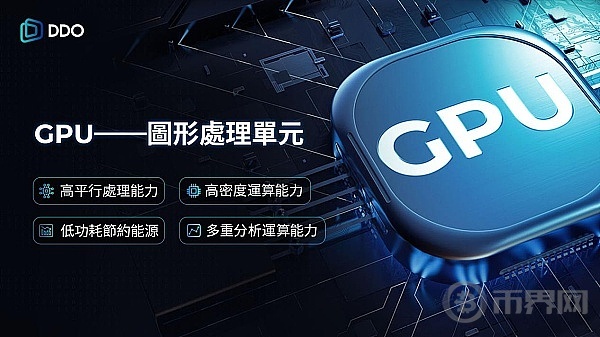
GPU的主要优势包括:

1.高并行处理能力:GPU拥有大量的处理核心,可以同时执行多个计算任务,提高计算效率。

2.计算密度高:在同等面积下,GPU的计算能力远高于CPU。

3.功耗相对较低:在处理相同任务时,GPU的能耗效率更高。

4.适应性强:GPU不仅可以用于图形处理,还可以处理科学计算、数据分析和机器学习等任务。 
qno4vxMlr7VR1v2WJwMY84kzJnEWYfihVeceskG0.png

GPU在区块链中的应用

在区块链技术中,GPU主要用于以下几个方面:

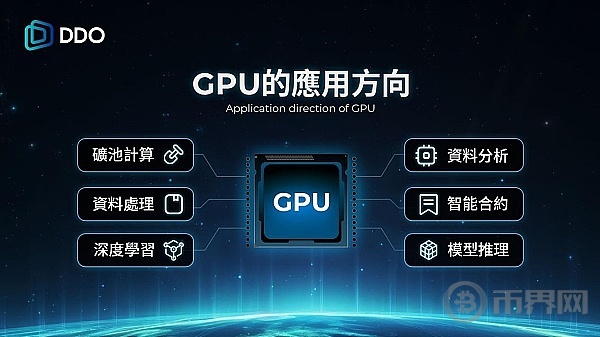
1.矿池计算:区块链网络中的矿工通过计算复杂的数学问题来验证交易并生成新的区块。GPU由于其强大的并行计算能力,能够更快地完成这些计算任务,提高挖矿效率。

2.智能合约执行:智能合约是区块链上的自执行合约,需要大量的计算资源来执行和验证。GPU可以加速智能合约的执行,提高区块链网络的整体性能。

3.数据处理和分析:区块链网络中产生了大量的数据,GPU可以用于快速处理和分析这些数据,提高数据处理的效率和准确性。

GPU在人工智能中的应用

在人工智能领域,GPU的应用主要集中在以下几个方面:

1.深度学习:深度学习模型需要大量的数据和计算资源来训练,GPU的高并行处理能力使得深度学习模型的训练速度大大加快。

2.模型推理:在模型部署阶段,GPU可以加速模型的推理过程,提高实时应用的响应速度。

3.大数据处理:AI系统需要处理海量数据,GPU的高计算能力可以显著提高大数据处理的效率。 
eyqVa9m8FF5N4vFNdGl0JekivZ6trCfHiDj5WZr5.png

DDO Chain中的GPU应用

DDO Chain作为一个结合区块链和AI技术的人工智能公链,充分利用了GPU的强大计算能力,实现了多个关键功能,提升了整个生态系统的效率和性能。

未来前景

随着GPU技术的不断发展,其在区块链和AI领域的应用前景将更加广阔。未来,DDO Chain将继续探索和利用GPU的计算能力,进一步提升平台的性能和用户体验。同时,随着更多高性能GPU的引入,区块链和AI的结合将创造出更多创新应用,为用户带来更大的价值。

结语

GPU作为一种强大的计算工具,在区块链和人工智能领域发挥了重要作用。DDO Chain充分利用GPU的计算能力,通过加速矿池计算、智能合约执行、AI模型训练和数据处理,提升了其生态系统的效率和性能。随着技术的不断进步,GPU将在更多领域展现其强大的计算能力,为我们的未来带来更多可能性。DDO Chain将继续做行业引领者,构建一个更加高效、安全和智能的公链。


Trending Cryptos

Related Reads

Research Report Analysis: Is Intel Making a Comeback with Apple? Bernstein's Calculations Show the Right Direction, but the Price Is Already Overvalued

Bernstein analyst Stacy A. Rasgon published a report on June 18 regarding Intel, assessing the potential impact of recent political support for a US-based PC chip design and manufacturing collaboration between Apple and Intel. The report views this as a significant signal for the foundry landscape shift but concludes the initial financial contribution would be minimal. Key conclusions: 1) An Apple deal is seen as a small-scale "proof of concept." Even if Intel wins 40% of Apple's premium notebook chip orders (~5 million units/year), Bernstein estimates it would generate only about $500M in annual revenue and ~$0.03 EPS, negligible against Intel's ~$55B revenue. 2) Political encouragement is not equivalent to enforceable mandates. Winning orders ultimately depends on Intel demonstrating competitive technology (like its 18A node), cost, and reliable supply. 3) The path from validation to large-scale production involves significant challenges, capital investment, and time. Due to these uncertainties, Bernstein maintains a Market-Perform (Hold) rating with a $100 price target, implying potential downside from the ~$121.10 price at the report date. The analysis highlights the tension between near-term validation value—serving as a crucial trust signal for Intel's foundry ambitions and US supply chain resilience—and the long-term opportunity to attract larger cloud and AI chip customers. The investment thesis hinges on successful 18A execution and sustained policy support, not on immediate financial gains from Apple.

marsbit8m ago

Research Report Analysis: Is Intel Making a Comeback with Apple? Bernstein's Calculations Show the Right Direction, but the Price Is Already Overvalued

marsbit8m ago

27-Year Reign Ends: SK Hynix Market Cap Surpasses Samsung for First Time, an AI-Driven Reshuffle of Korean Chip Power

On June 22, 2026, SK Hynix made history by surpassing Samsung Electronics in market capitalization, ending Samsung's 27-year reign as South Korea's most valuable company. This dramatic reversal is powered by the AI boom and SK Hynix's dominant position in High Bandwidth Memory (HBM), a critical component for AI model training. Once a heavily indebted firm on the brink of bankruptcy, SK Hynix bet early on HBM, which has evolved from a niche product to essential AI infrastructure. It now commands a 59% share of the global HBM market. Its financial performance is staggering, with Q1 2026 net profit soaring nearly fourfold year-over-year to KRW 40.35 trillion, translating to over 2 billion RMB in daily net profit. HBM now drives roughly 40% of its revenue with exceptionally high margins. In contrast, Samsung, with its broad portfolio spanning memory chips, smartphones, and foundry services, has lagged in the HBM race while facing headwinds in other divisions. This shift signifies a deeper restructuring of South Korea's economy, moving from consumer electronics to AI-driven growth. However, the future remains competitive. With major capacity expansions planned industry-wide by 2028 and Samsung aiming to catch up in HBM technology, the new market leader cannot afford complacency. This event marks a pivotal moment in the global semiconductor industry's ongoing power realignment.

marsbit19m ago

27-Year Reign Ends: SK Hynix Market Cap Surpasses Samsung for First Time, an AI-Driven Reshuffle of Korean Chip Power

marsbit19m ago

Why Does 'AGI Godfather' Ben Goertzel Believe the Future of AI Relies on Blockchain?

Ben Goertzel, known as the "AGI Godfather," argues that the future of Artificial General Intelligence (AGI) must be built on blockchain to prevent its control by a few corporations or venture capital firms. He believes the core AGI code should be free and open-source, but that this alone is insufficient without a decentralized infrastructure to run it affordably. His blockchain project, SingularityNET, and the broader Artificial Superintelligence Alliance aim to create a user-owned, decentralized network for hosting and deploying AGI, contrasting with the closed models of companies like OpenAI and Anthropic. Goertzel criticizes the shift of other labs from open to closed development. He argues that while a closed path is simpler, an open, decentralized model—akin to Linux and the internet—is both possible and ultimately better for humanity. He envisions an "Agent economy" where individuals orchestrate teams of AI agents to perform tasks, including transactions, on an open network rather than corporate clouds. While his current model relies on cryptocurrency, plans include offering paid AI services to businesses with the decentralized blockchain as the backend. Goertzel predicts human-level AGI could arrive by 2029 and warns that a gap in understanding and access to AGI could drastically worsen inequality. The first test of his decentralized approach will be the upcoming release of the Agent Omega Claw.

Foresight News49m ago

Why Does 'AGI Godfather' Ben Goertzel Believe the Future of AI Relies on Blockchain?

Foresight News49m ago

Trading

Spot
Futures

Hot Articles

Discussions

Welcome to the HTX Community. Here, you can stay informed about the latest platform developments and gain access to professional market insights. Users' opinions on the price of AI (AI) are presented below.

活动图片