New Binance Co-CEO’s WeChat Hacked In Memecoin Pump-And-Dump

bitcoinistPublished on 2025-12-11Last updated on 2025-12-11

Abstract

Newly appointed Binance Co-CEO Yi He had her WeChat account hacked, with the attacker using it to promote the little-known memecoin Mubarakah (MUBARA). The hacker purchased a large amount of the token beforehand and then sold it after the price surged due to the fraudulent endorsement, netting an estimated $55,000 profit in a classic pump-and-dump scheme. Binance founder Changpeng "CZ" Zhao confirmed the incident and warned users not to buy coins promoted by the hacker. Yi He later regained control of her account. The hack occurred just a week after her promotion to co-CEO. In unrelated news, Binance became the first digital asset exchange to receive a full license from the Abu Dhabi Global Market (ADGM).

Newly-appointed Binance Co-CEO Yi He has seen her WeChat account hacked, with the attacker using it to promote a litte-known memecoin.

Hacker Shilled Memecoin Mubarakah Using Binance Co-CEO’s WeChat

Binance‘s new co-CEO Yi He fell prey to a social media hack Tuesday night, as founder Changpeng “CZ” Zhao has shared in an X post. “Someone hacked @heyibinance’s WeChat account,” said CZ. “Do not buy meme coins from the hackers posts.”

The entity who gained control of Yi He’s account used it to promote a small memecoin called Mubarakah (MUBARA). Like is usually the pattern with hacks like these, investors bought into the token, believing the endorsement to be coming from a well-known industry figure. This sent the memecoin soaring.

On-chain sleuth Lookonchain has revealed how the hacker timed their moves. First, the attacker made two wallets hours in advance, spending 19,479 USDT to buy 21.16 million in Mubarakah.

“After the pump, the hacker has already sold 11.95M $Mubarakah for 43,520 $USDT and still holds 9.21M $Mubarakah($31K), for a total profit of $55K,” explained Lookonchain. The pattern is a clear example of a classic pump-and-dump scheme.

Yi He posted on X that the phone number tied to her WeChat account was taken over, locking her out of the account. A few hours later, she shared that she was able to regain control of the account.

Zhao took the moment to throw a jab at legacy internet systems, saying, “Web 2 social media security is not that strong.” Web 2.0 refers to the traditional online ecosystems most apps still run on, as opposed to the newer, blockchain-powered Web 3.0.

The hack has come just a week after Yi He, who is also a co-founder, was appointed as Binance co-CEO. Previously, she served as chief customer service officer for the cryptocurrency exchange.

In some other news, Binance has become the first digital asset exchange in the world to receive a license from UAE’s ADGM this week, as announced in a press release.

ADGM, standing for Abu Dhabi Global Market, is the international financial center of UAE’s capital, Abu Dhabi. ADGM’s Financial Services Regulatory Authority (FSRA) has given the exchange full authorization to operate its platform in the region.

Due to ADGM’s regulatory requirements, Binance will run its operations through three distinct entities, with each responsible for a separate function: an exchange, a clearing house, and a broker-dealer.

Binance co-CEO Richard Teng noted:

ADGM is one of the most respected financial regulators globally, and holding an FSRA license under their gold standard framework shows that Binance meets the highest international standards for compliance, governance, risk management, and consumer protection.

Bitcoin Price

At the time of writing, Bitcoin is trading around $91,900, down 1% over the last week.

The trend in the price of the coin over the last five days | Source: BTCUSDT on TradingView
Related Reads

Trillion-Dollar Banking Giant Adjusts Portfolio: Buys XRP Heavily, Clears Out Solana

In a significant portfolio rebalancing move, Italian banking giant Intesa Sanpaolo, with $1.1 trillion in assets, has made a notable shift in its cryptocurrency holdings. According to disclosures from Q4 2025 to Q1 2026, the bank's total crypto exposure surged from $100 million to approximately $235 million. The most striking action was its first-time establishment of an XRP position, investing around $18 million through the Grayscale XRP Trust. This marks a milestone as one of the first major European banks to adopt XRP via a regulated investment vehicle. This move is part of a broader, systematic digital asset strategy. The bank also substantially increased its Bitcoin exposure via ETFs and initiated its first Ethereum investment through a staking trust. In a contrasting strategic pivot, Intesa Sanpaolo drastically reduced its Solana holdings by over 99%, nearly exiting its position in a Bitwise Solana staking ETF. This shift is interpreted as reflecting a institutional preference for assets perceived with lower regulatory and operational risk, especially following Solana's network stability issues and improved clarity for XRP after its legal settlements. The bank's actions highlight key drivers for institutional adoption: clearer regulations, the availability of compliant ETF products, and the search for portfolio diversification. This trend signifies crypto's evolving status from a niche experiment to a recognized component of mainstream asset allocation, with institutions favoring gradual, regulated entry points over direct token ownership.

marsbit26m ago

Trillion-Dollar Banking Giant Adjusts Portfolio: Buys XRP Heavily, Clears Out Solana

marsbit26m ago

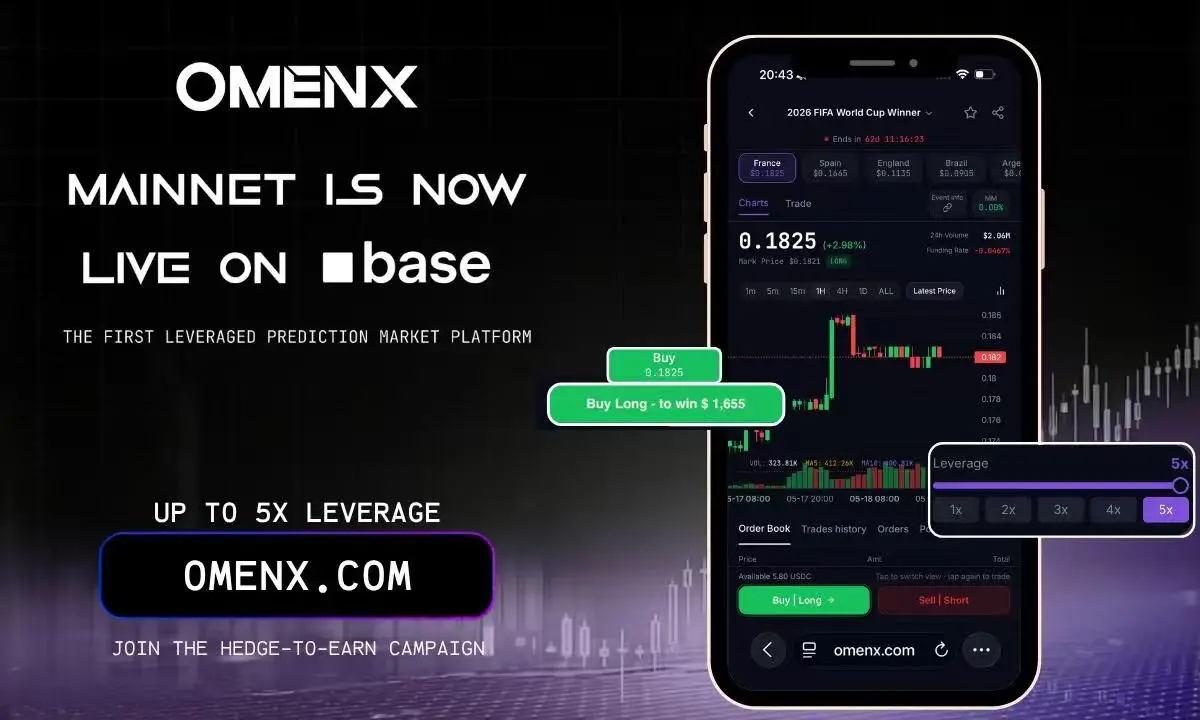
Base Native Leveraged Prediction Market OmenX Officially Launches on Mainnet

Base-native leveraged prediction market platform OmenX has officially launched on mainnet. It currently supports up to 5x leverage, with plans to increase to 10x based on platform liquidity and market conditions. Unlike traditional prediction markets where users fully collateralize YES/NO positions and wait for settlement, OmenX aims to create a trading platform-like experience. Users can open leveraged positions on event outcomes, and actively trade, adjust, or hedge these positions before the event concludes for greater capital efficiency. Alongside the mainnet launch, OmenX introduced a "Hedge-to-Earn" campaign targeting existing users of other prediction markets (initially Polymarket). This initiative allows users to claim incentives or hedging benefits on OmenX based on their existing positions, aiming to introduce them to leveraged trading and active risk management. OmenX positions itself as a derivatives trading platform for prediction market assets. The team believes that as platforms like Polymarket mainstream prediction markets, event outcomes are becoming a new tradable asset class. The next phase of demand will focus on leverage, liquidity, and advanced trading tools. Post-launch, OmenX plans to expand supported market types, optimize liquidity, and develop APIs and additional trading tools. The team is also in discussions with investors and partners to secure resources for further development.

链捕手39m ago

Base Native Leveraged Prediction Market OmenX Officially Launches on Mainnet

链捕手39m ago

Trading

Spot
Futures

Hot Articles

Discussions

Welcome to the HTX Community. Here, you can stay informed about the latest platform developments and gain access to professional market insights. Users' opinions on the price of S (S) are presented below.

活动图片