‘The question is how, not if’ – Reserve Bank of Australia’s 24/7 trading roadmap

ambcrypto發佈於 2026-03-27更新於 2026-03-27

文章摘要

The Reserve Bank of Australia (RBA) has shifted its focus from questioning "if" to "how" tokenization will be implemented in the financial system. Assistant Governor Brad Jones announced this change, highlighting that tokenization is now considered an inevitable future. The RBA's Project Acacia projects $16.7 billion in annual efficiency gains and supports the coexistence of stablecoins and bank deposits. Currently, the Australian dollar stablecoin market cap is relatively low at $10.5 million, with AUDD dominating at 98.73%. However, new regulations and the push for 24/7 trading are expected to spur growth. Tokenization pilot programs covered assets like government bonds and carbon credits, using both central bank and private tokenized money. The RBA will collaborate with regulatory bodies to support implementation, which could accelerate Australia's digital economy and stablecoin market.

Australia moved closer to tokenization, with the Reserve Bank of Australia (RBA) outlining its next phase.

At the ‘Beyond Tomorrow’ forum on the 25th of March, Assistant Governor Brad Jones said the focus had shifted from “if” to “how” tokenization would be implemented.

He stated,

First, we no longer see the main question as whether tokenisation has a future in Australia’s financial system, but rather, how.

How tokenization will be implemented

Australia appeared positioned to advance tokenization across asset classes, with a focus on enabling 24/7 trading.

On the RBA website, Jones detailed findings from Project Acacia, which projected $16.7 billion in annual efficiency gains.

The central bank noted that stablecoins and bank deposits could coexist within the system.

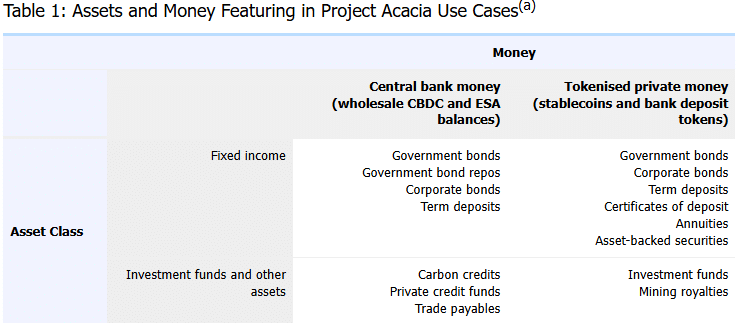
The pilot covered fixed income and investment funds, with transactions flowing through both central bank money and tokenized private money.

These included government bonds, corporate bonds, carbon credits, and private credit funds.

However, the RBA confirmed it would work with the Council of Financial Regulators (CFR) and DFCRC to support implementation.

That coordination could accelerate Australia’s stablecoin market and broader digital economy.
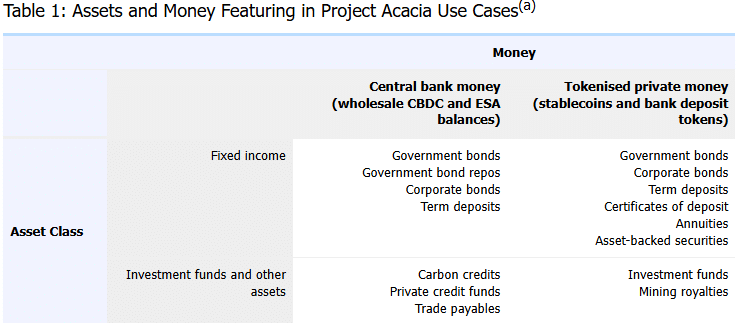
Source: rba.gov.au

Australia dollar [AUD] stablecoins market cap

Speaking of the market cap for Australian dollar stablecoins, it is relatively low, probably due to regulatory hurdles before the RBA move.

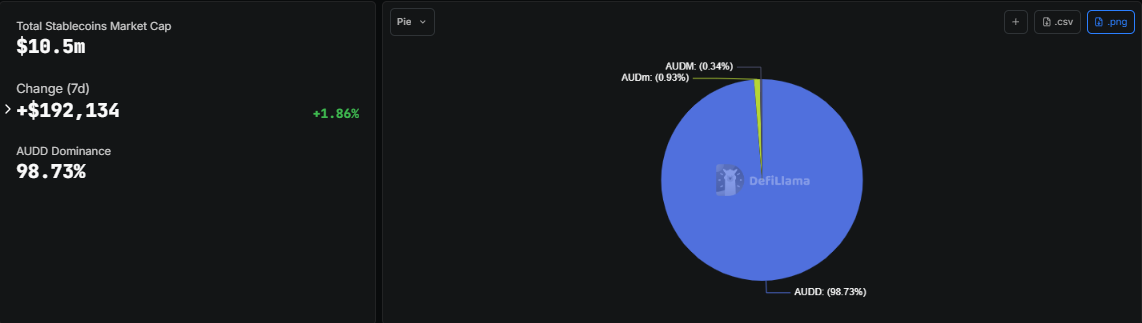
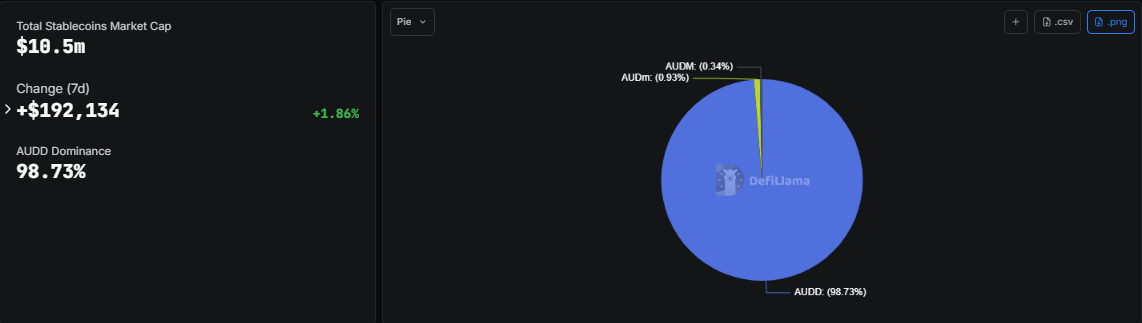
As per DeFiLlama, their total market cap was at $10.5 million, a growth of 1.86% this week. In this lot, AUDD led with a dominance of 98.73%, equivalent to $10.35 million.

Others in the list were AUDm and AUDM, accounting for 0.93% and 0.34% of the total cap, respectively. The joint had a cap of about $133K.
Source: DeFiLlama

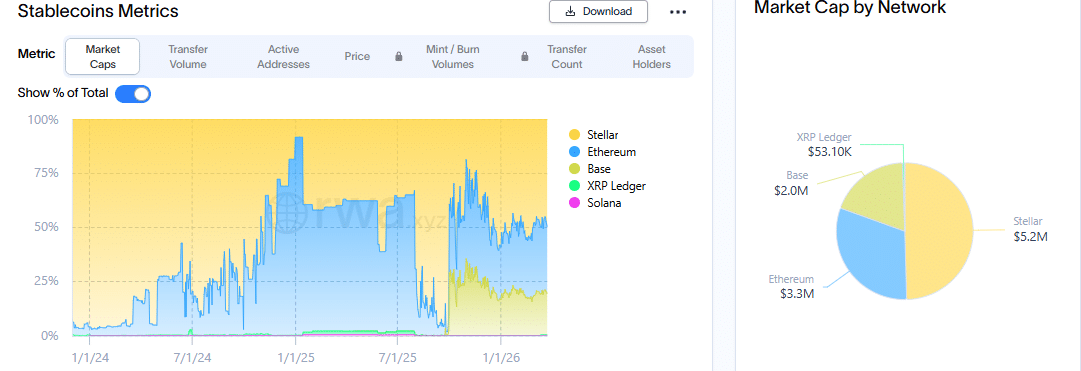
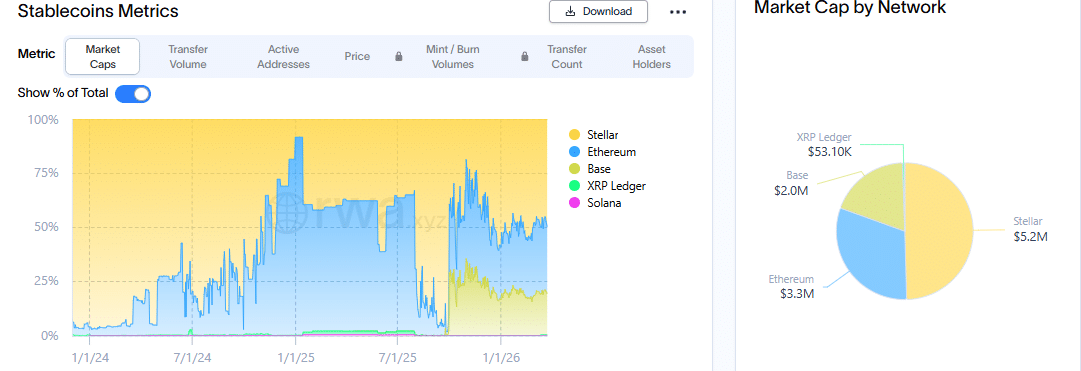
Narrowing down the analysis to AUDD, it was spread across five major blockchains.

The largest share of its cap, about 48%, was on Stellar [XLM], equal to $5.2 million, as Ethereum [ETH] came second with 31% of the total.

Base Chain held 19%, which represented $2 million. Meanwhile, less than 1% of its total share was on Solana [SOL] and XRP Ledger.
Source: RWA.xyz

The projection from Project Acacia, together with the implementation, was a precedent for the growth of tokenization in the Australian market.

Daily transactions surge

Tokenization was heavily reliant on stablecoins.

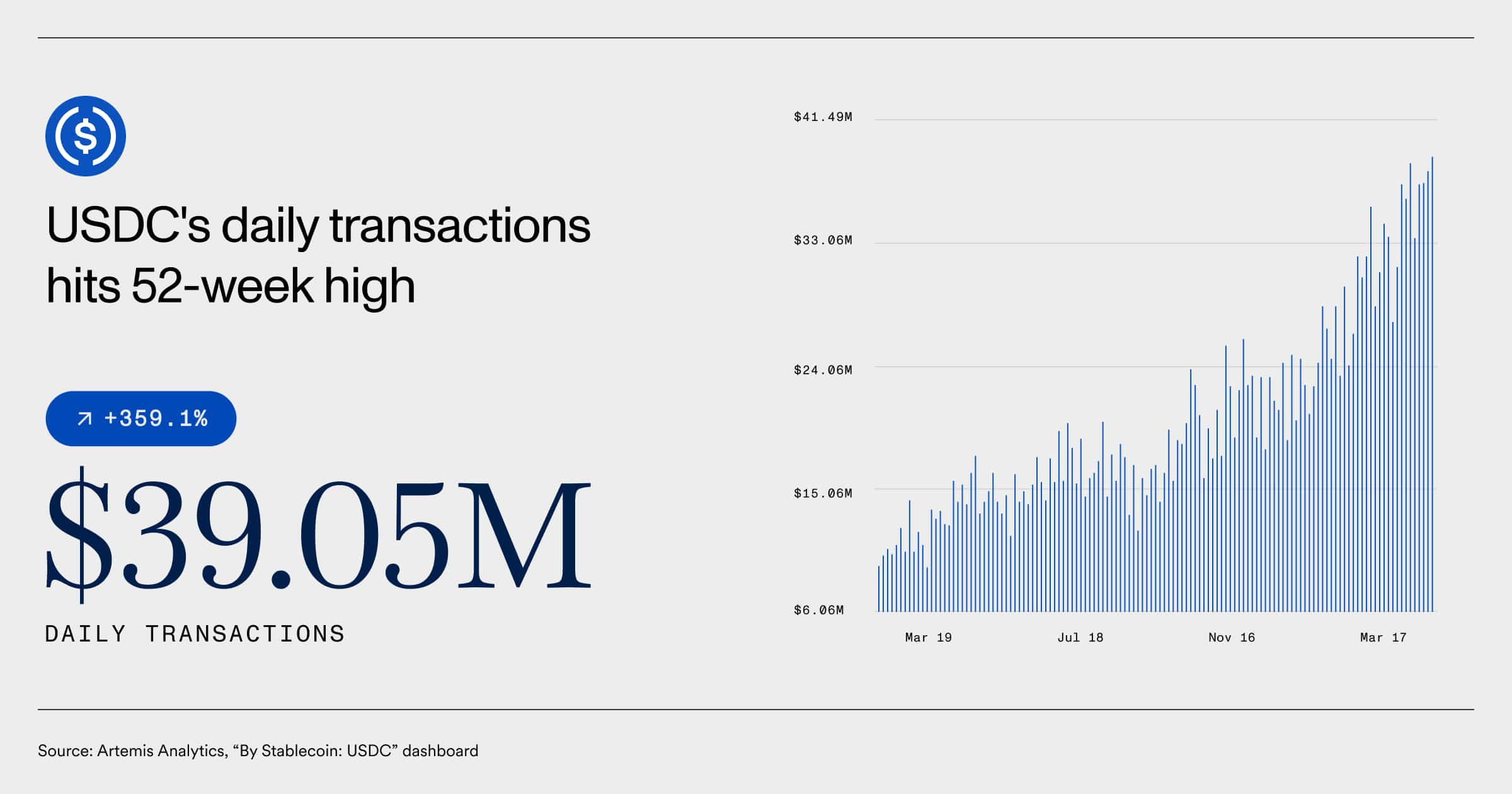
For context, daily transactions for USD Coin [USDC] had hit a 52-week high of $39.05 million. This equated to a 359% growth since March 2019.
Source: Artemis Analytics

However, the growth of the Australian dollar stablecoin market was nowhere near that of the USD-backed ones. Therefore, tokenization could spur growth in AUD-backed stablecoins and real-world assets (RWAs) in the country.


Final Summary

  • RBA shifts from asking whether tokenization was happening to how to implement it.
  • The market cap of AUD-backed stablecoins has stayed relatively low, but the regulations could shift this trend.


熱門幣種推薦

相關問答

QWhat is the main shift in the Reserve Bank of Australia's (RBA) stance on tokenization, as stated by Assistant Governor Brad Jones?

AThe main shift is that the RBA no longer sees the question as 'if' tokenization has a future in Australia's financial system, but rather 'how' it will be implemented.

QWhat was the name of the RBA project that projected significant annual efficiency gains from tokenization, and what was the projected amount?

AThe project was called Project Acacia, and it projected $16.7 billion in annual efficiency gains.

QWhat is the current total market cap of Australian dollar (AUD) stablecoins, and which stablecoin dominates this market?

AThe total market cap is $10.5 million, and the AUDD stablecoin dominates the market with a 98.73% share, equivalent to $10.35 million.

QWhich two types of assets were used in the RBA's pilot for tokenization, and what two forms of money did the pilot use for transactions?

AThe pilot covered fixed income and investment funds, and transactions flowed through both central bank money and tokenized private money.

QAccording to the article, what could the RBA's coordination with other regulators accelerate the growth of in Australia?

AThis coordination could accelerate the growth of Australia's stablecoin market and its broader digital economy.

你可能也喜歡

Rubin Ultra大减配,英伟达也扛不住内存涨价了?

知名投研机构SemiAnalysis近日报告指出,英伟达已向主要客户预览了其顶级AI芯片Rubin Ultra的最新规格,但相比此前预期出现显著降配。核心变化包括:算力峰值保持与普通版Rubin相同的35 PFLOPs;显存容量降至8层堆叠的192GB,甚至低于普通版的288GB;显存带宽仅微升1TB/s;芯片功耗反而略有提高。Rubin Ultra的主要升级方向转向“扩展互联规模”,支持通过NVLink将最多576张GPU互联成统一计算域,远高于普通版的72张。 报告分析认为,此次调整主要源于HBM(高带宽内存)价格持续快速上涨。以HBM3为例,其价格已从2025年二季度的低点180-220美元,飙升至目前约700-850美元。HBM成本飙升使得Rubin Ultra单机架的物料成本一度从约660万美元升至800万美元。英伟达因此重新评估设计,通过减少昂贵的HBM配置(成本占比从近40%降至28%),将资源更多投入互联能力等方向,优化整体成本结构。 此消息引发市场对HBM需求见顶的担忧。受冲击影响,韩国存储股开盘大跌,SK海力士、三星股价均下挫约8%。市场解读认为,若英伟达此举成为趋势,意味着AI芯片厂商可能开始通过优化设计来降低对高容量HBM的依赖,这或将限制存储厂商未来的提价空间,标志着AI基础设施的“堆料涨价”时代可能接近尾声。

Odaily星球日报12 分鐘前

Rubin Ultra大减配,英伟达也扛不住内存涨价了?

Odaily星球日报12 分鐘前

生成模型也能端到端训练了?核心竟是一个for循环

长期以来,深度学习在图像分类、检测等任务上凭借端到端训练取得了巨大成功,但生成模型领域却始终是个例外。当前主流的自回归、扩散模型等训练时只学习预测“一小步”,推理时则需要反复展开数百上千步,这种训练与推理的不一致导致了“暴露偏差”等问题,使得生成模型一直未能实现真正的端到端训练。 最近,一篇来自UIUC与哈佛大学的论文提出了“探索式建模(Explorative Modeling,XM)”新范式,其核心是一个简单到近乎朴素的for循环:在每个训练步骤中,模型生成K个候选样本,然后仅选取其中最接近真实数据的一个样本来计算损失和回传梯度。这种做法巧妙地绕开了传统生成模型中因使用重构损失(如平方误差)而导致的“模态模糊”问题——即模型倾向于输出多个可能答案的平均值,而这个平均值往往不属于任何真实的数据模式。 XM通过这种方式,在不拆分生成过程的前提下,直接提升了模型的“生成表达力”,即模型捕捉数据分布中多个独立模式的能力。论文将“探索”验证为继模型参数量、数据量之后的第三根可扩展轴。实验表明,随着模型规模、数据量和计算量的增大,探索带来的性能收益越发显著,在图像、视频、语言等多种任务上均能带来效率与质量的提升。 更重要的是,当探索程度足够时,XM可以实现真正的端到端生成。在机器人控制等任务中,仅需一次网络前向传播的XM策略,其性能可媲美甚至超过需要上百次前向的扩散模型策略,实现了推理效率的飞跃。 尽管“最佳K样本选择”的思想并非全新,但该研究的贡献在于清晰地揭示了这一简单机制如何直接解决生成模型的核心瓶颈,并为实现高效、端到端的生成模型开辟了新的可能性。随着模型规模的持续扩大,探索这一新维度可能将发挥越来越关键的作用。

marsbit1 小時前

生成模型也能端到端训练了?核心竟是一个for循环

marsbit1 小時前

交易

現貨

熱門文章

什麼是 $BANK

銀行人工智能:銀行未來的革命性步伐 介紹 在這個科技迅速進步的時代,銀行人工智能處於人工智能(AI)和銀行服務的交匯點。這個創新的項目旨在重新定義金融格局,通過人工智能的力量提高運營效率、安全措施和客戶體驗。在我們探索銀行人工智能的過程中,將深入探討這一項目的內涵、運作動態、歷史背景以及重要里程碑。 銀行人工智能是什麼? 從本質上講,銀行人工智能代表了一項變革性倡議,旨在將人工智能整合進各種銀行運營中。這個項目利用人工智能的能力來自動化流程、改善風險管理協議,並通過個性化服務增強客戶互動。 銀行人工智能的主要目標包括: 銀行功能自動化:通過利用人工智能技術,銀行人工智能旨在自動化日常任務,減輕人力資源的負擔並提高效率。 加強風險管理:該項目利用人工智能算法來預測和識別風險,從而強化針對欺詐和其他威脅的安全措施。 銀行服務個性化:銀行人工智能專注於通過分析客戶數據和行為提供量身定制的金融產品和服務。 改善客戶體驗:實施由人工智能驅動的解決方案,如聊天機器人和虛擬助手,旨在為用戶提供更接近人類的互動,徹底改變客戶與銀行的互動方式。 有了這些目標,銀行人工智能將自己定位為在提高銀行效率、安全性和以用戶為中心的關鍵角色。 銀行人工智能的創造者是誰? 關於銀行人工智能的創造者的具體細節尚不清楚。因此,在可用信息中尚未確定具體的個人或組織。圍繞該項目創建的匿名性引發了問題,但並未減少其雄心壯志的願景和目標。 銀行人工智能的投資者是誰? 與項目的創造者類似,關於銀行人工智能的投資者或支持組織的具體信息尚未披露。沒有這些信息,很難概述可能推動該項目向前發展的財務支持和機構支持。儘管如此,擁有堅實的投資基礎對於在這樣一個創新領域中保持發展至關重要。 銀行人工智能是如何運作的? 銀行人工智能在幾個創新領域運作,專注於使其與傳統銀行框架區分開來的獨特因素。以下是主要的運作特點: 自動化:通過應用機器學習算法,銀行人工智能自動化銀行內的各種手動流程。這樣不僅減少了運營成本,還使人力工作者能夠將精力轉向更具戰略性的活動。 先進的風險管理:將人工智能整合到風險管理實踐中,使銀行獲得準確預測潛在威脅(如欺詐)的工具,確保客戶信息和資產的安全。 量身定制的財務建議:通過持續學習客戶互動,人工智能系統發展出對用戶需求的細緻理解,能夠對財務決策提供量身定制的建議。 增強的客戶互動:利用由人工智能驅動的聊天機器人和虛擬助手,銀行人工智能提供了更具吸引力的客戶體驗,使用戶能夠快速解決問題,從而減少等待時間並提高滿意度。 這些運作特徵使銀行人工智能成為銀行業的先驅,建立服務交付和運營卓越的新標準。 銀行人工智能的時間線 了解銀行人工智能的發展軌跡需要看其歷史背景。以下是突顯重要里程碑和發展的時間線: 2010年代早期:對人工智能整合到銀行服務的概念開始引起關注,隨著銀行機構認識到潛在利益。 2018年:隨著銀行開始使用聊天機器人等人工智能工具進行基本客戶服務和風險管理系統以改善安全處理,人工智能技術的實施顯著增加。 2023年:人工智能的技術不斷進步,生成式人工智能被引入進行更複雜的任務,如文件處理和實時投資分析。今年標誌著人工智能技術為銀行提供能力的重要飛躍。 2024-當前狀態:截至今年,銀行人工智能正處於上升軌道,持續的研究和開發預示著將進一步提升銀行業務的能力。對人工智能應用的持續探索暗示著未來令人興奮的發展。 銀行人工智能的關鍵點 人工智能在銀行中的整合:銀行人工智能專注於採用人工智能來簡化銀行流程並改善用戶體驗。 自動化和風險管理的聚焦:該項目強烈關注這些領域,旨在減輕例行任務的負擔,同時通過預測分析增強安全框架。 個性化的銀行解決方案:通過利用客戶數據,銀行人工智能提供滿足個別用戶需求的量身定制銀行服務。 對發展的承諾:銀行人工智能致力於持續的研究和開發,確保其隨著技術的持續演變而保持適應性和持續相關性。 結論 總結來說,銀行人工智能展現了銀行業的一個重要進步,利用人工智能重塑運營範式、提高安全性,並促進客戶滿意度。儘管有關創造者和投資者的信息仍有缺口,但銀行人工智能的明確目標和功能機制為其持續發展提供了堅實基礎。隨著人工智能技術的不斷進步和與銀行業的融合,銀行人工智能在金融服務未來的影響力將十分顯著,改善我們對銀行的理解和互動方式。

308 人學過發佈於 2024.04.06更新於 2024.12.03

什麼是 $BANK

如何購買BANK

歡迎來到HTX.com!在這裡,購買Lorenzo Protocol (BANK)變得簡單而便捷。跟隨我們的逐步指南,放心開始您的加密貨幣之旅。第一步:創建您的HTX帳戶使用您的 Email、手機號碼在HTX註冊一個免費帳戶。體驗無憂的註冊過程並解鎖所有平台功能。立即註冊第二步:前往買幣頁面,選擇您的支付方式信用卡/金融卡購買:使用您的Visa或Mastercard即時購買Lorenzo Protocol (BANK)。餘額購買:使用您HTX帳戶餘額中的資金進行無縫交易。第三方購買:探索諸如Google Pay或Apple Pay等流行支付方式以增加便利性。C2C購買:在HTX平台上直接與其他用戶交易。HTX 場外交易 (OTC) 購買:為大量交易者提供個性化服務和競爭性匯率。第三步:存儲您的Lorenzo Protocol (BANK)購買Lorenzo Protocol (BANK)後,將其存儲在您的HTX帳戶中。您也可以透過區塊鏈轉帳將其發送到其他地址或者用於交易其他加密貨幣。第四步:交易Lorenzo Protocol (BANK)在HTX的現貨市場輕鬆交易Lorenzo Protocol (BANK)。前往您的帳戶,選擇交易對,執行交易,並即時監控。HTX為初學者和經驗豐富的交易者提供了友好的用戶體驗。

1.3k 人學過發佈於 2025.05.09更新於 2026.06.02

如何購買BANK

相關討論

歡迎來到 HTX 社群。在這裡,您可以了解最新的平台發展動態並獲得專業的市場意見。 以下是用戶對 BANK (BANK)幣價的意見。

活动图片