Standard Chartered To Launch Crypto Prime Brokerage Through VC Unit – Report

bitcoinist發佈於 2026-01-13更新於 2026-01-13

文章摘要

Standard Chartered is reportedly planning to launch a cryptocurrency prime brokerage through its venture capital unit SC Ventures, according to a Bloomberg report. The initiative, still in early stages, would expand the bank’s digital asset offerings and operate under the previously announced Project37C joint venture, which focuses on custody, tokenization, and market access. This move aligns with the bank’s growing involvement in crypto, including backing custodians, offering Bitcoin and Ethereum trading, and partnering with platforms like OKX and Coinbase. Launching the brokerage through its VC arm may help Standard Chartered navigate strict global banking capital requirements for crypto, which impose high risk charges on direct holdings. Global regulators are currently reviewing these rules, with the US leading calls for amendments ahead of their planned 2026 implementation.

Banking giant Standard Chartered is reportedly planning to launch a prime brokerage for cryptocurrency trading amid a global push by banks to establish digital asset ventures and compete in the sector.

Standard Chartered Plans Crypto Expansion

On Monday, Bloomberg reported that London-based Standard Chartered is allegedly preparing to expand its crypto efforts with the launch of a prime brokerage for digital assets trading.

According to sources familiar with the matter, discussions are in the early stages, and an official timeline for the launch has not been defined. However, they revealed that the major global bank plans to launch the new crypto business within its venture capital (VC) unit SV Ventures.

Notably, Standard Chartered’s VC unit recently announced that it is developing Project37C, a joint venture related to digital assets, but did not specifically call the platform a crypto prime brokerage. The joint venture is set to offer custody, tokenization, and market access, and “complement the broader Standard Chartered digital asset ecosystem.”

At the time, Harald Eltvedt, Operating Member and Head of Venture Building at SV Ventures, affirmed that “as we see institutional engagement with digital assets accelerating, there is similarly a growing need for platforms that combine innovation with a high standard.”

As the report noted, the banking giant has been one of the most active global financial institutions in the digital assets sector. Notably, it has backed multiple crypto ventures, including custodians and institutional trading platforms.

In July, the institution became the first global systemically important bank to offer spot Bitcoin and Ethereum trading for institutional clients. In Q4 2025, Standard Chartered announced its partnership with crypto exchange OKX in the European Economic Area (EEA) and its collaboration with DCS Card Center as the banking partner for a credit card that enables users to make stablecoin transactions.

Last month, Standard Chartered expanded its partnership with Coinbase to develop a suite of crypto prime services for institutional clients, including trading, staking, custody, and lending.

Global Banking Rules’ Challenge

Bloomberg highlighted that Standard Chartered could benefit from launching the new business through SC Ventures, as it may help circumvent some strict capital requirements for digital assets in corporate and investment banks.

It’s worth noting that the Basel Committee on Banking Supervision (BCBS) released its standard for the “prudential treatment of banks’ exposures to cryptoassets” in 2022, including tokenized traditional assets, stablecoins, and unbacked digital assets.

Under Basel III rules, banks that hold cryptocurrencies face a risk charge far higher than with any other risk assets. The institutions are required to comply with a 1,250% risk charge for exposure to permissionless crypto assets such as Bitcoin and Ether. Meanwhile, some VC investments under the latest Basel capital package only face a 400% charge.

As reported by Bitcoinist, global regulators are in talks to review and potentially overhaul rules for banks’ crypto holdings, set to come into force in 2026. Senior executives stated that banks have largely interpreted the standards as a signal to avoid crypto “since they imposed a heavy capital burden on such holdings.”

However, the recent global shift toward the crypto industry has sparked debates at the BCBS regarding the suitability of these rules under the current environment, with major jurisdictions, including the US and UK, not committing to implementing them on time.

The US has been reportedly leading calls to amend these standards, arguing that the rules are “incompatible with the industry’s evolution,” particularly in the stablecoin sector. Moreover, some countries seem to agree with the US’s reasoning and favor reviewing the standards before they are widely implemented.
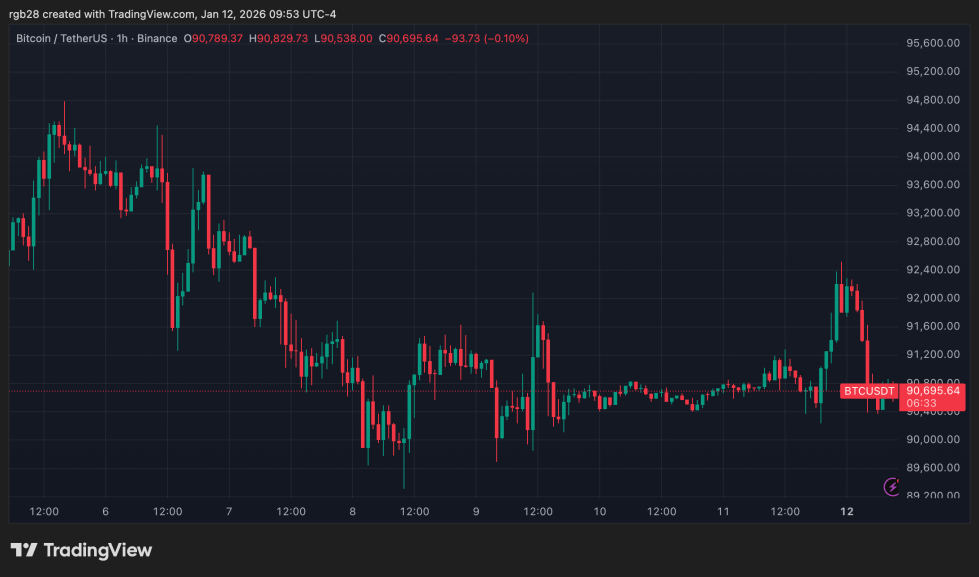
Bitcoin (BTC) trades at $90,695 in the one-week chart. Source: BTCUSDT on TradingView

相關問答

QWhat is Standard Chartered reportedly planning to launch in the crypto space?

AStandard Chartered is reportedly planning to launch a prime brokerage for cryptocurrency trading through its venture capital unit, SC Ventures.

QThrough which specific unit does Standard Chartered plan to launch its new crypto business?

AThe bank plans to launch the new crypto business within its venture capital (VC) unit, SC Ventures.

QWhat is the name of the joint venture Standard Chartered's VC unit is developing, and what services will it offer?

AThe joint venture is called Project37C, and it is set to offer custody, tokenization, and market access for digital assets.

QWhat is a key regulatory challenge for banks holding cryptocurrencies under the Basel III rules?

AUnder Basel III rules, banks face a punitive 1,250% risk charge for exposure to unbacked crypto assets like Bitcoin and Ether, which is a major capital burden.

QWhy might launching the crypto business through its VC unit be beneficial for Standard Chartered from a regulatory perspective?

ALaunching through the VC unit may help the bank circumvent the strict capital requirements for digital assets that apply to corporate and investment banks, as some VC investments face a lower 400% charge.

你可能也喜歡

华为云不打Token价格战,周跃峰要给AI云换一个赢的方式

在2026华为云INSPISE创想者大会上,新任CEO周跃峰首次公开阐述华为云AI战略,明确表示不以Token调用量或收入规模为竞争核心,而是聚焦于“每个Token是否真正提升生产力”。 面对当前国内AI云市场普遍以Token价格战和规模增长为焦点的态势,华为云选择了差异化路径:其一,依托昇腾、鲲鹏等全国产化软硬件构建“第二算力平面”,不参与“万国牌”硬件的规模比拼;其二,将政企及国计民生行业作为主战场,通过混合云与机密计算等技术,在保障数据主权的同时输送公有云迭代能力;其三,坚持开源开放策略,并联合20余家头部模型厂商共建生态。 周跃峰提出,AI竞争焦点正从算力、模型转向智能体(Agent)的实际应用。为此,华为云发布“Agentic Infra”新范式及一系列新品,旨在解决企业部署智能体时的工程难题,如AICS灵衢集群降低时延、AMS解决长程记忆、ModelArts Next实现多模型智能调度以降低成本。 更关键的举措是推出智慧医疗、具身智能等“行业AI梦工厂”专区,深入具体场景。例如,智慧医疗专区与瑞金医院共建大模型,旨在向基层医院规模化输出顶级诊疗能力。华为云试图将竞争从“卖Token”转向“卖生产力”,衡量标准变为金融风控效果、医疗诊断可及性等实际价值。 周跃峰承认,这条依赖国产算力、深耕产业的路比追逐MaaS收入更慢、更难,但避开了当前的价格红海,押注于智能体深入产业后底层基础设施的机遇。华为云的目标是证明其国产算力体系能满足中国产业AI未来的真实需求。

marsbit7 分鐘前

华为云不打Token价格战,周跃峰要给AI云换一个赢的方式

marsbit7 分鐘前

70%民众反对AI,美国人希望美国输掉人工智能战争

这篇文章主要讲述了美国社会目前普遍存在的反AI情绪。一项民调显示,高达70%的美国人认为AI发展“太快”,需要加强监管。这种情绪已经从线上蔓延到线下,具体表现为: 1. **公开抵制**:谷歌前CEO埃里克·施密特在大学毕业典礼上鼓励学生拥抱AI时,遭到台下学生集体嘘声和社交媒体嘲讽。科技公司的AI广告被涂鸦破坏,硅谷等地爆发了多次反AI游行示威。 2. **阻碍基建**:各地居民强烈反对在当地建设AI数据中心,担心其推高水电费、消耗水资源、造成热污染及破坏环境。多个数据中心项目因居民抗议而推迟或取消,甚至有议员因支持项目而遭罢免或住所被枪击。 3. **走向极端**:出现了向OpenAI CEO奥特曼住宅投掷燃烧弹、枪击支持数据中心项目的议员等暴力事件。 民众反对AI的主要原因包括: * **担忧失业**:普遍认为AI会取代大量工作岗位,让财富更集中于科技巨头,而大众承担失业风险。 * **经济负担**:数据中心巨大的能耗和水耗,导致电网升级和水资源成本被分摊到居民账单上,推高生活成本。 * **环境影响**:数据中心运行加剧碳排放,阻碍碳中和目标,其废热排放也抬升局部气温,引发环保团体反对。 * **社会与政治忧虑**:担心AI存在偏见、制造虚假信息,影响公众舆论和选举公正;同时也忧虑当前AI投资热潮可能是泡沫,一旦破裂会引发经济衰退。 这一问题已演变为复杂的政治难题。特朗普上台后废除了拜登时期加强AI监管的行政令,转而推行以“创新与竞争力”为先的政策,以在AI竞赛中保持领先。但这引发了其支持者阵营(MAGA)内部“硅谷派”与“极右翼”的分歧,后者与民主党在限制AI发展上形成了临时同盟,共同反对数据中心建设。特朗普面临着在支持其的科技金主与反对AI的草根票仓之间做出艰难抉择的困境。

marsbit40 分鐘前

70%民众反对AI,美国人希望美国输掉人工智能战争

marsbit40 分鐘前

Agent接管流量分发权,腾讯、字节、阿里在抢什么?

近日,腾讯、阿里、字节三大互联网巨头几乎同时加码AI智能体(Agent)布局,争夺AI时代的入口主导权。核心在于,谁掌握了Agent,谁就掌握了未来的流量分发权。 **阿里**采取“双子星”策略:千问App正演变为超级Agent,深度接入淘宝、支付宝等生态业务,实现从搜索到交易的全流程操作,并已向外部品牌开放接入;夸克则定位为AI旗舰应用,致力于成为“AI超级框”。在B端,阿里推出企业智能体平台“悟空”,探索“一人AI公司”模式。 **字节**凭借“豆包”App已获超3亿月活,并通过“扣子”平台构建开发者生态,支持多智能体协同。其战略是软硬一体,将豆包能力延伸至AI手机、智能眼镜等硬件,旨在让AI入口无处不在。 **腾讯**的杀手锏藏于微信。正在内测的微信AI智能体可通过右滑直接调用数百万小程序完成任务,将微信生态转化为“服务操作系统”。腾讯试图将AI深度融入现有国民应用,而非另造新入口。 三家的竞争折射出商业逻辑的深刻变化:流量分配权正从“用户自主点击”转向“Agent代为决策”。商业模式从争夺用户时长的“注意力经济”,转向以结果和效率为核心的“意图经济”。未来,服务提供者不仅比拼品牌,更需比拼其接入AI生态的能力。 这标志着从PC网页、移动App到AI Agent的又一次入口更迭,新一轮行业洗牌已然开始。

marsbit2 小時前

Agent接管流量分发权,腾讯、字节、阿里在抢什么?

marsbit2 小時前

交易

現貨
合約
活动图片