Today, the Agent economy is no longer a sci-fi concept; it brings not only a leap in efficiency but also a restructuring and redistribution of economic organization. Particularly, the global popularity of the open-source project OpenClaw has further propelled large models from the lab to large-scale applications, with various parties scrambling to join the battle for Agent entry points.
So, which large model should one choose? Will Token resources be sufficient to support long-term use? Will those who don't follow the OpenClaw (Lobster) trend be left behind by the times? In this rapidly evolving AI transformation, how should individuals position themselves and find breakthroughs?
With these questions in mind, on April 3, Xujiahui Tech Innovation, Shanghai Distributed Consensus Technology Association, PANews, and Mankun Law Firm jointly hosted a themed event called "Don't 'Shrimp' Anxiety."
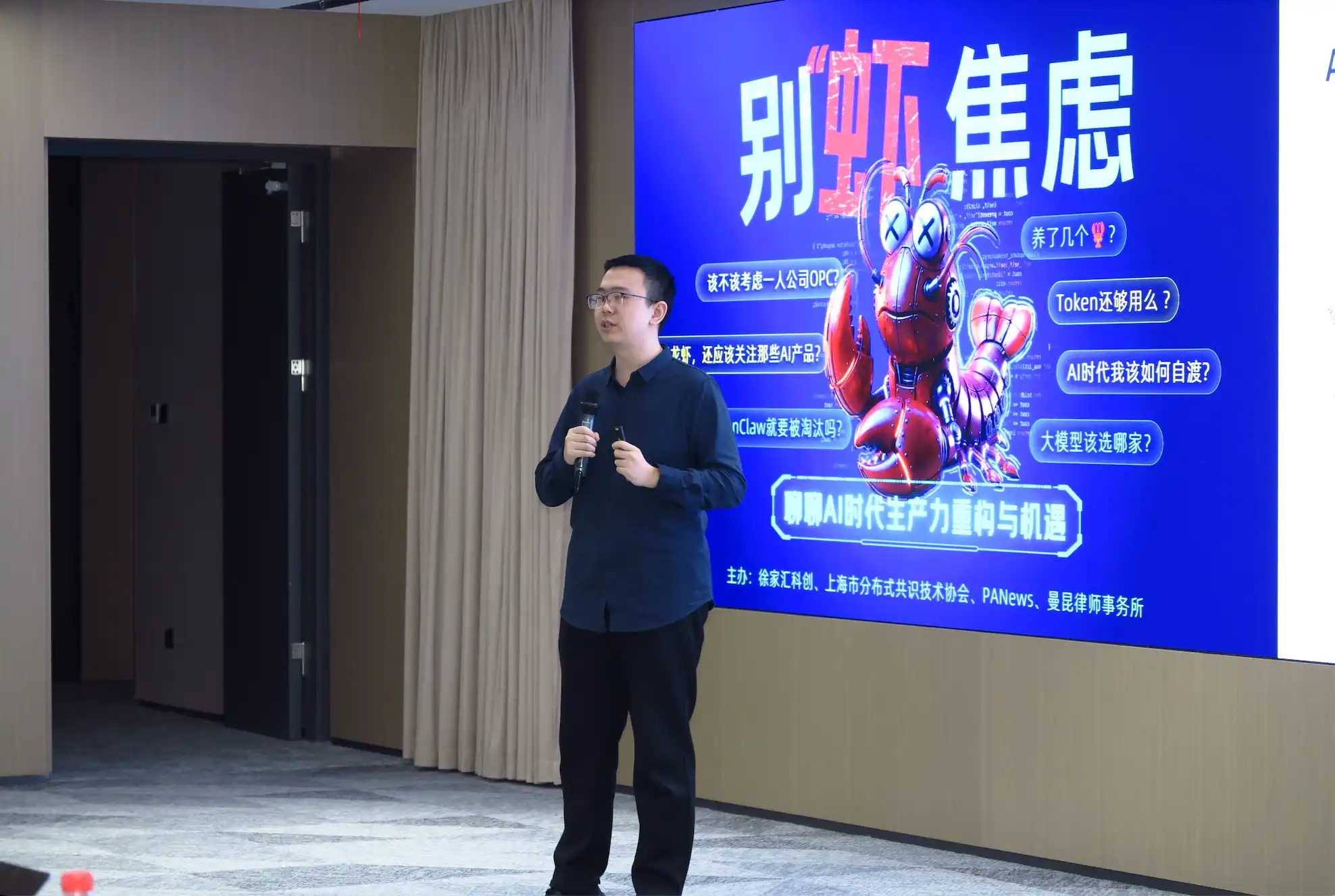
In a keynote speech titled "Embracing the Unpredictable AI Wave," Li Chenxing, Chief Architect of Conflux Tree Graph, stated that currently, giving more autonomy to AI rather than overly constraining it with limited human experience is an inevitable trend at this stage of technology. The "lack of consideration" exhibited by AI is essentially due to its difficulty in stably capturing and consistently remembering key contextual constraints in complex scenarios. From a technical structure perspective, AI primarily relies on parametric memory, contextual memory, and external memory, but these mechanisms still face challenges such as difficulty in updates, limited context windows, and insufficient call efficiency. Therefore, the future should focus on strengthening external memory call capabilities, exploring continuous learning and experience reuse mechanisms, and gradually accumulating experiential memory through vertical domain practices to enhance AI's decision-making completeness and reliability in real-world complex scenarios.
He also pointed out that the core progress of AI currently lies in the enhancement of autonomous analysis and reflection capabilities. With future improvements in memory capabilities, key bottlenecks are expected to be broken, profoundly impacting various industries. For example, the long-term potential of digital identity and digital payment systems has been constrained by development and user barriers, but AI has the potential to unlock this value by reducing development costs and acting as an agent to replace the user learning process. Overall, AI should not be seen as a threat to employment but as a key tool for boosting productivity and creating new opportunities. Individuals and industries should maintain an open mindset and actively explore paths for AI integration.
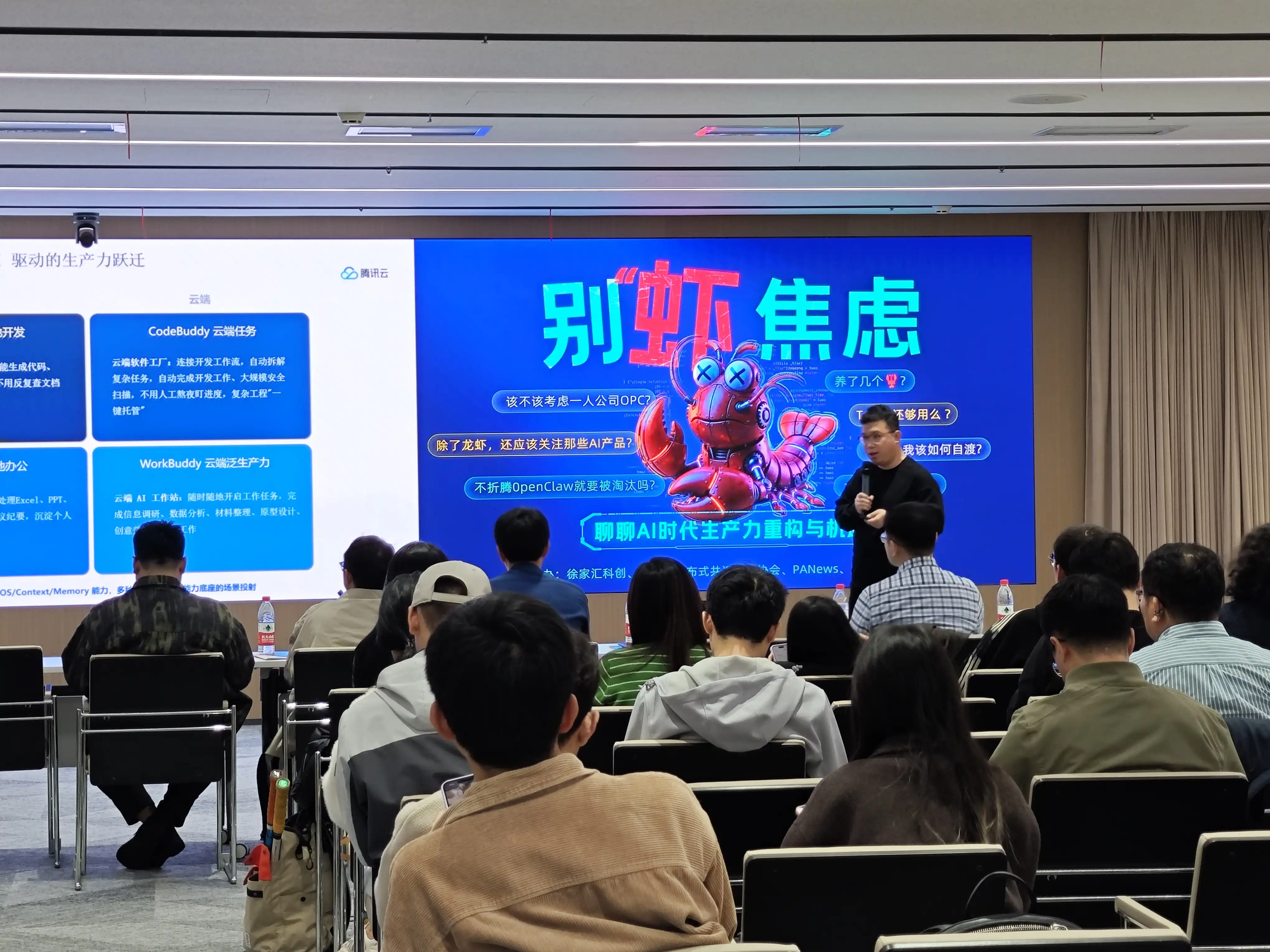
According to Feng Heqing, Product Architect of Tencent Cloud Workbuddy, with the significant improvement in large model capabilities, AI has evolved from early-stage basic辅助开发 like code completion to independently completing complex tasks. The core capabilities of custom Agents are reflected in end-to-end task support, multi-role collaboration, hierarchical memory systems, and intelligent task decomposition based on context. Additionally, multi-Agent collaboration enables data flow and parallel processing between tasks, while security measures include local data storage and manual confirmation for critical operations to ensure data security. In terms of applications, WorkBuddy already covers typical office scenarios such as resume screening, automated PPT generation, data analysis, and weekly report integration. It can also integrate with enterprise systems like Qiwei through enterprise-level integration capabilities to achieve unified task management. Its technical architecture emphasizes full-stack self-development, execution environment isolation, and enterprise-grade permission control, supporting both local and cloud deployments. In terms of business models, it can target enterprise R&D and high-frequency digital office users. Overall, WorkBuddy aims to enhance enterprise production efficiency through custom Agents and multi-task collaboration capabilities, and further strengthen its adaptability and implementation capabilities in complex enterprise scenarios by continuously optimizing task decomposition and ecosystem expansion.
Teddy, founder of Biteye and XHunt, shared insights on digital employee practices, large model applications and cost issues, technical configuration and security risks, and collaboration optimization. Regarding digital employee practices, to reduce model hallucinations and code error rates, it is necessary to introduce higher-level review Agents to conduct secondary checks on code generated by lower-level Agents, forming a mandatory code review process. Since current Agents still produce bugs in code writing, errors can be reduced by standardizing development processes, strengthening prompt design, and adding multi-round verification mechanisms. In operational scenarios, it is crucial to control posting frequency and ensure stability through backend API scheduling. In complex team collaboration environments, Discord is generally more suitable than Telegram for Agent coordination and task distribution, and special attention must be paid to Token consumption in resource management. Additionally, Agent systems still require human time for training, tuning, and behavior correction.
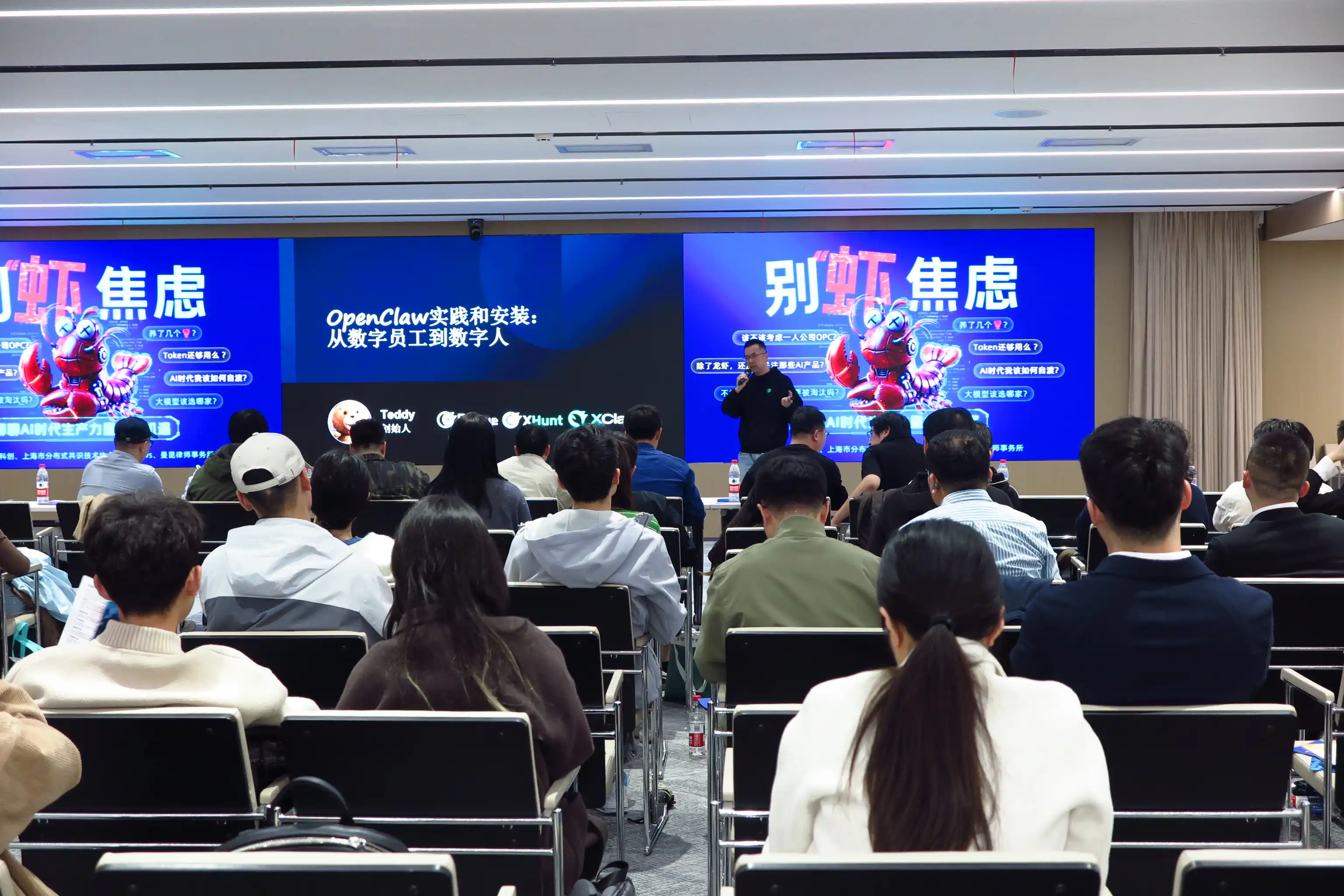
Regarding the installation and deployment of OpenClaw, Teddy suggested running it on idle computers or Mac Minis, which offers high autonomy and control. The code is fully open-source, emphasizing privacy protection capabilities and access to an international ecosystem, though the installation and configuration barriers are relatively high. During use, special attention must be paid to the risks of modifying model and channel configurations to avoid system abnormalities due to improper settings; tools like Grok and Gemini can assist in troubleshooting issues. On the security front, risks such as prompt injection attacks and malicious skill injection must be guarded against. Resource and cost aspects also require attention to Token consumption control to avoid high operational costs.
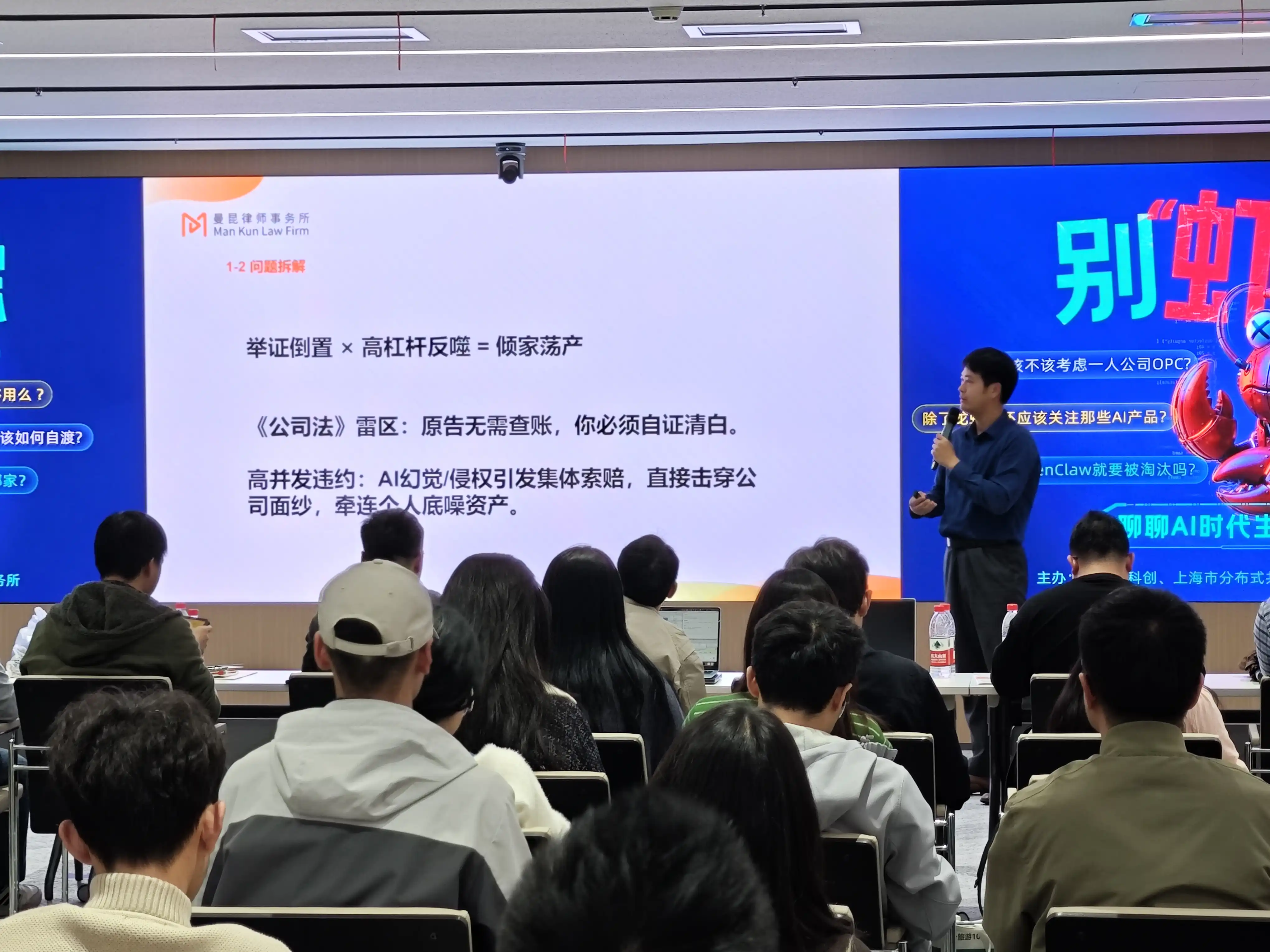
In a keynote speech, Zhao Xuan, Partner Lawyer at Mankun Law Firm, shared three major legal issues and solutions that entrepreneurs in the AI era need to focus on. The first is the organizational shell, specifically the "false isolation" created by One-Person Companies (OPCs), which表面上 form independent entities but实际上 struggle to truly isolate liability and risk. True physical and legal isolation is needed, including introducing partners in the structure, using dedicated corporate credit cards, and inserting AI disclaimers and liability caps into contracts. The second is the issue of core asset ownership: effort does not equal rights; one must prove their dominion and fully document the creation process with evidence preservation. The third is the systemic risk of "pulling the plug" due to platform hegemony, including god-like terms of service and technological lock-in. Core data should be separated from third-party services, alternative plans should be made in advance, and decentralized technologies should be introduced.
In a panel titled "From Frenzy to Sobriety: Real Needs and False Propositions of AI in the Eyes of VCs," several investors shared their views on the development stage, application boundaries, and investment logic of AI.

Cancer, Founding Partner of Shuidi Capital, believes that AI is still in its early stages and will take considerable time to truly reach a stage of mature user experience and be widely regarded as "meaningful." He pointed out that AI technology迭代极快 (iterates extremely fast), and relying solely on technological leadership is难以形成长期护城河 (difficult to form a long-term moat). Therefore, investment should focus more on foundational layer capabilities with irreplaceability, such as core resources like computing power. At the application level, he gave an example that tools like "Lobster" are not user-friendly for average programming users but might be more suitable in the future as encapsulated vertical applications like "family doctors," providing professional advice through real-time health data. He also believes that AI can replace information production tools like research reports on the enterprise side but cannot replace final decision-making roles, serving only as辅助决策工具 (decision-support tools).
Tang Yi, Founding Partner of Enlight Capital, stated that it is currently difficult to find明显的非共识机会 (obvious non-consensus opportunities) in the AI investment field, as the rapid iteration of large models may continuously "flatten" the advantages of application-layer companies. He is relatively optimistic about the combination of Web3 and AI, seeing them as representing advanced productivity in their respective fields. Regarding open-source tools like OpenClaw, he believes they essentially give large models "hands" and "feet," enhancing their ability to connect with external systems and social applications, but also bringing higher security and data risks, thus requiring complex configurations unsuitable for ordinary users. Currently, a more ideal path is to improve overall ease of use and experience.
Yinghao, Investor at First Rule Ventures, focuses on application opportunities from the perspective of users and products, including deep-water industry applications, AI creation, and software-hardware integration, evaluating project potential through user behavior and interaction data. He pointed out that not trying every emerging AI product personally does not mean missing key trends, as technological capabilities are often quickly modularized and integrated into existing product systems.
Compared to single products, he is more concerned with three long-term structural changes: First, whether AI interaction is forming a new memory carrier, allowing users' cognition and work to be沉淀 (precipitated) within a certain system. Second, whether this memory has the ability to migrate across products or will gradually become bound to a single product, creating high migration costs and experience lock-in. Third, whether new super entry points will emerge, becoming core hubs for AI interaction and traffic distribution.
Zhao Xuan, Partner Lawyer at Mankun Law Firm, primarily uses AI tools for data processing, retrieval, and analysis in his work and looks forward to the emergence of more integrated products that consolidate these capabilities. He also emphasized that in AI entrepreneurship, it is more important to avoid一次性重大失败 (one-time major failures). He advised companies to prioritize key legal designs such as data compliance, arbitration clauses, and disclaimer clauses early on to achieve risk isolation and liability protection when uncontrollable risks arise, thereby preventing single-point risks from causing overall company collapse. Additionally, he展望道 (looked ahead), stating that in the future, Agents will become the main economic execution entities, responsible for data acquisition, information purchasing, strategy execution, and even cross-system transactions, forming a machine-to-machine economic activity and payment system.
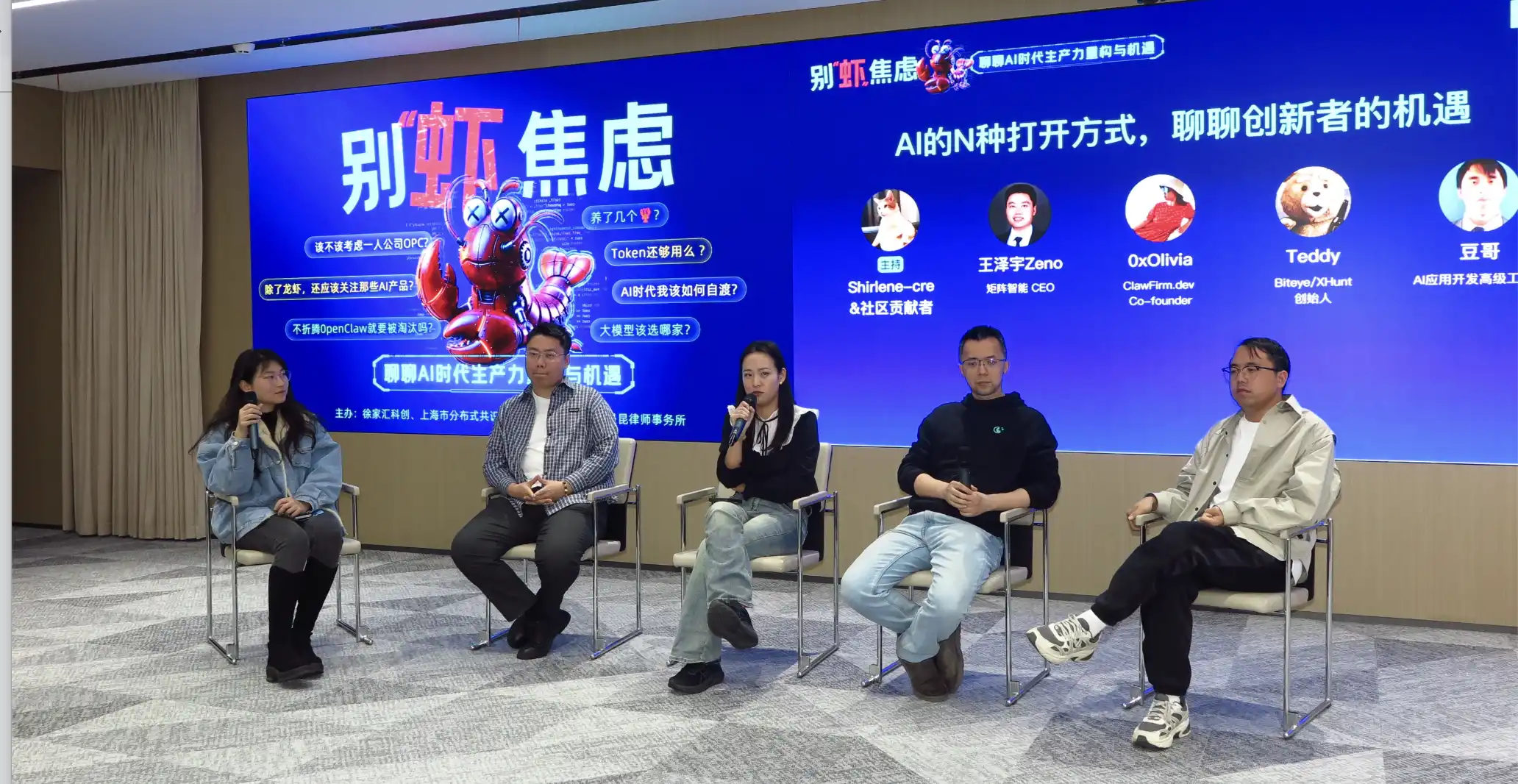
In a panel discussion titled "N Ways to Open AI: Talking About Innovators' Opportunities," several guests explored the changes brought by AI from different perspectives. Zeno, CEO of Matrix Intelligence, suggested that users can modify scripts or plugins themselves to integrate multiple devices, achieving multi-device memory synchronization and state consistency, ensuring information isn't lost and tasks aren't interrupted. A daily purification/review mechanism can also be added to maintain system stability. Compared to using off-the-shelf tools,深度定制 (deep customization) based on enterprise-level permissions or platform capabilities is more efficient, freer, and更容易做出符合个人习惯的工作流 (easier to create workflows that suit personal habits). Looking ahead, he believes AI will become a unified entry point; users will only need to interact through one AI hub to调用 (call upon) various tools and systems to complete all tasks. As usage increases, AI will continuously accumulate user memory, preferences, and workflows, forming a data and capability flywheel effect, becoming increasingly understanding of the user and more efficient. Under this trend, individuals configuring AI systems and paying subscription costs may achieve productivity improvements far exceeding traditional human labor, significantly widening the efficiency gap between people.
0xOlivia, Co-founder of ClawFirm.dev, disclosed that in practical AI use, issues like system instability and fragmented memory and automation capabilities still exist. Users need to constantly piece together various tools and scripts like building with LEGOs. For non-advanced users, adopting成熟的商业平台 (mature commercial platforms) combined with official applications and continuous iteration capabilities is often more stable and efficient than highly fragmented self-built systems. Introducing open-source components can further enhance data processing and content generation capabilities. She emphasized that the current main limitation of AI is not the model capability itself but the fact that engineering usage methods have not yet fully matched model capabilities, leaving huge room for optimization and implementation. In the future, as large model capabilities rapidly增强 (strengthen), AI application scenarios will gradually cover all aspects of work and life and continue to integrate with different product forms.
Teddy, founder of Biteye/XHunt, pointed out in discussing AI digital employees that APIs or automation interfaces can be used to integrate AI into internal systems, enabling it to undertake specific execution tasks like code generation, requirement implementation, and content processing, while humans focus on product design and需求定义 (requirement definition), thus retaining key decision-making power. This collaboration model is more stable and scalable, not only improving overall development efficiency but also significantly reducing error rates, making AI more like a schedulable, manageable outsourced team rather than a single tool. He also emphasized that any process-driven, highly repetitive work has the potential to be transformed or replaced by AI. Even if the initial effects are unstable, long-term optimization will continuously enhance productivity. In complex task and management decision-making areas, AI has also begun to show significant辅助能力 (assistive capabilities) and is渗透 (penetrating) into higher-order business scenarios.
Senior AI Application Development Engineer Brother Dou added that there is general consensus on the trend of AI outsourcing, automation, and tool-based collaboration. From an enterprise perspective, greater consideration needs to be given to security, permission management, employee collaboration mechanisms, and asset沉淀 (precipitation). Currently, the market has various AI development frameworks and tool ecosystems, each with its own focus on lightweight, low-code, high-integration, and security control aspects. Enterprises need to balance flexibility and controllability when choosing and design their architecture based on actual business scenarios. Truly understanding and implementing these AI systems cannot remain at the theoretical level; it requires actual investment and usage costs. He emphasized that AI is rapidly reshaping workflows and organizational structures. Whether individuals or enterprises, they must quickly adapt to this change,提升效率 (enhance efficiency) through continuous learning and tool application, otherwise they risk being left behind by the pace of technological iteration.