Farewell to Brute Force Computing: Reconstructing the Valuation Logic of AI for Science through HKUST's "GrainBot"

marsbit發佈於 2026-03-05更新於 2026-03-05

文章摘要

In 2026, Hong Kong's AI sector is rapidly transitioning from infrastructure development to deep application deployment. A key example is GrainBot, an AI tool developed by a team led by Prof. Guo Yike at HKUST, which represents a significant shift from general-purpose AI to specialized scientific discovery. GrainBot addresses critical challenges in materials science, particularly in analyzing microstructures like grain boundaries in materials used in semiconductors, batteries, and solar panels. Traditionally, this required manual, time-consuming, and error-prone analysis of microscopy images. GrainBot automates this process using computer vision and deep learning to accurately identify, segment grains, and quantify geometric features. It also correlates microstructural data with macro-material properties, as demonstrated in its application to perovskite solar cell research. This breakthrough highlights a broader trend in AI for Science (AI4S), where value is measured not by user metrics but by accelerated R&D cycles and novel discoveries. GrainBot’s potential to drastically shorten development timelines or uncover new materials with superior properties underscores a new valuation logic centered on industrial intellectual property. Hong Kong’s strength in combining domain expertise (e.g., materials science, chemistry) with AI capabilities creates a competitive advantage, positioning it as a hub for "autonomous labs" that integrate AI analysis with robotic experimentation. ...

In 2026, Hong Kong's artificial intelligence sector is experiencing a "high-density explosion." If last month's budget plan, which included a HK$3 billion computing power subsidy, was a shot in the arm for the industry, then the recent series of major academic breakthroughs and high-level industry dialogues indicate that Hong Kong's AI is rapidly transitioning from the "infrastructure development" phase to the deep waters of "application deployment."

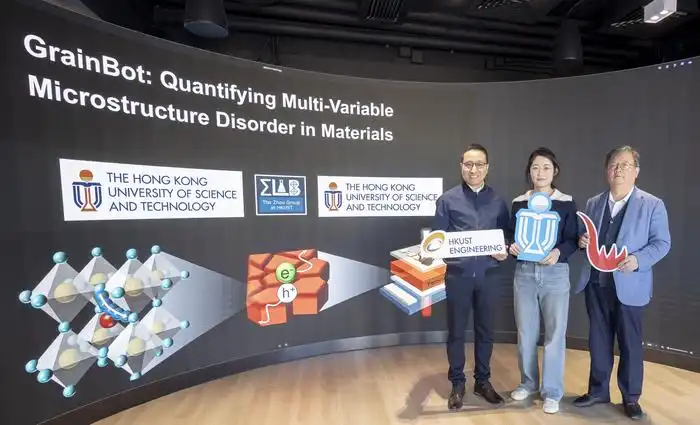
Just yesterday (March 3), while most market observers were still focused on the computing power inflation of NVIDIA's latest GPU or which parameter-heavy general-purpose large model OpenAI had released, a team led by Professor Guo Yike, the Provost of the Hong Kong University of Science and Technology (HKUST), dropped a bombshell in both academic and industrial circles—GrainBot.

This is not just another AI toolbox; it is a quintessential example of "AI for Science" (AI4S) moving from concept to industrial application. As a long-time observer of the quantitative technology and deep tech sectors, I believe the emergence of GrainBot signifies that the focus of Hong Kong's AI development is shifting from "general-purpose chatbots" to "vertical discoveries." For financial professionals, understanding the logic behind GrainBot is key to identifying the alpha in hard tech investments over the next five years.
(Image source: analyticalscience.wiley.com)

To understand the value of GrainBot, we must first understand the "pain points" of materials science.

In the upstream of high-end manufacturing, such as semiconductors, new energy batteries, and photovoltaic panels, material performance often determines the success or failure of a product. And material performance—whether it's conductivity, strength, or corrosion resistance—largely depends on its microstructure, i.e., the size, shape, and distribution of "grains." For a long time, materials scientists have been like artisans with magnifying glasses. They use scanning electron microscopes (SEM) or atomic force microscopes (AFM) to capture thousands of images, then rely on PhD students or researchers to spend hundreds of hours manually identifying, tracing, and annotating the boundaries of each grain. This is not only highly inefficient but also fraught with human subjectivity and error.

The emergence of GrainBot is essentially equipping the microscope with an "L4-level autonomous driving brain."

According to the latest research published in Cell Press's flagship journal "Matter," GrainBot uses advanced computer vision (CV) and deep learning algorithms to automatically perform image segmentation, feature extraction, and quantitative analysis. It no longer requires human intervention to accurately identify grain boundaries and calculate complex geometric parameters such as surface area, groove geometry, and convex-concave volume.

More importantly, GrainBot is not just a "counter." It has the capability for correlation analysis, directly linking these microstructural data to the macro-performance of materials. In validation tests on metal halide perovskite films—a key material for next-generation high-efficiency solar cells—GrainBot successfully built a database containing thousands of annotated grains, revealing previously unquantifiable structure-performance relationships. A statement by Professor Guo Yike at the launch event was particularly forward-looking: "As scientific workflows become more automated and data-intensive, such toolkits will become the key engine for future 'autonomous laboratories.'"

For financial capital, the emergence of achievements like GrainBot means that we need to readjust the valuation models for AI projects. Over the past two years (2024-2025), market enthusiasm for AI has been primarily focused on "general-purpose large models" and "application-layer SaaS." The valuation logic mainly revolved around MAU (monthly active users), ARR (annual recurring revenue), and Token consumption. However, as the marginal effects of general models diminish, capital is beginning to look for new growth points. AI for Science (AI4S) offers a completely different logic: its value lies not in "how many people it serves" but in "how much it shortens R&D cycles" and "how many new materials it discovers."

Taking GrainBot as an example, if it can reduce the R&D cycle for perovskite solar cells from 3 years to 6 months, or help a company like CATL (Contemporary Amperex Technology Co. Limited) discover a new cathode material that increases energy density by 10%, the economic value generated would be exponential.

This is an "industrial IP" logic. The future AI unicorns may no longer be companies developing chatbots, but rather "digital laboratories" that master the core data and algorithms of specific vertical fields (such as materials, biomedicine, and chemical engineering) and can mass-produce patented technologies.

Under this logic, the advantages of Hong Kong's universities are greatly amplified. Unlike Silicon Valley's software engineer-dominated ecosystem, Hong Kong boasts an extremely high density of experts in materials science, chemistry, and biomedicine. This breakthrough by HKUST is the result of deep collaboration between computer science (Professor Guo Yike's team) and chemical engineering (Professor Zhou Yuanyuan's team). This combination of "AI + Domain Knowledge" forms a moat that is difficult for pure internet companies to replicate.

GrainBot is not an isolated case. If we zoom out, we can see that Hong Kong is building a new paradigm for scientific research based on "autonomous laboratories." Autonomous laboratories refer to the use of robotics and AI to achieve full automation of experimental design, execution, data analysis, and iterative optimization. In this closed loop, AI (like GrainBot) is responsible for "seeing" and "thinking," while robots are responsible for "doing." This trend has profound implications for the transformation of Hong Kong's economic structure. For a long time, Hong Kong has been seen as a financial center and trading port, but often considered "lacking" in hard tech R&D. However, with the advent of the AI4S era, the form of R&D is changing—it is becoming more digital and intelligent. Hong Kong does not need vast land for factories like the mainland; it only needs to leverage its computing power infrastructure and top-tier research minds to become a global exporter of "various new material formulations."

Imagine the future Hong Kong Science Park, which might not only have office buildings but also hundreds of "unmanned laboratories" running 7x24. They continuously consume data, analyze results through tools like GrainBot, automatically adjust experimental parameters, and ultimately output high-value patentable formulations. These formulations can then be licensed to manufacturing bases in the Greater Bay Area for mass production. This is version 2.0 of "Hong Kong R&D + Bay Area Manufacturing."

Of course, as rational observers, we cannot ignore the problems and hidden concerns.

The biggest bottleneck for AI for Science remains data. Unlike the massive amounts of internet text used to train ChatGPT, high-quality scientific data (such as perfectly annotated microscope images) is extremely scarce. The success of GrainBot was possible because the team invested significant effort in building an initial high-quality dataset. Furthermore, the "silo effect" of scientific data is more severe than on the internet. The data of every materials company and every laboratory is a core secret. Establishing a secure data sharing mechanism (perhaps incorporating Web3 or privacy computing technologies) to allow AI models to "learn from diverse sources" is key to the next step of commercial deployment.

In the spring of 2026, standing on the HKUST campus overlooking Clear Water Bay, we see not just the scenery but also the generational shift in scientific research paradigms.

The release of GrainBot symbolizes the perfect handshake between the "hacker spirit" (rapid iteration, algorithm-driven) and the "artisan spirit" (meticulous observation, material refinement). For investors, the focus should no longer be solely on who owns the most NVIDIA GPUs, but rather on who can use AI to solve the most specific real-world physical problems.

On this new track, Hong Kong has made a strong start. GrainBot may be just the beginning. Beyond the field of view of the microscope, a trillion-dollar market for AI-driven material discovery is slowly unfolding.


相關問答

QWhat is GrainBot and what problem does it solve in materials science?

AGrainBot is an AI-powered toolbox developed by a team led by Prof. Guo Yike at HKUST. It uses computer vision and deep learning to automate the analysis of microscopic structures (grains) in materials, such as identifying grain boundaries and calculating geometric parameters. It addresses the inefficiency and human error in manually analyzing materials' microstructures, which is critical for determining properties like conductivity and strength in semiconductors, batteries, and solar cells.

QHow does GrainBot represent a shift in AI valuation logic for investors?

AGrainBot exemplifies a shift from valuing AI based on user metrics (e.g., MAU, token usage) to valuing it for its ability to accelerate R&D and discover new materials. Its worth is measured by how much it shortens development cycles (e.g., reducing solar battery R&D from 3 years to 6 months) or enables breakthroughs (e.g., finding higher-energy-density materials), creating exponential economic value through industrial IP and patents.

QWhat advantages does Hong Kong have in the AI for Science (AI4S) domain, as highlighted in the article?

AHong Kong's strengths in AI4S include a high density of domain experts in fields like materials science, chemistry, and biomedicine, coupled with strong computational infrastructure. The collaboration between computer science (Prof. Guo's team) and chemical engineering (Prof. Zhou Yuanyuan's team) at HKUST demonstrates a 'AI + Domain Knowledge' model that is hard for pure software companies to replicate, positioning Hong Kong as a hub for digital R&D and patent output.

QWhat is the concept of an 'autonomous lab' mentioned in the article, and how does GrainBot fit into it?

AAn 'autonomous lab' refers to a fully automated research environment where AI (like GrainBot) handles data analysis and decision-making ('seeing' and 'thinking'), while robots perform experiments ('doing'). GrainBot serves as a key engine in this paradigm by providing automated, precise analysis of scientific data, enabling continuous, 24/7 optimization of experiments and output of high-value patents, aligning with Hong Kong's vision of 'R&D + manufacturing' in the Greater Bay Area.

QWhat are the main challenges for AI for Science, as discussed in the context of GrainBot?

AThe primary challenge is data scarcity and silos. High-quality, annotated scientific data (e.g., perfect microscope images) is rare and costly to produce, and data is often held as proprietary by companies and labs. GrainBot's success relied on building an initial high-quality dataset. Overcoming this requires secure data-sharing mechanisms (e.g., using Web3 or privacy computing) to allow AI models to learn from diverse sources for broader commercialization.

你可能也喜歡

a16z:区块链为 AI 代理基础设施提供帮助的 5 种方式

人工智能代理正迅速从“副驾驶”转变为经济参与者,但其发展速度超过了现有基础设施的支持能力。当前代理缺乏标准化的方法证明身份、权限和跨环境报酬机制,身份无法跨平台共享,支付方式尚未实现可编程,协调工作也各自独立。 区块链技术为代理基础设施提供了关键支持,主要体现在五个方面: 1. **非人类身份**:代理经济当前的瓶颈是身份而非智能。区块链提供可移植的身份层、可编程钱包和可验证证明,帮助代理建立跨平台的可信身份(KYA,了解你的代理),解决权限证明和跨平台独立运作问题。 2. **AI运行系统治理**:当代理操作关键系统时,治理成为核心问题。区块链通过链上记录和自动执行决策,确保代理行为符合用户利益,防止模型供应商单方面控制结果,实现真正的去中心化治理。 3. **支付系统空白填补**:代理开始进行无头交易(如数据购买、API调用),稳定币成为默认支付方式。加密支付支持无许可编程和低风险承保,推动代理对代理的商业发展,如x402和MPP协议已处理大量代理驱动支付。 4. **重新定价信任**:当智能成本趋近于零时,验证成为稀缺资源。区块链提供可审计的历史记录和加密收据,确保代理行为的透明度和可追溯性,从而降低规模化风险,将信任硬编码到系统架构中。 5. **保留用户控制权**:随着用户将更多任务委托给代理,加密技术通过智能合约和基于意图的架构(如NEAR Intents)设定代理的行为边界,确保用户保持最终控制权,减少盲目信任。 人工智能降低了规模化门槛,但信任建立仍需依赖加密货币和区块链技术,以确保透明度、问责制和用户控制。互联网基础设施的设计需适应非人类行为者,以实现真正的代理经济。

marsbit11 分鐘前

a16z:区块链为 AI 代理基础设施提供帮助的 5 种方式

marsbit11 分鐘前

Solana会很快超越以太坊吗?SOL迈出全面主导的第一步

索拉纳(Solana)长期以来一直是以太坊(Ethereum)在各个领域最接近的竞争对手,尽管其价格表现并不总是能与之匹敌。从去中心化金融(DeFi)到用户活动,SOL 一直落后于以太坊。但如今,这场竞争已从潜在讨论转变为可量化的实际竞赛,尤其是在2026年,双方在网络处理交易数量等实际数据上的对比更加明显。 上个月,SOL 处理了近90亿笔交易,而以太坊仅处理了6900万笔。这一差距不仅体现在数字上,更显示出 Solana 作为一个高吞吐量网络,在实时使用方面的定位优势。其架构支持每秒处理数千笔低成本交易,避免了以太坊曾面临的瓶颈问题。尽管以太坊已通过升级提高了处理能力,但仍未足以颠覆 SOL 的地位。 Solana 已成为机构寻求高速网络的首选,例如支付巨头 Visa 已与 Solana 达成稳定币结算合作,Western Union 也计划在2026年上半年于 SOL 上推出其稳定币 USDPT,将其每年1500亿美元的汇款量带入该网络。此外,SOL 在真实世界资产(RWA)持有者数量上首次超过了以太坊。 然而,真正的“翻转”不仅涉及孤立指标,还需考量资本流入、开发者活动和对网络的信心。Solana 市值较小,意味着更大的上涨空间,但在技术之外,其快速增长部分依赖于高频活动(如网络上的迷因币)。以太坊则通过 Layer-2 扩展策略分散交易负载,虽减少了主网活动,但强化了整体生态系统。目前,Solana 是否会完全超越以太坊尚无明确答案。

bitcoinist32 分鐘前

Solana会很快超越以太坊吗?SOL迈出全面主导的第一步

bitcoinist32 分鐘前

交易

現貨
合約

熱門文章

什麼是 $S$

理解 SPERO:全面概述 SPERO 簡介 隨著創新領域的不斷演變,web3 技術和加密貨幣項目的出現在塑造數字未來中扮演著關鍵角色。在這個動態領域中,SPERO(標記為 SPERO,$$s$)是一個引起關注的項目。本文旨在收集並呈現有關 SPERO 的詳細信息,以幫助愛好者和投資者理解其基礎、目標和在 web3 和加密領域內的創新。 SPERO,$$s$ 是什麼? SPERO,$$s$ 是加密空間中的一個獨特項目,旨在利用去中心化和區塊鏈技術的原則,創建一個促進參與、實用性和金融包容性的生態系統。該項目旨在以新的方式促進點對點互動,為用戶提供創新的金融解決方案和服務。 SPERO,$$s$ 的核心目標是通過提供增強用戶體驗的工具和平台來賦能個人。這包括使交易方式更加靈活、促進社區驅動的倡議,以及通過去中心化應用程序(dApps)創造金融機會的途徑。SPERO,$$s$ 的基本願景圍繞包容性展開,旨在彌合傳統金融中的差距,同時利用區塊鏈技術的優勢。 誰是 SPERO,$$s$ 的創建者? SPERO,$$s$ 的創建者身份仍然有些模糊,因為公開可用的資源對其創始人提供的詳細背景信息有限。這種缺乏透明度可能源於該項目對去中心化的承諾——這是一種許多 web3 項目所共享的精神,優先考慮集體貢獻而非個人認可。 通過將討論重心放在社區及其共同目標上,SPERO,$$s$ 體現了賦能的本質,而不特別突出某些個體。因此,理解 SPERO 的精神和使命比識別單一創建者更為重要。 誰是 SPERO,$$s$ 的投資者? SPERO,$$s$ 得到了來自風險投資家到天使投資者的多樣化投資者的支持,他們致力於促進加密領域的創新。這些投資者的關注點通常與 SPERO 的使命一致——優先考慮那些承諾社會技術進步、金融包容性和去中心化治理的項目。 這些投資者通常對不僅提供創新產品,還對區塊鏈社區及其生態系統做出積極貢獻的項目感興趣。這些投資者的支持強化了 SPERO,$$s$ 作為快速發展的加密項目領域中的一個重要競爭者。 SPERO,$$s$ 如何運作? SPERO,$$s$ 採用多面向的框架,使其與傳統的加密貨幣項目區別開來。以下是一些突顯其獨特性和創新的關鍵特徵: 去中心化治理:SPERO,$$s$ 整合了去中心化治理模型,賦予用戶積極參與決策過程的權力,關於項目的未來。這種方法促進了社區成員之間的擁有感和責任感。 代幣實用性:SPERO,$$s$ 使用其自己的加密貨幣代幣,旨在在生態系統內部提供多種功能。這些代幣使交易、獎勵和平台上提供的服務得以促進,增強了整體參與度和實用性。 分層架構:SPERO,$$s$ 的技術架構支持模塊化和可擴展性,允許在項目發展過程中無縫整合額外的功能和應用。這種適應性對於在不斷變化的加密環境中保持相關性至關重要。 社區參與:該項目強調社區驅動的倡議,採用激勵合作和反饋的機制。通過培養強大的社區,SPERO,$$s$ 能夠更好地滿足用戶需求並適應市場趨勢。 專注於包容性:通過提供低交易費用和用戶友好的界面,SPERO,$$s$ 旨在吸引多樣化的用戶群體,包括那些以前可能未曾參與加密領域的個體。這種對包容性的承諾與其通過可及性賦能的總體使命相一致。 SPERO,$$s$ 的時間線 理解一個項目的歷史提供了對其發展軌跡和里程碑的關鍵見解。以下是建議的時間線,映射 SPERO,$$s$ 演變中的重要事件: 概念化和構思階段:形成 SPERO,$$s$ 基礎的初步想法被提出,與區塊鏈行業內的去中心化和社區聚焦原則密切相關。 項目白皮書的發布:在概念階段之後,發布了一份全面的白皮書,詳細說明了 SPERO,$$s$ 的願景、目標和技術基礎設施,以吸引社區的興趣和反饋。 社區建設和早期參與:積極進行外展工作,建立早期採用者和潛在投資者的社區,促進圍繞項目目標的討論並獲得支持。 代幣生成事件:SPERO,$$s$ 進行了一次代幣生成事件(TGE),向早期支持者分發其原生代幣,並在生態系統內建立初步流動性。 首次 dApp 上線:與 SPERO,$$s$ 相關的第一個去中心化應用程序(dApp)上線,允許用戶參與平台的核心功能。 持續發展和夥伴關係:對項目產品的持續更新和增強,包括與區塊鏈領域其他參與者的戰略夥伴關係,使 SPERO,$$s$ 成為加密市場中一個具有競爭力和不斷演變的參與者。 結論 SPERO,$$s$ 是 web3 和加密貨幣潛力的見證,能夠徹底改變金融系統並賦能個人。憑藉對去中心化治理、社區參與和創新設計功能的承諾,它為更具包容性的金融環境鋪平了道路。 與任何在快速發展的加密領域中的投資一樣,潛在的投資者和用戶都被鼓勵進行徹底研究,並對 SPERO,$$s$ 的持續發展進行深思熟慮的參與。該項目展示了加密行業的創新精神,邀請人們進一步探索其無數可能性。儘管 SPERO,$$s$ 的旅程仍在展開,但其基礎原則確實可能影響我們在互聯網數字生態系統中如何與技術、金融和彼此互動的未來。

85 人學過發佈於 2024.12.17更新於 2024.12.17

什麼是 $S$

什麼是 AGENT S

Agent S:Web3中自主互動的未來 介紹 在不斷演變的Web3和加密貨幣領域,創新不斷重新定義個人如何與數字平台互動。Agent S是一個開創性的項目,承諾通過其開放的代理框架徹底改變人機互動。Agent S旨在簡化複雜任務,為人工智能(AI)提供變革性的應用,鋪平自主互動的道路。本詳細探索將深入研究該項目的複雜性、其獨特特徵以及對加密貨幣領域的影響。 什麼是Agent S? Agent S是一個突破性的開放代理框架,專門設計用來解決計算機任務自動化中的三個基本挑戰: 獲取特定領域知識:該框架智能地從各種外部知識來源和內部經驗中學習。這種雙重方法使其能夠建立豐富的特定領域知識庫,提升其在任務執行中的表現。 長期任務規劃:Agent S採用經驗增強的分層規劃,這是一種戰略方法,可以有效地分解和執行複雜任務。此特徵顯著提升了其高效和有效地管理多個子任務的能力。 處理動態、不均勻的界面:該項目引入了代理-計算機界面(ACI),這是一種創新的解決方案,增強了代理和用戶之間的互動。利用多模態大型語言模型(MLLMs),Agent S能夠無縫導航和操作各種圖形用戶界面。 通過這些開創性特徵,Agent S提供了一個強大的框架,解決了自動化人機互動中涉及的複雜性,為AI及其他領域的無數應用奠定了基礎。 誰是Agent S的創建者? 儘管Agent S的概念根本上是創新的,但有關其創建者的具體信息仍然難以捉摸。創建者目前尚不清楚,這突顯了該項目的初期階段或戰略選擇將創始成員保密。無論是否匿名,重點仍然在於框架的能力和潛力。 誰是Agent S的投資者? 由於Agent S在加密生態系統中相對較新,關於其投資者和財務支持者的詳細信息並未明確記錄。缺乏對支持該項目的投資基礎或組織的公開見解,引發了對其資金結構和發展路線圖的質疑。了解其支持背景對於評估該項目的可持續性和潛在市場影響至關重要。 Agent S如何運作? Agent S的核心是尖端技術,使其能夠在多種環境中有效運作。其運營模型圍繞幾個關鍵特徵構建: 類人計算機互動:該框架提供先進的AI規劃,力求使與計算機的互動更加直觀。通過模仿人類在任務執行中的行為,承諾提升用戶體驗。 敘事記憶:用於利用高級經驗,Agent S利用敘事記憶來跟蹤任務歷史,從而增強其決策過程。 情節記憶:此特徵為用戶提供逐步指導,使框架能夠在任務展開時提供上下文支持。 支持OpenACI:Agent S能夠在本地運行,使用戶能夠控制其互動和工作流程,與Web3的去中心化理念相一致。 與外部API的輕鬆集成:其多功能性和與各種AI平台的兼容性確保了Agent S能夠無縫融入現有技術生態系統,成為開發者和組織的理想選擇。 這些功能共同促成了Agent S在加密領域的獨特地位,因為它以最小的人類干預自動化複雜的多步任務。隨著項目的發展,其在Web3中的潛在應用可能重新定義數字互動的展開方式。 Agent S的時間線 Agent S的發展和里程碑可以用一個時間線來概括,突顯其重要事件: 2024年9月27日:Agent S的概念在一篇名為《一個像人類一樣使用計算機的開放代理框架》的綜合研究論文中推出,展示了該項目的基礎工作。 2024年10月10日:該研究論文在arXiv上公開,提供了對框架及其基於OSWorld基準的性能評估的深入探索。 2024年10月12日:發布了一個視頻演示,提供了對Agent S能力和特徵的視覺洞察,進一步吸引潛在用戶和投資者。 這些時間線上的標記不僅展示了Agent S的進展,還表明了其對透明度和社區參與的承諾。 有關Agent S的要點 隨著Agent S框架的持續演變,幾個關鍵特徵脫穎而出,強調其創新性和潛力: 創新框架:旨在提供類似人類互動的直觀計算機使用,Agent S為任務自動化帶來了新穎的方法。 自主互動:通過GUI自主與計算機互動的能力標誌著向更智能和高效的計算解決方案邁進了一步。 複雜任務自動化:憑藉其強大的方法論,能夠自動化複雜的多步任務,使過程更快且更少出錯。 持續改進:學習機制使Agent S能夠從過去的經驗中改進,不斷提升其性能和效率。 多功能性:其在OSWorld和WindowsAgentArena等不同操作環境中的適應性確保了它能夠服務於廣泛的應用。 隨著Agent S在Web3和加密領域中的定位,其增強互動能力和自動化過程的潛力標誌著AI技術的一次重大進步。通過其創新框架,Agent S展現了數字互動的未來,為各行各業的用戶承諾提供更無縫和高效的體驗。 結論 Agent S代表了AI與Web3結合的一次大膽飛躍,具有重新定義我們與技術互動方式的能力。儘管仍處於早期階段,但其應用的可能性廣泛且引人入勝。通過其全面的框架解決關鍵挑戰,Agent S旨在將自主互動帶到數字體驗的最前沿。隨著我們深入加密貨幣和去中心化的領域,像Agent S這樣的項目無疑將在塑造技術和人機協作的未來中發揮關鍵作用。

656 人學過發佈於 2025.01.14更新於 2025.01.14

什麼是 AGENT S

如何購買S

歡迎來到HTX.com!在這裡,購買Sonic (S)變得簡單而便捷。跟隨我們的逐步指南,放心開始您的加密貨幣之旅。第一步:創建您的HTX帳戶使用您的 Email、手機號碼在HTX註冊一個免費帳戶。體驗無憂的註冊過程並解鎖所有平台功能。立即註冊第二步:前往買幣頁面,選擇您的支付方式信用卡/金融卡購買:使用您的Visa或Mastercard即時購買Sonic (S)。餘額購買:使用您HTX帳戶餘額中的資金進行無縫交易。第三方購買:探索諸如Google Pay或Apple Pay等流行支付方式以增加便利性。C2C購買:在HTX平台上直接與其他用戶交易。HTX 場外交易 (OTC) 購買:為大量交易者提供個性化服務和競爭性匯率。第三步:存儲您的Sonic (S)購買Sonic (S)後,將其存儲在您的HTX帳戶中。您也可以透過區塊鏈轉帳將其發送到其他地址或者用於交易其他加密貨幣。第四步:交易Sonic (S)在HTX的現貨市場輕鬆交易Sonic (S)。前往您的帳戶,選擇交易對,執行交易,並即時監控。HTX為初學者和經驗豐富的交易者提供了友好的用戶體驗。

1.4k 人學過發佈於 2025.01.15更新於 2025.03.21

如何購買S

相關討論

歡迎來到 HTX 社群。在這裡,您可以了解最新的平台發展動態並獲得專業的市場意見。 以下是用戶對 S (S)幣價的意見。

活动图片










