On August 19, Moderna and Merck announced the Phase 3 topline results for the personalized neoantigen therapy intismeran autogene (referred to as INT) in combination with Keytruda for the treatment of high-risk melanoma.
INTerpath-001 enrolled a total of 1,137 patients with stage IIB to IV cutaneous melanoma who had completed surgical resection and had not previously received systemic treatment. At the first interim analysis, the trial simultaneously met its primary endpoint of Recurrence-Free Survival (RFS) and the key secondary endpoint of Distant Metastasis-Free Survival (DMFS). Overall Survival (OS) data is not yet mature, and the trial will continue.
The company has so far only confirmed that the results are statistically significant and clinically meaningful, without disclosing specific hazard ratios, confidence intervals, patient subgroups, and full safety data. In other words, the market has confirmed the trial's success but does not yet know exactly how strong the efficacy is.
Following the announcement, Moderna's stock closed up about 177% to $174.38, with its market capitalization increasing by approximately $45 billion in a single day; Merck's stock rose about 13% to $152.20, with its market cap increasing by about $50 billion. The market debate quickly shifted from "Will the trial succeed?" to "Can such a scale of gains be justified by fundamentals?"
Clinical Breakthrough is Real, But Insufficient to Explain the 177% Surge
Bernstein believes that INTerpath-001 meeting both the RFS and DMFS endpoints at the first interim analysis suggests the efficacy is likely quite robust.
Interim analyses typically need to cross a higher statistical threshold. Based on this, the report speculates that the Phase 3 trial's RFS hazard ratio could be in the range of 0.50 to 0.65, and the DMFS hazard ratio might be close to 0.40, roughly consistent with previous Phase 2 data.
A hazard ratio below 1 means the relative risk of recurrence, distant metastasis, or death events is lower in the combination therapy group compared to the Keytruda monotherapy group. For example, a hazard ratio of 0.50 roughly represents an approximate 50% reduction in the relative risk of the relevant event, but does not equate to half of the patients being cured.
The above ranges are merely Bernstein's speculation based on statistical thresholds and past data, not the Phase 3 results announced by the companies. Specific efficacy, safety, and overall survival trends still await complete data.
However, the significance of this trial extends beyond melanoma. It is Moderna's first pivotal trial success outside of respiratory vaccines and the first personalized neoantigen regimen proven to further improve Keytruda's efficacy in a Phase 3 study.
This provides critical clinical evidence for expanding mRNA from infectious disease vaccines to cancer treatment and marks the starting point for the market's revaluation of Moderna's platform value.
The Market is Trading on Platform Revaluation and Short Covering
Clinical results can explain a stock price increase but are insufficient to explain its magnitude.
Bernstein believes that even with optimistic success expectations for all of INT's later-stage projects, it is difficult to justify Moderna's approximately 177% single-day surge. This rally is primarily driven by the convergence of three forces:
Clinical success reduces the residual risk for the melanoma project;
Investors begin pricing in the platform potential of mRNA expansion to more cancer types;
High short interest triggers short covering, amplifying short-term buying pressure.
Prior to the results announcement, approximately 14% to 15% of Moderna's float was sold short. After the clinical results exceeded pessimistic expectations, short sellers were forced to buy to cover their positions, and previously underweight investors also started chasing the rally. Moderna's trading volume that day approached 200 million shares, roughly equivalent to half of the company's total outstanding shares.
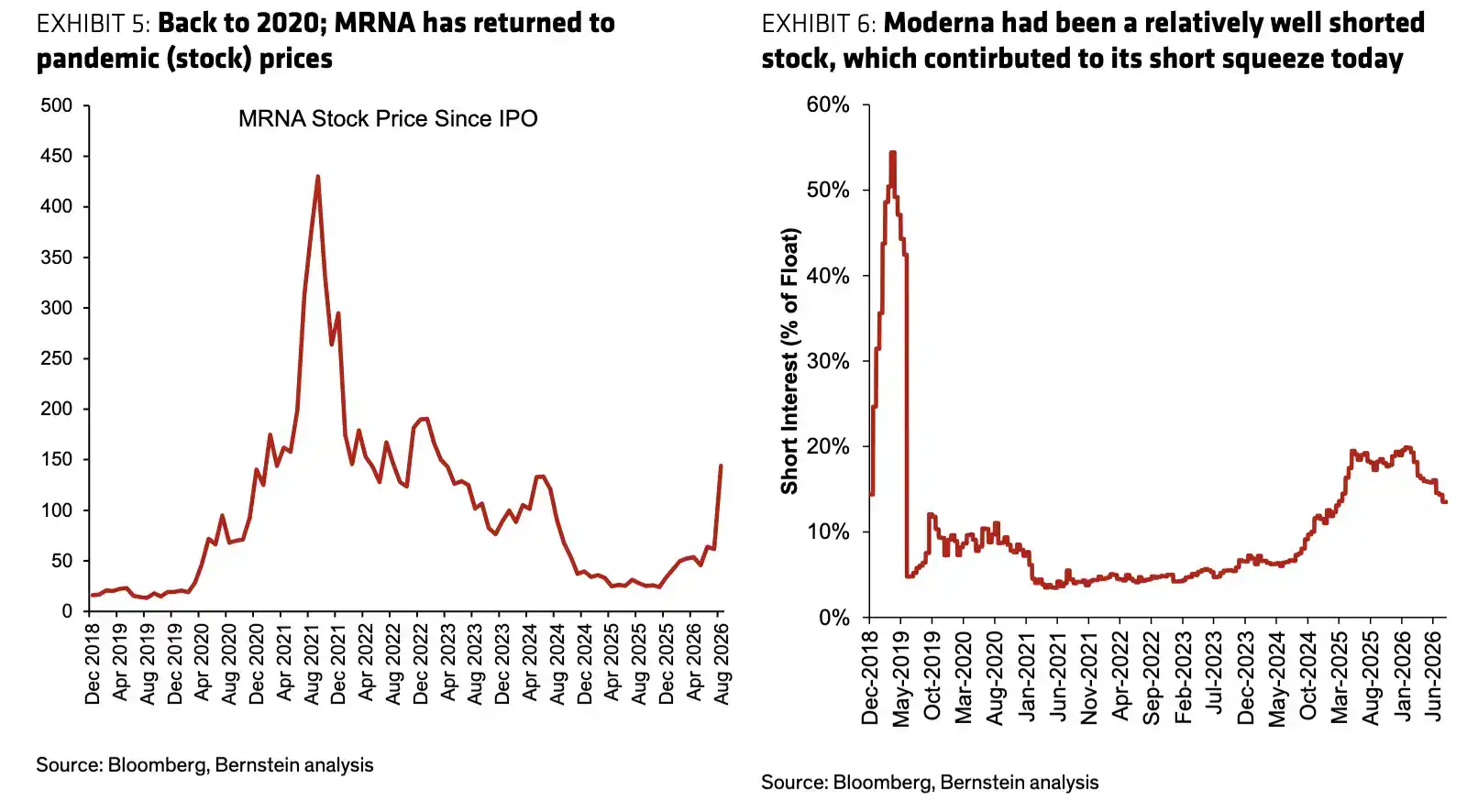
MRNA stock price chart (left) and short interest chart (right). MRNA's stock price surged on August 19, 2026, returning to pre-pandemic levels, while previously about 14-15% of its float was shorted, creating conditions for a short squeeze. Clinical data triggered the rise, but short covering further amplified the gains.
The news tag "cancer vaccine success" further amplified the spread effect. Compared to "personalized neoantigen therapy meets Phase 3 endpoints," this phrasing more easily leads the market to envision a large platform covering multiple cancer types.
Therefore, clinical data was the trigger for the rise, while platform narrative, short covering, and news effects amplified the gains. The amount of stock price increase does not mean the market has already confirmed that INT can generate equivalent levels of revenue and profit.
Melanoma is Just the Starting Point; Platform Replication Remains to Be Proven
Moderna and Merck currently have four Phase 3 studies and five Phase 2 studies around INT, covering melanoma, non-small cell lung cancer (NSCLC), renal cell carcinoma, and bladder cancer, and are beginning to enter unresectable or metastatic tumors.
Bernstein estimates that INTerpath-001 corresponds to a U.S. potential patient population of approximately 13,000 to 19,000 people, representing about 30% of the accessible patient population for the current Phase 3 and potential registration-enabling Phase 2 projects, and about 17% of all Phase 2 and Phase 3 projects.
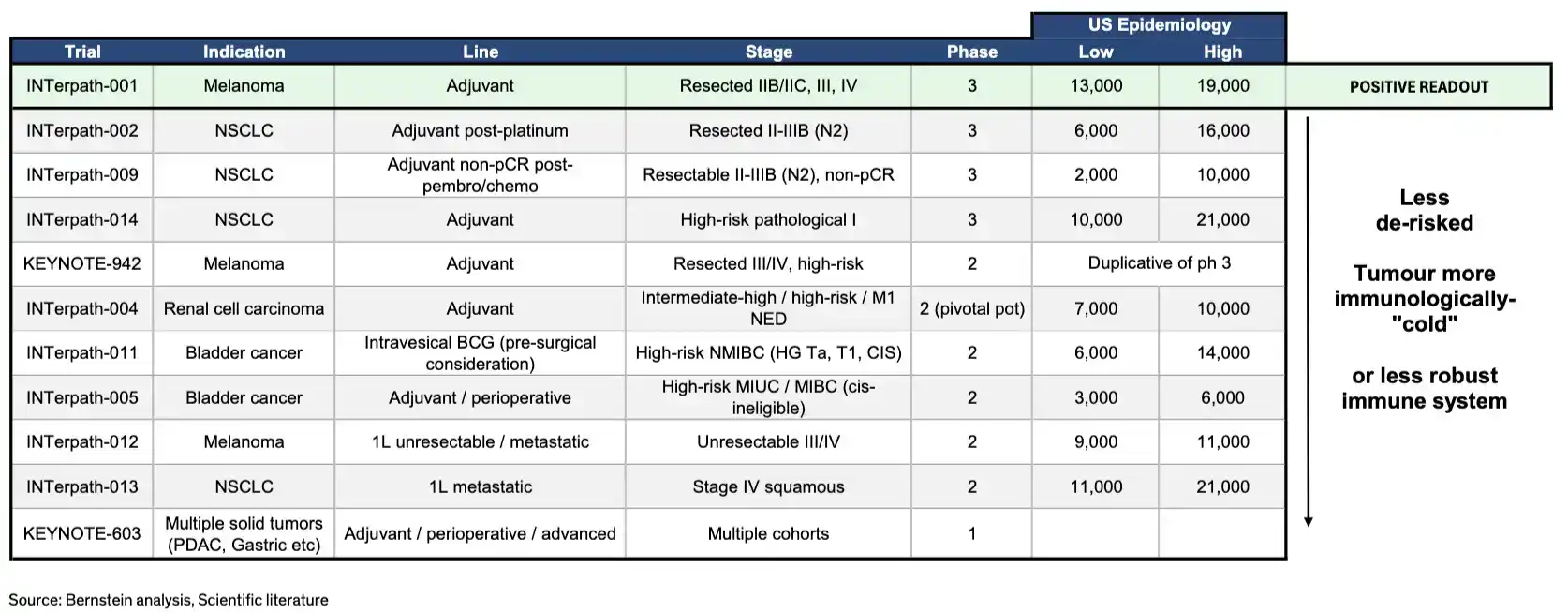
The U.S. accessible patient population for INTerpath-001 is approximately 13,000 to 19,000 people, representing only about 30% of the accessible patient total for current pivotal projects and about 17% of all Phase II and Phase III INT studies. Success in melanoma does not automatically guarantee the same results can be replicated in lung cancer, kidney cancer, and other cancer types.
If projects in lung cancer, kidney cancer, and bladder cancer can replicate the success in melanoma, INT's market potential will expand significantly. Bernstein currently gives an un-risk-adjusted sales forecast for early-stage melanoma and lung cancer of approximately $2.4 billion.
The report also uses Keytruda as an upside reference: its early-stage cancer indications generated about $7.9 billion in revenue in 2025, with an estimated $9.2 billion in 2028, and INT's future pricing could potentially be higher than Keytruda's.
But $2.4 billion is an un-risk-adjusted sales forecast, not profit, and certainly not realized performance. INT also has not yet covered several important Keytruda indications like triple-negative breast cancer, cervical cancer, and head and neck cancer.
More critically, melanoma typically has strong immunogenicity. Its success cannot be directly extrapolated to tumors with different immune microenvironments, such as lung cancer, kidney cancer, and bladder cancer.
INTerpath-001 proves the platform's *potential* for replication but does not prove replication *will* necessarily occur. The market has already started trading the endgame of success in other cancer types, but the relevant clinical data is still on the way.
Bernstein therefore maintains its "Market-Perform" rating and $45 price target for Moderna, far below the August 19 closing price of $174.38.
The "Cancer Vaccine" Label Blurs Commercial Realities
INT is not a preventive vaccine for healthy populations but a personalized treatment for cancer patients. At this stage, it is used as adjuvant therapy after patients have completed tumor resection, with the goal of reducing the risk of recurrence and distant metastasis caused by residual disease.
Tumor tissue and blood samples must be individually collected from each patient, followed by gene sequencing and algorithm analysis. The system selects up to 34 patient-specific neoantigens from the patient's tumor mutations, then produces the corresponding mRNA construct to induce a T-cell response against the tumor.
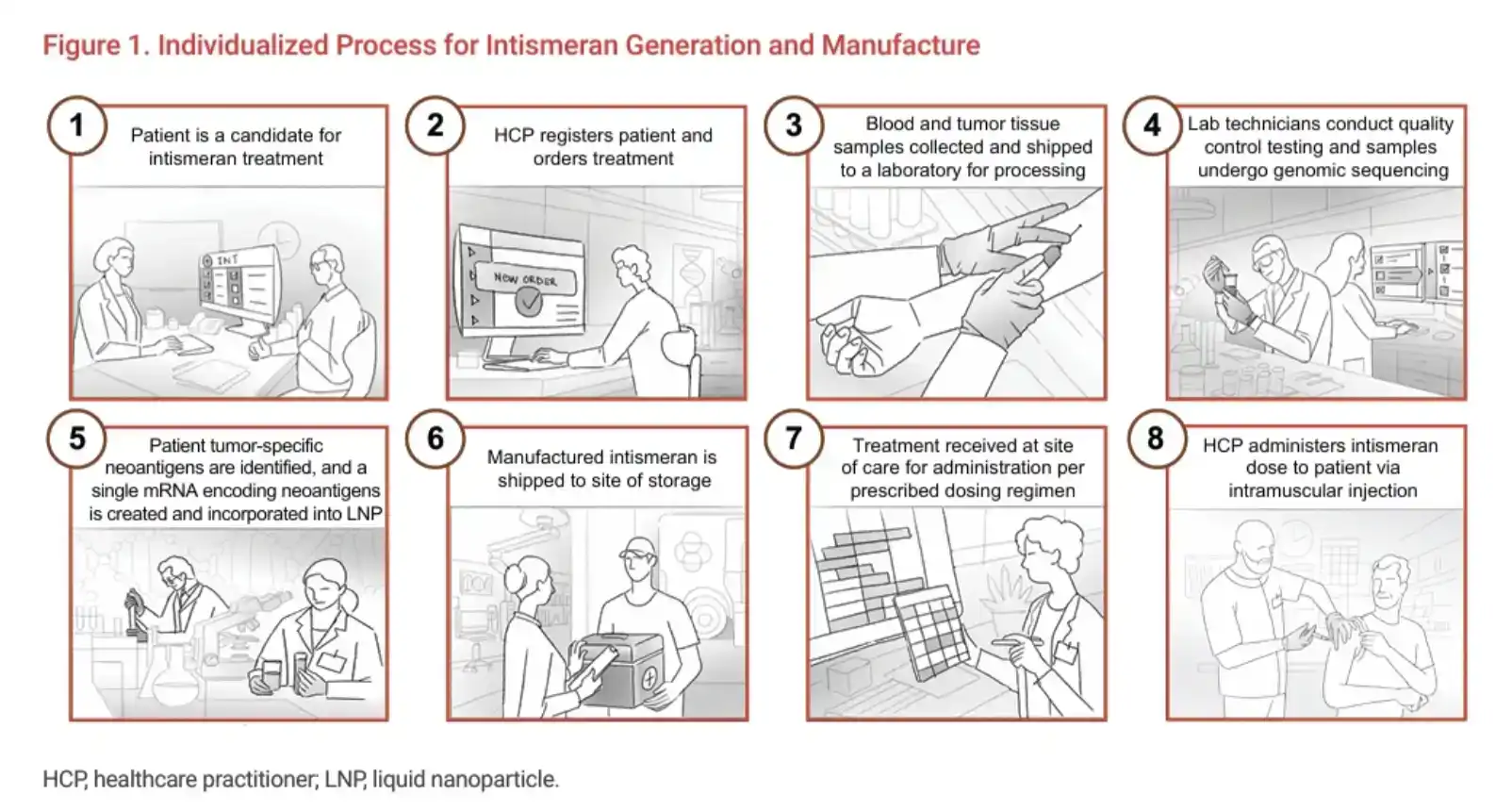
Therefore, while INT uses Moderna's mRNA platform, its business model is closer to that of a personalized oncology drug:
The target patient population is in the tens of thousands, not tens or hundreds of millions like traditional vaccines;
Each patient requires separate sequencing, design, and production;
Production costs are difficult to scale down rapidly like batch-produced vaccines;
Regulatory, pricing, and reimbursement will follow the oncology drug pathway.
"Cancer vaccine" is an easily communicable label, but it may amplify market imagination about patient scale while downplaying real-world constraints like personalized production costs and commercialization efficiency. The incremental impact of INT's success on traditional vaccine raw material suppliers is also relatively limited.
For Billions in Revenue, How Much Profit Ultimately Remains?
Compared to sales potential, Bernstein is more concerned about INT's profit margins.
Merck will be responsible for global commercialization. Moderna will participate in co-promotion in the U.S., while Merck will independently handle marketing and sales in markets outside the U.S. The two parties will share costs and profits per the agreement.
Bernstein uses the single melanoma indication as an example, assuming INT's peak sales reach $1.2 billion, with gross margins gradually improving from 35% at launch to 60%. After deducting approximately $250 million in SG&A expenses and profit sharing, the mature-stage contribution to Moderna's EPS would be about $0.60.
This is Bernstein's scenario calculation, not company guidance. It illustrates that even if INT becomes a billion-dollar product, personalized production costs and profit sharing will limit profit realization.
The market's current pricing, however, already implies multiple favorable conditions: success in other cancer types, smooth expansion of custom manufacturing, favorable pricing and reimbursement, and continuously improving gross margins. None of these conditions have yet been fully verified.
For Merck, INT's strategic value lies primarily in expanding Keytruda's usage. Most trials use an "INT + Keytruda" vs. "Keytruda monotherapy" design, so INT is first and foremost an add-on therapy, not a replacement for Keytruda.
If the combination regimen becomes the new standard of care, Bristol-Myers Squibb's Opdivo, Roche's Tecentriq, and AstraZeneca's Imfinzi could face market share pressure in some melanoma and NSCLC markets. However, the low initial gross margins and profit sharing could also weigh on INT's contribution to Merck's operating profit margin.
Therefore, Merck's approximately $50 billion market cap increase is similarly difficult to explain solely by the profits from the current melanoma project.
Pharma Sector Rally Also Influenced by AI Trading Rotation
Bernstein believes this rally is not entirely Moderna's individual stock story.
The report observes that the pharmaceutical and semiconductor sectors have recently shown a certain inverse trading characteristic. Against a backdrop of increasingly concentrated AI and semiconductor holdings, pharmaceuticals have started to be viewed by some investors as a relatively clean defensive option: demand is less affected by economic cycles, while potentially benefiting long-term from AI's application in drug discovery and clinical trials.
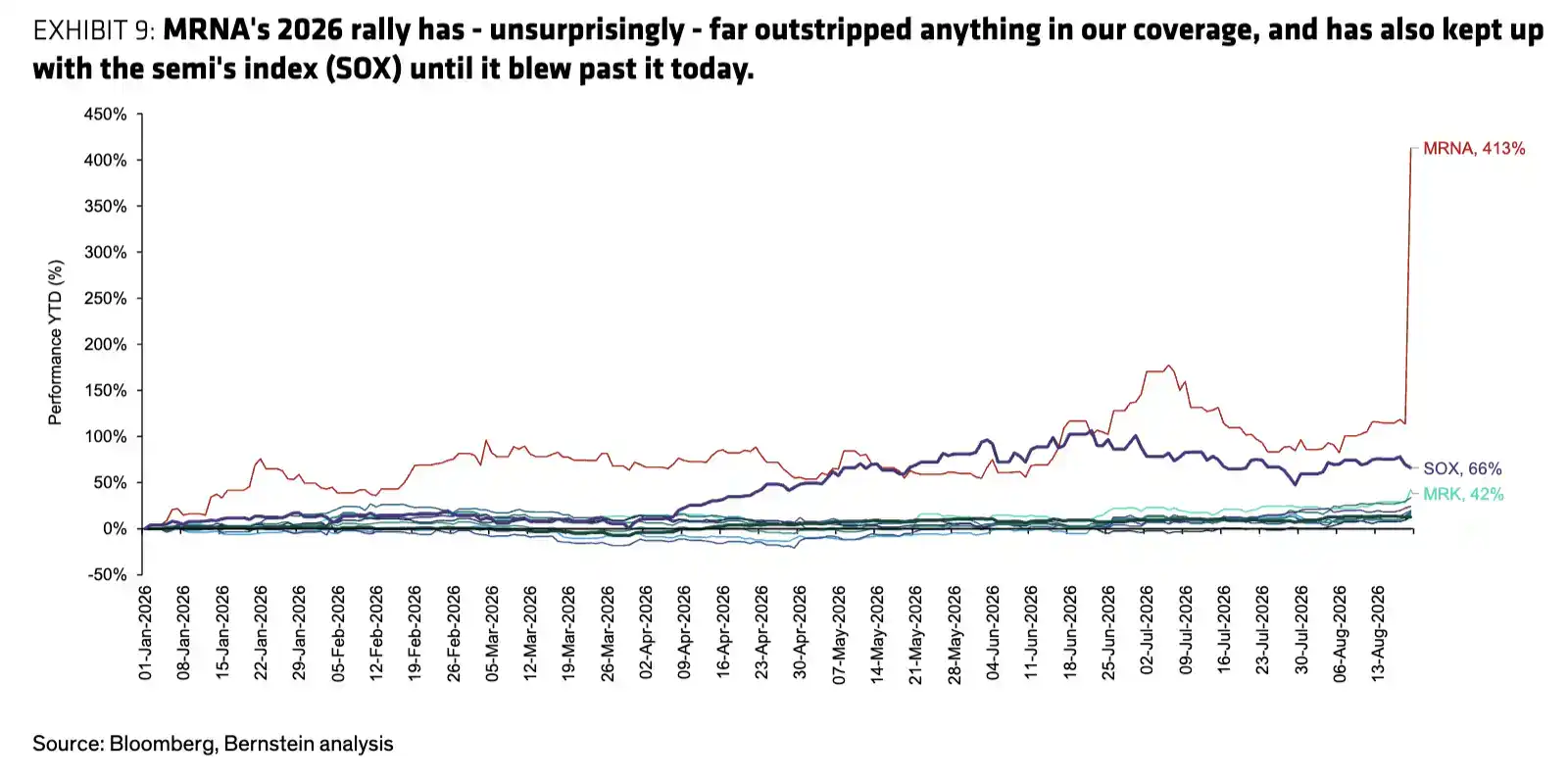
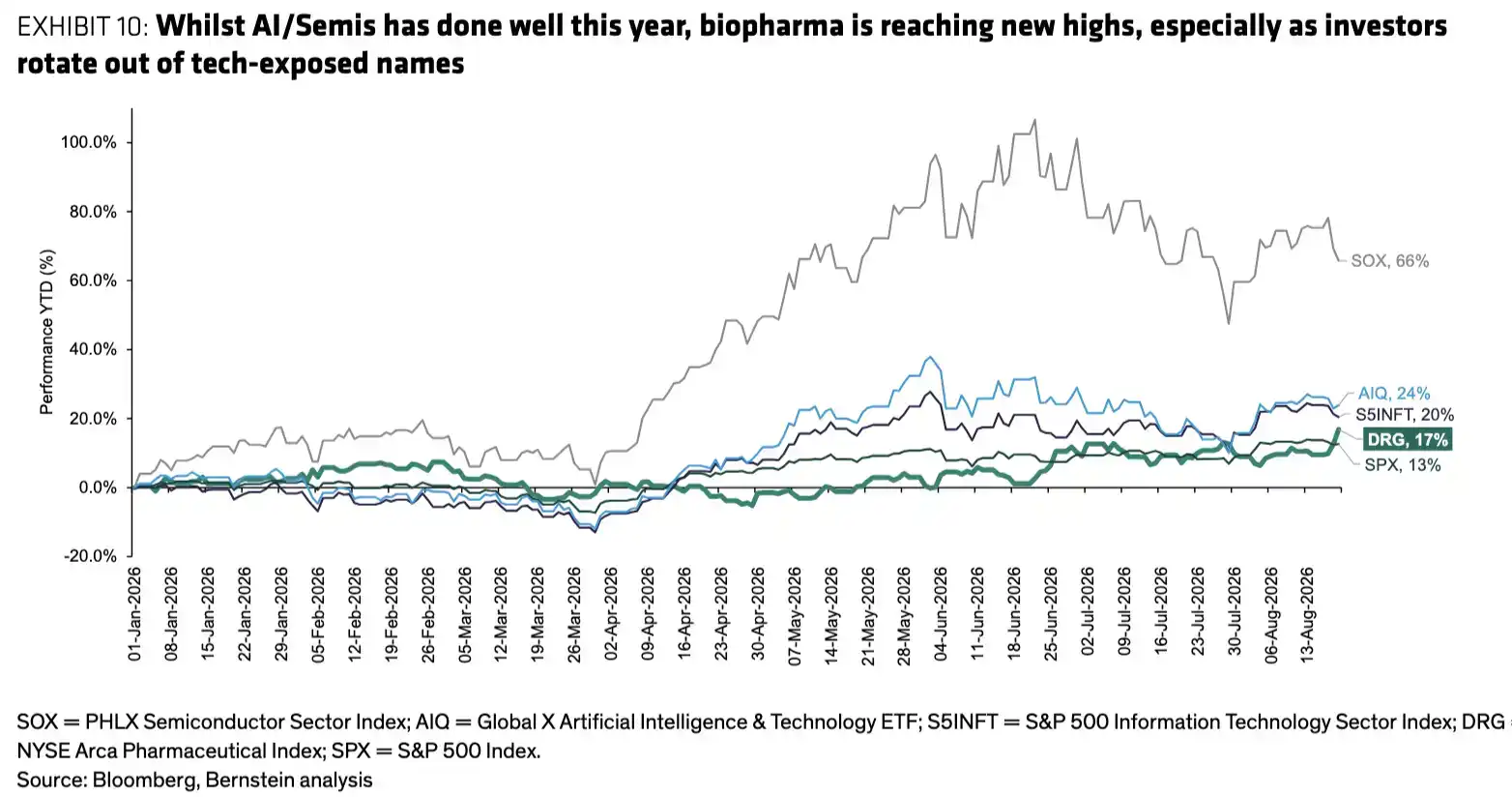
In 2026, the pharmaceutical sector (DRG) and the semiconductor index (SOX) show a clear inverse trading characteristic. When the AI theme experiences volatility and capital flows out of the tech sector, the pharmaceutical sector, as a defensive asset, sees capital inflows. Moderna's rise is not just an individual stock story but also a result of sector rotation.
This is merely Bernstein's interpretation of capital flows and does not imply a stable negative correlation between pharmaceuticals and semiconductors. However, when tech stock volatility rises, sector rotation can provide additional buying pressure for the pharma sector and amplify the market impact of INT's clinical results.
Thus, Moderna's rise contains three layers of trading: the foundation is the Phase 3 melanoma success, the middle layer is mRNA platform revaluation, and the outer layer consists of short covering and sector rotation. The further from the core, the greater the distance from quantifiable fundamentals.
From Clinical Breakthrough to Earnings Inflection Point: Three Validations Remain
INTerpath-001 has proven that mRNA personalized neoantigen therapy can succeed in a large Phase 3 trial. But to define it as Moderna's earnings inflection point, at least three more validations are needed:
First, complete Phase 3 data. The specific hazard ratios, safety profile, patient subgroups, and OS trends will determine INT's real advantage over Keytruda monotherapy.
Second, cross-cancer replication. Results from subsequent lung, kidney, and bladder cancer trials will determine whether melanoma is just a favorable indication or the starting point for a broader oncology platform.
Third, commercialization efficiency. Custom manufacturing cycles, capacity, pricing, reimbursement, and gross margins will determine whether sales can be converted into profits sufficient to support the valuation.
Bernstein does not deny the clinical value of INTerpath-001. Its real warning is: the market has rapidly jumped from a successful melanoma trial to endgame pricing based on a multi-cancer platform and long-term profit realization.
A clinical breakthrough has occurred, but an earnings inflection point is not yet confirmed. The current stock price is trading more on the imagination of platform success and short-term demand amplified by high short interest.