Lao Huang: Prompt is Dead, the Entire AI Community is Frenziedly Chasing Loops

marsbit發佈於 2026-06-29更新於 2026-06-29

文章摘要

The article "Prompt is Dead: The AI Industry is Obsessively Chasing Loops" discusses a major shift in AI development, where "Loop Engineering" is replacing traditional prompt engineering. Industry leaders like NVIDIA's Jensen Huang, Andrew Ng, and engineers from Anthropic and OpenAI argue that manually crafting prompts is becoming obsolete. Instead, the new focus is on designing autonomous, self-improving AI systems (loops) that can operate 24/7. A loop system typically involves five key phases: Discovery (finding tasks), Handoff (assigning to agents), Validation (critical independent review), Persistence (saving progress), and Scheduling (automated operation). The core idea is to move humans from being the operational "engine" to being the system "architects" who design the loop, define goals, and set up verification mechanisms. A major challenge and necessity is implementing robust, independent validation to prevent AI from uncritically approving its own work. The trend is seen as part of a move towards "inference-time compute," where allocating computational budget effectively becomes a key engineering skill. While loops can produce higher-quality outputs, they are more expensive and time-consuming than simple prompting. The article warns of risks like "verification debt," "comprehension corrosion," and "cognitive surrender," where engineers might stop understanding the code their systems generate. Ultimately, the article concludes that in an era of automated loops, huma...

Recently, what's the hottest word in Silicon Valley?

Loop.

Open up X, and the entire internet is flooded with discussions about Loop Engineering.

A group of Silicon Valley big shots are abandoning prompts one after another, turning towards autonomous loops!

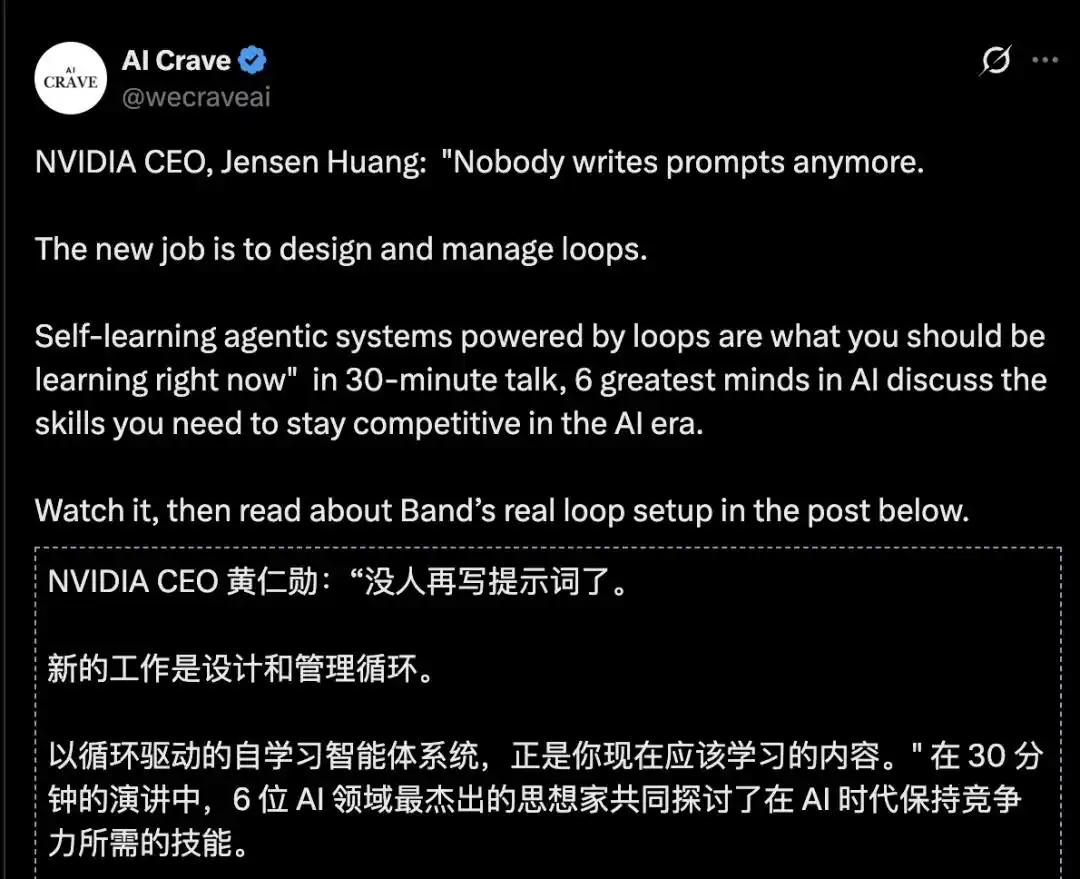
Jensen Huang has outlined the new focus for the next phase (and a new way to burn tokens):

Nobody writes prompts anymore. The new job is to write and handle loops.
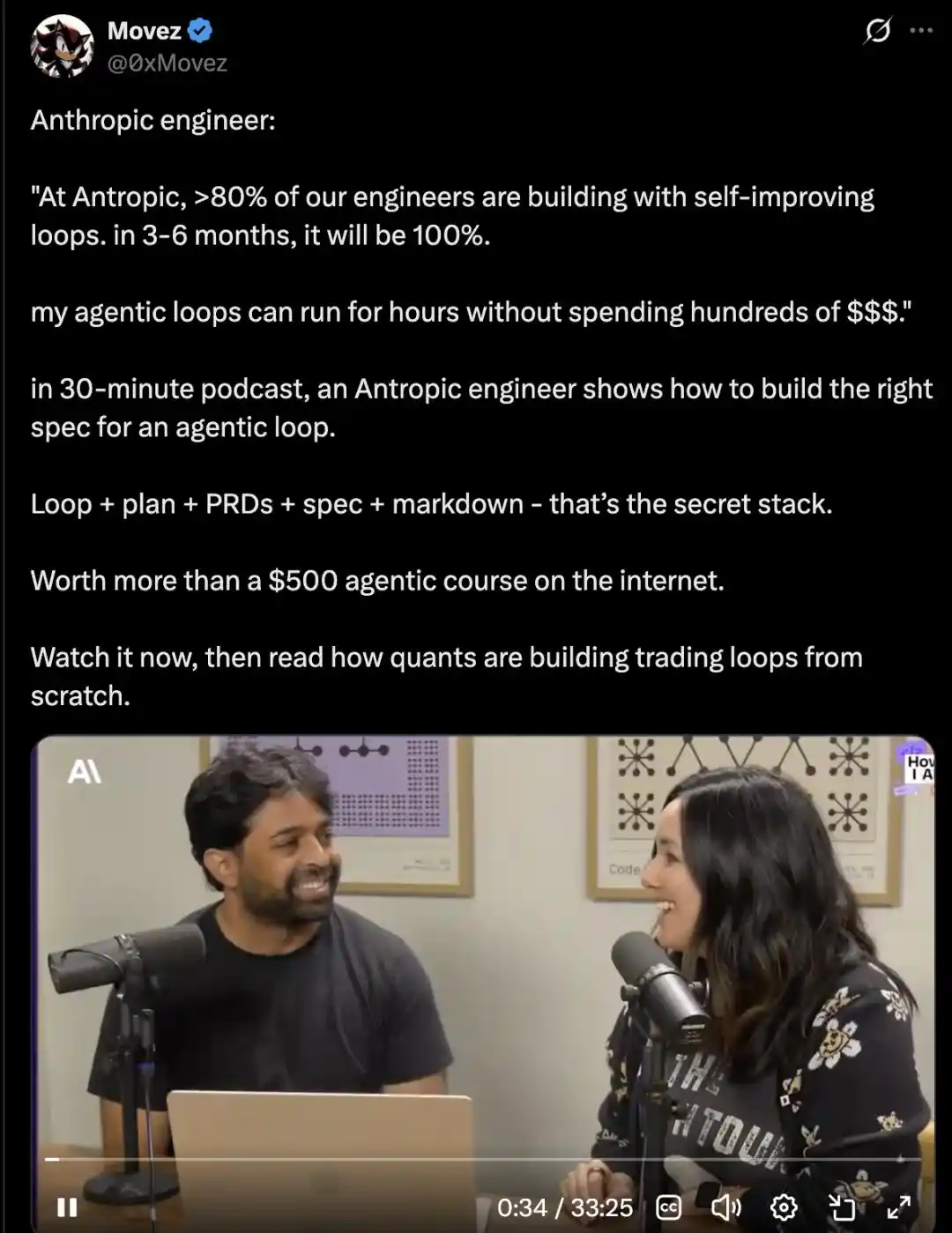
Recently, an Anthropic engineer revealed:

Over 80% of engineers at Anthropic are already using self-improving loops, and it will reach 100% in 3-6 months.
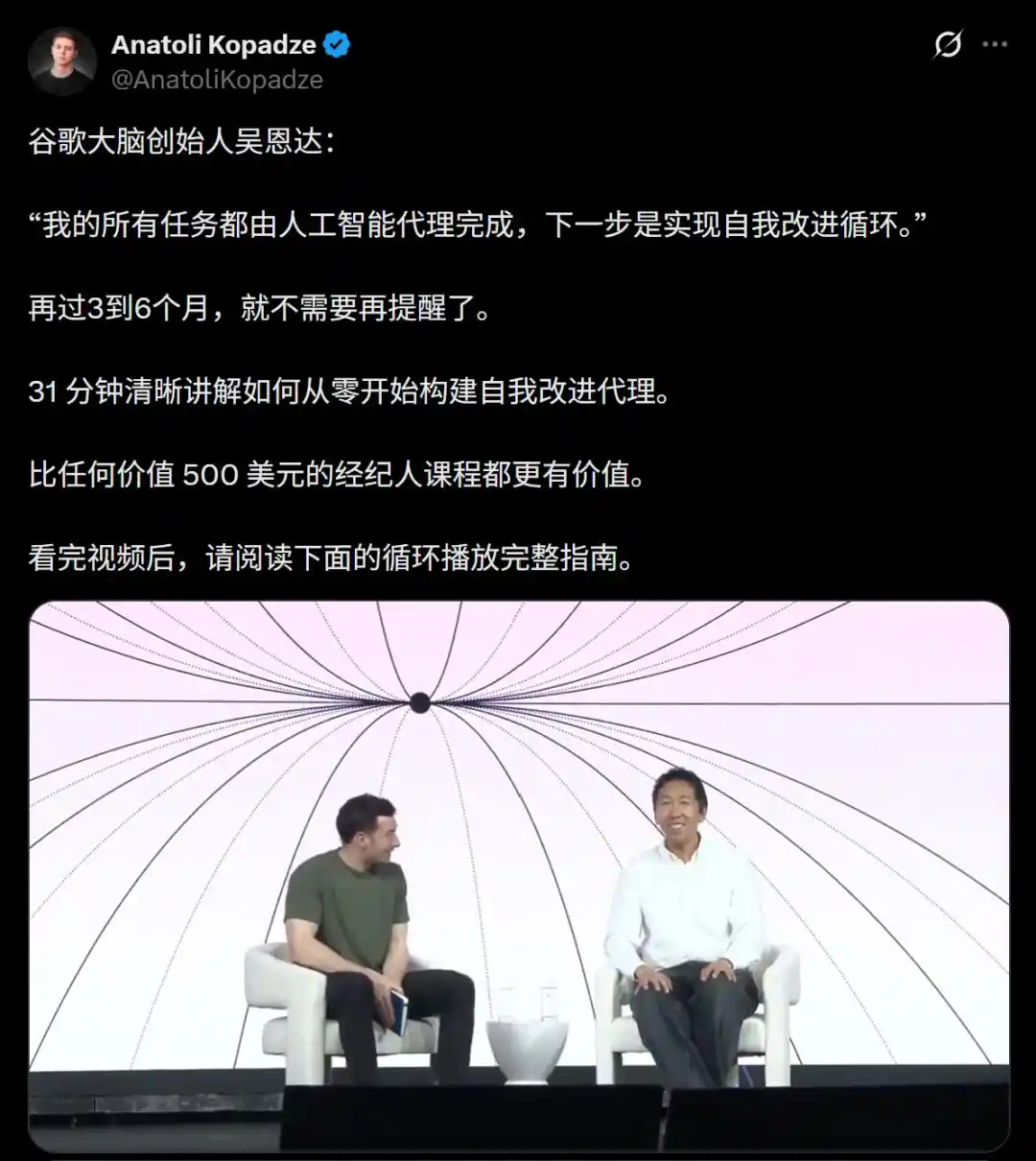
Andrew Ng asserts: In 3 to 6 months, prompts will die! Loops replacing prompts is a foregone conclusion.
Earlier, when explaining his AutoResearch project, Karpathy discussed AI agents' closed loops (generation → execution → evaluation → improve), advocating for partially removing humans from the loop.
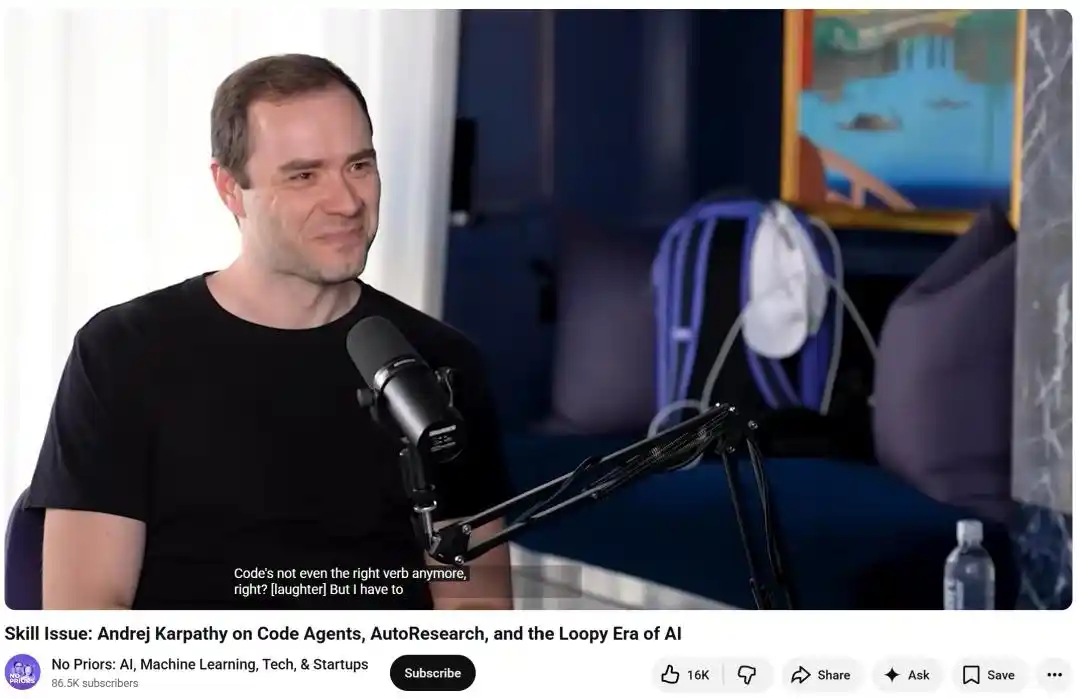
In March, Karpathy gave an in-depth interview about AutoResearch / the Karpathy Loop.

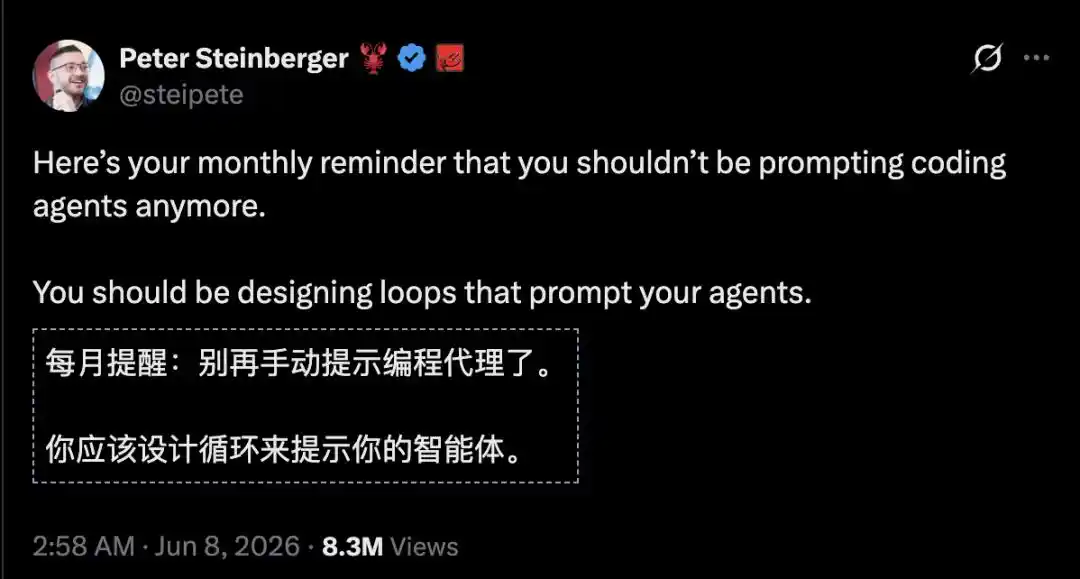
OpenClaw's creator, Peter Steinberger, stated bluntly: A monthly reminder, stop manually writing prompts, designing loops is the way.
Claude Code's creator, Boris Cherny, boldly declared: Loop cycling is the future!

Two years ago, we were manually writing code. Then we started transitioning to having agents write code.

Now, we are moving towards a stage where agents prompt other agents, and the latter generates the code.

The step from source code to agents was big, but the significance and impact of introducing a loop mechanism is no less than the previous step.
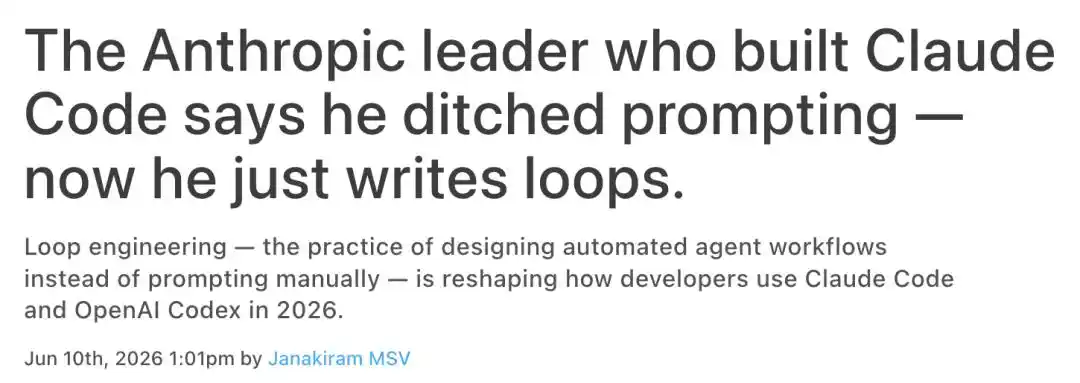
Who would have thought, after two years of prompt engineering being hot, top AI engineers have moved on.

Why are Silicon Valley big shots so bullish on Loops?

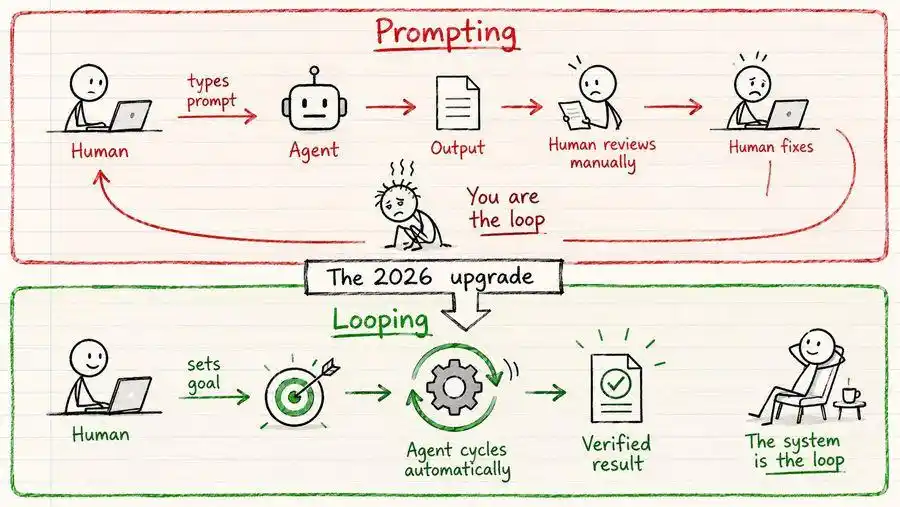
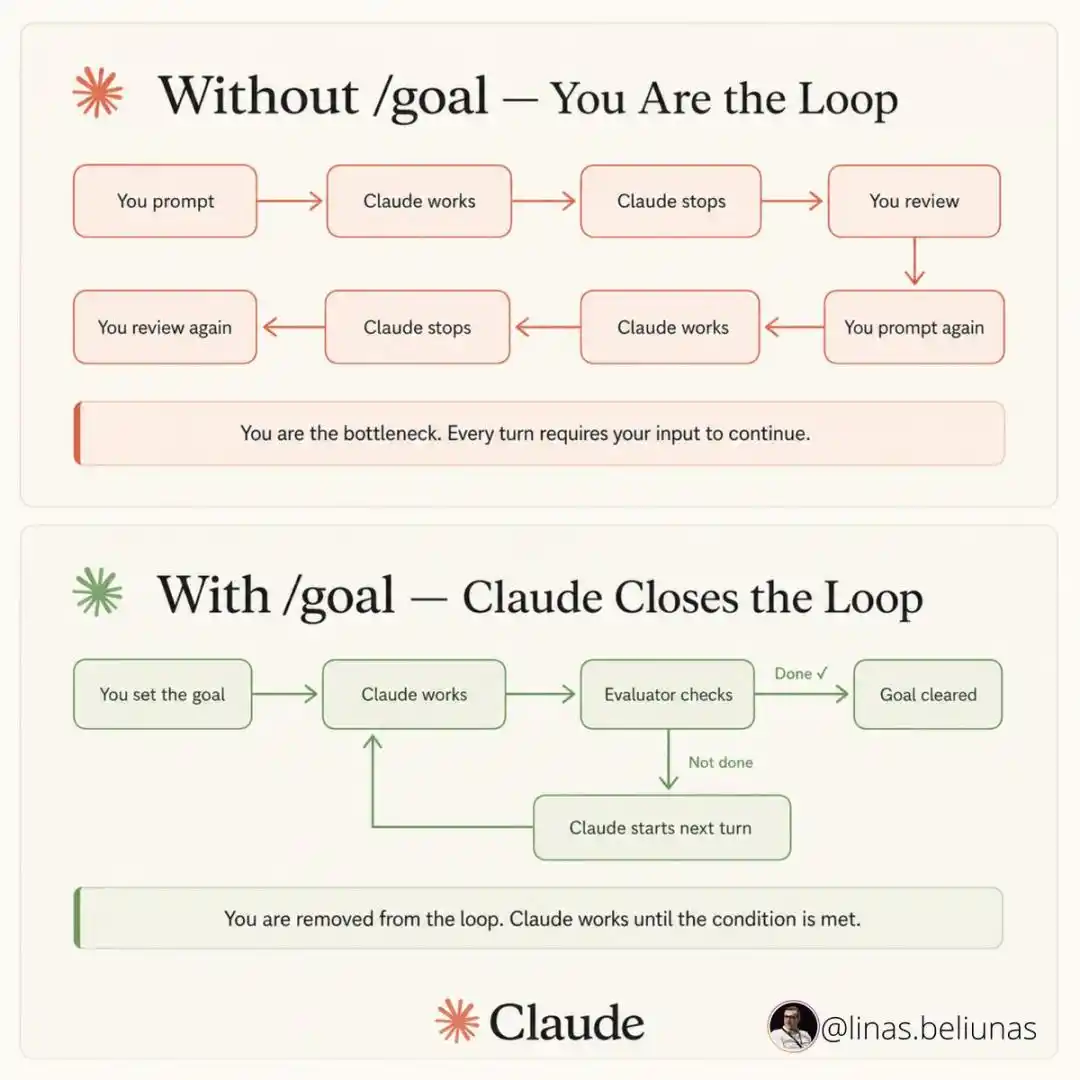
The essence of traditional prompting is: Humans *are* the loop itself.

You write a prompt → Agent outputs → You review → You write the next prompt → Repeat.

Each step relies on human attention, contextual memory, and decision-making bandwidth. The amount of tokens and task complexity one person can effectively drive in a day is limited.

The essence of Loop Engineering is: The system becomes the loop itself.

Therefore, loop engineering is more important than prompt engineering.
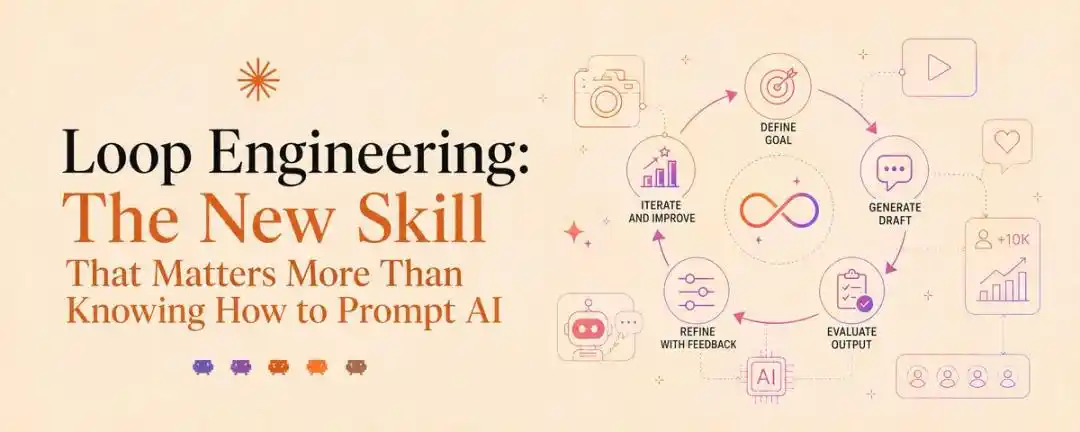
Humans only do high-value design once:

1. Define goals and stop conditions

2. Build verification mechanisms (most critical)

3. Establish persistent memory (markdown / external state)

4. Configure discovery and scheduling

Afterwards, the AI loop system can autonomously discover tasks → execute → verify → persist → discover again, running 24/7, with humans only intervening when necessary.
This is why Silicon Valley big shots are all bullish on Loops.

Their judgment is based on this: Once loops mature, the cost-effectiveness of manual prompting will directly collapse!

Loop Engineering 11-page White Paper, Spreading Like Wildfire Online

So, what exactly is the loop process?

In recent days, a white paper on Loop Engineering has started spreading like wildfire on X.
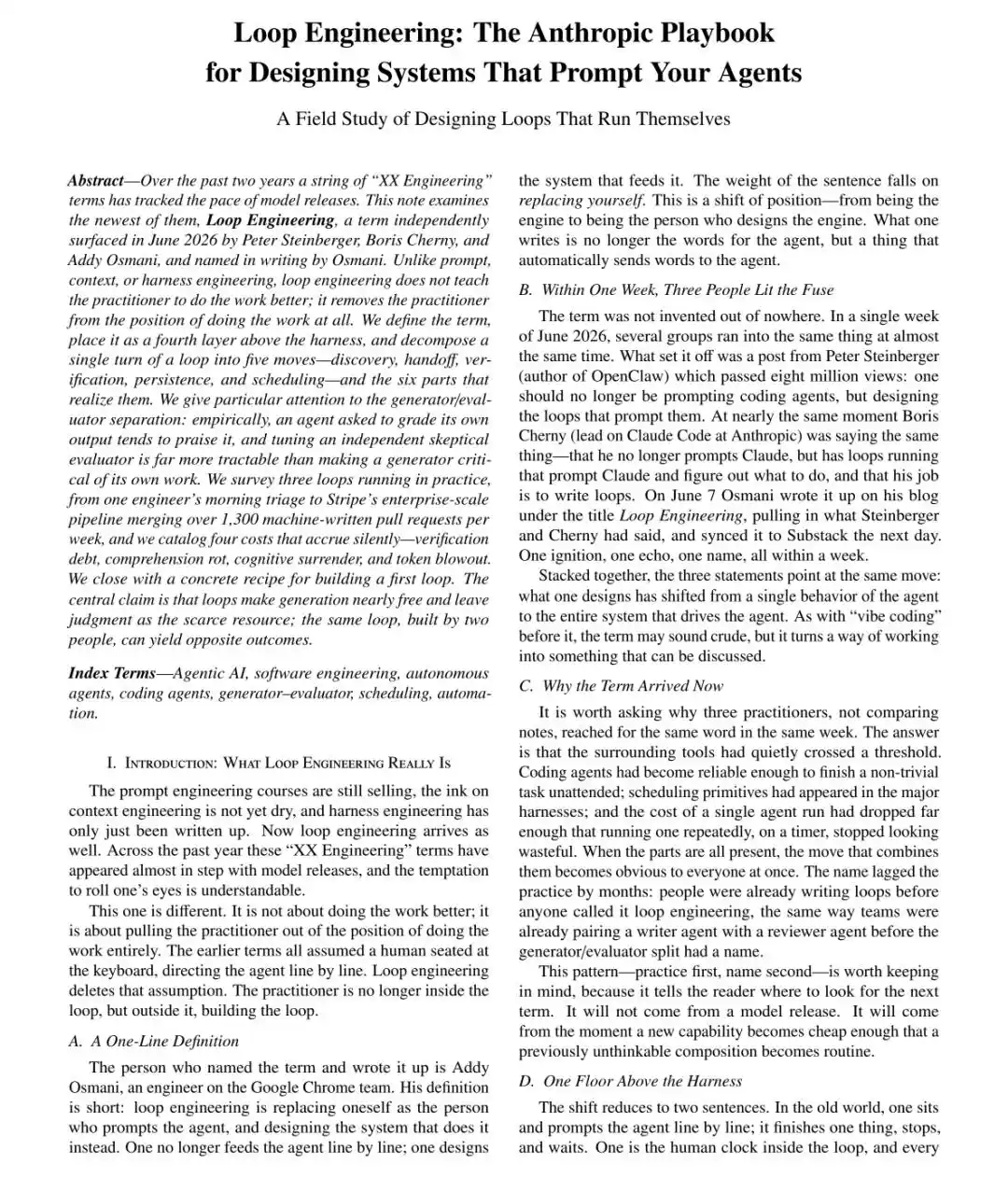
https://drive.google.com/file/d/1qzKI4DKnyHRpXK1J3ATPqwaqLc0iNu-M/view

This 11-page PDF is essentially a popular summary / field guide, compiling relevant public discussions and practical experience.

The core ideas within originate from the public statements of Peter Steinberger, Boris Cherny, and Addy Osmani.

What is Loop Engineering?

Loop Engineering, named by Google Chrome engineer Addy Osmani in June 2026.
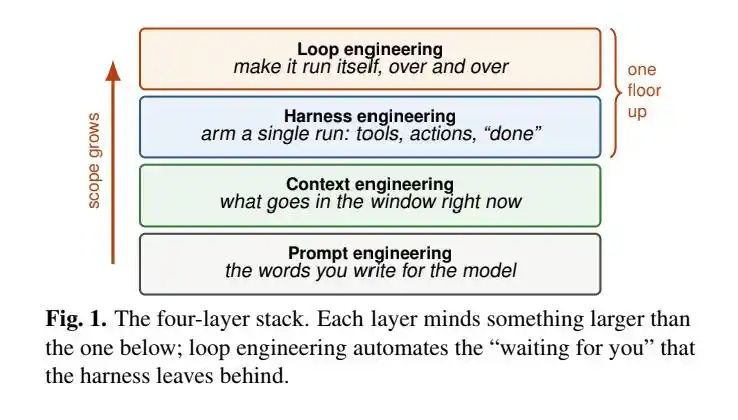
It is the fourth layer above prompt engineering, context engineering, and toolchain engineering: the first three layers assume you sit at the keyboard directing the AI line by line; Loop Engineering aims to move you from that position, completely liberating you from the work.

From now on, you are no longer the engine driving the AI, but the architect designing that engine.

The system will automatically wake up at set times, spawn child agents to work, and feed the output back to itself as input for the next round.

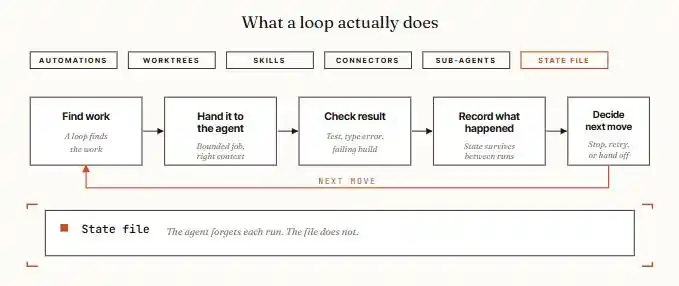
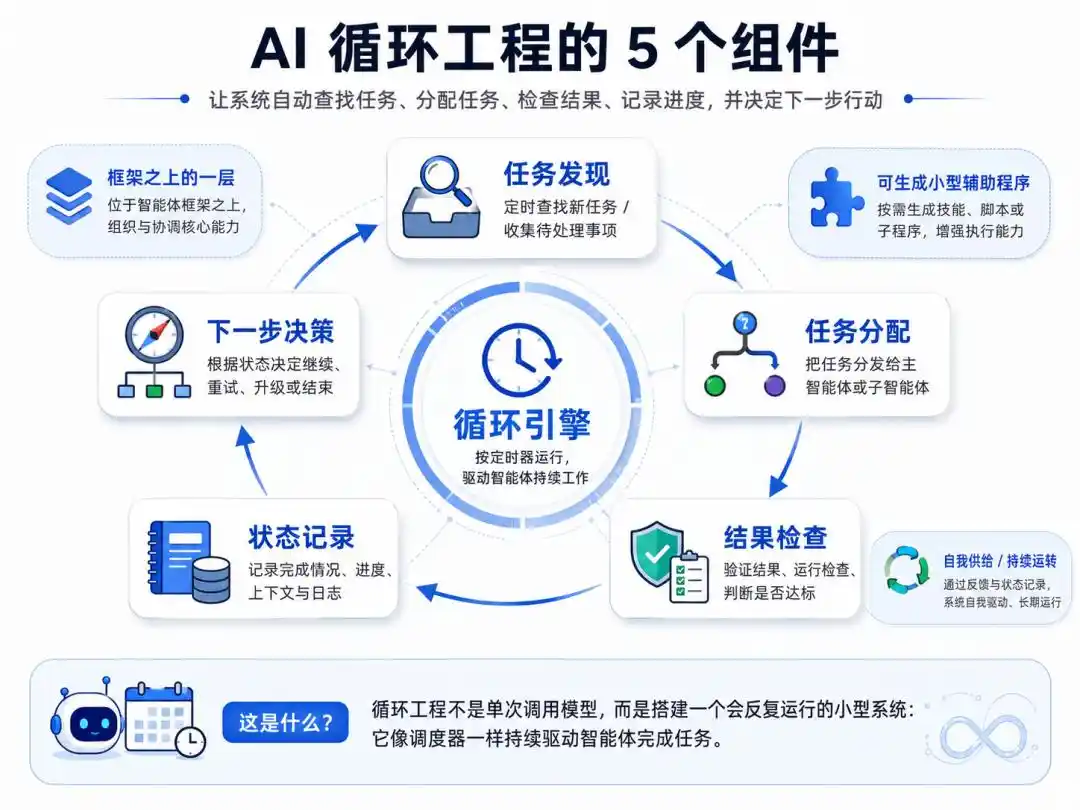
The article breaks down a complete Loop into five key actions:

Discovery: The AI uses a solidified skill library to find valuable work on its own, such as reading the latest CI failure logs or unresolved issues.

Handoff: Open independent sandboxes for each task, allowing multiple agents to work in parallel without interference.

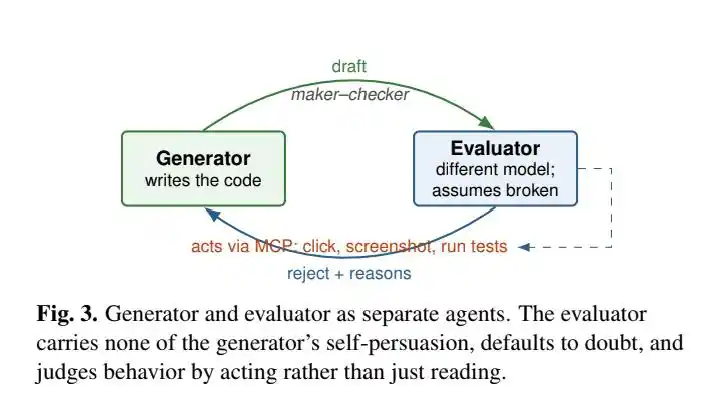
Verification: This is the most crucial step. Letting the code-writing AI score itself, it will blindly praise itself. Therefore, a completely independent, default-skeptical "evaluator" agent must be introduced to find faults.

Persist: The AI's memory cannot just stay in a context window that can be cleared anytime. Its state and progress must be solidified to disk so it can continue the next day.

Schedule: Use automation scripts to let the system run autonomously and periodically, closing the entire loop.
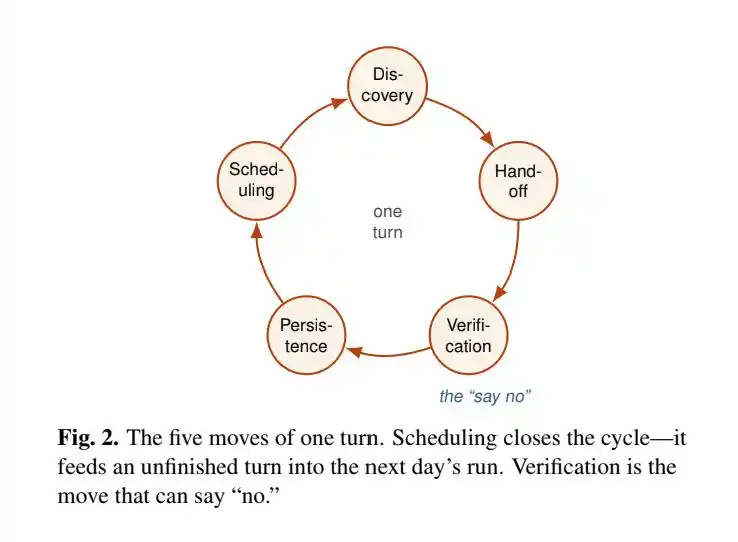
Among these, the hardest and most likely to be lazily skipped is verification.

Having the AI score itself, it will almost always praise itself because its mind contains a self-persuasion chain. The solution is to introduce an independent evaluation Agent that assumes the code is bad by default.
However, the system running fully automatically doesn't mean you can rest easy. The author warns: When the loop runs wild late at night, it may quietly accumulate four hidden costs.

Verification Debt: Minor errors not validated are quietly merged into the repository.

Understanding Decay: The AI writes code too fast, causing human understanding of the codebase to seriously fall behind.

Cognitive Surrender: Humans become too lazy to review, accepting AI results wholesale.

Token Runaway: The AI retries all night in an infinite loop, burning through the budget.
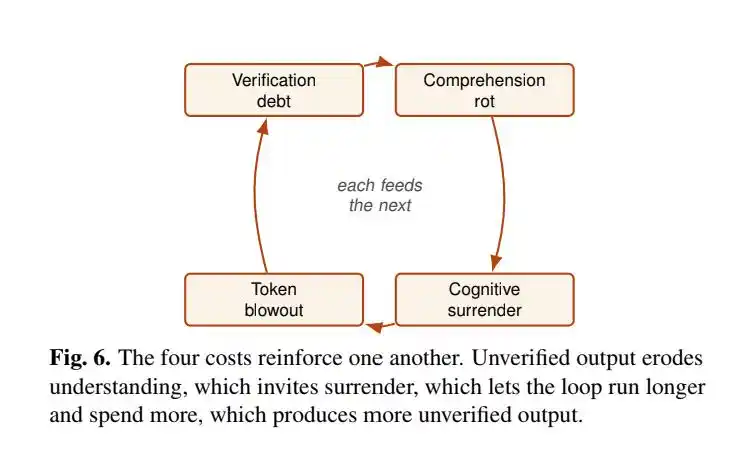
The same Loop, built by two different people, may yield completely opposite results. Bring judgment into it, and it amplifies judgment; bring laziness into it, and it amplifies laziness.

In short, this report reveals a profound industry change: Loop engineering makes code generation almost free, while human judgment becomes the only scarce resource!

Also spreading wildly online simultaneously is a 14-step practical handbook issued by Codez, already with millions of shares.
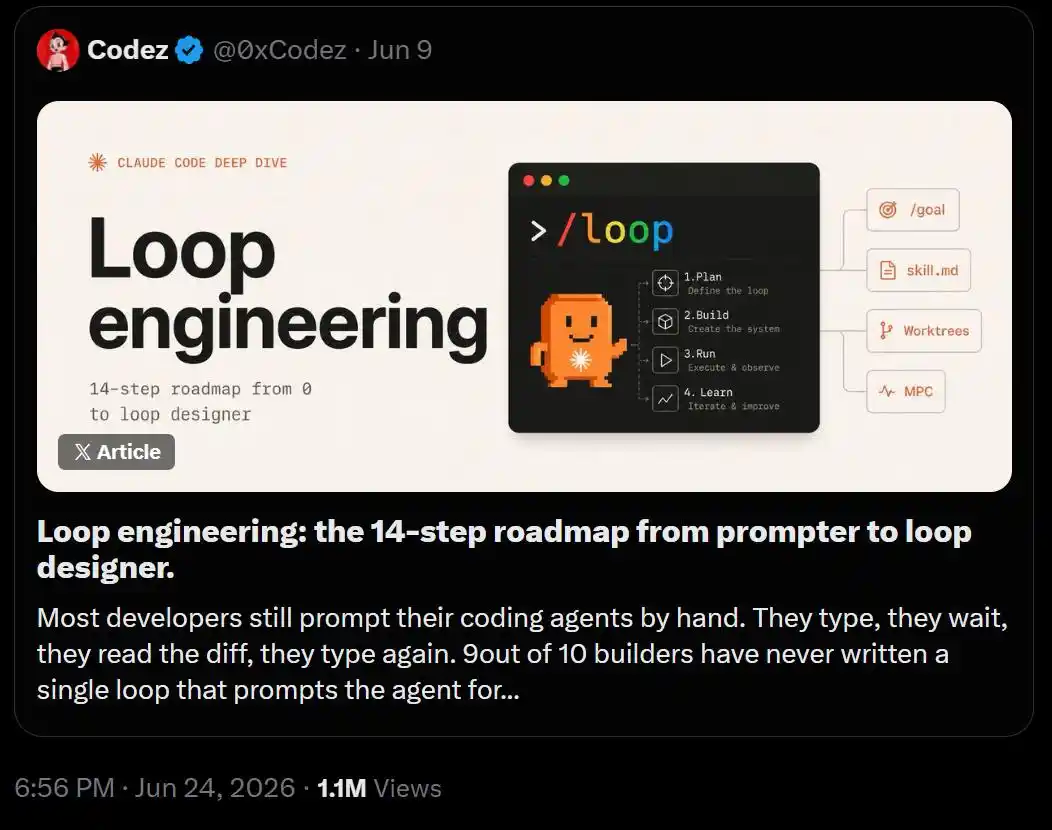
The general idea of the article is as follows: Prompts are outdated, the leverage point has moved up one layer—from "words written for the AI to see" to "designing a system that automatically feeds the AI."

This transformation can be broken down into 14 steps, 3 stages—

First, determine if you really need a loop (Is the task repetitive? Can verification be automated? Can the budget handle it?), then learn the five components (scheduler, isolated working directory, skill files, external connectors, independent evaluation sub-agent), and finally build a minimal viable loop.

The most crucial point among them is: Separate the agent that writes code from the agent that reviews code. The same model acting as both athlete and referee will always give itself full marks.

A loop without objective verification gates is just "two optimists nodding at each other." The better the loop runs, the easier it is for engineers to stop truly understanding the code.
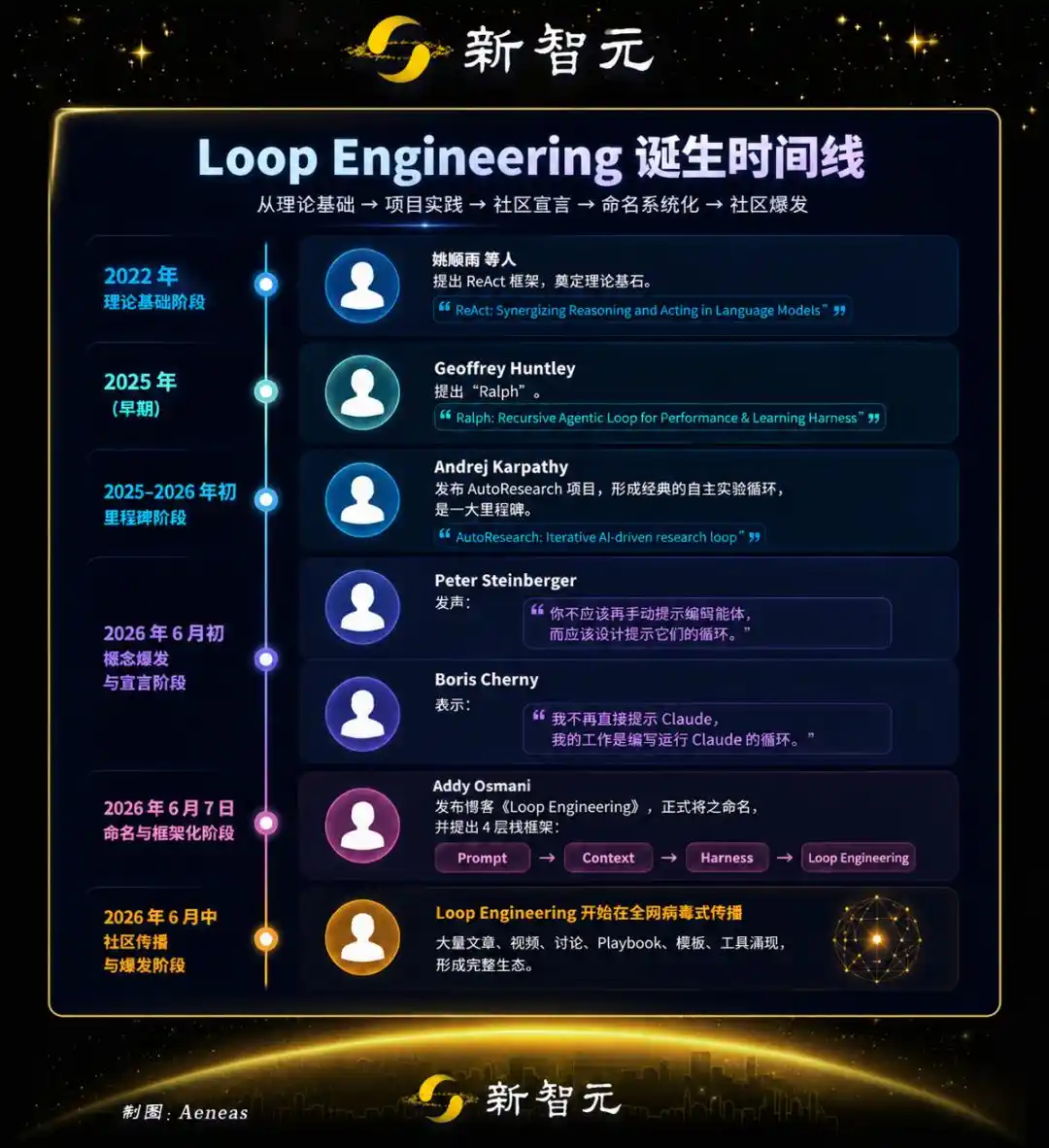
Loop Engineering Birth Timeline

If we were to outline a timeline for loop engineering, it would roughly be as follows.

Early Foundation Stage

2022: Shunyu Yao and others propose the ReAct framework, laying the theoretical cornerstone.

2025: Geoffrey Huntley proposes "Ralph."

2025–Early 2026: Andrej Karpathy releases the AutoResearch project, forming the classic autonomous experiment loop, a major milestone.

Concept Explosion and Naming Stage

Early June 2026, Peter Steinberger speaks out: You shouldn't manually prompt coding agents anymore, you should design loops that prompt them.

Boris Cherny states: I no longer prompt Claude directly, my job is to write loops that run Claude.

June 7, 2026: Addy Osmani publishes the blog post "Loop Engineering," formally naming it, providing a 4-layer stack framework: Prompt → Context → Harness → Loop Engineering.

Subsequently, throughout June, Loop Engineering begins spreading virally across the entire internet.
Claude's "Infinite Loop," Automated Agents Take Over Everything

In an internal podcast, an Anthropic engineer revealed a spine-chilling detail:

When you click run and let Claude execute for 8 hours, you are essentially making a $500 compute power gamble.

If you're still struggling over how to write prompts, you've already lost.

In Anthropic's logic, engineers are evolving into "compute power allocators."

Your core job is no longer writing logic, but deciding where each cent of compute power is invested.

As OpenAI researcher Noam Brown pointed out earlier this month, contemporary models can solve almost any problem if you're willing to throw enough compute power at it.
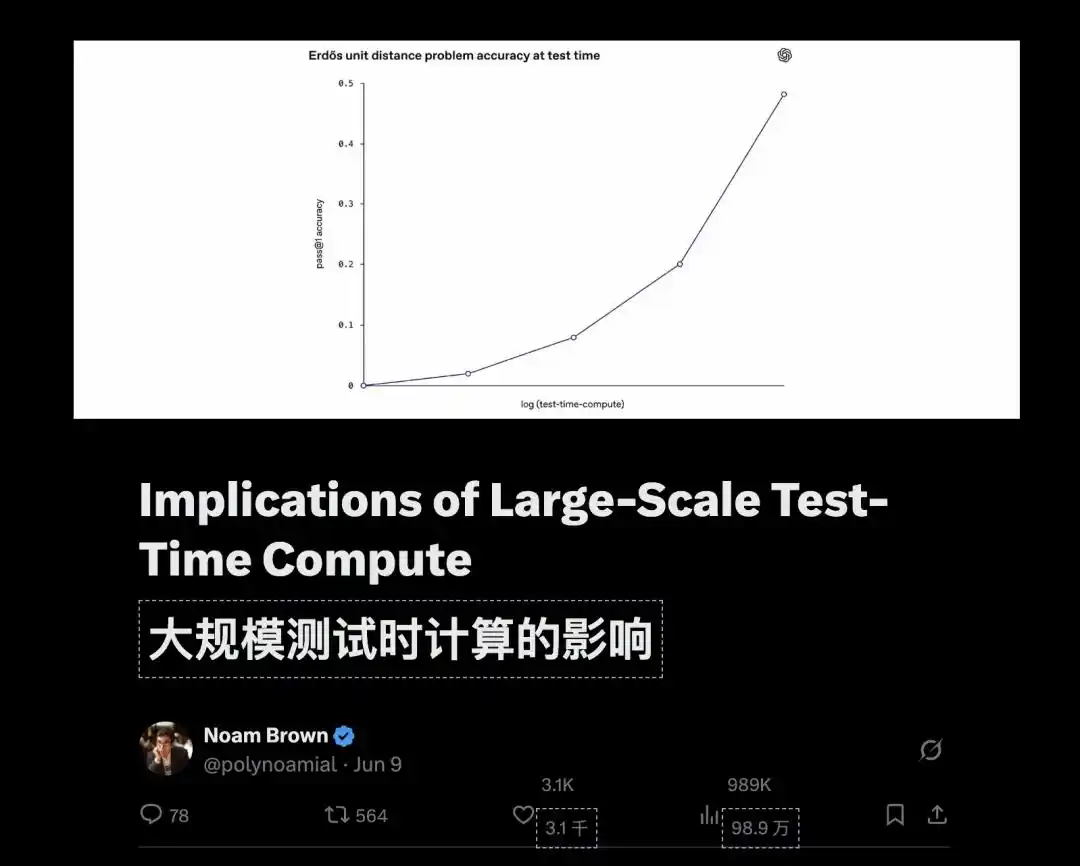
Loop engineering is part of the big trend of "compute at test time."

Interestingly, the idea of having agents work in loops has actually had prototypes for a while.
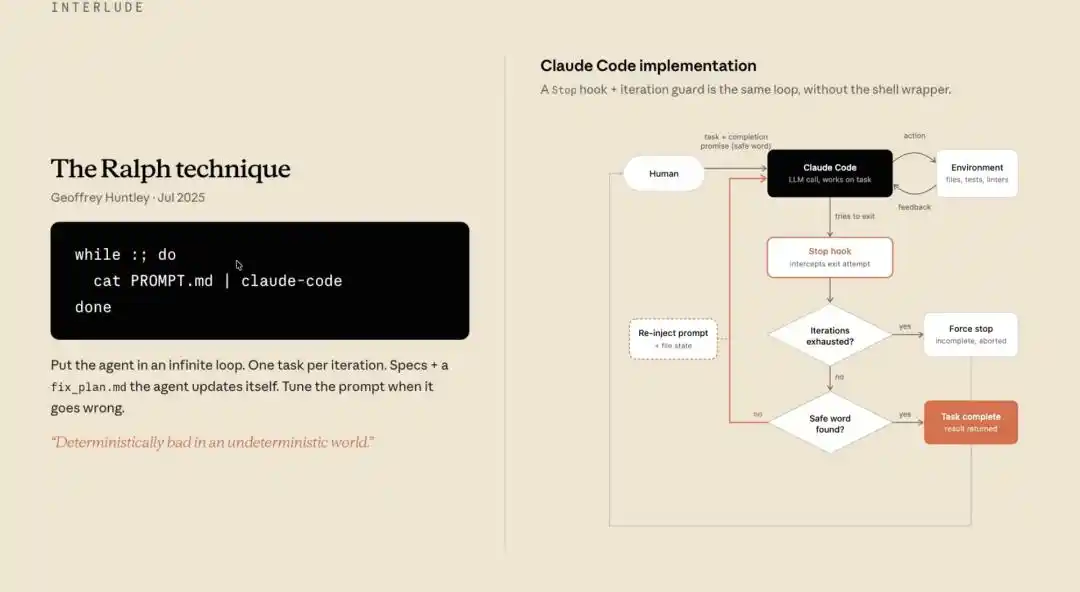
At least since last summer, Australian sheep farmer Geoffrey Huntley mentioned a similar approach in his blog, calling it the "Ralph loop."
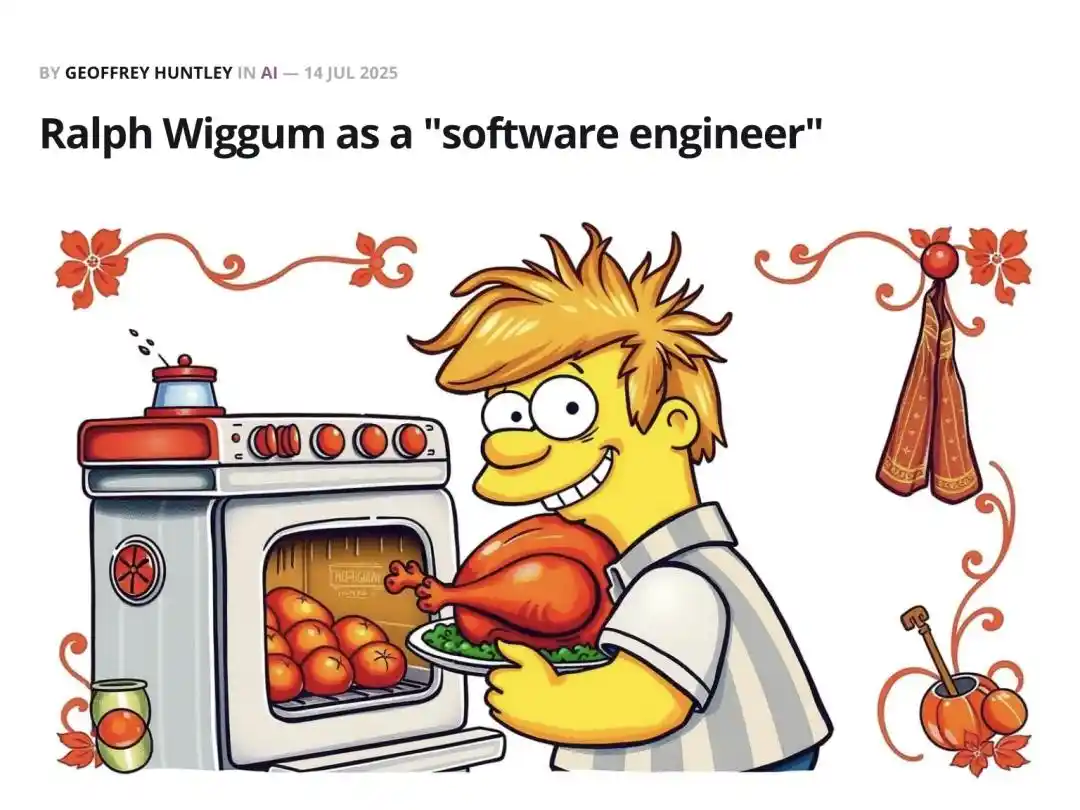
A year ago, if you wanted to implement a loop, you had to write a bunch of bash scripts and then maintain that code forever, it belonged only to you.

Now, these components are built directly into the products.

You no longer argue about whether to use Codex or Claude Code, but directly design loops that work regardless of which tool you're in.

Former Google engineering and developer relations lead Addy Osmani pointed out that loop engineering requires all the parts that these AI tools already possess.
He also asserts that loop engineering may lead to "cognitive surrender" among engineers:

When the loop runs by itself, you easily stop thinking and just passively accept everything it feeds back.

This is exactly what software engineer Armin Ronacher is worried about.
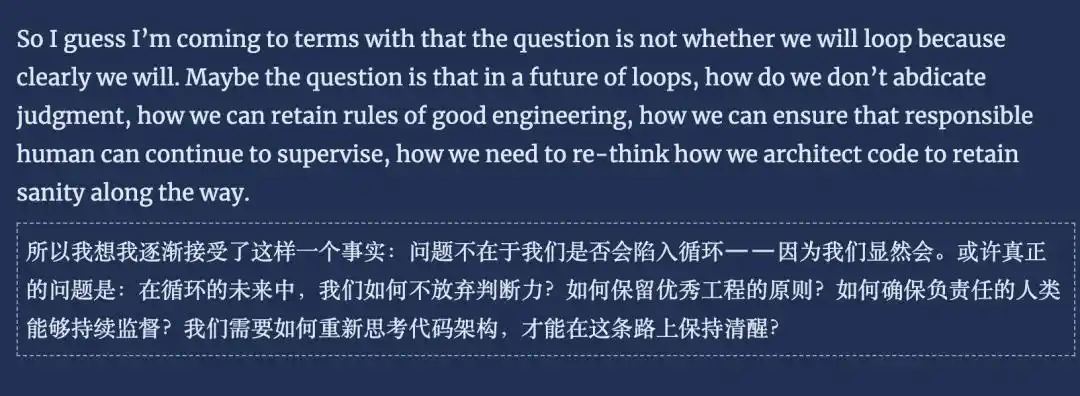
This is also exactly what is said in the Orange Book, Addy Osmani encourages people to design loops with judgment:

Designing loops, if done with judgment, is the cure; if done to avoid thinking, it is the catalyst—the same action, completely opposite results.

The Loop Endures, Engineering Lives

At the AI Engineer Summit in April, an Anthropic engineer said they tasked Claude with developing a retro mini-game app, using two methods: one using only minimalist prompts, the other using agent loops.

The comparison was stark: The minimalist prompt version took 20 minutes and cost $9; the loop method took 6 hours and cost $200.

But the quality of the app from the latter was far superior.

The former game wouldn't run, the app was crude; the loop version was much richer, containing many features the game designer wanted.

The loop won't pity those who give up thinking. It will only use its speed to turn your ignorance into code debt faster.
And those willing to maintain a clumsy understanding, continuously define rules, and take responsibility for the final results, will gain greater leverage in this paradigm shift than ever before.

Build the loop. Stay the engineer.

Prompt is dead, Loop is running.

And you are still the one who decides its meaning.

References:

https://x.com/DataScienceDojo/status/2069873216152092975

https://x.com/0xCodez/status/2064374643729773029

https://x.com/akshay_pachaar/status/2069769689560187027

This article is from the WeChat public account "新智元" (New Zhiyuan), author: ASI启示录

熱門幣種推薦

相關問答

QWhat is the core difference between traditional prompt engineering and the emerging Loop Engineering, as discussed in the article?

AThe core difference lies in the role of the human. In traditional prompt engineering, the human acts as the loop itself: manually writing prompts, reviewing outputs, and making decisions for each iteration. In Loop Engineering, the system itself becomes the autonomous loop. Humans design the system once by defining goals, validation mechanisms, and memory, after which the AI system can run 24/7, autonomously discovering, executing, validating, and persisting tasks.

QAccording to the 'Loop Engineering' whitepaper, what are the five key actions that constitute a complete autonomous loop?

AAccording to the whitepaper, a complete autonomous loop consists of five key actions: 1) Discovery: The AI uses a fixed skills library to find valuable work. 2) Handoff: Tasks are passed to independent sandboxes for parallel, isolated execution by agents. 3) Validation: An independent, skeptical 'evaluator' agent checks the work, as a single agent scoring its own work is unreliable. 4) Persistence: The system's state and progress are saved to disk to survive beyond the context window. 5) Scheduling: Automated scripts run the system periodically to close the loop.

QWhy does the article emphasize that a separate 'evaluator' agent is crucial in a loop, especially for coding tasks?

AThe article emphasizes a separate evaluator agent because an AI agent tasked with both writing and evaluating its own code is inherently biased and will almost always praise its own work. It lacks the ability for objective, critical assessment. A dedicated, independent evaluator agent operates with a default skeptical stance, assuming the code is flawed, which is essential for catching errors and ensuring quality before results are persisted.

QWhat are the potential 'hidden costs' or risks associated with fully autonomous AI loops running unattended, as warned in the article?

AThe article warns of four main hidden costs or risks: 1) Validation Debt: Subtle, unvalidated errors are quietly merged into the codebase. 2) Comprehension Rot: Humans lose understanding of the codebase as AI writes code too quickly. 3) Cognitive Surrender: Humans stop reviewing and passively accept all AI outputs. 4) Token Runaway: The AI gets stuck in retry loops overnight, burning through the compute budget.

QBased on the timeline in the article, who formally named 'Loop Engineering' and what is the four-layer stack framework they proposed?

ALoop Engineering was formally named by Google Chrome engineer Addy Osmani in a blog post published on June 7, 2026. He proposed a four-layer stack framework consisting of: 1) Prompt Engineering, 2) Context Engineering, 3) Harness/Toolchain Engineering, and 4) Loop Engineering. This framework positions Loop Engineering as the highest layer, aiming to remove the human from direct, line-by-line interaction with the AI.

你可能也喜歡

OpenAI和Anthropic都要“自研芯片”,除了成本,更重要的是算力控制权

据The Information报道,Anthropic正与三星洽谈定制AI芯片,并已启动自研芯片的早期开发工作,此举被视为追随OpenAI的类似布局。两家头部AI公司共同指向同一趋势:大模型竞争正从算法层面转向软硬件一体化的综合竞争。 文章指出,自研芯片的首要动机并非仅是降低成本,更是为了掌握核心算力的控制权。当前,AI计算高度依赖英伟达GPU,供应紧张和成本高企使算力成为核心生产资料。通过定制芯片,AI公司可以优化模型与硬件的协同设计,从而在推理速度、能耗和单位经济性上获得更大提升。专家分析认为,最大的效率提升空间来自模型、内核与硅片之间的跨层协同优化,而非单点改进。 然而,这并不意味着对英伟达的立刻替代。自研芯片从设计到部署周期漫长,且英伟达的CUDA生态和通用性优势依然显著。因此,自研芯片更可能作为一种技术备选和谈判筹码,用于特定、高负载的推理场景,形成对现有供应链的制衡。 这一动向也反映了全行业“算力自主权”竞赛的全面开启。从谷歌、亚马逊到Meta、微软,全球科技巨头均已深度布局自研AI芯片。对三星等代工厂而言,获得Anthropic的订单将有助于其在AI半导体领域扩大影响力。总体而言,大模型的竞争已延伸至对算力、资金和硬件栈的整体控制能力。

marsbit37 分鐘前

OpenAI和Anthropic都要“自研芯片”,除了成本,更重要的是算力控制权

marsbit37 分鐘前

看跌阴云密布,价值21.3亿美元的比特币和以太坊期权到期

7月3日,加密货币市场迎来关键节点,价值约21.3亿美元的比特币和以太坊期权到期,为当前充满挑战的市场环境提供了新的投资者情绪洞察。 此次到期的比特币期权合约约3.1万份,名义价值约19亿美元,其认沽认购比为0.70,最大痛点为61,000美元。以太坊期权则到期13.5万份,价值约2.3亿美元,认沽认购比高达1.29,最大痛点水平为1,650美元。 以太坊认沽认购比高于1,表明认沽期权数量多于认购期权,这反映出许多交易者正在对冲进一步下跌风险或保持谨慎态度。期权到期持仓仍集中在关键伽玛暴露水平附近,比特币在60,000美元左右,以太坊则在1,700美元附近。尽管比特币本周重新站上60,000美元心理关口,但市场情绪依然喜忧参半。 除了期权活动,投资者注意力也日益转向传统金融市场,特别是人工智能和半导体股的动向。在数字资产行业内,代币化美股也成为一个主要话题。期权到期数据表明,交易者在进入第三季度时仍持谨慎态度。比特币虽收复重要支撑位,但以太坊的防御性定位和对冲活动的集中,显示出许多市场参与者仍在为波动加剧做准备,而非预期将出现决定性的牛市突破。 截至发稿,比特币交易价格最高达61,932美元,但24小时交易量下降24.43%,至333亿美元,过去24小时清算金额超过9484万美元。以太坊则回升至1,738美元附近交易区间,交易量降至124.7亿美元,清算金额达1.7146亿美元。

TheNewsCrypto1 小時前

看跌阴云密布,价值21.3亿美元的比特币和以太坊期权到期

TheNewsCrypto1 小時前

交易

現貨

熱門文章

什麼是 GROK AI

Grok AI: 在 Web3 時代革命性改變對話技術 介紹 在快速演變的人工智能領域,Grok AI 作為一個值得注意的項目脫穎而出,橋接了先進技術與用戶互動的領域。Grok AI 由 xAI 開發,該公司由著名企業家 Elon Musk 領導,旨在重新定義我們與人工智能的互動方式。隨著 Web3 運動的持續蓬勃發展,Grok AI 旨在利用對話 AI 的力量回答複雜的查詢,為用戶提供不僅具資訊性而且具娛樂性的體驗。 Grok AI 是什麼? Grok AI 是一個複雜的對話 AI 聊天機器人,旨在與用戶進行動態互動。與許多傳統 AI 系統不同,Grok AI 接納更廣泛的查詢,包括那些通常被視為不恰當或超出標準回應的問題。該項目的核心目標包括: 可靠推理:Grok AI 強調常識推理,根據上下文理解提供邏輯答案。 可擴展監督:整合工具協助確保用戶互動既受到監控又優化質量。 正式驗證:安全性至關重要;Grok AI 採用正式驗證方法來增強其輸出的可靠性。 長上下文理解:該 AI 模型在保留和回憶大量對話歷史方面表現出色,促進有意義且具上下文意識的討論。 對抗魯棒性:通過專注於改善其對操控或惡意輸入的防禦,Grok AI 旨在維護用戶互動的完整性。 總之,Grok AI 不僅僅是一個信息檢索設備;它是一個沉浸式的對話夥伴,鼓勵動態對話。 Grok AI 的創建者 Grok AI 的腦力來源無疑是 Elon Musk,這個名字與各個領域的創新息息相關,包括汽車、太空旅行和技術。在專注於以有益方式推進 AI 技術的 xAI 旗下,Musk 的願景旨在重塑對 AI 互動的理解。其領導力和基礎理念深受 Musk 推動技術邊界的承諾影響。 Grok AI 的投資者 雖然有關支持 Grok AI 的投資者的具體細節仍然有限,但公開承認 xAI 作為該項目的孵化器,主要由 Elon Musk 本人創立和支持。Musk 之前的企業和持股為 Grok AI 提供了強有力的支持,進一步增強了其可信度和增長潛力。然而,目前有關支持 Grok AI 的其他投資基金或組織的信息尚不易獲得,這標誌著未來潛在探索的領域。 Grok AI 如何運作? Grok AI 的運作機制與其概念框架一樣創新。該項目整合了幾種尖端技術,以促進其獨特的功能: 強大的基礎設施:Grok AI 使用 Kubernetes 進行容器編排,Rust 提供性能和安全性,JAX 用於高性能數值計算。這三者確保了聊天機器人的高效運行、有效擴展和及時服務用戶。 實時知識訪問:Grok AI 的一個顯著特點是其通過 X 平台(以前稱為 Twitter)訪問實時數據的能力。這一能力使 AI 能夠獲取最新信息,從而提供及時的答案和建議,而其他 AI 模型可能會錯過這些信息。 兩種互動模式:Grok AI 為用戶提供“趣味模式”和“常規模式”之間的選擇。趣味模式允許更具玩樂性和幽默感的互動風格,而常規模式則專注於提供精確和準確的回應。這種多樣性確保了根據不同用戶偏好量身定制的體驗。 總之,Grok AI 將性能與互動相結合,創造出既豐富又娛樂的體驗。 Grok AI 的時間線 Grok AI 的旅程標誌著反映其發展和部署階段的關鍵里程碑: 初始開發:Grok AI 的基礎階段持續了約兩個月,在此期間進行了模型的初步訓練和微調。 Grok-2 Beta 發布:在一個重要的進展中,Grok-2 beta 被宣布。這一版本推出了兩個版本的聊天機器人——Grok-2 和 Grok-2 mini,均具備聊天、編碼和推理的能力。 公眾訪問:在其 beta 開發之後,Grok AI 向 X 平台用戶開放。那些通過手機號碼驗證並活躍至少七天的帳戶可以訪問有限版本,使這項技術能夠接觸到更廣泛的受眾。 這一時間線概括了 Grok AI 從創建到公眾參與的系統性增長,強調其對持續改進和用戶互動的承諾。 Grok AI 的主要特點 Grok AI 包含幾個關鍵特點,促成其創新身份: 實時知識整合:訪問當前和相關信息使 Grok AI 與許多靜態模型區別開來,從而提供引人入勝和準確的用戶體驗。 多樣化的互動風格:通過提供不同的互動模式,Grok AI 滿足各種用戶偏好,邀請創造力和個性化的對話。 先進的技術基礎:利用 Kubernetes、Rust 和 JAX 為該項目提供了堅實的框架,以確保可靠性和最佳性能。 倫理話語考量:包含圖像生成功能展示了該項目的創新精神。然而,它也引發了有關版權和尊重可識別人物描繪的倫理考量——這是 AI 社區內持續討論的議題。 結論 作為對話 AI 領域的先驅,Grok AI 概括了數字時代轉變用戶體驗的潛力。由 xAI 開發,並受到 Elon Musk 願景的驅動,Grok AI 將實時知識與先進的互動能力相結合。它努力推動人工智能能夠達成的界限,同時保持對倫理考量和用戶安全的關注。 Grok AI 不僅體現了技術的進步,還體現了 Web3 環境中新對話範式的出現,承諾以靈活的知識和玩樂的互動吸引用戶。隨著該項目的持續演變,它成為技術、創造力和類人互動交匯處所能實現的見證。

819 人學過發佈於 2024.12.26更新於 2024.12.26

什麼是 GROK AI

什麼是 ERC AI

Euruka Tech:$erc ai 及其在 Web3 中的雄心概述 介紹 在快速發展的區塊鏈技術和去中心化應用的環境中,新項目頻繁出現,每個項目都有其獨特的目標和方法論。其中一個項目是 Euruka Tech,該項目在加密貨幣和 Web3 的廣闊領域中運作。Euruka Tech 的主要焦點,特別是其代幣 $erc ai,是提供旨在利用去中心化技術日益增長的能力的創新解決方案。本文旨在提供 Euruka Tech 的全面概述,探索其目標、功能、創建者的身份、潛在投資者以及它在更廣泛的 Web3 背景中的重要性。 Euruka Tech, $erc ai 是什麼? Euruka Tech 被描述為一個利用 Web3 環境提供的工具和功能的項目,專注於在其運作中整合人工智能。雖然有關該項目框架的具體細節仍然有些模糊,但它旨在增強用戶參與度並自動化加密空間中的流程。該項目的目標是創建一個去中心化的生態系統,不僅促進交易,還通過人工智能整合預測功能,因此其代幣被命名為 $erc ai。其目的是提供一個直觀的平台,促進更智能的互動和高效的交易處理,並在不斷增長的 Web3 領域中發揮作用。 Euruka Tech, $erc ai 的創建者是誰? 目前,關於 Euruka Tech 背後的創建者或創始團隊的信息仍然不明確且有些模糊。這一數據的缺失引發了擔憂,因為了解團隊背景通常對於在區塊鏈行業建立信譽至關重要。因此,我們將這些信息歸類為 未知,直到具體細節在公共領域中公開。 Euruka Tech, $erc ai 的投資者是誰? 同樣,關於 Euruka Tech 項目的投資者或支持組織的識別在現有研究中並未明確提供。對於考慮參與 Euruka Tech 的潛在利益相關者或用戶來說,來自知名投資公司的財務合作或支持所帶來的保證是至關重要的。沒有關於投資關係的披露,很難對該項目的財務安全性或持久性得出全面的結論。根據所找到的信息,本節也處於 未知 的狀態。 Euruka Tech, $erc ai 如何運作? 儘管缺乏有關 Euruka Tech 的詳細技術規範,但考慮其創新雄心是至關重要的。該項目旨在利用人工智能的計算能力來自動化和增強加密貨幣環境中的用戶體驗。通過將 AI 與區塊鏈技術相結合,Euruka Tech 旨在提供自動交易、風險評估和個性化用戶界面等功能。 Euruka Tech 的創新本質在於其目標是創造用戶與去中心化網絡所提供的廣泛可能性之間的無縫連接。通過利用機器學習算法和 AI,它旨在減少首次用戶的挑戰,並簡化 Web3 框架內的交易體驗。AI 與區塊鏈之間的這種共生關係突顯了 $erc ai 代幣的重要性,成為傳統用戶界面與去中心化技術的先進能力之間的橋樑。 Euruka Tech, $erc ai 的時間線 不幸的是,由於目前有關 Euruka Tech 的信息有限,我們無法提供該項目旅程中主要發展或里程碑的詳細時間線。這條時間線通常對於描繪項目的演變和理解其增長軌跡至關重要,但目前尚不可用。隨著有關顯著事件、合作夥伴關係或功能添加的信息變得明顯,更新將無疑增強 Euruka Tech 在加密領域的可見性。 關於其他 “Eureka” 項目的澄清 值得注意的是,多個項目和公司與 “Eureka” 共享類似的名稱。研究已經識別出一些倡議,例如 NVIDIA Research 的 AI 代理,專注於使用生成方法教導機器人複雜任務,以及 Eureka Labs 和 Eureka AI,分別改善教育和客戶服務分析中的用戶體驗。然而,這些項目與 Euruka Tech 是不同的,不應與其目標或功能混淆。 結論 Euruka Tech 及其 $erc ai 代幣在 Web3 領域中代表了一個有前途但目前仍不明朗的參與者。儘管有關其創建者和投資者的細節仍未披露,但將人工智能與區塊鏈技術相結合的核心雄心仍然是關注的焦點。該項目在通過先進自動化促進用戶參與方面的獨特方法,可能會使其在 Web3 生態系統中脫穎而出。 隨著加密市場的持續演變,利益相關者應密切關注有關 Euruka Tech 的進展,因為文檔創新、合作夥伴關係或明確路線圖的發展可能在未來帶來重大機會。當前,我們期待更多實質性見解的出現,以揭示 Euruka Tech 的潛力及其在競爭激烈的加密市場中的地位。

712 人學過發佈於 2025.01.02更新於 2025.01.02

什麼是 ERC AI

什麼是 DUOLINGO AI

DUOLINGO AI:將語言學習與Web3及AI創新結合 在科技重塑教育的時代,人工智能(AI)和區塊鏈網絡的整合預示著語言學習的新前沿。進入DUOLINGO AI及其相關的加密貨幣$DUOLINGO AI。這個項目旨在將領先語言學習平台的教育優勢與去中心化的Web3技術的好處相結合。本文深入探討DUOLINGO AI的關鍵方面,探索其目標、技術框架、歷史發展和未來潛力,同時保持原始教育資源與這一獨立加密貨幣倡議之間的清晰區分。 DUOLINGO AI概述 DUOLINGO AI的核心目標是建立一個去中心化的環境,讓學習者可以通過實現語言能力的教育里程碑來獲得加密獎勵。通過應用智能合約,該項目旨在自動化技能驗證過程和代幣分配,遵循強調透明度和用戶擁有權的Web3原則。該模型與傳統的語言習得方法有所不同,重點依賴社區驅動的治理結構,讓代幣持有者能夠建議課程內容和獎勵分配的改進。 DUOLINGO AI的一些顯著目標包括: 遊戲化學習:該項目整合區塊鏈成就和非同質化代幣(NFT)來表示語言能力水平,通過引人入勝的數字獎勵來激發學習動機。 去中心化內容創建:它為教育者和語言愛好者提供了貢獻課程的途徑,促進了一個有利於所有貢獻者的收益共享模型。 AI驅動的個性化:通過採用先進的機器學習模型,DUOLINGO AI個性化課程以適應個別學習進度,類似於已建立平台中的自適應功能。 項目創建者與治理 截至2025年4月,$DUOLINGO AI背後的團隊仍然是化名的,這在去中心化的加密貨幣領域中是一種常見做法。這種匿名性旨在促進集體增長和利益相關者的參與,而不是專注於個別開發者。部署在Solana區塊鏈上的智能合約註明了開發者的錢包地址,這表明對於交易的透明度的承諾,儘管創建者的身份未知。 根據其路線圖,DUOLINGO AI旨在演變為去中心化自治組織(DAO)。這種治理結構允許代幣持有者對關鍵問題進行投票,例如功能實施和財庫分配。這一模型與各種去中心化應用中社區賦權的精神相一致,強調集體決策的重要性。 投資者與戰略夥伴關係 目前,沒有與$DUOLINGO AI相關的公開可識別的機構投資者或風險投資家。相反,該項目的流動性主要來自去中心化交易所(DEX),這與傳統教育科技公司的資金策略形成鮮明對比。這種草根模型表明了一種社區驅動的方法,反映了該項目對去中心化的承諾。 在其白皮書中,DUOLINGO AI提到與未具名的「區塊鏈教育平台」建立合作,以豐富其課程提供。雖然具體的合作夥伴尚未披露,但這些合作努力暗示了一種將區塊鏈創新與教育倡議相結合的策略,擴大了對多樣化學習途徑的訪問和用戶參與。 技術架構 AI整合 DUOLINGO AI整合了兩個主要的AI驅動組件,以增強其教育產品: 自適應學習引擎:這個複雜的引擎從用戶互動中學習,類似於主要教育平台的專有模型。它動態調整課程難度,以應對特定學習者的挑戰,通過針對性的練習加強薄弱環節。 對話代理:通過使用基於GPT-4的聊天機器人,DUOLINGO AI為用戶提供了一個參與模擬對話的平台,促進更互動和實用的語言學習體驗。 區塊鏈基礎設施 建立在Solana區塊鏈上的$DUOLINGO AI利用了一個全面的技術框架,包括: 技能驗證智能合約:此功能自動向成功通過能力測試的用戶頒發代幣,加強了對真實學習成果的激勵結構。 NFT徽章:這些數字代幣標誌著學習者達成的各種里程碑,例如完成課程的一部分或掌握特定技能,允許他們以數字方式交易或展示自己的成就。 DAO治理:持有代幣的社區成員可以通過對關鍵提案進行投票來參與治理,促進一種鼓勵課程提供和平台功能創新的參與文化。 歷史時間線 2022–2023:概念化 DUOLINGO AI的基礎工作始於白皮書的創建,強調了語言學習中的AI進步與區塊鏈技術去中心化潛力之間的協同作用。 2024:Beta發佈 限量的Beta版本推出了流行語言的課程,作為項目社區參與策略的一部分,獎勵早期用戶以代幣激勵。 2025:DAO過渡 在4月,進行了完整的主網發佈,並開始流通代幣,促使社區討論可能擴展到亞洲語言和其他課程開發的問題。 挑戰與未來方向 技術障礙 儘管有雄心勃勃的目標,DUOLINGO AI面臨著重大挑戰。可擴展性仍然是一個持續的擔憂,特別是在平衡與AI處理相關的成本和維持響應靈敏的去中心化網絡方面。此外,在去中心化的提供中確保內容創建和審核的質量,對於維持教育標準來說也帶來了複雜性。 戰略機會 展望未來,DUOLINGO AI有潛力利用與學術機構的微證書合作,提供區塊鏈驗證的語言技能認證。此外,跨鏈擴展可能使該項目能夠接觸到更廣泛的用戶基礎和其他區塊鏈生態系統,增強其互操作性和覆蓋範圍。 結論 DUOLINGO AI代表了人工智能和區塊鏈技術的創新融合,為傳統語言學習系統提供了一種以社區為中心的替代方案。儘管其化名開發和新興經濟模型帶來某些風險,但該項目對遊戲化學習、個性化教育和去中心化治理的承諾為Web3領域的教育技術指明了前進的道路。隨著AI的持續進步和區塊鏈生態系統的演變,像DUOLINGO AI這樣的倡議可能會重新定義用戶與語言教育的互動方式,賦能社區並通過創新的學習機制獎勵參與。

728 人學過發佈於 2025.04.11更新於 2025.04.11

什麼是 DUOLINGO AI

相關討論

歡迎來到 HTX 社群。在這裡,您可以了解最新的平台發展動態並獲得專業的市場意見。 以下是用戶對 AI (AI)幣價的意見。

活动图片